
What attracts flies is the exact question you need answered if you’re tired of them buzzing around your home. Flies follow specific chemical signals like fresh feces, p-cresol, and α-pinene, which trigger egg-laying, while β-pinene actually repels them. Active flies chase CO₂, but resting flies dodge it, and ethanol beats CO₂ for long-lasting attraction.
Pairing blue surfaces with fecal odors seals the deal for fly traps. These cues stack up in ways you can actually use for control. In this guide, you’ll get practical breakdowns of what works and what doesn’t. Read on to make your pest control efforts smarter, not harder.
At A Glance
- Flies are attracted to decaying organic matter like manure and garbage.
- Specific chemicals in fresh dung, such as p-cresol and indole, trigger egg-laying.
- Short-chain fatty acids in human feces attract disease-carrying fly species.
- Carbon dioxide attracts foraging flies but repels resting ones.
- Ethanol from fermenting fruit is a reliable attractant for many fly species.
Why Do Flies Love the Smell of Feces?
Flies don’t just tolerate the smell of feces; they actively hunt it down. This isn’t a lazy preference; it’s hardwired into their fly behavior by something called olfaction genetics.
The genes controlling their sense of smell drive them toward manure and decaying matter. Inside a fly’s antennae, specific receptors, like those tuned to p-cresol and indole, act like keyholes.
Feces, fresh dung especially, provides the exact chemical keys. One whiff of that signature volatile blend, and a female fly’s brain switches to egg-laying mode.
She doesn’t ponder the smell; she follows it. Her olfaction genetics force her to, making a pile of manure the most important real estate in the field.
For pest control professionals, this explains why fly traps baited with ammonia or sulfur compounds work so well. Targeting these exact attractants helps you reduce fly infestations around barns, stables, and garbage areas.
For pest control professionals, this explains why ammonia or sulfur baits work so well.
If you want to remove flies fast, focus on eliminating their breeding sites. Remove fresh waste daily and treat moist organic matter with a reliable larvicide like a BTI-based dunk that kills mosquito and blackfly larvae for over 30 days without harming beneficial insects.
Think of it as nature’s baby registry: stinky, spot-on. Call a licensed exterminator for a custom fly management plan that breaks the cycle for good.
Why Fresh Dung Beats Aged Manure for Attracting Flies
Horn flies show 71.1% attraction to fresh cattle dung, but three-to-seven-day-old manure is virtually ignored. Fresh dung releases a volatile blend that triggers strong antennal responses, the fly’s smell sensors.
Aged manure loses those key chemicals, so for effective pest control, skip the old stuff. Fresh dung contains α-pinene and p-cresol, which prompt egg-laying, while β-pinene acts as an oviposition deterrent.
If you’re buying traps, use fresh dung to attract flies quickly. Its chemical profile, including indole at 5.46%, seals the deal for successful fly management. For a safer alternative, consider eco-friendly water-based insecticides that break down quickly.
Bottom line: fresh dung wins because flies detect and prefer its active compounds.
How p-Cresol and α-Pinene Trigger Oviposition
The core of fly attraction, and the key to triggering egg-laying, boils down to two chemicals: p-cresol and α-pinene. These oviposition cues work due to the fly’s antennal sensitivity.
The core of fly attraction and egg-laying boils down to two chemicals: p-cresol and α-pinene.
In lab tests, female horn flies laid 0.84 eggs each when exposed to p-cresol and 0.80 eggs with α-pinene, far more than with other compounds. p-Cresol is the dominant smell in fresh dung, making up over 63% of its volatile blend.
α-Pinene, a piney terpene, reinforces the signal. Together, they tell a female fly: “This is fresh. Lay eggs here.”
It’s not magic; it’s just chemistry that hijacks her antennae. Her nose, well, her antennae, simply can’t ignore them.
For anyone managing fly populations, these two chemicals are the bullseye. Targeting them gives you a direct route to disrupting the breeding cycle, which is essential for effective pest control.
If you’re looking for a targeted fly control solution, focusing on these cues helps you block egg-laying before larvae develop. That means fewer flies around livestock and cleaner, safer pastures for your operation. Commercially, durable plastic traps often use food-grade, non-toxic bait to attract flies through similar olfactory cues.
Why β-Pinene Repels Egg-Laying Flies
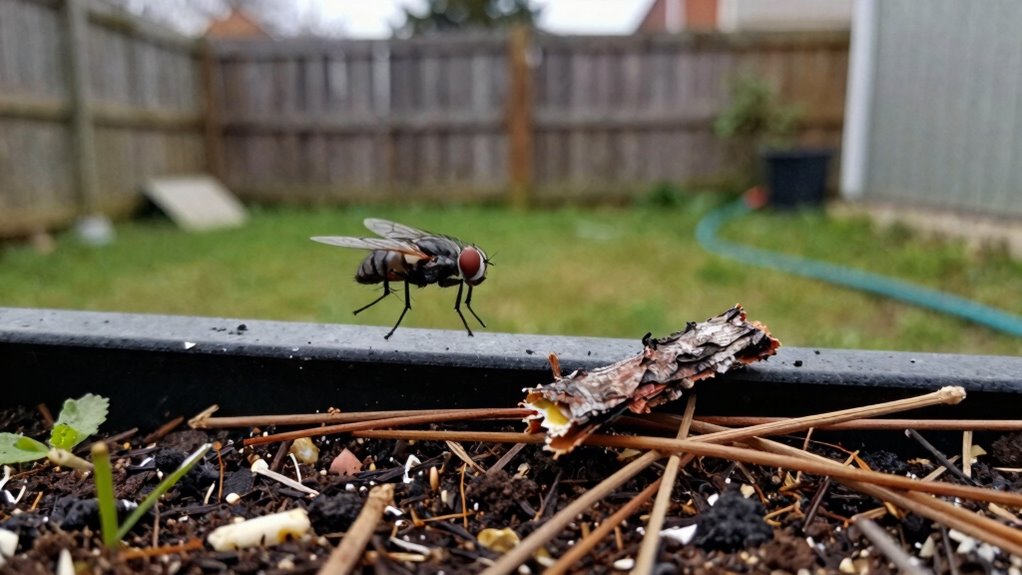
Why does a single atom swap turn a fly’s nursery into a no-go zone? It comes down to a specific inhibitory receptor. Female horn flies, normally eager to lay eggs on fresh dung, hit the brakes when β-pinene is around.
This compound does not just smell bad, it actually raises the oviposition threshold. That is the minimum signal needed to trigger egg laying. Think of it like a bouncer raising the cover charge.
Whereas p-cresol and α-pinene give the green light, β-pinene activates a different neural pathway that says “nope.” The result is fewer eggs deposited, making β-pinene a natural deterrent for pest control. It is a neat trick of chemistry, one tweak turns the nursery into a no fly zone.
For fly management, this compound offers a clean, chemical free way to discourage breeding without killing anything. This approach can be integrated with non-toxic, pet-safe baits to create a comprehensive fly control strategy around outdoor trash and living areas. Pest control professionals can use β-pinene based repellents to protect livestock areas and reduce horn fly populations naturally.
How Human Feces Draws the Trachoma Vector
Flies cannot read labels, but their antennae absolutely can. Human feces is a powerhouse of volatile cues that overwhelmingly draws the trachoma vector, *Musca sorbens*.
In field tests across The Gambia and Ethiopia, human feces baits caught 44 to 61 times more females than plain soil did. That is not a fluke, it is a chemical signal.
These flies use their antennae to sniff out key compounds like cresol, indole, and short-chain fatty acids. Stable isotopes in human waste reveal that flies are homing in on specific carbon sources tied to human diets.
It is a gross but effective dinner bell. If you are targeting pest control for trachoma, human feces trumps sheep dung or soil every time.
For the best fly trap results, use fresh human bait and skip visual lures. Just follow your nose and you will find the best lure for disease vector control. This olfactory approach is consistent with how non-toxic bait attracts filth flies using natural ingredients like fish, egg, and bran.
Which Short-Chain Acids Trigger Fly Antennae
Among the many volatiles in feces, certain short-chain acids stand out as key triggers for fly antennae. Electrophysiological tests have shown that compounds like butanoic, pentanoic, and hexanoic acids elicit strong responses from female Musca sorbens, confirming their role in attraction.
These particular acids, part of the human feces volatile profile, likely guide flies to preferred breeding sites with a precision that makes other odors seem like background noise. For effective pest control, targeting these specific attractants can help in trapping flies near breeding areas and reducing infestation.
If you are looking for ways to eliminate flies from your home or farm, understanding these chemical cues allows you to choose the right bait. You can buy traps that mimic these short-chain acids to lure and capture flies without relying on harsh sprays, and many non-toxic traps use food-grade ingredients like fish, eggs, and bran to produce similar scents safely.
This friendly approach keeps your environment practical and safe for family or livestock. Remember that early detection of fly problems often starts with recognizing their attraction to these specific acids.
Key Active Acids
The electrophysiological evidence points to a short list of key offenders. Butyric acid and isovaleric acid are the main troublemakers that actually trigger fly antennae.
These short-chain fatty acids are potent attractants, not just background noise. Think rancid butter or smelly feet, sorry for the visual.
Female flies in particular perk up their antennae when these two compounds hit the air. In lab tests, both butyric and isovaleric acid reliably elicited measurable signals.
Flies detect them even at low concentrations. So when trying to understand what lures flies, forget the complex blends.
Focus on these two acids as the real culprits for effective fly control. They are the short list of chemical offenders that get the job done in pest management. To combat these attractants, products like Farnam Repel-X use permethrin concentrate for broad-spectrum control on animals and premises.
Female Antennal Responses
To identify the best attractants for pest control traps, researchers used electrophysiology to test which short-chain acids actually excite a female fly’s antennae. The results showed that butanoic acid, pentanoic acid, and hexanoic acid all triggered strong signals in *M. sorbens*, confirming these are key lures for monitoring.
However, the flies ignored 2-methylpropanoic acid almost completely. This picky response links to the *ir25a pathway*, which controls state dependent aversion, so a full or stressed fly may not respond to the same chemicals that attract a hungry one. Context really matters here, the same odor can be a dinner bell or a warning signal.
For effective trap design, focus on short-chain acids that reliably stimulate antennae rather than just any strong smell. Choosing the right volatile compounds will help you catch more target pests while reducing false catches. Commercial traps often use food-based liquid bait to mimic these naturally occurring attractants for reliable indoor pest control.
Feces Volatile Profiles
Key profile features:
Butanoic acid smells like rancid butter and is a top trigger for housefly traps.
Pentanoic and hexanoic acids are less pungent but still potent attractants in pest control.
2-Methylpropanoic acid is a dud. Flies yawn at it.
Tsetse interactions are different. Those blood-feeders prefer CO₂ and skin odors, not poop acids.
For effective housefly traps, lean on butanoic blends. Skip the methylpropanoic stuff.
Bottom line: Stick with the strong short-chain acids for reliable antenna tickling. Your fly count will thank you when buying professional trap baits. To keep flies away from dining areas, pairing a fan with a targeted repellent creates a bug-free zone.
When CO₂ Attracts Flies: and When It Repels Them
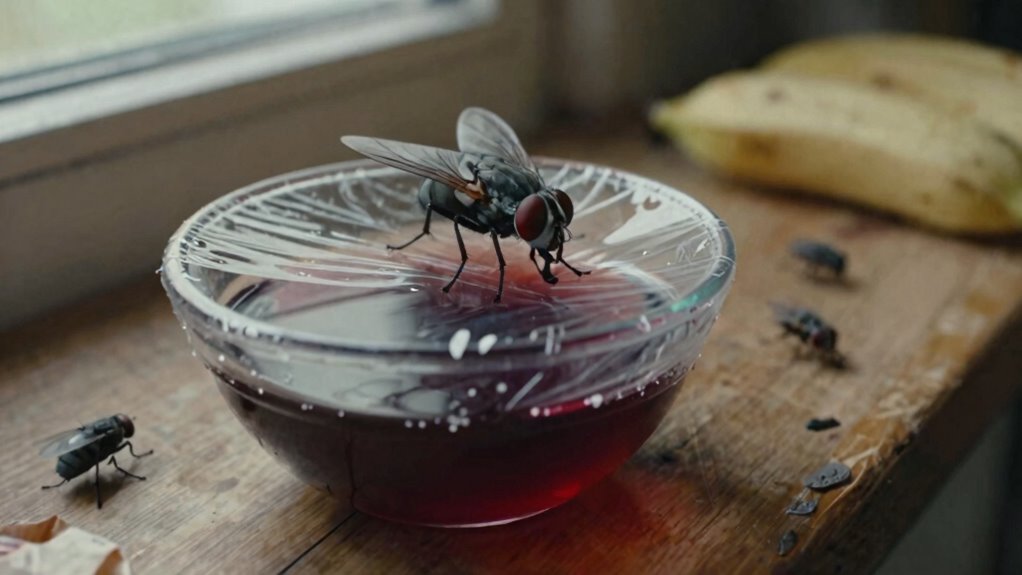
CO₂’s relationship with flies is a classic Jekyll and Hyde story. It attracts them during active foraging but repels them when they are settled.
This split in behavior depends on the fly’s internal state, not just the gas itself. When a fly is hunting, its CO₂ detection pathways fire up and pull it toward fermenting fruit or a breathing host.
This attraction relies on the IR25a receptor function, a key part of the fly’s sensory toolkit. For pest control, understanding this switch explains why traps work best in high-activity zones. Resting flies treat the same gas like a bad house guest. They back off fast, which is a survival filter against drowning in high CO₂ pockets or parasite zones.
An effective pest control approach also uses super sticky glue to physically capture moving crawlers in those same high-activity zones.
Why Active Flies Seek CO₂ but Resting Flies Avoid It
Carbon dioxide is a tricky scent for flies, and it only works as a lure when they are active. For pest control, this means resting flies actually avoid CO₂, likely as a defense against parasites or danger.
Treating a fly infestation requires understanding this behavior. Flies that are walking or flying will seek out CO₂, so placing traps that release it during active periods can boost your pest control results.
Resting flies, however, will avoid CO₂, so you need different bait strategies. If you want to buy a targeted fly trap, look for one that mimics foraging cues instead of just CO₂.
This shift in behavior is key for effective pest management. Understanding when to use CO₂ lures can help you catch more flies and reduce infestations faster. For those ready to take action, electric fly swatters offer a high-voltage solution for zapping active flies instantly.
Active Foraging States
Active foraging flies flip their response to carbon dioxide based on what they are doing. This state dependent attraction turns CO₂ into a dinner bell for a fly on the move.
A buzzing fly looking for food or a mate treats CO₂ as a signal for fermenting fruit or a breathing host. A resting fly avoids the same gas to dodge parasites or stale air, making it a practical safety switch.
This foraging behavior modulation prevents wasted energy on false alarms. Active flies need resources while resting flies need safety, so context changes everything.
Even with a brain the size of a poppy seed, a fly’s CO₂ response proves that knowing when to act is key. For pest control, understanding these cues helps target infestations where flies are most active. Mosquito traps require attraction systems mimicking body heat, CO₂, and UVA light to exploit similar state-dependent foraging behaviors.
State-Dependent CO₂ Response
That same state-dependent switch that sends foraging flies chasing CO₂ flips hard when the fly stops moving. Active flies, whether walking or buzzing, find carbon dioxide irresistible as a reliable cue for food or egg-laying sites.
A resting fly treats the same gas like bad cologne and avoids it entirely, because tiny brains house separate receptors for attraction and avoidance. CO₂ comes from flowers, fruit, blood hosts, or wildfires, while ethanol specifically signals yeast fermentation.
This split-personality response keeps flies from wandering into dangerous CO₂ pockets or parasite-filled dens when they are not hunting. For the fly, it is a cost-saving survival trick: know the state, active means chase, settled means steer clear.
For pest control professionals, understanding this context is key to targeting fly behavior effectively. If you are looking for fly control products, remember that CO₂-based traps only work when flies are actively foraging, not when they rest. Non-toxic and odorless sticky traps can be effective for capturing resting flies near sunny windows or entry points.
Buyer-intent insight: a stationary fly near a trap may not respond to CO₂ lures, so pair them with visual or heat cues for resting stages. The bottom line is that carbon dioxide is not a universal attractant, and context is everything in fly management.
How Ethanol Doubles Fly Search Time Over CO₂
Ethanol doubles fly search time compared to CO₂, a finding straight from the lab. This is not because flies are budding alcoholics.
Ethanol is a unique signature of yeast fermentation, a precise signal for ripe fermenting fruit. CO₂, by contrast, is everywhere, exhaled by hosts, flowers, and even wildfires. That ubiquity makes CO₂ a less reliable cue for pest control baiting strategies.
Flies in an active foraging behavior state find CO₂ attractive, but only then. Ethanol works regardless, pulling them in even during low-activity states. The result is that flies spend twice as long probing an ethanol source.
For practical fruit fly trap placement, ethanol beats CO₂ hands down. It is more consistent and less context dependent for targeting pest populations.
Pair ethanol with a blue surface and fecal volatiles for maximum chaos in your fruit fly control plan. Using airtight lids with locking buckles can further prevent fruit flies from detecting odors and entering containers. Bottom line is that if you want flies to linger, ditch the CO₂ and pour a little ethanol.
Why Blue Objects Complement Feces Odors
Ethanol keeps flies lingering but won’t make them land. That final decision often hinges on something simpler: the color blue.
Blue attraction is a well-documented quirk among biting flies, including horn flies and the trachoma-spreading *Musca sorbens*. These insects, apparently born with an eye for decor, zero in on blue surfaces. They might mistake them for shaded animal hosts or a nice, cool resting spot.
Blue attraction is a well-documented quirk among biting flies. They zero in on blue surfaces.
The real trick is pairing these visual cues with the right stink. Feces odors alone work fine, as human dung baits catch up to 61 times more females than soil. But adding blue makes them land faster. Visual cues do the heavy lifting for approach, while volatile scents seal the deal.
Bottom line: a blue trap near feces is your best shot for effective pest control. Some repellents use UltraBond Technology to provide weatherproof protection that lasts up to 17 days. It’s like offering a fly a landing pad and a buffet at once.
Full Volatile Blend: What Drives Fly Preferences
Individual compounds only tell half the story. The real question is how the full volatile blend shapes a fly’s choice.
The magic isn’t one ingredient; it’s the blend ratios. Percentages like p-cresol’s 63% in fresh dung or indole’s 5.46% matter hugely for effective pest control.
Compound synergy effects make the blend a messy masterpiece. For example, α-pinene boosts egg-laying but β-pinene kills it.
Think of it as a recipe for your fly bait. Get the ratios wrong, and flies walk away from your traps.
Get them right, and you have bait that beats soil 61 to 1. This blend insight is key for any pest management professional.
The table below shows the volatile component roles. p-Cresol at 63% is the top egg-laying trigger.
α-Pinene at 1% attracts 76% of females. β-Pinene at 1.4% deters oviposition.
Indole at 5.5% delivers a key electrophysiological hit. Short-chain fatty acids drive M. sorbens to human feces.
Bottom line, the blend matters more than any single stink. Use these facts to improve your own attractant formulas. For yellow jackets, non-toxic dehydration traps effectively lure and eliminate pests without chemical exposure.
Frequently Asked Questions
Do Flies Prefer Human or Animal Feces?
Flies typically prefer human feces over animal feces, especially for breeding. In tests, human waste attracted 44 to 61 times more female *Musca sorbens* than soil, a key trachoma vector.
This allure links to volatile compounds like cresol and short-chain fatty acids in human waste. But seasonal variation matters: fresh animal dung draws horn flies for egg laying, whereas older dung repels them.
So it is less about absolute preference and more about context. Freshness and species drive the choice, which is critical for effective pest control solutions.
If you are dealing with fly infestations around livestock or outdoor areas, knowing this helps you choose the right fly control products. For lasting results, use targeted baits and traps that match the specific fly species and their breeding habits.
Can Flies Detect Dung From a Distance?
Yes, flies can detect dung from a distance thanks to their powerful sense of smell. The olfactory range varies by species and the specific chemical compounds released.
Horn flies pick up fresh cattle dung volatiles like p-cresol and α-pinene from several meters away. For pest control around livestock, targeting these attractants with proper waste management can reduce fly populations fast.
Wind detection helps flies track odor plumes upwind, making fresh manure a magnet for infestations. If you’re dealing with persistent flies, investing in a quality trap or larvicide can break their breeding cycle.
Fresh dung’s volatile blend, rich in terpenes and indole, is key to attracting flies. Aged dung loses this scent and appeal, so prompt removal is a simple, effective pest control strategy.
Why Do Some Chemicals Attract Flies but Not Others?
Flies are picky because their molecular olfactory receptors act like custom keyholes, and only specific chemical shapes activate a response.
p-Cresol from fresh dung triggers egg-laying behavior, while β-pinene acts as a natural deterrent, so not all odors are equal.
For effective fly control products, synthetic attractants work when they mimic these exact chemical keys, which is why commercial traps often rely on pheromone blends.
CO₂ attracts hungry flies seeking a blood meal, but lazy flies ignore it entirely, meaning your bait choice matters depending on the species.
This isn’t random behavior; it’s a finely tuned chemical lock-and-key system that pest control solutions exploit to maximize catch rates.
If you’re shopping for fly bait or insect traps, look for lures containing p-cresol, indole, or skatole, since these match manure-breeding flies like house flies and bottle flies.
For outdoor pest management near barns or compost, choose a fly trap with controlled-release volatiles, as this keeps the scent active for weeks.
When targeting fruit flies or drain flies, switch to acetic acid or ethyl acetate blends, because those receptors respond to fermenting organic matter.
Bottom line: match the correct volatile compound to the fly’s receptor, and they come running toward your trap.
Fail to match the chemical signature, and they ignore you completely, wasting both your time and your budget.
So before buying fly control products, identify the fly species first, then pick a bait with the right active ingredients for guaranteed results.
A smart purchase means checking the label for specific attractants, not just generic “fly attractant” claims, since precision beats broad-spectrum guesses.
Does Fly Attraction to Odors Change With Age?
Yes, fly attraction to odors changes with age, driven by shifting needs over the fly lifespan. Fresh dung, rich in volatiles like p-cresol and α-pinene, strongly attracts horn flies for feeding and egg-laying.
But aged dung, 3 to 7 days old, loses that appeal. Their olfactory response fails, and feeding habits shift.
Even oviposition drops, from 2.54 eggs per female on fresh dung to barely 1.09 on old. So flies aren’t picky, they’re practical.
If you’re dealing with a fly infestation, targeting fresh breeding sites is key for effective pest control. Using a quality fly trap or insecticide spray near manure piles can reduce egg-laying and cut populations fast.
Smart little recyclers, sure, but on your property they’re a nuisance. Look for products with lures that mimic fresh dung volatiles to maximize fly bait effectiveness.
For long-term fly management, combine sanitation with residual insecticide treatments. This is a buyer-intent strategy that stops flies before they multiply.
Are Flies More Attracted to Smells or Colors?
Flies are definitely more attracted to smells than colors, and that’s key for effective fly control. Olfactory cues like p-cresol from dung drive attraction far more than visual cues, which only serve as a backup.
Fresh poop’s volatile scent blend hooks horn flies 68% of the time. Blue objects? Eh, maybe just a lucky guess.
Specificity matters a lot in pest control. P-cresol pulls 76% of females, while colors lack that precision.
So if you’re baiting traps for a fly infestation, focus on smelly stuff, not shiny things. Scents pay the bills when you want to buy the best fly traps or repellents.
Incorporating odor based attractants into your pest management products will maximize catch rates. For professional grade results, prioritize scent lures over colored decoys every time.


