
How far can mosquitoes travel? Most people assume they stick close to home, but the answer might surprise you—and it matters for how you protect your yard.
While many mosquitoes only fly a few hundred meters from where they hatch, some species can hitch a ride on winds and travel over 180 miles in a single night. That means a mosquito problem isn’t always local, and your pest control strategy needs to account for far-ranging invaders.
In this article, we’ll break down how far different mosquitoes actually travel, what that means for your property, and the most effective ways to stop them before they become a nuisance.
Keep reading to learn how to stay ahead of these airborne hitchhikers.
At A Glance
- Most mosquitoes fly under 3 km from their breeding site.
- Wind-assisted Sahel mosquitoes can travel up to 300 km in one night.
- Chicago Culex mosquitoes reached 2.48 km max, with 90% staying within 3 km.
- Blood-fed females hitchhike on high-altitude winds for long emergency journeys.
- Sparse hosts force longer flights; dense urban areas reduce travel distances.
Can Mosquitoes Really Travel 300 Kilometers in One Night?
Yes, mosquitoes can travel roughly 300 kilometers in a single night, and this is backed by clear scientific evidence. These are not your average backyard pests; they are mostly blood-fed females in Africa’s Sahel, catching high-altitude winds.
This extreme dispersal creates genetic bottlenecks when only a few travelers start new colonies, like a tiny airborne lottery. Most mosquitoes stay close to home because larval competition keeps them near breeding sites, limiting local travel to under a few kilometers.
For effective pest control, understanding this behavior helps: long-distance trips are rare emergency moves, not daily commutes. Products like oil of lemon eucalyptus can last up to six hours for personal protection during outdoor activities.
Professional mosquito prevention services often focus on eliminating standing water to stop larvae from developing.
The bottom line is yes, they can go that far, but only when survival depends on it.
If you need mosquito extermination help, targeting breeding areas remains the most practical solution for any residence.
How Does Wind Enable Mosquitoes to Travel That Far?
So after talking about marathon mosquito flights, you might wonder what the trick is. It’s mainly about using wind speed to their advantage.
Mosquito flight is weak on its own, barely covering a few hundred meters under its own power. But when they catch a breeze, especially gusts like those in Chicago hitting 16.7 km/h, they become airborne passengers.
They ascend hundreds of meters, letting air currents carry them over 300 kilometers in a single night. This isn’t active flying; it’s ecological hitchhiking.
Blood fed females are common passengers, seeking new breeding sites during droughts. Wind turns a short range flutter into a long distance commute.
So mosquitoes don’t fly far, they let the wind do the work. For effective pest control, you need to target both resting adults and their windborne arrivals. To stop these wind-driven invaders, use systems like a thermal fogger that treat dense foliage where arriving mosquitoes rest and hide.
Bottom line: wind, not muscle, is their secret to epic travel. If you are looking for mosquito control solutions, focus on barriers and traps that stop wind driven invaders.
What Happens When Mosquitoes Ride the Wind for 300 Kilometers?
When a mosquito rides the wind for 300 kilometers, it is not just taking a scenic tour; it is fundamentally changing the game of disease transmission. This is mosquito ecology at its most dramatic, turning these tiny flyers into airborne disease-delivery systems that drop pathogens far from their origin.
Their travel behavior rewrites the rules of mosquito control: a blood-fed female caught in high winds can travel further in one night than a car commuter in a week. That means a local outbreak becomes a regional problem overnight, and controlling pests at the source no longer guarantees protection.
Control efforts that work on a small scale fail when new mosquitoes blow in weekly, so pest management plans must adapt to wind patterns, not just breeding sites. Health officials are forced to think bigger, tracking weather forecasts alongside larval habitats to predict where the next wave lands.
For homeowners, this makes professional pest control services more valuable, since a single treatment won’t stop wind-borne invaders. You need ongoing barrier treatments and repellent strategies that account for long-distance mosquito migration. Residual barriers from normal rain can last 40 days or more, but heavy storms may still wash away defenses and require reapplication.
The bottom line: expect surprises, because when mosquitoes ride wind for 300 kilometers, disease can arrive unannounced. If you’re serious about mosquito prevention, invest in yard treatments that last, and monitor local wind advisories to time your pest control sprays effectively.
Who Are the Surprising Long-Distance Travelers in Africa’s Sahel?
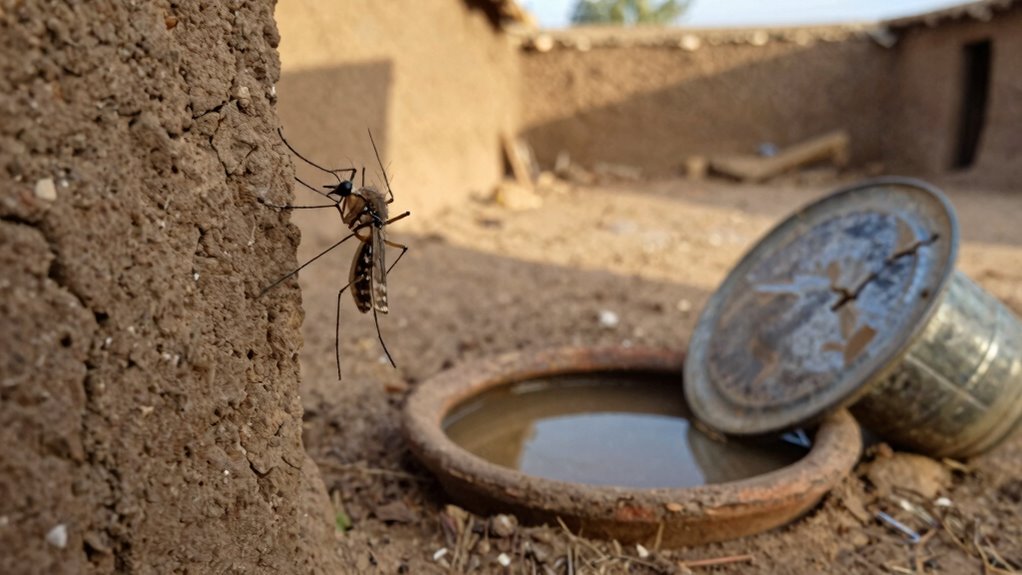
Wind dispersal success in Africa’s Sahel depends on one surprising fact: most of these long-distance travelers are blood-fed females.
These mosquitoes fly hundreds of meters up and rely on gusts to carry them roughly 300 kilometers in a single night.
They do this to search for egg-laying sites during droughts, which makes pest control efforts extra challenging.
So the surprising travelers are not just any mosquitoes but well-fed mothers on a wild, one-way ride.
This behavior seriously increases the risk of spreading malaria far beyond local villages.
For effective mosquito control, you need to consider these long-range movements when planning your treatment strategies.
Focusing on source reduction and targeted spraying can help manage these unexpected threats.
Knowing where these travelers come from gives you a better chance at protecting your community.
Wind Dispersal Success
Surprise often rides the wind, and malaria mosquitoes in Africa’s Sahel prove it. These insects are not strong fliers, but they use high altitude air currents to cover up to 300 kilometers in a single night.
This wind dispersal success comes from a biological search for breeding sites. During the Sahel’s prolonged drought, suitable water for larvae is rare, so the mosquito’s egg laying strategy targets temporary ponds after rainfall.
Flying hundreds of meters up lets them catch prevailing winds, turning a weakness into a travel superpower. You might think a mosquito sticks to your backyard, but these airborne hitchhikers are covering entire countries.
It is a survival trick that makes conventional wisdom look a bit silly. To control these pests, consider professional mosquito treatment that targets both ground and high altitude dispersal routes. For local standing water, Bti-based biological larvicides provide a safe and targeted way to kill larvae without harming fish or plants.
Blood-Fed Females Aloft
The most startling long-distance travelers in Africa’s Sahel are not the strong-flying ones; they are blood-fed female mosquitoes, often carrying a recent meal that makes them heavy and slow. These engorged insects, caught hundreds of meters high, ride seasonal winds for up to 300 kilometers in a single night.
Why? It’s not a vacation. Their oviposition behavior drives them to search for new, dry-season puddles, which are ecological endpoints for laying eggs.
Wind dispersal is their desperate taxi service when local breeding sites vanish. This isn’t just a curiosity; it’s a disease-spreading problem that affects pest control planning and public health safety.
A blood-fed female carries malaria parasites far beyond where she bit, so effective mosquito management must account for these windborne migrations. For homeowners and communities seeking mosquito control services, knowing this pattern helps target barrier treatments and larvicide applications before the dry season hits. Mosquito dunks with methoprene can be placed in standing water to stop larvae from maturing into these windborne adults.
Strong fliers? No. Persistent hitchhikers with a belly full of blood and eggs? Absolutely.
To reduce indoor biting risk, professional pest control experts recommend sealing entry points and using ongoing mosquito misting systems, especially near seasonal puddle zones. If you are looking for mosquito extermination near me, ask about residual sprays that disrupt oviposition sites before winds carry new invaders in.
The result is a hidden aerial highway that demands proactive mosquito prevention products and routine inspections.
Culex Mosquito Dispersal in Chicago: Actual Flight Range Measured
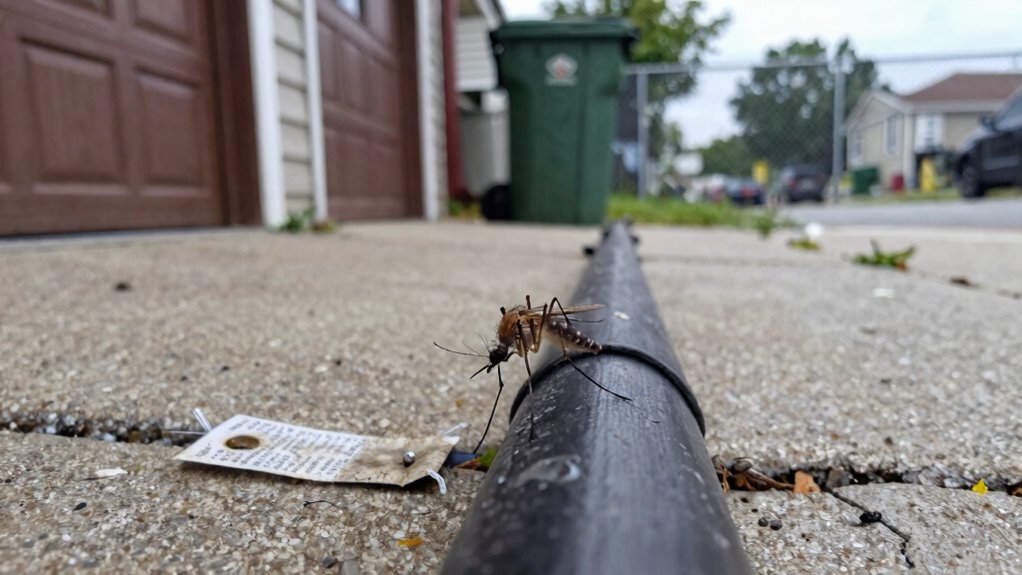
The Culex mosquito dispersal study in Chicago showed a maximum flight range of 2.48 kilometers. The mean distance traveled was 1.15 kilometers, with 50 percent of mosquitoes staying within about 1.0 kilometer.
The Culex mosquito study in Chicago found a maximum flight range of 2.48 kilometers.
Seventy-five percent were found within roughly 1.7 kilometers, and 90 percent within about 3.0 kilometers. Big winds gusting up to 16.7 km/h helped push these bugs along.
In suburban Chicago, these mosquitoes were willing to travel a few kilometers. This is much farther than you might expect.
It is a solid reminder that local pest control efforts need a bigger buffer. For effective mosquito treatment, consider expanding your perimeter spray zone around your property. Using a Picaridin spray provides up to 12 hours of protection against mosquitoes and ticks.
How Far Did Anopheles Gambiae Actually Fly in Rural Gambia?
Over in rural Gambia, researchers got down to brass tacks with Anopheles gambiae, the main malaria-carrying mosquito in those parts. They uncovered that these little vampires don’t exactly go globetrotting; in fact, most of them are homebodies near their local swamps.
90% of movements stayed within 1.7 kilometers of the breeding site distance. That’s about a 20-minute casual stroll for a human, but a whole night’s work for a mozzie.
Half of the adult females were caught within 386 meters of their larval homes. This means they basically set up camp next door, which is key for targeted pest control strategies.
Flight range variation was real. Some models predicted 95% wandering within 1.67 kilometers, whereas others stretched it to 2.83 kilometers, proving even mosquitoes can’t agree on a commute length.
Knowing these homebody habits helps pest management teams focus on localized breeding sites. For effective mosquito control, treating within a half-kilometer radius can significantly reduce adult populations. Additionally, placing ultrasonic pest repellers within this radius may help deter mosquitoes using high frequencies of 25 to 45 kHz.
What Makes a Mosquito Travel Farthest: Wind, Hosts, or Habitat?
Wind pushes mosquitoes farther than any other factor, carrying them across entire regions in a single night. This means effective pest control must account for wind patterns, especially in open areas. For example, 20% Picaridin repellent offers up to 12 hours of protection against mosquitoes and ticks, making it a strong choice for travelers in windy zones.
Host availability tends to keep them close: plenty of warm blooded meals reduces the need for a long road trip. For homeowners, removing standing water and using professional pest control treatments near patios can lower local host attraction.
Habitat plays a supporting role, but a mosquito with a good tailwind and few local hosts is a tiny, buzzing wanderer with a one way ticket. To defend your yard, combine yard sprays with bug zappers and window screens to stop these travelers from settling in.
Wind Dispersal Dynamics
Wind dispersal is a major factor in how far mosquitoes travel and spread disease.
In Africa’s Sahel, mosquitoes climb hundreds of meters high, riding winds that carry them 300 km overnight.
Most wind-borne mosquitoes are already blood-fed females, which makes them efficient disease spreaders during dry spells.
Urban gusts in Chicago, with winds up to 16.7 km/h, helped Culex mosquitoes reach 2.5 km from their larval homes.
For long distances, wind is the mosquito’s invisible chariot, so professional pest control must account for aerial migration.
If you’re dealing with recurring mosquito pressure near your property, targeted barrier treatments can reduce local breeding sources.
Knowing how wind moves pests helps you plan effective mosquito control services, especially during drought periods.
For the best protection, schedule a yard inspection and ask about larvicide applications to break the cycle before flight begins.
A chemical-free operation in some modern traps, such as those with solar panels and UV light, can complement these efforts without adding toxins to the environment.
Host Availability Impacts
A mosquito will fly as far as it has to for dinner, but a full buffet keeps it close to home. Host availability directly shapes host seeking behavior, as abundant blood sources reduce the need for long distance travel.
When humans or animals are plentiful, mosquitoes rarely stray beyond a few hundred meters. In places like rural Gambia, most Anopheles gambiae stay within 1.7 km of breeding sites since hosts are nearby.
Conversely, sparse hosts force mosquitoes to travel farther, risking greater energy loss. This is why urban areas with dense populations often see shorter mosquito flights. Dinner is always close.
Think of it like a fast-food joint on every corner. Nobody drives an hour for a burger.
So, although wind can carry mosquitoes hundreds of kilometers, host availability keeps them grounded. Abundant hosts mean shorter journeys, less disease spread, and easier pest control.
For homeowners, reducing host availability around your property is a key mosquito management strategy. Removing standing water and using professional pest control services can break the buffet cycle. For extended outdoor protection, a picaridin-based repellent offers up to 12 hours of defense, reducing the need for frequent reapplication.
Why Blood-Fed Females Are the Most Likely to Travel Far
Though a mosquito’s typical flight is a short, aimless buzz around a backyard, blood-fed females are the ones most likely to travel far. Their drive to find egg-laying sites, especially after a drought, overrides the genetic costs of risky long hauls. Consider using DEET-based repellents with 20-25% concentration for long-lasting protection during outdoor activities. The high predation exposure along the way, being a flying snack for birds and bats, is a gamble they take for reproduction. Wind assisted journeys let them hitch rides on gusts, like those in Africa’s Sahel, carrying them hundreds of kilometers in a single night. Urban expeditions in Chicago show from mark capture studies that they fly up to 2.48 kilometers from larval homes, often seeking new puddles. Their blood meal fuels this trek, but daily survival rates drop with distance, a trade off for better breeding spots. If you are dealing with a mosquito problem, professional pest control services can target these long distance travelers. Identifying and treating standing water sources helps break the egg laying cycle near your home.
Do Blood-Fed Females Pose the Highest Disease Transmission Risk?
A single infected, blood-fed female can fly kilometers, carrying malaria or West Nile virus straight to new hosts. That’s why professional mosquito control services focus on these specific females first.
She’s not acting out of malice, just hunger and the need to lay eggs. But for homeowners, that timing is a real problem.
When you’re doing a property risk assessment, target these travelers. They’re the ones driving the highest disease transmission, so they deserve priority treatment.
If you’re seeking mosquito treatment near me or checking yard inspection reports, look for signs of resting females after a blood meal. These are the prime targets for barrier sprays and larvicide applications.
The practical takeaway is to time your pest management around peak feeding and egg-laying cycles. That way, you intercept the most dangerous individuals before they spread pathogens.
Protecting your family means identifying these flight-ready carriers early, then using repellent zones and adulticiding to cut their numbers. Every prevention step you take reduces the odds of a local outbreak.
Adding permethrin-treated clothing to your personal protection plan creates an additional barrier against these flying vectors.
How Mosquito Travel Data Should Reshape Malaria and West Nile Control Zones
Mosquito travel data makes a strong case for expanding intervention zones, since wind can carry blood-fed females hundreds of kilometers, not just the usual few hundred meters.
Urban perimeters need adjustment too, as suburban Chicago’s Culex mosquitoes traveled up to 2.48 km, meaning control rings should extend beyond current assumptions.
This isn’t about overreacting. It’s about matching spray and net boundaries to actual mosquito flight paths, which is both more effective and less wasteful.
Pest control professionals should consider broader perimeter treatments and targeted insecticide applications for West Nile and malaria vectors.
Adjusting spray zones to cover these travel ranges helps prevent outbreaks while saving time and resources.
For broader outdoor control, Amdro granules work best in dry conditions and can be applied with bait stations.
Expanding Intervention Zones
If a mosquito can ride the wind for 300 kilometers in a single night, your backyard fogger is little more than a toy. Expanding intervention zones is now a survival tactic, not a luxury.
Control radii should stretch 5 to 10 kilometers around urban clusters, replacing the old 1 kilometer buffer. Winds and climate change scatter blood fed females far beyond local traps.
Satellite guided drones and larvicide drops must cover seasonal migration corridors. These corridors shift as warming alters insect navigation patterns.
Surveillance networks need sensor arrays spaced every 2 kilometers. They track real time dispersal to trigger rapid response teams before outbreaks hop county lines. Since garlic sprays are safe for standing water applications, they offer a localized but limited tool within these broader zones.
The old stay local playbook is dead. Practical intervention now demands a regional, wind aware strategy for effective mosquito control.
Wind Dispersal Risks
Wind gusts become delivery drones when they carry blood-fed malaria mosquitoes hundreds of meters above the Sahel. These females, mid blood meal digestion, ride wind currents for up to 300 kilometers in a single night.
This is not a casual commute. It is a strategic migration that forces these insects to seek distant water for egg laying.
Drought compels them to travel, turning winds into a biological jet stream. The risk is clear: a single mosquito can reintroduce malaria to a cleared zone.
For effective pest control, control zones must expand beyond local breeding sites. These travelers do not stop at arbitrary borders, they follow wind patterns, not maps.
Disease prevention requires mapping seasonal wind corridors, not just mosquito traps. Ignoring wind dispersal is like ignoring the delivery truck, the package still arrives.
Use targeted mosquito control solutions that account for airborne migration. Using mosquito coils spaced 10–15 feet apart in open areas can help create a protective barrier against these windborne travelers. Understanding wind dispersal risks is essential for any malaria elimination strategy.
Urban Perimeter Adjustments
Urban planners rarely start a meeting with “think like a mosquito,” but maybe they should. Current control zones often stop at city borders, yet travel data proves that’s a mistake.
A suburban Culex study showed 90% of females stayed within 3 km of their larval home. That means a storm drain escape in one neighborhood can seed a rooftop breeding site two blocks away, quietly.
Perimeter buffers need to stretch, not shrink. Expand spray zones to a 3 km radius around known breeding hotspots, not just 500 meters.
Treat rooftop breeding sources like clogged gutters as primary targets. These overlooked spots are dry-season-proof and sustain pest pressure.
Map storm drain escape routes to predict where mosquitoes push outward after rain. This targeted larvicide approach reduces adulticide needs and saves budget.
Bottom line: widen the ring, or you’re just playing whack-a-mole with wings. Use this integrated pest management strategy to stop infestations before they start.
Frequently Asked Questions
How Long Can a Mosquito Survive After Traveling Far?
A mosquito that survives a long journey typically lives just a few days longer, maybe one to two weeks at most. Flying nonstop burns huge energy and drains fat reserves fast, making professional pest control treatment essential for homes near travel corridors.
Riding air currents saves energy, letting them stretch travel without crashing. But once landed, food is essential, so removing standing water and using mosquito traps cuts their survival short.
Without nectar or blood, survival drops sharply, which is why buying insect repellent or yard foggers gives you effective control. The distance shortens lifespan, but a lucky wind gives them a fighting chance. For reliable results, contact a local exterminator for outdoor barrier sprays.
Do Male Mosquitoes Also Travel Long Distances?
Not really, and here’s why. Male mosquitoes typically stick close to breeding sites, traveling only a few hundred meters at most.
Hormonal differences drive their focus on mating behavior near emergence areas, not on long trips. Females, on the other hand, often fly farther seeking blood meals or egg-laying spots.
For disease spread, it’s the ladies you worry about, since they’re the ones biting for protein. Males are homebodies, frankly, like a dad refusing to leave his garage.
If you’re dealing with mosquito pressure around your property, know that both sexes still emerge from stagnant water nearby. That means your DIY mosquito control routine should target breeding grounds first, using larvicide tablets or granules in standing water.
For perimeter protection, consider a residual barrier spray with permethrin or bifenthrin to knock down resting adults. And for buyer-intent peace of mind, look for EPA-registered mosquito foggers or backpack sprayers that cover zero to fifty feet around patios and yards.
The best mosquito killer for home use combines source reduction with adulticide applications, since male activity near breeding sites will still signal where females hunt. If you want long-lasting mosquito yard treatment, opt for products with microencapsulated or timed-release formulas that survive rain and heat.
Just remember, the real long-distance travelers are the females, so your insect repellent and outdoor spray strategy should focus on high-traffic zones like deck edges, shrubs, and shaded resting areas. Now you know the insect behavior basics, so you can pick the right mosquito control products and avoid wasted effort on far-off fields that males never reach.
Can Mosquitoes Travel Across Oceans or Large Lakes?
Can mosquitoes cross oceans or large lakes? It is rare over oceans, but large lakes are more realistic for pest control concerns.
Oceanic winds have carried mosquitoes hundreds of kilometers accidentally. They lack the stamina for open water and need nearby breeding grounds to survive.
Large lakes, however, are often crossed by windblown individuals. Blood fed females are the most likely hitchhikers, and that is trouble since they spread disease.
So yes, it is possible, but only as accidental travelers. Do not plan a mosquito cruise, but do plan barrier traps near shorelines.
For effective pest control, install mosquito barrier sprays around lakeside properties. These targeted treatments stop disease carrying females before they invade your yard.
If you are looking for the best mosquito control products, choose foggers or traps designed for shoreline use. Smart buyers prioritize prevention near water to reduce infestation risks.
How Does Temperature Affect Mosquito Flight Distance?
Temperature directly alters mosquito flight distance. Cold air stiffens wings, increasing wing wear and grounding them fast.
Warmer temperatures boost metabolism, letting them fly farther but not forever. Wind currents help extend that range, especially on hot nights.
Think of it this way: a chilly mosquito barely crawls, whereas a toasty one might cruise a kilometer. It’s a trade off between cozy energy and wing damage.
For effective pest control, addressing flying distances helps you choose the right mosquito trap placement. Buy a high coverage outdoor fogger to break their flight path before they reach your yard.
If you want lasting mosquito control, combine a thermal fogging machine with larvicides. This targets both the toasty fliers and their breeding sites, saving you repeat treatments.
What Is the Shortest Distance a Mosquito Might Travel?
The shortest distance a mosquito might travel is essentially zero inches.
Indoor hatching from stagnant puddles in a forgotten plant saucer means a female mosquito can feed on you without ever leaving the room.
If food, water, and shelter are right there, she doesn’t need to take a single flight.
That is why indoor mosquito control is so critical for effective pest management.
Whether breeding indoors or outdoors, distance is completely optional for these pests.
It is like ordering takeout and finding it in your fridge, laziness pays off for mosquitoes.
You can stop this cycle by using larvicides in standing water and sealing entry points around your home.
For immediate relief, consider a quality mosquito repellent or an indoor fogger designed for tight spaces.
Buying a targeted indoor mosquito trap near breeding sites can dramatically cut down your risk.
Professional grade sprays and granules for plant saucers and drains are smart, long term investments.


