
Do ticks live in grass? It’s a fair question if you’ve ever found one crawling up your leg after mowing. The short answer is usually no—blacklegged ticks hate open, sunny lawns and much prefer shaded, leaf-littered spots near woods.
Manicured grass is like a desert to them, with one New York study finding fewer than 2% of ticks on turf. But that doesn’t mean your yard is fully safe, especially along the edges where your grass meets the treeline.
That’s why this guide breaks down where ticks actually hide, how to treat those high-risk border zones, and what simple maintenance steps keep your family protected.
Keep reading to learn the exact spots to focus on and the pest control methods that actually work.
At A Glance
- Ticks prefer wooded, shaded, moist areas with leaf litter, not open grass.
- Open grass under direct sun is a dehydration trap that kills ticks quickly.
- Under two percent of blacklegged ticks are found on mowed lawns.
- Mowing frequency barely affects tick numbers; nearly zero ticks are found on lawns.
- Ticks quest on low vegetation, but grass is not a primary habitat for them.
Why Ticks Avoid Grass in Open Sunlight
Why don’t ticks just set up camp in your backyard lawn, waiting for an afternoon barbecuer to stroll by? One common tick myth is busted: open grass under direct sun exposure is a death trap for them.
These arachnids need high humidity to survive, so a sunny, mowed lawn dehydrates them fast. Studies confirm fewer than 2% of blacklegged ticks hang out in lawns; they prefer shady, leaf-littered woods.
So that manicured turf you fret over is basically a desert to ticks. You are far likelier to pick one up brushing against shrubs near a treeline, which is some bonus irony.
Bottom line: worry less about your lawn and more about those shady edges. For effective pest control, focus your tick treatment on wooded borders and leaf piles instead of open grass.
Professional tick spraying along fence lines and garden beds is a smart buyer’s choice. A targeted mosquito and tick barrier can give you peace of mind without over treating your sunny lawn.
The Ideal Habitat for Blacklegged Ticks
For blacklegged ticks, the ideal real estate is not a sunny lawn but a shaded, humid woodland. These ticks thrive in wooded areas where damp leaf litter covers the ground, providing the perfect hiding spot from drying sunlight.
Riparian corridors, the green zones along rivers and streams, also offer prime tick habitat thanks to extra moisture and wildlife traffic. If you are looking for effective tick control, focusing on these moist, shaded zones is a smart first step for pest management.
Clearing leaf litter and trimming overgrowth can reduce tick hiding spots around your property. For lasting tick prevention, consider a professional yard treatment that targets these humid woodland edges. For indoor tick control, certain foggers provide up to 7 months of reinfestation protection.
Wooded Shaded Areas
Wooded, shaded areas with leaf litter and high humidity are the prime habitat for blacklegged ticks. Tick questing happens daily as they climb low vegetation and stretch out their front legs to grab a passing animal.
Host attachment is efficient because deer, mice, and birds constantly move through these damp, dim spaces. The shade keeps moisture high and prevents dehydration, while leaf litter provides a cozy launching pad for questing.
Ticks are lazy climbers and rarely go higher than knee-level, so brushing against ferns or shrubs is the real danger. To control tick infestations near your home, focus on removing leaf litter and trimming back shaded wood edges.
For effective pest management, treat these zones with tick repellents or professional tick control services, such as a residual barrier lasting 40 days spray for long-lasting outdoor protection. Avoid dense, shaded wood edges in summer and fall, or you will become an unwitting taxi for a tick on a host-attachment mission.
Moist Leaf Litter
Damp leaf litter is the VIP lounge for blacklegged ticks, where moisture and organic matter create the perfect environment. This decaying layer keeps humidity high and shields ticks from the sun, making it ideal for pest control concerns.
A tick control plan must target this habitat to break the tick life cycle effectively. Leaf litter holds moisture like a sponge, so ticks never dry out there.
The soft, insulated layer from decomposition gives ticks a safe hiding spot. Studies show more than 90 percent of nymphs come from leaf litter, not open grass.
For reliable tick prevention, focus on removing or treating leaf litter in your yard. This step is key to reducing tick exposure and protecting your family. InsectGuard Tick Gaiters with Permethrin Unisex Black further reduce the risk of Lyme disease and West Nile virus by protecting against ticks on contact.
Riparian Corridors
Riparian corridors combine everything a blacklegged tick could want. These lush zones along rivers and streams offer constant shade, high humidity, and ample leaf litter.
The damp soil and air prevent ticks from drying out, which kills them fast in open lawns. Deer, mice, and other hosts travel these corridors, so ticks have steady blood meal options without leaving cover.
Dense canopy blocks UV rays, keeping the ground cool and humid unlike your sun baked grass. The upshot is that riparian corridors are five star tick hotels.
If you live near one, focus tick control on that edge, not the lawn. That is where the risk hides and where targeted pest control efforts matter most.
For effective tick removal and prevention, prioritize professional tick treatment along riparian boundaries. This approach stops infestations before they reach your yard.
Using 20% Picaridin can provide up to 12 hours of protection for anyone venturing into these high-risk areas.
Where Ticks Hide in Residential Yards
| Yard Feature | Tick Risk Level |
|---|---|
| Mowed lawn | Very low (under 2%) |
| Wooded area | High |
| Leaf pile | Moderate |
| Stone wall | Moderate |
Ticks climb low vegetation to find hosts, not the grass itself.
So skip the lawn obsession and focus on clearing brush and keeping edges tidy.
Professional tick control treatments can reduce yard infestations effectively.
Remove leaf litter and debris to lower tick habitats around your home.
Inspect pets and family after spending time in wooded or high grass areas.
Create a three-foot gravel barrier between lawns and woods for added protection.
Keeping stainless steel tools on hand, such as fine-tipped tweezers, ensures safe removal of any ticks found during these checks.
How Ticks in Grass Find Their Way to Hosts
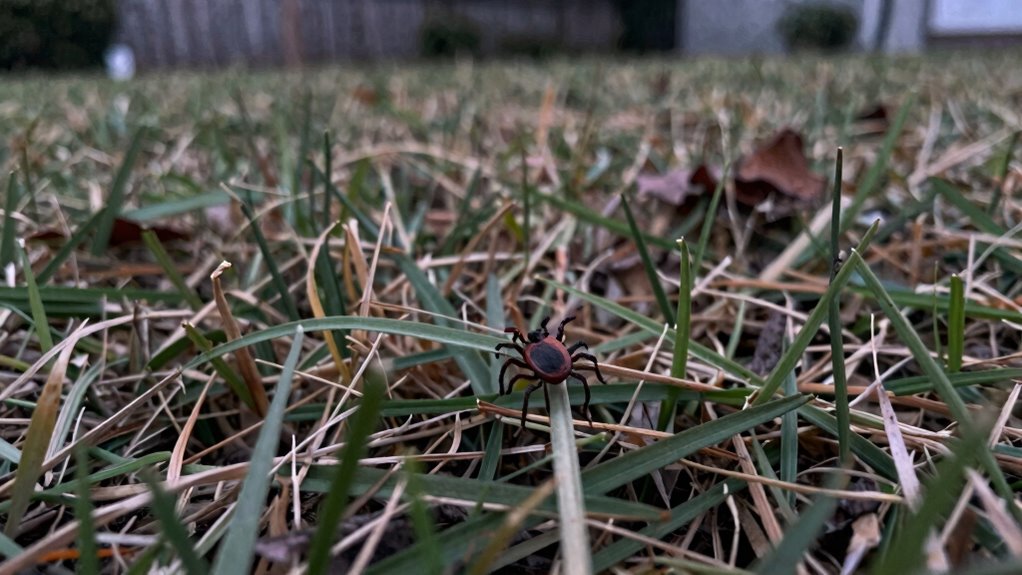
Ticks in grass don’t exactly “find” hosts the way you’d track down a lost remote. Their technique is far more passive, a sit and wait strategy they’ve mastered over millions of years.
Tick movement is minimal once they choose a perch. They rely entirely on host seeking by ambush.
Here’s how it works. Ticks crawl up grass blades, using their back legs to grip tightly as reaching out with front legs, a pose called questing.
They sense vibrations, body heat, and exhaled carbon dioxide from animals brushing by. But they don’t chase.
When a host makes contact, the tick latches on. It quickly crawls to find a feeding spot.
It’s less about hunting, more about lucky timing. Think of it like waiting for a bus you’re pretty sure will show up eventually.
To keep ticks out of your yard, professional pest control services can treat high traffic grass areas. Many homeowners also use tick repellents on pets and landscaping to lower the risk of an infestation. For reliable defense, apply a DEET-based spray evenly to exposed skin and clothing when entering grassy areas.
A targeted pest control treatment plan helps break the tick life cycle. This pest management approach reduces your family’s chances of encountering these pests in your own backyard.
Does Tall Grass Increase Ticks on Your Lawn?
Maintaining a taller lawn does not automatically invite more ticks into your yard.
In fact, research shows that mowing frequency has little impact on tick abundance in suburban spaces.
A New York study found less than two percent of blacklegged ticks were collected from lawns.
Ticks actually prefer wooded edges and areas with leaf litter, not open grass.
Keeping your grass a bit taller can help support local pollinators and beneficial insects.
For effective pest control, focus on treating lawn borders and shaded zones instead of cutting grass short.
To reduce tick exposure near your home, consider barrier sprays around perimeter areas.
A friendly approach to lawn care can lower your buyer intent for tick treatments while keeping your yard healthy.
Applying a spray-on clothing treatment like those containing 0.5% permethrin can kill ticks on contact and provide lasting protection when you work near lawn borders.
Research Findings
Many studies confirm that tall grass itself is not a major tick habitat. A survey in Westchester County, New York found less than two percent of blacklegged ticks in lawns. Most ticks were instead in wooded lots and edge zones called ecotones.
Understanding tick ecology is key here, since ticks hate open and sunny lawns where they dry out fast. Deer management also plays a role, because deer drop ticks in shady woods, not your yard.
For practical pest control, keep your property focused on reducing deer access near wooded borders. Lawns mowed weekly, every two weeks, or every three weeks in Springfield, MA netted zero ticks across 144 drags. This means regular mowing alone is not a key tick prevention strategy.
A coastal Maine study ranked unmanaged grasses as the poorest tick habitat compared to forests and brush. So homeowners can stop worrying about grass height for tick control.
Ticks in yards come from adjacent woodlands, not the grass itself. Your lawn is basically a tick free zone for peace of mind. However, if you venture into adjacent woodlands or edge zones, wearing permethrin-treated tick clothing provides long-lasting protection that bonds directly to fabric fibers.
Mowing Frequency Effect
Mowing frequency barely affects tick numbers, so you can stop worrying about that. A Springfield, MA study dragged 144 lawn plots mowed weekly, biweekly, and every three weeks, and found zero ticks in all cases.
That is a clean sweep, demonstrating that taller grass around 12.5 cm actually boosts native bees. Ticks simply avoid open, sunny lawns and prefer shady, damp woodland edges instead.
So mowing less won’t invite ticks into your yard. Tick detection is far more likely near wood piles or leaf litter, where humidity suits them.
Your real enemy is seasonal tick activity, which peaks in spring and fall regardless of your mower. For effective pest control, skip the obsessive lawn scalping and focus on clearing brush and leaf litter.
That is where the real battle lies for keeping ticks away from your property. Products with at least 20% Picaridin or DEET ensure reliable bug defense for those venturing into tick-prone areas.
Three Yard Changes That Actually Reduce Tick Risk
Ticks don’t actually love open lawns, they prefer shady damp spots. Smart yard management focuses on the wild edges where ticks really hide.
To lower your family’s risk of tick bites and disease, try three proven changes based on tick tracking data. First, create a barrier strip of wood chips or gravel that is 24 inches wide.
This separates your lawn from wooded areas and blocks tick migration across property lines. Second, rake up leaf litter and clear brush piles near fences and foundations.
This removes prime tick habitat created by suburban development. Third, install 8 foot fencing around vegetable gardens and seal stone walls close to your grass.
Less deer and rodents means fewer ticks, so you can skip heavy pesticide use. These modifications alter tick microclimates and directly slash your odds of an attached hitchhiker.
For additional protection, consider treating clothing and gear with Permethrin-treated clothing for long-lasting defense against ticks during yard work.
A simple pest control approach like this keeps your yard safer without harsh chemicals. For effective tick prevention, focus on these terrain management steps today.
Stop Ticks in Grass Without Pesticides
Short grass won’t save you from ticks. Those tiny pests prefer humid, shaded edges, not your sunbaked lawn.
The real trick is making your yard hostile without using poison. Natural repellents, like cedar oil or garlic sprays, work on perimeter vegetation but fade quickly, so reapply weekly.
Garden design matters most for tick control. Start by clearing leaf litter and widening wood chip barriers to three feet.
Move play areas to sunny, dry spots to reduce tick habitat. A wood chip border takes low effort but gives high effectiveness.
Removing leaf piles is also low effort with medium results. Targeted repellent sprays require medium effort for medium effectiveness.
Letting grass grow tall is the wrong direction entirely. The bottom line is simple: push ticks out with layout, not chemicals.
It’s cheaper, safer, and a better excuse to ditch the mower.
For tick control, capsaicin-based repellents can also deter mammals like squirrels and rabbits that may carry ticks, but they are safe for plants and pets when used correctly.
Frequently Asked Questions
Can Ticks Survive a Winter in Frozen Grass?
Yes, ticks can survive a winter in frozen grass. They enter tick dormancy, a slowed down state similar to a bear’s hibernation.
Snow insulation acts like a cozy blanket, keeping ground temperatures above lethal levels. Ticks do not die from cold alone. They just wait.
So even frozen lawns are not tick free. The real risk is that melting snow uncovers active ticks ready to latch onto you or your pets.
Winter does not kill them, it just pauses them. That is why year round tick control is essential for effective pest management.
Using a professional grade tick spray for lawns before the first freeze creates a protective barrier. This barrier targets dormant ticks and disrupts their lifecycle.
For best results, apply a residual tick killer in late fall and early spring. These treatments stop ticks from becoming active when snow melts.
If you want a tick free yard all year, invest in a seasonal pest control plan. It keeps your outdoor space safe even after the ground freezes.
Do Tick Repellent Plants Actually Keep Ticks Away?
Tick repellent plants have limited repelling efficacy. They create a scented barrier, but it’s weak, more like a polite suggestion than a hard stop.
Lavender, rosemary, or garlic around your yard might help a bit, but ticks won’t flee en masse from your flower beds. For serious protection against tick bites and Lyme disease, you need to combine plants with other pest control methods like tick tubes or targeted yard sprays.
Think of these plants as a backup chorus, not the lead singer, when you’re looking for the best tick prevention for your property. They add a layer of natural deterrence, which is useful for organic pest control fans, but they won’t replace a perimeter barrier spray.
If you want to buy tick control that actually works, pair plantings with a permethrin-based spray or bait boxes that kill nymphs before they bite. That combination gives you the practical, long lasting defense you need for family and pets.
Bottom line, these plants help in low pressure areas, but don’t bet the farm on them. For high risk zones near woods or tall grass, invest in professional grade tick repellent products and schedule routine treatments.
You can also use tick tubes filled with treated cotton, which rodents carry back to nests, cutting tick populations at the source. That’s the difference between a subtle scent and an active elimination strategy.
How Long Can Ticks Live Without Feeding?
Ticks can survive for months to over a year without feeding, depending on their life stage and conditions. Adult blacklegged ticks, for example, often wait up to a year thanks to impressive desiccation survival skills that keep them from drying out in low humidity.
Nymphs might last a few months, while larvae survive even less time without a blood meal. Think of it as their slow motion patience game, which is why relying on starvation to clear an infestation won’t work.
Instead, the best tick control approach focuses on yard habitat management and targeted pest control treatments. For effective tick prevention, prioritize removing leaf litter, treating perimeter zones, and using professional grade tick sprays.
If you’re dealing with a serious tick problem, consider investing in granular acaricides or a repellent barrier treatment for your property. These pest control products are designed to break the tick life cycle before they find a host.
Will Mowing Shorter Eliminate All Ticks From My Yard?
Mowing shorter won’t eliminate all ticks from your yard. Ticks thrive in shaded, humid wood lots and lawn edges, not open grass.
Even a perfect manicure leaves the lawn edge behavior unchanged. Ticks there still wait for hosts.
For pet risk reduction, focus on treating pets and clearing leaf litter near woods. It’s cheaper than a lawn service.
You will avoid the dad joke of mowing for ticks that aren’t there. Bottom line: mow for looks, not tick control.
Can Ticks Get on You From Grass Clippings?
No, ticks can’t get on you from grass clippings, and that’s a fact rooted in tick biology.
These pests need a living vertical perch, like tall grass blades or leaf stems, to latch onto a passing host.
Dead grass clippings dry out quickly and lose the moisture ticks depend on, so they simply won’t hang around your pile.
In fact, tick habitat relies on shade and high humidity, not on whether your lawn is freshly mowed.
That means your cut grass is a tick-free zone, which is a small but real win for your yard care routine.
Still, if you are tackling a serious infestation, you should focus on perimeter treatments and proper tick prevention products.
For smart homeowners, combining a reliable insecticide spray with strategic habitat removal gives you the best protection.
And remember, the real risk comes from tall grass, brush piles, and leaf litter, not from the clippings you just bagged.
So skip the worry about clippings and instead invest in a quality tick control solution for your property.
A targeted yard spray or granular barrier can kill ticks on contact and keep your family safe all season long.
Check the product labels for active ingredients like permethrin or bifenthrin, as these are proven pest control staples.
Buying a professional-grade option from a trusted brand makes all the difference for long-term outdoor pest management.
You can also reduce tick habitats by keeping grass short and clearing debris, which complements any chemical defense.
That practical combo of habitat cleanup and a solid pesticide application is your smartest, most cost-effective move.
So, rest easy about clippings, but stay proactive with a premium tick repellent for your lawn.
Your next smart purchase is a targeted tick control kit designed for yards, and it will pay off with peace of mind.


