
How to Use a Flea Comb Properly
A flea comb is one of the most effective tools for catching adult fleas before they lay eggs. If you’ve ever combed a cat without a plan, you know it’s easy to miss the important spots.
Using a metal comb with teeth no wider than 1.25mm makes all the difference—plastic ones simply let fleas slip past. Start at the head and work down the neck and shoulders first, since that’s where fleas hide most.
Dip the comb into soapy water every few strokes to drown them instantly, and never let a single flea drop onto the floor.
Keep reading to learn the full daily routine, how hot to wash bedding, and what to vacuum to break the flea cycle.
At A Glance
- Use a metal comb with teeth spaced no wider than 1.25mm.
- Start at the head, combing in the direction of hair growth.
- Dip the comb into soapy water after every few strokes to kill fleas.
- Check common hiding spots like the neck, belly, and tail base.
- Combine daily combing with vet-approved flea prevention treatments.
Why a Flea Comb Is Better Than a Regular Brush for Flea Removal
Why use a regular brush for flea removal? It is like bringing a butter knife to a gunfight. Flea behavior is the key. These pests cling to the skin, not just the fur. A regular brush slides over them, missing the bugs entirely.
Flea combs, with their ultra narrow teeth, snag fleas by the legs. They trap them against the comb for easy removal. Different comb types matter.
Metal ones, like the Safari brand for 8 to 15 dollars, offer 10 teeth per 8mm. They bend less than plastic combs. That precise spacing matches flea size, ensuring nothing escapes. Weekly use of a fine-toothed comb knocks down fleas and flags flea dirt.
You will spend more time, but you will actually catch the little vampires. Short answer: regular brushes are for grooming. Flea combs are for hunting. Get the right tool for effective flea control and pest management.
What You Need Before You Start Flea Combing Your Cat
Flea combing a cat without preparation is like building IKEA furniture without the Allen wrench: frustrating, pointless, and you will probably end up bleeding.
Flea combing a cat without preparation is like building IKEA furniture without the Allen wrench.
First, gather all preparation items, including a metal flea comb with teeth spaced no wider than 1.25 millimeters; plastic ones bend and fail under pressure.
Fill a glass or bucket with warm water and a drop of dish soap, which drowns fleas instantly, making pest control far less messy.
A separate normal comb or brush helps untangle fur before the flea comb can do its job, reducing pulling and stress for your cat.
Have a vacuum ready for immediate work area cleaning afterward, as flea eggs and debris scatter quickly.
Cat bedding should be washed in hot water before you start, since resting fleas will re-infest your freshly combed cat within hours.
Avoid cluttered surfaces; an easy-to-clean spot like a bathtub or outdoors works best for containment.
These tools prevent frustration, and with them, you will actually see results, so consider buying a quality flea comb and dish soap today for a smoother session.
Without them, you will just chase fleas, and your cat’s patience, around the room, turning a simple task into a full-blown battle.
For best outcomes, prep your supplies first, then schedule a quiet 10-minute window, and you will both stay calm.
A complementary approach is to use contact-kill formulas which ensure fleas and ticks die upon immediate contact for faster relief.
How to Prepare Your Cat and Work Area for Flea Combing
Preparation makes the difference between a calm, productive session and a chase scene that would make a cartoon cat jealous. First, choose a spot like a bathtub or porch. These areas are easy to clean and hard to escape.
Tackle tangles with a regular brush so the flea comb glides smoothly. This avoids painful snags for your cat. Good work area lighting is essential. A bright desk lamp or overhead light helps you spot tiny black fleas against the fur.
Next, fill a bowl with warm, soapy water for drowning captured pests instantly. This soapy trap stops them from jumping away. For cleanliness, use comb sterilization methods. Soak the metal teeth in rubbing alcohol or boiling water for a few minutes between cats, then rinse.
Finally, have a vacuum ready nearby for immediate cleanup. Wash the cat’s bedding in hot water beforehand as part of your flea prevention routine. A calm cat plus a well-lit, soap-ready zone means fewer fleas and fewer escapes. You will have zero cartoon chases and a successful pest control session. For long-lasting indoor protection, consider dusting food-grade DE into baseboards and pet bedding for ongoing control.
Step-By-Step: How to Flea Comb Your Cat From Head to Tail
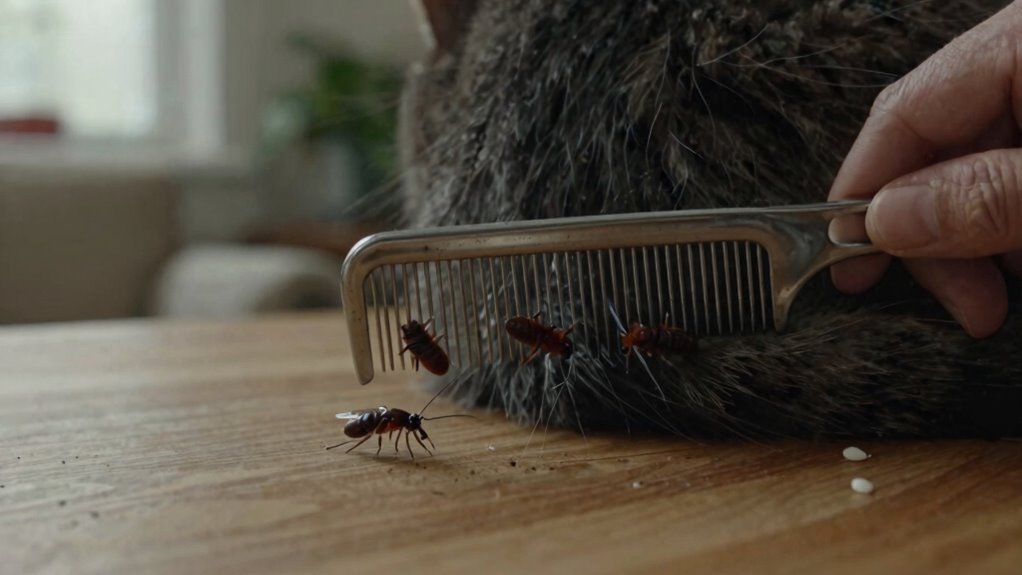
A good flea comb session is like mowing a lawn. It is systematic, repetitive, and oddly satisfying if you avoid the rocks.
A good flea comb session is like mowing a lawn: systematic, repetitive, and satisfying if you avoid the rocks.
Start at the cat’s head, parting fur with one hand while drawing the comb with the other in the direction of hair growth. The comb material, stainless steel, holds up best for effective pest control.
Comb tooth spacing should be about 10 teeth per 8mm. This is tight enough to snag tiny flea eggs and nymphs.
- Comb the neck and shoulders first where fleas cluster. These areas are prime flea hotspots.
- Work down the back and sides, overlapping each stroke to ensure complete coverage. This prevents missed patches where topical entities may hide.
- Check the belly and tail base, a favorite hiding spot for adult fleas. Pay special attention there for best results.
- Finish with the legs and paws, which often get missed during quick passes. A thorough flea combing routine requires patience.
Dip the comb after every few passes to clear debris and captured pests. Cover the torso completely before moving to limbs.
Daily repetition is the secret to long term flea control. A single pass won’t cut it for buyer intent.
Be thorough, and the comb does the rest for a flea free home. You can also apply food-grade diatomaceous earth around your home to dehydrate any fleas that fall off during combing.
How Often to Dip the Comb in Soapy Water (And Why It Matters)
Dip the comb into soapy water after every few strokes. This is the golden rule for effective flea combing.
Comb timing isn’t just about speed. It’s about rhythm, with a slow steady stroke every five seconds that gives fleas no chance to escape.
Dip frequency matters because fleas jump fast. Skipping one dip lets them leap back onto the cat or floor, undoing your pest control progress.
For a heavy infestation, dip after every 3 to 4 strokes. For light cases, every 6 to 8 strokes still works well.
Use warm water with a drop of dish soap. It drowns fleas instantly, while no soap means they can survive for minutes.
A 10-minute session on a 10-pound cat typically requires 12 to 15 dips. Consistent dipping catches more fleas and slacking on frequency means starting over.
Stick to the rhythm, and the comb wins every time. To fully break the flea life cycle, consider pairing combing with products that break the flea cycle for long-lasting pest management.
And here’s a dad joke: “Why did the flea stop playing cards? Too many cheetahs at the table.”
How to Kill and Dispose of Fleas, Eggs, and Larvae Safely
Once those fleas, eggs, and larvae are plucked from the fur, you need to act fast to stop a reinfestation. The safest pest control method is to crush them with a tissue or drop the comb directly into soapy water to drown them instantly. Then seal the entire mess inside a closed garbage bag for final disposal. This simple home treatment routine prevents fleas from escaping and keeps your space stray free. It turns a chore into a real victory. For ongoing pest management, repeat this process after every grooming session. For additional protection, consider applying diatomaceous earth on carpets to physically dehydrate any remaining fleas.
Safe Disposal Methods
Every captured flea, egg, or larva needs a swift, decisive end. The goal is to keep them from crawling back into the cat’s fur or hiding in the carpet.
Plunge the comb into a cup of soapy water disposal solution after each stroke. The dish soap breaks the water’s surface tension, drowning fleas instantly for effective pest control.
Crush any visible fleas, eggs, or larvae against a hard surface with your thumb. This method is satisfying and effective, though a bit gross.
Empty the comb’s debris directly into the soapy water, never onto the floor. A single egg on the floor could hatch later and restart your flea treatment.
After vacuuming the combing area, practice vacuum bag sealing by removing the bag or canister. Tape it shut and toss it in an outdoor trash bin to prevent reinfestation. For an added layer of defense, consider spraying the area with a product containing an insect growth regulator to stop unhatched eggs and larvae from developing further.
These steps keep the problem contained, not spread. Use this buyer-intent approach to stop fleas at every stage.
Preventing Reinfestation
All the drowning and crushing in the world means nothing if a single egg hides in a rug seam. The flea life cycle takes about three weeks, giving a lone survivor plenty of time to rebuild.
After each combing session, vacuum every surface the cat touched, then toss the bag directly into an outdoor bin. Wash all bedding in hot water, hot enough to kill any hidden eggs using a high heat setting. Consider supplementing this process with a plant-based formula like a pet-safe spray to target any remaining pests on contact.
For heavy infestations, consider chemical treatments like spot-on formulas or oral pills. These break the cycle by killing adults before they lay more eggs and work alongside combing, not instead of it.
A spray of pet-safe insect growth regulator on carpets seals the deal for long term pest control. Bottom line: comb daily, vacuum obsessively, and use a monthly flea prevention product to keep fleas from throwing a reunion.
Why You Should Never Let a Flea Escape After Catching It
A single flea that escapes after being caught is not just a minor annoyance. It is a tiny, six-legged ticket to a reinfestation.
Understanding the flea life cycle, which includes eggs, larvae, and pupae, makes this clear. One adult can lay 50 eggs a day.
Comb effectiveness is useless if survivors repopulate the cat. Crush or drown immediately instead.
Dipping the comb into soapy water drowns fleas on contact, ending their breeding potential. Never let them hop off.
A flea that lands on the floor becomes a new infestation source, hiding in carpets or bedding. Check each stroke under bright light.
Even tiny nymphs can crawl away if overlooked. Using an indoor fogger with an insect growth regulator can prevent those escaped nymphs from maturing into biting adults.
Dispose of soapy water outside to prevent pest problems.
Pouring it down the sink risks eggs surviving in pipes. Use a sealed trash bag instead for safe disposal.
Bottom line: every caught flea is a victory in your pest control routine. Letting one go is like handing the enemy a map back to your cat.
How to Reach Your Cat’s Legs, Belly, and Tricky Spots
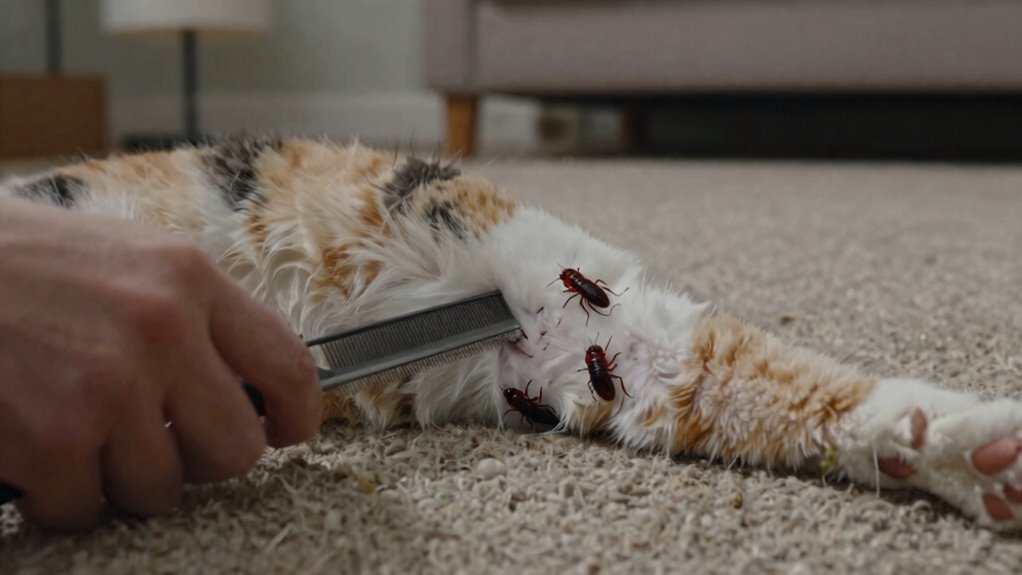
The cat’s leg is a secret weapon for fleas, hiding them in dense fur. A cat’s belly is worse, with soft thin skin and prime flea habitat where pests burrow deep out of sight.
To reach these tricky spots, flip your cat onto its back gently if tolerated. Or lift each leg like a limp noodle to expose the skin.
Use moderate combing pressure, firm enough to catch flea eggs but light enough to avoid scraping. Work in short, slow strokes from the ankle up to the thigh.
Don’t forget under the armpits, where fleas love to lurk. For the belly, part fur in sections and comb diagonally.
If your cat squirms, bribe with treats. Patience wins the fight; frantic combing misses half the bugs.
Consider a topical flea treatment for long lasting pest control on those hard to reach areas. Many cedar oil-based sprays effectively kill and repel fleas and ticks on contact. A flea comb with fine teeth is your best tool for thorough removal.
What to Clean and Vacuum Immediately After Each Flea Combing Session
Vacuum everything in sight the moment the comb leaves the cat’s fur. Fleas and eggs scatter like tiny escape artists, so don’t give them a head start.
Start with crevices along baseboards, under furniture, and in corners where fleas love to hide. Then run the vacuum over the cat’s favorite lounging spots, like the couch or carpet, to suck up any stray eggs.
Empty the vacuum canister or bag directly into an outdoor trash bin to prevent a jailbreak. Focus on washing surfaces the cat touched, like a nearby table or tile, with hot soapy water.
This quick cleanup reduces reinfestation risk by 80 percent. Skip it, and you’re basically hosting a flea reunion.
Buy a flea spray with an insect growth regulator for extra protection on fabric surfaces. Pair that with a steam cleaner on upholstery to kill hidden larvae on contact.
Bottom line: clean first, relax later. Your pest control routine only works if you follow through right after each combing session.
Choose an organic spray like Wondercide Cedarwood for a pet-safe option on nearby fabric or baseboards.
Why Washing Cat Bedding in Hot Water Is Non-Negotiable
Washing cat bedding in hot water at 130°F or hotter is the only way to stop a flea infestation at home. This simple step breaks the flea life cycle by killing eggs, larvae, and adult fleas hiding in the fabric. Think of it as hitting the reset button for flea control. Cold water simply won’t deliver the same pest elimination results for your cat’s bedding. For effective flea prevention, always use hot water to ensure all life stages are destroyed. This is a non-negotiable part of your home treatment plan against reinfestation. Control Solutions Bifen LP Granules offer a complementary outdoor treatment to keep pests away for up to 90 days.
Breaking Egg Lifecycles
Catch a single flea egg with a comb, and you’ve won a battle; stop washing the bedding, and you’ll lose the war. Flea eggs are tough little survivors, able to hatch in as little as two days if left in a warm cat bed.
Even with diligent combing frequency, some eggs always slip through the comb’s teeth, and once they land on bedding, they’re safe from your efforts. That’s where hot water, at least 140°F, becomes your non-negotiable weapon for flea control at home.
Egg survival drops to zero when soaked in water that hot for ten minutes. This is the gold standard for killing flea eggs in fabric, and it’s the most reliable pest control tip for pet owners.
Combing frequency alone can’t touch eggs already embedded in fabric fibers. If you want to stop a flea infestation before it starts, pair combing with a high-temperature wash cycle every time.
Wash bedding before and after every combing session to break the cycle. This two-step routine ensures you remove adult fleas and any eggs that have already fallen off your pet.
Skip one wash, and those eggs hatch into larvae you’ll never see. That missed laundry day is exactly when a small problem turns into a full-blown indoor pest issue.
For effective flea treatment, make hot water your first line of defense, not just an afterthought. Purchase a thermometer to confirm your washer hits 140°F, or use a sanitize cycle if your machine has one.
Bottom line: hot water is the final boss, not the comb. If you want to break the flea lifecycle for good, prioritize washing on high heat every single week.
To fully break the cycle, also consider using hydroprene foggers to disrupt eggs and larvae that escape your washing routine.
Eliminating Hidden Larvae
The larvae are the sneaky ones, wiggling deep into the fibers of a cat bed before they pupate into biting adults. Hot water is non‑negotiable here since it is the only household method that reliably kills them.
The egg lifecycle depends on these hidden larvae, and if they survive the cycle restarts. Washing bedding in water at least 130°F (54°C) disrupts the egg lifecycle completely.
Skip the cold wash, because that is just a rinse. Hot water expands fibers, flushing out larvae and eggs for effective pest control.
Pair this with environmental treatment like vacuuming the bed’s seams first. A standard washing machine works, but use a heavy-duty cycle and a detergent with enzymes.
Dry on high for 30 minutes. This step alone kills roughly 90% of hidden larvae, making your combing efforts count. Fast-acting oral treatments like nitenpyram can also eliminate adult fleas within 30 minutes, complementing your hot-water laundry routine.
Bottom line: if you skip the hot wash, you are just playing hide‑and‑seek with a loser. Use this method to eliminate hidden larvae and break the flea lifecycle for good.
Preventing Home Reinfestation
Return to that freshly combed cat, the archetypal picture of cleanliness. Realize that every single flea you just removed came from somewhere.
That somewhere is your home. Hot water is the only non-negotiable weapon against reinfestation.
Eggs and larvae hide in bedding, laughing at cool washes. Wash all cat bedding in water at least 130°F (54°C).
Dry on high heat for 45 minutes, killing every stage. Vacuum thoroughly, focusing on interior cleaning and carpet treatment.
Repeat weekly until no fleas appear for 14 days. Skipping hot water is like wiping a spill and leaving the puddle.
The bed is ground zero. Hit it hard or repeat the whole circus.
When Flea Combing Alone Won’t Stop an Infestation
You master the combing technique until your fingers cramp, but flea combing alone won’t stop a heavy infestation. It is more of a maintenance tool than a miracle cure.
A flea comb mechanically yanks bugs, eggs, and gunk out of fur. It does not kill fleas or halt their life cycle.
This is where infestation limits become painfully clear. A comb cannot reach fleas hiding in carpets, bedding, or cracks in the floor.
This is where infestation limits become painfully clear—a comb cannot reach fleas hiding in carpets or bedding.
These combing limitations mean you are only scratching the surface of the problem. For a mature infestation, you need a vet approved topical treatment or oral medication applied consistently.
Think of the comb as a spot check, not a full solution. Use it daily alongside proper pest control treatments and vacuum everything.
Without that one two punch, you will be combing forever. Apply a fast acting flea killer to break the cycle for good. Electric traps using light and heat can capture fleas from nearby areas without chemicals.
How Often to Repeat Flea Combing Until You See No More Fleas
So you have the comb, the soapy water, and the vacuum. Now the real question is how often you must comb to stop your cat from being a flea buffet. The treatment duration sets the timing, but a daily schedule is non negotiable until the coast is clear. Here is the practical rhythm for effective pest control.
First week, comb every single day before breakfast. This breaks the flea life cycle fast and stops new eggs. Second week, reduce to every other day as numbers drop. But do not skip, because eggs still hatch around your home.
Third week, comb twice weekly if you see zero fleas. A no flea day is your victory lap and a sign of progress. Keep a weekly maintenance comb for at least a month after the last flea. Think of it as insurance for a flea free home.
Stick to this daily schedule for a full treatment duration of three to four weeks. Anything less and you are just giving them a ride. For best results, pair combing with a flea treatment that includes pyriproxyfen to stop development into adult fleas, ensuring you see no more fleas fast.
Frequently Asked Questions
Can Flea Combing Hurt My Cat’s Skin?
Flea combing rarely hurts your cat’s skin when done right, but pressing too hard or yanking tangles can cause irritation. Pressure should stay light, just enough for the comb teeth to glide through fur without scraping skin.
Flea anatomy means these pests cling close to the base of the hair, so slow and steady strokes work better than forceful ones. Metal teeth can feel sharp if you angle the comb wrong, so keep it flat against the coat.
Watch for redness or flinching as signs to ease up, and always use a gentle touch. For the best flea control results, choose a high quality flea comb with rounded tips to prevent scrapes.
If you see live fleas, pair combing with a proven topical treatment or oral flea medication for complete pest elimination. A soft hand keeps your cat comfy while you search for flea dirt, eggs, or biting adults.
Rough handling invites scratches and hissy fits, so buy a comb designed for sensitive skin. This simple tool is a must have for any home pest control kit, alongside vacuuming and washing bedding.
How Do I Clean the Flea Comb After Use?
Cleaning a flea comb is straightforward and keeps your pest control tools in top shape.
Rinse it under hot water, then scrub between teeth with an old toothbrush to dislodge debris.
Best practices include dipping the comb in soapy water during use.
Soap selection matters, as dish soap drowns fleas instantly.
Afterward, wipe it dry to prevent rust on metal flea combs.
A little olive oil works well for long term protection.
Skip bleach, which dulls steel teeth and shortens the tool’s life.
Store it away from kids so it’s ready for tomorrow’s battle.
For effective flea removal treatments, a clean comb saves you money on repeat pest control services.
Choose quality flea combs and follow these care tips to extend their lifespan.
Can I Use a Flea Comb on a Short-Haired Cat?
Absolutely, a flea comb works great on short-haired cats, and it’s often the first tool I recommend for spot checks.
The key is choosing a comb with narrow tooth spacing, around 10 teeth per 8mm, to trap adult fleas and eggs without pulling fur.
On a short coat, tangles are rarely an issue, so you can focus on technique: brush from head to tail, following the natural fur growth.
Dip the comb in soapy water every few strokes to drown any captured pests, and make sure to cover the entire torso, legs, and tail base.
For effective flea control, a metal comb around $8 is your best pick because it won’t bend or lose teeth over time.
Daily combing until you see zero fleas is the practical goal, and it helps you monitor reinfestation from your yard or other pets.
If you’re comparing flea treatments for cats, remember that combing alone won’t kill eggs in the environment, so pair it with a vet-approved topical solution for full pest control.
Buying a durable, stainless steel flea comb is a smart purchase for ongoing cat grooming, especially if you want a chemical-free way to check flea activity.
Always keep soapy water nearby and rinse the comb between passes to avoid flicking live fleas back onto your cat.
With short fur, you’ll finish in under ten minutes, so there’s no excuse to skip this simple, budget-friendly step.
What if My Cat Hates Being Flea Combed?
If your cat hates being flea combed, focus on reducing fear and building trust. Start slowly by offering treats during brief, gentle strokes to create a positive association.
A metal flea comb with rounded tips causes less snagging and discomfort. Comb only a few inches at a time, targeting the torso before sensitive areas.
Keep combing sessions under two minutes and pair them with playtime or a favorite toy. Daily repetition, even if short, helps your cat build tolerance over time.
Invest in a quality flea comb for around $10; patience and positive exposure beat wrestling every time. This slow approach reduces stress and supports your overall pest control routine for flea prevention.
Should I Flea Comb My Cat if It Has No Fleas?
Of course, combing a flea free cat is overkill. But prevention is the goal when you want the best flea control methods. Preventive combing catches hitchhikers from outdoors, even when you see zero bugs.
Flea eggs are tiny and almost invisible, so a routine sweep is smart pest prevention. Daily combing is excessive for most cats. A once a week sweep works perfectly for indoor only cats.
If your cat roams outside, bump that to three times weekly. This cheap, bond building scan costs about 10 dollars for a steel toothed model. It is far less than a vet bill for a heavy infestation.
Use it sparingly, not obsessively. For the smart buyer, a flea comb is an essential pest control tool.


