
Can bed bugs live in clothes? Yes—especially in stored, folded garments sitting near your bed, where they tuck into seams and pockets and survive for months without a meal.
Standard sprays won’t reach them in crumpled layers, but a home dryer on high heat for 30 minutes kills every life stage, no washing required.
For delicates, dry cleaning at $10–$15 per item works just as safely.
This guide covers exactly when clothes are at risk, how to treat them fast, and which products actually hold up—so you can get back to sleeping without the itch.
At A Glance
- Bed bugs can live in clothes, especially in stationary hiding spots like seams and pockets.
- Clothes stored near beds become prime harborages during an infestation.
- Bed bugs survive for months without feeding inside crumpled or folded clothing.
- Standard chemical sprays often fail to reach bugs hidden deep in layered clothes.
- Home dryers on high heat for 30 minutes effectively kill all bed bugs in clothes.
Can Bed Bugs Actually Live in Your Clothes?
Yes, bed bugs can live in your clothes, but they prefer stationary hiding spots over fabric you’re wearing. Their flat bodies let them tuck into seams, pockets, and folds, where they can survive for months without a meal. For a strong defense, mattress encasements with six-sided zippers and bug-proof seals can prevent insects from reaching your bed in the first place.
That’s why standard chemical sprays often fail; they can’t penetrate every layer of a crumpled shirt. Clothes stored near your bed become prime harborages for these hitchhikers, especially if you’ve had an infestation.
For effective bed bug control, focus on laundering infested items with high heat for at least 30 minutes. You can also use a steamer or professional heat treatment to kill eggs and adults hiding in your dresser drawers.
To prevent re-infestation, seal clean clothes in plastic bins or vacuum-seal bags, and inspect secondhand garments before bringing them inside. If you suspect bed bugs in your hamper, don’t just spray; consider a targeted insecticide labeled for fabric and follow up with regular vacuuming.
The real lesson here is to treat your laundry area, not your outfit, since bugs rarely stay on your body. For peace of mind, use bed bug interceptors under bed legs and wash sheets weekly on hot cycles.
Check your hamper and closet seams weekly, and act fast at the first sign of rust-colored stains or shed skins. With these steps, you’ll keep your wardrobe clean and your sleep undisturbed.
How to Treat Bed Bug-Infested Clothes Without Spreading Them
The simplest way to treat infested clothes without spreading them is to use heat, not freezing. A standard home dryer on high heat for 30 minutes kills all bed bugs in one cycle.
Freezing works too, but it requires a chest freezer at a steady 0°F for at least four days. That is far less convenient than a quick dryer cycle, so skip the freezer unless you have no other option.
For most people, tossing clothes in the dryer on high for half an hour is the safest, fastest bet. Think of it as a sauna session for your wardrobe, and you can also add a bed bug spray or laundry additive for extra peace of mind. For example, you can use an eco-friendly plant-based additive like BugOut! to boost the dryer’s killing power without harsh chemicals.
Before you start, strip off any clothes you are wearing and place them directly into a garbage bag sealed shut. Then, empty the bag into the dryer one load at a time to avoid carrying bugs through your home.
After the dryer cycle, transfer the hot clothes straight into a fresh, clean bag. Do not fold them on a bed or couch, because that is how bed bugs hitch a ride to new hiding spots.
For items that cannot go in the dryer, like delicate fabrics or leather, use a handheld steam cleaner at 120°F or higher for full coverage. You can also buy a portable bed bug heater designed for clothes, which lets you kill pests without chemical treatments.
Finally, vacuum the area where the infested clothes were stored and dispose of the vacuum bag outside immediately. This step helps you stop the infestation fast and prevents recontamination of your freshly treated laundry.
Heat Treatment
Heat treatment wins the battle against bed bugs in clothes, hands down. No chemicals, no fuss, just high heat efficacy for pest control.
A tumble dryer on HOT for 30 minutes kills all life stages, even eggs. That 30-minute cycle for a 7.7-pound load delivers 100% mortality for bed bug elimination.
For washing, 140°F water kills everything in a 30-minute cycle. Lower temps, like 100°F, leave eggs alive, so dry heat is the reliable hero for bed bug treatment.
This makes heat a top chemical free alternative for laundry infestations. No sprays, no stains, just your dryer doing the dirty work for pest management.
For delicate fabrics, a dryer alone at medium high heat for 30 minutes suffices. Wash optional for easy bed bug removal from clothes.
Shaking clothes outside fails because bugs cling tight. The bottom line is high heat is your simple, effective kill switch for infested laundry.
Kills bugs at 113°F within an hour, so even a slight temperature drop in your dryer cycle still proves lethal.
Freezing Methods
Freezing bed bugs can feel like a clever way to handle an infestation, but it requires serious patience compared to heat treatment. A home freezer often stays above 0°F, which allows bed bug eggs to survive the cold.
A chest freezer set at a steady 0°F is your only reliable tool for this pest control method. For effective freezing tips, place infested clothes in cold storage for at least four days.
A 5½-pound batch takes about eight hours to reach the target temperature in the center. That is a long wait, so plan ahead and use plastic bags sealed tight to prevent bugs from escaping during treatment.
After freezing, leave items in the bag until they warm up to avoid condensation dampening fabrics. The bottom line is that you should freeze only if you own a chest freezer and have several days to spare.
For most household infestations, heat remains faster and more forgiving as a bed bug killer. If you want quick results, steamers that guarantee a pest-free bedroom can provide a chemical-free solution reaching 221°F.
What Temperature Kills Bed Bugs in the Wash?
Starting with a fact that might make you want to hug your washing machine, hot water is the undisputed heavyweight champion for killing bed bugs in the laundry.
The magic number is 140°F (60°C) for a full 30 minute cycle.
This temperature kills all life stages including those stubborn eggs.
For effective bed bug control, always check fabric tolerance first before washing.
Some delicates cannot handle that heat.
A 100°F (40°C) wash kills only adults and nymphs, meaning about 75 percent of eggs survive.
That is a gamble you do not want to take for pest control.
The dryer’s HOT setting for 30 minutes likewise does the trick with no wash needed.
Short washes simply do not cut it during heat treatment.
A 10 minute hot tumble kills just 75 percent of nymphs.
For peace of mind and complete elimination, go hot and long.
This is the most reliable pest control method for your laundry routine.
For surfaces that cannot handle high heat, residual protection sprays can keep bed bugs away for weeks.
Does Freezing Your Clothes Get Rid of Bed Bugs?
Yes, freezing can kill bed bugs in clothes, but it is not as simple as tossing a shirt in the icebox. For a reliable pest control treatment, the freezer must hold a steady 0°F (-17°C) for at least four days.
A regular fridge freezer often runs warmer than that, so eggs might survive and cause a reinfestation later. For a standard 5½-pound load of laundry, plan on about eight hours just for the center to reach that lethal temperature.
This method works best for items you can seal in plastic bags, and you should check the core temperature with a thermometer before calling it done. If you want a faster solution, consider professional heat treatments or washing on the hottest cycle, which are proven bed bug removal options.
Patience is the real cost here, so no quick fixes in the freezer aisle. For a thorough home treatment, combine freezing with vacuuming and mattress encasements to target hidden bugs and eggs. Alternatively, diatomaceous earth powder can be applied to cracks and crevices for residual protection.
Freezing Time Requirements
Freezing clothes will kill bed bugs, but only if you do it right. Getting it right takes more patience than most people expect.
Duration accuracy is critical here. A batch of clothes must stay at 0°F for at least four days to guarantee every bed bug, egg, and nymph is dead.
Container condensation is a sneaky problem. When you open a sealed bag in the freezer, dampness collects on cold surfaces.
This dampness can drip onto clothes and create wet patches. It does not kill bugs, but it can damage fabrics over time.
To avoid that, seal items in airtight plastic bags. Remove as much air as possible before placing them in the coldest part of a chest freezer.
A refrigerator freezer will not work as well. The bottom line is that freezing works, but it is slow.
For faster pest control, wash or dry your clothes on high heat instead. You will not have to wait four days for a verdict. For a more comprehensive approach, consider using interceptor traps under furniture legs to monitor for any surviving bed bugs.
Effective Freezer Temperatures
To freeze bed bugs out of clothes, the temperature must reach 0°F (-17°C) and stay there for the entire duration.
Home freezers vary widely, so a chest freezer is your best bet for consistent cold.
A fridge’s icebox usually hovers around 10°F, which won’t kill bed bug eggs or tiny nymphs.
A dedicated chest freezer maintains the steady cold you need for effective pest control.
Power outages are a major risk during cold treatment.
If the freezer thaws even briefly, you must restart the entire four day process.
You need to keep the temperature rock solid for 96 hours to ensure total eradication.
That is a long time to hold a grudge against a bug, but your patience will pay off.
For the best results in bed bug elimination, use a chest freezer and never rely on a fridge freezer.
Avoid any gamble with a power outage to protect your clothes.
Your garments will emerge bug free after this cold treatment, though your patience will be well tested.
Follow these pest control tips for reliable freezer success.
Periodic inspection with reusable interceptor traps can help confirm all bed bugs are gone after treatment.
How to Spot Bed Bugs Hiding in Your Clothes
Since bed bugs are master hiders and flatter than a credit card, they love tight spaces in your clothes. Spotting them takes a sharp eye and a little patience.
Look for visual clues like tiny rust-colored stains from crushed bugs or small black dots of excrement. Infestation signs also include pale, shed skins near seams, cuffs, or collars.
Run a flashlight along zippers and folds where these pests often tuck themselves. Check inside pockets and under tags for any bed bug evidence.
A live bug is a clear giveaway, but droppings and eggs confirm the problem. If you find any proof of an infestation, bag the clothes immediately.
Do not shake them inside because that spreads the bugs. Using non-toxic, pesticide-free traps around your laundry area can help catch any stragglers before they hide. So inspect carefully and use proper pest control methods to keep your wardrobe safe.
Can Dry Cleaning or Soaking in Cold Water Kill Bed Bugs?
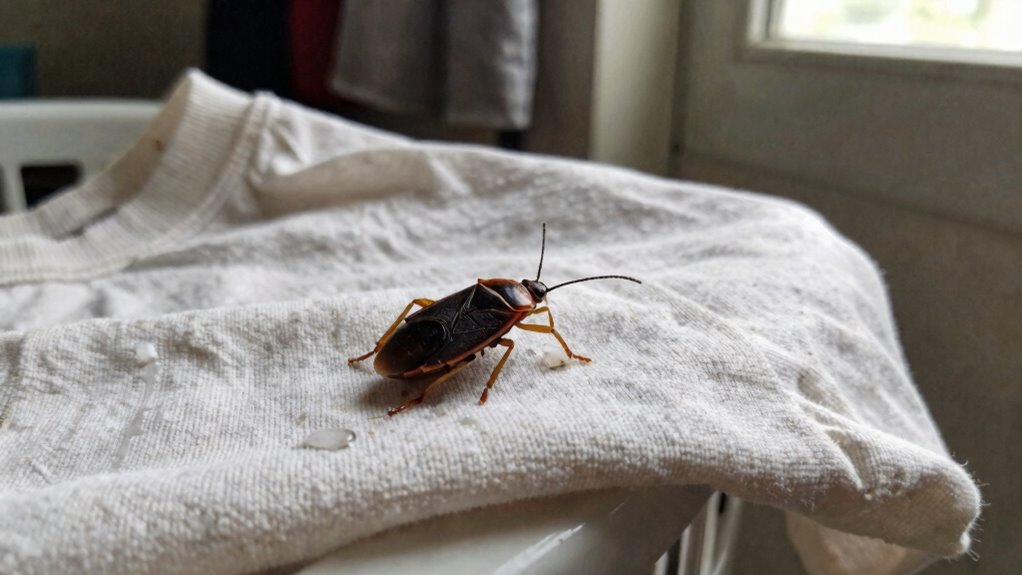
Dry cleaning is a certain bed bug killer. It wipes out every life stage, including eggs, making it a solid option for delicate fabrics you cannot use hot water on.
Dry cleaning safety is high; the chemicals and heat guarantee death. So your silk blouses won’t become bug motels, just take them to a pro for about $10 to $15 per item.
Cold water soaking is a half measure. Soaking clothes in cold water for 24 hours kills all adults and nymphs, but eggs survive.
That means a tiny, stubborn batch could restart your infestation. For the impatient, it is a gamble, but for pricey cashmere, it beats using a clothes iron on delicate. For those preferring a no-wash option, pack TSA-approved sprays that kill bed bugs on contact while remaining safe for luggage.
Use dry cleaning for safe, complete kill. Use cold water only as a last resort, and only if you are okay with rolling the dice on eggs.
How to Prevent Bed Bugs From Hitchhiking in Your Clothes
Prevention beats extermination every time, especially for keeping bed bugs out of your clothes. Practice solid travel hygiene and never place luggage on hotel beds or upholstered furniture.
Use a metal luggage rack instead, since bed bugs cannot climb smooth metal.
For bed bug detection upon return, inspect seams and folds of clothing with a bright flashlight.
Treat suspect clothes by tossing them in a dryer on high heat for 30 minutes. This costs pennies and kills all life stages of a bed bug infestation.
Wash delicate items in hot water at 140 degrees Fahrenheit. You can also freeze them at zero degrees Fahrenheit for four days.
Shake out shoes and bags outside before bringing them indoors. The bottom line is a quick dry cycle beats a months-long infestation headache.
Do it before you unpack, not after you spot a rash. Professional pest control experts recommend this heat treatment for effective clothing protection.
After heat treating clothes, applying boric acid powder to mattress seams and bed frames can target any remaining bugs hiding in the bedroom.
Frequently Asked Questions
Can Bed Bugs Live Inside Shoes or Boots?
Yes, bed bugs can absolutely live inside shoes or boots. These pests are experts at finding dark, tight hiding places like the seams and crevices of footwear.
A thorough inspection of your footwear after travel is critical for early detection. They can survive for months without feeding, tucked inside your loafers or boots.
Heat treatment is your most reliable solution. A dryer set to 120°F for 30 minutes will kill all bed bugs hiding in your shoes.
Freezing can also work, but only at a consistent 0°F for at least four days. A household fridge is usually too warm, so don’t rely on it for pest control.
If you need a proactive bed bug solution, consider a portable heat chamber or a bed bug spray for shoes. These products make it easy to treat footwear without damaging it.
Always check your shoes after hotel stays or public transit trips. Investing in a good bed bug prevention kit can save you from a full blown infestation later.
How Long Can Bed Bugs Survive in a Sealed Plastic Bag?
For survival, bed bugs inside a sealed plastic bag can last two to six months without a meal.
That’s impressively long, frankly, like a tiny, blood‑sucking hibernation period.
This survival time hinges on their lifecycle and ability to slow their metabolism to wait out starvation.
It’s a sad fact for homeowners: this lifespan is shorter than a year but longer than your patience with an infestation.
The bottom line is that a bag alone won’t kill them.
You need to pair sealing with extreme heat or freezing for real results in your pest control treatment.
Do Bed Bugs Prefer Dirty or Clean Laundry?
Bed bugs don’t care if your laundry is clean or dirty. They want your blood, not your scent or fabric softener.
They track you by the carbon dioxide and warmth you produce. So sorting laundry won’t stop a single bed bug from riding home with you.
What matters is fabric texture. Seams, folds, and tags give them perfect hiding spots in your clothes.
Here is your best weapon: heat. Run a hot dryer cycle at 120°F for 30 minutes and you kill every stage of bed bugs, including eggs.
Don’t waste time on a cold soak, it does almost nothing. Instead, toss all your belongings in the dryer on high heat for instant protection.
Have you checked your bedroom for signs of infestation yet? A quick inspection of mattress seams and headboard cracks can save you from a bigger problem later.
If you want a durable solution, pair your dryer treatment with a quality bed bug spray or mattress encasement. That way, you stop bed bugs from finding new harborage in your clean clothes.
Buy a portable heating chamber or a steam cleaner for ongoing prevention. Smart pest control buys add long term peace of mind without harsh chemicals.
Can Bed Bugs Crawl Through Zippers on Suitcases?
Yes, bed bugs can crawl through zippers on suitcases. Those tiny pests slip right through zipper seams, especially if the teeth don’t mesh perfectly.
They’ll then hide in luggage lining or corners, making professional pest control a smart call. To stop them, pack clothes in sealed plastic bags inside the suitcase.
A cheap trick is to use a zipper lock or tape over the seam. It’s not foolproof, but it helps prevent infestations at home.
Bottom line: inspect the lining and seal those gaps before traveling. For reliable bed bug prevention, consider a travel-sized bed bug spray or a suitcase encasement.
Buying a quality luggage protector now can save you from a costly extermination later. Always check your hotel room mattress and headboard for signs of bed bugs.
If you spot any, a thorough pest inspection and treatment is your best defense.
Will Bed Bugs Die in a Hot Car During Summer?
Yes, car heat can kill bed bugs, but survival time depends on the temperature. A car parked in direct summer sun can hit 140°F or more, which is lethal.
The bugs must stay in that heat for at least 30 minutes to die. Any cooler, and they might survive, so a hot car is a decent trap but not a guaranteed oven.
Check the interior temp first with a thermometer. If it’s not blistering, the bugs may outlast the ride, making professional pest control a smarter purchase for complete eradication.


