
Bed bugs vs. mosquito bites: if you’re waking up with itchy welts, telling the difference is key to stopping the problem fast. Bed bug bites appear in straight lines or zigzag trails, often on your back and neck, with a delayed reaction of two to nine days. Mosquito bites are solitary, scattered, and puffy red with a dot in the center, itching within hours. Mosquitoes can transmit West Nile, while bed bugs just need a meal—but both require targeted pest control.
This guide breaks down bite patterns, timing, and telltale signs like rusty sheets to help you identify the culprit. Keep reading for clear, quick guidance and a roundup of the best products to handle each infestation.
At A Glance
- Bed bug bites form clusters or lines; mosquito bites are solitary, random bumps.
- Bed bug bite reactions are delayed 2-9 days; mosquito bites itch within hours.
- Bed bug bites appear in the morning; mosquito bites can occur anytime outdoors.
- Bed bugs require professional extermination; mosquitoes are prevented by removing standing water.
- Bed bugs pose no disease risk; mosquitoes transmit West Nile and Zika.
Why Bed Bug and Mosquito Bites Look So Similar
A red, itchy bump on your arm could be a mosquito’s work or a bed bug’s handiwork, and telling them apart feels like a dermatological guessing game. The real trick is to look at the bite pattern. Mosquito bites are solo acts, random and scattered, like a bad game of connect the dots. Bed bugs, on the other hand, are social biters leaving clusters of three to five bumps in a straight line or zigzag, a trail from crawling across your skin. That’s your first clue for identifying a bed bug infestation. Using interceptor traps under furniture legs can help detect these pests early.
Then there is reaction timing. A mosquito bite stings and itches within hours, fast and furious. A bed bug bite plays the long game, taking days to show up, sometimes up to nine days. You might not even react at all. So if you wake up with mysterious welts that appeared overnight and they are lined up like tiny soldiers, it is likely bed bugs. If it itched immediately, blame the mosquito and consider professional pest control for peace of mind.
What Do Bed Bug Bites Look Like? (Clusters, Lines, and Patterns)
We’ve already covered why bed bug and mosquito bites look so similar. Now it’s time to focus on the signature pattern of a bed bug bite.
Unlike mosquito bites, which appear as lone scattered bumps, bed bug bites form tight clusters. They often create straight lines or zigzag trails across your skin.
This happens because the bug probes multiple times while crawling. That linear arrangement is your telltale clue for identifying a potential infestation.
| Aspect | Bed Bug Bite Signature |
|---|---|
| Formation | Clusters of 3 to 5, in lines or curves |
| Location | Exposed skin: arms, neck, legs |
| Timing | Delayed, often 2 to 9 days |
| Itch level | Mild to intense, varies per person |
| Visual | Red, flat or slightly raised welts |
Bite appearance stays subtle at first, but the reaction timeline stretches. What you notice today might have been last week’s work.
So if you spot a neat row of bites, skip blaming mosquitoes. Check your mattress seams for signs of bed bugs.
After all, bed bugs are rude houseguests who never RSVP. For professional pest control solutions, consider using a six-sided zippered encasement to fully seal out any remaining bugs from your mattress or box spring. Inspect your bedding and headboard closely.
What Do Mosquito Bites Look Like? (Isolated, Random, and Scattered)
Mosquito bites are loners. Unlike bed bugs that bite in neat little lines, a mosquito’s approach is more like a lazy fly by.
The mosquito bite appearance is just a single puffy red bump, often with a tiny dot in the center where the needle went in. Since they are solo operators, the bite location patterns are totally random.
One on your arm, another on your ankle, maybe one behind your knee for good measure. They don’t cluster or line up, because the mosquito lands, feeds, and flies off without crawling around.
This scattered isolated look is the tell. If the bites look like someone threw darts at a map of your body, it is a mosquito, not a bed bug. Products with 20% to 30% DEET are effective for hiking, camping, or backyard barbecues to prevent these bites.
For professional pest control advice, identifying random patterns helps you choose the right treatment. No pattern means pure chaotic irritation, which points to mosquitoes.
Immediate vs. Delayed: How Bite Timing Gives Them Away
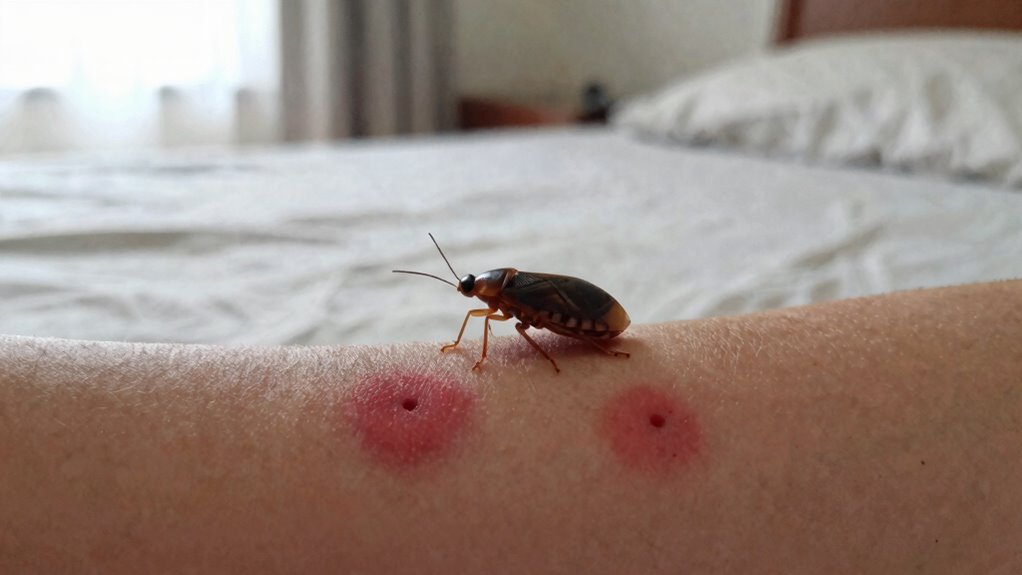
Right out of the gate, the timeline of the itch is your first clue for bite identification. A mosquito bite usually screams for attention within hours, often the same evening.
It’s an immediate, relentless itch, like a tiny alarm clock going off. Bed bug bites, on the other hand, play the long game.
Their reaction can take days, sometimes up to a week, to appear. That delayed symptom timeline makes them sneaky, so you might blame a random itch on dry skin or stress.
Up to one in five people never react at all, which does not help the case. So if you wake up puzzled with fresh welts that arrived overnight but only started itching days later, you are likely dealing with bed bugs, not mosquitoes.
That delayed itch is a key sign for pest control identification. Timing is everything, even in the insect world.
Since a single mated female can lay 500 eggs, catching the first bug is critical to preventing a large infestation from taking hold.
Where Bed Bugs and Mosquitoes Bite on Your Body
Bed bugs avoid clothing, so bites cluster on uncovered areas like the back and neck. Mosquitoes bite anywhere accessible, including arms, legs, and back, often with less pattern.
Bed bug bites appear in tight, linear clusters, a signature of their feeding crawl. Mosquito bites are solitary, scattered randomly, not grouped like bed bug souvenirs.
Check where your clothes end; it’s the best clue for pest control. Bed bugs stick to skin, whereas mosquitoes roam freely across your body. Applying a spray with up to 16 weeks of residual protection can help prevent bed bugs from reaching your skin in the first place.
When Do Bed Bugs and Mosquitoes Actually Bite?
Bed bug bites show up in the morning, often in fresh clusters, since these insects feed as you are asleep, typically between midnight and dawn.
Those bite clusters, lined up like tiny, itchy zippers, are the telltale sign of a nocturnal feast.
Mosquitoes, meanwhile, are crepuscular party animals, most active at dusk and dawn, especially during warmer months.
They are drawn by your carbon dioxide, sweat, and warmth, turning a quiet evening into a battleground.
The timing difference is key: bed bugs deliver a nightly, repeat performance, whereas mosquitoes operate on a schedule you can somewhat plan around.
On the plus side, bed bugs pose no known risk of disease transmission, unlike mosquitoes, which can carry West Nile, dengue, or Zika.
So, if you wake up with a fresh lineup of bites, you are dealing with a home invader, not a backyard pest.
For effective pest control solutions, you can explore professional bed bug treatment options to target these nocturnal feeders directly.
A chemical-free method relies on heat alone between 221°F and 356°F to kill bed bugs and their eggs without toxic fumes.
Which Bite Itches More: and What to Do About It

It is a classic question: do bed bug bites or mosquito bites itch more? Typically, mosquito bites tend to itch immediately and with a sharper intensity, whereas bed bug bites often produce a milder, more persistent itch that builds over days.
Both can drive a person crazy, but the real issue is knowing how to calm the reaction, when to simply scratch and move on, and which signs suggest a scratch has gone too far into infection territory. For fast relief, a topical antihistamine cream or calamine lotion works well on mosquito bites, while a cold compress can dull the deeper, lingering itch from bed bug bites.
If you suspect bed bugs, you should search for local pest control services to inspect your mattress and furniture, since treating the source beats treating the bite. For mosquito bites, reapplying a hydrocortisone ointment every few hours usually keeps the itch under control, but avoid scratching with dirty nails.
Watch for redness spreading beyond the bite, warmth, or yellow discharge, as these are signs of infection that need a doctor’s visit, not just more cream. To prevent future bites, use an EPA-approved insect repellent outdoors and schedule a professional bed bug heat treatment if you find rusty spots on your sheets.
A mild itch that fades within a week is normal, but a bite that swells into a hard lump or starts oozing means you should book an urgent care appointment. When you must scratch, do it with clean hands and then immediately apply a barrier cream or anti-itch gel to reduce bacteria entry.
If the itch keeps you up at night, take an oral antihistamine like cetirizine before bed, and for bed bug control, wash all linens in hot water and vacuum the room’s baseboards. Remember, mosquito bites flare up fast and die down, while bed bug bites linger and often appear in a line or cluster, which helps you tell them apart.
That difference matters because bed bugs require targeted extermination services, while mosquitoes just need you to remove standing water near your home. For any bite that feels hot or painful to the touch, apply a dilute tea tree oil solution, and if that fails, switch to a numbing spray with lidocaine.
Scratching too hard can break the skin, so keep nails short and use a silicone itch reliever tool instead of your fingers. If you see a red streak traveling up your arm or leg, that is a medical emergency; do not wait, go to urgent care immediately.
Final tip: always read the label on topical products, since some contain strong steroids not meant for broken skin, and if you have pets, avoid ingredients like permethrin. For persistent bed bug issues, contact a licensed exterminator who can offer a follow-up inspection, and for mosquito season, install screens on windows and use a fan to keep them away. For long-term indoor pest prevention, consider using ultrasonic pest repellers as a chemical-free, set-and-forget solution that runs silently 24/7.
That way, you can stop thinking about which bite itches more and start focusing on which prevention method works best for your home.
Intensity Levels Compared
Bite for bite, a mosquito’s itch is sharper, but only when comparing fresh wounds. The initial sting is quick, followed by a maddening histamine rush that peaks within hours.
Bed bug bites often start subtly, then swell into a dull ache over days. Their clustered bite patterns create a larger area of discomfort that frustrates longer.
Mosquito bites carry serious disease risks like West Nile and Zika. That threat can amplify the perceived itch, making pest control a top priority. For travel protection, travel-sized sprays under 3.4 oz are TSA-approved and ideal for carry-on luggage.
A fresh mosquito bite wins the instant intensity contest. But a week old bed bug cluster often outlasts a mosquito’s in sheer annoyance and requires professional treatment to stop.
Itch Relief Methods
A mosquito bite delivers a sharper, more immediate itch, but a bed bug cluster wins the longevity prize with days of discomfort.
For mosquito bites, an over-the-counter hydrocortisone cream or a cold compress will knock that sudden itch down fast, usually within minutes.
Bed bug bites require a different, more patient strategy.
Antihistamines help calm the persistent reaction and are a key part of any bed bug treatment plan.
Calamine lotion or baking soda paste provides relief for the long haul.
Avoiding chronic scratching is essential, as it leads to open wounds and infection.
If bites cause severe, unrelenting reactions, allergy testing can pinpoint triggers for both pests.
For targeted pest control solutions, identify the infestation source early.
The bottom line: antihistamines for bed bugs, cold packs for mosquitoes, and no scratching allowed ever.
Contact a reliable exterminator for persistent pest issues.
For mosquito bites, fast-acting formulations like CeraVe Itch Relief Cream can offer relief within minutes and maintain comfort for several hours.
Infection Warning Signs
Watch for the warning signs that turn a simple itch into a full-blown medical detour. Both bites can lead to a secondary scratch infection if you dig in too much, especially when the itch hits hard.
Here are the key infection markers. Redness spreading: A growing halo around the bite signals trouble beyond the original spot.
Warmth and swelling: A hot, puffy area suggests bacteria are moving in, beyond your usual reaction.
Pus or oozing: Yellowish fluid means the body is fighting something and losing. Don’t wait.
Fever or chills: Whole-body signs confirm the infection has left the bite zone. See a doctor fast.
Catch these signs early to avoid needing professional pest control for an ongoing infestation. Clean bites with soap and water, skip the scratching, and apply a basic antibiotic ointment like Neosporin, around $5. Boric acid powder is a common treatment for bed bug infestations, but it should never be applied directly to skin or bites.
If pus or fever shows up, a doctor’s visit is your best bet. Don’t gamble on a few bucks.
Bottom line: calm the itch first with a reliable topical cream. Save the skin second with proper care.
Can Mosquito Bites Make You Sick? (Bed Bugs Can’t)
Features vs. Drawbacks:
Mosquitoes can transmit serious diseases, so you need repellent or netting costing $5 to $50.
Bed bugs pose no disease risk, but removing them requires professional pest control costing $200 to $1,500.
Bottom line: For health safety, prioritize mosquito protection and use reliable bug repellent.
Bed bugs are annoying but not dangerous, so focus on mosquito bite prevention first. For example, DEET-based formulas provide up to 10 hours of defense against disease-carrying insects.
Blood Stains, Shed Skins, and Other Proof of Bed Bugs
Blood stains, shed skins, and tiny white eggs are the real calling cards of a bed bug infestation. These physical clues are far more reliable than guessing from bites alone.
When inspecting a mattress, look for rust colored dots on sheets or pillowcases. These blood stains come from crushed, engorged bugs and look like a flicked rusty pen.
Rust-colored dots on sheets are crushed, engorged bed bugs—look for that flicked-pen stain.
Check mattress seams for translucent, empty exoskeletons the size of a flaxseed. These shed skins are bug jackets they have outgrown.
Look for dark, ink like fecal smears on bedding or wood from digested blood. This squiggly mess is a key sign you need professional pest elimination.
Search crevices for apple seed shaped live bugs or pinhead sized white eggs. Unlike mosquito proofing which requires water removal, these signs demand thorough vacuuming and expert treatment.
Do not rely on repellents for bed bugs. Find these markers and you have found the problem that needs immediate pest control action. A chemical-free heat treatment can eliminate all life stages, including eggs, without harsh pesticides.
Prevent Mosquito Bites Without an Exterminator
Unlike bed bugs, mosquitoes won’t lurk in your mattress or leave a trail of molted skin. They prefer to crash your evening barbecue instead.
Preventing them is bite prevention without a professional exterminator. Their breeding grounds are simple, any standing water.
| Prevention Tactic | Why It Works |
|---|---|
| Dump standing water in buckets, birdbaths, or gutters. | Mosquitoes lay eggs there. Remove the water, remove the pests. |
| Use EPA-registered mosquito repellents with DEET or picaridin. | These block your scent, so skeeters lose interest and stop biting. |
| Install or repair window screens. Fix tears with mesh tape for a physical barrier. | This keeps mosquitoes out for under ten dollars. |
| Wear long sleeves and pants at dawn or dusk. | Less exposed skin means fewer targets for mosquito meals. |
For your yard, citronella candles work but only up close. For longer outdoor activities, DEET-based sprays are safe for children over two months old and provide lasting protection. Bottom line, deny them water then use repellents.
No exterminator is needed for effective mosquito control. These pest management tips will keep your yard bite free.
Call a Pro for Bed Bugs; Handle Mosquitoes Yourself
Bed bugs hide deep inside mattress seams and baseboards. Only a professional pest control heat treatment, costing around one to two thousand dollars, can reach them. To target these hiding spots yourself, apply a food-grade diatomaceous earth to cracks and crevices, but it is not a substitute for professional intervention.
Bed bugs hide deep inside mattress seams and baseboards—only a professional heat treatment, costing $1,000–$2,000, can reach them.
Mosquitoes breed in standing water, so you can dump birdbaths and use a repellent with DEET yourself. No professional pest control service is needed for these outdoor pests.
Bed bugs bite sleepers in linear rows, while mosquito bites are isolated and random. Allergic reactions to bed bug bites can take days to appear, making DIY detection nearly impossible.
The bottom line is to call a pro for bed bugs. These stubborn roommates you did not invite require a professional exterminator.
Handle mosquitoes yourself with a bucket and bug spray. Simple pest control steps like removing standing water and using repellent keep them away.
Frequently Asked Questions
Can Bed Bugs Live in My Clothes or Hair?
Bed bugs can certainly live in your clothes, but they won’t take up residence in your hair. These pests often hitch a ride from luggage, secondhand furniture, or shared laundry facilities.
They hide in seams, folds, and pockets, so you need to inspect those areas after travel. Don’t bother checking your scalp, because bed bugs lack the grip for hair or skin.
Hair myths are false, unlike lice, which are designed to cling. Bed bugs prefer fabric and mattresses, so focus on crevices and bed frames.
For peace of mind, steam treatment kills bed bugs in clothing for under 30 dollars. Prevention beats panic, and a quick inspection saves you from a full blown infestation.
If you’re looking for effective pest control products, consider a handheld steamer or a bed bug proof mattress encasement. These smart purchases stop bed bugs from spreading and protect your home.
Do Bed Bug Bites Appear During the Day?
It is a common bite timing myth that bed bug bites appear during the day. The truth is bites usually show up in the morning, after the bugs feed at night.
Daytime visibility is rare because bed bugs are nocturnal and avoid light. If you see new bites mid-day, it likely isn’t them.
Their feeding schedule is strictly after dark, so daytime detection points to something else, like mosquitoes, which bite anytime.
For reliable pest control solutions, inspect your mattress seams and box springs for live bugs or dark spots. Consider using a bed bug encasement to trap existing pests and prevent new infestations.
Contact a professional exterminator for a thorough inspection and eco-friendly treatments. Investing in early detection tools, like interceptors, can help you confirm an infestation quickly.
Can Mosquito Bites Cause Scars or Dark Spots?
Yes, mosquito bites can cause scars or dark spots, especially if you scratch them. This condition is called post inflammatory hyperpigmentation, and it leaves flat, dark spots on your skin.
These mosquito bite marks usually fade on their own over weeks or months. But picking or excessive scratching will make the hyperpigmentation worse and last longer.
To prevent scarring, resist the urge to itch and apply a cold compress right away. You can also use over the counter creams with hydroquinone or vitamin C to fade dark spots faster.
If you want to stop bites before they happen, invest in a quality mosquito repellent or a yard spray for pest control. For serious infestations, consider a professional pest control service to keep your outdoor space bite free.
The bottom line is treat bites gently, or those dark spots will linger like uninvited guests. For best results, combine a good skin care routine with proactive pest control products to protect your home and skin.
How Long Do Bed Bug Bites Last on Skin?
Bed bug bite duration varies, usually lasting three to ten days on the skin. The healing timeline depends on your individual reaction; some see marks vanish in a week, others take up to two weeks.
For most people, the bite is relatively short lived and annoying but minor. Many find that an over the counter anti itch cream provides effective pest control relief at home.
Delayed reactions are common, meaning the bite itself fades quickly in about a week. However, any lingering itch or discoloration might stick around a bit longer.
If you’re experiencing persistent bites, consider hiring a professional pest control service for a thorough inspection. Knowing what products work best for bed bug removal can help you choose a smart purchase for long term prevention.
Keep your mattress encased and vacuum regularly as part of your integrated pest management routine. This practical step reduces the chance of new bites and speeds up the healing of existing ones.
Are There Home Remedies for Bed Bug Bites?
Home remedies exist, but they treat the itch, not the bed bugs themselves. Oatmeal paste, made from colloidal oats and water, calms inflamed skin for about thirty minutes of relief.
Critical oils like tea tree or lavender, diluted properly, may reduce swelling, though they’re not scientifically proven. Don’t expect miracles. These are stopgaps for temporary comfort.
For real bed bug control, you’ll need professional pest control services. Otherwise, you’re just soothing a recurring problem.
Try these remedies if you need quick relief, but know the source demands harder action. For a lasting solution, look into heat treatments or chemical sprays from trusted pest management companies.
If you’re searching for “bed bug exterminator near me” or “best bed bug killer,” choose products with proven efficacy. Don’t let a few bites turn into a full infestation.
Buy a quality mattress encasement and monitor with interceptors. Your purchase should target the bugs, not just the symptoms.


