
A bed bug infestation can feel impossible to outlast. You might wonder if simply leaving your home empty will starve them out. The surprising truth is that adult bed bugs can survive for over a year without feeding, but only under specific conditions.
Cold and humid environments drastically extend their lifespan, while warm, dry air speeds their demise. This guide explains exactly how temperature and humidity affect bed bug survival, and why waiting them out is rarely the winning strategy.
At A Glance
- Adult bed bugs can survive over a year without feeding in cool conditions.
- At 26°C, adult males live 106 days without a meal; females last 99 days.
- First instar nymphs survive up to 38 days without blood at warm temperatures.
- Cooler temperatures around 7°C allow nymphs to survive 210–213 days unfed.
- Higher humidity extends survival; low humidity reduces it to 30–45 days.
How Long Can Bed Bugs Survive Without a Meal?
Adult bed bugs can survive without a meal for almost a year in chilly conditions, which sounds like a horror movie premise.
Adult bed bugs can survive without a meal for almost a year in chilly conditions.
At a warm 26°C, first instar nymphs max out at 38 days, whereas adult males last 106 days.
Nymphal molting requires that first blood meal, so young bugs starve faster.
Egg viability drops fast without fresh feeding, and females need blood every few days to lay their daily five eggs.
In a vacant apartment study at 23°C, large nymphs and adults turned up 155 days later.
That is five months of hiding, just waiting for a host.
So if you are clearing a rental, do not assume a month of emptiness solves it.
Plan for at least half a year when scheduling pest control treatments.
Professional extermination is crucial because bed bugs can stay hidden for months.
Spot inspections after a short vacancy may miss surviving infestations.
Non-toxic, pesticide-free traps ensure safe detection without chemical exposure during this extended survival period.
Why Is Temperature the Biggest Factor in Starvation Survival?
Cooler temperatures (around 7°C) allow first instars to survive 210 to 213 days without feeding, a stunning endurance trick. At 26°C, that same nymph dies in 38 days.
Warmth revs their metabolic engine faster, burning through energy reserves like cash on vacation. This isn’t luck; it’s environmental adaptation honed over millennia.
They’ve evolved to wait out cold periods, not hot ones. Lower temps mean slower respiration, less water loss, and longer starvation survival.
For homeowners facing an active infestation, this is a key pest control insight: professional heat treatment for bed bugs kills them quickly. Cold doesn’t kill, it just delays the inevitable, which is why thermal remediation is your fastest path to a bed bug free home.
If you’re asking how to get rid of bed bugs fast, temperature dictates the timeline, and heat is your winning card.
Turning up the thermostat or hiring a licensed exterminator for whole room heating forces rapid dehydration and death. Cooler rooms only buy you weeks, not a solution, so don’t rely on winter to solve the problem.
For long term bed bug prevention, understand that starvation survival is a waiting game, but heat breaks that waiting game in hours.
Schedule a professional inspection if you suspect an active bed bug infestation, because timing is everything in pest control.
Does Humidity Help Bed Bugs Live Longer Without Eating?
Humidity does help bed bugs live longer without eating, especially when the air is both damp and cool. Higher moisture levels slow down water loss, so a bed bug at 70% humidity can survive weeks longer than one in a dry room.
That said, humidity is not the main survival factor, but it works alongside temperature and group size to extend their lifespan. If you are dealing with an infestation, controlling indoor moisture is a smart part of your pest control strategy.
For homeowners seeking effective bed bug treatment, reducing humidity can make a real difference in how long they linger between meals. Pair this with targeted inspection and professional extermination services to break their survival cycle.
Cooler rooms plus higher dampness can stretch their fasting period, which is why you might find them in basements or unventilated spaces. To speed up elimination, use a dehumidifier and keep your home dry, since that cuts their edge.
If you are shopping for bed bug sprays or heat treatments, remember that humidity alone won’t kill them, but it does buy them time. Focus on integrated pest management, like steam cleaning and mattress encasements, to outlast their natural endurance.
A dry environment forces them to burn energy faster, so lowering moisture is a practical, friendly step in your extermination plan. Just know that even with high humidity, they still need a host eventually, so vigilance is your best ally.
High Humidity Boosts Survival
Yes, humidity matters. Higher humidity slows water loss in bed bugs, boosting starvation survival.
In dry conditions, they dehydrate faster. Damp air buys them precious weeks for pest control efforts.
| Humidity Level | Survival Time (approx.) |
|---|---|
| Very low (10-20%) | 30-45 days |
| Low (30-40%) | 55-70 days |
| Moderate (50-60%) | 80-100 days |
| High (70-80%) | 110-130 days |
| Very high (>80%) | 140-160+ days |
But there is a catch. Extreme humidity invites mold growth in harborage limits, killing bed bugs faster than starvation itself.
Think of it like a damp basement. It is okay for a spell, but eventually it gets gross and ruins bed bug harborage sites.
The ideal sweet spot for bed bug treatment success is 60 to 70 percent humidity. This range provides enough moisture to help them survive without turning their hiding spots into a science experiment gone wrong.
However, maintaining humidity levels between 40 and 50 percent is the recommended range to prevent pest reproduction and survival, which directly contradicts this higher survival window.
Cooler Climate Extends Longevity
A chill in the air changes the whole game for bed bugs, and cooler longevity is a real survival factor for these pests. At a brisk 7°C, first‑instar nymphs can survive 210–213 days without feeding, which is roughly seven months of patient waiting.
That extended window makes climate conditions a critical variable in any bed bug treatment plan, since humidity also plays a role, but temperature acts as the true slowdown switch. In warm conditions around 26°C, the same nymph dies in just 38 days, so a cool, damp home doesn’t just feel drafty, it hands bed bugs a longer lease on life.
For anyone scheduling pest control services, know that dropping your thermostat won’t starve them faster, so cold alone is not a reliable eradication method. The bottom line is that cooler temps extend survival, so focus on heat treatments, professional inspection, and targeted insecticide applications for immediate contact kill and residual protection. If you’re comparing extermination options, ask about integrated pest management that uses heat or desiccants, since these work faster than relying on ambient chill. A proactive approach with monitoring tools and follow-up visits is your best bet for lasting bed bug removal, not just a colder room.
Larger Populations Last Longer
What happens when dozens of bed bugs gather in one room? Does sheer numbers tip the survival odds in their favor?
Yes, but not because they share snacks. Colony dynamics here hinge on microclimate.
Think of it like a crowded subway car. Body heat and respiration raise local humidity.
Those density dependent effects are real. Higher humidity, even modestly, slows water loss through their waxy cuticles.
Drier air is lethal faster. A humid cluster buys extra days without a blood meal.
For a homeowner, this means a heavy infestation in a humid bedroom can outlast sparse bugs in a dry living room by weeks. This complicates treatment timing.
Don’t assume empty means dead. Kill them all, or the colony’s humidity advantage extends their survival.
Measure humidity and treat accordingly. Never underestimate a crowd when you need effective bed bug control.
Structured pest management relies on understanding these microclimate factors. A professional inspection can reveal hidden harborage zones.
Always target both the bugs and the conditions that keep them alive. Complete elimination requires addressing environmental humidity. Maintain humidity levels between 50-60% to create an environment unsuitable for silverfish and other moisture-loving pests.
How Long Can Different Life Stages Go Without Feeding?
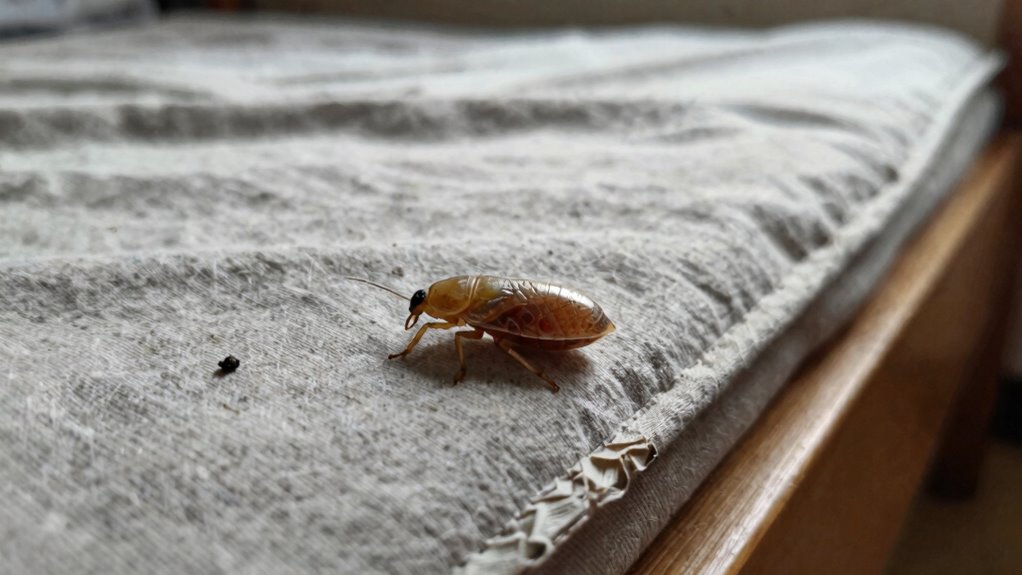
First instar nymphs survive about 38 days without feeding at warm temperatures like 26°C. Adult females actually fare worse than males, lasting up to 99 days compared to 106 days for males.
First instar nymphs survive about 38 days without feeding at warm temperatures like 26°C.
This difference likely comes from the high energy cost of egg production and greater desiccation risk. Larger nymphs show more resilience and can outlast their younger counterparts.
Nymphal diapause, a dormant state, can dramatically extend survival especially in cooler conditions. For effective pest control, targeting first instars early in the infestation cycle is key.
First instars survive roughly 38 days in warm conditions but can last up to 210 days in cool temperatures. Adult males endure up to 106 days without feeding.
Adult females survive up to 99 days, yet at 13°C they can last over 562 days. Younger nymphs are the weak link in the population, so early intervention improves control success.
What Happens to Nymphs Without a Blood Meal?
Nymphs, or baby bed bugs, cannot survive as long as adults without a blood meal. A first or second instar nymph typically starves after 52 to 69 days at room temperature.
Cooler conditions like 7°C can stretch that survival to over 200 days. That makes them patient little freeloaders in an empty home.
If you are hoping a vacant apartment will starve the infestation out, think again. These youngsters can wait for months, much like a teenager avoiding a summer job.
For effective bed bug treatment, professional pest control is often needed to break their lifecycle. Without a proper heat treatment or chemical application, nymphs can linger long after the last tenant leaves.
Unlike ants, where plant-based essential oils can offer immediate control, bed bugs require more aggressive methods to fully eliminate an infestation.
Nymphal Starvation Periods
The bed bug nymph faces a serious problem if it cannot find a blood meal. Early stage nymphs, the first and second instars, depend on that single feed to grow to the next stage.
Without a blood meal, molting gets delayed and the nymph simply cannot develop. In real world conditions around 23°C, these tiny pests survive starvation for about 52 to 69 days.
That is not a break, it is a slow countdown toward death. Colder temperatures slow their metabolism down significantly.
At 7°C, first instars can survive for 210 to 213 days by essentially freezing their hunger. But at a warm 26°C, that survival window drops to just 38 days.
For bed bug control, this means a nymph’s best chance is to find a host fast or hope for a cold snap. Without blood, they do not grow, they just wait.
Waiting is a lousy career move for a bed bug. So if you are dealing with an infestation, professional pest control treatment is key to breaking this cycle.
Nymphs are fragile, and they need a constant supply of blood meals to survive. Eliminating their food source through thorough inspection and treatment is the most effective way to stop them from maturing. Using industrial grade boric acid in cracks and crevices can help eliminate these nymphs before they mature.
Temperature Impact on Survival
Temperature likes to play games with a starving bed bug nymph. A cold environment, around 7°C, lets first instars survive over 210 days without feeding.
Warm temperatures, around 26°C, cut that to just 38 days. Cold temps trigger cold hardening, slowing metabolism and extending life.
Heat forces a rapid metabolism, burning energy fast. The results are striking for effective pest control strategies.
At 7°C, nymphs may survive 210 to 213 days, but even a small rise reduces that significantly. At 26°C, maximum survival plummets to 38 days, a huge difference for a tiny bug.
Field studies, with average 23°C, show large nymphs surviving 57 days without a host. This proves climate matters for proactive treatment and prevention plans.
Knowing these limits helps you time heat treatments or cold interventions. For long term infestation control, focus on eliminating hiding spots and regular monitoring. Using non-repellent formulas lets pests pass through treated zones until the insecticide takes full effect.
Can Adult Bed Bugs Outlast Younger Ones During Starvation?
Yes, adult bed bugs can survive longer without blood than younger nymphs, but the reality involves key trade-offs. Adults have larger energy reserves and slower metabolisms, making them more resilient during starvation.
Nymphs, especially early instars, need blood to molt and grow, which leaves them far more vulnerable. Pest control experts often target nymphs first, as they die faster and break the reproductive cycle.
| Life Stage | Survival at 26°C (days) | Key Limitation |
|---|---|---|
| 1st instar | 38 | Must molt to survive |
| Adult male | 106 | Bigger fat stores |
| Adult female | 99 | Egg-laying drains energy |
For effective home treatment, focus on eliminating visible bugs and eggs before a starvation period begins. Older bed bugs can outlast younger ones, so a thorough inspection is needed to remove all life stages. If you are planning a DIY bed bug elimination, remember that adults may hide for months without feeding. Heat treatments or professional fumigation often work faster than relying on starvation alone. Residual sprays and vapor pouches offer long-lasting protection inside luggage for up to two weeks or 60 days.
What Happens When Hosts Leave a Vacant Apartment?
When a host leaves a vacant apartment, bed bugs don’t panic. They wait calmly instead of causing an emergency.
Apartment abandonment triggers a slow survival mode where they stop moving to conserve energy. Here is what happens during that wait for a pest control solution.
Apartment abandonment triggers a slow survival mode, stopping movement to conserve energy.
They hunker down in baseboards, furniture seams, or electrical outlets. This reduces their movement by up to 90 percent during the vacancy.
Nymphs slow their growth and stop molting until a blood meal appears. A host vacancy can stall an infestation for weeks, making professional bed bug treatment essential.
Adults will cannibalize each other only on rare occasions. They prefer to starve silently for 134 days or more in field conditions.
They do not panic and they do not leave the apartment. They simply wait for you to return, so early pest inspection is critical to prevent a resurgence, though laundry additives can help kill bugs on fabrics during washing.
How Long Do Bed Bugs Live in a Warm Home Without Eating?
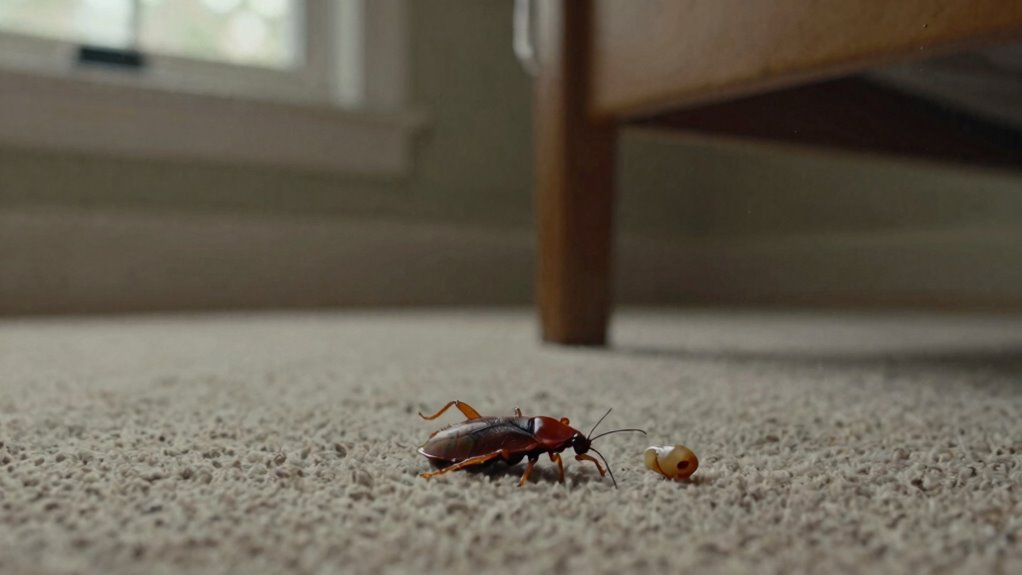
Temperature plays a huge role in bed bug survival without a meal. In a warm home around 26°C, first‑instar nymphs max out at about 38 days without feeding, whereas adult males can last up to 106 days.
Humidity likewise matters, with higher moisture levels typically helping them hang on a bit longer. For effective pest control, focus on heat treatments and reducing clutter to starve hidden infestations.
A professional exterminator can target adult bed bugs that survive long fasting periods. Homeowners often ask how long bed bugs live without food to plan their DIY treatment timeline.
Understanding these survival limits helps you choose the right pest control products and strategies. Keeping your home dry and warm may buy you time, but active removal is always the fastest solution.
Temperature Affects Survival
Since a warm home speeds up a bed bug’s metabolism, it dramatically shortens how long it can survive without a blood meal. At a toasty 26°C, those pests burn through reserves fast, with nymphs lasting about 38 days and adults up to 106.
That’s still long enough to mess with your sanity, so professional pest control is key. In a warm environment, nymphs die within 38 days but grow quickly if they find food.
Adults survive 99 to 106 days, with females pausing mating and egg production when starved. Field results show large nymphs and adults reappearing after 57 to 155 days in vacant apartments, even at 23°C.
For effective bed bug treatment, don’t rely on waiting them out. Contact a pest management expert to inspect and eliminate infestations fast. Instead, apply a food-grade diatomaceous earth in cracks and crevices to mechanically kill bed bugs by dehydration within 48 hours.
Humidity Impacts Longevity
Humidity has a major impact on how long bed bugs can survive without feeding. In a warm home near 26°C, higher humidity slows water loss and helps them live longer.
Low humidity creates dry conditions that dry bed bugs out much faster. This reduces their desiccation resistance, meaning they struggle to avoid drying up.
Nymphs and adults both last longer in damp environments. But even with high humidity, adults rarely exceed 106 days without a blood meal.
To control an infestation, lowering indoor humidity can speed up bed bug die-off. Combining this with targeted pest control treatments improves your chances of full elimination. Low humidity, similar to dehydration-based traps for yellowjackets, accelerates pest die-off by removing moisture from the environment.
| Condition | Humidity Level | Survival Time (days) |
|---|---|---|
| High humidity | 75%+ | 80–106 |
| Moderate | 50% | 50–70 |
| Low humidity | 30% | 30–45 |
Using a dehumidifier in affected rooms helps create a hostile environment for bed bugs. This practical step works alongside professional bed bug treatments for faster results.
Why Does a 5-Month Starvation Window Make Eradication Hard?
A five month starvation window turns bed bug eradication into a waiting game landlords and tenants can’t afford to win. This happens because these pests don’t just sit tight. They roam, making eradication timelines unpredictable.
Hunger triggers dispersal, pushing bugs from furniture into walls, baseboards, and even light switches. This spreads the infestation and makes targeted bed bug treatment much harder.
Hunger drives bed bugs to scatter, hiding in walls and switches, making treatment far harder.
Adult bed bugs can survive 99 to 134 days without feeding according to field studies. This means a vacant unit stays infested for months, requiring prolonged pest control monitoring.
All life stages must be starved out simultaneously, but nymphs die faster than adults. This staggered die off complicates your treatment schedule and demands follow up inspections.
The five month window means every missed spot is a ticking time bomb. You will need repeat treatments and thorough inspections long after a unit empties, delaying successful elimination. Interceptors with smooth walls provide a reusable, non-toxic option for monitoring and trapping these roaming bugs during the extended starvation period.
Does Starvation Force Bed Bugs to Spread Through the Apartment?
Bed bugs don’t just wait around for a free meal. Starvation doesn’t force them to spread, but it strongly encourages it.
As the feeder density in a room drops, meaning fewer humans to bite, these pests shift their aggregation behavior.
They move from cracks and crevices to scout new territory, often wandering along baseboards and under doors.
This isn’t desperation, it’s instinct; they’re wired to search for a blood source, which is why vacant apartments see higher bed bug activity.
You’ll find them crawling through electrical outlets, along pipes, or into shared walls, making containment a real challenge.
Think of it as a slow, methodical exodus, not a stampede, just persistent tiny nomads looking for a warmer host.
For effective bed bug control, focusing on early detection and professional pest management is key.
If you suspect an infestation, scheduling a bed bug inspection and using targeted treatments like residual sprays or steam can stop their spread.
They aren’t panicking, but they are exploring, so sealing cracks and installing door sweeps are smart prevention steps.
What Should You Do When Treating an Empty Apartment?
Treating an empty apartment is both a blessing and a puzzle wrapped in a six-legged mystery.
Treating an empty apartment is both a blessing and a puzzle wrapped in a six-legged mystery.
With no one around, bed bugs can survive 4 months or more.
Your strategy needs to match their stubbornness.
First, deploy passive monitors by placing ClimbUp interceptors under every bed leg.
These cost about $15 for a six-pack.
Also dust along baseboards with CimeXa, a silica powder that kills bugs within 48 hours through dehydration.
Next, coordinate with neighbors because bed bugs travel through walls.
Inspect adjacent units and hallways using a flashlight and a heat-producing tool like a ZappBug oven for $200 to treat furniture.
Finally, set a tenant re-entry protocol after heat treatment costs $1,000 to $3,000 for a 500-square-foot apartment.
Install bed bug monitoring traps for 30 days.
Schedule a follow-up inspection before allowing tenants back.
No bugs for two weeks? Then you can declare victory with a wink.
Frequently Asked Questions
Can Bed Bugs Survive Longer in Groups Than Alone?
Yes, bed bugs can survive longer in groups than alone, and this is a well-known phenomenon called the huddle effect. When bed bugs cluster together, they retain moisture and body heat far better, which is critical in cooler environments where a lone bug would quickly dehydrate or chill.
Each starved bed bug lasts noticeably longer when huddled with others because the group reduces individual energy loss, essentially slowing down their metabolism. A larger initial infestation also means more survivors after weeks without a blood meal, so the group dynamic gives them a real edge in empty homes or vacant rooms.
If you’re dealing with a suspected bed bug problem, don’t assume a few stragglers will die off on their own, because groups are built to endure. For effective bed bug control, you’ll want to act fast with proven treatments like steamers, desiccant dusts, or professional-grade insecticides that break up those clusters.
Targeting the harborage areas, such as mattress seams, box springs, and baseboards, is essential because that’s where huddling happens. Consider buying a bed bug proof mattress encasement and interceptors for bed legs, as these tools trap bugs and cut off their group survival advantage.
Remember that heat treatments work best on whole rooms, since they penetrate deep into cracks where bed bugs aggregate. If you’re comparing pest control products, look for EPA registered sprays or powders that list bed bugs on the label, and always follow the reapplication schedule.
For severe infestations, hiring a licensed exterminator is often the smartest purchase because they use commercial grade heaters and vacuums. Ultimately, a lone bug is vulnerable, but a group is a resilient pest, so your buying decision should prioritize breaking that huddle fast.
Do Female Bed Bugs Live Longer Without Food Than Males?
Female bed bugs actually live slightly shorter without food than males, about 99 days versus 106 days at warm temperatures. This sexual dimorphism relates to metabolic rates, where females burn energy faster for egg production.
So while both sexes are impressive survivors, the gents edge them out by a week. It is like a marathon, but with a blood meal finish line.
If you are dealing with an active infestation, understanding bed bug survival without feeding helps you time your treatment. For effective pest control, use a targeted residual spray or desiccant dust to kill both males and females before they can feed again.
For long term prevention, focus on cracks and crevices where bed bugs hide. Pair your insecticide with a bed bug mattress encasement and interceptors to monitor activity.
For best results, combine chemical and non chemical pest control products. This integrated approach ensures you eliminate all bed bugs, even the tougher males.
Can Bed Bugs Starve to Death or Do They Always Find a Host?
Yes, bed bugs can absolutely starve to death, and their survival time depends heavily on temperature and life stage.
Adults might last over a year in cold lab conditions, but in a real home with normal warmth and activity, that drops to a few months.
Nymphs die much faster, especially without a blood meal, since they need feeding to molt and grow.
A vacant apartment is living proof: without a host, the population collapses within weeks to months, not years.
That means they don’t always find a host, which is why leaving a room empty and sealing cracks works as a slow, free control method.
But if you’re dealing with an active infestation, don’t wait for starvation to do the job, because it’s unpredictable and risky.
For fast results, you’ll want a targeted bed bug spray or dust, paired with a quality mattress encasement to trap any stragglers.
Using a professional-grade residual insecticide in baseboards, bed frames, and luggage seams gives you the best chance of breaking their lifecycle before they reproduce.
If you’re asking “do bed bugs starve to death” for a pest control purchase decision, know that prevention beats patience every time.
Buy a bed bug interceptor for bed legs and a high-efficiency vacuum first, then treat active areas with a product labeled for bed bugs.
Starvation works as a last resort, but it’s slow and leaves room for re-infestation if you miss a hiding spot.
How Long Can Bed Bug Eggs Survive Without a Blood Source?
Bed bug eggs can survive without a blood source for 10 to 14 days at room temperature. The egg stage depends on warmth, not feeding, to trigger hatching.
Cooler conditions stretch survival to a few weeks, but dry air kills them much faster. For effective pest control, remember that eggs need heat above 70°F to hatch successfully.
Hatching slows down below 50°F and often fails entirely. Since no blood is needed inside the egg, they are simply born hungry and ready to feed.
The bottom line is to control heat and humidity to stop eggs from hatching. Don’t wait for them to starve use targeted bed bug treatment products to break the cycle early.
Does Pesticide Resistance Help Bed Bugs Survive Starvation Longer?
Current evidence does not support pesticide resistance directly helping bed bugs survive starvation longer.
Resistance involves physical adaptations like thicker cuticles or metabolic suppression of toxins, not an enhanced ability to fast.
Survival without feeding depends on factors like temperature, humidity, and life stage, not chemical tolerance.
A resistant bed bug starves just as fast as a non-resistant one under the same conditions.
For effective control, trust thorough heat treatments or desiccants over relying on resistance affecting hunger.


