
Getting rid of ants naturally doesn’t have to be a guessing game. In 2024, the simplest approach still starts with identifying the species, sealing cracks, and disrupting their scent trails with vinegar or soap. For persistent colonies, the right baiting strategy can wipe them out in about two weeks. Below, you’ll find the best natural supplies, practical notes on what actually works, and a clear rundown of what’s worth buying for your home.
At A Glance
- Wipe ant trails with vinegar or soapy water to disrupt pheromones.
- Seal cracks and gaps around foundation and windows to block entry.
- Eliminate food and water sources by cleaning spills and fixing leaks.
- Apply food-grade diatomaceous earth along entry points to damage exoskeletons.
- Use boric acid baits in cracks for stomach poison control.
Identify the Ant Species First (Carpenter vs. Pavement)
Before grabbing a spray bottle, you must identify whether you’re dealing with carpenter ants or pavement ants.
Identify the ants before you grab a spray bottle.
Carpenter ants are large, dark, and often black, while pavement ants are smaller and brownish in color.
Carpenter ants signal a moisture problem, as they nest in damp, rotting wood, so finding them means structural repair is likely overdue.
Carpenter ants are often resistant to typical baits, so specialized gel baits or targeted formulas are required for colony elimination.
Pavement ants nest in cracks near foundations or sidewalks, and they’re happy with crumbs and leftover food scraps.
Look for telltale sawdust piles near baseboards or window sills, those are carpenter ant calling cards.
Use a flashlight to trace their trail routes along edges and corners; five minutes of inspection beats spraying blindly.
If you spot carpenter ants, check for leaky pipes or a soggy sill plate, and fix that leak or replace the rotten board.
That solves half the battle before you ever apply a treatment, because pests follow moisture and food sources.
Wrong species means wrong treatment, which wastes your time and money on ineffective pest control products.
So identify the ant species first, then choose a targeted bait or residual spray that matches the nesting habit.
For pavement ants, sealing cracks in the foundation and wiping down counters removes their food supply and entry points.
For carpenter ants, you’ll need a professional inspection for hidden nests in walls or roof eaves, plus a moisture audit.
Bottom line: identify first, then act, and save the vinegar spray for a cleaning day, not a pest emergency.
That practical approach cuts costs and gets you closer to a pest-free home without guesswork.
Wipe Out Scent Trails With Vinegar and Soap
Vinegar and soap are the one-two punch for ant trails. Vinegar breaks the chemical path, and soap dissolves the pheromones ants leave behind.
A quick spray of a 50/50 vinegar-water mix or a squirt of dish soap in water works wonders. Wiped over counters and baseboards daily, this simple pest control solution keeps the scent map from ever forming.
It is not glamorous, but it is cheap and non toxic. For anyone seeking ant prevention tips, this homemade spray works better than chasing ants with a shoe.
Though that is still fun. Just remember to reapply after cleaning to maintain your scent trail removal routine. For a more persistent defense, plant-based sprays like those with peppermint oil offer contact kill and long-lasting repellent action.
Vinegar Breaks Trails
Vinegar breaks the invisible chemical trails ants follow. A quick wipe with soap and water becomes tactical demolition.
Mix vinegar one to one with water to erase the scent path fast. Lost scouts will wander like confused commuters.
| Action | Effect |
|---|---|
| Wipe door steps | Stops trails instantly |
| Spray baseboards | Ants scatter randomly |
| Repeat at dawn | Keeps routes closed |
Dilution costs pennies a gallon, so reapplication stays affordable. But trail work is not nest work.
Vinegar only destroys trails, it does not kill the queen. For a chemical-free alternative, diatomaceous earth works mechanically to damage ant exoskeletons and dry them out. For lasting pest control results, pair with moisture control and prompt organic waste removal.
Leaky sinks and spilled crumbs send fresh replacement troops each day. Fix the faucet, sweep the whole floor, and reapply vinegar every dawn.
Repeat this ant control routine to block entry points and maintain a barrier. Consistent pest management prevents reinfestation.
Soap Erases Pheromones
The humble dish soap bottle deserves some credit too. It doesn’t just clean grease, it genuinely erases the invisible pheromone trails ants march along.
A simple squirt of dish soap mixed with water breaks down the chemical markers. This leaves confused foragers wandering aimlessly, making it a cheap and effective home pest control trick without the stink of vinegar.
Mix about a tablespoon of liquid soap per quart of water in a spray bottle. Douse the baseboards, windowsills, and any traffic lanes you spot.
The soap disrupts their GPS, so to speak. For ant control solutions, it is likewise perfect for wiping down counters after a spill, but keep it light to avoid residue.
For a stronger follow-up, plant-based sprays like EcoVenger use geraniol and peppermint oil to kill ants on contact while staying safe around kids and pets.
Daily Surface Wiping
When a cookie jar sits empty on the counter, it’s not the lack of snacks that brings ants. It’s the invisible breadcrumb trail left behind.
Daily surface wiping with a vinegar and soap solution is the unsung hero of pest control. This cheap, effective ritual erases those chemical pheromone maps and blocks ant infestations.
This simple habit does double duty by cleaning grime and confusing scout ants. It breaks the chain of communication before trails can form.
To make it a routine, follow these steps. Mix one part vinegar with three parts water and a squirt of dish soap in a spray bottle.
Wipe down counters, tables, and the stove top every evening. Focus on corners and baseboards to disrupt ant entry points.
Pay special attention to the sink and pet food bowls. These are prime ant highways where food attractants linger.
This daily surface wiping removes pest attractants and prevents ant trails before they form. It’s a small five minute chore that saves you from a six week war. For extended defense, applying residual dusts to cracks and crevices after wiping provides months of backup protection.
Bottom line, grab a spray bottle and make the ants lose their way. For effective pest control, buy a vinegar solution today and stop ants at the source.
Seal Cracks and Block High-Traffic Ant Pathways
Sealing cracks is the single most effective non toxic pest control move you can make against ants. It cuts off their supply lines at the source with structural exclusion. For larger gaps, pack them with stainless steel mesh or steel wool to create a lasting physical barrier.
Grab a caulk gun for about ten bucks and seal gaps around windows, pipes, and baseboards. Don’t forget the foundation, ants are tiny Houdinis that squeeze through almost invisible entry points.
Also complete moisture repair by fixing that leaky faucet. Damp wood acts like an ant resort, and they love it.
For high traffic ant pathways, use petroleum jelly or tape as a temporary blockade. This cheap solution costs under five dollars.
It can get messy, my pants will attest to that. It works though as a quick blockade solution.
Spend an afternoon on crack sealing and ant proofing your home. You will save a week of swatting later, so do it.
Eliminate Ant Food, Water, and Nesting Spots
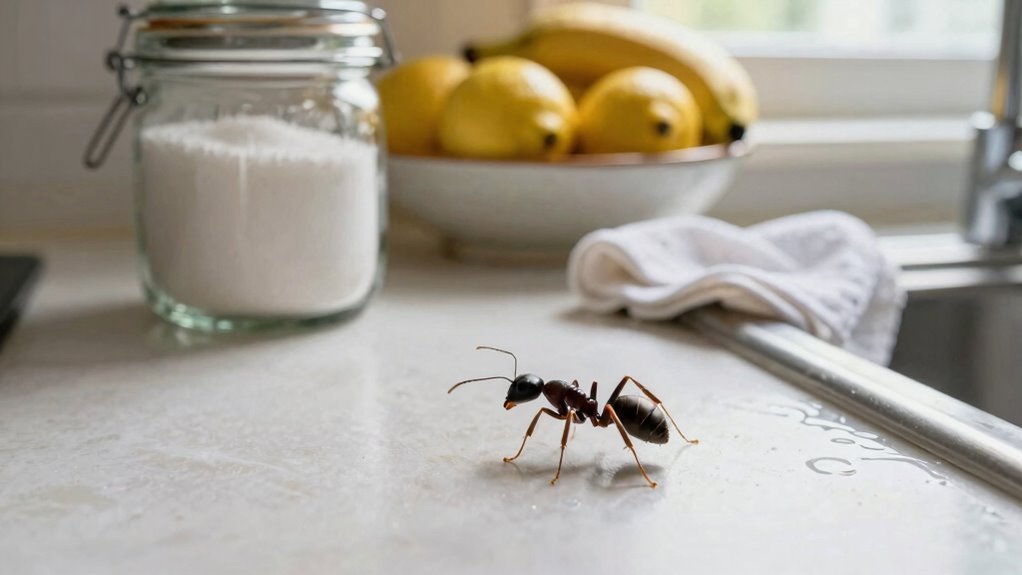
Eliminating food, water, and nesting spots is the most direct way to make your home ant-proof, since ants are relentless foragers with an incredible sense of smell. Strip your space down to the basics to break their cycle.
Stop the buffet, shut off the water, and seal the gaps to break the ant cycle.
Store food in airtight containers, wipe crumbs, and take out trash nightly to remove the buffet.
Fix leaks and dry standing water right away, because moisture damage is essentially a drinking fountain for ants.
Seal gaps around windows, doors, and pipes, and remove damp wood to kill nesting sites, as carpenter ants thrive in rotting beams.
Wipe surfaces with soapy water to disrupt their pheromone trails and block the next wave of scouts.
An ant control strategy works best when the environment is dry, clean, and tightly sealed. For long-lasting protection, apply food-grade diatomaceous earth in thin, dry layers along entry points and baseboards to mechanically destroy ant exoskeletons.
You don’t need a spray if you cut off the basics: deny access, deny moisture, deny shelter.
For home pest prevention, check under sinks and behind appliances weekly for new condensation.
If you’re already dealing with an invasion, target them with bait stations near the trail, but always follow entry point sealing first.
Bottom line: make your house a no-vacancy zone for food and shelter, and you win the battle without chemical treatments.
Dry, clean, sealed, and dry again, and the ants move to a friendlier neighbor.
Use Natural Repellents as a First Defense
Vinegar is the undisputed MVP of natural ant repellents, a common kitchen staple that wipes out the invisible scent trails ants follow. This leaves them wandering like lost tourists, completely disoriented.
A simple spray of equal parts water and vinegar along baseboards, windowsills, or wherever you spot a line of trespassers costs about a dollar per bottle. It does the job without turning your home into a chemical warzone.
For entry points and counters, citrus-based cleansers or a few drops of lemon juice applied liberally act as a polite but firm no vacancy sign. The acidic scent overwhelms their navigation and sends them packing.
Just reapply after rain or mopping, for it is a deterrent and not a force field. This easy pest control method keeps your kitchen safe without harsh chemicals. For a more lasting barrier, food-grade diatomaceous earth can be applied along entry points and dehydrates ants on contact.
Vinegar Disrupts Trails
Ants rely on a scent trail, a chemical breadcrumb system laid down by scout ants, to guide their colony to lunch. The very first thing anyone should do is break that signal, and vinegar does it beautifully for pocket change.
The acetic acid in plain white vinegar wipes out those scent trails, leaving workers wandering like they lost their phone. This disrupts navigation completely, making it a top pest control solution for ant problems.
Mix one part vinegar with three parts water in a spray bottle. Saturate counters, baseboards, and window sills; reapply daily for a week.
Wipe down the same spots after any cleaning, since soap won’t erase the pheromones. This simple buy vinegar trick is cheap, safe, and smells like a salad dressing accident.
Bottom line: grab a two dollar jug, spray the paths, and watch the line vanish. That’s the whole trick for effective ant removal.
Citrus Deters Ants
When the vinegar smell starts to feel like a permanent salad dressing, citrus steps in as a mellow, nicer-scented option that still sends ants packing.
The active compound, d-limonene, breaks down the ants’ waxy exoskeleton, causing dehydration, and it additionally wipes out pheromone trails with a clean, zesty swipe.
No harsh fumes, just a fresh-squeezed threat for effective home pest control.
Citrus sprays work best along baseboards, window ledges, and door frames.
Simply mix equal parts lemon juice and water, then spray until damp.
For entry points, lemon barriers of fresh peel rubbed along cracks or thresholds act as a solid, temporary blockade that ants refuse to cross.
This solution is cheap, food-safe, and smells like a summer drink.
For tougher infestations, look for organic gardening products that use ingredients like Spinosad derived from soil bacteria.
Reapply after rain or heavy cleaning because it fades quickly indoors.
It works on pavement ants and tiny pharaoh ants, but is slow on big, stubborn colonies.
The bottom line is that citrus is a friendly first defense, not a heavy hitter.
Use it for ant prevention, but pair it with sealing gaps for real results.
Switch to Ant Baits for Stubborn Infestations
For a stubborn ant problem, the issue isn’t so much the number you see as the colony you don’t. Baits work because workers haul slow-acting poison back to the nest, killing the queen and brood.
Spraying just zaps the scouts you spot, like mopping water while the faucet leaks. Trust me, they’re far better couriers than you are.
Spraying only kills the scouts you see—the colony stays hidden, and they’re better couriers than you are.
Pick gel baits for tight cracks, or plastic stations for open floors; a syringe runs about eight dollars, while a six-pack costs five. Place them near trails along baseboards or window sills for the best ant control results.
Keep discarded bait stations for months, since a fresh batch may arrive and leftover gel stays potent. This targeted pest management approach tackles the root colony, not just the visible foragers.
For long-term extermination, rotate between gel and granular bait to avoid bait aversion. Also, ensure the bait matches the ant species, as sweet-eating ants require sugar-based formulas.
You’ll see fewer ants within days, but full colony elimination takes up to two weeks.
If you need a fast ant killer solution, pair baits with a crack-and-crevice spray, but never spray near the bait itself.
Reapply bait after heavy cleaning, and check moisture spots under sinks where colonies thrive.
Monitor and Maintain Your Perimeter to Stop Ants Long-Term
Once the colony is knocked down, the real work shifts from poisoning to patrolling, because those little suckers are relentless. Long-term success means turning a one-time fix into a weekly ritual for ongoing ant control.
Start with a perimeter inspection, a slow walk around the foundation looking for fresh dirt piles, tiny trails, or dampness issues. That walk should trigger an entry point audit, which is a fancy way of saying, “check all the spots they got in last time.”
Check weatherstripping, utility lines, and foundation cracks for any potential ant entry points. Re-caulk any gaps you find, even the small ones, to block future ant trails. For additional defense, apply perimeter pest control granules in a 6-10 foot band along the foundation after sealing cracks.
Trim back shrubbery touching the siding, because it’s a free ant highway for carpenter ants and other pests. A ten-minute sweep costs nothing but prevents a future headache and saves on professional extermination costs.
The bottom line is to seal it once, check it often, and they’ll get the hint. For best results, pair this with bait stations and a recurring pest prevention plan.
Your home defense strategy needs constant vigilance, so set a reminder on your phone for a weekly walk. Professional-grade caulk and silicone sealants are worth the investment for lasting ant barrier protection.
Know When to Call an Eco-Friendly Pro for Ants
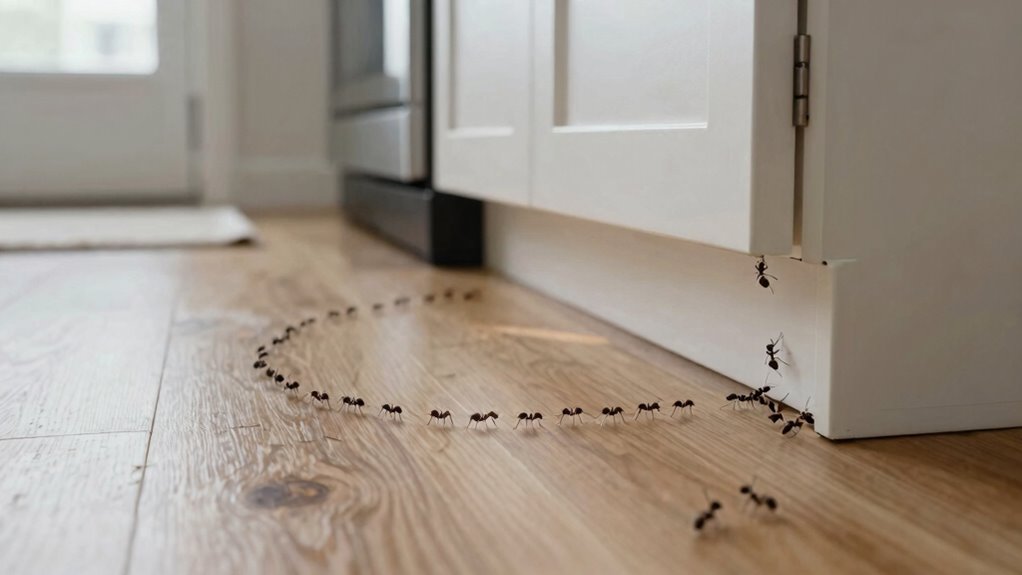
Know when to call an eco friendly pest control pro for ants is a blend of stubborn pride and practical math. When colonies nest deep inside walls, DIY fixes just don’t cut it. Yet boric acid remains a viable natural option when used as a stomach poison in cracks and crevices.
An eco friendly inspection makes sense then, especially if you value non toxic methods. Here are signs it is professional time: carpenter ants signal dampness damage hiding in wood.
Ant trails reappear within days of baiting, signaling multiple colonies. You have sealed gaps, but ants still pour in through unknown routes.
Professional identification of the species pinpoints the right low impact treatment. This saves money long term on ant extermination costs.
Expect $200 to $400 for an eco friendly inspection, plus gel bait costs. Call a green pest firm when your patience runs thinner than their eco credentials.
Frequently Asked Questions
Are Natural Ant Deterrents Safe for Pets and Children?
Most natural ant deterrents are safe for pets and children, but “natural” does not automatically mean “harmless.”
Vinegar and citrus based repellents are fine for household use, but diatomaceous earth can irritate lungs if inhaled.
For a child proof pest control application, always place deterrents high and out of reach.
Cinnamon and pepper are typically safe, though they can be spicy for curious noses.
Always test a small area first before applying any natural ant killer.
The bottom line is that natural products are safer than chemical pesticides, but supervision still matters.
A little common sense goes a long way when choosing safe pest control for your home.
If you want an effective ant repellent that won’t harm your family, look for plant based formulas with clear pet safety labels.
Why Do Flying Ants Suddenly Appear Inside My Home?
Seeing flying ants suddenly swarm inside your home typically signals one thing: a flying ant mating event called a nuptial flight. This is when reproductive ants leave their colony to find a mate and start new nests.
They often enter through cracks, open windows, or vents after heavy rain, so it’s not a sign of a new infestation. These winged ants usually die within a day or two, so there is no need to panic.
The best pest control approach is to seal entry points like gaps around doors and windows. For immediate removal, use a vacuum instead of spray to avoid scattering pheromones.
Vacuuming is a safe and effective method to capture the swarm without chemical residue. Then simply discard the vacuum bag outdoors to prevent any survivors from crawling back.
If you want a long term solution, consider a residual insecticide barrier treatment around your home’s foundation. This professional grade pest control product stops future nuptial flights before they become a nuisance.
Do Coffee Grounds Help Repel Ants Effectively?
Can coffee grounds help repel ants? Not really, this is just a temporary trick.
Caffeine toxicity sounds hopeful, but grounds hold too little active compound to truly drive them away.
The acidity debate is likewise shaky. Most ants barely care about mild acidity in used coffee.
They do mask scent trails for a couple of days. Then the grounds dry out and it is just a messy nuisance.
Skip your French press leftovers for pest control. A $10 bag of diatomaceous earth works far better.
Or use a simple vinegar spray to create a real ant barrier. Save your coffee grounds and choose a proven solution.
How Can Ants Reach a Second-Floor Apartment?
Ants reach a second-floor apartment through structural flaws, plain and simple. They don’t fly, but they’re relentless climbers, using vertical trails like pipes, wires, and exterior walls.
A quarter-inch crack around a utility line is a wide-open door for a scout ant. They’ll march up siding if it touches the ground, then slip through gaps in window frames or vents.
Your best move is to grab a quality sealant and caulk every entry point you can find. For a long-term pest control solution, pair that with a perimeter ant bait station placed near the foundation.
Check for cracks where cables enter the wall, and pay extra attention to weep holes and soffits. If you want a smart purchase for active infestations, choose a gel bait that workers carry back to the nest.
Seal those gaps with caulk, pronto, and reapply after any weather shifts. Bottom line: cut their highway, and you cut the party short, so inspect monthly and fix new flaws fast.
For serious problems, consider a professional-grade insecticide spray labeled for indoor perimeter use, but always follow safety directions. Need fast results? Look for products with a residual effect that keeps killing for weeks.
Can Ultrasonic Ant Repellent Devices Actually Work?
Ultrasonic ant repellents? Verdict: mostly a bust. Efficacy studies consistently show they fail to reliably drive ants away.
Practical limitations are huge, since sound waves can’t pass through walls or furniture. Ants lack ears, so they literally shrug it off.
Even a thirty dollar device is no match for a scout trail. It is like yelling at a rock.
Some units beep, but that is just ambient noise. Bottom line: skip the gadget, seal cracks instead.
For real ant control, focus on sanitation and exclusion. Use caulk to block entry points and remove food sources.
Buyer intent often leads to quick fixes, but a bait station or granular insecticide works better. Avoid wasting money on ultrasonic pest repellers for ants.


