
Struggling with a roach problem that just won’t quit? Boric acid is one of the most effective home remedies if you get the mix right.
This guide shows you exactly how to use boric acid for cockroaches, from the correct 1% syrup ratio to strategic placement near warm harborage areas. We cover everything you need to create a bait that kills them in about four days without the common sugar overload that makes baits fail.
Below, we line up the top-rated products to help you execute this method perfectly and finally take control of your kitchen.
At A Glance
- Mix 1% boric acid with 99% white sugar, add enough water to dissolve.
- Replace bait every three days to prevent crystallization and maintain attraction.
- Place bait near harborage areas, but away from competing water sources.
- Use maltose or sucrose to ensure roaches feed without hesitation.
- Keep boric acid sealed airtight to avoid moisture clumping that repels roaches.
Why Boric Acid Beats Borax and Other Borates
Why does boric acid outperform borax and disodium octaborate tetrahydrate? Simple. Cockroaches do not avoid boric acid baits.
In choice tests, roaches consume boric acid like soda. They ignore borax and DOT, which leads to zero meaningful pest control results.
Boric acid has a stellar safety record and no known resistance cases in insects. That is rare for any roach killer and backed by decades of data.
It also kills roaches faster. LT90 values show boric acid works in about 4.4 days, while DOT takes 5.0 days and borax takes 5.7 days in no choice assays.
Boric acid causes sublethal mayhem too, such as dropped egg cases. The bottom line is that you can skip flashy alternatives.
Boric acid is a reliable, cheap, and proven pest control choice. There is no contest when it comes to effective roach control.
High-purity boric acid (99% or higher) ensures maximum effectiveness and longer-lasting pest control.
What Concentration of Boric Acid Works Best? (0.5–2%)
The sweet spot for boric acid in roach baits is 0.5% to 2%, not higher.
Push past 2%, and bait crystals crust over like bad frosting on a cake, making roaches less likely to nibble.
Studies show 1% boric acid with 0.1 to 0.5 M sugar delivers an LT90 of just 4.4 days.
Going higher delays death more than it helps.
A key perk is low concentrations boost predator safety, so pets or birds that snack on poisoned roaches face minimal risk.
But watch for temperature effects, as cooler conditions slow roach metabolism and lengthen kill times.
For best results, place baits in warmer areas of your home.
The takeaway is to stick with 0.5% to 2% boric acid.
Mix with sugar and avoid overdoing it, and you will outsmart those roaches without harming your household’s four-legged friends.
Baits under 2% offer effective roach control with added safety.
Boric acid powders applied this way can provide a long-lasting residual effect for weeks when kept dry.
Mix a 1% Boric Acid Sugar Bait in 60 Seconds
A single recipe for a 1% boric acid sugar bait takes about sixty seconds to mix. It is one of the fastest DIY roach controls available. This low concentration avoids bodily harm to pets or people when used carefully. It disrupts roach egg development effectively.
Combine 1 gram of boric acid with 99 grams of white sugar. Then add just enough water to dissolve, creating a syrupy bait. Cockroaches eat it, get poisoned slowly, and die. They often die before they can reproduce. The key is using the right sugar, like maltose or sucrose. This guarantees they feast without hesitation. Mixing is that simple, and the results are deadly. For maximum effectiveness, ensure you use a powder with at least 99.9% purity so that impurities don’t interfere with the bait’s potency and consistency.
Why Maltose and Sucrose Are the Only Sugars That Work
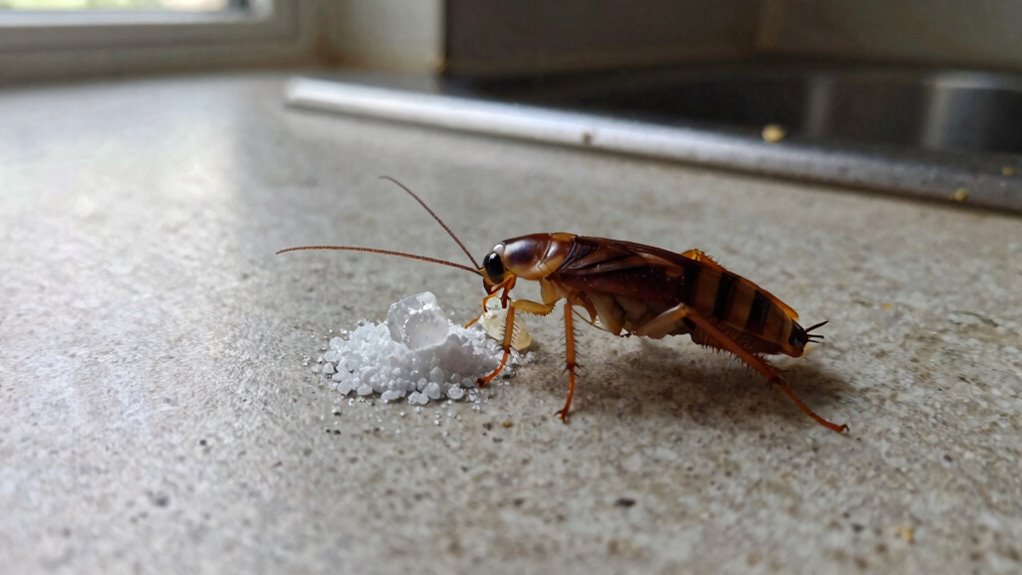
Effectiveness hinges on the right pairing, not just any sweetener. Boric acid baits rely on sugars to trick roaches into eating a lethal dose, but only two, maltose and sucrose, convince males to consume enough within 24 hours.
Effectiveness hinges on the right pairing—not just any sweetener. Maltose and sucrose are the only sugars that work.
Monosaccharides like glucose or fructose fail. Roaches sip them, then wander off, delaying death.
This matters because behavioral resistance can emerge if sugar choice is off. Roaches learn to avoid a bait when the sweetener doesn’t trigger strong feeding.
Maltose and sucrose trigger strong feeding without triggering aversion, even at intermediate concentrations. These sugars also boost sublethal effects, like premature egg drop, which compounds colony collapse.
For pest control, choose bait that delivers a lethal dose fast. Commercially, stick with table sugar or maltose syrup.
Anything else is just a fancy snack for roaches. That wasted chemistry experiment won’t help you eliminate an infestation. However, overuse of the spray might lead to burning or redness on surfaces.
How to Apply the Liquid Bait Without Roaches Avoiding It
Why does a perfectly good boric acid bait fail to kill roaches? It often comes down to how the liquid ages, since roaches avoid it once it crystallizes and loses its sweet appeal.
The trick is liquid longevity: mix a fresh 1% boric acid solution with 0.1 M maltose, then replace it every three days before it dries out. A cotton ball soaked in the bait works well, but keep it in a shallow dish to limit surface residue.
That crystallized crust, the leftover residue, is the main turnoff for roaches, so wiping the dish edges helps keep them interested. Place the bait near harborage areas, like behind appliances or under sinks, but never next to a cleaner water source.
Roaches won’t travel far for a drink if a dripping pipe or pet bowl is closer, so position the bait as the easiest option. For a more thorough approach, commercial gel baits like those using Fipronil or indoxacarb can kill within hours and help eliminate entire colonies. Change the bait on a strict schedule, control the residue, and set it right, and they’ll sip it down without a second thought.
For a more effective roach control plan, pair this liquid bait with gel baits or dust in cracks to cover all feeding habits. Buy a ready-made boric acid solution if mixing feels messy, but always check the label for maltose or sugar content to keep it palatable.
How Fast Do Roaches Die From Boric Acid? (4–8 Days)
Cockroaches typically kick the bucket within 4 to 8 days of ingesting boric acid, though the exact timing depends on how you roll out the bait.
In lab tests, no-choice setups killed 90% in about 4.4 days; choice tests, where roaches had other food options, stretched that to 7.6 to 8.5 days.
The mode of action is slow but insidious: boric acid destroys foregut epithelium via cuticular penetration, causing internal damage that builds up over time.
Sublethal effects matter just as much, because even before dying, roaches drop egg cases prematurely and see reduced hatching success.
So if a few linger past day 8, you’ve already crippled the next generation, which is key for long-term pest control.
This isn’t a flash-bang insecticide; it’s a slow, relentless process that works best with proper bait placement and patience.
For a kill timeline that actually works, aim for 0.5–2% boric acid mixed with sugar as a phagostimulant, and expect visible results within a week.
When shopping for roach killer powder, look for boric acid dust labeled for indoor use, and apply it in thin layers along baseboards, under sinks, and near cracks.
To speed things up, pair it with gel baits or traps, but don’t spray other chemicals on the same surfaces, since that can repel roaches from the boric acid.
If you need fast extermination for a heavy infestation, consider combining boric acid with professional-grade cockroach control products, but always follow safety labels for pets and kids.
Buying boric acid in bulk saves money if you’re treating multiple rooms, and reapply after cleaning or if the powder gets damp.
Remember, the 4–8 day window assumes roaches actually ingest the poison, so keep bait stations fresh and avoid over-applying, which makes it less appealing.
By day 8, you’ll see dead roaches near hiding spots, but some survivors might appear; that’s when you rotate to a second bait station for a follow-up treatment.
For best results, monitor droppings daily and replace bait every 3 days, ensuring the sugar-to-acid ratio stays attractive and toxic.
However, for faster knockdown, fipronil-based gels typically begin working within 24 hours to a week, offering residual protection up to three months in real-home conditions.
Five Common Mistakes That Ruin a Boric Acid Bait
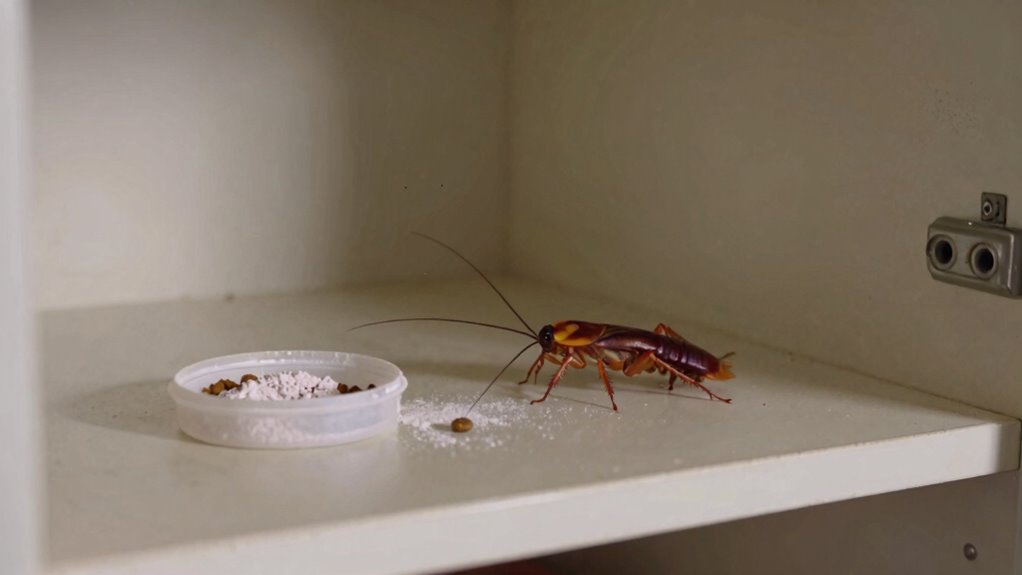
Boric acid bait fails most often because of sugar overload, which makes roaches avoid the mix and die too slowly.
Stick to a low molarity recipe so the poison stays attractive and works gradually but effectively.
Wet storage turns your bait into hard clumps that pests simply ignore, so always seal the container airtight after every use.
Humidity is the enemy here, and dry powder keeps the bait active for weeks.
Stationary bait spots let resistant roaches learn the danger zone, and they will start avoiding that corner entirely.
Move the bait to fresh locations weekly, shifting between cracks, under sinks, and along baseboards.
Water sources nearby act like a buffet that outcompetes your bait, since roaches will sip first and skip the poison.
Separate bait stations from any moisture zones, like under pipes or beside pet bowls, to force feeding.
Bottom line: keep it dry, simple, and patient, because boric acid kills within days, not hours.
For long term pest control in kitchens and bathrooms, rotate bait placement and monitor for droppings to track progress.
Check for gaps in your current setup, and buy pre measured boric acid powder for easy mixing if you want a foolproof option.
A consistent baiting schedule, paired with sealing food containers, gives you the best shot at eliminating the colony fast.
This approach causes less harm to beneficial insects like bees and ladybugs compared to harsh chemical alternatives.
Frequently Asked Questions
How Often Should I Reapply the Boric Acid Bait?
Reapply boric acid bait weekly until roach activity stops, and that schedule is your best starting point.
High humidity can degrade the bait faster, so check it more often in damp environments like basements or bathrooms.
You should also adjust placement frequency based on visible droppings or live sightings, since those are clear signs the bait is working or needs a refresh.
Once the roaches are gone, monthly reapplications are enough to keep your home protected as a maintenance routine.
Think of it like changing a furnace filter: a little effort now saves you a bigger headache later.
Keep the bait in a dry, undisturbed spot, and the mix will stay potent for weeks instead of days.
For kitchens and pantries, inspect every three to five days if you see fresh droppings or egg casings.
If you’re dealing with a heavy infestation, combine the bait with roach gel and traps for faster knockdown.
Buy a boric acid powder with a fine mesh applicator, and you’ll target cracks and crevices precisely.
Check under sinks, behind appliances, and along baseboards, since those are prime roach highways.
When the bait looks clumped, dusty, or covered in debris, replace it immediately to maintain effectiveness.
Most pest control experts agree that consistent reapplication beats higher doses, so stick to the weekly cadence early on.
For ongoing prevention, a monthly top-up near water sources and entry points is your best smart purchase for long-term control.
Always read the label for safe handling around pets and kids, then reapply as needed until zero activity for two weeks straight.
Is Boric Acid Bait Safe Around Pets and Children?
Boric acid bait is generally safe around pets and children when you follow the label instructions, but it’s definitely not a chew toy.
If a curious pet or kid ingests a small amount, signs like drooling or vomiting can appear, though toxicity is low and it mainly acts as a stomach irritant.
For worry-free pest control, placement is everything: tuck baits inside cabinets, behind appliances, or in tight crevices where roaches travel but paws and little hands can’t reach.
This targeted approach keeps the poison out of sight while still hitting the infestation hard, which is why many homeowners choose boric acid bait for roach control.
Research shows boric acid kills roaches faster than other borates and shows no resistance issues, making it a smart pick for long-term roach prevention.
To get the best roach killer for your home, always pair the bait with a clean, clutter-free environment to boost its effectiveness.
Keep curious paws away by securing bait stations with child-resistant clips or placing them in lockable cabinets.
If you spill any powder or gel, clean it up immediately with a damp cloth so no one accidentally touches or tastes it.
Bottom line: when you buy pest control supplies, choose a boric acid product with clear dosage instructions and use it as directed.
That way, it’s a low-risk option that solves your roach problem without turning your home into a hazard zone.
For added peace of mind, double-check that your bait stations are tamper-resistant, especially if you have toddlers or free-roaming pets.
Following these simple pest control tips ensures you get fast roach elimination while keeping your family safe.
Can I Use This Bait on Other Crawling Insects?
Yes, boric acid bait works on other crawling insects, and it is a versatile tool for many household pests. For silverfish control, it is highly effective in damp areas like basements, bathrooms, and laundry rooms where these pests thrive.
Earwig elimination is also possible with this bait, especially if you add a little sugar as a lure to attract them to the station. When mixing your own solution, use 0.5 to 2% boric acid with 0.05 to 1.0 M sugar in bait stations for the best results.
Avoid high sugar levels above 1 M, because that can actually make insects avoid the bait instead of feeding on it. Apply the bait in thin layers near common hiding spots, such as corners, cracks, under sinks, and behind appliances.
This low cost pest control solution is a smart buy for DIY homeowners who want an affordable insect killer without harsh fumes. However, results vary by species, so you may need to combine it with other roach bait or ant gel for stubborn infestations.
For best success, place multiple bait stations in areas with high crawling insect activity, and reapply after cleaning or moisture exposure. If you are shopping for pest control products, look for boric acid powder or pre-filled bait stations labeled for silverfish and earwigs to save time.
As a professional tip, always wear gloves when handling boric acid, and keep it away from pets and children during application. This effective crawling insect bait works best as part of a broader integrated pest management plan that includes sealing cracks and reducing humidity.
Does Boric Acid Still Work if the Solution Dries Out?
Yes, boric acid remains effective even after the solution has completely dried out. Once the liquid evaporates, it leaves behind a fine, crystalline boric acid residue that is the real active weapon against cockroaches.
This dried residue naturally recrystallizes into tiny, sharp particles that cockroaches walk through. As they groom themselves, they ingest the powder, just like they would a fresh bait application.
The dry residue works slower than a wet bait, think of it as a slow burn rather than a sprint. However, it remains lethal and is an excellent long term pest control solution for cockroach infestations.
For best results, keep the treated area dry so the powder stays light and powdery, not clumpy. This ensures the boric acid continues to stick to pests and get tracked into their hiding spots.
If you are looking for an affordable, low odor pest control product that delivers consistent results, boric acid is a smart purchase. It works well as part of an integrated pest management plan for kitchens, basements, and other dry areas.
Will Cockroaches Drink the Bait if Water Is Nearby?
Yes, cockroaches will drink the bait even when clean water is nearby. In choice tests, boric acid at 0.5 to 2 percent with 0.05 to 1.0 M sugar strongly overrides the competition from fresh water.
No avoidance occurs, so water proximity does not reduce the bait’s effectiveness. Think of it like offering a free soda next to tap water; roaches pick the sweet poison every time.
For pest control success, keep the bait fresh and avoid using sugar concentrations above 1 M, which can actually repel them. The bottom line is that water is no obstacle for this bait’s powerful draw, making it a smart purchase for reliable cockroach elimination.


