
How to Prevent Ants From Coming Back starts with understanding why they keep invading—it’s not revenge, it’s a chemical trail. Those invisible highways lead from a hidden colony straight into your kitchen, and in 2025, the smartest fix is a layered approach, not just spraying what you see. You’ll need to wipe scent paths with soapy water, seal tiny cracks, and place a strategic gel bait to take out the queen. Below, we break down the best supplies, helpful notes on what actually works, and what’s worth buying to keep ants out for good.
At A Glance
- Use boric acid bait so workers carry poison back to eliminate the hidden queen.
- Seal all foundation cracks and utility gaps with silicone caulk or expanding foam.
- Eliminate moisture and food sources by fixing leaks and sealing pet kibble.
- Trim foliage back 12–18 inches and apply a dry diatomaceous earth barrier.
- Wipe pheromone trails daily with soapy water to break the ant superhighway.
Why Ants Keep Coming Back: It’s the Trail, Not the Ants
Ants keep coming back because of the chemical trail they leave behind, not because of the individual insects you see.
When a scout ant finds a crumb, she releases a pheromone path that other colony members instantly follow.
Each trip reinforces that scent, turning it into a superhighway that survives even after you wipe the counter.
Spraying visible ants does nothing to erase those invisible markers, since pheromone decay takes days or weeks depending on humidity and temperature.
So you are not fighting ants, you are fighting chemistry. The most effective pest control method is to break down those oily residues with warm soapy water, which neutralizes the trail completely.
For ongoing prevention, plant-based essential oil sprays offer a non-toxic way to deter ants from re-entering cleaned areas.
For a long term solution, seal cracks around windows, doors, and baseboards so new foragers cannot enter.
Remove all food sources, including pet bowls and crumbs, so the colony loses interest and the trail fades naturally.
If you need professional ant extermination, look for a local pest control service that offers targeted baiting and entry point sealing.
Calling an exterminator early saves you from repeated infestations, because once the trail is gone, the ants stop returning for good.
The bottom line is simple: kill the trail, not just the ants.
Clean thoroughly, block their routes, and eliminate food, and your kitchen stays ant free without constant respraying.
The Hidden Colony: Why Spraying Foragers Fails
Spraying the ants you see is a classic mistake, because those workers are just the colony’s errand runners. The queen stays safely hidden deep inside the nest, making surface sprays useless for ant control.
Killing those few foragers often backfires instead of fixing the problem. The spray can irritate the colony and cause it to bud, splitting into multiple smaller nests that scatter around your property.
That one can of insecticide turns a single ant issue into a handful of them. It is like trying to put out a fire by tossing a bucket of gasoline on it.
You will likely see new trails within days, so focus on effective pest control methods like baiting. Target the nest directly to eliminate the colony for good, not just the visible workers.
Using boric acid bait works because ants ingest it as a stomach poison and carry it back to the colony, eliminating the nest from within.
The Queen Remains
A common frustration unfolds at the kitchen baseboard: a spray-and-walk-away routine that offers a temporary victory lap, only to see the parade return by dinner. That is because those workers are just errand runners, while the real boss, the queen, stays tucked deep inside the nest, safe from the spray.
Queen resilience is the culprit, as she is the egg factory. While she is alive, colony rebound is guaranteed, and killing fifty foragers will be replaced in days.
It is like mowing the lawn but leaving the roots, and it grows back. The fix is to stop spraying visible ants and use slow-acting bait that workers carry back to the nest. For this to work, the bait must remain stable and attractive over several days to ensure the poison reaches the colony. The queen gets a dose, and the whole operation shuts down. For effective pest control, bottom line: spray the symptom, get the sequel; bait the queen, get silence.
Spraying Splits Colonies
When you grab a spray can to kill ants, that quick fix often backfires in a surprising way. It kills a few foragers, but the queen and brood stay hidden and untouched.
The chemical scent panics the colony, causing it to split into satellite nests. So one ant problem quickly becomes multiple problems scattered across your yard.
A smarter move is to place a bait station near their trails. Workers carry the slow acting poison back to the queen, wiping out the root of the infestation. Baits with a non-repellent formula are particularly effective because ants do not avoid them.
Pair that with a professional perimeter treatment around your foundation. This creates a lasting barrier that stops new ants from entering.
Forget the spray, it is a temporary fix that makes ants regroup and spread. Use baits and barriers for real control that eliminates the colony for good.
Eliminate the Free Buffet: Indoor Food Sources to Erase
The average home pantry is less a storage space than a scheduled feeding station for ants. The average homeowner doesn’t realize this until the third visit from a line of foragers marching across the countertop.
Crumbs hide in moisture-prone areas like under the toaster or behind the coffee maker. Pet food storage is a classic buffet, so that open kibble bag becomes an all-you-can-eat sign. Seal it in a plastic bin. Store flour and sugar in airtight containers to block pantry pests. Wipe counters after every meal, sweep daily, and empty trash cans with lids that click shut.
That sticky soda ring on the counter? Ants love it. So do grease splatters near the stove. Erase scent trails with soapy water, and you will cut the supply line fast. Bottom line: no crumbs, no ants.
Fix Leaks and Condensation: Remove the Colony’s Lifeline
Fix leaks and condensation to remove the colony’s lifeline. Even a clean kitchen can attract ants if moisture is present.
Ants need water as much as they need food. A tiny drip under the sink or a sweaty pipe is their water source.
Fix leaks immediately and install vapor barriers in crawl spaces to block ground moisture. Use humidity sensors to monitor damp zones and catch trouble before ants do.
Check bathrooms, laundry rooms, and kitchens regularly. Wipe condensation off windows and improve airflow to reduce moisture.
A dehumidifier works wonders in persistent damp areas. No water means no colony can survive. Keep indoor humidity below 50 percent to create an environment where pests cannot thrive.
You can scrub every surface, but if plumbing weeps, ants will keep returning. Channel your inner plumber to stop the source.
Your future self and your countertops will thank you. That is the simple dry truth.
Seal the Gaps: Entry Points Ants Use to Get Inside
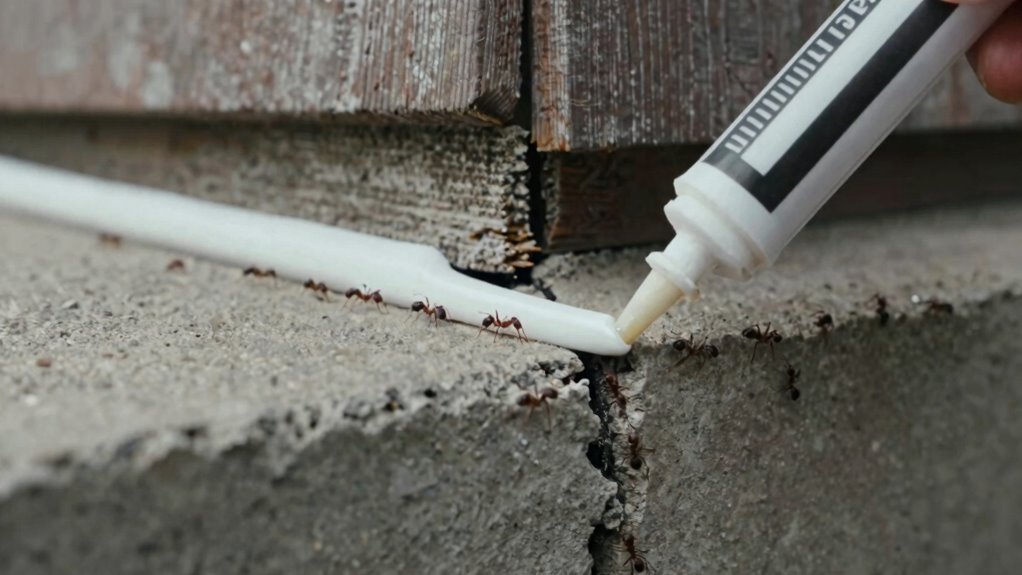
Sealing utility openings and caulking foundation cracks is the boring but non-negotiable first move for effective ant control. This job wins no praise yet quietly evicts your six-legged neighbors.
Ants squeeze through gaps as small as 1/16 of an inch. A worn seal around a pipe is basically a welcome mat for an ant infestation.
A $5 tube of silicone caulk can close those doors in an afternoon. Check where cables and conduits enter the house.
Fill those holes with expanding foam or caulk. For damp or outdoor areas, rust-resistant stainless steel wool blocks small gaps that caulk alone might miss. Then move on to the foundation’s cracks for complete pest proofing.
It is cheap, straightforward, and beats finding a trail across the kitchen counter. This simple approach stops ants from finding entry points before they become a problem.
Seal Utility Openings
Perseverance is an ant’s superpower, and the utility openings in your home are its favorite battlefield. These overlooked gaps around pipes, wires, and vents are highways for scouts.
Combining sealing with a perimeter barrier helps stop ants that squeeze through tiny cracks.
Crawl space vents and electrical conduit gaps are prime entry points, so sealing them stops the parade before it starts. For homeowners tackling ant control, this is your first line of defense.
| Opening | Fix |
|---|---|
| Crawl space vents | Install fine mesh screening |
| Electrical conduit gaps | Apply expanding foam sealant |
| Gas line entries | Use putty or caulk |
| Dryer vents | Add a tight-fitting flap |
Check each opening annually, because even a pencil-thin crack invites a determined colony. A tube of foam costs around $8, far less than a repeat ant battle.
Pest proofing your home means choosing the right barrier, and this is a low-cost way to prevent infestations. Make your home a fortress, not a buffet, and seal once to forget it mostly.
Dad wisdom: an ant’s ambition only needs quality sealant, so invest in durable caulk or foam for long lasting results. If you are searching for ant prevention near your plumbing, this quick fix delivers real peace of mind.
Caulk Foundation Cracks
Underneath the siding, a hairline crack in the foundation is a grand entrance for a determined ant. Ignoring it is like leaving the front door ajar for a tiny, six-legged burglar seeking pest control entry points. Foundation crack identification matters, so check for gaps wider than a credit card. Focus especially near corners where settling happens.
Use a flashlight and probe with a screwdriver to find hidden fissures. Clean the crack with a wire brush, removing debris and old crumbly concrete. Choose a caulk composition that flexes for long term foundation repair.
Polyurethane or latex with silicone works best, costing around $8 a tube for effective ant prevention. Apply with a caulk gun, forcing the material deep. Smooth it with a wet finger for a clean seal.
This crack sealing is a targeted pest control method that minimizes ecological footprint.
Seal it once, and you can stop replaying the ant invasion. Your foundation will thank you for this simple pest proofing solution.
Don’t Forget the Outside: Cut Off Ant Highways Outdoors
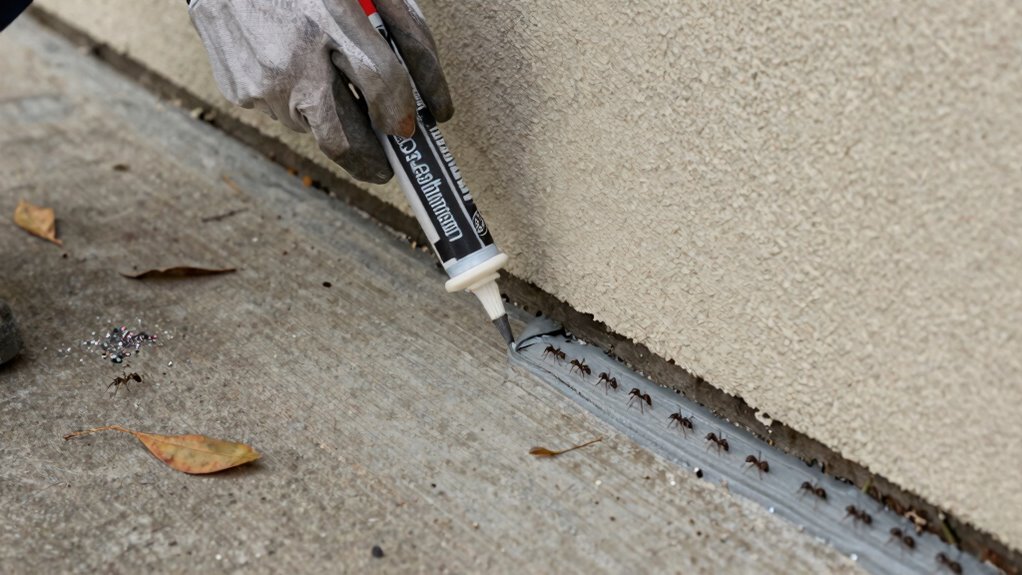
A lush shrub pressed against the siding is not a landscaping choice. It’s a welcome mat for ants.
That greenery creates prime outdoor harborage, a fancy term for ant bedrooms. It gives colonies a cool, damp place to thrive feet from your door.
The fix isn’t expensive. It’s about creating a perimeter buffer, a clear, gravel or bare-dirt zone around your foundation.
Imagine a dry moat, but for bugs. The result is that foragers must trek across open ground, exposed to sun and predators.
This makes them think twice about invading your kitchen.
| The Toll (Negligence) | The Fix (Action) |
|---|---|
| Branches touching walls, ferrying scouts inside | Trim all foliage back 12–18 inches from the house |
| Mulch piled against the siding, retaining humidity | Leave a 6-inch gap of bare soil before the mulch starts |
| Leaf litter and debris trapping humidity | Rake and clear the foundation line weekly |
| Crumbling edging giving ants a tunnel | Install a hard, compacted stone barrier |
Trim it now. A quick walk around your home, snips in hand, cuts their highway.
That short boundary line, armed with vigilance, is the cheapest pest control insurance you will ever buy.
The ants either take a long, risky detour or go find an easier target.
For extra protection, consider residual barrier sprays along the foundation to keep ants from crossing.
You can stop ant invasions before they start with this simple outdoor ant control step.
Clean Scent Trails So Ants Stop Recruiting Helpers
Those pheromone trails are basically ant freeways, complete with rush-hour traffic and a sign that says, “All you can eat, this way.” Wiping them away is not just about cleaning up after the party; it is about shutting down the invitations to the next one.
Ant freeways with rush-hour traffic—wipe away the pheromone trails and shut down the next invitation.
Ants lay these chemical breadcrumbs through pheromone biology, creating a scent map for foraging communication. To break the loop, start with a simple pest control reset: wipe visible trails with soapy water for an instant cleanup.
Then spray a vinegar-water mix at a 1:3 ratio on counters and floors to neutralize the scent markers. Scrub under pet bowls and trash bins, since those high-traffic zones attract the most ant activity.
Repeat this daily for a full week, and old pheromone trails fade while new ones stop appearing. Skip bleach entirely, because it will not erase the chemical markers that trigger ant recruitment. To actively kill the colony that is sending these scouts, place bait stations near their trails so they carry poison back and eliminate the nest within days.
Clean trails mean zero reinforcements and no new helpers joining the colony. The bottom line is this: erase the road, and ants stay gone for effective ant control and long term pest prevention.
For a lasting solution, pair this routine with entry point sealing to stop future invasions. This approach targets the root cause, not just the visible workers, which is what professional pest management recommends.
Consistent cleaning interrupts the foraging cycle, so scouts cannot send out the all clear signal to the nest. You will see fewer ants within days, and by week two, the colony should move elsewhere.
Use Baits Wisely: Spreading Poison to the Queen
Worker ants transport the slow acting poison to the queen, and the entire colony collapses within a few weeks. Skip the spray and buy a decent gel bait for around ten dollars, as ants are drawn to the bait’s attractive ingredients and will readily carry them back to the nest. Proper placement is the key to successful ant extermination. Patience wins the battle. Bait wisely and the queen gets her final snack.
Build a Long-Term Plan: Prevention That Actually Lasts
For lasting results, prevention requires more than a one-time treatment.
It is a shift in how your home interacts with its environment.
Ants follow seasonal ant patterns, so adapt your plan with the calendar.
Ants run on seasons, so your defense should too—sync every step with the calendar.
Use eco friendly barriers like diatomaceous earth, a fine powder, around the foundation for about $15.
For maximum effect, apply it in thin, dry layers along entry points and baseboards, as moisture neutralizes its abrasive action.
This lasts weeks and disrupts ant trails naturally.
Seal entry points with a $5 silicone tube.
Caulk gaps around pipes and weep holes to stop the nightly parade of invading pests.
Control moisture by fixing dripping spigots and leaky AC lines.
Ants need water worse than that last slice of pie.
Perform monthly perimeter checks with a flashlight.
Note new cracks and reapply barriers after rain.
Update the plan quarterly, not yearly.
That is the only way to outsmart a colony with a thousand cousins.
Frequently Asked Questions
Are Ants Dangerous to Humans or Pets?
Are ants dangerous to humans or pets? Mostly no, but it depends on the type of ant you are dealing with.
Some ants, like carpenter ants, cause structural damage by hollowing wood for nesting. This can weaken your home over time and require professional pest control.
Others, such as pharaoh ants or pavement ants, can track germs across your kitchen counters. While disease transmission is rare, it is a valid concern for food safety.
Most ants are just annoying picnic crashers that invade your home for sugar and crumbs. For pets, ant bites sting but rarely cause serious harm.
The real fix for ant infestations is a simple prevention plan. Seal cracks around doors and windows with caulk to block entry points.
Store all food in airtight containers and wipe down surfaces daily. Fix dampness issues like leaky pipes or standing water near the foundation.
That is about $20 of caulk and a lesson learned the easy way. Bottom line, you do not need to panic, but you should deny them entry.
For persistent problems, a quality ant bait or granular insecticide can offer long term control. Always choose a product labeled for the specific ant species in your area.
Can Natural Repellents Like Vinegar or Cinnamon Work?
Natural repellents like vinegar or cinnamon can work, but only on the surface. Vinegar is effective for wiping out ant scent trails, giving you a temporary win.
The problem is that vinegar evaporates fast, so it is not a long term solution for ant control. Cinnamon’s toxicity to ants is minimal, more of a spicy rumor than a killer.
These DIY pest control methods are a quick patch, not a cure. For lasting results, pair them with sealing cracks and baiting the colony.
Bottom line: use them for a fresh start, not a miracle. If you need professional grade pest control products, look for gel baits and granular treatments that target the nest directly.
How Do I Find a Nest Inside My Walls?
Acoustic detection works best at night. Press a glass to the drywall and listen for faint rustling, the ants’ version of rush hour.
For wall void inspection, drill a quarter inch hole and insert a cheap borescope camera. You can find one for about $30 to spot trails or frass.
One hole usually suffices. Just be careful with that drill.
Avoid spraying blind into the wall. It scatters colonies like a startled cat and makes pest control harder.
Pinpoint the nest first. Then apply targeted ant bait for the best results.
Bottom line: use your ears first and your eyes second. This strategy saves time and money on pest control products.
Do Ants Hibernate or Become Inactive in Winter?
No, ants don’t hibernate like bears. They just slow way down, that’s winter ant behavior.
Outside, ants enter a dormant state called diapause. Inside, they stay active all winter long.
That indoor ant activity is a year round party, just quieter. A homeowner will find stragglers near the heater or kitchen sink.
Heated garages and basements are prime spots for winter ant colonies. Homeowners shouldn’t slack on sealing cracks or wiping crumbs.
Ants are waiting for spring to rebound. Bottom line, keep up prevention or they’ll throw a comeback party.
For effective home pest control, use gel baits and granular insecticides. If you spot indoor ants, call a professional pest control service for a winter infestation inspection.
Should I Mix Different Bait Types for Ant Species?
Mixing bait types is a trap because ants show selective attraction to one food group at a time. Combining protein and sugar bait actually repels them entirely, ruining your pest control efforts.
Bait rotation is the answer for effective ant control. Start with a sugar based Terro bait, which costs about six dollars.
Switch to an Advion protein bait after two weeks if no takers appear. This rotation strategy works short term and long term for colony elimination.
The honest fix is simply choosing one bait, waiting, then rotating to the other type. Your ants might thank you, and your home


