
What attracts ants into a house is usually a simple combo of food, water, and shelter. A single crumb or a drippy pipe can feel like a gold mine to a scout ant, which then lays a chemical trail for hundreds more to follow within hours. Cracks as thin as 1/16 inch act as highways, so sealing gaps with silicone caulk and fixing leaks are cheap, smart moves. In 2024, staying ahead of an infestation means knowing the best supplies for quick fixes and what’s actually worth buying. Below, you’ll find a practical roundup of products and helpful notes to keep your home ant-free.
At A Glance
- Food residues like sugar, crumbs, and pet food draw scout ants.
- Moisture from leaks, condensation, and standing water attracts colonies.
- Heavy rain and flooding drive ants indoors seeking dry shelter.
- Structural gaps and landscaping touching the house provide easy entry.
- High indoor humidity and damp environments signal ideal nesting spots.
Why Do Sweet and Protein Foods Top the Ant Menu?
A worker ant‘s stomach is about the size of a pinhead. That explains why sweet and protein foods pull them indoors nearly every time.
Their tiny gut needs constant refills, so crumbs and spills become gold mines. This is a key pest control challenge for any homeowner.
Ant behavior is pure efficiency. A scout finds a sugar blob, drops a scent trail, and the colony arrives within hours.
Foragers can recruit thousands, especially to protein rich peanut butter. Pharaoh ants find this particularly irresistible.
Top food lures include sugar residue and drink rings. Exposed pet food and greasy countertops are also prime targets.
To stop an ant infestation, focus on these common attractants first. Seasonal shifts change their cravings: queens need protein for eggs in spring, while workers favor carbs later.
A lone ant always signals a hidden horde nearby. That is why immediate ant control measures matter.
The bottom line is this: airtight containers and prompt crumb patrol beat any trap. Professional pest management services recommend these steps for long term DIY ant prevention. For effective elimination, use slow-acting borax baits that allow worker ants to carry the poison back to the colony.
How Do Water Sources Quietly Invite Ants Inside?
Water is a silent but powerful ant magnet, often more reliable than a forgotten cookie. Humid bathrooms, leaky pipes, and condensation create the damp, cozy real estate ants crave for nesting.
A single dripping faucet can be a five-star hotel for a colony. When heavy rains flood their outdoor homes, they march inside seeking drier ground.
Fixing that slow leak is cheaper than a professional ant removal service. To prevent ants, focus on moisture control as your first line of defense. Maintaining humidity levels between 50-60% is a proven way to reduce indoor moisture and deter pests.
Inspect plumbing for drips and wipe down wet surfaces daily. This simple pest control step makes your home less inviting to an entire colony.
If you already see trails, contact a local exterminator for targeted ant treatment. Addressing the water source first ensures long term prevention.
Humid Spaces Attract
Humidity sends out a quiet welcome signal that ants are oddly good at reading. Bathrooms, laundry rooms, and damp crawl spaces are prime real estate for ant control concerns.
Humid spaces provide more than just a drink. They offer a perfect nesting environment for pest infestation.
Dampness sources like a sweaty glass or damp sponge seal the deal for ant prevention. Ants need water to survive, and that is non-negotiable.
Consider this: a colony does not send scouts for a vacation. They are on a mission to find moisture for their colony.
Common trouble spots include standing water in a plant saucer. Condensation on a window sill can also attract ants quickly.
These areas read like a welcome mat for pest activity. Check those areas regularly to prevent an infestation.
Fix what you can and dry what you cannot for effective property protection. Removing that dampness, even temporarily, disrupts their plan.
The bottom line for pest removal success is to keep it dry. Keep it boring and they will look elsewhere for a home.
Leaky Pipes Invite
A single drip might seem harmless, but it invites every ant in the neighborhood to visit.
Leaky pipes create consistent, hidden water sources that scout ants discover within days.
Those small drips add up, providing enough hydration for entire colonies to thrive.
This encourages them to nest nearby or even right inside your walls.
The fix involves two key steps to eliminate the problem.
First, leaky pipe repair stops the water source at its origin, cutting off the supply.
Second, moisture control reduces overall humidity, making the area less appealing to pests.
A persistent drip can cost hundreds in water damage, but ant invasions often force homeowners to act first.
Regular checks under sinks, around toilets, and near appliances are cheap insurance.
For persistent infestations, apply a waterproof deltamethrin dust to cracks and crevices near leaky pipes to eliminate scout ants.
Bottom line: fix the leak, remove the buffet, and save yourself the headache of hosting a million tiny guests.
Rain Drives Indoors
Rain is the great ant relocator. When heavy rain floods outdoor nests, water seeps into every cranny, so colony relocation becomes a survival instinct.
They don’t plan a move; they just flee, often straight into your dry, warm walls. Your bathroom’s humidity feels like a five-star hotel to a displaced queen, and they’re not being nosy, just practical.
They aren’t picky either: one leaky pipe is a VIP pass for pest control entry. As soil saturates, shelterless ants scout higher ground, and an inch of rain can turn your home into a refugee camp for six-legged tenants.
The real trick is eliminating standing water to stop indoor ant infestations before they start. Fix that dripping spigot, clear the gutters, and keep the foundation dry to reduce pest pressure around your property line. Using dehumidifiers to maintain indoor relative humidity below 50 percent also removes the moisture that attracts these pests.
No water source means no welcome mat for these uninvited guests. If the deluge keeps driving them in, call a professional exterminator for a home inspection and targeted ant treatment.
A quick moisture audit today saves you from a full colony cleanup tomorrow, and pro pest removal services can seal entry points you might miss. Keep the perimeter dry, and you’ll keep the six-legged refugees outside where they belong.
How Does Seasonal Weather Shift Ant Behavior and Entry?
Spring brings a population boom as milder temperatures and extra dampness let colonies multiply fast. Heavy rains then flood outdoor nests, sending thousands of workers scrambling for dry ground.
That forces them to squeeze through the tiniest cracks in your foundation. This is basically an ant evacuation drill, and your warm house becomes their emergency shelter.
Treating entry points before April is the only sane defense. Professional pest control services can seal gaps and apply targeted ant baits early. For robust, three-month residual control, applying Amdro granules on dry ground in early morning yields the best results against perimeter invasions.
For long term prevention, focus on moisture control and crack sealing around doors and windows. If you notice ant trails indoors, call an exterminator immediately to stop a full scale invasion.
Spring Population Surges
With moisture and warmth returning to the soil, the entire ant calendar flips from survival to expansion. Homes suddenly become prime real estate for these persistent pests.
Mild winter carryover means more queens and workers survived the cold, so populations start big. Then comes colony fission expansion, when a mature colony splits and sends new queens out to found satellite nests.
Foundation cracks look like luxury condos to them. They scout aggressively for protein to feed larvae.
Pheromone trails get laid down fast, inviting the whole crew. That is why dozens of ants appear in March, not just one lost straggler.
It is not personal, they are just following the real estate market. Bottom line: indoor visitors are common during spring surges, but removing crumbs and sealing gaps works wonders. For active infestations, bait stations can eliminate the entire colony within days. For effective pest control, focusing on exclusion and sanitation is your best defense. If you are looking for professional ant removal services, early spring treatment can stop infestations before they grow.
Rain Drives Indoors
A heavy downpour often sends ants scrambling for higher ground, turning your home into their emergency shelter. When floodwater saturates the soil, underground tunnels and nursery chambers become waterlogged and unlivable.
This forces the entire colony, including the queen, to relocate to the nearest dry and stable surface, which is often your foundation slab or exterior wall. They aren’t raiding your pantry for crumbs; they are simply running for their lives.
That desperate need for survival explains why you see ants marching along baseboards and up sink pipes after a storm. They can squeeze through a crack as thin as 1/16 of an inch, so even a tiny gap around a utility line is a welcome door.
Persistent dampness from a slow leaky pipe under your cabinet creates the perfect five-star oasis for these refugees. To prevent an indoor nesting site, you need to address the source of moisture, not just the visible ants.
Start by fixing gutter downspouts and grading your yard so rainwater flows away from the foundation. Then, seal all exterior entry points with a quality caulk or expandable foam, focusing on where pipes and wires enter the house.
Calling a licensed exterminator for a preventive perimeter treatment is a smart move before the next big storm hits. A preventive perimeter treatment using bifenthrin spray can help stop these storm-driven invasions. They can also inspect wall voids and crawlspaces for hidden moisture and established pheromone trails.
Where Are the Hidden Entry Points in Your Home’s Exterior?
Where exactly does a determined ant get a foothold? Often, it’s not the obvious front door.
The real action is along your foundation’s perimeter, a world of overlooked access.
Structural gaps are the primary culprits. These are tiny, hairline cracks in concrete or masonry, ever-widening with seasonal shifts.
A gap of just 1/32 of an inch is a veritable interstate for a worker ant. Look closely where your driveway meets the foundation or around window frames.
The fix is usually cheap specialty caulk. Then, consider utility lines.
Pipes for gas, water, and AC units punch through siding, leaving sleeved openings that are rarely sealed properly.
If you use standard foam here, ants will chew through it. That is a welcome mat, not a barrier.
Seal gaps, then seal them better. For thorough pest prevention, always combine caulk with a professional grade ant barrier. After sealing, apply perimeter pest control granules in a 6-10 foot band along the foundation.
Inspect your home’s exterior for these hidden entry points today. A quick pest control check can stop an infestation before it starts.
Which Landscaping Features Create a Bridge to Your Siding?
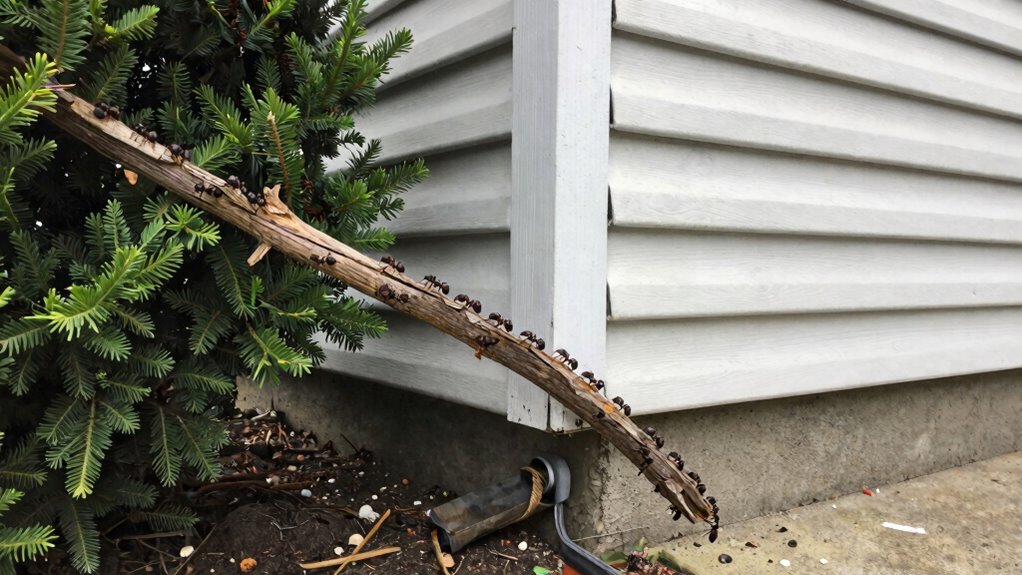
Landscaping often hands ants a free ladder to your siding. The way you arrange plants or your terrain design can accidentally build a bridge.
Vegetation density is the big one. Thick growth touching your house is an open invitation to pest control scouts.
Watch for these three bridge builders. They are common and easy to miss.
Tree branches and shrubs that press against the siding. Prune them back a foot because ants treat leaves like a boarding ramp.
Mulch beds piled high and damp, running right up to the foundation. That is a nesting corridor and a hidden path for ant control.
Dense groundcover like ivy hugging the exterior wall. It traps humidity and gives ants dark, safe cover for an infestation.
Cut those connections and you have pulled up their welcome mat. Simple fixes deliver a serious payoff for pest prevention. For any ants that still find a way in, boric acid dust applied along baseboards offers long-lasting control.
Where Do Ants Find Prime Nesting Spots Indoors?
Discovery is a quiet thing, and ants are masters of it. Indoors, they scout for damp, dark, and undisturbed zones that become prime nesting spots.
A leaky pipe behind a drywall wall turns your indoor insulation into a cozy, moisture laden condo. These areas often require professional pest control to fully eliminate the colony. They additionally love the gap under a refrigerator or the void inside a hollow door frame.
Flowerpot colonies thrive when overwatered houseplants keep soil perpetually soggy. That is a ready made nursery that attracts ant infestations. Baseboards, electrical outlets, and the seam where cabinets meet the floor offer slim, crack like entries.
These spots stay humid and safe for nesting activity. But here is the key point: ants prefer warmth near heat sources like a water heater closet. So check those hidden, steamy corners for an effective ant treatment plan. When dealing with established colonies, bait products are most effective when applied during early morning or late afternoon when ants are active.
Bottom line: damp, quiet, and cluttered areas equal ant headquarters. For long term ant prevention, seal cracks and fix moisture issues right away.
Why Does a Single Ant Mean Hundreds More Are Hiding?
A lone ant on the kitchen counter is not a solo visitor. It is a scout, and scouts are notoriously bad at keeping secrets.
That single forager signals a much larger colony operation nearby. The visible workers are just the tip of the iceberg, while hidden queens stay tucked inside wall voids, churning out replacements day and night.
One forager signals a nearby colony; visible workers are just the tip, with hidden queens churning out replacements.
Seeing one scout means the colony’s food supply line is already established. Its return trip will trigger a mass exodus of foragers.
Population math shows that foraging workers make up only about 10% of the colony. So one visible ant implies roughly 900 more are waiting in the wall or under the floor.
Nest proximity is key. The scout’s rapid trip means the hidden nest and its queens are likely within 30 feet of your kitchen.
Recruitment delay is short. The scout will return to that dry, humid corner spot and spur a wave of workers within hours.
Bottom line: ignore the lone ant and you are hosting a family reunion. Count yourself warned and grab a bait station for effective pest control. To maximize success, choose ant bait stations labeled for the ant species you are facing.
What Role Do Pheromone Trails Play in Recruiting an Army?
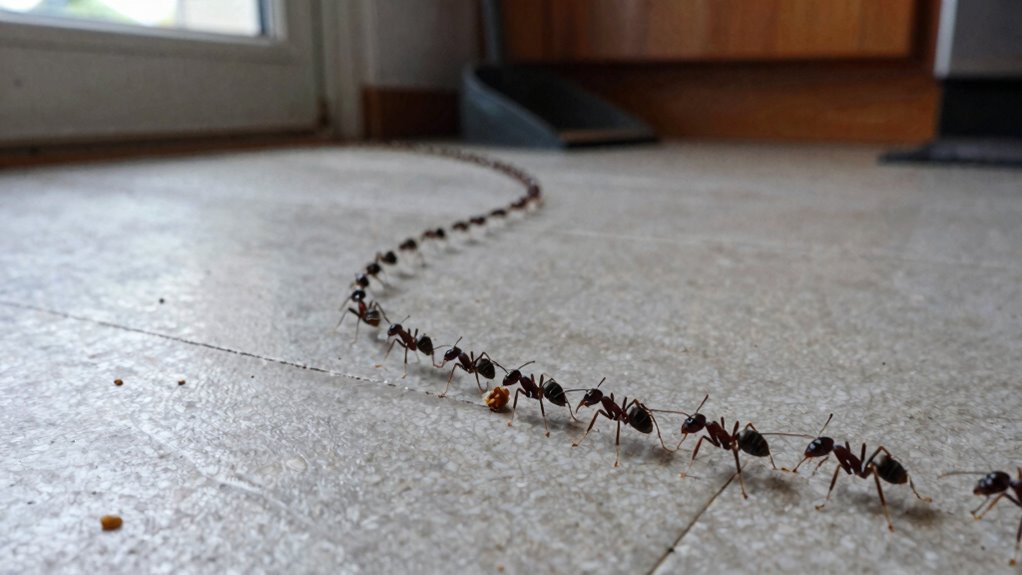
A scout ant’s pheromone trail turns a solo forager into a coordinated raiding party by creating a chemical roadmap to the food source.
That first trail says “food here” and other ants follow, reinforce the scent, and soon you have a steady line of workers.
For pest control professionals, understanding this recruitment signal is crucial because it explains how a tiny sighting explodes into an infestation overnight.
If you need ant extermination services, disrupting that trail early with targeted treatments stops the recruitment before the colony mobilizes.
Breaking the trail with soapy water or a vinegar wipe removes the scent temporarily, but ants are persistent and will quickly relayer a fresh path.
For lasting ant prevention, focus on sealing entry points and removing the attractants like crumbs or moisture that trigger the initial scout discovery.
Applying products with residual protection of up to eight months can effectively prevent ants from relaying those pheromone trails.
A single ant is never just one visitor; it is an advance scout that has already signaled the colony.
If you see one inside, act fast and consider professional pest control for thorough nest removal, not just surface cleanup.
The army is coming, but with early trail disruption and a solid barrier treatment, you can stop the invasion at the source.
Hiring a licensed exterminator ensures the queen and hidden satellite nests are addressed, so reinforcements don’t simply move next door.
What Simple Changes Keep Ants Out of Your House?
Breaking a scout’s pheromone trail is a solid first strike, yet it’s a bit like mopping a floor while the faucet still runs. To truly win, you must exploit the colony lifecycle, cutting off the resources that fuel new generations.
Simple changes disrupt ant behavior at its source, turning your home from a buffet into a barren wasteland. Seal entry points with silicone caulk around windows, doors, and utility pipes.
A $10 tube blocks the high-traffic cracks ants use daily for effective pest control. Store pantry goods in airtight glass or plastic containers.
This eliminates the open sugar and flour that scout ants report back on during their foraging raids. Fix leaky faucets and clear gutters to create dry, barren spaces.
These conditions signal poor nesting sites, forcing queens to look elsewhere for their colony. Target the queen’s larder, not just the workers, and they will pack up shop.
For complete ant prevention, combine these simple changes with a baiting strategy that tackles the nest directly. Place borax bait stations along ant trails to kill the queen and colony.
Frequently Asked Questions
Can Ants Cause Structural Damage to My Home?
Can ants cause structural damage to your home? Yes, but only carpenter ants can do real harm.
They don’t eat wood, they excavate it to build nests, which silently degrades beams over time.
Look for telltale sawdust piles and hollow sounding wood when you tap on walls or trim.
Subterranean tunneling is more of a termite issue, so don’t confuse the two pests.
Most ants are just hungry neighbors looking for crumbs, not your home’s framework.
If you see big black ants indoors, schedule a professional pest inspection soon.
A pro inspection runs about $100 to $300 and can confirm if you need carpenter ant control.
Ignoring the problem can lead to costly structural repairs, so call a local exterminator today.
Bottom line: don’t panic, but don’t put off treatment if you spot the warning signs.
Are Ant Bites or Stings Dangerous to Humans?
Ant bites or stings are typically not dangerous, but some people can have severe allergic reactions. If you’re dealing with an infestation, professional pest control can quickly eliminate fire ants and other stinging species.
Bite symptoms like redness, swelling, and itching are common and usually harmless. For most people, a simple over the counter antihistamine or cold pack does the trick.
However, ant venom allergies can trigger anaphylaxis, a life threatening reaction. If you or a family member has a known allergy, always carry an epi pen and call a pest control expert for fast nest removal.
Fire ants sting 14 million Americans yearly, but fatalities are under 100. Most cases just itch, and a reliable ant killer spray or bait can stop the problem before it escalates.
Allergic people should carry an epi pen and consider preventative pest control treatments around the yard. Others need not worry, as it’s all just a tiny ant’s idea of a bad joke or two.
Be aware, not scared. A quick call to a local exterminator or a purchase of a proven ant bait can keep your family safe and bite free.
Do Ultrasonic Pest Repellers Actually Deter Ants?
Ultrasonic pest repellers do not work on ants at all.
The high frequency sounds simply do not register in ant behavior, which relies on scent trails and touch.
A close study found zero deterrence from these devices.
While they cost between $15 and $50, the effect on ants is nonexistent, though they can bother a dog’s sensitive ears.
These repellers emit high pitched noise that fades quickly, and ants simply walk around it.
A simple tube of caulk outperforms these gadgets for just a dollar, making it a smarter home pest control investment.
For real ant control, sticky traps and bait gels actually kill the colony.
Skip the buzz and block the entry points instead for proven pest prevention.
Are Natural Remedies Like Cinnamon Effective for Ants?
Yes, cinnamon works for ants, but it acts as a natural deterrent rather than a killer. The compound cinnamaldehyde irritates ants and disrupts their pheromone trails, keeping them from returning.
For the best results with home pest control, apply ground cinnamon thickly at entry points. You can also create a cinnamon oil barrier on windowsills and door thresholds for stronger prevention.
This natural ant repellent fades quickly, so you will need to reapply often. A three dollar spice jar is budget friendly, but it will not break a large colony.
If you are dealing with a small ant problem, try cinnamon as a first step. However, if you need effective ant control for a real infestation, call a professional exterminator for a permanent solution.
How Can I Identify the Specific Ant Species Present?
Species identification is a detective game, think Sherlock not Watson. A person collects a few workers, noting size, color, and waist nodes.
That reveals colony behavior and helps you select the right pest control treatment. Carpenter ants nest in wood, while odorous ants reek of rotting coconuts a free giveaway.
A $10 magnifying glass works wonders for spotting key features on your ant sample. Big black ones are likely Camponotus, requiring a targeted carpenter ant bait.
Petite yellowish ants could be Monomorium pharaonis, a common indoor pest that needs a specific gel bait. Foraging trails hint at nesting sites, guiding where to place your ant control products.
Bottom line: a sample plus a field guide names the enemy and leads to an effective purchase. Use professional grade ant baits and sprays to match the species you identify.


