
Want to get rid of spiders naturally without spraying harsh chemicals every month? The real trick is cutting off their food supply, sealing entry points, and removing egg sacs—not just killing what you see.
Vacuum weekly with a crevice tool, targeting corners and webs, then empty the bag outside immediately. Place glue traps along baseboards perpendicular to walls, and swap outdoor lights to yellow bug bulbs for around $10.
Seal gaps under doors with a door sweep costing $8 to $15, and spray a peppermint oil mix of 10 to 15 drops per water each week. This $30, half-day effort beats monthly poison sprays and keeps your home spider-free.
Keep reading, because there’s more to the seasonal strategy that will save you even more time and hassle.
At A Glance
- Vacuum webs and egg sacs weekly, then dispose of bag outside immediately.
- Seal cracks with silicone caulk and install door sweeps to block entry.
- Swap outdoor lights for yellow bug bulbs to reduce insect prey.
- Place glue traps along baseboards to monitor and catch remaining spiders.
- Reduce humidity and remove crumbs to eliminate spiders’ insect food sources.
Why Spiders Keep Coming Back (and What’s Drawing Them In)
Forgetfulness, not malice, is why spiders keep coming back. Their presence often stems from ignoring spider lifecycles and seasonal reinfestation patterns.
Each spring, baby spiders hatch from egg sacs left in undisturbed corners. Autumn brings mature males seeking mates indoors.
Each spring, babies hatch from hidden egg sacs; autumn brings males hunting for mates inside.
Without breaking this cycle by disrupting nests before hatching, they will return like that cousin who always crashes on the couch. A home with plenty of insect prey is an all you can eat buffet for spiders.
Lights attract moths and humidity draws silverfish. Crumbs feed ants, and these insects are the real draw.
Addressing that root cause cuts the food supply, making your place less appealing than a dusty basement. It is not personal, just practical.
For long term results, pair seasonal cleaning with reducing insect access. Fix screens and seal cracks to prevent next year’s reinfestation before it starts. Using long-lasting pouches in low-airflow areas can provide up to 90 days of continuous protection against reinfestation.
Grab a Vacuum and Sticky Traps for Fast Spider Removal
The vacuum is your fastest ally for spider removal, but only if used with a clear purpose.
A regular schedule of sweeping corners and ceilings breaks the breeding cycle right away.
Focus on targeting webs and the egg sacs that cling to them for fast pest control.
Strategic glue trap placement along baseboards and behind furniture catches any survivors.
These sticky traps provide a quiet, chemical-free monitor of spider activity.
For best results, combine vacuuming with glue traps to stop infestations quickly.
Non-toxic adhesive glue boards are especially safe for homes with children and pets.
Regular Vacuuming Schedule
A vacuum cleaner is the fastest, most satisfying way to evict spiders and their entire family tree. This includes those egg sacs you did not know were tucked behind the bookshelf.
To make this work, a disciplined vacuuming frequency matters for effective pest control. Hitting baseboards, corners, and under furniture every week drastically cuts their real estate options.
Run the vacuum in closets, behind couches, and under beds on a weekly schedule. Spiders love these hidden five star hotels.
Use the crevasse tool to reach cracks where eight legged squatters camp out. That skinny attachment is key for spider removal in tight spaces.
Immediately remove the vacuum bag outside after use for professional grade results. Otherwise, survivors crawl back out, irritated and plotting revenge.
Place glue boards near suspected entry points to catch stragglers and track activity. Monitor sticky traps to ensure your treatment plan is working. Pesticide-free adhesive safely sticks to spiders without releasing harsh chemicals into your home.
Emptying the bag outside is non negotiable because it guarantees you are not running a spider relocation service. Stick to the weekly rhythm and you will see numbers drop fast.
Targeting Webs and Egg Sacs
Vacuuming down webs is oddly satisfying, like popping bubble wrap but with a side of pest control. Web removal alone won’t cut it because those egg sacs are ticking time bombs.
Each silky pouch can hold hundreds of spiderlings ready to scatter. Target them with the vacuum’s crevice tool to suck up sacs in corners, window frames, and behind furniture.
Egg destruction is critical for effective spider control. A missed sac means a new infestation in weeks.
For a vacuum, the Shark Navigator Lift Away ($149) excels with its brush roll shutoff to prevent web tangling. The Dirt Devil SimpliStik ($39) offers a lightweight alternative for quick ceiling patrols.
Both feature removable canisters for easy disposal. Empty the bin outside to avoid releasing survivors.
For sticky traps, Catchmaster 72MB ($11 for 60) works well, and these traps are pesticide-free and chemical-free for safe indoor use. Bottom line: attack webs and sacs simultaneously.
Ignore either and spiders win. This targeted approach ensures you buy the right gear for long term pest prevention.
Strategic Glue Trap Placement
Grab a vacuum and some sticky traps for fast spider removal, targeting webs and egg sacs to clear active infestations immediately.
Strategic glue trap placement then catches the stragglers you missed, especially sneaky species like brown recluses that hide behind furniture.
Place traps along baseboards, under sinks, and near corners, which are the dark, quiet routes spiders travel during nighttime hunting.
This method works by mimicking natural predators, ambushing prey without using harsh chemicals, making it a safe pest control solution for home defense.
Position traps perpendicular to walls to intercept crawling spiders as they move along their usual pathways.
Check and replace traps every two weeks, or sooner if they are full of dust or bugs, to maintain effective spider monitoring.
Avoid placing traps where pets or kids might step; instead, use under furniture or appliances to keep the removal process child and pet safe.
Combine with vacuuming for a one-two punch: remove nests first, then monitor survivors with these glue boards for long term prevention.
Sticky traps are cheap, safe, and give you peace of mind knowing you are outsmarting eight legged invaders without expensive exterminator services.
For a thorough spider control plan, focus on these high traffic zones and you will see a noticeable reduction in pest activity within days.
Buy sticky traps in bulk for multi room coverage, and pair them with regular sweeping to reduce dust that attracts bugs spiders eat.
This proactive approach ensures you stay ahead of hidden populations, especially in basements and garages where moisture draws insects.
These pre-baited glue boards with sweet scents like molasses can also naturally lure crickets that spiders prey on, further disrupting the pest cycle.
How to Spider-Proof Your Home by Sealing Entry Points
The first line of defense against spiders is a thorough hunt for cracks and gaps.
Caulking these openings, installing door sweeps, and repairing window screens blocks the most common spider highways.
These steps alone can cut indoor spider sightings by a surprising amount.
They often outperform any spray for long term pest control and exclusion.
Sealing entry points is a core part of effective spider proofing.
You will block the routes spiders use to get inside your home.
This approach targets the source of the problem instead of just killing bugs.
It is a practical, friendly way to keep your living space spider free.
Using dense nylon bristle brush seals fills uneven gaps around sliding doors and weathered frames to further block spider entry.
Sealing Cracks and Gaps
Sealing cracks and gaps is the least glamorous but most effective way to spider-proof your home. Spiders exploit even tiny openings, following spider migration patterns and seasonal spider activity to slip inside.
A single dime-sized gap is basically an open door, so tackling these entry points is a smart pest control investment. Use silicone caulk, around $5 to $10 per tube, on gaps around windows, baseboards, and pipes.
Apply foam sealant, priced at $4 to $8 per can, in larger foundation cracks to block common spider hiding spots. Install mesh screens over vents and soffits using 1/20-inch hardware cloth, which costs $10 to $15 per roll.
Check for gaps near electrical boxes and HVAC lines, then seal them with putty or expanding foam for complete home pest prevention. This isn’t glamorous, but it beats finding a spider in your coffee mug.
Your home becomes a fortress, minus the moat, and you’ll stop worrying about indoor spider control all season long. Prioritize these spider exclusion tips now so you don’t need emergency spider removal later.
Every crack you seal reduces the chance of a brown recluse or black widow finding a way inside. For the best results, pair this sealing work with routine inspections around doors and attic entrances.
Buy extra caulk and foam in bulk if you plan to treat multiple rooms, since consistent coverage makes the biggest difference. Sealing is fast, affordable, and you can finish most homes in a single weekend.
Take action today and enjoy a spider-free home without harsh chemicals or repeated treatments. Just grab a caulk gun, check your baseboards, and close those gaps for good. For an added layer of defense at entry points, consider using a bifenthrin spray outdoors around the foundation to create a residual barrier against spiders.
Door Sweeps and Weatherstripping
Neglect is a spider’s best friend. Gaps under doors, often just a quarter inch, are prime insect entry points for spiders and other pests.
Door gap blocking is cheap, fast, and stops them cold. A simple door sweep, costing around $10 at any hardware store, seals the bottom.
Weatherstripping tape, applied to the sides, costs even less and blocks insect pathways. Here is a quick look at your options for pest prevention.
| Feature | Door Sweep | Weatherstripping |
|---|---|---|
| Cost | $8–$15 | $5–$12 per roll |
| Install | Screw on, 15 mins | Peel-and-stick, 5 mins |
| Best for | Bottom gaps over 1/4 inch | Side gaps and light gaps |
Try a rubber draft stopper for older doors needing more flexibility. It works like a small, firm pillow for the crack to stop spiders and drafts.
Bottom line: if a credit card slides under the door, a spider can too. Seal it now to keep pests out of your home. For larger gaps around pipes or vents, copper mesh provides a rustproof, chew-resistant barrier that stops spiders from entering.
Repairing Window Screens
Durability is the quiet enemy of a good window screen. Half the time, you don’t realize it’s failing until a spider saunters through a hole the size of a pencil eraser.
That tiny tear is an open invitation for pests. Proper spider identification often starts with spotting those telltale web patterns clustered near a damaged frame.
Fixing screens isn’t glamorous, but it stops both spiders and their insect prey cold. Patch small holes with a screen repair kit for around $8 at hardware stores and fiberglass mesh.
It is simpler than replacing the whole panel for pest control. Replace severely rusted or torn screens entirely with a pre-cut aluminum screen for about $15.
This lasts years and blocks spider entry points. Check spline, the rubber cord holding the screen in place, for cracks.
Replacements cost pennies and take ten minutes for a tight seal. Seal gaps between screen and frame with clear silicone caulk.
This blocks even the tiniest entry points for insects. A tight screen means fewer spiders and fewer excuses to leave the windows closed. For added defense around the sealed frame, apply diatomaceous earth into cracks and crevices where spiders hide.
The Best Natural Spider Repellents You Can Make at Home
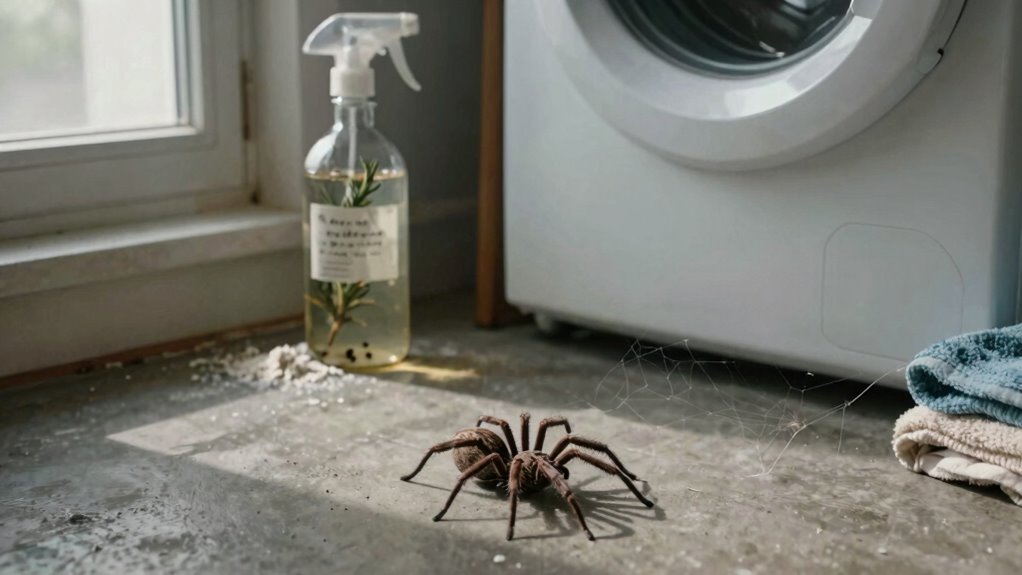
Several excellent natural spider repellents can be made at home using common kitchen ingredients.
A peppermint spray is simple: mix ten to fifteen drops of peppermint essential oil with water in a spray bottle costing around eight dollars.
Shake and spritz along baseboards, windows, and dark corners weekly.
Spiders strongly dislike the strong scent, so they will avoid treated areas.
Another effective pest control option is a vinegar solution, combining equal parts white vinegar and water in a spray bottle.
This mixture costs pennies per batch and can be used daily on entry points like door frames and sills.
The acidic smell repels spiders instantly, but it fades after a few hours and reapplication is needed.
Both methods are safe for pets and people, though the vinegar odor may make your house smell like a pickle for a short time.
Use either natural repellent to keep spiders at bay without harming them.
For best results, apply these bug deterrents weekly to maintain a spider-free home.
Additionally, scent pouches lasting 30–60 days offer a mess-free, plant-based alternative for ongoing protection.
Starve Spiders Out by Getting Rid of Their Food (Insects)
Spiders stick around for one main reason: they’re hungry. Remove their insect buffet, and they’ll eventually move on.
Start by tackling indoor attractants. Seal cracks, fix leaks, and reduce insect attracting dampness from sinks or pipes.
Outdoors, manage compost piles properly. Poorly managed composting food waste draws flies and beetles for pest control success.
Switch outdoor lights to yellow bug bulbs for about $10 to $15 each. This cuts down night-flying prey near your home.
Wipe counters and sweep floors daily to remove crumbs. These crumbs lure ants and roaches into your living space.
Store pet food in airtight containers instead of open bags. This is a key step in kitchen pest prevention.
Clean gutters and dispose of standing water weekly. This stops mosquito breeding and disrupts the spider food chain.
This isn’t glamorous, but it beats playing spider exterminator. Bottom line: crash their pantry, and the eight-legged freeloaders pack up.
Insecticidal soaps target soft-bodied pests like aphids and whiteflies, which are common spider prey, making them an effective tool for reducing the insect buffet around your home.
Declutter and Deep Clean to Remove Spider Hiding Spots
Underneath that cluttered pile of old magazines or behind that stack of storage bins is a five-star hotel for spiders. The declutter benefits are immediate: fewer dark crevices means fewer nesting sites.
Removing cardboard boxes, unused fabrics, and piled debris forces spiders to check out. Deep cleaning methods like vacuuming under furniture, washing corners with soapy water, and wiping down baseboards destroys webs and egg sacs on contact.
Removing clutter and deep cleaning destroys spider webs and egg sacs instantly.
Pay extra attention to closets, basements, and attics. Spiders love dusty, forgotten spaces, so target these areas for pest control success.
A clean room with clear floors isn’t just more pleasant. It’s actively unwelcoming to eight-legged squatters, making it an effective spider repellent strategy.
Stick to hard plastic bins with tight lids instead of cardboard. Store them off the floor to eliminate spider harborage points.
This simple, no-cost habit cuts spider real estate down to zero. It leaves them homeless and heading elsewhere, giving you lasting spider prevention.
For even more coverage in these cleaned areas, consider placing repellent pouches with sachets that slowly release plant-based scents to deter spiders naturally.
3 Outdoor Fixes That Stop Spiders at the Source
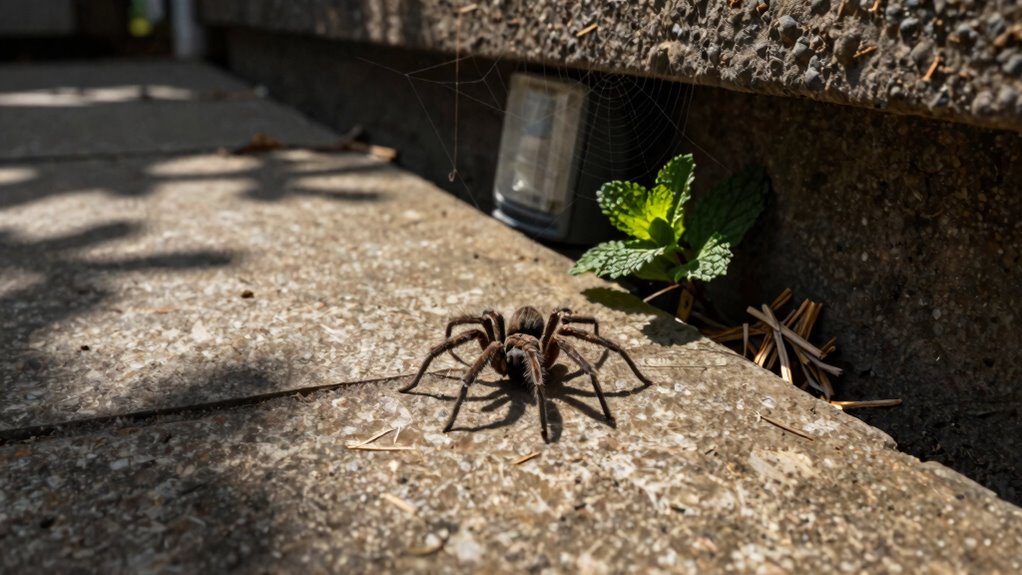
A certain smugness comes with knowing spiders are plotting their next move from just outside your walls. Stop them before they plot their indoor invasion with these three outdoor fixes for effective spider control.
Start by swapping your outdoor lighting. Swap bright white bulbs for warm yellow or sodium vapor lights. These attract fewer flying insects, a spider’s main food source. A single ten dollar yellow bulb can cut prey near your door by half, reducing pest pressure.
Next, perform serious habitat modification. Move woodpiles, leaf debris, and tall grasses at least two feet from your foundation. Spiders love hiding there, so deprive them of that cozy real estate for long term pest prevention. For a more proactive chemical barrier, consider using a Wondercide cedarwood oil concentrate that is safe for pets and pollinators when applied around your home’s perimeter.
Then seal cracks and gaps with a five dollar tube of silicone. Caulk gaps around pipes, vents, and foundation edges to block entry points without harming anything else. For extra protection, install a door sweep under your exterior doors. A fifteen dollar sweep stops spiders from crawling in under the crack while saving energy and improving home pest management.
These steps address spider origins, not just symptoms. Do them once, and the smugness shifts to your side with lasting outdoor pest control.
Your Step-by-Step IPM Plan for Long-Term Spider Control
Integrated Pest Management sounds fancy, but it is really just a smart way to outthink spiders without dousing your home in harsh chemicals. This plan uses spider migration patterns and seasonal spider behavior to stop them before they settle indoors.
For fall, when cold weather drives spiders inside, focus on sealing gaps and entry points. In spring, when they emerge, tackle outdoor clutter and debris.
Here is the breakdown for long term spider control:
| Step | Action |
|---|---|
| 1. Inspect | Check corners, basements, and light fixtures weekly for webs and activity. |
| 2. Seal | Caulk cracks for under $5 and install door sweeps for $10 to block entry. |
| 3. Clean | Vacuum webs and egg sacs regularly. Declutter storage boxes to remove hiding spots. |
| 4. Reduce Prey | Switch to yellow bulbs for $8 to cut insect attraction near your home. |
| 5. Monitor | Use glue traps for $6 per pack of 12 to track pest activity and locate hotspots. |
Bottom line is a $30, half day effort beats spraying poison every month. Stick to the seasons, skip the chemicals, and outsmart the eight legged invaders. For added protection, you can apply plant-based peppermint oil sprays around baseboards and entryways as a safe, long-lasting repellent barrier around pets and family.
Frequently Asked Questions
Can Spiders Climb Walls or Ceilings Easily?
Yes, spiders climb walls and ceilings with ease thanks to two key tricks: microscopic hairs on their feet and basic physics. Their grip relies on thousands of tiny setae that act like Velcro hooks latching onto rough surfaces for solid traction.
This wall climbing physics also uses a thin, sticky liquid on those hairs to create surface tension. It is not suction or glue, just impressive contact area that lets them crawl anywhere.
If you are dealing with a spider infestation, you will see them on your ceiling especially where insects hang around. That is a clear sign you need professional pest control products to break the web of activity.
For homeowners seeking spider repellent or spider killer sprays, focus on solutions that target both the spider and its food sources. A quality insecticide spray with residual action is often the smart purchase for long term control.
Want to keep them off your walls and out of your home? Consider barrier treatments applied to baseboards, corners, and window frames to stop climbing in its tracks. Bottom line: spiders are built for vertical living, so your pest control plan must match their abilities.
Do Natural Repellents Work on All Spider Species?
No, natural repellents don’t work on all spider species universally. Their main weakness isn’t species, it’s behavior.
Recluses and widows, which avoid open spaces, may ignore peppermint sprays entirely. Effectiveness depends more on direct contact and surface coverage than the species itself.
Consider this: spiders are hunting machines, not scent-sensitive creatures. They don’t smell danger like a dog does; they detect prey vibrations.
A limonene scent’s success relies on a spider crawling through it, and some simply won’t. They’ll just avoid the area instead.
Most spiders: peppermint or vinegar works temporarily. Recluses: rarely affected by sprays alone.
Widows: often ignore repellents entirely. Jumping spiders: more curious, sometimes less deterred.
The real trick is combining repellents with exclusion. A spider that can’t enter needs no repellent at all.
Sprays alone won’t solve a heavy infestation. Think of them as a polite suggestion, not a chemical command.
For the best spider control results, use a targeted pest management strategy that pairs natural sprays with physical barriers, sealing cracks, and reducing hiding spots. If you’re shopping for effective pest control products, look for solutions labeled for specific spider types and apply them directly on entry points and dark corners where spiders roam.
Will Vacuuming Remove Spider Eggs Completely?
Vacuuming gets most spiders, but complete egg removal is a gamble. The suction often crushes sacs, yet egg sac survival depends on the species and sac toughness.
Those tough, leathery ones can withstand a vacuum trip. The real trick is vacuum crevices, baseboards, and under furniture, then immediately sealing the bag.
An egg sac might lodge in a hose cranny, later hatching. For reliability, swap to a crevice tool, then burn the bag, preferably with dramatic flair.
For thorough pest control, always target hidden egg sacs during spider extermination. A high suction vacuum with a HEPA filter boosts your chances of spider egg removal.
If you want reliable spider control, pair vacuuming with a residual spray or insecticide dust. This ensures any surviving eggs won’t hatch into a new infestation.
Buying a bagless vacuum with a sealed canister helps you inspect and dispose of egg sacs fast. For the best pest control results, combine vacuuming with professional grade spider killer products.
Are There Any Plants That Naturally Repel Spiders?
Some plants do repel spiders, but don’t expect a magic shrub. Spider plants, lavender, and mint produce scents spiders dislike, similar to aromatic oils.
Chestnut placement, especially tucking horse chestnuts in corners, is a folk remedy with mixed results. Peppermint oil sprays work much better as a natural pest control solution.
Use them weekly near doors and windows to keep spiders out of your home. It is not perfect, but it beats spraying toxic chemicals around your family.
For serious infestations, skip the plants and seal foundation cracks instead. If you want effective spider control products, start with a good caulk and peppermint spray combo.
How Often Should I Reapply Natural Spider Repellents?
Natural spider repellents like vinegar or essential oils need reapplication every 3 to 7 days, depending on how long the scent lasts and where you apply them.
Sprays on porous surfaces like wood or fabric fade faster, sometimes within 48 hours, while non-porous walls and glass hold the treatment much longer.
Peppermint oil typically sticks around for 3 to 5 days, but vinegar evaporates quicker, so plan on refreshing it more often.
A light misting on corners every 4 days works well for maintenance, but heavy dampening on baseboards can stretch your protection to a full week.
Here is the simple rule to follow: if you can no longer smell the repellent, it is time to reapply.
Stubborn areas like attics or crawl spaces merit weekly attention, while high-traffic spots near doors and windows will need a more frequent schedule.
For the best pest control results, test a small patch first to avoid staining, then refresh your natural spider spray after cleaning or dusting.
This keeps the active compounds active and ensures your homemade spider deterrent stays effective.
When you are shopping for natural repellents, look for concentrated peppermint or eucalyptus oil with high purity, as these are top-rated spider control products for home use.
Buy a spray bottle with a fine mist nozzle to cover larger surfaces evenly, and pair it with a residual indoor pest barrier if you want longer-lasting spider prevention.
Remember that essential oil blends for spiders work best as a proactive measure, not a reactive fix for heavy infestations.
For serious spider problems, combine your natural spray with glue traps and sealing cracks, then reapply your repellent after any rain or heavy foot traffic.
The key is consistent rotation: mark your calendar for every 4 to 5 days in kitchens and bathrooms, then shift to weekly for less used rooms.
This routine keeps your chemical-free spider control working around the clock, saving you money on professional pest services.
If you want maximum efficiency, choose cedarwood or citrus-based sprays that last closer to the 7 day mark on smooth surfaces.
Just remember that natural spider repellents do not kill spiders instantly, so you will also need to clear existing webs and egg sacs as part of your integrated pest management plan.
For high humidity areas like basements, increase your reapplication frequency to every 3 days, since moisture breaks down the essential oils faster.
With this practical timeline, you will keep spiders out of your living spaces without harsh toxins, while making a smart purchase on products that actually deliver.


