
Carpenter ants vs. black ants—spotting the difference is easier than you think once you know what to look for. If you’ve noticed winged ants inside your home or fine wood shavings near baseboards, you might be dealing with structural damage, not just a nuisance.
This identification guide breaks down their size, thorax shape, and nesting signs so you can act fast. You’ll learn when DIY cleanup works and when a professional treatment—typically $100 to $300—is worth it.
Below, we’ll round up the best ant control products to match your situation.
At A Glance
- Carpenter ants measure ¼–½ inch; black ants are smaller and uniformly dark.
- Carpenter ants have a smooth, rounded thorax; black ants display a distinct notch.
- Carpenter ants have elbowed antennae and a one-segmented waist; black ants vary.
- Winged carpenter ants keep transparent, veined wings; black ants shed theirs quickly.
- Carpenter ants leave sanded wood shavings without mud; termites show mud-lined galleries.
Carpenter Ant vs. Black Ant: The 3-Second Visual Test
Three seconds is all it takes to tell carpenter ants from black ants. This simple test can help you avoid costly pest control mistakes later.
Three seconds is all it takes to tell carpenter ants from black ants.
Carpenter ants are larger, ranging from ¼ to ½ inch long. They come in black, red, or brown, never pure black.
Check the thorax from the side: it should be evenly rounded and arched. There should be no indentation or pinched look.
Look for elbowed antennae and a one segmented waist. These traits confirm you are dealing with carpenter ants.
Their parent nests require damp wood with moisture above 15%. Satellite nests form in drier spots like wall voids.
A fringe of fine hairs at the rear tip is a dead giveaway. Black ants lack this feature entirely.
Black ants are tiny, uniform black, and always nest in soil. They cause no wood damage or structural drama.
If you see a large, multi colored ant indoors at night, act quickly. Immediate carpenter ant control can prevent serious damage.
The 3 Visual Clues That Trick Homeowners Into Misidentification
Many homeowners mistake carpenter ants for harmless black ants, but a few key details reveal the truth.
Size matters, since carpenter ants are noticeably larger and can reach up to half an inch in length.
They also come in reddish or multicolored shades, rather than the uniform black of common house ants.
Their thorax is evenly rounded with no distinct indentation, which sets them apart at a closer look.
Winged swarmers keep their transparent wings long after mating, while black ants shed theirs quickly.
For effective pest control, checking these physical traits helps avoid misidentification before you treat the wrong species.
If you need ant removal services, knowing these signs can guide your call to an exterminator.
Proper identification ensures targeted carpenter ant treatment and prevents structural damage from overlooked nests.
Use a magnifying glass to inspect the waist and wing placement, and you will confirm the species with confidence.
Contact a local pest management professional if you see sawdust trails or hear faint rustling inside walls, both classic carpenter ant activity.
For treatment, look for sprays containing pyrethroids since they are recommended for wood-boring pests like carpenter ants.
Size and Color Variation
Size and color are the first things homeowners notice when they spot a big black ant indoors, but those features often mislead you.
Color variation is a classic trap because carpenter ants can appear black, red, brown, or even tan, sometimes with multiple shades on one body.
True black ants stay uniformly dark, which makes casual identification tricky.
A lone black worker might actually be a minor carpenter ant, barely half an inch long, so size alone won’t save you.
The same colony’s major worker can stretch to nearly half an inch and pack twice the bulk, which is a key sign of polymorphic workers.
Reddish legs on a dark body are a strong indicator of carpenter ants, not typical black ants.
Shiny, smooth cuticles versus dull, matte finishes are another quick way to separate species fast.
This size spread within one nest often fools people into thinking they have two different pests.
For effective pest control, measure twice and spray once, because misidentification leads to wasted treatments.
Don’t trust hue or heft alone; grab a magnifier and inspect the thorax to confirm before buying any ant killer.
If you’re dealing with a recurring indoor invasion, a professional inspection can pinpoint the nest and save you time.
Knowing the exact species helps you choose the right bait or spray for lasting results.
For carpenter ants, using a slow-acting poison ensures foraging workers carry bait back to the colony to eliminate the queen and nest.
Thorax Profile Differences
When comparing carpenter ants and black ants, the thorax shape is the most reliable way to tell them apart.
From the side, a carpenter ant has a smooth, evenly rounded thorax with no notch or pinch.
A black ant that is not a carpenter will show a clear notch or pinched area on the thorax.
This visible indentation makes the profile appear segmented rather than smoothly arched.
The node count can also help with identification.
Carpenter ants always have one node, while non-carpenter black ants may have one or two nodes.
Homeowners often confuse carpenter ants with field ants, and non-carpenter black ants are frequently mistaken for carpenters.
These three visual clues fool people every day, so always check the thorax shape instead of relying on color.
Using this simple profile check during pest inspection can prevent misidentification.
Correctly identifying carpenter ants is essential for effective ant control and targeted treatment.
To ensure safe treatment around your home, look for a non-toxic natural repellent that is proven effective against crawling insects.
Wing Duration After Swarming
One reliable clue for telling carpenter ants from black ants is what happens after they swarm. Carpenter ant reproductives drop their wings soon after mating, whereas many black ant species keep theirs longer.
This wing duration difference can trick homeowners who find wings inside and assume they faced a recent swarming period. If you find a pile of wings near a window, look closely: carpenter ant wings are shed cleanly, with a tiny joint still attached, like a broken ring.
Black ant wings, still attached to a dead swarmer, tell a different story. They are stubborn, requiring a tug to remove.
Check the wing color for a simple pest control tip. Carpenter ant wings are translucent with prominent veins, while black ant wings appear uniformly dark.
Spot a freshly mated queen outside, dragging her abdomen. Carpenter ants land and immediately snap off wings, whereas black ants often keep wings for a day.
The bottom line: if you find loose wings scattered, suspect carpenter ants. If wings stay attached to bodies, think black ants and schedule a home inspection.
Carpenter Ants Destroy Wood; Black Ants Don’t: Here’s the Difference
Although carpenter ants and black ants both have six legs, their real difference is what they do to your house. Carpenter ants chew through wood to build nests, leaving smooth tunnels and piles of fine wood shavings like pencil shavings.
Black ants nest in soil and cause no structural damage at all. A DIY fix for carpenter ants is very difficult because you must find and eliminate the queen, often needing professional pest control.
The cost impact can be severe, from repairing damaged wood to hiring an exterminator, running hundreds to thousands of dollars. Black ant issues are simpler: seal cracks, remove food sources, and they are gone.
If you see large black ants indoors at night, suspect wood damage first. This is your sign to call a pest control service for a thorough inspection and treatment.
What Carpenter Ant Damage Actually Looks Like (Wood Shavings and Clean Tunnels)
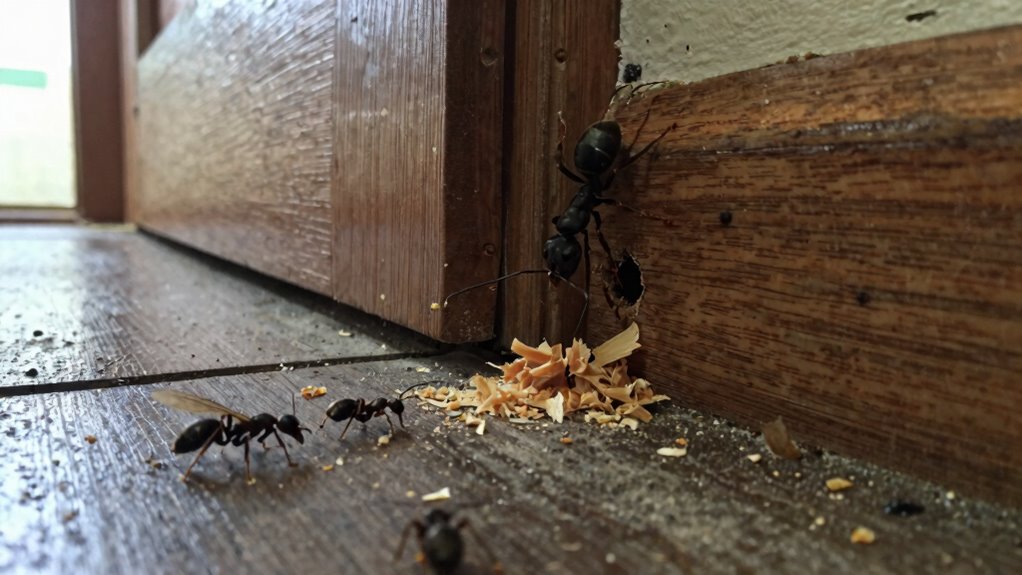
Carpenter ant damage leaves two unmistakable signs: piles of wood shavings that look just like pencil shavings minus the graphite. Their tunnels are so clean they appear sanded by a tiny perfectionist with a grudge.
These smooth, irregular galleries cut right across the wood grain. This is different from termite damage, where tunnels follow the grain and are lined with mud.
If you spot little sawdust piles and spotless passageways in your walls, you likely have carpenter ants, not termites. For effective pest control, you need to act fast before they cause structural issues.
Homeowners often confuse this with termite activity. But knowing what carpenter ant damage looks like helps you request the right treatment from a professional exterminator. For targeted elimination, an aerosol spray foam can be applied directly into wall voids and cracks to reach hidden nests and provide lasting control.
Pencil-Shaving Piles
A telltale sign of carpenter ant activity is a pile of pencil-shaving-like debris, often mistaken for sawdust. This means they have been chewing, not eating, wood inside your walls.
These piles are your first clue, not your last. The debris consists of fine, shredded wood fragments like fresh pencil shavings after a long sharpening session.
Mixed in with the shavings you may find insect parts, bits of dead ants, and tiny seed husks from their foraging. The pile sits directly below a small, clean hole they use as an exit, with no dirt or mud, just wood dust.
This debris indicates wood decay is nearby, often around satellite nests in drier, warmer spots. Ignore the pile and the colony grows, but spot it and you have found the problem.
Check ceilings and crawlspaces, as that is where they hide. A professional pest control inspection can confirm the nest location and stop the damage.
Clean, Smooth Galleries
A clean carpenter ant gallery has a smooth, sanded wall texture. The wood grain is cut across rather than followed, leaving no debris inside.
This is very different from termite damage, which leaves rough mud lined tunnels. Termites also leave behind mud and soil inside their galleries.
You will see no mud or soil in carpenter ant tunnels. The opening debris looks like pencil shavings, not termite frass or mud tubes.
Carpenter ants create multiple satellite nests instead of a single colony. This quiet destruction happens without any messy mud or soil.
The tunnels look almost as if the wood was sanded before they moved in. That clean smooth appearance is a clear sign of carpenter ant activity. Because these ants do not consume wood, they simply excavate it, making them a distinct threat that requires an eco-friendly, chemical-free approach to pest control.
How to Trace Foraging Trails Back to the Parent Nest (Critical for Elimination)

Look for steady ant lines moving along baseboards, fence edges, or tree branches after dusk, their bodies catching flashlight beams. Watch where they carry food, such as white insect parts or dead bugs, and track the direction they’re heading toward the nest.
Notice the pace: rushed, purposeful ants with full mouthparts mean a satellite nest is nearby, not the parent colony. Check for clean, sanded wood shavings near wall voids or damp wood, which signal the parent nest’s entrance where the queen hides.
Follow the trail backward from food to source; the parent nest is where moisture and decay meet a steady stream of ants. For effective ant control and long term pest elimination, you must locate this primary hive to stop reinfestation at its origin.
Once you find that moist, decaying spot, you’ve pinpointed the colony’s core, which is critical for targeted extermination services. You’ll find it by checking behind appliances, under leaky pipes, or along foundation cracks where condensation collects. Apply a residual powder directly into the nest entrance and along foraging trails to kill the queen and provide up to eight months of ongoing protection.
Winged Carpenter Ants Indoors: Your Emergency Response
You have spent hours following ant trails, checking damp wood, and vacuuming shavings, only to see a winged carpenter ant on your windowsill. This is not just any ant: it signals a mature colony, likely over three years old, that is nesting nearby, possibly inside your walls.
Unlike common black ants that wander in for crumbs, carpenter ants tunnel into wet wood and can weaken your home’s structural integrity. Those wings are shed after mating, so spotting one is a clear warning of a potential new infestation.
Grab a flashlight and inspect for smooth, clean galleries in wood near leaks or window frames. This quick check helps you confirm carpenter ant activity and decide on the right pest control solution.
If the colony is large, expect to pay $100 to $300 for a single professional treatment, but fixing moisture issues and sealing entry cracks cuts long term costs. Immediate action now prevents expensive structural repairs later from carpenter ant damage.
For effective carpenter ant removal, call a licensed exterminator to perform a thorough inspection and targeted crack sealing. They can locate the main nest and apply a bait or dust treatment that eliminates the queen.
Your smartest investment is a professional inspection, which also protects your home from future ant infestations and helps you avoid repeat service fees. Apply Bifen LP granules around the foundation after repairs to create a long-lasting 90-day barrier against re-infestation. Act today to stop these winged swarmers from breeding another colony inside your house.
How to Eliminate Carpenter Ants (Black Ants Don’t Need This)
Patience is a virtue, but it has no place in carpenter ant control. These ants don’t just wander in; they establish a parent nest in damp wood and satellite nest locations in drier spots, like wall voids or roof eaves.
Dampness management is step one. Fix leaks, replace rotten fascia, or you’re just inviting them back.
Then, physically remove infested wood and vacuum up galleries. Crunching through pencil shaving piles beneath a baseboard, finding a hidden satellite nest in an attic joist.
Spraying a non repellent dust into wall voids, watching the colony slowly starve over weeks. Using a moisture meter to confirm wood is below 15% after repairs, a satisfying little victory.
Tracing foraging trails at dusk with a flashlight, marking every crack they use to enter. Only by destroying all nests, both parent and satellite, do you win.
Black ants? They just need a sealed crack and a clean counter.
Non-invasive pinless moisture meters are ideal for scanning finished surfaces like painted walls or tiles without leaving unsightly holes.
Why Black Ant Control Is Simple: Soil Nests, Seal Entry Points, Remove Food
Pour boiling water directly into the nest mound for a free and effective black ant control method. Then seal all foundation cracks with caulk to block future ant entry points.
Keep food sources removed by sweeping floors daily and storing pet kibble in sealed containers. These ants do not damage wood, so no structural treatments are needed.
Your main goal is to keep the soil dry and the counters clean. This simple approach stops ants without requiring chemical sprays or professional pest control.
Frequently Asked Questions
What Time of Year Are Carpenter Ant Swarmers Most Active?
Carpenter ant swarmers are most active from March through July, with their peak activity happening in late spring. This is their swarming season, and it’s driven by warm, humid conditions that trigger their nighttime mating flights.
A mature colony, usually three to six years old, will release these winged ants to start new nests. If you spot swarmers indoors, especially near windowsills or lights, it often means a parent nest is lurking somewhere in your home.
The queen is likely hiding in a damp space like a crawlspace or behind a leaky pipe. That’s why you need a professional carpenter ant inspection and a targeted treatment plan right away.
Don’t wait for the problem to grow: timely ant control products like gel baits, dusts, or foam sprays can stop them before they cause structural damage. For long term pest prevention, seal cracks and fix moisture issues to make your home less attractive to these wood destroying insects.
Do Carpenter Ant Wings Fall off After Swarming?
Yes, carpenter ant wings fall off after swarming, but not right away. This wing loss is a key part of swarmer behavior that every homeowner should recognize.
Winged reproductives fly off to mate, then land and shed their wings. After mating, the female chews her wings off because they are no longer useful, while the male dies shortly after.
Finding piles of shed wings near windows or doors is a clear sign a swarm has occurred nearby. This is often the first clue you need to call a professional pest control service for an inspection.
If you spot these wing piles, it means a new carpenter ant colony could be starting inside your walls. Acting fast with targeted pest control products or a local exterminator can prevent structural damage.
Look for other signs like sawdust frass, hollow sounding wood, or ant trails to confirm an infestation. For a smart purchase, choose foam sprays, dust insecticides, or bait stations designed specifically for carpenter ant elimination.
Can Carpenter Ants Infest Dry, Undamaged Wood?
Carpenter ants can infest dry wood, but only if a dampness problem is present. They don’t eat wood for nutrition, they hollow it out for nests.
Infestation signs include piles of wood shavings, like pencil sharpener dust, and smooth, clean galleries carved across the grain. This wood damage type is structural, but it starts with leaks or condensation.
Dry wood alone won’t attract them. The bottom line is you need to check for dampness first, otherwise you’re just treating the symptom, not the cause.
Finding damp wood or moisture issues is your number one clue for effective carpenter ant control. Using a moisture meter can help you pinpoint areas where these pests will target for nesting.
If you spot sawdust or frass, look behind leaky pipes or in crawl spaces. A professional pest inspection can identify the hidden moisture source and recommend the best ant bait or spray treatment.
Buying a reliable dehumidifier or fixing gutter drainage will stop future infestations. Treating the dampness eliminates the reason carpenter ants hollow out wood in your home.
How Long Can Carpenter Ant Colonies Go Undetected?
Carpenter ant colonies can go undetected for three to five years, sometimes longer. This silent damage happens inside walls and hidden nests within wood cavities, making early pest control inspections critical.
These ants avoid detection by working at night and leaving only faint wood shavings outside. A mature colony will produce swarmers around year four, often the first obvious sign of a serious infestation.
That sudden sighting is a rude awakening for many homeowners. To catch these stealthy excavators early, you should regularly check for dampness near windows and pipes.
Routine moisture control is a key part of effective ant prevention. Taking action now can save you from costly repairs and major headaches down the line.
What Causes Moisture That Attracts Carpenter Ant Nests?
Carpenter ant nests need moisture, plain and simple. Leaky pipes, poor drainage, or condensation in attics decay wood, making it soft enough to chew.
This dampness hits over 15% moisture content, their sweet spot for parent nests. Think roof leaks or gutters clogged with leaves. They are like open invitations, frankly.
Fix these moisture sources first, and you will dry up their real estate. No damp wood, no colony, end of story.


