
Getting rid of fruit flies naturally doesn’t require harsh chemicals or expensive traps—just a few smart habits and a simple DIY setup. Those tiny pests can smell overripe fruit before it even hits the counter, so staying ahead of them is key.
Start by tossing any overly ripe produce, flushing drains with boiling water weekly, and wiping down surfaces to break the breeding cycle. For an effective trap, mix ¼ cup apple cider vinegar with a drop of dish soap in a jar, punch small holes in the lid, and place it near the sink.
Replace that trap every two weeks, and you’ve solved the problem for less than a dollar. In the next sections, we’ll cover a no-catch-and-release method and how to seal off entry points for good.
At A Glance
- Eliminate attractants by removing overripe produce and cleaning kitchen grime daily.
- Use an apple cider vinegar jar trap with dish soap to break surface tension.
- Pour boiling water down sink drains weekly to clear fermenting residue.
- Seal gaps around windows and doors to prevent outdoor flies entering.
- Place yellow sticky traps to monitor and capture adult flies without chemicals.
Why Fruit Flies Invade Your Kitchen (And How to Prevent It)
Fruit flies invade your kitchen for one simple reason: they smell food before you do. They detect fermenting odors from overripe produce, spills, or even damp organic residue in drains.
High kitchen humidity helps them thrive, providing moisture that supports breeding in hidden spots like sink traps or under appliances. These pests likewise slip in through outdoor entry points like cracks around windows, poorly sealed doors, or open vents.
Once inside, a single female fruit fly can lay hundreds of eggs near a food source. The key is to eliminate those attractants early with proactive pest control, not just clean later.
The key is to eliminate those attractants early with proactive pest control, not just clean later.
Check your fruit bowl daily and toss anything soft. Keep drains dry with weekly boiling water flushes for effective drain fly prevention.
Seal gaps around windows and doors using weather stripping or caulk to block entry. Consider professional pest control services if infestations persist. For persistent problems, strategically placed options like plant-based liquid traps can safely capture flies near food prep areas without using harsh chemicals.
It’s not glamorous, but it beats sharing your banana with uninvited guests.
Remove What Attracts Fruit Flies: Clean Your Kitchen
Though cleaning may not be your favorite weekend activity, it is the most effective defense against a fruit fly invasion. These pests thrive on the kitchen grime you ignore, so removing their food sources is essential.
Take out the garbage daily, especially if it contains overripe produce or sticky spills. Pour boiling water down sink drains each week to clear out the fermenting gunk that attracts flies. Storing any remaining produce in fruit fly proof containers helps keep them sealed away from pests.
Wipe countertops, floors, and cutting boards with soapy water to erase any sugary residue. A clean kitchen starves the enemy and stops an infestation before it starts.
The Easiest Trap: Apple Cider Vinegar Jar Method
The apple cider vinegar jar method is a simple fruit fly trap that uses a jar, vinegar, and dish soap.
Assembly takes less than five minutes by punching small holes in the lid and pouring in a quarter cup of vinegar.
Add a few drops of dish soap to break the surface tension.
This cost effective trap lures flies with the fermenting scent of vinegar.
The soap ensures they drown instead of escaping.
This plant-based active ingredients method minimizes health risks around kids and pets.
This homemade pest control solution works for under a dollar.
Materials Needed
– A mason jar or any clean glass jar with a tight-fitting lid works perfectly for this fruit fly trap. You need about 12 ounces of space for the bait.
Apple cider vinegar, ¼ cup is the best lure because real vinegar smells like fermenting fruit to pests. Avoid balsamic vinegar since it smells like rotting fruit to flies and won’t attract them.
Three to five drops of liquid dish soap break the water’s surface tension so flies drown instead of float. Any brand of soap works for this natural pest control method.
A small hammer and nail, or a toothpick, are used to punch holes in the lid for easy entry. That’s it. No fancy gadgets or expensive chemicals needed.
The soap does the heavy lifting while the vinegar does the luring for a simple DIY pest solution.
This household pest remedy is practical, friendly, and highly effective for quick results. Boric acid targets different pests like cockroaches, ants, and silverfish when applied as a powder in cracks and crevices.
Step-by-Step Assembly
Start by gathering that mason jar and lid you just read about. Punch about a dozen small holes in the lid, each roughly the size of a pencil tip.
Pour in ¼ cup of apple cider vinegar. The smell mimics fermenting fruit perfectly to attract fruit flies.
Add three drops of dish soap. This breaks water tension so flies cannot float on the surface.
Screw the lid on tight. Place the jar near your compost bin or sink after a thorough drain cleaning.
Fruit flies will plunge into the holes and hit the vinegar. They will drown quickly in this effective pest control solution.
It is grim but effective, like fly rated pest control on a budget. Leave it out until the jar fills with bodies, usually a week or two.
Replace the mixture if it gets too funky. This homemade trap uses household staples and costs under a dollar.
It stops the breeding cycle cold. No hype, just dead flies and a clean kitchen.
This method works best when pantry staples are stored in airtight containers to prevent future infestations from taking hold.
Plastic Wrap Method to Catch More Fruit Flies
Facing a fruit fly invasion with only plastic wrap and a jar feels unconventional, but it works like a targeted pest control trap.
This method taps into the flies’ attraction to fermenting fruit scents using a precise vinegar concentration, typically half a cup of apple cider vinegar plus a drop of dish soap.
The tight seal over the jar’s opening, secured with a rubber band, guarantees no easy escape routes.
Flies get in, but they are not getting back out, which makes this a reliable DIY fruit fly killer.
Strategic holes, poked with a toothpick, are just big enough for entry but too small for exit.
This ensures high capture rates while keeping the bait contained, a key feature for effective fruit fly elimination.
The scent bait mimics overripe produce, drawing them in from across your kitchen.
The dish soap breaks the liquid’s surface tension, so the flies drown quickly, reducing your insect infestation without harsh chemicals.
This passive trap uses no electricity and works continuously like bait and liquid traps found in stores.
Empty the jar when it looks unsightly, and repeat the process as needed.
For ongoing pest prevention, keep the trap near drains, compost bins, or fruit bowls, and you’ll see a noticeable drop in indoor bug populations.
This low-cost solution is perfect for homeowners seeking natural pest control options.
It’s a simple, repeatable bug trap that targets the source of the problem, making it ideal for quick pest removal.
Funnel Trap for Releasing Fruit Flies Outdoors
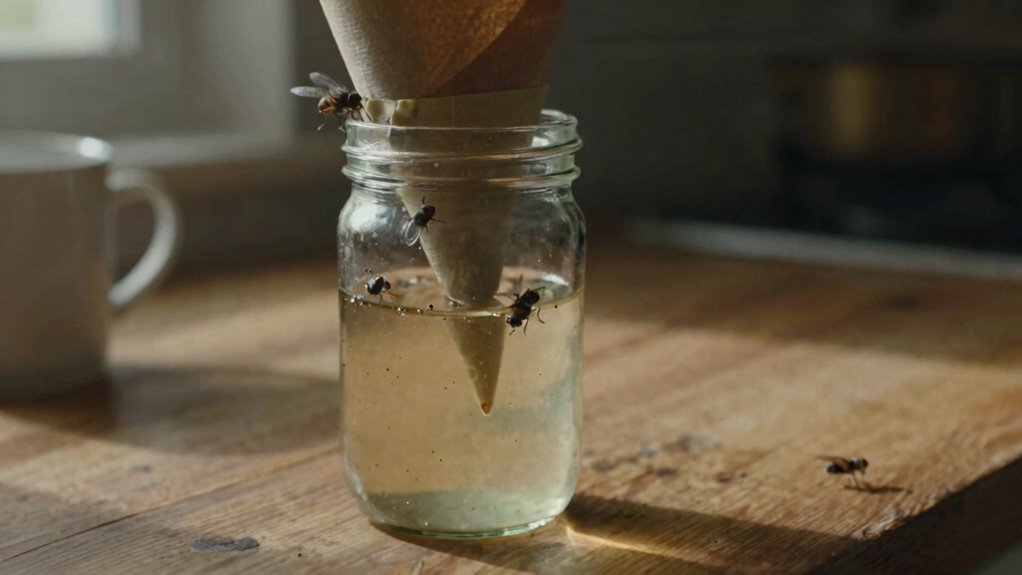
The funnel trap uses half an inch of apple cider vinegar in a jar as bait. Rolled paper forms a cone secured by tape, with no liquid on the funnel itself.
Fruit flies enter through the narrow tip but cannot escape back out. To release them outdoors, walk far from the house and lift the funnel gently.
This simple pest control method lets the swarm fly free without chemicals. For effective fruit fly removal, repeat the trap setup as needed. Fruit flies are naturally attracted to bright yellow traps that use non-toxic glue and require no chemical pesticides.
Funnel Assembly Steps
Patience, like a good sourdough starter, rewards those who give it time and a little gentle prodding.
For the funnel trap, assembly is simple, but funnel stability matters. A wobbly funnel lets flies escape before the release. Use tape to secure the paper cone, ensuring it sits snugly on the jar rim without touching the bait.
Roll a piece of paper into a cone, tape it firmly, and trim the tip to a dime-sized opening. Place the funnel onto the jar, checking for gaps that compromise funnel stability. Unlike ant baits containing Abamectin at 0.011%, which require careful placement to avoid moisture, this trap relies only on a steady position to lure fruit flies inward.
Choose trap placement carefully, set it near fruit or a sink drain, but away from drafts that might knock it over. A few stray flies might mock you from the kitchen, but the trap will soon gather them neatly for an outdoor parole. No drama, just results.
Bait and Liquid Depth
With the funnel secured and the jar ready, the next question is what goes inside. The bait is simple: half an inch of apple cider vinegar for your fruit fly trap.
This depth, not more or less, is vital since fruit flies drown in vinegar, not air. Too much liquid gives them a chance to escape.
Vinegar concentration matters. Standard five percent acidity works best, smelling like fermenting fruit without being overpowering.
A tiny drop of dish soap breaks the surface tension. This sounds fancy but just makes them sink fast, improving your pest control results.
You may wonder about trap placement near sinks or fruit bowls. Avoid direct sunlight, where the vinegar evaporates too quickly.
Keep the liquid shallow and the vinegar standard. Place the trap within a few feet of the problem for effective insect removal.
That is it. The flies do the rest, or they drown trying.
For persistent infestations, consider supplementing this trap with a non-electric swatter to quickly eliminate any lingering adults.
Outdoor Release Technique
Lift the funnel straight up, walk at least fifty feet from the house, and tilt the jar to let those little buzzers fly free. This outdoor release technique works best with a funnel trap since the flies enter easily but can’t escape back inside, making relocation simple for effective pest control.
Travel distance is key: move far from entry points because flies have short range and will find new homes elsewhere. Timing matters too, so release during daylight in mild weather. Cold slows them down, and heat dries them out.
No soap is needed for this method. Unlike drowning traps, it keeps flies alive, so avoid adding dish soap to the vinegar bait.
The funnel trap is cheap at under $5 with a mason jar and fully reusable. It’s a gentle option, letting you capture and release without killing. Just walk far enough, or they’ll be back for dinner. For indoor use, clear sticky strips provide a non-toxic alternative that safely traps flies without chemicals.
The Rotten Fruit Trap for Stubborn Flies
For truly stubborn fruit flies that ignore the vinegar trap, a rotten fruit trap offers a more direct form of justice. This method uses fermenting bait like chopped past‑prime fruit to lure the most persistent pests into a pest control solution. For long-term outdoor protection, consider using UV-resistant waterproof traps that last up to three months in rain or sunlight. Place the bait in a bowl and cover tightly with plastic wrap. Secure it with a rubber band, then poke small holes with a toothpick for entry.
The flies enter the trap, but the holes are too tiny for escape. Trap relocation is key to getting rid of fruit flies effectively.
Move it near the infestation source, not just the countertop. Leave it out until you stop seeing flies, then dump the mess outside.
It is gross, yes, but effective when you are losing patience. Think of it as the final humiliating feast for the holdouts.
The bottom line is straightforward for home pest control. When vinegar fails, go rotten for a surefire fruit fly killer.
How to Prevent Fruit Flies From Coming Back
So you’ve won the battle, but fruit flies are clever little grifters who don’t forget a good home. Long term pest control means breaking their cycle before they even think of returning.
Seasonal sanitation is your new mantra, especially as summer heats up. Store produce in the fridge immediately after washing, and toss any overripe fruit into an outdoor bin.
A clean kitchen counter is a boring kitchen counter to a fruit fly. Fix damp areas like sink drains and garbage disposals by pouring boiling water down them weekly.
Dampness is their nursery, so declare it a no‑fly zone for effective fly prevention. Use a simple apple cider vinegar trap as a sentinel all season and replace it monthly.
It is a cheap, passive home remedy that catches any stragglers before they throw a party. The bottom line is stop breeding before it starts for long term pest management.
Sanitation now saves swatting later, and these fly repellent tips keep your kitchen protected. For similar pest control indoors, yellow sticky traps passively monitor adult populations and catch stragglers without any mixing or chemicals.
Frequently Asked Questions
Can Fruit Flies Survive in the Refrigerator?
Fruit flies can briefly survive in a refrigerator, but cold survival is limited. The low temperature slows their metabolism dramatically, extending their lifespan to a few extra days rather than the normal week or two.
They won’t reproduce in the fridge. So, although a fridge stuns them, it’s not a permanent solution. More like a cold timeout than a knockout.
A few may revive when warmed, but most succumb within hours. For real fruit fly control, you need a targeted trap or spray to eliminate the breeding source.
If you want to stop them for good, consider a professional grade fruit fly killer. These products work faster and more reliably than a simple cold shock.
Will Vinegar Traps Attract More Fruit Flies Indoors?
No, properly made vinegar traps will not attract more fruit flies indoors. The apple cider vinegar type lures those already present without summoning new ones from outside.
Trap placement matters a lot for effective pest control. Set jars near breeding spots like overripe fruit or sink drains, not by windows.
The flies already infest your kitchen, so a good trap redirects them from your fruit bowl to a watery grave. One caveat: if your trap leaks or you leave it uncovered, it smells like a fly frat party.
Keep the entry holes tiny to prevent a bigger infestation. For the best fruit fly killer, choose a brand with a narrow opening and a nonstick reservoir.
You can also buy commercial fruit fly traps that use a similar vinegar lure but last longer. These products often include a sticky surface to catch adult flies quickly.
How Long Does It Take to Eliminate Fruit Flies?
Eliminating fruit flies usually takes one to two weeks, and their life cycle stages from egg to adult span about eight to ten days. DIY remedies like apple cider vinegar traps are effective for catching adults daily and breaking that cycle.
Consistency is key, so leave traps out until zero flies appear for three days straight. Faster results follow if you remove breeding sites immediately, such as overripe fruit or damp drains.
Patience pays because any surviving eggs hatch within days, so diligent trapping is essential. Combining sanitation with the right pest control products finishes the job, usually within two weeks.
For a smart purchase, look for fruit fly traps, sticky traps, or drain treatments that target breeding grounds. These effective pest control solutions work best when you act fast and stay consistent.
Are Store-Bought Fruit Fly Sprays Safe for Pets?
Store-bought fruit fly sprays are generally safe for pets when applied correctly. They usually contain pyrethrins, natural insecticides that break down quickly and keep pesticide residue low.
Wait until all treated surfaces are fully dry before letting pets near them. Avoid spraying directly on food bowls, water dishes, or pet bedding to prevent ingestion.
For extra peace of mind, consider using fruit fly traps instead of sprays. Traps are foolproof and pet friendly, making them a smart choice for homes with curious animals.
Always read the product label and ventilate the room during application. This minor effort gives you major peace of mind while controlling the infestation.
If you need a long term fruit fly solution, opt for sprays with low toxicity or non chemical alternatives. Choosing the right pest control product keeps both your home and your furry companions safe.
Do Fruit Flies Bite Humans or Contaminate Food?
Fruit flies do not bite humans, and their diet is strictly liquid based like fermenting produce and sugary spills. The real risk is disease transmission, as they shuttle bacteria from garbage to fresh food in your kitchen.
They contaminate surfaces through vomit and feces, not through wounds or bites. Think of them as tiny, unsanitary couriers spreading germs across your countertops.
To keep your kitchen safe, remove overripe fruit quickly and clean drains regularly. A simple apple cider vinegar trap works well, but prevention beats the chase.
A fruit fly infestation can escalate fast if you ignore moist areas or trash bins. Professional pest control products like sticky traps or drain gels offer targeted solutions for persistent problems.
Buyer intent often centers on fast elimination and long term prevention. Using a commercial grade fruit fly spray near breeding sites stops the cycle without harming pets or people.
Cheap and easy methods help, but a strategic pest control plan keeps your home truly safe. Prioritize sanitation and choose the right tool to break the fruit fly life cycle completely.


