
Fleas coming back is almost never bad luck—it’s a missed hiding spot. The 95% of the infestation living as eggs, larvae, and pupae in your carpets and bedding will reinfest your pet within days if ignored.
To prevent fleas from coming back, you need to treat the whole household, not just the animal, and stick to a strict schedule for at least two months. This guide breaks down exactly which monthly chews work for dogs, why cat products are a no-go, and how to handle laundry and vacuuming without burning out.
We’ll also cover what happens if you miss a dose and how to tell when the cycle is truly broken.
Keep reading—the full plan is straightforward, and you’ll be done with fleas for good.
At A Glance
- Treat all pets monthly year-round with species-appropriate prevention to stop reinfestation.
- Vacuum carpets daily to remove 90% of eggs and larvae before they mature.
- Wash all pet bedding in hot water weekly to kill hidden eggs and larvae.
- Clean home every two days for two to three months to break the flea life cycle.
- Treat outdoor shaded areas with insect growth regulator to prevent external reservoirs.
The 95% You Can’t See: Flea Eggs, Larvae, and Pupae
It is a humbling arithmetic problem, that flea math. Only 5% of a flea population lives on the pet.
It is a humbling arithmetic problem, that flea math. Only 5% of a flea population lives on the pet.
The other 95% lurks unseen in the home. This hidden majority includes 50% eggs, 35% larvae, and 10% pupae.
A single missed preventive dose allows the cycle to continue. Flea egg dormancy can last weeks in carpets, waiting for a warm host.
Environmental hotspot mapping focuses vacuuming on pet resting areas to disrupt this cycle. Daily vacuuming removes up to 90% of eggs and helps control flea infestations.
Wash pet bedding weekly in hot water. Use an insect growth regulator to sterilize eggs and stop larvae.
For targeted control on pet bedding and carpets, food-grade diatomaceous earth kills fleas on contact via mechanical dehydration within 24–48 hours.
Ignoring the invisible 95% guarantees reinfestation. Treating only the pet is like mopping the floor with the faucet still running.
Why One Missed Dose Brings Fleas Right Back
A single missed dose of flea prevention gives the population a full reboot, thanks to their rapid reproduction rate. Once the medication wears off, that lonely female flea can lay up to 50 eggs daily in your home.
Within weeks, this can fill your space with thousands of new pests ready to bite. That is why sticking to a monthly flea treatment schedule is absolutely critical.
Skipping treatment effectively lets the entire lifecycle restart from scratch. Every dose resets your protection, stopping an infestation before it gains ground.
For effective pest control, never let a gap in prevention occur. Keeping up with your topical or oral treatment is the best way to ensure your pet and home stay flea free. Insect growth regulators in sprays stop eggs and larvae from developing, preventing reinfestation for up to seven months.
Flea Lifecycle Rebound
Missing even a single monthly dose of flea prevention can feel like handing the front door keys back to the entire flea kingdom. Understanding their rebound rate helps explain why that happens.
Flea metabolism slows in winter, but don’t be fooled. They are masters of winter survival, hiding indoors as dormant pupae.
That missed dose is an invitation for adult fleas to appear and lay eggs. Within weeks, 95% of the population is in your home’s environment as eggs, larvae, and pupae.
A single warm day or indoor heating wakes them up. That one gap lets the cycle restart fast.
Pupae can wait months for the right moment, and they are immune to sprays. So one missed dose isn’t a slip-up. It is a full reset for the entire flea lifecycle.
Use a consistent flea prevention schedule to break the rebound. A monthly topical treatment or oral medication keeps the cycle from regaining a foothold in your carpets and bedding. For example, a product containing afoxolaner kills fleas quickly before they can lay eggs, stopping that environmental rebound in its tracks.
Rapid Reproduction Rates
A single female flea can lay up to fifty eggs daily, making one missed dose a major problem. Those eggs fall off your pet into rugs, bedding, and shaded corners, creating an environmental harborage.
Vacuuming is a key mechanical control that removes eggs before they hatch. But pupae hide deep in carpet fibers, resisting sprays and waiting weeks to emerge.
Wash all bedding in hot water every week to kill hidden eggs and larvae. Treat your dog monthly without fail, because skipping one dose lets dormant eggs hatch.
You will be back to square one, so consistency beats panic. Use a reliable flea prevention product to break the reproductive cycle. Consistent application of natural repellents can help maintain protection between treatments.
Monthly Dose Critical
Skipping just one month of flea prevention puts your pet at risk, not just from a few fleas. It opens the door to a full-blown reinfestation in your home. A single missed dose lets adult fleas survive, and one female can lay up to fifty eggs daily. This quickly restarts the entire flea life cycle around you. Without continuous protection, the five percent of fleas on your pet fuel the ninety-five percent hiding as eggs, larvae, and pupae in your yard and house.
Spots under decks or in shaded, damp leaf piles stay untreated. Fleas jump right back onto your pet from these harborage zones. Home sprays for flea control and regular vacuuming work best only when no new adult fleas keep laying eggs. One missed dose sabotages all that progress. Dormant pupae hatch unopposed after weeks of waiting, and they resist many treatments. Without monthly prevention, they emerge onto a defenseless pet. Using a fogger with up to 7 months of effect duration can provide sustained control and reduce the risk of reinfestation from missed topical doses.
The bottom line: set a calendar reminder and refill early to stop fleas. One slip in prevention means you are back to square one, fighting an uphill battle.
Pick a Flea Preventive That Fits Your Pet’s Life
Choosing a flea preventive is like picking a phone plan with options, fine print, and consequences if you guess wrong.
Choosing a flea preventive is like picking a phone plan—options, fine print, and costly consequences if you guess wrong.
For a dog that loves outdoor recreation, oral isoxazoline chews like Simparica or NexGard work fast and kill fleas within hours.
They are waterproof, which matters when swimming or hiking.
If your cat faces travel risks or stays indoors, a topical like Bravecto covers 12 weeks per dose with no monthly hassle.
But missing a single dose gives fleas all they need to re-establish.
Prescription preventives beat grocery-store brands for reliability and pest control effectiveness.
Oral chews offer quick kill, are waterproof, and come in monthly or 12-week options.
Topicals work well for pets that hate pills, but always check water exposure.
Cost runs $15 to $25 per dose, which is cheaper than dealing with an infestation.
Bottom line: match the product to your pet’s habits, not your convenience.
For additional protection, consider using a plant-based spray to treat bedding and gear quickly.
Treat Every Dog and Cat for Fleas at the Same Time
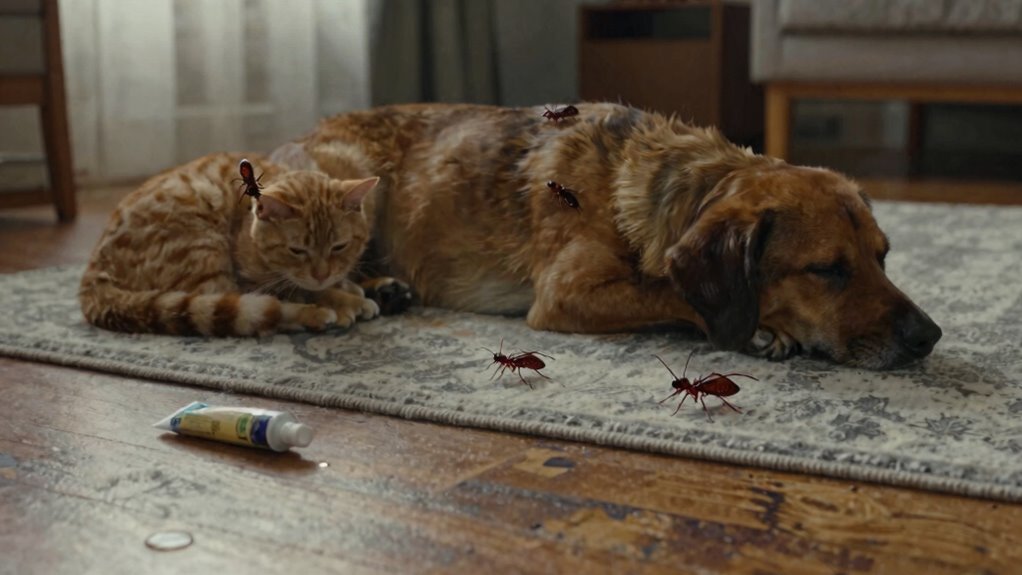
Treating every dog and cat in the house at the same time is non-negotiable.
Fleas don’t play favorites, so one missed pet becomes a reservoir that lets the cycle restart.
All animals must get their species-appropriate, weight-specific dose simultaneously.
Never skip Fido just because he’s “mostly indoors,” as fleas hitchhike on humans too.
Household-wide coverage is the only logical move for effective flea control.
Your topical pest prevention routine works best when no pet is left untreated.
Buy the right flea treatment for each animal’s size and species today.
Breaking the flea life cycle requires total home protection from the start.
Since pyriproxyfen stops eggs and larvae from developing into adults, consistent treatment of every pet is key to breaking the cycle, and monthly reapplications are the standard for most households.
Household-Wide Simultaneous Dosing
Consistency across every four-legged roommate is the hidden valve that stops or sustains a flea outbreak. If one pet misses a dose, it can restart the entire cycle.
That is why simultaneous dosing, treating all animals in the home at once, is non-negotiable. For the best flea control, treat every dog and cat on the same day.
Key steps for household-wide success:
1. Treat every pet on the same day.
Use species and weight appropriate products. Dog products must never go on cats, as that is a vet emergency.
2. Stick to the schedule.
Missing a month is enough for fleas to re-establish. Consider a calendar reminder or automatic refill for your flea treatment supply.
3. Store products properly.
Keep oral chews like NexGard or Bravecto in a cool, dry place. Always store them away from kids and pets for safety.
Bottom line:
You cannot pick and choose who gets treated. Fleas do not care which pet they bite. For outdoor areas, consider applying imidacloprid-based granules to kill grubs and fleas in the lawn before they reach your pets. Treat every animal, every dose, without exception. Then watch the infestation collapse with a complete home defense plan.
Species-Appropriate Product Use
Treating your entire home at once is essential. But that does not mean using the same flea control on every pet.
Dog flea medications often contain permethrin, which is highly toxic to cats. A single canine chew can kill a feline, so species specific preventives are a must.
Always purchase weight appropriate treatments from your vet. Prescription isoxazoline chews like NexGard or Bravecto work fast on dogs.
For cats, you need separate topical treatments or pills such as Revolution Plus. Never use a dog spot on product on a cat, as that creates a veterinary emergency.
If accidental exposure happens, call animal poison control immediately. The bottom line is to treat every pet, but treat each one correctly.
Buy separate meds for dogs and cats. Follow all label instructions and never swap bottles between species.
Consistency in your flea prevention routine matters. But safety matters more for your pets health.
Pair these medications with safe, species-appropriate natural repellents like rosemary oil, diluted properly for each animal.
How Long It Really Takes to Clear a Flea Infestation
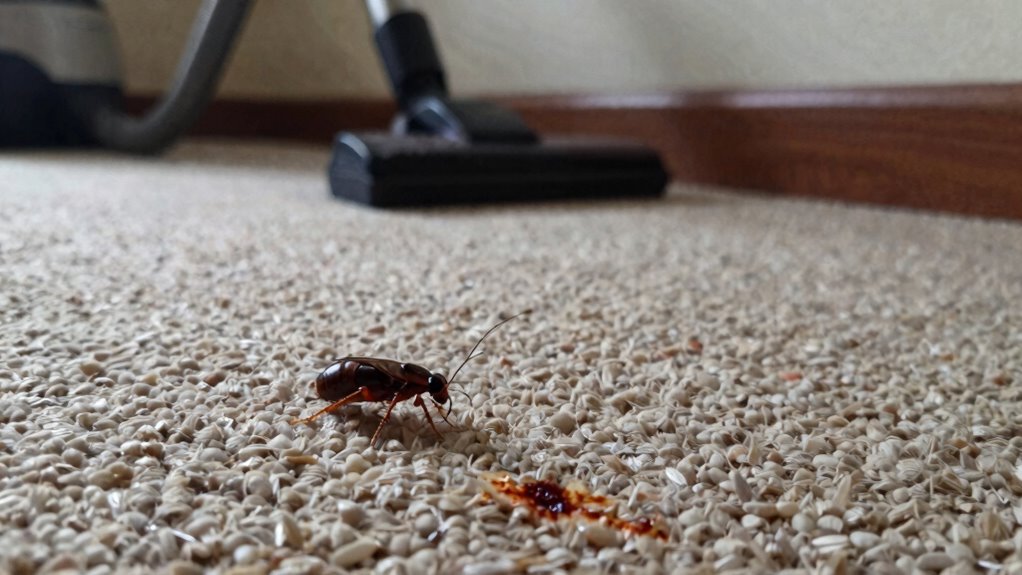
Realistically, clearing a flea infestation takes two to three months of consistent effort, even when you nail every treatment from day one. That realistic timeline isn’t a joke; it’s biology.
The treatment duration must stretch long because flea pupae, those tough little cocoons, resist sprays and can snooze for weeks before hatching.
Pupal patience means dormant pupae can wait months, so a three month flea control plan stops each new wave before they lay eggs.
Daily cleaning is key: vacuum every spot daily, even under sofas. Flea eggs love dark corners, so miss one day and you miss a generation.
Monthly prevention with prescription oral chews like Simparica kills adult fleas fast, but skip a dose and the whole realistic timeline resets. For maximum effectiveness, use foggers with hydroprene to disrupt flea eggs and larvae, preventing re-infestation for up to seven months. Stick with it, and the flea life cycle breaks for good.
Wash, Vacuum, and Dispose: Break the Flea Cycle
Vacuuming and washing are not just chores. They are frontline weapons in your pest control battle.
A solid vacuum technique means hitting carpets, baseboards, and furniture daily during an active infestation. This removes eggs, larvae, and adults.
The key is outdoor disposal in a sealed bag, placed in a lidded trash can. This prevents any survivors from crawling back inside.
Wash all pet bedding in hot water, then dry on high heat. This kills every life stage hiding in the fabric.
For a moderate infestation, do this every two days. The combo of vacuuming and washing breaks the cycle where 95% of fleas live off the pet.
It is cheap, chemical free, and works in tandem with preventives. Do not skip it.
The payoff is a flea free home in weeks, not months. Use these tactics to break the flea cycle for good. To extend your efforts, consider a food-grade diatomaceous earth powder that kills fleas by dehydration for weeks when kept dry, adding a chemical-free barrier between deep cleanings.
Where to Spray Your Yard for Fleas (and Where to Skip)
Most flea infestations start in shaded outdoor areas where pets spend time. Focus your treatment on damp soil under decks, along fence lines, and near pet resting spots.
> Most flea infestations start in shaded outdoor areas where pets spend time. Focus treatment on damp soil under decks and along fence lines.
A $15 outdoor IGR concentrate covers 5,000 square feet. Use it only where organic debris collects, not on open grass.
Sunny lawns are not ideal for flea eggs because heat kills them quickly. Skip sprinkler irrigation or outdoor misting systems on full-sun turf.
Treat key entry points like shady soil near doors and crawl spaces. Fleas wait there to jump onto passing pets.
A simple rule: if the ground feels cool and damp, spray there.
For long-term prevention, consider applying Bifen LP Granules for up to 90 days of control in shaded, damp areas.
Don’t Forget Indoor Pets: Fleas Hitchhike Inside
Despite the fact that Fluffy has never stepped a single paw outside, fleas can still find her. Hitchhiking fleas ride indoors on humans, visitors, or even the dog that does go out.
This is a real indoor pet risks scenario. A single flea, tracked in on a sock, can launch a full-scale infestation in a carpet-soft living room.
Fluffy, lounging on the sofa, becomes the all-you-can-eat buffet. Treatment must include her, not just the outdoor adventurer.
Skip Fluffy, and she becomes a flea hotel, re-infesting everyone. Monthly prevention for every pet, no exceptions, is the only play. Using a shampoo with residual protection can prevent re-infestation for up to 28 days.
It is not about who goes out. It is about who stays in.
Cover all paws, and the hitchhikers starve. Use a pest control spray on carpets and a flea treatment for all indoor cats to stop the cycle.
Set It and Forget It: Build a Monthly Flea Prevention Habit
Cover every pet with year-round prevention, treat every room, and repeat it all on a strict schedule. That’s a lot of moving parts, but the fix is simple: automate your memory.
Set recurring reminders on your phone the same day each month, and pair them with refill alignment so you order the next dose before the current one runs dry. Missing one month is an open door for fleas, so treat prevention like a mortgage payment: non-negotiable.
A monthly alert takes five seconds to set, costs nothing, and saves you from a flea bath saga. For easy protection, many vet pharmacies offer auto-ship subscriptions, aligning deliveries to your dosing cycle and removing any guesswork.
Sync the schedule with all household members, because one forgetful human undermines every treated pet and reopens the door to flea infestations. Buy flea prevention in bulk or with subscription refills to cut costs and lock in coverage without extra trips. For those who prefer a collar, eight months of continuous protection can simplify the routine even further.
Bottom line: build the habit once, then let routine carry the weight. No drama, just coverage, and your pets stay itch-free all year.
Frequently Asked Questions
Can I Use the Same Flea Product for My Cat and Dog?
No, you should never use the same flea product on a cat and a dog. Cross species safety is a critical concern in pest control.
Ingredient differences make dog flea treatments highly toxic to cats, often causing seizures or worse. A single misapplication can be fatal for your feline.
Your veterinarian will recommend a cat specific, weight appropriate formula. Bravecto or Revolution for cats, for example, are safe and effective options.
Dog products deliver a lethal dose to felines, so always check the label. Use only species appropriate preventives to protect your pet.
If you suspect an accidental application, call poison control immediately.
For the best flea and tick prevention, match the product to your pet’s species and size.
What if My Pet Hates Taking the Chewable Flea Medication?
If your pet hates chewable flea medication, you can often outsmart them by hiding the pill in a high-value food like cheese, peanut butter, or a soft treat. This trick works best when you break the chewable into smaller pieces and press them into the center of the snack.
If that fails, switch to topical flea prevention, which many pets tolerate far better than oral options. These liquid drops are applied directly to the skin between the shoulder blades, where your pet cannot lick them off, and they deliver month-long flea control with zero mealtime battles.
Brands like Frontline Plus and Advantage II are trusted spot-on treatments that cost roughly $30 to $45 for a six-dose pack, making them a budget-friendly choice for ongoing pest control. They eliminate the stress of forcing a pill, and most pets barely notice the application once the product dries.
When choosing a topical product, always verify the label matches your pet’s exact species and weight range, because using the wrong formula can cause skin irritation or reduced effectiveness. This step is crucial for safe, reliable flea and tick prevention that actually works.
The bottom line: skip the fight and pick a spot-on treatment, which is easier on you and your pet. For picky eaters, topical solutions offer a practical, low-stress alternative that keeps your home pest-free without the daily drama.
How Do I Stop Fleas From Hitching a Ride Indoors on Me?
Fleas can easily hitch a ride indoors on your pants, socks, and shoes. Checking your clothing before you step inside is a good first move, but it won’t stop every stubborn pest.
Outdoor prevention is your real shield against flea infestations. Treat shaded yard zones with a quality insect growth regulator (IGR) and rake up leaf debris where fleas breed.
Spraying those hot spots kills fleas before they ever latch onto you. A quick 30 second visual scan of your lower legs and socks catches most stragglers.
After that scan, shake your clothes out vigorously outside, away from doorways. Then vacuum entryways daily to catch any fleas that still manage to drop off.
This routine is cheap, simple, and keeps you from becoming a taxi service for biting pests. Pair your yard treatment with that clothing scan, and you cut your risk by about 90%.
For best results, use a residual outdoor flea spray with an IGR, and consider a permethrin treatment on shoes and pant cuffs. This combo gives you long lasting protection and reduces the need for harsh indoor foggers.
If you’re shopping for flea control products, look for labels mentioning “adulticide plus IGR” for both yard and pet areas. That buyer intent phrase ensures you’re getting a product that breaks the flea life cycle, not just kills adults.
Remember, fleas hide in grass, mulch, and under porches, so treat those shaded zones every two weeks during peak season. And always follow the label instructions for safe application around kids and pets.
Will Vacuuming Alone Eventually Get Rid of All Flea Pupae?
Vacuuming alone won’t get rid of all flea pupae, no matter how often you run the machine. Those pupae build sticky cocoons that shrug off suction, making them nearly impossible to remove.
Even with daily vacuuming, resistant eggs can wait for weeks before hatching into new fleas. You would need months of perfect, fanatical coverage, and honestly, the odds are not great.
Think of vacuuming as a solid sidekick for flea control, not the hero of your pest control plan. Skip the solo mission and pair your vacuum with an IGR spray to sterilize those sneaky pupae.
That combination actually works, stopping the flea life cycle in its tracks. Without it, you are just playing whack a mole with tiny, biting jerks that keep coming back.
For a smart purchase, look for insect growth regulator products labeled for home use against fleas. Buy both a high suction vacuum and a trusted IGR spray to break the cycle fast.
Is It Safe to Treat My Yard While My Pets Are Outside?
No, it is not safe to treat your yard while your pets are outside. Chemical toxicity to paws and skin is a real risk from lawn pesticides and weed killers.
Wildlife impact from runoff can also harm birds, bees, and other beneficial insects. To protect your pets, wait until they are inside before applying any pest control treatment.
Keep them off treated areas until the product dries completely, usually one to two hours. For safety, always read labels because some yard sprays require a full day before re entry.
A dry, treated yard is safer than a wet, risky one every time. Choose pet safe pest control products and use proper yard maintenance timing to get the best results.


