
You don’t have to call an exterminator to get rid of bed bugs—you just need the right plan. This guide shows you the DIY steps that actually work, from vacuuming every seam to dry-heating your clothes at 118°F to kill eggs. You’ll learn how silica gel dust like CimeXa dries out 97.5% of adults in a day, and why bug bombs only make things worse. Stick with this routine, and you’ll handle the full process, including traps and encasements, without the expensive call.
At A Glance
- Vacuuming daily and disposing of the bag outside immediately removes bed bugs.
- Dry all infested fabrics on high heat for 30 minutes to kill bugs and eggs.
- Apply silica gel dust into cracks for fast, effective desiccant treatment.
- Use a high-temp steamer on mattresses, couches, and baseboards for contact kills.
- Seal washed items in plastic bags immediately to prevent reinfestation.
Why Clutter Removal and Vacuuming Are Your First Step Against Bed Bugs
Clutter removal and vacuuming are your first, best, and most practical line of defense against bed bugs. Think of it as preparing the surface so no hiding spots remain under piles of laundry or old stacks of paper.
Debris removal is not glamorous, but it costs nothing and only takes some elbow grease. Vacuuming actively removes live bed bugs, shed skins, and fecal spots, which reduces the population right away.
Just remember that vacuuming will miss cemented eggs, those stubborn little stickers that cling to fabric. Focus your daily vacuum pass on mattress seams, baseboards, and carpet edges for the best results.
After each session, toss the vacuum bag outside immediately, or you will simply relocate the problem back into your rooms. This step is tedious, almost like flossing your entire house, but it is absolutely necessary.
On its own, vacuuming and decluttering will not eliminate an infestation, but skipping it makes every chemical treatment or heat service fail. That is the boring truth, and it is also why professional pest control experts always start here.
If you are looking for a bed bug exterminator near you, remember that this prep work is non-negotiable before any treatment plan. Call a local pest control service for a free inspection, and mention that you have already started this cleanup.
For ongoing monitoring after this initial pass, reusable interceptor traps placed under furniture legs can help you confirm whether these pests are still active without relying on chemicals.
Why DIY Methods Often Miss Bed Bugs – and How Reinfestation Happens
The problem is simple: DIY methods target the bugs you can see, not the ones you can’t. Even after a thorough cleaning, bed bugs will hide in places like screw holes, behind baseboards, or inside electronics, where sprays and heat never reach.
You may think you’ve won, but you’ve really just thinned the herd. That leftover population is ready to bounce back fast, often leading to a full reinfestation within weeks.
For effective bed bug control, professional treatments reach every hidden harbor. A targeted pest inspection can uncover live bugs in socket covers and mattress seams.
If you want to avoid another round of bites, consider a heat treatment or chemical barrier. These methods stop reinfestation before it starts, saving you time and frustration. Using a high-temp steam cleaner instead kills bed bugs on contact without toxic fumes or residues.
Hiding Spots Remain
Bed bugs are expert hiders, which is why DIY pest control often fails to eliminate every last one. They squeeze into tiny cracks behind baseboards or inside electrical outlets where sprays and heat treatments can’t reach.
Even after a thorough vacuuming, a single female bed bug can restart an infestation. She lays eggs in those dark, untouched spots, and within weeks you’re back to square one.
It’s not that you didn’t try hard enough. Bed bugs treat your home like a game of hide-and-seek, but they cheat by using hidden sanctuaries you can’t see.
Without reaching every crack and cranny, complete elimination is impossible. Most DIYers miss these tiny hiding spots, turning a small problem into a recurring headache.
If you don’t target every bed bug hiding spot, you’re not fixing the issue. You’re just delaying the next round of bites and frustration.
To effectively reach these hidden areas, use a foaming spray like Raid Bed Bug Foaming Spray that expands into cracks and deep corners to kill bugs and eggs on contact.
No True Elimination
Squashing every bed bug you see, vacuuming until your back aches, and sealing every mattress in plastic still won’t eliminate an infestation. A deep cleaning removes visible bugs, but eggs glued into cracks survive.
Contact sprays kill on contact, but they leave no residual barrier to stop hatchlings. Without rotating between different insecticide classes, bed bugs develop resistance fast.
Silica gel works well, but only if applied thoroughly in every hiding spot, which DIYers rarely achieve. Interceptor traps cut populations down, yet they don’t finish the job.
That lone survivor breeds a new generation before you even notice the resurgence. Heat treatments need 118°F for 90 minutes to kill eggs, and home dryers handle clothes but not walls.
The bottom line is that DIY methods reduce bug counts but never stop reinfestation. Professional treatment, averaging $600, is the only real finish line here.
Saving cash by doing half the job just wastes time and money. For complete bed bug removal, a licensed exterminator’s targeted insecticide rotation and steam application hits both adults and hidden eggs.
If you’re searching for effective pest control near me, professional fumigation or whole-room heat remediation is your best bet. Buying more sprays or traps only delays the inevitable repeat cycle.
You’ll spend more in the long run on failed DIY attempts. A single professional visit with follow-up inspections gives you the lasting protection you can’t achieve alone.
Trust the experts to handle resistant strains and harborages deep inside walls and baseboards. That investment is what truly ends the infestation for good.
Quick Reinfestation Risks
Bed bugs can survive weeks without feeding, so a “dead” room is not safe. Over-the-counter sprays dry in hours and lack long lasting residue.
Eggs are glue sealed to surfaces, resisting vacuuming and wiping. Mated females hitchhike on clothing or pets, re entering after treatment.
Non porous encasements only trap existing bugs, new arrivals crawl in from the floor. The real verdict is that DIY methods rarely eliminate eggs or hidden stragglers.
Expect a repeat infestation unless you seal every gap and monitor for 30 days. For complete bed bug extermination, professional pest control services with heat treatment or steam treatment are your best choice.
Buyer intent focused keywords like residual spray and mattress encasements help, but only full prevention stops reinfestation. Stay vigilant with weekly inspections and a clutter free zone.
For targeted DIY application, use a precision nozzle duster to reach cracks and baseboards where bed bugs hide.
Using Heat to Kill Bed Bugs (Dryers, Steam, Sunlight) – What Works
Dryer heat reliably kills bed bugs and their eggs on fabrics, so tossing infested bedding or clothing in a machine on high for 30 minutes is a solid win. It reaches the 118°F needed for egg mortality without any guesswork.
Sunlight is trickier for bed bug control, as black plastic bags in direct sun can work for small items. They must sustain that lethal temperature for over an hour, and a cloudy day just bakes nothing.
Steam treatments on furniture kill bed bugs on contact but move slowly and miss hidden ones. Think of steam as a helpful sidekick, not a savior for a full bed bug treatment.
Dryer Heat for Fabrics
If you need a DIY method that kills bed bugs fast, the clothes dryer is your best tool. Bed bugs and eggs die at sustained temperatures above 118°F, and most dryers reach that easily.
Always inspect the lint trap for safety and avoid overloading the machine. Run fabrics on high heat for at least 30 minutes, but thick items like comforters need longer.
Place infested items directly in the dryer without washing first because washing alone won’t kill them. Use an oven thermometer to confirm your dryer actually reaches the lethal heat.
Seal dried items in plastic bags immediately to prevent reinfestation of your home. Repeat this process weekly for all washable fabrics to catch newly hatched bugs.
This simple, chemical-free solution delivers real results for bed bug treatment. No smoke, no mirrors, just hot air doing the dirty work on your pest control routine. For larger items or entire rooms, portable heat treatment units can treat up to 600 square feet in eight hours.
Sunlight and Steam Limits
Two common heat treatments like black plastic bags in the sun and steaming furniture sound promising but each has a critical catch.
Sunlight needs hours of direct hot rays to reach 118°F inside that bag for effective bed bug heat treatment.
Realistically, your couch cushion won’t bake that long for a full pest cure.
Steaming fails on coverage because you must wet every crack, seam, and screw hole for it to work against bed bugs.
A steamer costs $30 to $60 but it’s slow and you cannot treat the whole room at once.
So sun is weather dependent and steam is patience dependent for your DIY bed bug battle.
Both are partial fixes not full cures if you want a reliable bed bug solution.
Consider these limits before buying heat treatment equipment for your home.
Wash in hot water at 130°F or higher to kill lingering bed bugs or eggs if you proceed with laundry.
What Sprays Actually Kill Bed Bugs? (Spoiler: Not Foggers)
A harsh truth for anyone battling bed bugs: most sprays you can grab off the shelf are more about marketing than murder. Over-the-counter foggers are useless; bugs just hide in cracks where chemicals never reach.
Effective sprays rely on residual pesticide longevity, meaning they keep killing for days after drying. Still, many of these require licensed application requirements, so you cannot simply buy them without certification.
Non-residual contact-only sprays kill only what they directly hit, missing hidden colonies. Synthetic pyrethroids often fail because of widespread bed bug resistance.
Desiccant dusts like silica gel offer long-lasting non-toxic action. Professional-grade liquids like Temprid FX have better residual but still limited DIY access.
Foggers actually scatter bugs deeper into walls, worsening infestations. The bottom line is skip foggers entirely.
Effective sprays exist but require either a license or choosing desiccants instead. For a safe, DIY-friendly alternative, food grade DE physically dehydrates crawling pests like fleas, ants, and bed bugs, requiring dry conditions. Always look for products with proven bed bug control and residual activity.
Silica Gel and Other Proven Ways to Kill Bed Bugs Without Chemicals
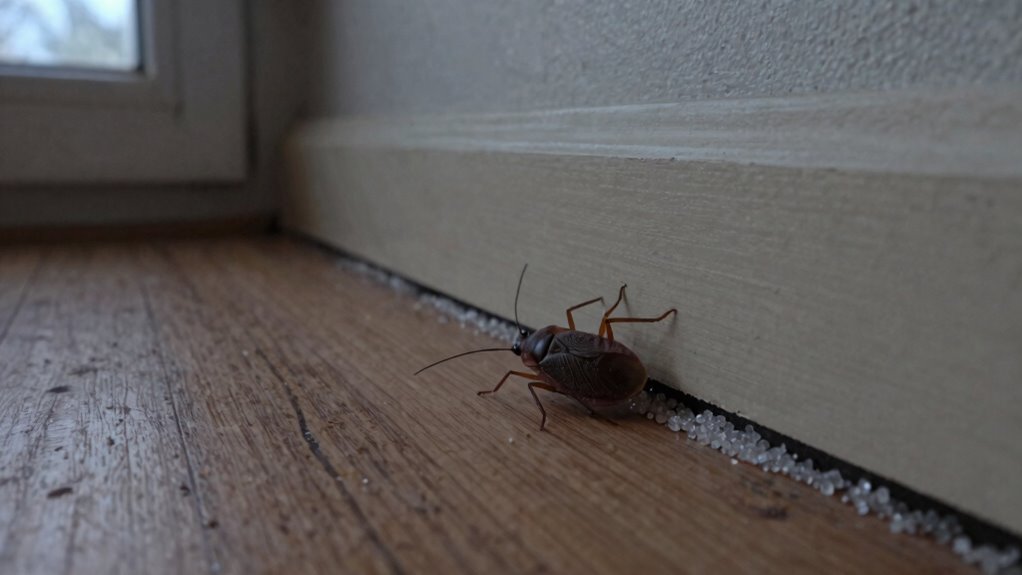
Foggers are not effective and sprays require a license to buy. So the logical next step is killing bed bugs without chemicals at all.
Desiccant powders work like microscopic sponges that suck the waxy coating off a bug’s shell. This causes the insect to dry out and die quickly.
Silica gel kills 97.5% of adult bed bugs in 24 hours. It reaches 100% within two days of application.
Diatomaceous earth is another popular desiccant that works slower but costs less. For silica gel, look for a dust like CimeXa at about $12 for a 4-ounce bottle.
Sprinkle it lightly into cracks, baseboards, and behind headboards. This bed bug powder stays effective as long as it stays dry.
A light, thin layer does more than a thick clump because bugs simply walk around piles. Bottom line: skip the foggers, grab silica gel for pest control, and let physics do the dirty work.
Boric acid powder with at least 99.9% purity works by damaging their exoskeletons and depleting energy over 48 hours to a week.
Can Home Freezers Kill Bed Bugs? The Cold Hard Truth
Freezing bed bugs sounds like a clever DIY hack, but the cold hard truth is your home freezer probably isn’t up to the task.
These pests require sustained temperatures of -19°C (-2°F) for at least four days to guarantee eggs die too, and most home freezers hover around -18°C (0°F) and can’t maintain that chill long enough.
Most units cycle above -15°C (5°F) during defrost, allowing bed bugs to survive and potentially spread.
Items must be sealed in bags to prevent contamination, a tricky process that risks introducing other pests or predator insects.
Ethical concerns also arise when freezing live bugs, which can suffer slowly if temperatures fluctuate.
Freezer capacity limits treatments to small items like shoes or books, not furniture.
Non-toxic and pesticide-free traps provide a safer alternative for widespread home monitoring without chemical exposure.
Encasements and traps, discussed next, offer far better long-term defense without guesswork.
Bottom line: unless you own a commercial deep freezer, skip the cold cure and look for professional pest control solutions or targeted heat treatments.
Encasements and Traps: Your Best Long-Term Defense After Treatment
Encasements and traps are the unsung heroes of DIY bed bug control, quietly working after the chaos of treatment ends.
Mattress longevity depends on these zippered vinyl covers, which lock in surviving bugs and block new ones for at least a year.
Trap placement under bed legs catches stragglers, confirming they are gone without nightly bug sleuthing.
The encasement seal prevents escape and stains, preserving your mattress for the long haul.
Interceptor cups are the simplest trap placement, and they trap 100% of walking bugs.
Think of an interceptor as a bug moat, steep and slippery and unforgiving.
One cup costs $10 per pair.
Long term, these tools quietly stand guard as you sleep.
The logic is simple: no hiding, no breeding.
For under $50 total, durable encasements and a few traps turn a treated room into a bug proof fortress.
Bottom line: invest now, sleep sound later.
For even stronger protection, combine interceptors with non-toxic glue traps under furniture or along baseboards to catch bugs that bypass the cups.
Signs Your DIY Worked – and When to Call a Pro ($600 Average)
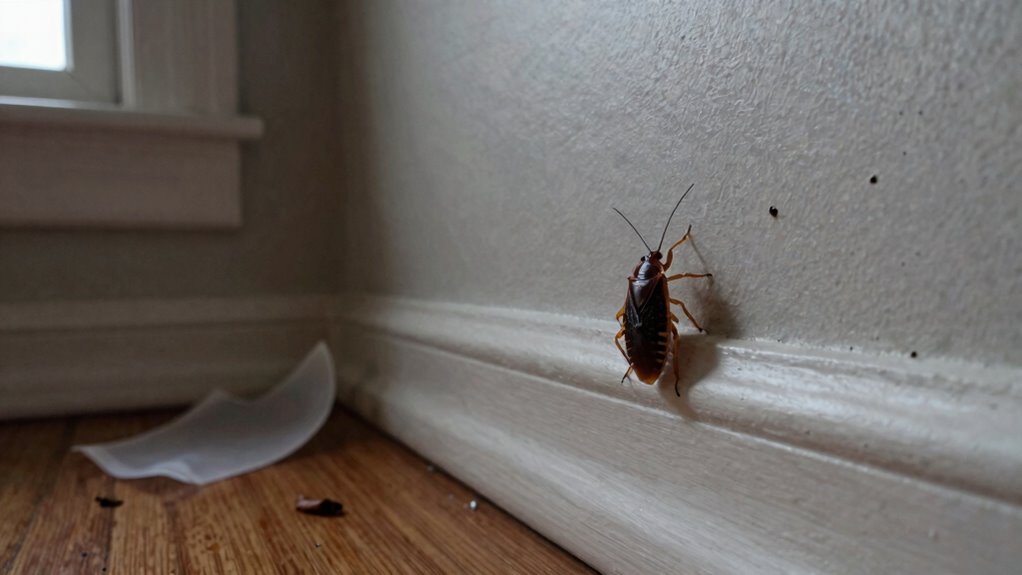
You have no fresh fecal stains or shed skins anywhere for a full month. Interceptor traps remain completely empty, even after you moved furniture away from walls.
You stop waking with itchy welts, a solid but weirdly satisfying milestone. Your mattress encasement zippers stay shut with no bugs found during weekly checks.
You feel less paranoid, though you might still eye the headboard at midnight. When these signs do not appear or a few bed bugs keep showing up, it is time to call a pro. For continuous protection between checks, you can use plant-based sprays with peppermint or cedarwood oils on baseboards and entryways as a safe, non-staining option.
A professional bed bug extermination averages $600 and beats months of fruitless heat and dust. The verdict is three clean weeks means victory. Any less, call the cavalry for guaranteed eradication.
Frequently Asked Questions
Can I Use Rubbing Alcohol to Kill Bed Bugs on Contact?
Rubbing alcohol can kill bed bugs on contact, but it is not a reliable solution for pest control.
It evaporates too quickly to reach hidden bugs or eggs, making it useless for infestations.
A direct spray kills exposed bugs, but it will not stop new ones from appearing.
For real control, skip the alcohol and try heat or desiccants like silica gel instead.
This method works only on direct contact, not deep hiding spots.
It dries fast, leaving no residual protection against future bed bug problems.
Be aware that rubbing alcohol is a fire hazard, so avoid using it near sparks or outlets.
Stick with proven bed bug treatment methods like steaming or applying a desiccant dust.
Rubbing alcohol is just a quick fix, not a win for long term bed bug elimination.
Choose professional grade pest control products to ensure your home stays bug free.
Should I Throw Away My Mattress if I Have Bed Bugs?
Throwing away a mattress is overkill when you have bed bugs. A mattress encasement seals in bed bugs for a full year, starving them out.
Heat treatment like a dryer on high for 90 minutes kills everything on linens. Tossing your mattress just spreads bed bugs to a landfill, costing you a new mattress plus a huge infestation risk.
Keep your mattress, encase it, and treat the room with a quality bed bug spray or steam cleaner. That’s the smarter, cheaper move for effective bed bug control.
For buying a mattress encasement**, look for a zippered, bed bug proof cover with a tight seal. Pair it with interceptors** under your bed legs to catch any escapees trying to climb back up.
Need to eliminate bed bugs fast? Focus on heat treatment for your bedding and a targeted insecticide for cracks and crevices. This combo keeps your home safe without the waste and expense of disposal.
How Often Should I Vacuum During a Bed Bug Infestation?
During a bed bug infestation, daily vacuuming is key to reducing live bugs and keeping your space manageable. Use crevice tools to reach baseboards, mattress seams, and furniture folds where these pests hide.
This removes bugs, cast skins, and debris, though it won’t catch all eggs. Vacuuming alone won’t end an infestation, but it cuts their numbers and keeps things tidy.
Think of it like brushing your teeth: it’s a good habit, but you still need a professional treatment. Just toss the bag outside right after each session to avoid re-infestation.
Clean floors help, but they won’t solve the whole problem. For real bed bug control, pair daily vacuuming with a proven insecticide spray or a heat treatment kit.
If you’re shopping for effective pest control products, look for vacuum attachments with HEPA filters and targeted bed bug sprays. These tools boost your effort and speed up elimination.
Do Ultrasonic Pest Repellers Work Against Bed Bugs?
No, ultrasonic pest repellers do not work against bed bugs. Scientific studies confirm zero effectiveness since these resilient pests simply ignore the noise.
A DIY ultrasonic device might sound tempting, but it is a wasted investment. Save your cash for proven bed bug control methods instead.
Silica gel desiccant kills 97.5 percent of adult bed bugs within 24 hours. Professional heat treatment averages around 600 dollars for complete eradication.
For long term protection, use mattress encasements and interceptor traps. Sustained heat at 118 degrees Fahrenheit for 90 minutes eliminates infestations effectively.
Skip the gadgets and focus on mechanical and heat based tactics. These are the best bed bug treatments for reliable results.
Will Painting Over Bed Bugs Trap and Kill Them?
Painting over bed bugs will not trap and kill them. The bugs simply hold their breath or find gaps in the paint seal.
Paint toxicity varies and it is not designed as an insecticide. Worse, egg survival is high since eggs can outlast the paint drying process and still hatch.
For effective bed bug control, use steaming or desiccants like silica gel, which kills 97.5% of bugs in 24 hours. Skip the paintbrush and invest in proven pest control products instead.


