
How to Get Rid of Cockroaches in a Car doesn’t have to mean expensive fuming or repeated sprays.
The real fix is breaking their food and shelter cycle with a brutal deep clean and targeted baiting.
This guide walks you through the exact steps—from vacuuming every crack to sealing vents and using a simple sugar-baking soda mix.
If you want a roach-free car without wasting money on temporary fixes, keep reading.
At A Glance
- Vacuum all crumbs, eggs, and droppings using a crevice tool.
- Seal entry points like A/C vents and door gaps with steel wool.
- Place baking soda and peanut butter bait on cardboard under seats.
- Use boric acid or professional gel baits; avoid ineffective sprays.
- Remove all food, trash, and clutter to starve the infestation.
Why Cockroaches Love Your Car (And How They Sneak In)
Cockroaches don’t need an invitation. They just need a crack, a crumb, and a little darkness.
Your car offers all three, making it a perfect spot for a roach motel, especially during seasonal infestations when they seek shelter from heat or cold.
The roach life cycle, from egg to nymph to adult, means a single pregnant female can turn your glovebox into a nursery in weeks.
They sneak in through A/C vents, door seals, or even under the hood when you park near garbage bins.
Crumbs under the seat, a spilled soda, or a forgotten receipt become their buffet.
Once inside, they breed fast, hiding in the dark crevices you never see.
The verdict is clear. If you cannot block every crack, you are rolling out the welcome mat for these pests.
Find and Remove Roaches Right Now (Immediate Steps)
Once you accept your car is a roach Airbnb, evict them immediately with these pest control steps. The most common roach hiding spots are under floor mats, inside seat crevices, behind the glovebox, and in the dark corners of the trunk.
Once you accept your car is a roach Airbnb, evict them immediately with these pest control steps.
Declutter by removing all trash, papers, and bags. Roaches feast on mess, so a clean car is your first defense.
Use a crevice tool for immediate vacuuming of roaches, eggs, and droppings from every nook. Shine a flashlight into every crack, especially around the dashboard and under seats.
Place sticky traps in known hiding spots for 24 hours to catch survivors. Using traps with a non-toxic adhesive ensures safety for kids and pets while luring roaches. After vacuuming, dispose of the vacuum bag outside your home.
Don’t skip checking under the spare tire. That is a prime roach condo you need to inspect.
How to Keep Roaches From Coming Back After Removal
Prevention always beats extermination when keeping roaches out for good. Seal entry points like A/C vents and gaps under doors to block their path inside. Pair that with a strict no food policy in your car. Regular vacuuming and trash removal after every trip eliminate any chance of infestations. Your vehicle becomes as welcoming as a sealed container with no snacks. This roach control approach stops them from returning after removal. For added protection, apply a long-lasting residual spray in hidden cracks and crevices to prevent reinfestation for months.
Blocking Entry Points
Check and seal gaps around doors, windows, and under the hood. Even a credit card thick crack is enough for roach entry. Close A/C vents before parking. They are a primary entryway for roaches hitching a ride into your vehicle. Avoid parking near drainage openings, sewage drains, and garbage bins. Those spots are prime real estate for vehicle pest infestations. Inspect rubber seals for wear. Gaps here are like leaving the front door open for a smelly house party of cockroaches. Use steel wool with mesh to seal larger holes, creating a dual-layer barrier rodents and pests cannot chew through.
Maintain Cleanliness
Sealing cracks and closing vents is a solid first move, but if your car still looks like a snack pantry, those roaches will find a way back.
Maintenance is now the real boss battle for effective pest control.
Baking soda, when mixed with sugar or peanut butter, becomes a deadly, non-toxic bait.
It kills roaches by expanding in their stomachs, which is grim but highly effective for roach elimination.
Fresh pandan leaves act as a natural deterrent, though dried ones just become another snack for them.
Vacuum every crevice, wipe down surfaces, and ditch old receipts or cardboard boxes that give roaches hiding spots.
A clean car is honestly your cheap insurance for roach prevention.
No clutter means no cozy breeding grounds and fewer pest issues.
Keep the interior sterile with regular cleaning, and watch those freeloaders get the message.
If you need professional roach treatment, a targeted pest inspection can provide long term protection.
Consider using a gel bait with growth regulators or reproductive inhibitors to prevent population resurgence after cleaning.
Remove Food Sources
Cockroaches are scavengers that will eat almost anything. To stop them returning after removal, you must eliminate all food sources. Even a single crumb can sustain a hungry roach, so relentless cleaning is your best pest control solution.
Vacuum every crack and crevice weekly, focusing on seats and floor mats where food debris hides. Ban all eating inside the vehicle; if unavoidable, clean immediately and remove every trace. Store snacks and groceries only in sealed, hard plastic containers with tight lids.
Wipe down surfaces daily for moisture control, since roaches need both food and water to survive. Remove old trash, receipts, and clutter because roaches love cardboard. A spotless car starves them out completely. Use airtight lids with locking buckles to prevent pests from detecting odors and entering your stored items.
No crumbs means no roaches. This simple habit will keep your vehicle roach-free for good.
Deep Clean Your Car to Starve Roaches Out
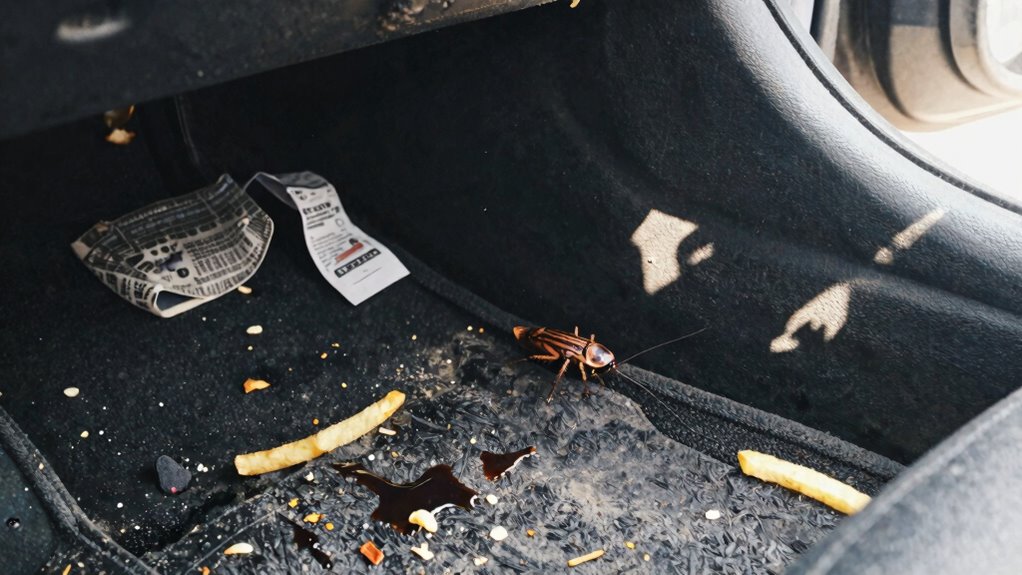
Since a single cockroach can survive weeks without food, your car’s hidden crumbs and spills keep an infestation thriving. Deep cleaning is the only way to starve them out and break the pest control cycle.
Start by removing every floor mat, then vacuum every crevice, seat track, and cupholder. For fabric stains and pet odor elimination, use an enzymatic cleaner. It breaks down the organic matter roaches feast on.
Scrub hard surfaces with a steam cleaner to kill hidden eggs. A $60 Bissell steamer works fine for this roach treatment step. Wipe down all dashboards and door panels with a microfiber cloth.
Toss out old receipts and gym bags immediately. If you find a dead roach, don’t panic. Just bag it and throw it away.
The bottom line is a spotless, crumb-free car leaves roaches with nothing to eat. This starving strategy forces them to leave or die. For lasting control, pair deep cleaning with natural roach killers like diatomaceous earth or boric acid to finish off any survivors.
Seal Every Entry Point So Roaches Can’t Return
Once your car is spotless, the next logical step is making certain roaches can’t just waltz back in. No vehicle is fully sealed, but closing the obvious gaps cuts their red carpet off.
Check these spots and don’t get lazy, it pays off. Inspect weather stripping around doors and windows, replacing cracked, brittle rubber that leaves gaps.
A $20 roll of adhesive foam tape works wonders for a weekend fix. Install door sweeps at the bottom of each door, they block the dark, dusty crevices roaches love to crawl through.
Tight fit, no squeaking. Run your hand along the hood seal and firewall gaps, especially near the cabin air intake, and stuff them with steel wool.
Plug any holes around wiring or A/C vents with silicone caulk or foam sealant. For larger or uneven gaps, consider a brush seal strip with dense nylon bristles to fill spaces that flat tape can’t reach.
Bottom line, an hour of sealing beats a month of spraying.
Do it once, done right. This professional pest prevention approach stops roaches from re entering and keeps your car protected.
Natural Car Roach Deterrents That Actually Work
A whiff of fresh pandan leaves might not replace your car’s air freshener, but it can do what fake pine trees cannot. It sends roaches packing naturally without harsh chemicals.
Just do not let those leaves dry out. Dried pandan becomes a snack for pests, not a deterrent for effective roach control.
For a more aggressive approach, try a homemade roach bait. Baking soda mixed with equal parts peanut butter or sugar works well.
In one pest control study, this combo trapped over 900 cockroaches across three rooms. It works because baking soda reacts with stomach acid inside the bug, causing fatal gas expansion.
Place small dollops on cardboard near sun visors or under seats. Replace every few days for best results in pest management.
No harsh fumes, no sticky residue, and your car smells like a kitchen experiment gone right. For gentle persuasion, choose pandan leaves.
For actual results and a serious roach killer, use baking soda baits. This is a practical, friendly solution for car pest control without toxic sprays.
Boric acid acts as a stomach poison that pests ingest during grooming or feeding, effectively disrupting their digestive and nervous systems.
Why Sprays Fail in Cars: And How Baits Succeed

Sprays often fail in cars because German cockroaches are now almost universally resistant to pyrethroids, the active ingredient in most consumer bug sprays. For effective pest control, baits are a much smarter choice since they attract roaches to a slow-acting poison. For example, top-rated baits use non-repellent formulas that prevent roaches from detecting and avoiding the poison altogether. The roaches then carry this bait back to their hiding spots, killing the colony at its source. A spray might only kill a few visible roaches, but a well-placed bait can eliminate the entire infestation within a week or two. To get the best results, place bait stations near cracks, crevices, and under seats where roaches travel. This targeted approach is key for fast roach elimination and long-term prevention in your vehicle.
Ineffectiveness of Sprays
The sad truth is that most insecticide sprays are glorified air fresheners for cockroaches in cars. They barely scratch the surface of an infestation.
Spray flammability is a real hazard. Aerosol propellants and solvents can ignite near hot car interiors or electrical sparks, turning a roach problem into a fire hazard.
Bait longevity wins here. Sprays evaporate quickly in a hot vehicle, losing any residual effect within hours, whereas baits remain active for weeks.
Consumer sprays kill less than 20% of German cockroaches after 30 minutes, even with direct contact. Resistance is near-universal among these pests.
Most require 8 to 24 hours to work. But roaches simply avoid sprayed surfaces, so the chemical dries uselessly.
Bottom line: sprays are a waste of money and a fire risk. Skip them and choose bait stations with slow-acting ingredients that work silently for up to three months, killing the entire colony without fumes or fire hazard.
Why Baits Work Better
If sprays are the polite suggestion, then baits are a roach’s final meal, and that is why they win. Baits exploit cockroach biology: they eat the gel, crawl back to the nest, and die, spreading poison to others. Sprays just scatter survivors, so baits give you better roach control.
Bait placement matters most: apply near vents, under seats, and in glove boxes, where roaches travel. Avoid hot surfaces where gel melts, and your pest elimination will last. Quality gels last weeks in a car’s AC, while sprays dry out or degrade within days. You also won’t get a greasy residue from cheaper formulas when using these baiting solutions. Baits like indoxacarb gels also offer a self-spreading kill effect where one poisoned roach can kill up to 40 others in the nest.
A tube of Advion (12 dollars) or Combat (8 dollars) costs less than two cans of spray. This roach bait works for months, making it a top choice for car pest control. For most cars, baits are the clear winner: less mess, less risk, more dead roaches. Bottom line, skip the spray can and buy a gel tube for effective roach extermination.
When to Call a Professional for a Roach-Free Car
Hiring a professional is the move when you’ve tried bait traps, deep cleaning, and sealing gaps, yet still spot a roach scurrying across the dashboard every few days. DIY traps and scent deterrents like pandan leaves only go so far against a stubborn infestation.
Professional pest control experts assess hidden nests in vents, foam, and wiring, areas DIY can’t reach. German cockroaches shrug off most sprays, but Integrated Pest Management uses targeted gels and dusts that actually work. These gels can provide residual protection up to three months when applied correctly to cracks and crevices.
Roach droppings and shed skins trigger asthma, so a pro eliminates that mess fast. A $150 to $300 treatment saves weeks of frustration and repeated product buys.
When you’ve thrown everything at them and they still wave back, call a pro. It’s the shortcut to a clean, roach free cabin.
Frequently Asked Questions
Can Roaches Survive in a Car During Winter?
Cockroaches can survive winter in a car, but only above certain temperature thresholds. Most species die at freezing, yet a car’s interior often stays warmer than outside, especially if parked in a garage.
They hunker down in crevices, seeking warmth near engines or under seats. So a cold snap alone won’t guarantee a roach free ride.
You need sustained sub freezing temps for days to really do them in. Think of it as a natural deep freeze for effective pest control.
For reliable roach elimination in your vehicle, use a targeted insecticide like a gel bait or aerosol spray. These pest control products reach hidden cracks where roaches hide.
If you want a long term solution, consider a vehicle fogger or a professional car interior treatment. These buyer intent phrases point to products you can use to protect your ride.
Always follow label directions and ventilate the car after application. A smart purchase means choosing the right treatment for your specific infestation.
Will Parking in Direct Sunlight Kill Cockroaches?
Parking in direct sunlight won’t reliably kill cockroaches. Heat exposure needs sustained temperatures above 120°F for hours, but a car’s interior rarely stays that hot throughout the day.
UV damage does little because roaches just scurry to shaded cracks, seats, or glove compartments. They treat it like a lazy afternoon nap and simply wait it out.
Professional baiting and sealing gaps work much better for long term pest control solutions. Removing food sources and moisture is essential for effective cockroach elimination.
If you want to buy the best roach killer for your home, focus on gel baits and insect growth regulators. Sunlight is a mood booster, not a roach exterminator, so don’t rely on it.
For smart purchase decisions, look for roach bait stations or professional grade sprays. Always combine treatments with exclusion techniques to prevent future infestations.
How Do I Know if Roaches Are in the Air Vents?
Roaches in air vents produce a faint, greasy smell like stale oil.
You might also spot tiny droppings near the vent slats.
Air vents act as a highway for roaches seeking dark, humid nesting spots.
Turn the A/C on high, and if debris or a roach flies out, you have your answer.
Check with a flashlight for legs or egg casings.
If you see those, it’s time to act.
No stink or specks? Your vents are likely clear.
But a quick inspection prevents a nasty surprise later.
Use a professional grade roach bait or spray near vent openings.
That targets the problem before it spreads through your HVAC system.
Do Cockroaches Lay Eggs in Car Upholstery?
Yes, cockroaches do lay eggs in car upholstery, tucking their egg cases into tight seams and crevices. Those cases, called oothecae, make egg removal a real challenge without professional pest control products.
A cockroach infestation in your car can damage the upholstery, staining fabric and leaving droppings behind. If you ignore the problem, expect more roaches and an even bigger mess to clean up.
To prevent a full blown infestation, check under seats and deep in upholstery folds. Catch them early with a targeted roach bait or spray, or you will face a nasty surprise later.
Can Roaches Travel From My Car Into My Home?
Yes, roaches can absolutely travel from a car into a home via car interior hitchhiking. They cling to bags, shoes, or clutter, then stroll right in.
Garage cross contamination is common, and parking inside makes it worse. They aren’t picky about borders.
A single gravid female hiding under a seat becomes a home invasion overnight. Vacuum often, seal cracks, and consider a $15 bait gel for the car.
Bottom line: clean the car before it redecorates your kitchen. For effective pest control, use a roach bait gel designed for vehicles to stop infestations before they spread.
If you want to buy a reliable roach killer, look for products with active ingredients like hydramethylnon or fipronil.
Professional pest control experts recommend a targeted spray for baseboards and floor mats to eliminate hiding spots.
Don’t ignore clutter in your car, as it invites german cockroaches and other common household pests.
A quick DIY treatment with a residual insecticide can save you from a costly home extermination later.
Check for cracks under seats and around door seals, then apply a gel bait to high traffic areas.
This is the smartest purchase for any homeowner: a $15 gel that guards your car and your kitchen.


