
Does washing clothes actually kill fleas, or are you just wasting your time? The answer depends entirely on heat—water above 60°C (140°F) is the only reliable way to wipe them out in the laundry. Cold or lukewarm cycles leave eggs and larvae alive, so skipping the hot wash won’t solve your flea problem.
Heat breaks down their protective coating, and detergent helps drown the adults, but only if you run a full 30-minute hot cycle. Dryers set to 122°F for at least 30 minutes work just as well, while shorter cycles fail completely. For lasting control, you’ll need to repeat this weekly and avoid overloading the machine, which blocks the heat that kills them.
We’ll cover everything else—like steamers and sprays—to make your home flea-free for good.
At A Glance
- Hot water at 60°C or higher kills adult fleas, eggs, and larvae effectively.
- Cold or warm water below 60°C leaves flea eggs and larvae alive to reinfest.
- High-heat drying over 122°F for at least 30 minutes is more reliable than washing.
- Detergent alone cannot kill fleas; sustained heat above 60°C is required.
- Weekly hot washes and drying break the flea life cycle and prevent reinfestation.
Best Water Temperature for Killing Fleas in Laundry
The magic number for killing fleas in the wash is 60°C (140°F) or hotter. That threshold will destroy adult fleas, eggs, and larvae effectively.
Steam heat inside the machine helps penetrate fabric fibers to reach hiding spots a quick rinse might miss. Wash duration matters too; a short, 15 minute cycle may not cut it.
Your laundry needs sustained exposure to the heat, so aim for a full 30 minute cycle at high temperature. Skipping this step is like baking a cake for five minutes; the results will be disappointing and your socks might still be hopping.
Think of it as a hot tub party for your laundry, one where the guests do not get to leave. For complete flea pest control, always check that your water heater can supply 60°C, and use a high heat drying cycle afterward for added assurance. Food-grade diatomaceous earth can be used as a natural deodorizer on pet bedding to absorb odors and dampness.
Why Cold Water Wash Won’t Remove Flea Eggs and Larvae?
Cold water washes below 30°C simply lack the heat required to break down the protective outer shells of flea eggs and larvae.
Instead of killing these pests, a cold cycle acts like a gentle rinse that lets them float and then reattach to fabric fibers once the wash ends.
Flea eggs have a tough, sticky coating that resists water and mild detergents, so they survive the cycle without damage.
Larvae are equally resilient, wiggling through the rinse and clinging to towel fibers or pet bedding as if nothing happened.
The real flea killer in your laundry routine is heat, not water temperature alone.
A high-heat dryer cycle, sustained above 50°C for at least 30 minutes, is what breaks the life cycle and eliminates eggs, larvae, and adult fleas.
If you want to get rid of fleas for good, pair a hot wash (over 60°C) with a thorough dryer session.
That combination offers the best pest control results and ensures you don’t waste detergent on a cold cycle that leaves infestations active.
For pet owners dealing with recurring flea problems, skip the cold wash entirely and focus on heat-based laundry treatments.
You’ll also want to vacuum upholstery and wash pet bedding weekly to remove stray eggs before they hatch.
The bottom line is straightforward: cold water cleans clothes, but it never clears flea eggs or larvae.
To truly eliminate fleas from your fabrics, rely on hot water and a powerful dryer, and treat your home with food-grade diatomaceous earth for lasting relief.
How Long and How Hot to Dry Laundry for Flea Control
For total flea death, the dryer must reach over 50°C (122°F) and hold that heat for at least 30 minutes. This high-heat drying step is more reliable than washing alone, since it kills eggs that survive cold or warm cycles. A similar heat treatment can be applied to furniture using a portable heater to eliminate pests without chemicals.
So it is not just about washing. Turn the dryer to high heat and set a timer for half an hour to finish the job.
This method ensures your pest control efforts are complete. It is a practical, heat-based solution for flea removal.
Optimal Heat for Drying
Reliability in flea control depends on the dryer, not the washer. Drying temperature is the real hero for effective pest elimination.
Most dryers hit 125 to 135°F, well above the 122°F needed to zap fleas and eggs. Cycle duration matters too, so crank it for 30 minutes on high heat.
Shorter cycles are like a tepid handshake, not a knockout punch. Set your dryer to “high” or “cotton heavy” and target 130°F for consistent kill.
Run the timer for 30 minutes minimum, or 45 minutes for bulky loads like comforters. Anything less gives fleas a warm, cozy safe space.
That is not pest control, that is hotel service. Bottom line: hot dryer, half-hour round, done.
Time Requirements for Effectiveness
A dryer timer is your best tool for flea control, but it depends on enough heat. The time threshold is critical: high heat above 50°C must run for at least 30 minutes to guarantee death across all stages.
Shorter cycles risk survivors, especially eggs. A 45 minute cycle adds safety without harming fabrics. For the most reliable results, choose a formula that offers residual or long-lasting protection to prevent re-infestation even after washing.
| Drying Time | Flea Mortality |
|---|---|
| 10 minutes | Low, adults only |
| 20 minutes | Partial, eggs survive |
| 30 minutes | High, most killed |
| 45 minutes | Complete, all stages |
Think of it like baking cookies: underbaked means doughy. For a heavy load, add 10 minutes.
Your dryer’s cycle might run shorter, so trust a timer, not the buzzer. That extra spin is cheap insurance against itchy chaos.
Beyond the Wash Cycle
Why rely on guesswork when your dryer can deliver a verdict? After washing, high heat above 50°C for 30 minutes finishes what detergent started.
This kills fleas, eggs, and larvae hiding in fabric folds. It is a heat versus chemicals showdown, and heat wins because it penetrates deeper with no rinsing required.
For eco friendly pest control, direct sunlight works, but only if strong and steady, which is less reliable than a dryer. A modern dryer costs around $0.30 per load, so skipping a chemical rinse saves money on flea treatments.
Here is the practical tip: fleas hate hot air almost as much as teenagers. Crank it up, check pockets for stray items, and dry thoroughly.
To prevent reinfestation, run a full cycle on high heat for at least 30 minutes. Insect growth regulators in sprays like Black Flag can also stop eggs and larvae for up to seven months, complementing laundry efforts. That gives you no survivors, no hidden eggs, and clean laundry with a side of confidence.
Detergent Needs Heat to Actually Kill Fleas
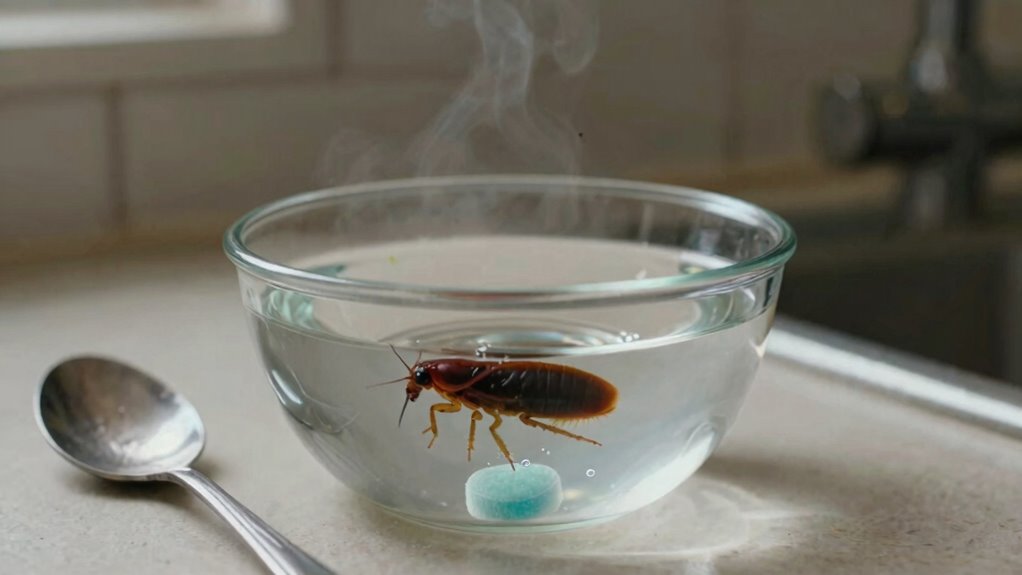
Hot water is the real key for effective flea control, not just the detergent. Cold water, even with soap, leaves fleas and their eggs alive and ready to reinfest your home.
Heat above 60°C works with detergent to break surface tension and drown fleas fast. This makes your wash cycle a true pest elimination step, not a missed opportunity.
For reliable flea removal, always use hot water in your laundry or cleaning routine. Pairing high heat with the right pest control products ensures fleas and eggs are killed on contact. Similarly, chemical-free steamers rely on heat between 221°F and 356°F to kill pests without toxic residues or fumes.
Hot Water Essential
Washing laundry without heat is like trying to boil water by staring at it. It is ineffective and slightly sad.
For flea eggs, simply adding detergent to cold water won’t work. This is the core of the heat versus detergent debate.
Soap alone cannot reliably kill flea eggs. However, hot water at 60°C or hotter can.
Detergent helps drown fleas by reducing water tension. Without heat, eggs stay stubbornly alive.
For effective pest control in your laundry, choose hot water cycles. You need this targeted approach for flea removal.
Cold water under 30°C shows low flea egg mortality. Warm water between 30-40°C offers partial results.
Hot water over 60°C delivers high mortality, nearly all eggs killed. Buy a reliable hot water heater to ensure consistent temperature. Combining treatments can sometimes boost flea control by up to 90 percent.
Cold Water Ineffective
Cold water alone won’t cut it for flea control, so detergent needs heat to actually kill fleas. Think of it as a one two punch where the detergent merely sets the stage.
Flea heat resistance is real, these pests evolved to shrug off a chilly rinse and leave eggs unbothered. Detergent kill mechanisms rely on breaking surface tension to drown fleas, but without heat the chemical punch lacks knockout power.
A 30°C wash might remove some adults, yet eggs and larvae hold tight like stubborn guests at a party that ended hours ago. For a load to work effectively for flea removal, temperatures need to climb above 60°C. Because fleas can survive on pet bedding, you should consider plant-based sprays as an additional, pet-safe layer of defense for treating your home after washing.
Heat Plus Detergent Works
Detergent alone is like a bouncer who cannot open the door. It needs heat to actually break down flea defenses and kill them.
Without hot water, detergent mostly just makes fleas angry and slippery. For real pest control results, the water must hit 60°C (140°F) or higher.
This temperature breaks down flea pupae resistance and drowns them properly. Cold water below 30°C leaves eggs alive and ready to hatch later.
Hot water over 60°C kills adults, larvae, and eggs in a single wash cycle. Large washing machine loads trap cool spots that let fleas survive.
Heat plus detergent is a team for complete flea removal. Laundry with cold water alone is just giving fleas a bath.
Bottom line: crank the temperature or you are wasting your effort. Professional pest control advice always recommends hot water for flea-infested laundry. For long-term protection, pair this with an indoor flea fogger that targets eggs and prevents reinfestation for months.
Overloading the Machine and Cold Water: Why Fleas Survive
Washing machines can fail to kill fleas if you overload the drum or use cold water. That mistake just gives flea eggs and adults a free ride through the cycle.
Flea eggs and pupae survive chilly washes, while adult fleas float on the surface. Packing bedding too tight blocks heat and detergent from reaching every fiber.
Think of an overloaded drum like a packed elevator. Nobody gets cleaned properly in that crowded space.
Cold water under 60°C merely splashes fleas around. This leaves eggs alive to hatch later in your home.
For a reliable kill, choose hot water and keep loads half full. Give the machine room to work for effective flea control.
Buyer intent: if you want to eliminate fleas from laundry fast, follow these practical washing tips. Overlooking these simple steps may lead to reinfestation.
For a more thorough home approach, diatomaceous earth treatments can target fleas that survive the wash and reinfest carpets.
Repeat Wash and Dry Cycles Weekly During an Active Infestation
Repeating wash and dry cycles weekly during an active infestation is the only way to stay ahead of fleas. Flea eggs and pupae are stubborn, they laugh at a single wash.
That is why repeated treatments are non-negotiable. Weekly washing breaks the life cycle, preventing survivors from restarting the party.
It interrupts the flea life cycle completely. Eggs can hatch days later, so a single wash is not enough.
This method beats hatching eggs effectively. Pupae can wait weeks, but weekly cycles catch them before they emerge.
It traps flea survivors for good. Fleas that escape one wash get nailed in the next.
This prevents reinfestation of your home. Without weekly washing, pets bring fleas right back.
Think of it like lawn care. Mowing once will not stop weeds.
Stay consistent with your pest control routine. Eventually the fleas surrender.
For long-term success, pair this with a hydroprene fogger to disrupt the flea life cycle in your home.
Treating Fleas on Non-Washable Items (Beds, Carpets, Furniture)
Washing clothes is the easy part, but beds, carpets, and furniture don’t fit in your machine. That’s where carpet steaming shines for flea control.
Washing clothes is easy, but carpet steaming tackles what your machine can’t—beds, rugs, and furniture.
The high heat, around 100°C, blasts into fibers, killing adults, larvae, and eggs on contact. Rent a steam cleaner for about $30 a day, or hire a pro for $150, and focus on edges and under cushions.
Furniture sprays, like those with permethrin or insect growth regulators, work wonders on sofas and mattresses. Spray lightly, let it dry, and repeat in two weeks to catch hatching fleas.
No, these sprays won’t stain, just test a hidden spot first. For a natural alternative, plant-based sprays made with essential oils like peppermint or cedarwood can safely kill fleas and ticks on contact without harsh chemicals. Bottom line: steam the rugs, spray the couch, and you’re halfway to a flea-free fort.
Pair Laundry With Vacuuming and Pet Treatment for Total Control
For lasting freedom, combine these actions. It is not glamorous, but it beats scratching. Stick with it.
Additionally, consider using garlic spray repellents as a natural alternative to support flea control around your home.
Does Washing Clothes Actually Kill Fleas? Yes, But Only Right
Hot water with detergent at 60°C destroys up to 100% of fleas during a wash cycle. The dryer is critical for pest control, as high heat for 30 minutes kills any survivors.
Cold water fails to eliminate fleas. Below 30°C, eggs and larvae survive the washing process.
Wash hot and dry hot for effective flea removal. Then treat your pets and carpets with a flea spray or powder.
Otherwise, you are just cleaning flea laundry, not solving the problem. For a complete flea infestation solution, combine heat with cedar oil sprays.
Frequently Asked Questions
Can Fleas Survive a Hot Water Wash if Items Are Packed Tightly?
Yes, fleas can survive a hot water wash if items are packed tightly because the water and heat can’t reach every fiber. Tight packing blocks water flow, so your pest control treatment in the wash just isn’t effective.
Hard water also makes it harder to kill fleas since it weakens detergent and leaves them clinging to fabric. A short, gentle cycle won’t hold 60°C long enough to eliminate fleas and eggs.
For the best flea removal results, always wash small loads on the longest hot cycle. Then dry everything on high heat for at least 30 minutes to finish the job.
That combination beats a crowded tub any day, and it’s the smart purchase for your home pest control arsenal. Follow these washing tips for flea infested clothes, bedding, and pet items to ensure total elimination.
Does Washing Kill Flea Pupae Still Inside Their Protective Cocoons?
Washing alone is a gamble against flea pupa biology, since the protective cocoon shrugs off most water and detergent. That silk and debris shell acts like a tiny bunker, so a standard cycle barely phases it.
But the dryer is the real MVP for flea control. High heat above 50°C for 30 minutes cracks that cocoon and fries the pupa inside.
Throw in hot water at 60°C or more as your backup plan. That combination makes your laundry a true pest control product against fleas.
Bottom line, wash hot and dry even hotter. Otherwise those stubborn pupae will laugh at your spin cycle and keep your home infested.
Will Air Drying in Direct Sunlight Kill Any Remaining Flea Eggs?
Sunlight exposure can kill some flea eggs, but it’s not a reliable pest control solution. Direct sun’s UV rays and heat help, especially on a scorching summer day.
However, eggs hidden in fabric folds or deep in carpet fibers often survive the drying process. A dryer’s steady 50°C for 30 minutes is the proven method to kill fleas and eggs.
Air drying in direct sun is a free backup, not a primary weapon for flea prevention. For best results, pair it with a hot wash cycle using a quality flea killing laundry additive.
Bottom line: sunlight is fine for a quick boost, but high heat wins for complete egg elimination. Buy a reliable dryer or mattress encasement to protect your home from future infestations.
Can I Use Vinegar or Baking Soda to Boost Flea Kill in Laundry?
No, vinegar and baking soda won’t meaningfully boost flea kill in laundry. They’re pantry staples, not pest control products for flea eradication.
Vinegar has no real efficacy against flea eggs or adults in the wash. It just leaves your clothes smelling like salad, which fleas completely ignore.
Baking soda’s effects are similarly unimpressive in a water environment. It can dehydrate fleas as a dry powder, but in the wash it’s just salty fizz, not a heat replacement.
For effective flea laundry treatment, hot wash and high heat dryer cycles are the real killers. Save the condiments for your kitchen, not your infestation.
If you want to boost flea control in your home, look for a laundry additive labeled for pest management. That’s a smart purchase for buyers serious about breaking the flea life cycle.
How Soon After Washing Can Fleas Reinfest Clean Clothes?
Reinfestation can start within minutes if clean clothes touch a flea ridden pet or infested floor. The real reinfestation timeline hinges on the flea lifecycle and hidden eggs.
Eggs hatch in 1 to 10 days, while larvae hide deep in carpets and upholstery. Pupae can wait weeks in cocoons, so unwashed spots re seed your wardrobe fast.
Dry heat from a hot dryer kills fleas at all stages, but fresh fleas can jump onto clean laundry within seconds. To break the cycle, wash clothes in hot water and dry on high heat.
Then quarantine your clean clothes away from pets and rugs for at least two weeks. This simple step stops reinfestation and saves you from replaying laundry day.
If you want a long term solution, pair that routine with a quality home flea spray or fogger. Look for products that target eggs, larvae, and adult fleas for complete pest control.


