
Drugstore beetles are tiny, brown, and tough to spot—until you find them crawling through your pantry. Getting rid of them fast means tossing infested food and sealing everything else tight.
You don’t need harsh chemicals to win this fight; a few simple steps like vacuuming, wiping shelves, and freezing new purchases will do the trick. But knowing where they hide and how they chew through plastic is half the battle.
This guide walks you through the exact cleanup process, from identifying infested items to deciding when to call a pro. Stick with the sanitation-first approach, and you’ll keep your kitchen beetle-free without the stress. Keep reading to see the full strategy.
At A Glance
- Discard infested food in sealed bags for outdoor trash immediately.
- Vacuum shelves, cracks, and corners; dispose of vacuum bag outside.
- Store all dry goods in airtight glass or hard plastic containers.
- Freeze new purchases at 0°F for three days to kill hidden eggs.
- Call a licensed pest control professional for persistent infestations.
Find and Identify Drugstore Beetles in Your Home

Start by actually finding the criminals. These tiny, humpbacked beetles are uniformly brown with fine silky hairs, and a key clue is their drugstore beetle antennae ending in three larger segments.
Females lay between 23 and 114 eggs, depositing them singly into suitable foodstuff, so catching adults early is critical for effective pest control. Their complete life cycle takes about 75 days, meaning a single missed female can start a whole new dynasty before you even notice.
A single missed female can start a whole new dynasty in about 75 days.
Look for them near birdseed, pet food, or even books. They chew through tin and foil like it is paper, so inspect packaging closely. You can apply food-grade diatomaceous earth around dry food storage and pantry shelves for additional protection.
Adults live 14 to 65 days, fly, and love light, so check windowsills and lampshades. Spotting them early, before their egg laying habits produce the next generation, saves you from a months long battle.
Bottom line: inspect thoroughly, since one leftovers bag can fuel the whole operation. If you need to buy pest control products, focus on treatments that target stored product pests.
Toss Infested Food and Vacuum All Affected Areas
Once you’ve spotted a drugstore beetle, or worse, its tiny larvae, it’s time to cut off the food supply and clean up. First, toss infested food directly into a sealed bag and then the outdoor trash.
Do not compost it; those beetles will just throw a sequel. Next, vacuum affected areas thoroughly, including all shelves, cracks, and corners where crumbs hide.
Pay special attention to pantry floors and under appliances. Immediately empty the vacuum canister or discard the bag outside; otherwise, you’ve just built them a luxury condo.
Wipe down shelves with soapy water afterward, but avoid wetting them excessively, since that pasty residue is beetle bait. This step eliminates eggs and stray adults.
Do it once, do it right, and you starve the problem at its source. For lasting protection, consider using airtight side-locking lids with silicone gaskets on your storage containers to keep pests out. Also, consider using pantry moth traps or calling a local pest control service for a targeted inspection.
A professional treatment plan can also help you identify hidden infestation hotspots and prevent a repeat outbreak. Remember, thorough cleaning paired with sealed storage containers is your best defense against these pantry pests.
If you need ready-to-use beetle sprays or diatomaceous earth, check your nearby hardware store for safe, food-area approved options.
Finally, schedule a follow-up vacuum session after 10 days to catch any newly hatched larvae before they mature.
How to Store Food to Prevent Drugstore Beetles From Returning
Once the infested food is gone and the cabinets are vacuumed clean, the goal shifts to keeping it that way. Store all grains, pet food, and spices in airtight glass or heavy plastic containers with tight lids. Beetles can chew through cardboard and thin plastic with ease, so choose sturdy storage for lasting pest prevention. Freeze new purchases for three days at 0°F to kill any hidden eggs. Then rotate stock so older packages are used first, making a re-infestation unlikely. For best results, inspect all incoming dry goods before storing them in sealed containers with silicone gaskets to block pests.
Airtight Container Storage
Airtight container storage is the ultimate weapon against drugstore beetles. These tiny pests, barely one-tenth of an inch, can chew through cardboard and plastic bags but not glass or heavy-duty plastic with a proper seal.
For true insect proof storage, use thick glass or hard polycarbonate containers. Mason jars work fine, but pantry canisters with rubber gaskets like OXO Good Grips hold up better over time.
Look for snap-lock lids, wide mouths for pouring, and transparent sides to spot trouble fast. Avoid containers with just a screw-top lid because beetles sneak through tiny gaps. Locking buckles and sealing rings ensure a secure seal that blocks pests and prevents odors from escaping.
Transfer all dry goods like flour, cereal, birdseed, and dog kibble into airtight containers immediately. This cheap, one time fix keeps beetles from ever returning.
Rotate Food Stock
Rotating food stock is your second line of defense after airtight containers. This simple habit requires almost no extra effort to fight pantry pests.
Use older packages before newer ones. Keep clear line spacing between batches so nothing gets buried.
This disrupts pest longevity because beetles need time to complete their life cycle. Fresh food eaten quickly never gives them that chance to breed.
Store opened packages first and unopened ones second. Always check dates for your pest control routine.
For birdseed or dry pet food, buy only what you can use within two to four months. This is especially important in warm weather when beetles multiply faster.
Rotation denies beetles the months they need to reproduce. It is a cheap and easy way to stop infestations before they start.
No insecticides are required when you follow this method. It keeps your pantry safe with minimal effort. For extra protection on trips, consider DEET-based repellents for extended pest control.
Freeze New Purchases
Freezing new purchases is the most reliable way to prevent drugstore beetles from ever entering your pantry. This pest control method targets eggs and larvae that are invisible to the naked eye.
Stick to standard freeze durations of zero degrees Fahrenheit for a full three days. Anything less only gives them a chilly nap instead of a permanent end. Consider that third day the final exam they fail. This zero effort habit means tossing new flour, birdseed, or pet food directly into the freezer upon arrival.
No chemicals are needed, and no dead beetles will surprise you in your oatmeal. Since pests can bore through tin foil, freezing is safer than relying on packaging alone. Freeze first, store second, and relax third. That is the bottom line for effective pantry pest prevention.
When Should You Safely Use Insecticides for Drugstore Beetles?

Insecticides are a last resort for drugstore beetles, not your first line of defense. They work best as an emergency option when other methods have failed.
Never spray near food, on shelves, or anywhere you store utensils or plates. Always pick a product labeled specifically for pantry pests, and apply it only into cracks and crevices.
Remove every item from the cabinet and clean thoroughly before you even open the insecticide bottle. Let the treated surfaces dry completely before you restock any food.
If the infestation keeps coming back despite freezing, vacuuming, and sealing dry goods, that is your cue to call a licensed pest control professional. Experts can handle tricky cases, like beetles that chew through thin foil packaging, with targeted treatments you should not attempt yourself.
Remember that spraying is a last ditch move, not a standard habit. When you do need a professional pest inspection, ask for a pantry pest treatment plan that includes monitoring and follow up visits.
Keep your kitchen pest prevention routine simple: store flour, cereal, and pet food in airtight glass or heavy plastic containers. This stops drugstore beetles from finding new breeding sites and reduces the need for any insecticide application. For effective perimeter defense, permethrin-treated clothing can protect you from ticks and mosquitoes during outdoor pest inspection visits.
Should You Call a Professional Exterminator for Drugstore Beetles?
That tiny, humpbacked beetle may not look threatening, but it can chew through tin foil and lead sheeting, so needing backup doesn’t mean you failed.
Professional pest control for drugstore beetles makes sense when infestation severity is high, like beetles inside walls or books, where DIY sprays simply cannot reach.
Treatment failure often happens because you miss hidden breeding spots, and exterminators use heat tools and fumigants to solve those cases.
Cost evaluation matters too: one professional visit runs $150 to $400, but repeat DIY purchases add up quickly.
If you’ve cleaned twice and still spot adult beetles weekly, call a local exterminator for a thorough inspection.
They’ll trace the source to rodent droppings or hard-to-reach shelves, then seal entry gaps using weather-resistant rubber or foam seals to stop reinfestation.
For small outbreaks, do-it-yourself pest control works fine, but once the problem spreads beyond cabinets, hire a licensed professional.
Protecting your pantry and peace of mind is worth the service fee, so don’t hesitate to book an appointment.
A pro can also identify drugstore beetle vs. cigarette beetle differences, which matters for choosing the right treatment plan.
Their targeted insecticide application and monitoring traps prevent future generations from emerging.
Remember, these pests can contaminate food products quickly, so early intervention saves you money and stress.
Get a free estimate from a reputable company, and ask about warranties for follow-up visits if needed.
Your sanity is worth the bill, and professional help gives you a clear, lasting solution.
Act fast when you see signs of infestation, and you’ll reclaim your kitchen without endless frustration.
How to Prevent Drugstore Beetles From Coming Back
Once you’ve handled an infestation and maybe called a pro, the next logical fear is “will they come back?” Good news: drugstore beetles aren’t like ghosts; they don’t haunt for no reason.
They return because conditions invite them, so a little detective work keeps them gone. Start with a thorough building inspection to seal cracks around baseboards, windows, and pipes, since adults fly in from outdoors and hidden food sources like forgotten pet kibble behind a wall can harbor eggs.
Next, implement strict dampness control in pantries and storage areas. Use a dehumidifier to keep humidity below 50%, as moist environments turn dry goods into beetle buffets and speed up their life cycle. Choose a model with adjustable humidity control to precisely maintain the 30-50% range for effective pest prevention.
Rotate food stock religiously, using older packages first and freezing grain products at 0°F for three days after purchase. This kills any stowaway eggs before they hatch, which is a key step for long-term pest prevention.
For ongoing protection, consider professional pest control services if you spot reinfestation signs. Sealing entry points and monitoring with sticky traps near shelving helps catch early activity, so you avoid repeat treatments.
Finally, clean shelves and vacuum crevices monthly to remove crumbs and stray larvae. Consistent sanitation and low humidity are your best allies in keeping these stored product pests away for good.
Keep a Clean Pantry to Stop Drugstore Beetles for Good
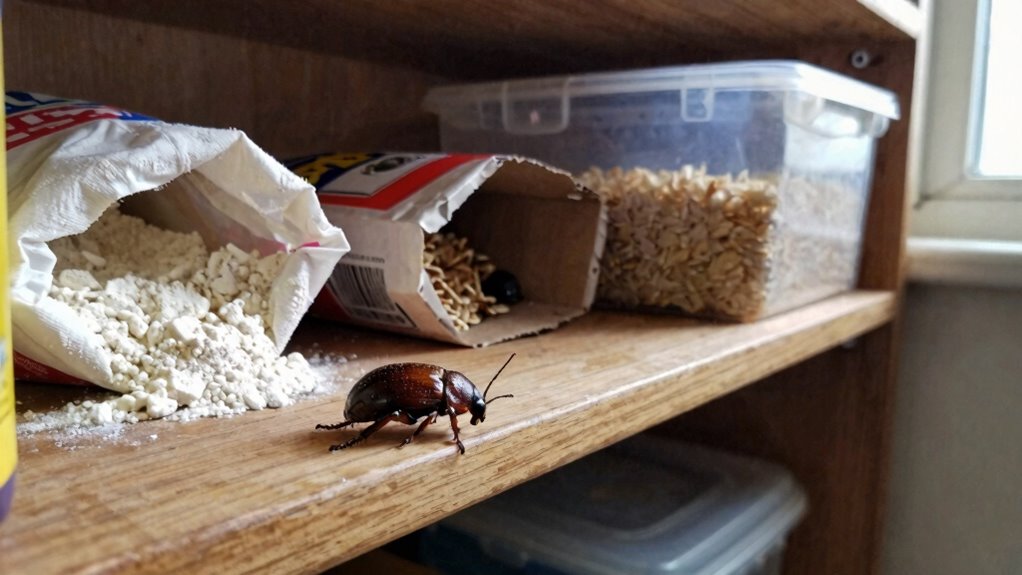
A clean pantry is your first line of defense against drugstore beetles, and it outperforms any chemical spray on the market.
These tiny brown pests, barely the size of a pinhead, feast on invisible crumbs and flour dust you often miss.
Routine spill cleanup, even wiping behind a jar, removes their food source and disrupts their breeding cycle.
Routine spill cleanup removes their food source and disrupts their breeding cycle completely.
Sweep shelves weekly with a stiff brush, then wipe every surface with soap and water.
Dry everything completely, because beetles are drawn to damp residue left behind.
Check rarely used corners where an old bag of dog treats might be hiding.
Store all dry goods in glass or hard plastic containers with tight-fitting lids, never the flimsy original packaging.
That airtight seal acts as your fortress wall against pantry moth and beetle invasions.
Keep your pest control routine simple: dry, bare, and swept surfaces.
Do this consistently, and you will starve them out before they ever establish a foothold in your home.
For long-term prevention, inspect new groceries before storing them, and rotate stock to avoid forgotten packages.
A bare pantry with no open food sources is the most reliable way to stop drugstore beetles for good.
You can also place pheromone-based traps near infested corners to interrupt their reproductive cycle effectively.
Frequently Asked Questions
Can Drugstore Beetles Infest Prescription Medications?
Yes, drugstore beetles can absolutely infest prescription medications, posing a real spoilage risk that many overlook.
They chew through blister packs, gel caps, and even foil wrappers to reach the pills inside.
Once inside, you get medication cross contamination from beetle frass mixing with your medicine.
This is why monthly pest control checks of warm, dark cabinets are so important for home medication storage.
Toss any bottles showing tiny holes or powdery residue right away to avoid ingesting bug debris.
Your pharmacist likely won’t replace chewed meds, so invest in sealed glass jars for long-term protection.
If you see bugs near your meds, trash them fast and consider a targeted pest control product to stop future infestations.
For severe cases, call a professional exterminator to identify the source and apply preventive treatments.
Will Freezing Kill All Life Stages of Drugstore Beetles?
Freezing will kill all life stages of drugstore beetles, but you need to get the technique right. The lethal temperature is 0°F (-18°C), and the freezing duration must last at least three days.
This guarantees that eggs, larvae, pupae, and adults all perish. Shorter times might leave some survivors, like a stubborn hangover that just won’t quit.
For best results, seal infested items in airtight bags first. It is a simple, chemical free fix for your pest control needs, but do not rush the process.
If you want effective pest management without harsh sprays, this method is a smart buy for any homeowner. Consider pairing freezing with other integrated pest management tools for complete drugstore beetle control.
How Do Drugstore Beetles Get Into Sealed Plastic Containers?
Drugstore beetles get into sealed plastic containers through container gaps, not by chewing through the plastic itself. Those tiny spaces along the lid or rim are perfect beetle highways for these common household pests.
An adult beetle, just 2.5 mm long, slips through any crack bigger than a hair’s width. No seal is perfect, which is why pantry pests like these are so hard to keep out.
Tight fitting glass jars with rubber gaskets, like the $12 set at the hardware store, stop this invasion completely. For effective pest control, focus on checking lids instead of the container material.
Bugs always exploit plastic entry points, not the plastic itself, so upgrading your food storage can prevent future infestations. Look for airtight containers with silicone seals to block even the smallest beetle.
This simple switch is a smart purchase for anyone dealing with stored product pests. Use these pest proof containers to protect your pantry and avoid repeat infestations.
Can Drugstore Beetles Bite or Harm Humans?
Drugstore beetles do not bite humans, since their mouthparts simply lack the anatomy to puncture skin. The real issue is that these tiny pests can trigger an allergic reaction in some people, often as skin irritation from contact with their microscopic hairs.
Think of them as a dusty nuisance rather than a physical threat, more like finding a dead bug in your flour than suffering a painful encounter. So no bites, just a possible itch, and that is honestly the worst of it.
If you are dealing with an infestation in your kitchen, professional-grade pantry pest traps and targeted insecticide sprays are your best first line of defense. For a complete solution, you should also inspect all stored food packaging and discard any infested boxes or bags immediately.
Many homeowners find that using pheromone monitoring traps helps pinpoint the source of a drugstore beetle problem before it spreads. Combining these traps with a thorough cleaning routine and airtight storage containers will break the beetle life cycle effectively.
When you are ready to buy pest control supplies, look for products labeled for stored product pests like drugstore beetles and cigarette beetles. Always follow the label instructions carefully, and if the infestation persists, contact a licensed exterminator for professional treatment options.
What Scent or Pheromone Repels Drugstore Beetles?
The honest answer is that no scent reliably repels drugstore beetles. Pheromone traps are your real tool for effective pest control.
Scent repellents like bay leaves or cedar are folk tales, not science. They might make your cupboard smell nice, but beetles will chow down anyway.
DIY traps using vinegar or oil rarely work for infestation control. Instead, buy commercial pheromone traps for about ten dollars for a two pack.
These traps lure males and break the breeding cycle. Use them near infested shelves, but pair with sanitation.
Otherwise, you are just hosting a smelly singles bar. The bottom line is skip scents and trap smarter.


