
How to get rid of flies in the house doesn’t have to mean spraying toxic chemicals or living in a constant battle with buzzing pests. The real secret is cutting off their food, water, and breeding grounds before they ever settle in.
That’s why this guide skips the gimmicks and focuses on the boring, effective stuff that actually works. You’ll learn exactly which gaps to seal, which traps pull their weight, and why your garbage bin is the biggest culprit.
No fluff, no overpriced sprays—just practical steps that get your home back to you. Stick with the first few fixes, and the rest will click into place fast.
At A Glance
- Eliminate attractants by sealing food waste and cleaning spills immediately.
- Use trash cans with tight, locking lids and empty them every 2–3 days.
- Seal gaps around doors and windows with weather-stripping or door sweeps.
- Place sticky flypaper strips near windows or kitchen food sources.
- Vacuum flies with a crevice tool for instant, chemical-free removal.
Why Flies Invade (And What Attracts Them)?
Flies aren’t driven by malice when they enter your home, only by three basic needs: food, water, and a place to breed. No grudges, no vendettas, just survival instincts at work.
Warmer months naturally bring more flies as they follow odors like a bloodhound on a scent trail. They are wired to detect fermenting fruit, rotting meat, or that sticky soda spill you forgot.
A single leaky pipe or overripe banana acts like a dinner bell for common household pests. They don’t need much, a crumb, a damp sponge, or a warm corner is enough.
To solve a fly infestation, focus on professional pest control solutions that target these attractants. Start by fixing leaks, sealing trash, and removing overripe produce from your counters.
Starve them out and they stop coming, so routine pest prevention is your best defense. Cut their food and water supply, and you cut their party short for good. For persistent outbreaks, consider placing traps 20 feet away from outdoor living spaces to draw flies away discreetly before they reach your door.
Eliminate Breeding Sites: Where to Look and What to Remove
A fly problem is really a garbage problem, so the hunt starts at the bins. Seal all food waste in plastic bags inside covered trash cans, and position those cans upwind of any door or window.
When the pasta sauce drips on the counter, wipe it up now. Flies are basically tiny, winged detectives for spilled dinner, and they follow the scent trail right to your kitchen.
Remove any standing water in plant saucers, pet bowls, or clogged gutters, since flies lay eggs in moisture. Check compost bins and recycling containers for sticky residue, and rinse them weekly to disrupt the breeding cycle.
Inspect under appliances, behind trash cans, and in drain traps for organic buildup. Treat those areas with an enzyme cleaner or a targeted fly bait product to cut the reproduction source immediately.
For persistent infestations, apply a residual insecticide around the base of bins and entry points. Pair that with a fly trap placed 10 feet away from doors to intercept adults before they invade your home. Consider using vapor-based treatments inside the bins for long-lasting protection that kills both adult flies and larvae for up to four months.
Schedule a weekly trash removal routine and tie off every bag tightly. That simple habit, plus routine drain maintenance, will starve the larvae and stop the next generation before it hatches.
Sealed Garbage Containers
Properly sealed garbage containers are your first and easiest line of defense against house flies. Odor attractants from unsealed cans draw flies from blocks away, turning your home into a buffet.
Dumpster placement matters, but sealing is priority one for pest control. Use cans with tight, locking lids that form a rubber gasket seal.
Standard kitchen cans often leak odors, so a heavy-duty 32-gallon outdoor can for $30 to $50 fixes that. Double-bag food waste inside, especially meat scraps and overripe fruit.
Empty indoor cans twice weekly and outdoor ones weekly for effective fly prevention. Flies can squeeze through gaps smaller than a penny’s edge, so a lid that clicks shut eliminates their nursery. Adding regular enzyme sticks to drains breaks down organic waste that attracts flies and maggots. A $40 can beats a fly infestation every time and is a smart buy for homeowners.
Upwind Dumpster Placement
The fix is simple. Place dumpsters at least 25 feet from doors, on the side prevailing winds hit first.
That way, smells drift into the yard, not your kitchen. Cost is zero if you just move it yourself.
This simple pest control adjustment gives you an instant drop in fly traffic. If your trash is upwind, your house is a crime scene for flies.
Move it downwind, and they will miss the memo entirely. Your home will stop attracting flies and the odors that bring them. For even better results, hang baited traps 20-30 feet from trash to maximize fly capture effectiveness.
Prompt Spill Cleanup
Clean up spills the moment they happen. Flies detect food odors instantly, and a sticky counter is an open invitation.
Prompt spill cleanup is the easiest way to stop a fly problem before it starts. Wiping up juice, soda, or crumbs removes the chemical trail flies follow.
Focus attractant removal on forgotten spots: under the toaster, behind the coffee maker, and the fridge’s drip tray. A simple spray of all-purpose cleaner and a paper towel works great.
You do not need expensive gear for effective pest control. Even a single drop of syrup can feed a dozen flies for days.
Think of this as preemptive fly prevention. Do not let them RSVP to your kitchen.
The bottom line: clean fast and clean thoroughly. You will starve the party before it begins.
Seal Your Home: Screens, Weather-Stripping, and Air Curtains
Flies can slip through gaps as thin as a credit card edge, so window and door screens are your first line of defense. Weather-stripping fills those sneaky spaces around frames, turning a leaky home into a fortress against flying pests. For example, brush seal strips with nylon bristles effectively fill uneven gaps that flies might otherwise exploit.
For high traffic entries, a professional air curtain creates an invisible barrier with a constant downward airflow. This fan system keeps flying intruders out while you keep the door open.
Screens, weather-stripping, and air curtains work together as a complete pest proofing solution. To seal your home effectively, start with these three simple upgrades for lasting fly control.
Screen Windows and Doors
Screens, weather-stripping, and air curtains act like your home’s personal bouncers, checking IDs at the door and politely turning away uninvited winged guests. For windows and doors, a tight screen is the first line of defense against pest intrusion, but only if it’s in good shape.
Screen inspections should happen twice a year, checking for tears or loose frames. Flies exploit even a pinhole, so catching damage early is key for effective mosquito control and flying insect prevention.
Mesh maintenance means patching small holes with a repair kit for five to ten dollars. You can also replace torn sections with aluminum or fiberglass mesh to keep bugs out long term.
Choose 18×16 mesh for optimal fly exclusion and airflow. Cheaper 14×18 mesh leaves gaps that pests can squeeze through easily.
Self-closing screen doors cost thirty to one hundred dollars and add convenience. Confirm the magnet or spring pulls firmly shut to prevent insect entry from the doorway.
Bottom line is to inspect and maintain screens yearly for reliable pest management. A ten dollar repair beats flies swarming in, and it is far less embarrassing than waving your arms like a windmill.
For gardens or outdoor spaces near the home, installing a fine mesh net over plants and vents can block flies and other pests while allowing airflow and sunlight.
Weather-Stripping for Gaps
Even the best screens are useless if flies can slip through a gap under the door, so draft exclusion is your next line of defense. This means plugging those hidden entry points with simple, low-cost materials.
Start with gap detection by running a flashlight along door bottoms and window frames at night. Any beam leaking through is a clear sign that flies and other pests can enter.
For a standard 36-inch door with a gap under a quarter inch, adhesive foam tape is your best bet, costing about $10 at hardware stores. It compresses to seal tight, cutting both drafts and fly access in one motion. For larger or irregular gaps, consider flexible stainless steel wool to block entry points that foam cannot fully compress into.
If the gap is over half an inch, install a door sweep, typically priced between $12 and $20, that brushes against the floor. Hard plastic sweeps last longer, but rubber versions are quieter and still block insects effectively.
These pest-proofing fixes cost under $30 per door and work silently with no batteries required. Just measure the width, cut the material to fit, and peel off the backing to press it into place.
For gaps that fall between a quarter and half inch, stack two layers of foam tape or use a vinyl V-strip for a tighter seal. That extra effort keeps out flies, ants, and even small spiders without much hassle.
Install Air Curtains
Mount the air curtain above your door and aim airflow outward, not inward, to push flies away. Match the speed to your door height: residential doors need 1,500 ft/min while commercial models require 2,000 or more for effective fly control. Steady airflow naturally discourages mosquitoes and flies from landing, reinforcing the barrier effect.
Run the unit during open-door hours and use manual or sensor switches for convenience. Clean filters monthly as a simple maintenance tip to keep the motor running smoothly and extend its pest repelling life.
Pair it with weather stripping for complete fortress mode against flying insects. Your door stays open and flies stay out with no buzz or fuss.
5 Sanitation Habits That Starve Flies of Food and Water
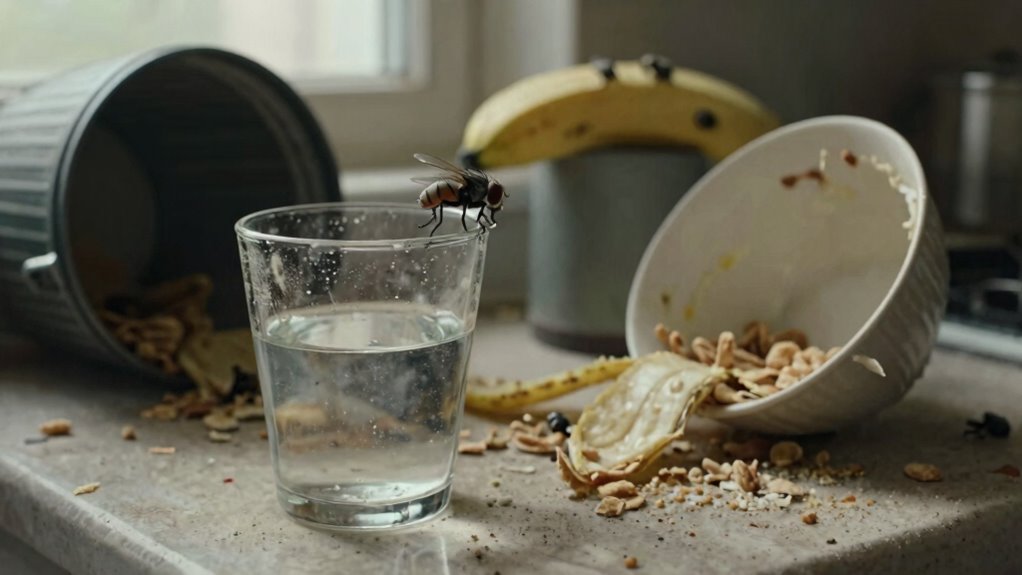
By cutting off a fly’s food and water supply, you effectively starve the pests out of your home without using any chemicals. It’s a slow, satisfying victory, like watching a villain run out of gas.
Cutting off a fly’s food and water supply starves them out without using any chemicals.
Start with pet bowl cleaning. Wash them daily since dried kibble crumbs are basically fly buffets.
Next, wipe down counters and sinks each night to eliminate stray spills. Then, check dryer vent screens because a clogged, linty screen traps dampness and organic debris, a perfect fly nursery.
Finally, seal pantry goods in airtight side-locking lids that block moisture and pests, and fix leaky faucets without delay. These five habits cost nothing but effort, yet they starve flies of resources faster than any spray ever could.
Bottom line: dry, clean surfaces win every time. For lasting pest control, focus on eliminating moisture and food sources to keep your home fly-free.
Stop Garbage Odors That Attract Flies From Far Away
Garbage odors are a dinner bell for flies, calling them from blocks away. A single uncovered bin can send an open invitation to the entire neighborhood.
Effective fly control starts with sealing the source. Use garbage cans with tight-fitting lids, preferably metal or heavy-duty plastic, to contain odors.
Line cans with thick, scented bags like Glad ForceFlex, around $10 for 30, that trap smells inside. Empty trash every 2–3 days in warm weather to slow decomposition.
Leftover food breaks down fast and amplifies garbage odor. Rinse cans weekly with a bleach solution of 1 teaspoon per gallon to neutralize lingering attractants.
Bottom line, a well-sealed can is a quiet can. Flies lose the map, and your yard stays pest-free. For produce stored indoors, using airtight lids with locking buckles can similarly block flies from detecting odors.
How to Use Fly Swatters, Sticky Traps, and Light Traps
Once you’ve sealed the garbage and eliminated the fly buffet, target the few that still slip through. A fly swatter aimed about 1.5 inches behind the fly works fast and costs under $5.
For passive control, sticky traps often under $3 hang near windows or lights where flies rest. They capture adult pests without mess and are a great non toxic alternative. Many sticky tapes last up to 3 months outdoors thanks to waterproof adhesives.
Light traps costing $20 to $50 attract flies with UV bulbs then zap or glue them. These devices are highly effective in kitchens for persistent indoor fly problems.
Use swatters for immediate kills, sticky traps for monitoring fly activity, and light traps for ongoing infestations. Start with cheap options and upgrade only if needed.
Why Vacuuming and Flypaper Are Underrated Tools
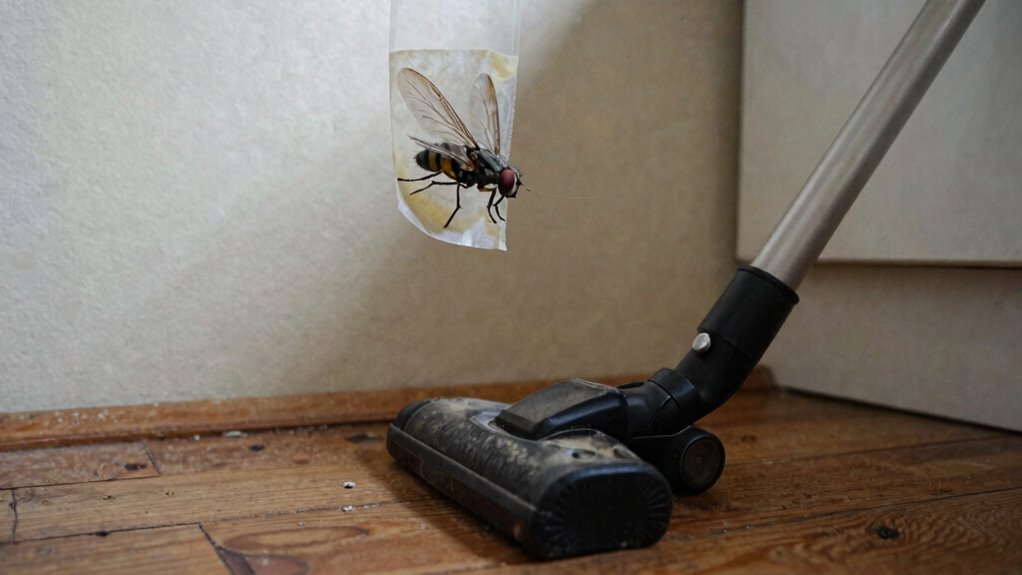
Vacuuming and flypaper are underrated pest control tools that tackle flies without harsh chemicals.
A vacuum cleaner, aimed just behind a resting fly, sucks it up in seconds near windows where they gather.
Sticky flypaper hung high attracts flies naturally, catching them for pennies a day.
These low cost solutions are reliable for home fly control.
Both methods work quietly and safely, making them smart choices for any household.
For buyers seeking non toxic fly traps, flypaper offers a simple, effective option.
A quick pass with a vacuum removes flies instantly, and it doubles as a general cleaning trick.
Flypaper keeps working around the clock, so you can set it and forget it.
Non-toxic, odorless adhesive makes flypaper a safe choice for homes with kids and pets.
Vacuum Cleaner Efficiency
A standard household vacuum cleaner is an underrated tool for fly control, offering a nimble, non chemical solution. It works through direct targeted removal without poisons, sprays, or sticky residues.
Just point, suck, and the job is done. For best results, vacuum suction power matters a lot: a model with at least 12 amps of draw easily plucks flies mid air or off walls without crushing them.
Canister attachments are key to effective pest removal. The crevice tool or soft brush lets you reach ceiling corners, behind appliances, and inside light fixtures where flies loaf.
You get zero chemicals and zero odor, perfect for kitchens or bedrooms where you would rather not fog with pyrethrins. This method is safe for kids and pets too.
Cost is low: any decent bagless upright or canister for $80 to $200 works fine, no need for fly specific gadgets. Empty the bin outside and you are clean.
The bottom line is that vacuuming is fast, precise, and chemical free. For spot killing a few flies, it is often better than most sprays. For those who prefer an active, hands-on approach, electric fly swatters offer a high-voltage alternative that instantly zaps pests on contact.
Sticky Flypaper Placement
If vacuuming feels too active, sticky flypaper offers a wonderfully lazy alternative. Hang it near ceiling placement since flies naturally move upward to rest.
Sticky flypaper catches them mid-settlement, silently doing the work for you. No batteries, no zapping, no cleanup.
Just peel the backing, hang the strip, and wait. Each strip costs roughly a dollar and lasts weeks.
Yes, it looks old-fashioned. But that’s the point. It works.
Position strips in kitchens near food sources or along window frames for effective fly control. Avoid drafts. Breezes make strips sway, spooking the flies.
Replace them when dust coats the glue to maintain pest trapping power. For a chemical-free alternative, consider a natural insect deterrent like the eco-friendly plant-based sprays available from brands such as SC Johnson and Zevo that use botanical extracts.
Flypaper won’t win design awards.
It will, nonetheless, win your fly problem and keep your home free of flying pests.
Mechanical Control Benefits
Whereas pesticides promise quick fixes, mechanical methods like vacuuming and flypaper deliver consistent chemical-free control without the hassle. A vacuum with a crevice tool is perfect for corners and windowsills, killing flies instantly with no ongoing cost. For outdoor infestations near the home, consider adding non-toxic bait traps placed at least 20 feet away to capture large swarms. Sticky flypaper placed along ceilings, where flies naturally rest, passively traps them all day. Hang flypaper near lights or above trash cans and replace it weekly for about $5 per pack.
Use a swatter for stragglers, aiming 1.5 inches behind the fly for peak slap accuracy. Combine methods by vacuuming heavy areas first and then using paper for remaining pests, creating a tag team that lasts.
Mechanical control is the unsung hero of home pest management. Skip the foggers and invest in a vacuum and flypaper instead.
You will sleep better, swat less, and smell only victory. This simple approach keeps your space clean and pest free without toxic residues.
Inspect for Hidden Fly Breeding Hotspots
Thorough inspection is the unsung hero of fly control. It is boring but far more effective than angrily swatting at a single fly that slipped through.
Hidden fly breeding hotspots hide in plain sight. Check wet basements where damp organic sludge breeds larvae by the dozen.
Pet food residues turn corners into all-you-can-eat buffets for pests. Peel back trash can liners, sniff drains, and inspect under appliances.
Look for clumps of dark, gritty material. That is maggot activity, not dirt.
A flashlight and a few minutes beat a week of sprays. Fix leaks, scrub spills, and seal gaps behind cabinets.
No chemical substitute matters if a rotting potato lurks under the sofa. Your nose is a decent detector, but your eyes win for finding the source.
Find the source and remove it. The fly population collapses fast.
Using enzyme-based formulas in slow drains can digest the organic buildup that attracts and breeds flies.
Monitor Fly Activity: Know When You’ve Fixed the Problem
Once the breeding hotspots are gone and the gaps are sealed, the real question is: did it work? The answer shows up in daily counts.
More than three flies per day in the kitchen means something’s still off. Maybe unidentified breeding sites lingered behind a fridge, or outdoor fly sources keep pushing in through a cracked window.
Monitoring tells you if your sanitation actually stuck. Count daily by jotting down flies caught in sticky traps or UV light attraction units.
Less than three? You’re winning. Check outdoors if dumpsters or compost bins still swarm.
Those are outdoor fly sources feeding the problem. Look for patterns like flies appearing at sunset.
That could mean gaps you missed near vents or doors. Wait a week because flies live about 15 to 30 days.
A consistent drop confirms you fixed the core issue. Bottom line: steady low numbers are your thumbs up.
When to Use Chemical Sprays (And Why They’re a Last Resort)
So when do chemical sprays actually earn their spot in your fly control toolkit? Only after you have sealed trash, fixed screens, and cleaned every crumb.
Chemical pesticides are a last resort because they are temporary fixes, not real solutions. Indoor fogging kills flies mid air but leaves zero long term protection. For example, even a professional-strength formula like 1% Pyrethrins achieves only quick knockdown without addressing the source of the infestation.
| When to Use Chemical Sprays | Why They’re a Last Resort |
|---|---|
| Severe, sudden infestation | Only provides temporary knockdown |
| After sanitation fails | Doesn’t address breeding sites |
| In isolated, non‑food areas | Risk of contamination elsewhere |
| For quick, visible relief | Flies return within hours |
Use sprays only when a swarm is overwhelming, say 50 or more flies in a kitchen. A twelve dollar can of pyrethrin aerosol gives about fifteen minutes of peace.
But do not kid yourself. You are just buying time with a quick pest control fix.
Bottom line. Sprays are a band aid, not a cure for your fly problem. Fix the root cause first to stop flies from coming back.
Set Up Fly Traps for Maximum Results
Place traps near entry points like windows and doors to intercept flies before they settle in. Don’t just toss one in a corner and hope for the best with fly control.
Use sticky traps for about $5 to $10 in kitchens where chemicals are unsafe. They are cheap, odorless, and oddly satisfying to check for pest management results. Opt for bright yellow double-sided cards that attract gnats and aphids without any toxic fumes.
Set up UV light traps costing $20 to $50 in garages or basements. Hang them 4 to 5 feet high because flies love light, so let them fly into a sticky death.
Empty or replace traps weekly to prevent them from becoming a breeding site. Nothing says “I give up” like a trap full of rotting flies for fly elimination.
Bottom line: traps are a smart, low-maintenance tool, not a magic wand. Use them strategically to maximize your fly trap effectiveness.
Combine All Methods for Lasting Fly Control
Start with sealed garbage cans costing $15 to $40 and daily wipe downs. Add window screens for $10 to $20 per roll and weather stripping for $5 to $15.
Then deploy traps near entry points like sticky ribbons at $5 for 10 or light traps for $30 to $60. This combo isn’t flashy, but it’s cheap and final for lasting fly control.
One tactic fails. Three overlap and catch stragglers.
Skip the foggers. They are a temporary bandage on a broken leg.
Bottom line: combine, don’t cherry pick. Lasting pest management isn’t magic.
It is a little boring planning. Dad quip: “Flies hate a coordinated attack more than I hate folding fitted sheets.”
For added protection, you can also use natural essential oil sprays that cost around $8 to $15 and are safe for indoor use.
Frequently Asked Questions
Are Certain Fly Species Attracted to Specific Rooms?
Yes, certain fly species are drawn to specific rooms based on available food and moisture. Kitchen infestations usually involve fruit flies or drain flies, attracted by overripe produce, spills, and garbage odors.
Bathroom dampness commonly invites fungus gnats and moth flies, which breed in drains and leaky pipes. A quick inspection of sinks, trash cans, and wet areas will help you pinpoint the pest type.
Fix plumbing leaks promptly and always seal bagged waste to stop infestations fast. For targeted pest control, use a fruit fly trap in the kitchen or a gel drain treatment for bathroom drains.
No mystery here, just messy habits that call for smart pest management solutions. Knowing which room attracts which fly helps you buy the right product the first time.
Can Houseplants or Pet Areas Become Fly Breeding Sites?
Yes, houseplants and pet areas can absolutely become fly breeding sites. Damp soil in potted plants and forgotten rotting fruit create ideal conditions for common household pests.
Fungus gnats thrive in moist dirt, while fruit flies swarm around mushy, fermenting debris. Pet zones with spilled food or wet bedding also attract and breed flies fast.
Pest control experts recommend cleaning spills immediately and avoiding overwatering your plants. Empty food and water bowls daily to disrupt the fly life cycle.
A sealed trash bin with a tight lid is a must for effective fly prevention. Dry surfaces throughout your home will kill the party for these invaders.
Bottom line: dry it out and clean it up. Flies will have nowhere to crash if you follow these simple pest management tips.
Do Fly Traps Work Better in Certain Locations or Seasons?
Yes, fly trap effectiveness shifts with location and season, so strategic placement really matters for best results.
Indoor sticky traps work great near windows, while outdoor traps perform better when placed upwind from doors and patios.
Summer is peak season because flies breed fast in hot months, making traps catch significantly more during this time.
Winter traps mostly target stragglers from indoor breeding spots, so you will still see some activity.
A practical tip: traps do not care about your calendar, just your garbage and breeding sites.
Focus on placing fly control products where pests congregate, not where you hope they might appear.
Always match your trap selection to the specific pest problem and environmental conditions.
For professional grade pest control solutions, choose high quality traps designed for the season and location you need.
How Often Should I Replace Sticky Flypaper or Light Traps?
Sticky flypaper should be replaced based on placement frequency and visible trap saturation. Swap it out weekly, or sooner if it’s packed with flies.
Light traps need cleaning every two to four weeks, but replace bulbs and glue boards every three months. Do this sooner when less than 20% sticky surface remains, since overloaded traps stop working.
Check your fly control setup often and swap on sight, because a full trap is just a dead end for flies. For effective pest management, pair these replacements with routine inspections of entry points and sanitation hotspots.
If you’re shopping for fly control supplies, look for high-adhesion glue boards and long-lasting UV bulbs to maximize your coverage. Buying in bulk for commercial kitchens or warehouses saves money, but always verify the trap’s square footage rating matches your room size.
A clean, active trap is your best defense against indoor flying insects, so don’t wait for odor or visible buildup. Proactive replacement keeps your facility compliant with health codes and reduces the need for emergency pest control services.
For residential buyers, sticky flypaper works well near trash bins or windows, while light traps suit garages and basements. Choose refill kits with pre-dated glue boards to simplify your monthly maintenance schedule.
Will Fly Problems Return After Fixing Sanitation Issues?
Flies will likely return even after fixing sanitation issues. A residual infestation can maintain the problem when eggs hatch days later.
Outdoor re-entry remains a constant threat since flies detect odors from up to a mile away. To prevent this, seal entry points with silicone caulk and install weather-stripping.
For persistent issues, consider an air curtain priced between $150 and $300. Success requires patience: eliminate all breeding sites first.
Maintain traps like sticky flypaper and replace them weekly. Always keep garbage sealed in tight containers to cut off food sources.


