
Does salt kill fleas? The short answer is yes—but only the adults, and not very well. Salt shreds a flea’s waxy shell and dehydrates it, but it leaves eggs, larvae, and pupae completely untouched. Since one female flea lays up to 40 eggs a day, relying on salt alone is like trying to drain a bathtub with the faucet still running.
It’s cheap and easy to grab, but salt can damage your carpet and irritate your lungs when inhaled. A better bet is vacuuming or using diatomaceous earth—both target every life stage for under $10. In this guide, we’ll break down what actually works and what’s just a waste of time, so you can pick the right fix for your home.
At A Glance
- Salt kills adult fleas by dehydrating them through scratches in their waxy exoskeleton.
- Salt does not kill flea eggs, larvae, or pupae, leaving 95% of the infestation.
- Table salt’s sharp crystals cause more abrasive damage than softer Epsom salt.
- Salt alone leads to rapid reinfestation, as a single female lays 40 eggs daily.
- Vacuuming and diatomaceous earth are more effective, targeting all flea life stages.
How Salt Wrings Fleas Dry (And Why That’s Not Enough)
Salt’s assault on fleas is a simple, brutal affair. Its coarse crystals scratch the flea’s waxy exoskeleton, then draw dampness out of the tiny wound like a thirsty sponge at a leaky faucet.
This dehydrates adult fleas, but that is where the magic ends. The salt myth that it annihilates an infestation crumbles under scientific refutation.
Salt only hits adults, ignoring eggs and larvae hiding deep in carpet fibers. You might kill a few jumpers, but the next generation survives, chuckling in their microscopic bunkers.
Vacuuming, by contrast, removes more adults and their food sources. This makes it a smarter first step for any flea control strategy.
For real control, combine vacuuming with food-grade DE for effective elimination.
Why Salt Fails Against Flea Eggs and Larvae
Salt’s drying effect only works on adult fleas, leaving eggs and larvae completely untouched. These younger stages hide deep in carpets, feeding on organic debris and resisting dehydration entirely.
So while salt may zap a few adults, it does nothing to stop the next generation from hatching and restarting the cycle. For a thorough home treatment, you need products that target immature stages, like insect growth regulators or vacuuming with steam cleaning.
These methods break the flea life cycle, while salt alone is just a short-term fix. If you’re dealing with an active infestation, focus on larval habitats and repeat treatments to prevent reinfestation.
Using a residual spray or diatomaceous earth can reach those hidden spots, but salt won’t solve the root problem. Pair that with frequent washing of pet bedding to catch eggs before they develop.
For effective long-term control, hydroprene foggers disrupt flea eggs and larvae, preventing reinfestation for up to seven months.
Life Cycle Gaps
The core problem with the salt remedy is a simple case of bad timing. It completely ignores the pest lifecycle.
Flea egg resilience means those tiny spheres resist dehydration. Salt’s abrasive assault slides right off them.
Meanwhile, larval habitat gaps exist deep in carpet fibers and under furniture. Salt rarely reaches those areas, so larvae just munch on organic debris, unfazed.
Salt only targets adult fleas. It leaves 95% of the infestation (eggs, larvae, pupae) untouched.
Think of it as swatting one mosquito while ignoring the breeding ground. Without treating all life stages, a new batch hatches within days.
Instead, effective powders use dual-action formulas that keep pests away for months.
Inherent Ineffectiveness
Fleas spend most of their lives as eggs, larvae, or pupae, so targeting only adult fleas is like trying to drain a swimming pool with a teaspoon. Salt simply cannot penetrate eggs or kill larvae hiding deep in carpets.
This inherent weakness fuels consumer skepticism, as people try salt treatments, see no real improvement, and assume they did it wrong. Meanwhile, dumping pounds of salt indoors damages carpets, harms wooden floors, and irritates pet paws. Proven alternatives like chemical-free flea traps use light and heat to capture adult fleas without risking harm to your home or pets’ paws.
Salt fails not due to bad luck, but because it ignores 95% of the flea life cycle. That is not a solution, it is a sprinkle of false hope.
For lasting flea control, skip the salt and use proven treatments like thorough vacuuming, professional pest control, or insect growth regulators. These methods tackle the whole infestation, not just the adult stage.
Does Table Salt Work Better Than Epsom Salt?
When comparing table salt to Epsom salt for flea control, both work by dehydrating the pests. The granules scratch the flea’s outer shell, causing it to dry out and die quickly.
However, neither salt is a real solution for a full-blown flea infestation. For effective pest control, you should use a targeted flea treatment or call an exterminator.
For best results, vacuum your carpets before applying any salt remedy. This helps remove flea eggs and larvae before the dehydration process begins.
For ongoing protection, you might consider chemical-free detection tools that use physical barriers instead of pesticides.
Dehydration Mechanism Comparison
Both table salt and Epsom salt kill fleas by drying them out. Their crystals scratch the exoskeleton, creating tiny wounds that let moisture escape.
Table salt has sharper, more jagged edges that cause more abrasive damage. It physically scuffs the shell more aggressively than Epsom’s softer grains.
A flea’s desiccation tolerance is low either way. Once its waxy coating is compromised, it’s game over for the pest.
Table salt wins the roughness contest, but the dehydration mechanism is identical for both. Neither is a miracle cure for flea control, so manage your expectations.
If you are choosing a household remedy, table salt’s extra abrasiveness makes it a marginally better drying agent. For targeted flea treatment, combine it with vacuuming and washing bedding to break the life cycle, similar to how food-grade diatomaceous earth kills pests by dehydrating them through exoskeleton damage.
Effectiveness Against Fleas
The verdict is underwhelming.
Table salt’s extra abrasiveness does not make it meaningfully better than Epsom salt for killing fleas.
Both rely on dehydration, targeting only adult fleas while leaving eggs and larvae untouched.
Expect re-infestation if you skip other pest control methods.
For pet safety, neither salt should be applied directly on animals.
Ingestion or skin contact risks irritation, so always use a vacuum or flea treatment instead.
Their environmental impact is low, but overuse can damage carpets and flooring.
Table salt has a moderate risk for pets, while Epsom salt is gentler.
Bottom line: you are not getting a miracle here.
Vacuuming beats both for flea control.
Salt is a mediocre sidekick, not a hero.
For effective flea removal, rely on professional pest control products.
Instead, consider a plant-based formula like those found in natural sprays that kill fleas on contact and break the flea life cycle.
Application Method Differences
Application method differences between table salt and Epsom salt are mostly about texture and waiting time. Table salt, fine as dust, penetrates carpet fibers quickly but clumps if too thick.
Epsom salt’s coarse crystals dissolve slower, requiring longer contact, up to 48 hours, before vacuuming. Salt distribution is trickier with Epsom. Its larger grains don’t spread evenly, leaving patches where fleas survive. Table salt spreads like a light snowfall, covering more area per pinch. Neither kills eggs, so both fail long-term for complete flea control. Unlike food-grade diatomaceous earth, which kills insects mechanically through exfoliation and dehydration, table salt lacks a residual effect and cannot match its long-lasting protection when kept dry.
For a quick, one-time try, table salt wins for immediate pest removal. But honestly, vacuuming beats both. It is cheaper, faster, and won’t ruin your floors. Save the salt for fries.
Why a Salt Treatment Alone Can’t Stop an Infestation
Salt kills a few adult fleas but leaves eggs untouched deep in carpets and bedding. It also ignores larvae hiding in cracks and under furniture.
You might get temporary relief after sweeping up dead adults. But a single female flea lays 40 eggs daily.
Without treating all life stages, fleas will reinfest your home within days. Vacuuming thoroughly and washing pet bedding on hot cycles are essential steps.
Salt alone is a speed bump, not a roadblock. For a lasting solution, combine salt with pest control treatments that target eggs, larvae, and pupae, such as products containing fast-acting options like nitenpyram that quickly kill adult fleas before they can reproduce.
How to Apply Salt on Carpets and Furniture (Without Damaging Them)
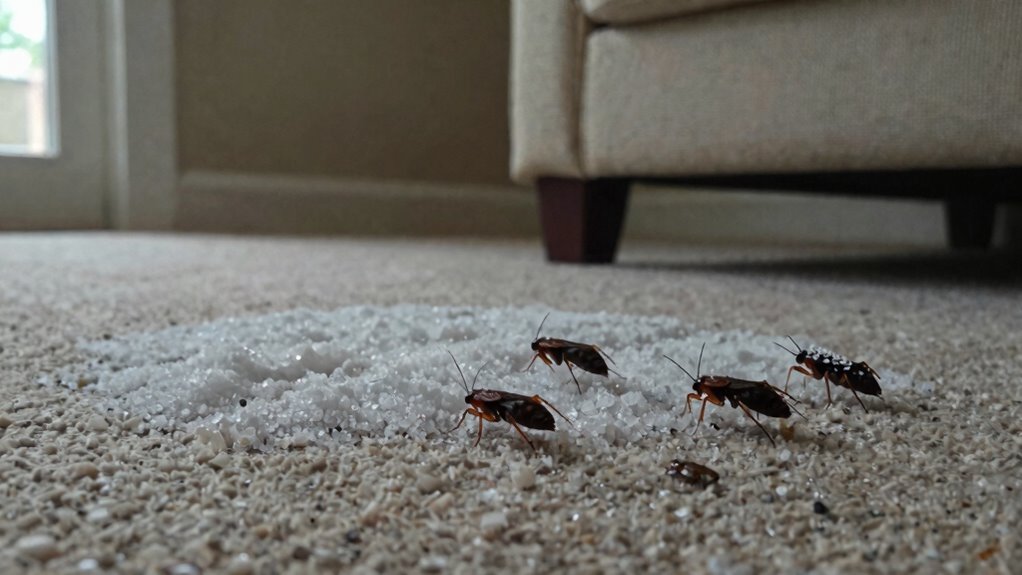
Applying salt for pest control works best with a light, even sprinkle. Too much salt will damage fabric and flooring over time.
A fine grind like standard table salt is ideal for carpets and furniture. Coarse crystals can scratch fibers and attract moisture.
You should spread a thin layer and leave it for one to two days. This helps with flea prevention and odor absorption.
Vacuum thoroughly after the waiting period to avoid residue buildup. Regular salt treatment can also deter ants and other crawling pests.
For best results, test a small hidden area first. This simple method keeps your home fresh without harsh chemicals. Food-grade diatomaceous earth is a top choice for pest control that physically dehydrates crawling insects without damaging carpets.
Sprinkling Salt Correctly
When sprinkling salt on carpets and furniture, think like a pest control cook rather than a seasoning fanatic. Apply the salt lightly and evenly, never dumping it in clumps.
A fine mesh sieve works best for distribution, just like dusting a delicate pastry. For low pile carpet, sprinkle lightly and let it sit for 12 hours.
High pile carpet needs half the amount with a maximum of 24 hours. Berber carpet should be avoided because salt can snag the loops.
Wool carpet requires less salt and only 6 hours of sitting time. For furniture fabric, place a thin layer on a cloth first.
A quarter cup per square foot is plenty for effective flea control. Too much salt just creates a crunchy mess, not a flea graveyard.
Let the salt sit for the recommended time, then vacuum with intent. This method targets fleas without damaging your fabrics or carpet fibers. Unlike salt, diatomaceous earth kills by dehydration within 24 to 48 hours but requires dry conditions to work.
Avoiding Carpet Damage
Salt can control fleas, but it risks damaging your carpet fibers.
Natural wool rugs may become brittle, while synthetic nylon usually holds up fine.
The biggest danger is moisture attracting salt, which can cause mildew growth.
Use only a thin dusting to avoid oversaturating the carpet.
Vacuum thoroughly after 48 hours to prevent grit from grinding down fibers.
Test a small, hidden spot first as a patch test for your floor.
For heavy flea infestations, skip the salt entirely.
Professional steam cleaning, costing around $100 to $200, saves your rug and your peace of mind.
Sometimes, it is just not worth the salt for protecting your carpet.
For a more effective and safer solution, consider a fully enclosed mattress encasement to block pests without damaging your floors.
The Real Risk: What Salt Can Do to Your Floors and Health
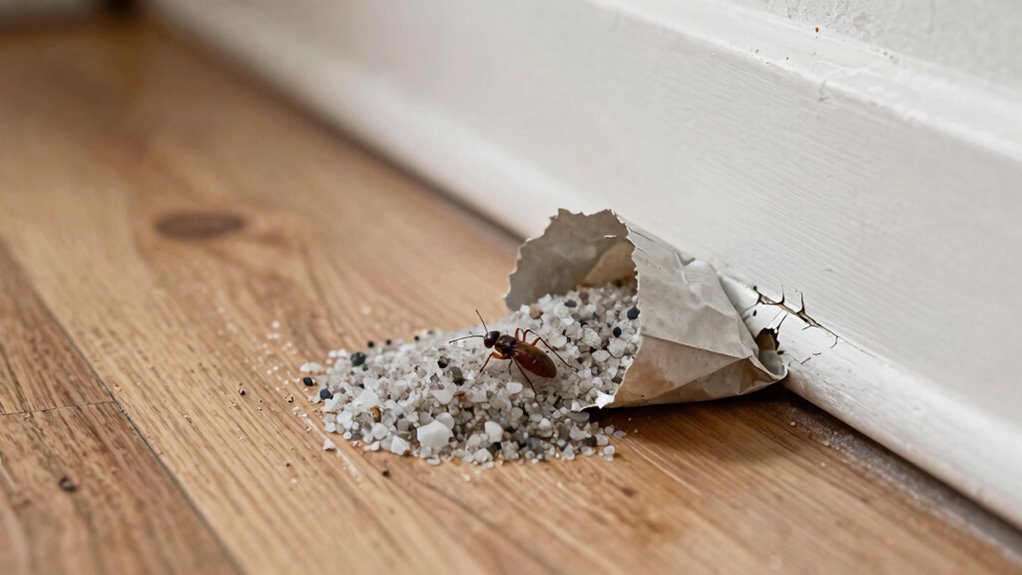
Using salt as a DIY flea remedy sounds clever, but it often creates more trouble than it solves.
This abrasive sprinkle doesn’t just target fleas, it grinds into carpet fibers causing texture damage that leaves floors looking patchy and worn.
When you breathe in the fine dust during application, you risk respiratory irritation.
This is especially true for kids or pets with sensitive lungs.
Salt crystals scratch hardwood finishes and dull tile grout.
The final repair cost often exceeds a professional pest control treatment.
Inhaling salt particles triggers coughing or sneezing.
It turns your home into an accidental saline mist machine.
Salt leaves flea eggs and larvae completely untouched.
The infestation just laughs and resprouts after your effort.
Skip the salt for flea control.
Use a proven flea spray or call an exterminator for lasting results.
Instead, consider heavy-duty leather swatters with stainless steel handles that provide crack-proof durability and safe, chemical-free pest control.
What Science Says About Salt as a Flea Killer
For all the talk of salt as a flea killer, the science is clear and it is not good news. Scientific studies show that salt’s abrasive crystals can scratch a flea’s outer waxy shell, causing minor dehydration.
That damage is slow and uneven, and it only affects adult fleas. Eggs and larvae stay snug in carpet fibers and remain completely unharmed.
You would need a salt blizzard, not a sprinkle, to make a real impact. Even then, it is a coin flip whether it works against a flea infestation. Unlike proven options that offer residual protection for weeks, salt offers no lasting defense against re-infestation.
Studies have not found it reliable for pest control, only for a few unlucky jumpers. So salt is a cheap trick, not a cure for your home.
Skip the seasoning and grab a vacuum instead for effective pest removal. It is cheaper per square foot and you will not ruin your rug.
Bottom line: salt is a dud for serious flea treatment. Stick with proven flea control methods for lasting results.
Diatomaceous Earth vs. Salt: Which Actually Kills Fleas?
Diatomaceous earth, food grade at about ten dollars per pound, stays effective as long as it remains dry and kills fleas over several days.
Salt is cheaper at pennies per pound but only targets adult fleas, leaving you to chase the same infestation endlessly.
Salt is cheaper but only kills adult fleas, leaving you stuck in an endless infestation loop.
Diatomaceous earth disrupts the flea life cycle by dehydrating larvae and eggs.
Salt simply gives you a salty carpet and zero peace of mind for long term pest control.
Food-grade diatomaceous earth with 89 to 95 percent amorphous silica is the key component for effective pest control.
Why Vacuuming Outperforms Salt for Flea Removal
A certain irony runs through the entire salt for fleas debate. You can spend hours sprinkling a cheap cupboard staple across your carpet, only to realize that the same amount of effort with a vacuum cleaner would have removed more fleas, plus their eggs and larvae, without the mess or the risk of damaging your flooring.
Vacuuming additionally avoids altering carpet pH, which salt can sometimes do, creating a less hospitable environment for your flooring’s fibers. Unlike salt, it doesn’t rely on dehydration, which is a slow, unreliable form of flea fumigation.
It is more of a gentle mist than a scorched earth policy. Instead, it physically sucks up adult fleas, eggs, and larvae in one pass.
Empty the bin outside, and you’ve won a round of pest control. Salt leaves the rest for later, making it a poor choice for flea treatment, especially when chemical-based indoor sprays offer faster results with adulticides and insect growth regulators for long-term control.
Bottom line for effective flea removal: skip the shaker, grab the hose. Vacuuming is the practical, friendly solution for eliminating these pests from your home.
Why You Must Treat Your Pet and Home Simultaneously
Treating your pet without addressing your home is like putting a bandage on a leaky pipe. It feels productive, but the problem keeps spraying everywhere.
Adult fleas hitch a ride on your dog, but eggs and larvae hide deep in carpets and furniture. No shampoo or comb can reach them there.
A comprehensive flea control approach tackles all life stages to break the cycle completely. Pet hygiene keeps the host clean, but without environmental sprays, flea eggs keep hatching around the house.
Vacuuming removes flea food and eggs while environmental sprays target hidden larvae in cracks and corners. Flea shampoos kill only adults, so treat bedding and floors with sprays to stop re-infestation.
The bottom line is clean your pet and then spray your home. Otherwise, you are just playing tug-of-war with fleas.
When Salt Fails: When to Call a Professional for Flea Control
When salt fails, and it will inevitably fail like a soggy paper towel in a rainstorm, the infestation has likely grown beyond any home remedy. The reinfestation risk is high because salt spares eggs and larvae, leaving a ticking time bomb in your carpet.
Breathing in salt dust is an inhalation hazard that causes throat irritation, so do not overdo it. Call a professional pest exterminator when fleas persist after a week of vacuuming and salt treatment.
They will use specialized insecticide sprays or foggers targeting all flea life stages, costing between $150 and $300 for a typical home. These experts additionally treat pets with vet grade medications, breaking the complete life cycle.
DIY methods fail here, like using a squirt gun on a wildfire. For reliable flea control solutions, hire a pro for targeted flea removal services.
Bottom line: if salt fails, save your sanity and invest in professional flea treatment. Contact a flea exterminator near you for a thorough home flea inspection.
Frequently Asked Questions
Does Salt Kill Fleas on Dogs or Cats Directly?
Salt on dogs or cats is a bad idea because it risks severe skin irritation and poses a salt safety hazard if ingested during grooming. Direct application of salt for flea control is not recommended for your pet.
Instead, treat your pet with vet approved flea products for safe and effective pest control. Then you can use salt only on carpets where it dehydrates adult fleas but misses eggs.
That combination might help with a mild flea outbreak, but it won’t fix a full infestation alone. For a complete flea treatment solution, you need professional pet treatments and long term prevention.
Keep salt off animals entirely and focus on proven flea products for your dog or cat. If you want to make a smart purchase, look for oral or topical flea treatments that kill fleas at all life stages.
Can I Mix Salt With Other Household Products to Kill Fleas?
Mixing salt with other household products can be tried, but results are mixed. Adding borax creates a synergy that boosts dehydration, though it still misses eggs and larvae.
Compared to diatomaceous earth, a finer dust that slices fleas’ shells, salt seems clunky. It is like bringing a butter knife to a sword fight.
Borax synergy works better than salt alone, but be cautious. Diatomaceous earth is more effective, just don’t inhale it.
For real relief, albeit pricey, a professional flea spray from a pest control company beats any kitchen science experiment. Bottom line, skip the mix and hire the expert for lasting flea treatment results.
How Long Does Salt Need to Stay on Surfaces to Work?
Salt needs to stay on surfaces for one to two days to effectively dehydrate adult fleas. Finely ground table salt works best, as coarse crystals simply won’t stick to carpet fibers or pet bedding.
Sprinkle it lightly across infested areas, then leave it undisturbed for a full 48 hours before vacuuming thoroughly. Any less time, and you risk leaving adult fleas active enough to reproduce and restart the infestation.
Most pest control experts agree that regular vacuuming is honestly more effective than salt alone, so pair this treatment with a high-suction vacuum for better results. After those two days, empty the canister outside immediately to prevent captured fleas from hopping back into your home.
If you’re shopping for DIY flea control products, look for salt-based powders with fine particle sizes and a moisture-absorbing formula. These are often bundled with flea sprays or traps, which boost your chances of breaking the flea life cycle in carpets, rugs, and upholstery.
For stubborn infestations, repeat the salt treatment after seven days to catch newly hatched fleas, then follow up with a residual insecticide labeled for indoor use. Buying a dedicated flea vacuum with a HEPA filter is a smart investment, since it locks in allergens and prevents eggs from scattering.
Remember, salt is a slow, gentle method, so don’t rely on it alone if you have pets with heavy flea loads or a warm, humid climate that speeds up flea breeding. Combine salt with frequent washing of pet bedding at high heat and use a flea comb on your animals to remove adults before they lay more eggs.
That 48 hour window is non-negotiable, but it also gives you time to treat other surfaces, like baseboards and under furniture, where flea larvae hide. For the best value, purchase a larger container of food-grade salt or a premixed flea powder, and always check the label for carpet-safe instructions.
Will Salt Harm My Vacuum Cleaner After I Clean It Up?
Salt can harm your vacuum cleaner, especially the abrasive grains that scratch internal parts. Fine saline residue may settle into the motor and increase filter clogging over time.
A cheap vacuum might survive this, but a $300 model is at real risk of damage. After cleanup, always dump the canister outside and tap the filter to remove trapped grit.
If your filter is washable, rinse it thoroughly and let it dry completely before reuse. For anyone battling pest control issues, this same careful approach protects your gear from salt, diatomaceous earth, or fine powders you might use against ants, roaches, or silverfish.
When you need to buy pest control products, remember that vacuum maintenance is key to keeping your equipment ready for the next job. A smart purchase includes a vacuum with easy to clean filters if you frequently tackle salt spills or powdery treatments.
Does Salt Prevent Future Flea Infestations After Vacuuming?
No, salt does not prevent future flea infestations after vacuuming. Vacuuming removes adults and some eggs, but salt types effective on adults leave larvae and pupae untouched to hatch later.
Application frequency doesn’t change that outcome. Repeated sprinkling just builds residue, risking carpet damage without breaking the flea life cycle.
Think of it as a band aid on a leaky pipe. For lasting flea control, you need products that target all life stages, not just the visible adults.
If you want professional grade prevention, look into insect growth regulators or flea sprays with IGRs. Routine vacuuming still helps, but it must be paired with a comprehensive pest control treatment.
The smart move is to skip salt and invest in targeted flea treatments. For full coverage that stops reinfestation, call a local pest control service today.


