
Kitchen ants are one of the most frustrating pests to deal with, and the real problem is never the few you see marching on the counter. The secret to getting rid of ants in the kitchen is targeting the colony itself, not just the visible scouts, and in 2025, bait stations are the smartest, safest way to do it.
Below, I’ve rounded up the best ant-killing supplies, what’s actually worth buying, and a few helpful notes on placement so you can stop the invasion fast.
Keep it practical, skip the sprays, and seal those tiny cracks—then check out the product picks that make the job easy.
At A Glance
- Wipe pheromone trails with soapy water to disrupt ant navigation and scent paths.
- Place borax-sugar bait stations along trails to poison the entire colony.
- Seal cracks thinner than a credit card with caulk, foam, or steel wool.
- Fix leaky pipes and dry damp areas to remove the colony’s water source.
- Store food in airtight containers and wipe counters daily to cut off supply.
How to Get Rid of Ants in the Kitchen Fast
The quickest way to evict kitchen ants is to outsmart them, not outspray them. Ant removal starts with wiping their trails, since they follow pheromones, not your crumbs.
A soapy sponge works, but skip the scented stuff. It confuses them for a bit, yet they regroup.
Natural repellents like vinegar, lemon juice, or even crushed mint disrupt their signals without poisoning your countertops. Spray these along baseboards, windowsills, and behind the fridge for effective pest control.
Natural repellents like vinegar, lemon, or crushed mint disrupt ant signals without poisoning your countertops.
Bait beats spray for actual ant removal. Ants carry it home to the queen, which makes it a top choice for home pest control.
If you’re in a panic, mix borax with sugar. Go easy on it, though, because too much borax scares them off. Alternatively, bait stations require no mixing and can be placed along ant trails or baseboards to wipe out the colony.
The goal isn’t a chemical war. It’s a tidy, scent-neutral kitchen that deters ants naturally.
Just clean first, then bait, then seal those cracks. This practical approach helps with permanent ant control and keeps your kitchen ant free.
Why Ants Keep Finding Your Kitchen?
Ants are not crashing your kitchen by accident; they have found a reliable pit stop. It is rarely about a single crumb, and their persistence comes down to basic biology.
Worker ants, called scouts, hunt nonstop for resources, and when they hit gold like a sticky counter or pet bowl, they rush home. They leave a chemical breadcrumb trail, which is pheromone trail science and a literal scent roadmap for the colony.
Your kitchen is a five star buffet for them, offering both food and moisture. They are not just after a snack; they are seeking hydration and harborage, so that dripping faucet or humid corner becomes a luxury resort.
The real kicker is that these scent paths can be detected for weeks, so simply wiping up visible ants does not erase the signal. As long as that chemical invitation remains, they will keep coming back, turning your space into a recurring pest control challenge.
To break the cycle, you need to address the source with targeted ant control methods, not just surface cleaning. Professional pest control services can locate and treat hidden nests, while DIY bait stations help eliminate the colony at its root.
Sealing entry points and fixing moisture issues are key steps in long term ant prevention. If you are dealing with repeat infestations, a home pest inspection can reveal the exact pathways and harborage spots you are missing.
Remember, a clean kitchen helps, but it does not stop the pheromone signal alone. For effective ant removal, combine sanitation with strategic treatments like gel baits or granular barriers around your perimeter.
That way, you turn off the chemical invitation and make your kitchen less appealing for future scout visits. Borax-based baits work effectively because they act as a delayed-action poison, allowing foraging ants to return to the nest and contaminate the entire colony before succumbing to the toxin.
Seal the Cracks and Entry Points Ants Use
Stopping the chemical trail is only half the work if ants can still walk right inside. Ants squeeze through cracks thinner than a credit card, so sealing entry points is essential for effective pest control.
Check foundation gaps where concrete meets siding, as that is their favorite highway. Grab a caulk gun and expanding foam, both cost under ten dollars for a quick fix.
Seal around window frames, door thresholds, and pipe penetrations to block common ant entry points. A tube of silicone takes fifteen minutes to apply and lasts for years, making it a smart homeowner upgrade. For larger gaps around pipes or vents, pack them with stainless steel wool to block ants and other crawling insects.
Fifteen minutes of silicone seals ant entry points for years.
Do it right, and the colony outside will get the message: no vacancy. The goal is not to seal the house into a bubble, just to close the obvious doors.
For most homes, a weekend afternoon of patching pays off faster than any spray. If you can see daylight, ants can see dinner, so seal it now.
Remove the Food and Water Sources They Need
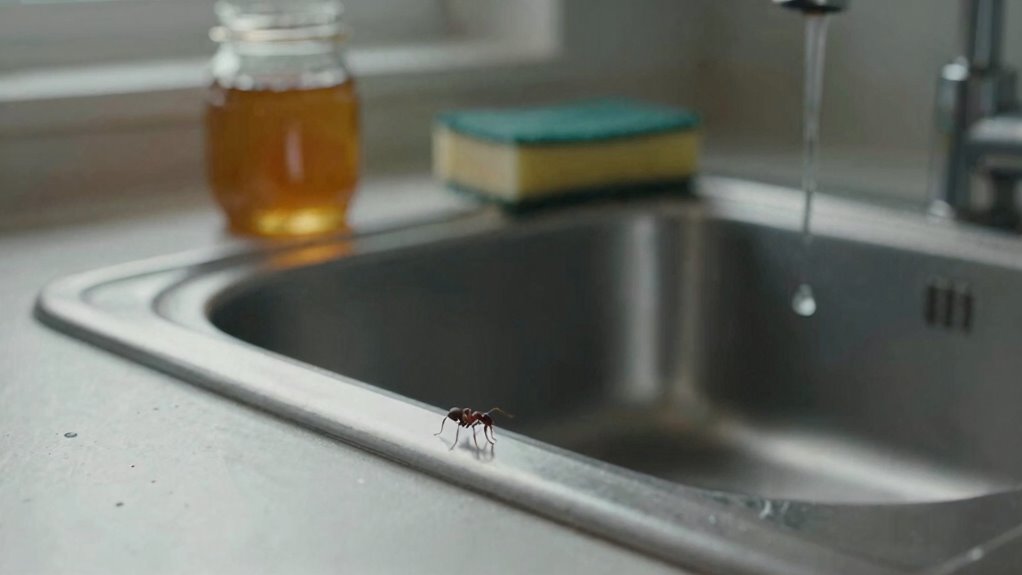
Ants are tiny survivalists that need water to thrive, and a leaky pipe or damp sponge is like a free drink station for them.
Fixing drips and drying damp areas immediately removes the water supply they depend on.
You are not running a hospitality service for pests, so make your kitchen feel like a desert instead.
Eliminate every drop of standing dampness to stop ant infestations before they start.
Check under sinks and around appliances for hidden moisture sources that attract these pests.
A dry kitchen is a key step in effective ant control and prevention.
Use a dehumidifier in humid spots to keep the environment unwelcoming to ants.
To ensure the environment is truly hostile to ants, humidity levels should be maintained between 50 and 60 percent, which creates an unsuitable habitat for moisture-loving pests.
This simple pest management tactic helps break their survival cycle.
Fix Leaky Pipes
A leaky pipe under the kitchen sink is a five-star buffet for thirsty ants. Fixing it must come first, period.
Leaky pipes provide the hydration colony survival demands. Dampness control becomes the foundation of the ant battle strategy.
A slow drip, maybe a cup per day, is still a reliable oasis for thousands of workers. They do not need much, just a consistent drop or two.
Tighten loose fittings with a wrench. Torque matters, not brute force.
Replace worn rubber washers. They cost about $2 at a hardware store.
Use a flashlight to inspect every joint monthly during routine cleaning. Additionally, maintaining humidity below 50 percent in the kitchen makes the area even less hospitable to pests.
The verdict is straightforward. Fixing leaks removes the water source and kills the colony’s best hydration plan.
Cheap repairs, roughly $5 in parts, defeat an infestation’s core need. Patch the drip, dry the space, and the ants lose their biggest advantage completely.
Dry Damp Areas
Once the pipe is tightened, the rest of the kitchen’s damp spots deserve the same suspicion. Ants are thirsty little invaders, and even a puddle under a plant pot is a welcome mat for pest control.
Wet materials like dishcloths, cardboard, and sponges hold moisture and keep scouts coming back. Damp appliances, such as a coffee maker’s drip tray, are prime real estate for ant treatment.
Dry them weekly; a dehumidifier under the sink, roughly fifty dollars, pulls moisture out overnight to stop ant problems.
Check baseboards for hidden wetness. If a spot stays damp two days, trace it.
Seal or dry it. Ants need standing water; remove it, they walk elsewhere. Sprinkle diatomaceous earth in thin, dry layers along entry points, as moisture neutralizes its ability to dehydrate ants.
A dry kitchen is boring, and boring works. No chemicals are needed for pest prevention.
Just a towel and a habit of inspecting ant entry points will keep them away.
Clean Up Ant Trails Without Spreading Them Further
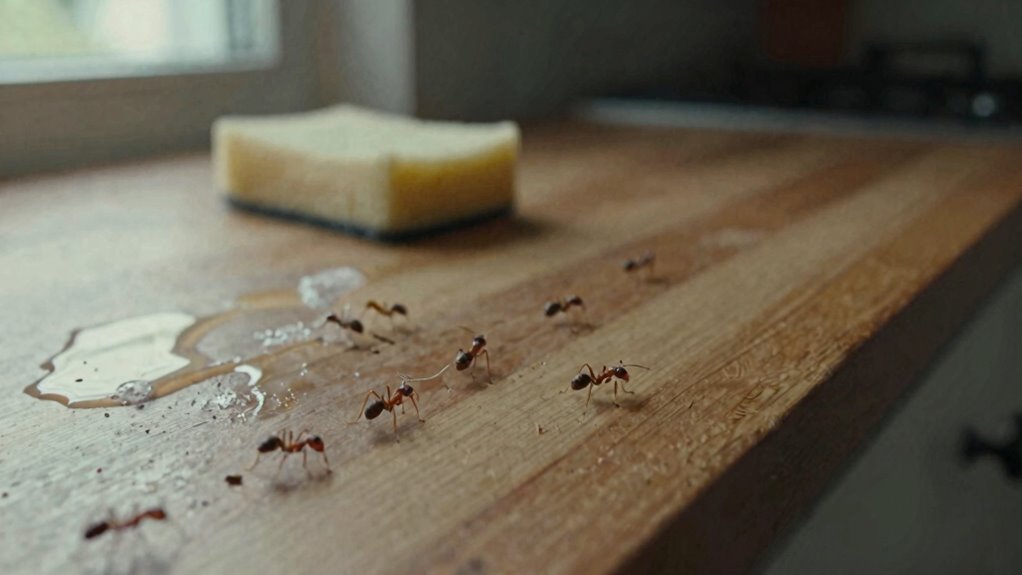
Whether the kitchen counter has become a parade route for tiny six-legged scavengers, the urge to grab a spray bottle is understandable. But resisting that spray matters more for effective pest control.
Spraying snaps the trail into frantic branches and scatters scouts. It wrecks the pheromone chemistry that guides ants home, killing only the few you see.
Instead, grab a vacuum for immediate ant removal. Suck up the visible workers, then wipe the surface with plain soapy water.
Do not use bleach or citrus cleaner. That soapy water dissolves the invisible pheromone trails ants follow.
Repeat this daily for a week to disrupt ant life cycles. Patience works better than chemical warfare for lasting infestation control.
This also keeps them from lingering near entry points. That buys you time to tackle exterior ant treatments later. After erasing the trails, applying a residual dust in cracks and crevices can provide long-lasting protection against future invasions.
Never use scented cleaners on ant trails. They just confuse the ants’ internal navigation system.
Bottom line for ant removal: vacuum and wipe, don’t nuke. You are erasing their map, not declaring war on the colony.
Place Ant Baits That Kill the Whole Colony
Finally, the moment arrives to let the ants do the heavy lifting. Colony identification matters first because different ants crave different foods.
A protein loving ant won’t eat sugary gel bait, so you must match the bait to the pest you have. Think about bait placement next.
Put stations along the trails, near entry points, and under appliances where hidden spots work best. Don’t spray nearby because spraying kills foragers before they share the poison with the nest.
That is like returning a library book unread. Worker ants carry the bait back and feed it mouth to mouth to queens and larvae.
The colony collapses within a week, and more ants at the station means the bait is working. Stations cost between $5 and $15, and refillable gels give you more control over the pace of elimination. Use a refill schedule to keep bait available until the colony is gone.
Bottom line: bait correctly to eliminate the entire ant colony. Skip the spray for lasting ant control results.
When DIY Ant Control Won’t Cut It
If ants are still marching after a week of baiting, that’s a red flag, not a mystery. That red flag often points to structural damage, like wood hollowed out by carpenter ants, which is a whole other kind of headache. A nest so huge that your little bait stations are just appetizers is another likely culprit. When you see frass, which is ant poop and wood shavings, near baseboards or notice sagging beams, it’s time to admit DIY pest control has hit its limit. Calling a professional exterminator for a full property inspection can save you from costly foundation repairs. Fixing a foundation costs more than a tube of caulk, so don’t wait for the problem to spread. If you’re searching for “ant exterminator near me” or need a residential pest control service, that’s the right buyer-intent move. Pro-grade ant treatments target the colony’s core, not just the visible trails, which is what you need after a week of failed baiting. Sagging floors or frass in cracks are clear signs of advanced carpenter ant damage, and a licensed pest management company can assess the extent safely. Schedule a quote today, and you’ll stop throwing money at temporary fixes that don’t address the root issue. Professional exterminators often use delayed-action poison that spreads through the colony to eliminate the queen and workers.
Signs Of Failure
A short-lived ant problem usually vanishes after a weekend of baiting and caulking. Persistent activity tells a different, less flattering story about what is happening inside your walls.
When trails reappear within days, the colony is too large, or the bait is simply ignored. That is a clear sign of failure, but it is not the time to panic just yet.
| Sign | What It Means |
|---|---|
| Ants ignore bait | Wrong species or food preference |
| Trails return after cleaning | Nest hidden inside walls |
| Multiple rooms affected | Satellite nests exist |
In such cases, even long-lasting residual barrier sprays can prove inadequate, as they only treat surfaces and fail to reach the hidden nest.
These signs mean DIY control will not cut it for long-term ant elimination. Spraying often harms budding prevention, causing colonies to split and scatter into new nesting sites.
Without professional pest control help, satellite nests keep spawning new trails throughout your home. This is not a personal failure, ants are simply better at this survival game than humans are.
Call a licensed exterminator before the kitchen becomes their condo. A thorough inspection and targeted treatment plan will stop the trails where they start, saving you time and frustration.
Structural Damage
A hollow thud from a wooden cabinet, a faint rustling inside a wall, or a small pile of sawdust like frass near the baseboard often signals real trouble.
Structural damage means carpenter ants have moved in, and DIY bait just won’t cut it.
Those massive swarms trailing behind baseboards are a colony, not a snack line.
Yet many homeowners ignore the warning signs of an infestation.
Tap hollow sounding wood to check for damage.
Frass is fine sawdust that acts as their garbage.
Winged ants are swarmers that indicate a mature nest.
Once they chew load bearing beams, your kitchen’s stability gets shaky.
Professional pest control inspectors find the nest and treat it directly to save your framing. While some perimeter products like Amdro targets carpenter ants for outdoor use, they cannot reach the hidden colonies causing structural damage inside your walls. Trying to fix carpenter ant damage alone is like using a Band Aid on a broken leg.
The verdict is to definitely call an exterminator before your cabinets audition for a demolition derby.
Stopping structural damage early protects your home’s value and safety.
Stop Future Ant Invaders With These Long-Term Habits
Beyond the immediate fixes, the real victory over kitchen ants comes from adopting a few boring but brutally effective daily habits. Clean habits, like wiping counters after every meal, remove pheromone trails, the chemical footprints ants follow.
It is tedious, but so is scrubbing ant guts off a cutting board. For food storage, invest in airtight containers to keep flour, sugar, and pet food safe from pantry pests. For instance, airtight side-locking lids with silicone gaskets create a hermetic seal that blocks out ants and moisture.
Ants can smell a crumb from across the house, so seal bags with clips and do not leave dirty dishes overnight. Combining these two habits cuts off their food supply and disrupts their navigation.
Your future self will thank you for this permanent ant prevention strategy. It is not pretty, but it is effective for long term pest control.
The bottom line is simple: consistent clean habits and proper food storage are your best defense against kitchen invaders. This is the most reliable way to stop future ant problems before they start.
Frequently Asked Questions
What Is the Best Ant Bait for Sugar Ants?
For sugar ants, a gel bait is your best bet. Its slow acting poison lets workers carry it back to the colony.
Placement of bait stations is critical along trails, not on counters. Expect a surge in ants for 48 hours. That is a sign of success.
Do not spray near stations, as it ruins your plan. A single $8 tube lasts months. Choose Advion or Terro gel baits.
Apply patiently and the colony collapses. The bottom line is gel plus placement beats any spray for sugar ant control.
Are Ant Baits Safe for Pets and Children?
Yes, ant baits are safe for pets and children when used properly. Gel toxicity stays low, so a quick lick won’t harm, but a whole tube might.
Placement safety matters, so install childproof bait stations with snap-lock lids. Many have pet deterrent features, like bitter coatings that taste awful.
Position them behind appliances, away from curious paws and fingers. Bottom line: station baits, read labels, place smartly, and your pest control problem is solved.
For long-term ant control, choose gel baits with slow-acting active ingredients like borax or fipronil, which let worker ants carry poison back to the nest.
Look for targeted ant killer products that specify indoor use, non-staining formulas, and low odor for kitchens or nurseries.
If you’re buying online, check for bait stations with tamper-resistant seals and clear dosage guides to keep kids safe.
For heavy infestations, pair the bait with crack and crevice spray, but always follow the label to avoid cross-contamination near food prep areas.
Remember, professional pest management pros always recommend bait rotation, since ants can develop feeding preferences over time.
How Do I Identify the Ant Species in My Kitchen?
Identify ants by their size, color, and smell. This is the fastest route to a successful ant control strategy.
Argentine ants are tiny and dark. Odorous house ants smell like rotten coconut when crushed.
Check kitchen entry points like window cracks. Also check dampness sources like leaky pipes, because ants love both.
Pavement ants nest near your home’s foundation. Pharaoh ants are pale, but spraying them is a mistake since they bud into new colonies.
Match the traits to the species. Then pick the right bait for the best pest control results.
Can Essential Oils Really Repel Ants Effectively?
Essential oils repel ants, but only as a temporary smokescreen.
The ant mechanism depends on pheromone trails, and oils like peppermint cause scent trail disruption, scrambling workers for hours.
Mix 20 drops per cup of water, then spray along baseboards for a quick fix.
A bottle costs about $8, making it a cheap deterrent for a small ant problem.
This approach won’t kill the colony. They will simply reroute when the smell fades, so it’s a polite “keep out” sign, not a cure.
For real ant control, use gel bait to target the nest.
This professional pest control method eliminates the entire colony instead of scattering them.
Why Do Ants Come Back After Professional Treatment?
Ants return after professional pest control for two main reasons: treatment failure or colony protection. A technician might miss a satellite nest, or the bait didn’t reach the queen. That’s a common treatment failure scenario.
Colony protection means surviving ants hunker down and then rebuild over time. It’s like they have a backup plan for survival. Also, pros can’t always seal every tiny crack in your home’s foundation.


