
Finding weevils in your rice is unsettling, but it’s a common pantry problem with a straightforward fix. The key to getting rid of weevils in rice is understanding their life cycle, not just tossing the bag. A simple four-day freeze at 0°F kills adults, eggs, and larvae without any chemicals or fuss. From there, transferring the grains to airtight containers with rubber gaskets creates a solid barrier against new invaders. This article lays out the fastest methods, from diatomaceous earth to bulk grain protocols, so you don’t have to guess. Whether you’re dealing with a small bag or a stubborn outbreak, the practical steps below will handle it quickly and cleanly. Let’s get your pantry back to normal.
At A Glance
- Freeze rice at 0°F for at least four days to kill all weevil life stages.
- Heat rice in an oven at 140–150°F for 15–20 minutes to eliminate infestation.
- Store rice in rigid, airtight containers with rubber gaskets to block pests.
- Dry rice below 10% moisture to starve weevils of survival water.
- Inspect rice before purchase and seal containers tightly to prevent re-infestation.
How to Check Your Rice for Weevils (And What to Look For)

Detection is about paying attention, not panicking. Start by pouring some rice onto a white plate or a light colored surface to spot weevils easily.
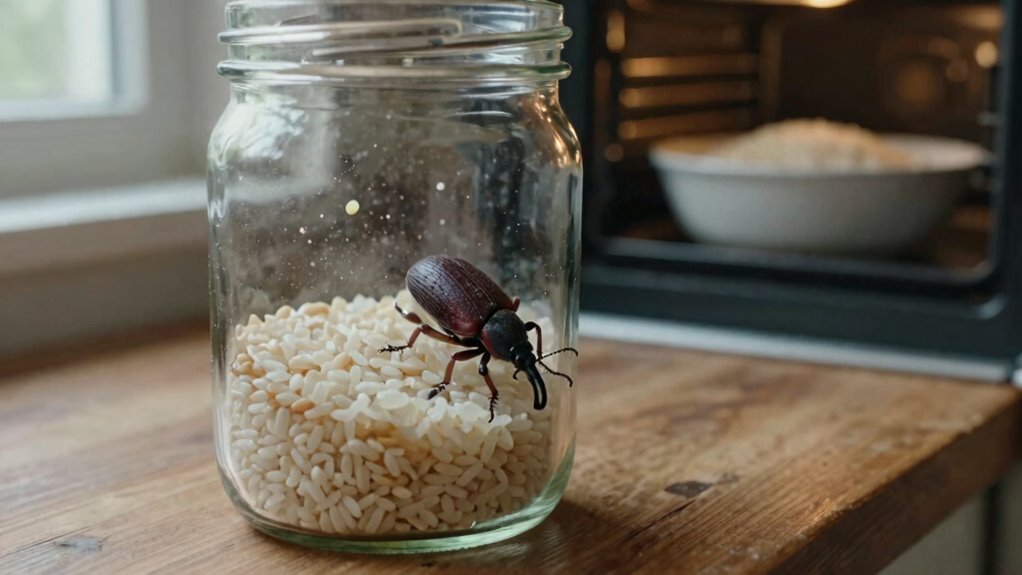
These dark round beetles are about 2 to 3 millimeters long. Look for tiny holes in the kernels, which are exit wounds and a clear sign of infestation.
These dark, tiny beetles leave exit holes in rice kernels—a clear sign of infestation.
Check for grains that feel damp or clump together oddly. Humidity attracts these pests, so this is a key clue.
If you find even a few weevils, the whole bag may need treatment. Do not throw everything away, just scoop out the infested rice.
Seal the rest in an airtight container right away. This will stop the infestation from spreading to your other food storage.
Catching them early saves your pantry sanity and helps you keep your kitchen pest free. For effective pest control, always inspect bulk grains before cooking. Residual protection from plant-based sprays can last up to 30 days, but weevil sprays mostly target adults, so eggs require airtight storage and cleaning.
Freeze Your Rice to Kill Weevils Instantly
Freezing is the easiest pest control method to eliminate rice weevils instantly. You need at least 48 hours at 0°F (-18°C) to be certain. Seal the rice in a freezer bag and press out the air. Toss it in the deep freeze for two full days. This kills adult weevils, larvae, and eggs alike. It will not stop new bugs from getting in later. Keep that rice sealed tight after it thaws to prevent reinfestation. For long term storage, consider adding oxygen absorbers or bay leaves to your pantry. To maintain ongoing protection, reapply every two weeks with a light dusting of food-grade diatomaceous earth around pantry shelves.
Freezing Duration Needed
Freezing rice for at least four days at 0°F (-18°C) kills all weevil life stages effectively. Shorter freezing durations leave a real risk of survivors surviving.
For thorough pest elimination, a full two week freeze guarantees zero eggs can hatch. This is overkill for light infestations but works as a fail safe.
Store your rice in a frost free freezer with caution. Moisture migration can cause freezer burn, but that is cosmetic damage only.
Check your freezer temperature first with a cheap appliance thermometer. That five dollar tool gives you cheap peace of mind.
Any rice frozen for more than a week stays safe indefinitely below 0°F. Avoid repeated thaw and refreeze cycles as they invite humidity problems.
A single freeze needs four days minimum and seven days ideal. The bottom line is four days kills weevils and seven days is safer with no exceptions.
For added protection after thawing, you can create a natural barrier around your storage containers using food-grade diatomaceous earth, which dehydrates and kills crawling insects on contact.
Step-By-Step Freezing Process
The four-day minimum gets the job done, but the actual process matters just as much as the timer. Start with product sanitation: inspect the rice bag for tears or dust, then transfer it into a sturdy, freezer-safe plastic bag or airtight container.
Squeeze out excess air, seal it tight, and label it with the date. Next comes freezer prep: clear a shelf, set your freezer to 0°F (-18°C) or colder, and place the bag flat for even chilling.
This isn’t just about cold; it’s about consistent cold, so don’t cram other items around it. After four days, pull the bag out and let it sit at room temperature for a few hours before opening.
This prevents condensation, which could invite mold and attract pantry pests like weevils or moths. For extra protection, add a bay leaf inside the bag before sealing to deter any insect activity.
Proper prep beats a hasty freeze every time, and you’ll get longer-lasting, better-tasting rice for meal prep or emergency storage. If you’re buying rice in bulk, inspect the packaging for small holes and store it in a hard plastic container after freezing to block rodent and insect entry.
Bottom line: a cool, clean, and sealed start stops pest problems before they start, giving you peace of mind and a safe pantry staple. Freeze flat, date clearly, and thaw slowly to keep each grain fluffy and ready for your next recipe.
Effectiveness Against All Stages
Freezing at 0°F for at least 48 hours kills eggs, larvae, and adult weevils instantly. This method stops infestations cold without any chemical treatments.
You do not need CO₂ tanks or sealed chambers. A standard freezer is all that is required for effective pest control.
For total mortality, three days of cold storage guarantees all stages are eliminated. Hidden eggs die within a 72 hour freeze.
Pair this treatment with airtight containers to prevent reinfestation. Do not thaw and refreeze, as condensation creates moisture that invites mold.
A deep freeze is your best bet for a cheap, chemical free fix. No fancy gear is needed to manage weevil problems at home. You can also use pheromone-based traps to attract and interrupt the reproductive cycle of any surviving adult weevils.
Use Airtight Containers to Stop Weevils From Spreading
Since weevils can chew through thin plastic bags faster than a kid through a birthday cake, the single most effective household move is sealing your rice in a rigid, airtight container.
These sealed containers are the backbone of any preventive storage strategy, physically blocking adult weevils from entering and trapping existing ones inside where they’ll eventually starve.
Choose glass, thick BPA-free plastic, or stainless steel with a rubber gasket for pest-proof storage. Test the seal by locking the lid and turning the container upside down, if you hear air hiss out it’s not tight enough.
A decent 5‑quart container runs $8‑12 at most stores for grain storage solutions. Once sealed, store in a cool, dry pantry below 70°F and check your stock weekly.
This one move cuts re‑infestation risk dramatically, so stop trusting flimsy bags and start trusting a good lid. Look for models with silicone gaskets and locking hinges to ensure a truly airtight barrier against pests.
Can Heat Treatment or Drying Get Rid of Weevils in Rice?
Heat treatment and drying are two pest control methods that can eliminate weevils. Heat treatment uses temperatures above 120°F for several hours to kill all life stages, though it may slightly change the rice’s cooking quality. For effective elimination, steam cleaners that reach 221°F provide faster results on pests.
Drying reduces grain moisture below 10 percent. This starves weevils of the water they need to survive, but it does not kill eggs hidden inside kernels.
For complete grain protection, combining heat treatment with proper storage is a smart strategy. Always inspect rice before buying and seal containers tightly to prevent reinfestation.
Heat Treatment Process
One reliable way to kill weevils hiding in rice is heat treatment, and it works better than you might expect. This method uses high temperatures like 140°F or more for at least 15 minutes to guarantee all life stages are eliminated.
Without tunnel vision, you would see this works like indoor gardening’s pest control cousin: simple, direct, and chemical free. For effective pest elimination, use the oven at 140 to 150°F for 15 to 20 minutes.
A microwave on full power takes just 2 to 5 minutes. Solar heating at 120 to 140°F needs 30 to 60 minutes.
Grains come out intact, just a bit warmer. This process does not affect flavor or texture if done correctly, so you can store them again afterward.
It is a quick, effective fix before moving to drying options. For long term grain protection, heat treatment is a must try solution. This method uses chemical-free, no fumes to ensure safe food handling without any residue.
Drying to Reduce Moisture
Drying might not sound as impressive as heat treatment, but it protects your grain just as effectively with a softer touch.
Lowering moisture below 12% takes away the damp conditions weevils need to breed and survive, so pest control becomes a waiting game.
Grain drying with a dehumidifier or a few sunny days takes patience but requires zero chemicals, which is great for chemical-free storage.
A cheap moisture meter for around $20 confirms when your rice is safely dry, so you can avoid guessing.
Don’t rush the process, because weevils can survive brief humidity spikes and reinfest your batch.
Spread rice in thin layers, keep airflow steady, and stir daily to hit every grain evenly.
After three days, most dampness is gone, and adult weevils die off from the dry conditions.
This method is cheap and gentle, making it perfect for bulk grain storage without risking your food’s texture.
Granted, drying is slower than heat, but it won’t cook your dinner or alter the taste of your pantry staples.
For long-term storage protection, buyers often prefer drying when they want no chemical residue and want to avoid scorching.
The bottom line is that drying beats heat for sustainable, long-term control of grain pests.
Stick with drying if your goal is safe, economical, and natural pest prevention for rice and other dry goods.
For effective pest prevention, consider a dehumidifier with auto or continuous drainage to ensure consistent moisture control while drying your grains.
Natural Pest Control for Rice Weevils: Parasitoid Wasps and Fungi

Parasitoid wasps target rice weevil larvae by laying eggs inside them, and the young wasps consume the larvae from within. This method can reduce weevil populations by 60 percent.
A specific fungus uses spores that penetrate the weevil cuticle, leading to death at an LC50 of 31.88 percent concentration. Combining oil with the fungus improves coverage and causes higher mortality, resulting in fewer weevil offspring.
You can buy these biological pest control products online from biocontrol suppliers. Store wasp cards in a cool place and release them near infested rice for effective rice weevil control.
This approach is low effort and high reward, and you get to say parasitoid at dinner. It offers a natural pest control solution that is both friendly to use and highly effective.
When to Use Chemical Sprays (And When to Skip Them)
If natural options like parasitoid wasps or fungus do not control the problem, or if you face a full blown weevil party in your pantry, chemical sprays can step in. But you need to know when to skip them.
Residual toxicity matters. Sprays like deltamethrin linger on grains for weeks, so only use them in empty pantries or sealed containers.
Never spray directly on rice you will eat. Fumigation safety is non negotiable.
Professional fumigants such as phosphine require sealing the room and vacating it for days. This is not a DIY job unless you enjoy headaches.
Skip sprays for small infestations. A ten dollar bag of diatomaceous earth works without chemicals.
Sprays cost fifteen to twenty five dollars per can and risk resistance. Some bugs show a 134 fold increase in resistance after repeated use.
The bottom line is simple. Spray only when weevils are widespread and natural methods have failed.
For minor issues, save the cash and save your grains. Use targeted pest control solutions that protect your food without unnecessary risk.
Chemical rotation helps prevent resistance buildup against a single chemical type.
Simple Storage Habits That Keep Rice Weevils Out for Good
Why do rice weevils keep showing up, even after a thorough cleaning? Because an airtight container isn’t just a suggestion; it’s a fortress.
Weevils sneak in through tiny gaps, so seal rice in glass or thick plastic bins with rubber gaskets. A modified atmosphere, achieved by replacing oxygen with high CO2 fumigation, suffocates adults and eggs without chemicals.
For home use, this means vacuum-sealing in bags or storing rice in a freezer for 48 hours before moving to the pantry. Keep a small batch in a dated jar, buy only a month’s supply, and inspect bags at the store for holes.
After finishing rice, wash containers with soap, dry completely, and never mix old and new grains. This pest prevention routine stops infestations before they start, and it saves you from repeat cleanup.
A dry, cool shelf and a sealed lid are your best rice storage solutions. That’s it: no weevils, no drama, and your rice stays rice, not a nursery.
For long-term protection, rotate stock regularly and check for insecticide-free traps near the pantry. You’ll find that consistent moisture control and airtight sealing are the key to keeping grain pests out for good.
To further block pantry pests, choose containers with locking buckles to maintain a secure seal against even the smallest invaders.
Frequently Asked Questions
Can Weevils in Rice Harm Humans if Eaten?
Eating weevils in rice won’t make you sick, and they’re basically just extra protein on your plate.
It might sound gross, but the tiny bugs are harmless and get killed off completely during normal cooking.
The real danger comes from believing pest control myths that exaggerate the health risks.
What you should really worry about is the quality of your food and the disgust factor, not getting poisoned.
When you boil or steam rice, both adult weevils and their larvae are destroyed by the heat.
The only difference you might notice is a slight change in texture, like a crunchy seasoning you didn’t order.
If you want to avoid that crunch, the smartest purchase you can make is a set of airtight storage containers.
Sealing future bags tight with a proper pantry pest management system stops weevils from ever getting in.
For total peace of mind, inspect your dry goods regularly and use bay leaves or food grade diatomaceous earth as a natural deterrent.
If you do find an infestation, the best advice is to bin the affected rice immediately and clean your pantry thoroughly.
Ultimately, this is about food quality and smart storage habits, not a medical emergency.
Does Freezing Rice Affect Its Taste or Texture?
Freezing rice does alter its texture and taste, but only slightly. A 48 hour freeze breaks down starches, making grains cook up softer and fluffier.
This process won’t boost flavor, so the rice stays neutral like a trusty sidekick. The texture becomes more delicate and less chewy, which many prefer for fried rice.
Think of it as a gentle change, not ruination. If you store rice properly and freeze it fast, you also keep pantry pests at bay.
Pantry moths and weevils can’t survive a deep freeze, so this method doubles as a pest control trick. For best results, seal rice in airtight containers or bags to block moisture and bugs.
Buyer intent tip: invest in heavy duty freezer bags or storage bins to lock freshness and repel pests. Bottom line: freeze your rice, eat it quickly, and you won’t miss a thing.
How Long Do Rice Weevils Live in a Sealed Container?
Inside a sealed container, rice weevils have a limited lifespan of several weeks to a few months. Their survival depends heavily on temperature and the food source already inside the grains.
Without fresh air exchange, humidity builds up, but they still eventually perish. This means a properly sealed container is not a permanent home, just an extended frustrating stay.
If you’re looking for effective pest control solutions, always inspect your grains before storage. Sealing tight is smart, but checking first prevents you from just trapping the problem.
For long term pantry protection, consider using food grade diatomaceous earth or oxygen absorber packets. These simple pest control products actively kill weevils and stop reinfestation.
When you buy rice or flour in bulk, freeze it for 72 hours to kill any hidden eggs. This step ensures your sealed container actually protects your food rather than hosting a weevil colony.
Need a reliable trap or repellent? We recommend a non toxic weevil killer that fits inside your pantry. Smart buyers always pair sealing with proactive monitoring for best results.
Are Weevils in Rice a Sign of Poor Hygiene?
No, weevils in rice are not a sign of poor hygiene. That’s a common pantry myth that pest control experts debunk every day.
These tiny invaders actually hitchhike from the field, hidden inside grains before you bring them home. So blaming your cleaning skills for a rice weevil infestation is completely unfair.
Pest psychology plays tricks here, making a spotless kitchen feel dirty when it really isn’t. The real solution focuses on grain storage practices, not sanitation routines.
For effective pantry pest prevention, simply freeze your rice for 48 hours to kill any hidden eggs. Then seal it tight in airtight containers, a cheap fix that costs around $10 for quality storage bins.
The bottom line for pest management is simple: check your bags, freeze the grains, and store them securely. You can shop for weevil proof containers or food grade buckets online with zero shame needed.
Can Weevils Fly and Infest Other Kitchen Foods?
Yes, weevils can fly, and their flight is how they often travel to new food sources. This makes kitchen infestation a real risk if you don’t act fast.
A weevil might escape a rice bag, then investigate nearby flour, pasta, or cereal. Their wings are fully functional, not just for show, so a single female can lay 300 eggs.
If one bag is contaminated, it pays to check everything else in your pantry. For effective pest control, seal your grains in airtight containers immediately.
This simple step is cheaper than replacing an entire pantry once an infestation spreads. For long term protection, consider using food grade diatomaceous earth or pheromone traps near stored foods.
These products target pantry pests safely and keep your kitchen bug free. Buy airtight storage bins and pest monitoring devices today to stop weevils before they fly to your next open box.


