
Getting rid of ants in potted plants starts with spotting the real culprit—not the ants themselves, but the sticky scale insects they’re farming for honeydew. Fix that food source, and the ants will pack up on their own, which is the smartest way to handle this common 2025 houseplant headache.
Below, I’ve rounded up the best supplies, from white oil sprays to mesh and chalk barriers, with quick notes on what actually works and what’s worth your money. No fluff, just practical steps you can use right away.
Keep reading for the full breakdown, plus the exact products we recommend for a clean, ant-free pot.
At A Glance
- Eliminate scale insects, the ants’ honeydew food source, to stop ant attraction.
- Scrape off scale and submerge pot in soapy water to remove ants and honeydew.
- Apply diatomaceous earth or insecticidal soap to kill ants and remaining scale.
- Use barriers like chalk on rims and mesh on drainage holes to block ants.
- Maintain consistent moisture and inspect leaves to prevent ant nesting and scale.
Why Do Ants Invade Potted Plants?
Since ants rarely act alone, their presence in a potted plant is almost always a symptom of a deeper problem, not the problem itself. What draws them in is food, plain and simple.
Ants are farmers, believe it or not. They tend sap-sucking pests like scale, guarding them from predators in exchange for honeydew, their sticky, sweet waste.
Ants are farmers, believe it or not, tending sap-sucking pests for their sticky, sweet honeydew.
The honeydew production cycle keeps ants coming back day after day, like a tiny six-legged drive-thru. These ants are not wandering in; they are running a farming operation on the fiddle leaf fig.
Dry, loose potting mix gives them a cozy nest near the food source. The bottom line is that no pests means no honeydew and no ants.
Fix the food source with targeted pest control to remove scale and other sap feeders. Once you eliminate the honeydew supply, the ants will pack up and move out.
For example, an insecticidal soap kills these sap-feeding pests on contact and is safe to use up to harvest day.
Check for Scale Insects, Honeydew, and Dry Soil First
Before waging war on ants, check for scale insects, honeydew, and dry soil first.
Scale insects are tiny sap-suckers that leave a sticky honeydew trail ants love.
Dry potting mix gives ants a perfect nesting spot.
Do a quick water-drain test to see if the mix is hydrophobic.
If water runs through in seconds, that confirms the problem.
Also check for sticky leaves to spot both pests.
This saves you from a pointless ant chase.
Use these ant control tips to target the real issue.
For ants that persist, dusting the soil with food-grade diatomaceous earth can kill them via mechanical dehydration within 24-48 hours.
Scale and Honeydew
A detective’s first rule applies here: look for the motive. Ants don’t crash your potted plant for the view.
They are after honeydew, that sticky sugary snack scale insects leave behind. The honeydew consistency is like spilled syrup, a dead giveaway.
Scale lifecycle matters too. These tiny armored bugs latch on, suck sap, and excrete the sweet goo.
This makes your plant an all you can eat buffet for ants. Check under leaves and along stems for little brown bumps.
That is scale, and it is gross to touch. Use a magnifying glass to spot the sneaky suckers.
You will feel annoyed when you realize ants are farming them like cattle. Relief comes when you know it is fixable with a little elbow grease.
First step: recognize the sticky mess. Then plan your attack with safe pest control methods like neem oil or insecticidal soap. Neem oil, especially cold-pressed neem oil, is a reliable organic option for tackling both scale and the ants that feed on their honeydew.
Targeting these honeydew producers and their ant partners is key to protecting your houseplants. For a full plant treatment, focus on scale removal and ant repelling strategies.
Dry Soil Test
With ants staging a tiny parade through the potting mix, the dry soil test is your first move. Check if the mix is hydrophobic, meaning water runs straight through, a sign ants love dry digs.
Their ant life cycle thrives in parched, loose soil, and they mess with soil pH balance by tunneling. A quick test is to stick a finger in; if it’s dusty, not damp, you have a problem.
Now check for scale insects and honeydew on leaves, because ants farm those pests for food. If dry soil is the culprit, rehydrate slowly with a deep soak to restore moisture.
Fix the moisture level and the parade marches elsewhere. Bottom line is that dry soil invites ants, so use a consistent watering schedule to keep the mix damp but not soggy. For persistent infestations, an EPA-registered physical solution like Harris diatomaceous earth provides a non-toxic mechanical barrier against crawling pests.
Soak Potted Plants in Soapy Water to Drown Ants
Submersion in soapy water is the most direct, satisfying way to evict ants from a potted plant. No bait trails or waiting weeks for poison to work back to the colony.
This method drowns the nest in one afternoon, and the soapy residue keeps the pot hostile for weeks. Unlike ant bait traps, which require patience, or a diatomaceous earth barrier that must stay dry, a soak works immediately.
The process is simple: mix a teaspoon of dish soap per liter of water. Fully submerge the pot, and wait fifteen minutes.
Watching ants scramble out in a panic is strangely therapeutic. That satisfying glug as air bubbles escape means the soil is thoroughly flushed.
No poison lingering around kids or pets afterwards. For a no-soak alternative, plant-based sprays provide contact kill and long-lasting repellent effects. Repeat weekly until gone for effective pest control.
For small pots, it is the cleanest win for removing ants without chemicals.
Scrape Scale Off Leaves and Stems
Scraping scale off leaves and stems is the most straightforward first step, and it’s surprisingly satisfying. A thumbnail or an old credit card works well for this pest control task.
Flipping leaves to inspect the undersides is crucial, because these little sap-sucking bumps like to hide there. The sticky honeydew they leave behind is basically an all-you-can-eat buffet for ants, so removing scale quickly helps protect your plants.
After scraping, applying an insecticidal soap can help eliminate any remaining pests and wash away the honeydew.
Doing this every few days for a couple of weeks breaks the life cycle of the infestation. You might pay for the effort with a thumb-wrestling match afterward, but it is worth it to keep your plants healthy.
Manual Scraping Method
Though it lacks the chemical drama of a store-bought pest control spray, manually scraping scale off a plant remains the most direct and cost-effective first move.
This manual removal technique uses a thumbnail, an old toothbrush, or a dull knife to dislodge the waxy, armor-like pests from stems and leaves.
Scraping efficiency is surprisingly high, especially on smooth-leafed plants like citrus or ficus, where the scale simply pops off with a firm press.
A full pass takes ten minutes, but be gentle near tender new growth. You do not want to scrape the plant itself.
First, it saves money. It costs only the time already on hand.
Second, it is immediate. There is no need to wait a week for insecticidal oils to kill the bugs.
This is the first move for any indoor plant pest problem. It is the cheapest and fastest fix available.
Inspect Leaf Undersides
After the initial pass with a thumbnail or toothbrush, the real cleanup phase begins with a close-up inspection of the leaf undersides. That’s where scale pests hide out, clinging like stubborn stickers and dripping honeydew that attracts ants.
Ant behavior explains it all: they farm scale insects for the sugary honeydew, offering ant protection in return. Bad news, since untreated scale means honeydew removal never ends, plus root damage from ant tunnels.
Check this cheat sheet for pest control steps. Sticky spots mean scale is present, so scrape them off with a toothpick or your thumbnail.
Ant trails indicate ant protection, so you must break the cycle to stop re infestation. For ongoing protection, residual barrier sprays applied around nearby entry points can keep ants from returning for months. Now hit the stems too, scale loves hiding there.
Scrape stems clean, wash leaves with insecticidal soap, and repeat in a week. Do it twice to stop scale from coming back.
The ants will grumble, but they will move out when their food source is gone. Take your time and be thorough to get rid of these pests for good.
Weekly White Oil Sprays Smother Scale Insects
Once a week, a thorough spray of white oil is the most reliable pest control method for a stubborn scale infestation. This simple mixture of vegetable oil, a squirt of detergent, and water smothers scale insects by blocking their breathing pores.
Scale insects are phloem feeding pests that cause sticky leaves and attract ants with honeydew. It is oddly satisfying to watch their slow drying coating of oil work effectively.
You will finally see fewer sticky leaves, and that honeydew mess will stop attracting ants. The scale will start dropping off, exposing clean stems for a small victory.
Your plant will breathe again literally once those armored pests are gone. Spray every leaf, especially undersides, for thorough coverage.
Repeat weekly for a month for the best scale treatment results. No expensive chemicals are needed, just kitchen staples for an affordable pest solution.
Your plant will thank you, and you will save money on ant traps. That is a good trade for a healthy indoor garden.
Alternatively, pure cold-pressed neem oil offers a natural shield against pests like scale and aphids when diluted and sprayed weekly.
Dry Soil Repels Water: and Attracts Ants

Dry soil repels water and attracts ants for nesting, which is a real problem for plant owners. When potting mix becomes hydrophobic, it sheds water instead of soaking it up like a sponge.
Watering becomes a useless gesture, and a quick drainage test will confirm the issue. If your plant’s water runs straight through, the mix is parched and pest control becomes urgent.
Ants love dry soil for their colonies, so you may need an ant bait or a moisture-retaining soil amendment. Using a slow-acting bait allows worker ants to carry the poison back to the nest, eliminating the queen and the entire colony. Fixing the soil with a wetting agent or rehydrating it slowly stops the ants from moving in.
A practical solution is to bottom-water or add a surfactant to break the water repellency. This keeps your plants healthy and reduces the need for ant extermination around your pots.
Hydrophobic Mix Repels Water
Patience is a virtue, but your potting mix’s ability to hold water is a practical necessity. Hydrophobic mix repels water like a cat avoids a bath.
Water beads off and shoots out the drainage hole. The root ball stays dry, and the ant life cycle thrives in these dry, crumbly voids.
Nobody wants that. Here are three reasons this frustrates you.
You water generously, and the soil stays dry as a biscuit. Leaves droop, despite the fact that you just watered.
Cue dramatic sigh. Beneficial nematodes, introduced to fight pests, die without dampness.
That is a waste of money. The fix is simple: soak the pot in a bucket.
Use water plus a drop of dish soap. Bottom watering rewets the mix, so your pest control efforts and nematode investment actually work.
Patience pays off. Once the soil retains moisture properly, use an indoor boric acid powder along the pot’s drainage holes and rim to stop ants from re-entering the moist root zone.
Dry Conditions Attract Ants
When potting soil turns water repellent, brief soaking helps temporarily but the real problem is the dry crumbly texture that ants love.
Ants simply hate wet feet and crave that loose arid substrate for perfect tunnel walls.
Fixing moisture retention solves the ant problem far better than just flooding the nest.
Add a few drops of dish soap per watering to lower surface tension and let water penetrate effectively.
Use a moisture holding mix for about $10 per bag that retains 30 percent more water and keeps soil damp.
This dampness discourages ant nesting because no colony wants to move into a swamp. For added protection, applying boric acid-based powders around the pot’s base can deter ants from returning.
Bottom line is simple: dampen the soil and ants will check out for good.
Quick Drainage Indicates Dryness
A simple pour test exposes the hidden invitation for ants. When water vanishes from the surface in seconds, the soil is hydrophobic and water-repellent.
That fast drainage does not mean healthy roots. It signals a parched mix where ants love to tunnel for effective pest control.
Recognize this cue before treating. The dry soil feels dusty when pinched, not damp.
Water pools on top briefly then rushes down the sides. The pot weighs noticeably lighter overnight, hinting at empty air pockets for ant colonization.
For plant care, rehydrate slowly with a soak not a splash. Drowning the pot resets moisture and evicts nesters.
Quick drainage is a flashing warning light, not a feature. Fix the problem with a targeted treatment, and the ants really get the message. When selecting that treatment, opt for plant-based sprays that are safe around pets.
Water Potted Plants Regularly to Stop Ant Nests
Water potted plants regularly to stop ant nests from forming in dry potting mix. Ants thrive in that desert like environment, but consistent watering makes the soil unlivable for them.
Water regularly to keep ants from nesting in dry potting mix.
Overwatering risks are real, so avoid soggy conditions that can lead to root rot prevention headaches. Check the top inch of soil and water until it runs out the bottom when dry.
A simple moisture meter, like a ten dollar XLUX model, removes the guesswork from your pest control routine. That steady dampness drives ants out while keeping your roots healthy and happy.
Bottom line: water on a regular schedule for effective ant control. Those little scavengers will find drier pastures, and your plant will thank you. For an additional chemical-free defense, dust the soil surface with food-grade diatomaceous earth to dehydrate any lingering ants.
Block Ant Entry to Potted Plants With Mesh and Chalk
Mesh and chalk form a cheap, low-tech fortress against ant invasion.
Cutting fine mesh barriers to cover drainage holes stops crawlers cold, costing about two bucks total.
Then chalk application around the pot rim creates a confusing chemical line, one ants won’t cross.
No more trails marching up your favorite fern, and no more soil tunnels collapsing roots.
No more surprise ant bites as you sip coffee on the porch, either.
Chalk works best on dry rims; wet chalk is just a sad puddle.
Reapply after watering, and don’t skip the mesh.
It handles the underground entrances, whereas chalk guards the topside.
This pest control trick targets common ant entry points without harsh chemicals.
For effective ant prevention, combine both barriers to keep your potted plants fully sealed.
It’s the kind of fix that feels almost too simple, honestly.
Bottom line: these simple tricks keep your pot sealed and your ants clueless.
For lasting outdoor plant protection, check the mesh monthly for tears and refresh chalk after heavy rain.
If you need ant-proof planters, this DIY method beats store-bought sprays for safety and cost.
For broader yard defense, a perimeter treatment like Amdro targets over 25 ant species and creates a lasting outdoor barrier.
Repel Ants With Lavender-Scented Mulch in Pots
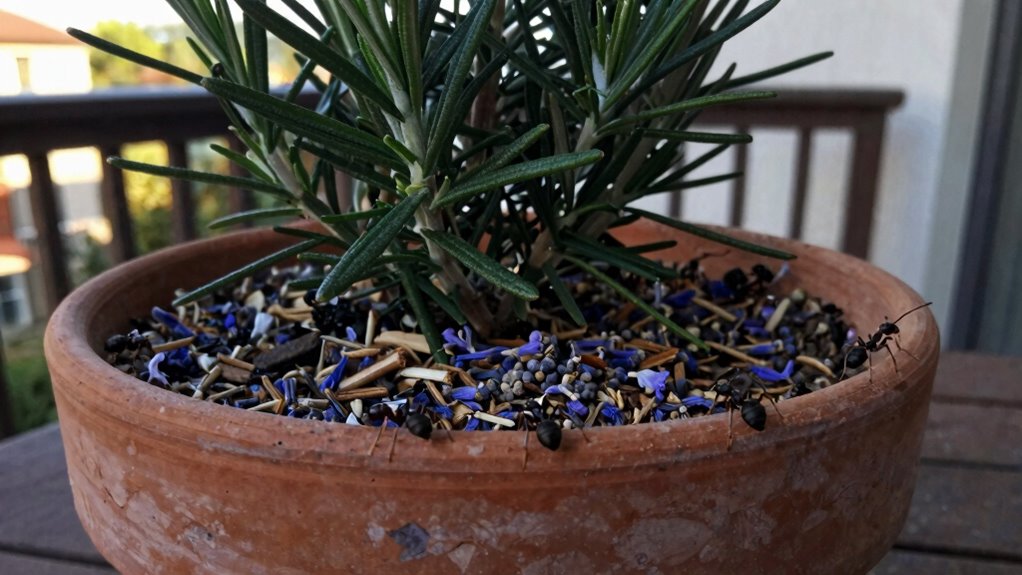
The chalk and mesh combo handles physical barriers, but ants follow scent trails and habits. Lavender-scented mulch tackles the olfactory angle as a natural bug barrier.
This organic ant repellent confuses their scent trails, making your pot’s soil a confusing, unwelcoming place to set up camp. The lavender mulch benefits extend beyond smell; it also retains dampness, which ants despise since they prefer dry digs.
Best of all, it’s a passive fix for ant control. You simply lay a two-inch layer over the soil, and the scent works its magic.
Just remember to refresh it monthly as the fragrance fades. It won’t solve an existing scale pest problem, but it’s a solid, low-effort perimeter defense for your green friends.
Quarantine New Plants Before They Bring Ants Inside
Before a new plant ever crosses the threshold, a short quarantine period can save a potful of headaches for the gardener. A solid quarantine protocol means keeping the newcomer isolated for a week, away from established greenery.
This gives time for a thorough pest inspection, since ants often hitchhike in soil or under leaves alongside scale insects. Set the plant in a bright, dry room. Ants hate open and exposed spaces.
Check the soil surface for tiny tunnels and the stems for sticky honeydew residue. Water the plant thoroughly, then watch for escaping ants. Treat with a soapy soak if needed to prevent an ant invasion.
Skip the rush and skip the drama. Now is the time to act. That ten minute check beats months of ant battles later.
Bottom line: isolation is cheap, effective, and surprisingly satisfying. So do it to keep your indoor garden pest free.
Frequently Asked Questions
Are Ants Harmful to My Plant’s Roots?
Ants rarely chew roots, but they cause root damage indirectly. Their tunneling improves soil aeration, but dries out mix fast.
It is like a free upgrade breaking the AC. They nest in dry soil, creating channels letting water run straight through, leaving roots parched.
Scale insects they farm produce honeydew, attracting more ants. Dry soil and pest stress, not bites, are the real problem.
Bottom line: ants are a symptom, not a root eater. To protect your plants, focus on fixing dryness and get rid of scale insects first.
For fast results, use a targeted ant bait like Terro or Advion to stop the colony. Then apply a systemic insecticide to eliminate scale and stop honeydew.
This two step pest control plan saves your roots without harsh sprays. Check soil moisture and add slow drip irrigation to prevent ant nesting.
Smart buyers know ants mean underlying pest issues, so treat the cause, not just the symptom.
Can I Use Vinegar to Kill Ants in Potting Soil?
Vinegar kills ants in potting soil, but it’s a rough trade. The acetic acid delivers quick vinegar toxicity, wiping them out, yet it backfires on your plant.
That same punch triggers a pH change, spiking the mix acidic and stressing roots. Soapy water soak is cheaper around three bucks per gallon and drowns them without collateral damage.
Bottom line: skip the condiment, rescue the soil. For targeted pest control without damaging your plant, a soap and water drench is the smart purchase for long term ant prevention indoors and outdoors.
How Long Before Soapy Water Soaking Kills Ants?
Soapy water soaking kills ants within 20 to 30 minutes, but only with proper soap concentration and soaking duration.
A few drops of dish soap per gallon of water is all you need for an effective ant control treatment.
Submerge the infested pot fully until bubbles stop forming, as this ensures the soap reaches every ant.
Ants drown fast in this solution, though their eggs may survive the first soak and require follow up.
For complete colony elimination, repeat the soaking process weekly until all ant activity stops.
This method is not instant magic, but it works as a reliable home pest control solution.
Bottom line: expect adult ants to die in 20 minutes, but plan a full week to wipe out the colony.
If you want a stronger ant killer spray for faster results, consider a commercial grade product for guaranteed elimination.
Will Ants Return After I Remove Scale Insects?
Mostly yes. Scale removal alone rarely stops ant persistence.
Those six-legged homebodies built entire colonies around that honeydew buffet.
One must soak the pot in soapy water weekly. Recheck stems and leaf undersides for new scale.
Ants scout relentlessly. They hunt new food sources after you remove their supply.
Think of this as a two step tango. Kill the buffet, then drown the dancers.
The bottom line is remove scale, then flush the soil with an insecticidal drench.
Otherwise, they return faster than a bad pun.
Use a targeted ant bait gel near the pot base for long term control.
Need a proven treatment? Look for a product with imidacloprid for scale plus a perimeter spray for ants.
Do Coffee Grounds Repel Ants in Potted Plants?
Coffee grounds do not actually repel ants in potted plants, so don’t rely on them for pest control.
The scent masking effect is weak, and worker ants will simply walk right around the scattered grounds to reach their target.
Yes, coffee grounds can slightly acidify the soil, which helps certain plants like azaleas or ferns, but ants actually prefer dry, acidic conditions.
That means your morning brew leftovers might even create a more inviting environment for an ant colony, not a deterrent.
For a real barrier against ants in houseplants, use a soapy water soak or sprinkle food-grade diatomaceous earth on the soil surface.
These options physically disrupt ants and kill them on contact, making them far more effective than a tablespoon of cheap coffee grounds.
If you’re dealing with a determined colony, skip the grounds entirely and focus on the root cause: dry soil and honeydew-producing pests like scale or aphids.
Ants are often farming these bugs for sugar, so treating the infestation with neem oil or insecticidal soap is your smartest purchase for long-term ant prevention.
Professional pest control experts agree that moisture management and sticky barriers outperform any home remedy for potted plants.
Try a cinnamon sprinkle as a mild scent deterrent, but pair it with sticky tape around the pot rim for a solid, affordable defense.
Bottom line: don’t waste money on coffee grounds for ant control; invest in targeted ant baits or a quality diatomaceous earth product.
You’ll get faster results, protect your plant’s roots, and stop the colony before it spreads to your kitchen.


