
Getting rid of American cockroaches means sealing gaps, blocking drains, and choosing the right bait—not just spraying what you see. These three-inch pests hide in cracks thinner than a dime, while the colony stays safe inside your walls.
Pouring water down dry drains weekly cuts off their sewer highway, and rotating gel baits like Advion every two months prevents resistance. You’ll also need boric acid powder and a strict no-cardboard, no-crumbs policy.
Below, we break down the exact steps and best products to clear them out for good.
At A Glance
- Seal entry points under doors and around pipes with caulk and door sweeps.
- Apply diatomaceous earth along foundation edges to mechanically kill cockroaches.
- Use gel baits like Advion; place pea-sized dabs every two feet in cracks.
- Eliminate food sources by wiping counters and storing items in airtight containers.
- Pour water into dry floor drains weekly to block sewage access routes.
Why American Cockroaches Are So Hard to Kill
American cockroaches are stubborn pests that resist standard pest control methods. Their large size and incredible speed make them difficult to catch or crush.
They hide in unexpected places like wall voids, under appliances, and sewer drains. This means you might see one roach while dozens remain hidden where you would never look.
When threatened, they release alarm pheromones that warn other roaches to scatter. Squishing one roach can actually trigger a retreat deeper into your home’s cracks.
This chemical signal, combined with their speed, often defeats typical spray treatments. For effective pest management, you need targeted baiting and professional help.
These roaches are built to outsmart quick fixes. Expect a persistent fight and plan for ongoing control.
American Cockroach vs. Other Roaches: How to Tell Them Apart
Start by looking at size above all else. American cockroaches stretch 1.5 to 3 inches, dwarfing the half inch German roach.
Their reddish brown body, with a yellowish figure eight behind the head, is a dead giveaway for identification. Compare that to the uniformly dark smoky brown cockroach, because distinguishing markings matter for pest control.
Size and speed make Americans the largest and fastest roaches in the U.S., zipping along at nearly 3.4 miles per hour. The yellow figure eight pattern is unique, so other large roaches lack this “necklace” marking.
Habitat preferences also help you tell them apart. Americans thrive in sewers, basements, and steam tunnels, while German roaches prefer kitchens and bathrooms.
Smoky brown roaches favor damp, outdoor debris, so knowing this helps with professional extermination. For effective cockroach treatment, focus on these size and color clues.
If you need pest control products, choose ones that target American roaches specifically in moist, warm areas. Bait formulas tailored to larger species attract them with different scents and bigger appetites, ensuring maximum control. Contact a roach exterminator for American roach infestations to ensure thorough removal.
Where American Cockroaches Hide and How They Enter Your Home
Knowing how to spot an American cockroach is one thing. Finding out they’ve been living in your walls is another, and frankly, more personal.
These pests prefer damp, warm spots like basements, kitchens, and bathrooms. They often enter through dry floor drains, which provide direct sewage system access.
American cockroaches thrive in damp, warm spots like basements and kitchens, often entering through dry floor drains.
Outdoors, they hide in outdoor debris piles, under lumber stacks, and near vines. Indoors, they squeeze through tiny gaps around windows, doors, vents, and foundation cracks.
If you see one, it’s not a solo visitor. It’s a scout from a larger group already settled nearby.
They can get in through gaps as small as 1/16 of an inch. That’s thinner than a dime.
The bottom line is to check your drains, seal cracks, and clear debris. Stop them before they unpack by scheduling a professional pest inspection.
Applying high-concentration granules around your home’s foundation creates a long-lasting barrier to block these entry points.
Seal Entry Points and Block Drains to Stop American Cockroaches
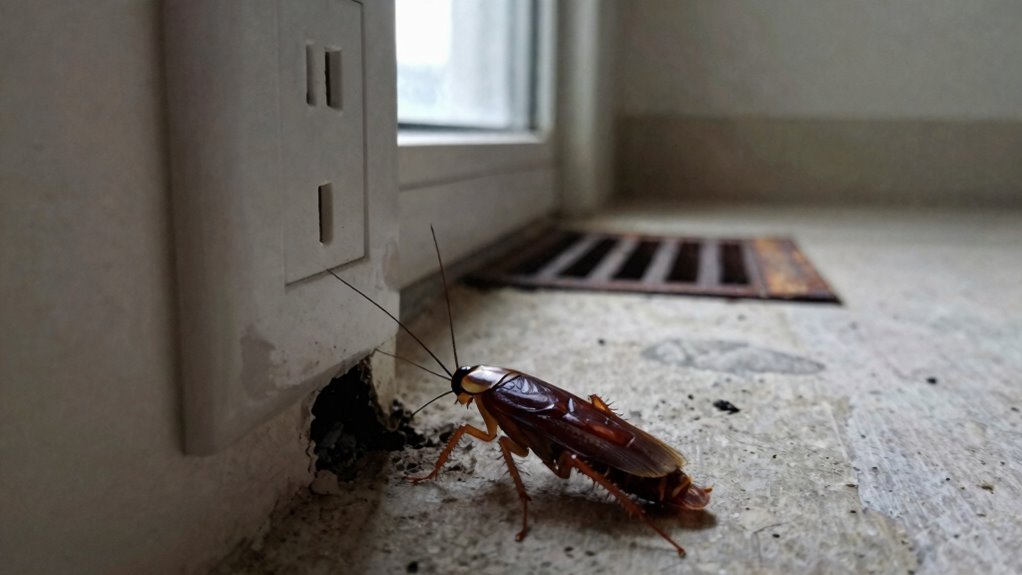
Sealing entry points is your first major step to control American cockroach infestations. Start by applying caulk into every crack and gap around pipes, windows, and doors. A gap the width of a nickel is an open highway for these pests. For gaps around pipes and vents, use steel wool for rodent proofing to block small openings that roaches might exploit.
Then, pour water into all dry floor drains every month to refill the p-traps. This creates a simple moat that blocks roaches from entering through the sewer system.
Finally, install door sweeps with a gap of less than one-quarter inch. This action effectively slams the door shut on outdoor invaders seeking entry.
Seal Cracks and Gaps
Check foundation joints for splits wider than 1/16 inch. Caulk immediately to block pest entry points.
Fill gaps around utility pipes and vents with copper mesh before applying foam. This creates a rodent proof seal that stops mice and insects.
Inspect attic soffits and siding seams with a flashlight. If you see daylight, that means pests have a direct path inside.
A tube of silicon sealant costs only $5. A can of expandable foam runs about $8.
Skip the fortress approach and focus on sealing cracks. This simple pest control measure protects your home from unwanted invaders.
For larger or uneven gaps, a brush seal strip with dense nylon bristles can fill spaces up to 0.5 inches and block stink bugs.
Block Dry Floor Drains
A dry floor drain is basically a highway for American cockroaches. They crawl up from sewers right into your basement, no ticket required.
Drain maintenance is your first defense. Simply pour a cup of water down each drain weekly.
That refills the p-trap, the curved pipe holding water, creating a simple barrier. This likewise aids moisture reduction, since a filled trap stops sewer gases and dampness from rising.
For a more permanent fix, grab a drain plug or a rubber stopper, usually under five bucks at a hardware store. Pop it in when the drain isn’t in use.
That’s it. You’ve sealed a major entry point and cut off their welcome mat.
Bug screens or specialized drain seals, around ten to fifteen dollars, work even better for heavy infestations. Bottom line: a little water or a cheap plug beats a cockroach parade any day.
For additional protection around other entry points, steel wool is versatile because sharp fibers make gnawing impossible for rodents and insects alike.
Install Door Sweeps
Those gaps under your doors aren’t just drafty; they’re open invitations for American cockroaches, which can flatten their half-inch-tall bodies to squeeze through surprisingly narrow spaces.
Door sweeps solve this, providing draft prevention and threshold sealing in one cheap fix.
Install one on every exterior door, especially basement and garage entries.
For uneven concrete, choose a brush-style sweep at about $15; a vinyl sweep works best on smooth wood floors.
Measure the full door width first, and pick a sweep long enough to cover it completely.
Trimming leaves gaps that roaches will exploit, so avoid cutting if you can.
Adjust the sweep so it just brushes the floor for a tight fit.
Too high invites pests, while too low scrapes and wears out quickly.
It takes 15 minutes with a screwdriver, and it’s the best $15 you’ll spend for roach control and energy savings.
Pair it with drain blocking for a complete pest barrier, and stop giving these invaders an entry point.
For added protection, consider pairing door sweeps with stainless steel wool to seal any remaining gaps that rodents or insects might exploit.
7 Sanitation Habits That Starve American Cockroaches
Sanitation is your first defense against American cockroaches. Think like a pest to make your pantry as uninviting as possible.
These roaches thrive on crumbs, grease, and dampness. Your kitchen can become a buffet if you are not careful.
To starve them, wipe counters daily and store all food in airtight containers. Pay special attention to pet kibble and fermented items like vinegar or leftover beer.
Seal these strong-smelling foods tightly or keep them in the fridge. Manage your compost with a lidded bin and empty it weekly.
Never let rotting scraps pile up indoors. Remove cardboard boxes and paper bags that serve as hideouts.
Fix leaky pipes to deny them water. Sweep under appliances weekly and take out trash every night.
Hungry roaches will either move on or die trying. Airtight side-locking lids with silicone gaskets provide a secure, pest-proof seal that blocks out moisture and pests.
Which Baits, Sprays, and Powders Kill American Cockroaches
1. Gel Baits like Advion or Maxforce cost $15 to $25 per tube. Place pea-sized dabs every two feet in cracks.
The slow-acting poison lets roaches share it with the nest for full colony elimination.
2. Aerosol Sprays such as Ortho Home Defense are priced around $10 to $15 per can. Direct stream kills on contact for fast results.
For residual protection, spray entry points and let dry fully to stop future invasions.
3. Boric Acid Powder costs about $8 per pound. Apply a thin dust along walls and under appliances.
Roaches walk through it, ingest it during grooming, and die within days. Avoid clumps for best coverage. This powder disrupts digestive and nervous systems, leading to dehydration and death.
When to Call a Pro for American Cockroaches
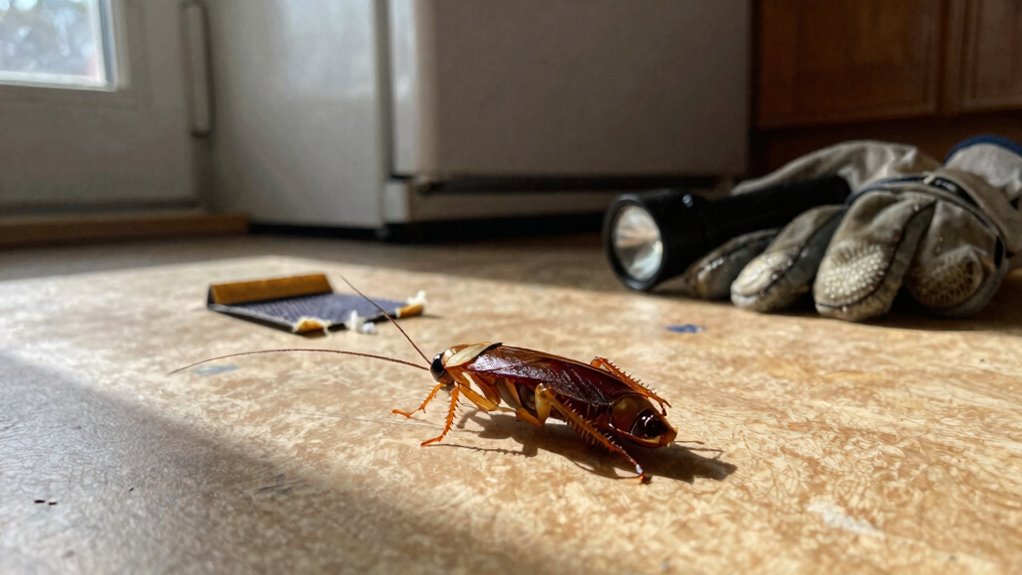
Seeing several American cockroaches during the day is a strong sign the infestation is severe, as these pests are normally nocturnal and hiding.
If a homeowner has made multiple treatment attempts with baits and sprays only to see a rapid population rebound, the colony has likely outgrown DIY control.
At that point, calling a professional exterminator becomes the most practical option to finally break the cycle.
Professionals use targeted cockroach control methods, including gel baits, growth regulators, and exclusion tactics that go beyond store-bought sprays.
You need a full home inspection to locate nesting sites in drains, wall voids, and appliance motors, which are common American cockroach hotspots.
If you are seeing nymphs and adults in kitchens or bathrooms during daylight, that signals a breeding population that requires commercial-grade treatments.
A licensed pest control service will also provide a follow-up plan to prevent reinfestation, which is key for long-term results.
Scheduling a professional cockroach removal appointment saves you time, money, and repeated frustration from failed over-the-counter products.
Don’t wait for the problem to spread to other rooms, as American cockroaches can carry allergens and bacteria that impact indoor air quality.
Contact a local pest management company for a free estimate and get a customized treatment schedule that matches your home’s specific needs.
These professionals often use baits that achieve secondary kill through droppings loaded with the active ingredient, spreading poison throughout the colony.
Signs Infestation Is Severe
You have spotted a single American cockroach. That is not the problem. The problem is the fifty you have not seen. Severe infestations reveal themselves if you pay attention.
Look for droppings everywhere, even in drawers. These pepper-like specks or smears are a certain sign of a settled colony.
A musty, oily odor that lingers comes from their secretions and pheromones. This smell means the cockroach numbers are high.
Daytime sightings are a major warning sign. Cockroaches are nocturnal, so wandering during daylight means overcrowding is forcing them out of hiding.
Ignoring these signals invites long term damage to your home’s wiring and insulation. It also brings serious health risks from allergens and bacteria.
Do not guess about the severity of the problem. Call a professional exterminator when the evidence stacks up for effective cockroach control and removal. Because foggers cannot reach hidden nests behind walls or under appliances, a pro can apply gel baits or residual sprays to target these deep-seated colonies.
Multiple Treatment Attempts Failed
Stop throwing good money after bad when multiple cockroach treatments fail, because misidentification is usually the real culprit. Homeowners often confuse smoky brown roaches with American ones, which leads to choosing the wrong bait stations and insecticide sprays.
Structural gaps are another major factor, including foundation cracks, hidden sewer pipe openings, and unfinished basements that give pests safe harborage. Without sealing these entry points, surface sprays only kill the visible roaches while the core colony keeps breeding underground. Targeted bait stations can effectively lure these hidden pests out and spread the toxin to the entire nest, breaking the reproductive cycle.
A licensed pest control technician brings thermal imaging and commercial grade gel baits to locate and target the nest directly. For $150 to $300, a professional inspection reveals what over the counter products miss, like moisture traps and wall voids.
If you have tried three different sprays and still see adult roaches, it is time to call a certified exterminator for a comprehensive pest assessment. They will identify the true species, map the harborage zones, and apply targeted treatments that break the breeding cycle.
This approach saves you money on wasted products and restores your peace of mind, all while reducing future infestations. A pro also offers follow up visits and preventive maintenance plans that keep roaches from returning.
Rapid Population Rebound Issues
A rapid population rebound is the clearest sign you need a licensed pest control professional. DIY sprays kill visible roaches but miss hidden egg cases, causing a rebound in just weeks.
Professionals target the source, not just the symptoms. A pro’s gel bait, costing $15 to $30 per tube, works slower but kills the nest.
Store sprays kill on contact but miss the queen, like cutting weeds instead of the root. Frequent reinfestation cycles every four to six weeks mean your home is a highway for sewer roaches.
Pros seal drains with $20 Trapguard devices to block their entry permanently. Spending $50 monthly on sprays that fail is pricier than a $200 one-time pro visit.
If you see nymphs after treatment, the core survived. Call a pro for effective roach control and prevent the rebound. Professionals often use hydramethylnon-based baits which deliver long-term results by infecting entire colonies through ingestion and carcasses.
How to Stop American Cockroaches From Returning
Stopping American cockroaches from returning takes more effort than the first time you fought them. These pests actually remember, as their gut bacteria adapts to common baits, creating bait aversion.
Rotate your bait types every two months to keep them unsure. Seal every crack, especially around pipes and drains, because a gap under your door acts like a welcome sign.
Install a door sweep for about fifteen dollars and pour water into dry floor drains weekly to block sewer entry. Remove clutter like cardboard boxes, which hold dampness they love for survival.
Outdoor debris piles are their hotels, so clear leaf litter, firewood, and vines. Apply diatomaceous earth along foundation edges as a cheap, toxic-free barrier that kills bugs mechanically by damaging exoskeletons and causing dehydration. Combine sanitation, exclusion, and bait rotation for effective pest control. It is not glamorous, but your kitchen stays yours with this simple plan.
Frequently Asked Questions
Can American Cockroaches Fly?
Yes, American cockroaches can fly. Their wings are fully developed and functional for short, clumsy flights.
This flying ability is strongest in warm, humid conditions, but they prefer gliding over sustained flight. Think of it more as a panic dash than a graceful soar, like a bug committing to flight for the first time.
If you see one launch, do not expect aerial acrobatics. For effective pest control, targeting their hiding spots is key to stopping infestations before they take off.
Invest in quality roach baits and sprays designed for flying cockroaches. These products help eliminate both adults and nymphs, ensuring your home stays pest free.
Do American Cockroaches Bite Humans?
Yes, American cockroaches can bite humans, but it is rare and never aggressive. These bites only happen when food residue is left on skin or during extreme infestations, not because the cockroach is attacking you.
Pest control myths often exaggerate the bite risk, but the real danger is disease transmission and allergen buildup in your home. A single female cockroach can produce over 300 offspring, so prevention is far better than dealing with a full blown invasion.
To avoid bites and health risks, you need effective cockroach control strategies that target hiding spots and breeding areas. Seal cracks around baseboards, pipes, and cabinets with caulk or expanding foam to block entry points.
Pay special attention to damp areas like under sinks and near drains, since cockroaches thrive on moisture. For serious problems, call a professional exterminator who can apply targeted bait stations, gel treatments, or insect growth regulators.
The bottom line is that bites are a footnote, not a headline, in cockroach management. Focus on sanitation, exclusion, and early treatment if you want to protect your family and property.
If you are searching for the best roach killer for home use, look for products containing hydramethylnon or fipronil in gel or granular form. For long term peace of mind, schedule routine inspections with a licensed pest control service to stay ahead of infestations.
What Attracts American Cockroaches to a Clean Home?
Even a spotless home can attract American cockroaches. They are primarily drawn by humidity, so a dripping pipe or damp basement is like a five star hotel.
Hidden food crumbs, even microscopic ones behind appliances, offer a feast. These pests enter seeking warmth and shelter, not because of poor housekeeping.
Sealing cracks and fixing leaks is your real defense. A clean home helps, but it will not stop a determined roach looking for a drink and a snack.
For lasting control, consider professional pest control products like gel baits and insect growth regulators. If you spot one roach, it is smart to act fast with targeted roach killer to prevent an infestation.
Can American Cockroaches Survive a Nuclear Blast?
No, they can’t. That’s a classic bug myth, but it’s completely false.
Cockroaches do have impressive radiation resistance, surviving about 10 times more than a human.
However, a nuclear blast’s heat and shockwave would kill them instantly.
The myth comes from their cells’ slow division, which withstands some radiation damage.
But a direct blast is like saying a turtle survives a car crash.
Bottom line: American cockroaches are great at dodging rads, not nukes.
If you need real pest control, focus on proven treatments for roach infestations.
Professional exterminators use targeted baits and sprays that work far better than myths.
For reliable roach prevention, seal cracks and use gel baits with slow acting poisons.
Contact a local pest control service for a safe, effective home treatment plan.
How Long Can an American Cockroach Live Without Food?
An American cockroach can live about a month without food, but only two weeks without water. Their survival tactics hinge on moisture, not just hunger, which is why water sources are the real battleground.
A dry environment, like a spotless kitchen with no leaks, is their kryptonite. Without dampness, they dehydrate quickly and die faster than you might expect.
So if you’re tackling a roach problem, skip the bait crackers and fix that dripping faucet first. That single move can cripple their colony faster than any spray.
For long term pest control success, pair moisture elimination with targeted roach gel bait and insect growth regulators. These products work best when you’ve removed the water they desperately need to survive.
When you shop for roach killers, look for fast acting formulas with a residual effect, since they keep working after the first contact. And remember, a dehumidifier in your basement or crawl space is a smart investment for pest prevention.
Combine professional grade traps with sealing cracks around pipes and baseboards to block their entry points. That integrated approach is what separates a temporary fix from a permanent solution.
If you’re ready to buy, compare cockroach bait stations and liquid concentrates that target American roaches specifically. Your goal is to cut off their water supply while delivering a lethal dose, and that combo wins the battle.


