
Waking up to cockroaches in your basement feels like a nightmare, but getting rid of them doesn’t have to be. The secret to cockroach control starts with cutting off their water supply.
This guide breaks down exactly how to dry out their environment, seal every crack, and choose the right bait. You’ll learn everything from dehumidifier settings to professional costs.
Keep reading for the full step-by-step breakdown below.
At A Glance
- Reduce basement humidity below 50% using a dehumidifier to cut off roach water supply.
- Seal all foundation cracks, pipe gaps, and entry points under 1/4 inch with silicone caulk.
- Fix leaky pipes and seal condensation on walls to eliminate moisture sources.
- Remove cardboard boxes and clutter; store items in airtight plastic bins instead.
- Place sticky traps in dark corners after decluttering to monitor and capture roaches.
Why Your Basement Is a Cockroach Magnet
Your damp basement is a perfect cockroach resort. They love the moisture and darkness you are providing.
You have essentially hung a vacancy sign for these pests. Poor ventilation traps humidity, making your basement ideal for roach infestations.
To take control, start monitoring humidity levels. A simple hygrometer can tell you if conditions are ripe for cockroaches.
Keep the humidity below 50 percent to discourage them. A dehumidifier, costing around $150, is an effective pest control solution.
Water is their main survival need. Leaky pipes and sweaty walls are like a five-star spa for roaches.
Water is their main survival need — leaky pipes and sweaty walls are like a five-star spa for roaches.
Fix all drips and seal any cracks in walls or floors. Also, stop storing cardboard boxes, as they provide both food and shelter.
Dry out the space completely. You will make your basement far less attractive to cockroaches without using any spray. For long-lasting chemical-free reinforcement, consider diatomaceous earth applied in dry cracks and crevices.
Identify the Roach Species in Your Basement
Before launching your anti-roach campaign, identify which species has set up shop in your basement. This species identification guides your attack strategy and treatment selection.
The American cockroach, a big bruiser up to two inches long, loves warm, damp spaces. The German roach is smaller, light brown, and prefers kitchens but will invade basements near food sources. The Oriental cockroach, dark and nicknamed “water bug,” thrives in cool, humid areas near drains or sump pumps.
Each species has different lifecycle stages, from egg to nymph to adult. Knowing these stages helps you target vulnerable points like killing nymphs before they mature for effective elimination. Check droppings, shed skins, and musty odors to confirm the infestation.
Don’t guess the roach type. Confirm it. This difference defines a smart pest control plan versus wasted bait and effort. To maximize your results, match your chosen treatment to the species and use bait stations with active ingredients like fipronil that trigger a deadly ripple effect through nest return.
Signs You Have an Active Roach Infestation
You can’t fix a cockroach problem you don’t know you have, so smart detection is your first weapon. The most obvious clue is cockroach droppings, which look like tiny coffee grounds or black pepper near baseboards and damp pipes.
A musty, oily odor that lingers in enclosed spaces is another clear sign of an active infestation. You might also find shed skins that are pale and brittle, or small brown egg cases.
Live roaches scuttling away when you flip on a light confirms you need immediate pest control action. Don’t wait for a dramatic sighting, as these subtle signs mean a full colony is working overtime.
Early detection saves you cash, time, and awkward midnight encounters. Act fast with professional treatment to eliminate the infestation for good. For a targeted, low-toxicity solution, you can apply boric acid dust into the cracks and crevices where these signs appear.
Step One: Cut Off the Roaches’ Water Supply
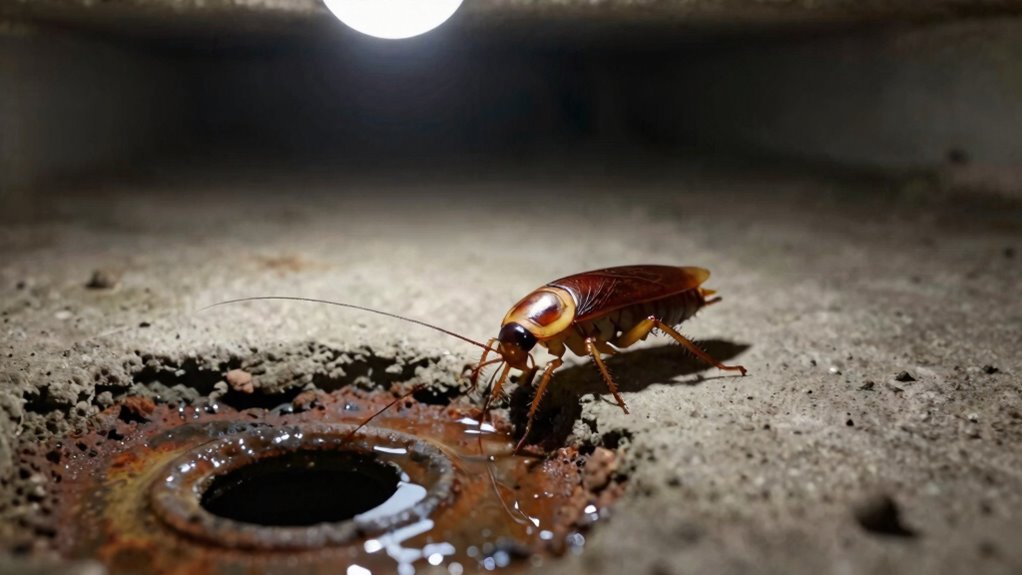
Step One: Cut Off the Roaches’ Water Supply. Basement humidity above 50% turns your home into a roach hydration station.
Dampness elimination starts with a hygrometer, a ten dollar humidity checker, then a dehumidifier. Place the dehumidifier in the dampest corner, ideally near floor drains or sump pumps.
Fix leaky pipes with epoxy or plumber’s tape for five to fifteen dollars. Apply waterproof sealant to condensation on walls for twenty to fifty dollars.
Use a vapor barrier on damp concrete floors for thirty to one hundred dollars. Seal windows and vents to block humid air from outside for ten to forty dollars.
Cover the sump pump area with a tight lid for fifteen to thirty dollars. Set the dehumidifier to 50 percent relative humidity or lower.
A 50 pint unit, like the Frigidaire FFAD5033W1 for two hundred dollars, handles 1,500 square feet. Empty its bucket daily or connect a hose for continuous drainage. Precise electronic controls maintain relative humidity within ±3%, preventing the moisture spikes that boost pest survival.
Roaches can’t survive without water. They will either leave or die.
It’s that simple. No water, no problem.
How to Seal Every Roach Entry Point
Foundation cracks and gaps around pipes are basically highways for roaches. Seal them with silicone caulk or copper mesh to block their entry.
Sump pump openings and drains need tight-fitting covers or fine wire mesh. Oriental roaches love entering that way, so cover these areas first.
Inspect every pipe seal and add steel wool where needed. A quarter-inch gap is all a German roach needs to invite its extended family.
Foundation Cracks & Gaps
Three common entry points for cockroaches are foundation cracks, gaps around pipes, and torn window screens. These structural flaws invite pests, so sealing them is key.
Think of caulk or expanding foam as your ecological barriers. They block roach highways without harsh chemicals.
First, inspect your basement’s structural integrity. Check walls for hairline cracks wider than a credit card and gaps where utilities enter. For sealing these gaps, choose a seal that is compatible with gap sizes, as some kits fit specific ranges like 5/16 to 15/32 inches while others cover 1/8 to 1/4 inch. Use silicone caulk for small cracks under ¼ inch. Use foam for larger ones, costing roughly $5 to $10 per tube.
Don’t forget window screens. Patch tears with metal mesh.
A tight seal beats a roach’s determination every time. Find every crack and fill it.
Your basement becomes a fortress, not a freeway.
Pipe and Drain Seals
Pipes and drains turn your home into a cockroach infestation superhighway if left unsealed. A roach’s flat body can squeeze through gaps as thin as a dime, so sealing those entry points is critical for pest control.
The infestation timeline speeds up when humidity from leaky drains invites them in. Start with pipe gaps in walls using expandable foam and copper mesh to block pest access.
For floor drains, a rubber drain seal or mesh screen costs just $8 to $25 per unit. Sink and washing machine drains work best with a one way check valve to stop roach travel.
Exposed pipe joints need plumber’s epoxy putty for a quick, affordable seal. Cracked sewer lines can be fixed with a pipe repair clamp and silicone for $15 to $30.
Seal every gap with silicone caulk or brass wool, because steel rusts over time. A $10 tube of caulk beats a $200 exterminator visit every time.
Check drains monthly with a simple twist of the rubber seal to save weeks of misery. This proactive approach keeps your home roach free and your pest control costs low. Additionally, steel wool barriers effectively block gnawing rodents that can chew through weaker sealants.
Sump Pump Openings
Sump pumps are basically roach welcome mats because they are damp, dark, and have a direct line to the outdoors. That is why sealing them is non-negotiable for pest control.
Oriental cockroaches, those water bug lookalikes, love crawling up from dry wells or floor drains connected to the pit. First, install a tight fitting lid with a rubber gasket for a tight seal, and a standard plastic cover costs around $20 at hardware stores.
For extra security, seal the lid edges with silicone caulk and check the discharge pipe gap. Stuff that gap with copper mesh or foam to block entry points. Copper tape barriers, applied around the lid’s rim, provide an additional conductive shield that deters roaches from crossing.
Do not forget the floor drain nearby, as roaches squeeze through tiny cracks. Cover it with a drain snap or mesh insert to stop an infestation before it starts.
Bottom line, a sealed sump pump and protected floor drains keep humidity and bugs out. This simple pest proofing step saves you from an expensive infestation.
Remove Roach Food Sources (Even Hidden Ones)
Why would cockroaches bother scrounging for crumbs in your kitchen when your basement offers an endless buffet they never have to leave? Most people think sealing cracks is the cure, but food sources are the real magnet.
Remove these attractants, and roaches lose their invitation to stay. Coffee grounds should never go into an open bin.
The smell and dampness lure pests instantly, so store used grounds in a sealed plastic bag or a compost container.
Pet food left out overnight is a prime target for scout roaches. Even a few kibbles will draw them in.
Keep bagged pet food inside a sturdy, airtight bin to block access.
Dust, spilled laundry soap, and even cardboard box glue count as hidden cockroach meals. Sweep weekly and wipe down shelves to eliminate residues.
Deny them the menu, and your basement becomes a ghost kitchen. The bottom line is to starve them first, then seal the rest.
For effective pest control, focus on removing roach food sources before applying any treatments.
This principle also applies to ants, where slow-acting poison ensures foragers carry bait back to the colony for complete elimination.
Declutter to Eliminate Roach Hiding Spots

Cockroaches love clutter, plain and simple. Start clearing out old boxes, stacks of newspapers, and that pile of forgotten holiday decorations.
Swap any cardboard for plastic storage bins with tight lids. This simple step removes prime hiding spots, forcing roaches out into the open.
Traps and treatments can then actually reach them. Decluttering is a key pest control measure for effective roach elimination.
Using airtight containers helps deny cockroaches the shelter they need. For long term roach prevention, removing these harborages is essential.
Buying sturdy plastic bins is a smart investment for your home. This practical action supports your overall roach treatment plan.
Airtight side-locking lids with silicone gaskets provide a secure, pest-proof seal for these bins.
Clear Clutter First
A clean, clutter-free basement makes roach treatments far more effective. Without hiding spots, roaches are forced to walk through your bait or spray.
Do the boring cleanup work first. Then use a quality roach killer for best results.
The chemicals can finally do their job. This is the most proven way to eliminate a roach infestation. After decluttering, place sticky traps in dark corners and along walls for continuous monitoring and capture.
Swap Cardboard for Plastic
Tidiness is a surprisingly effective weapon against pest control. Cockroaches adore cardboard because it offers food from the glue and dark places to hide.
Swapping cardboard for plastic storage bins turns basement storage from a roach motel into a fortress. Those flimsy boxes are just cockroach condos waiting to happen.
| Material | Roach Attraction |
|---|---|
| Cardboard | Edible glue, dark crevices, dampness absorption |
| Plastic | Smooth surfaces, no food value, sealable lids |
| Paper bags | Thin, easy to chew, hiding spots galore |
| Clear totes | Visible contents, stackable, airtight when locked |
Replace every cardboard box with clear, stackable plastic totes that have locking lids. A 4-pack of 20-gallon bins costs about $40 at big-box stores. Airtight seals with silicone gaskets make these bins a fortress against dampness and pests.
These bins keep out dampness and seal in smells, which denies roaches their favorite hideout. It is a cheap one-time fix that works better than fumigation.
Just label the bins and you are done with your pestproofing upgrade. Buy plastic totes today to stop roach infestations before they start.
4 Natural Roach Killers That Deliver Results
Sprinkling diatomaceous earth might look like a baking mistake, but it is one of the most effective natural roach killers that delivers real results.
This food-grade powder costs about $10 for a pound and slices roach exoskeletons on contact, dehydrating them within 48 hours.
It works best in dry areas, as dampness makes it clump and fail.
Apply a thin dust layer along baseboards, behind appliances, and in cracks.
Reapply after cleaning or humidity spikes to maintain protection.
For heavier infestations, boric acid mixed with sugar creates an inexpensive, slow-acting bait.
Roaches ingest it and die days later, which is cleaner than blood-filled chemical baits.
A $5 box treats a whole basement, making it a smart buy for pest control on a budget.
These natural repellents won’t stop a major outbreak but buy you time.
The bottom line is that diatomaceous earth and boric acid are safe, cheap starters for small problems.
Pairing diatomaceous earth with bait stations and sealing entry points stops re-infestation for quickest results.
When Diatomaceous Earth Isn’t Enough: Using Baits and Sprays
Spray safety concerns are real. Always use products labeled for indoor use, like pyrethrin-based sprays, and ventilate the area.
> Spray safety is real: use indoor-labeled products, ventilate, and always read the label first.
Wear gloves and a mask; keep pets and kids away for a few hours. Don’t spray directly on visible roaches, because it only kills a few, not the colony.
For a fifteen dollar investment in gel bait and a ten dollar spray, you can target nests effectively. The bottom line is that baits attract roaches while sprays kill on contact.
Combine them carefully to win the roach battle. Always read the label for correct application and reapply as needed.
Insect growth regulators in sprays like Bengal Gold sterilize roaches and prevent reinfestation for months.
How to Use Roach Traps for Maximum Impact
- Place traps along walls and corners. Roaches travel along edges, so set them every 3 to 5 feet near baseboards, behind appliances, and under sinks.
- Choose the right bait for the species you’re targeting. For German roaches, use a grease-based bait, while American roaches respond better to a sugary formula, so match your bait selection to the droppings you spot.
- Keep traps away from food sources to avoid competing with your snacks. Position them clear of pet bowls and open pantry goods, since roaches will ignore the poison if crumbs are easier.
- Check and rotate traps weekly, replacing any that are full or dirty. Move them to fresh spots where activity persists, because stale traps just collect dust and lose their killing power.
Done right, your basement becomes a sticky graveyard they never see coming. This approach boosts your roach control success and cuts down on repeat infestations.
For best results, pair traps with crack sealing and moisture reduction. That combo tackles both active roaches and the nesting sites they rely on.
When It’s Time to Call a Roach Exterminator
Sometimes, even with glue traps and boric acid, roaches refuse to go away. That persistent activity signals a serious infestation that requires professional pest control.
You will know it is time to call a roach exterminator when you spot egg cases or see roaches during the day. These signs indicate a hidden colony that DIY methods cannot reach, and a professional inspection is the only way to fully eliminate the problem.
Persistent Infestations After DIY
Even after you have sealed every crack, set out bait after bait, and used a dehumidifier that hums like a loyal but slightly annoying companion, cockroaches in the basement can still stubbornly persist. This means your DIY pest control efforts missed something, likely those persistent breadcrumbs inside a wall void or hidden oothecae that hatch weeks later.
Missed hiding spots let roaches breed inside appliance motors, behind baseboards, and within cardboard clutter. Dampness lingers in a crawlspace or from a weeping tile issue, keeping conditions ideal for an infestation.
Entry points remain open, like a gap around a sump pump pipe or an unsealed drain that invites new roaches. Egg cases that survived each ootheca can hold 16 nymphs, restarting your entire cockroach problem.
When baits stop working and roaches appear daily, it is time to call an exterminator for professional pest control. They use industrial grade gels and insect growth regulators that target deep colonies where DIY treatment fails.
DIY extermination often misses the core nest, but professional help ends the infestation for good. For lasting roach control, invest in a targeted treatment plan from a licensed exterminator.
Signs Requiring Professional Assessment
You’ve scrubbed, sealed, and baited, yet cockroaches still roam your basement like they own it. That means hidden damage like rotted wood or chewed wiring is likely inside your walls.
Hidden moisture sources, such as a dripping pipe or sweating foundation, keep them hydrated even with a dehumidifier running. Cockroach droppings that look like coffee grounds or a musty odor signal a deeply rooted colony.
Professional exterminators use gel baits and insect growth regulators that store products can’t match. They’ll pinpoint entry points you missed, seal them for good, and treat oothecae before they hatch.
If your traps catch dozens each night, it’s time to call in the pros. Their treatment costs between $300 and $500 but saves you endless frustration.
Bottom line, when roaches outlast your DIY pest control, send in the cavalry.
How to Keep Roaches Out for Good
The secret to keeping roaches out for good isn’t a single magic trick. It’s a boring, methodical checklist that treats your basement like a fortress under siege. Ignore pest myths on social media. Sealing one crack doesn’t fix the problem. Execute these four steps without shortcuts.
First, deprive them of water. Run a dehumidifier nonstop to keep humidity below 50 percent. Fix every drip from pipes, drains, or the sump pump. Roaches die in dry spaces, period. This is a critical step for effective cockroach control.
Second, block all entry points. Use caulk to seal gaps around pipes and foundations. Stuff steel wool into larger holes, as they can’t chew through it. Check window frames and door sweeps too. Sealing these areas is a must for long term roach elimination.
Third, eliminate food and clutter. Store pet food, cardboard, and newspapers in sealed plastic bins. Vacuum weekly to remove crumbs, dead bugs, and egg casings. They don’t need much to thrive. Cutting off their food sources is key to preventing roach infestations.
Fourth, use proven baits. Place gel baits or boric acid along baseboards weekly. Combine with sticky traps to monitor activity. It’s cheap, tedious, and works. This is one of the best roach control products for a lasting solution. For professional roach prevention, repeat these steps without shortcuts. Your basement will stay roach free.
Frequently Asked Questions
Can Roaches Survive in a Dry Basement?
Most roaches won’t survive in a truly dry basement where moisture is consistently absent. They need water every few days, so keeping humidity below 50 percent is an effective roach prevention strategy.
American and Oriental species may linger near leaks or drains, but without dampness they dehydrate fast. For a finished basement with no pipes or sump pump, roaches rarely establish a long-term infestation.
Think of a dry basement as a desert for these pests. Professional pest control treatment can help seal entry points and maintain conditions that repel cockroaches.
Choosing the right roach killer or bait station adds an extra layer of defense. Regular inspection and moisture control are key to keeping your basement pest free.
How Often Should I Reapply Diatomaceous Earth?
Reapply diatomaceous earth every week when moisture is present, because moisture interference reduces its effectiveness. Dust toxicity stays active until wet, but a dry basement boosts its lifespan, so check with a hygrometer.
For active infestations, reapply after vacuuming or heavy rain, focusing on cracks and baseboards. One application rarely ends a war, think of it as a weekly perimeter patrol, not a one time knockout.
Consistency wins, so set a schedule for pest control powder maintenance. If you want to kill bugs effectively, keep a fresh layer wherever ants, roaches, or fleas travel.
Do Cockroach Baits Work if Other Food Is Available?
Yes, cockroach baits still work when other food is available, but they face stronger competition from real food sources. Roaches naturally prefer fresh crumbs, grease, and pet food over gel bait, so the slow-acting poison must compete for their attention.
To maximize bait effectiveness, first remove all competing food sources like crumbs, spills, and pet bowls. A $6 tube of Advion bait gel works best when placed near damp areas, under appliances, and along baseboards where roaches travel.
Think of bait like a cheap date: it can’t win against a steak dinner if the real food is still around. Clean your kitchen thoroughly, then bait, then be patient. The simple formula is: starve them, bait them, wait for the colony to collapse.
Will Sealing Cracks Keep Out Baby Cockroaches?
Sealing cracks works. Baby cockroaches, or nymphs, are tiny.
Even a 1/16-inch gap is an open door for these pests. Proper crack sealing with durable caulk like silicone or acrylic latex blocks nymph entry.
Stuff steel wool into larger holes for a physical barrier they won’t chew through. Caulk runs about $5 to $10 a tube.
Seal every pipe and foundation crack to stop roach infestations early. It’s not a cure all, but it’s your first cheap, solid defense.
Just don’t expect miracles for gaps you missed. For best results, combine caulking with gel baits and insect growth regulators.
How Long Does It Take for Boric Acid to Kill Roaches?
Boric acid typically kills roaches within 48 to 72 hours after they ingest it. The powder disrupts their digestive system and then attacks their nervous system, causing paralysis and death.
It is not an instant killer, roaches must walk through the powder and groom it off their legs. For a small basement infestation, sprinkle a thin layer near baseboards and dark corners.
Patience pays off with this pest control powder, but do not expect a miracle overnight. Use sticky traps alongside treatment to track your roach killer progress as you wait.
This boric acid bait method works best when combined with proper sanitation and sealing entry points. For fast action on a large infestation, consider pairing it with gel baits or professional grade roach spray.


