
If you’ve spotted tiny white specks in your pantry, you might be wondering what weevil eggs look like. These eggs are smaller than a poppy seed, oval, and almost invisible to the naked eye.
Females hide them inside grain kernels or stems, sealing the entry with a plug. That’s why you rarely see the eggs themselves—only the damage they cause later.
Learning to spot these eggs early is the key to stopping an infestation before it spreads. We’ll walk you through simple detection tricks, including what to look for and how to use a magnifying glass.
You’ll also learn a practical freeze treatment that kills eggs on contact. Stick around for the quick, no-fluff steps that actually work.
At A Glance
- Tiny, white, oval eggs measure 0.6 to 0.8 mm.
- Eggs resemble polished grains of rice.
- They are smaller than a poppy seed.
- A 10x magnifying glass is needed to see them.
- Eggs are hidden inside grain kernels, not on surfaces.
Weevil Eggs: What They Look Like and Why They’re Hidden
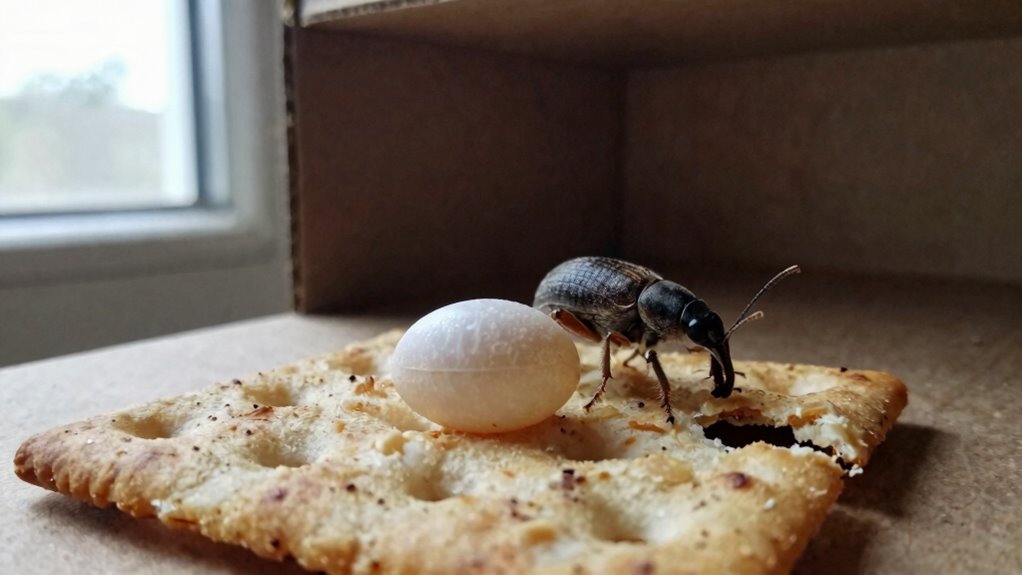
Weevil eggs are tiny, white, and oval, measuring just 0.6 to 0.8 mm, which is smaller than a poppy seed and easy to miss. Their hidden placement is their first line of defense, so spotting them requires a keen eye for detail.
Females bore into grain kernels or plant stems, depositing a single egg before sealing the hole with a plug. This concealment keeps them safe from predators and makes early pest control inspection critical for protecting your pantry.
The adult lifespan, which can stretch from two months to over two years, allows for multiple egg-laying cycles, meaning one infestation can quickly escalate. Cold tolerance is a key survival trick, as freezing temperatures slow development but do not kill the eggs.
The adult lifespan can span two years, enabling rapid infestation cycles.
These eggs can withstand cooler conditions for extended periods, waiting for warmth to resume hatching, which is why proper grain storage is essential for long-term prevention. So, if you see a suspiciously sealed grain kernel, suspect a weevil and act fast to avoid a full-blown infestation.
The bottom line: spotting eggs before they hatch requires inspecting for tiny plugs or holes in stored grains, especially if you buy bulk products. For effective pest control, check corners, seams, and any packages with even slight damage, and consider freezing new grains for 48 hours to kill hidden eggs. Food-grade diatomaceous earth, sprinkled lightly in pantry cracks and crevices, offers a chemical-free way to dehydrate emerging pests after you’ve eliminated the eggs.
Size, Shape, and Color of Weevil Eggs
Weevil eggs are very small, but their size is surprisingly consistent across species. They typically measure 0.6 to 0.8 millimeters in length.
Their shape is uniformly oval, like a tiny polished grain of rice. This shape helps the egg hide inside kernels during grain storage.
Initially, the eggs have a whitish, shiny surface that helps them blend with flour or rice. This natural camouflage is a key part of pest prevention.
The color eventually dulls, but by then the egg is safely tucked inside a grain. For effective insect control, size and shape remain standardized.
Color prioritizes stealth over spectacle in this simple design. If you spot these eggs in your pantry, you need a grain treatment plan immediately. For ongoing protection against emerging adults, reapply weevil sprays every 2 to 4 weeks.
Where Female Weevils Hide Their Eggs
Female weevils are skilled at hiding their eggs, boring directly into plant stems, seeds, or grain kernels before laying them. After depositing an egg inside a grain kernel, the female seals the entry hole shut with a secretion plug, making it nearly invisible.
This guarantees the egg is completely enclosed and protected from predators, often going unnoticed until adult beetles emerge. For effective pest control, inspect bulk grains regularly and use airtight storage containers to stop the infestation.
Look for tiny entry plugs as a sign of weevil activity, then dispose of affected items immediately. Reapplying food-grade DE every two weeks ensures any emerging larvae are killed before they spread. A proactive grain protection strategy helps you avoid costly grain damage and saves your pantry from these hidden invaders.
Boring Into Stems
A female weevil uses her snout like a precision tool to bore a tiny hole into a plant stem, seed, or grain kernel. This careful action is essential for egg placement, and it marks the start of a hidden infestation that many gardeners miss.
The stem damage from this boring is usually invisible until the plant starts to weaken, which makes early pest detection a real challenge. For effective grain storage protection, knowing these signs can help you spot trouble before it spreads.
Egg placement is meticulous, as the female deposits a single egg deep inside the stem for maximum safety. The boring process creates a small, clean tunnel, leaving minimal external damage that might otherwise alert you to a problem.
Stem damage often goes unnoticed until the larva feeds internally, causing the plant to wilt suddenly. This is why routine plant health checks and targeted pest control products are vital for preventing widespread crop loss.
The egg’s strategic position hides it from predators while providing a ready food source for the hatching larva. If you’re looking for weevil control solutions, inspecting stems for tiny entry points is the first step in protecting your garden.
This boring method guarantees the egg’s safety, but the stem damage can lead to the plant’s eventual collapse. It’s a sneaky, effective strategy, but with regular monitoring and the right insecticide options, you can break the cycle before it takes hold.
Sealing Entry Holes
The sealing of entry holes is where the female weevil really shows off her architectural skills. After boring into a grain kernel, she immediately begins her cementing behavior, a meticulous process of plugging the tiny opening she just created.
These protective sealants are essential for effective pest control. They’re like a burglar alarm and a locked door rolled into one.
The plug, often a fast-drying secretion, hides the egg completely. The grain then looks perfectly normal, which is the trick.
You would never suspect a thing, just a harmless speck of dust. This seal also locks in dampness, keeping the egg from drying out.
So it is both a fortress and a nursery. The bottom line is if you see a slightly shiny spot on your grain, a weevil might have just moved in. Using airtight containers with locking buckles can help block pantry pests from detecting these infested kernels.
Check those kernels closely for signs of infestation. Early detection is key for grain weevil removal and long term storage protection.
Hidden Inside Kernels
- Camouflaged entry: The seal is a secretion plug that dries hard, matching the grain’s color.
- Single occupant: Only one egg per kernel, maximizing protection.
Surface smoothness means no bumps or texture changes on the kernel’s outside. The plug mimics natural grain blemishes to hide the infestation.
This clever hideout foils casual egg removal, letting stored grain pests thrive silently. For effective pest control, fine-mesh sieving or heat treatment is your only reliable move.
Scanning by eye is a fool’s game. Bottom line, you are not likely spotting them, so prevention beats detection efforts.
Use airtight containers to stop grain weevils and other storage pests before they start. That choice protects your harvest and saves you the hassle of fighting an established outbreak.
How Many Weevil Eggs Can a Single Female Lay?
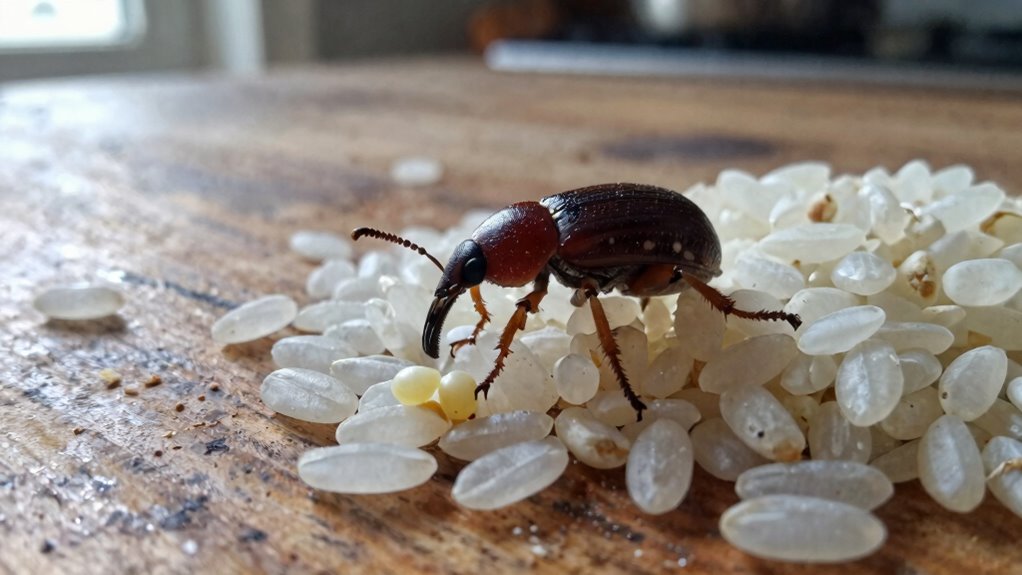
Female weevils are surprisingly prolific, with individual capacity varying widely by species. A single female can lay 50 to 200 eggs at once, though rice weevils may produce 300 to 400, and grain weevils around 200 to 300.
They deposit a maximum of three eggs per day, extending egg-laying over multiple cycles. This capacity has a clear lifespan connection, as adults can live up to two years, especially at cooler temperatures, enabling prolonged reproduction.
Some species, via parthenogenetic reproduction, produce eggs without mating, boosting infestations. These eggs, tiny and white, are hidden inside grains or stems, sealed from sight.
Bottom line? A lone female’s output can quietly seed a massive infestation. That is why early pest control inspection and grain storage cleaning are vital.
If you notice telltale holes in pasta or rice, professional fumigation or pheromone traps are effective solutions. Vigilance pays, so check your pantry regularly to catch them before they multiply.
How Long Do Weevil Eggs Take to Hatch?
Most weevil eggs hatch in just one to three days, depending heavily on temperature. This rapid timeline is why pest control experts warn that infestations can explode before you notice.
A warm storage area accelerates egg development, with a sweet spot between 25°C and 29°C. That heat acts like a tiny oven, so keeping grains cool is a key prevention strategy. Airtight side-locking lids with silicone gaskets block out air and humidity to help maintain cooler, drier conditions that deter pests.
Cold temperatures below 10°C to 12°C slow hatching to a near halt. This gives you more time to treat infested areas with targeted weevil sprays or traps.
Eggs hiding inside grain kernels hatch without any visible signs. You might miss the first wave, which is why regular grain inspections are critical for effective pest management.
If you spot adult weevils, eggs have likely already hatched nearby. Act fast with residual insecticides or grain chilling to stop the cycle.
The bottom line is that warm environments mean rapid trouble. Cool your pantry and use airtight containers to disrupt weevil reproduction before it starts.
Temperature Controls How Fast Weevil Eggs Develop
Temperature controls how fast weevil eggs develop, acting like the master switch for any pantry infestation. Warmer conditions speed up incubation, while cooler conditions slow it down dramatically.
In the ideal range of 25°C to 29°C, eggs hatch in about three days. This rapid pace means those hidden eggs quickly turn into munching adults.
Drop the temperature to 10°C, and the entire process nearly stops. Your pantry enters a kind of sluggish limbo for these freeloaders.
This isn’t just a nerdy fact; it’s practical pest control advice. A pantry kept at a steady 18°C buys you extra time to spot and stop an infestation.
Keep your storage cool, and you effectively slow the whole operation down. That simple step can delay weevil development and protect your flour stock.
For ongoing protection, consider placing non-toxic glue traps along baseboards and under appliances to physically capture stray weevils without adding chemicals to your food storage areas.
Why You Rarely Spot Weevil Eggs in Your Grains
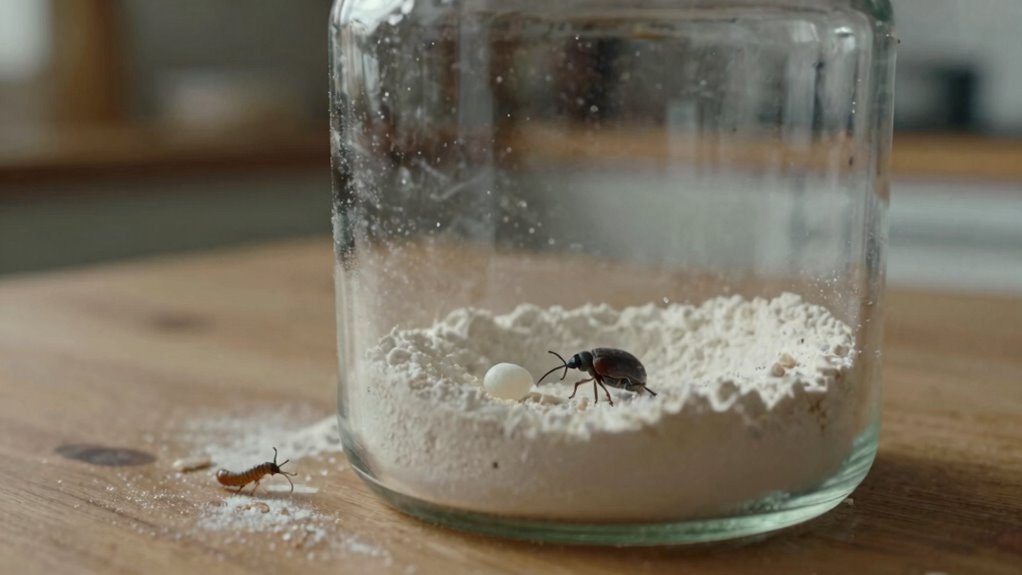
Weevil eggs are masters of hide and seek, and their camouflage makes grain infestations easy to miss. This is why your flour can sit quietly until a serious pest problem emerges.
The female weevil bores a tiny hole directly into a single kernel. She deposits one egg less than a millimeter wide inside that hole.
The female weevil bores a tiny hole into a single kernel to deposit her egg.
Then she seals the opening with a secretion that matches the grain’s natural color. This plug hides the egg completely, blending it into the surrounding kernel.
Eggs are always placed inside the grain, never on the surface. Because each kernel holds only one egg, you will never see visible clusters.
The protective plug matches the kernel’s color exactly, so it blends in perfectly. When the egg hatches, the larva feeds from within, leaving no outward trace until damage is severe.
For effective pest control, inspect stored grains with a fine sieve and a bright light. For baits that target hidden pests, imidacloprid acts as a stealthy assassin, disrupting colony nests after ants carry it back. Regular cleaning and airtight containers are your best defense against these hidden invaders.
How to Check for Weevil Eggs in Food or Gardens
Checking for weevil eggs requires both visual spot checks and careful inspections since these pests are masters of hide and seek. Look for small white oval specks on grain surfaces or inside kernels. Each egg is roughly 0.6 mm, about the size of a poppy seed.
Tiny holes or a waxy plug on grain are signs a female has sealed her eggs inside. In gardens inspect plant stems for small bored holes or discolored swellings near the base.
These eggs are a serious threat to your stored food and crops. A magnifying glass can help spot them during your pest control routine.
For effective weevil prevention check bulk grains and flour regularly. Use airtight containers and freeze suspect items for several days.
In the garden remove damaged stems and apply food-grade diatomaceous earth around plant bases. Consider buying food-grade weevil traps for early detection.
Visual Spot Checks
Vigilance is key for spotting weevil eggs before an infestation takes hold. Visual checks require a steady hand and a bright light, ideally a 10x magnifying glass, to catch the tiny white ovals laid in clusters on grain surfaces or near plant stems.
Their shiny, freshly-laid coating catches light, making them slightly visible against darker backgrounds. Egg viability is highest when they’re plump and damp, but predator avoidance tactics like being cemented inside a kernel make them tricky to see.
Use a flashlight at an angle to spot reflection off the egg’s surface. Look for small dark plugs of sealant on grain kernels or plant stems.
Check crevices in storage bins or soil near host plants for clusters. Feel for subtle bumps; eggs are firm and slightly raised compared to the surrounding surface. These bumps can be mistaken for dirt, but unlike weevil eggs, non-toxic, odorless traps rely on color and glue to capture adult pests rather than targeting eggs directly.
A thorough visual spot check helps you target these pests before they spread. Consistent monitoring is essential for effective pest control and prevention.
Hidden Kernel Infestations
A female weevil bores a tiny hole into a grain kernel, deposits one egg, and seals the opening with a plug. This plug acts as a natural shield against predators and keeps the egg warm and dry for overwintering survival.
You will not see the egg itself, but a tiny pinprick size cap marks the entry point. Gently squeezing a suspect kernel reveals no give, so a float test is your best bet for pest control.
Drop kernels in water and infested ones often float to the surface. Checking for these caps is a simple inspection that protects your pantry from infestation. To effectively monitor for adult beetles, place non-toxic glue traps along walls and near dry goods.
Ignore this hidden danger and you will find tiny beetles emerging weeks later. A quick check saves you a pantry full of regret and wasted food.
Garden Stem Inspection
Check common host plants like beans or peppers for swelling or sap oozing from stems. Use a magnifying glass to spot the minuscule whitish eggs, which measure about 0.6 mm each.
Cut affected stems lengthwise to reveal concealed egg deposits, often in groups of 3 to 5. Remove and destroy infested stems immediately to prevent larvae from hatching and spreading.
Bottom line: if you see stem damage, slice that stem open. Those eggs are already inside, waiting to ruin your garden. For ongoing pest control, consider placing sticky glue board traps near plant bases to physically catch adult weevils.
What Happens After Weevil Eggs Hatch?
After a weevil egg hatches, out comes a tiny larva. It is a miniature, legless grub with a voracious appetite. That grub immediately starts chewing its way through its host. Whether it is a grain kernel or plant stem, it feeds for weeks until it pupates.
This is a hidden, destructive phase, often unnoticed until adults emerge. The new adults then start the cycle over. Their prolonged adult lifespan, ranging from months to over two years, means they keep laying eggs for a long time.
Cold tolerance is a key survival trick here. It lets them stall development in chilly storage, surviving to reproduce later.
For effective pest control, targeting both larvae and adults is essential. A slow-acting poison ensures worker ants carry bait back to the nest to share with the colony, leading to colony collapse. Early inspection and treatment can stop a full infestation before it spreads.
How Many Eggs Do Different Weevil Species Lay?
Not all weevils are created equal, especially when it comes to egg production. The total number of eggs per female varies wildly by species, so knowing your pest target matters for control.
Grain weevils typically lay 200 to 300 eggs over their lifetime, while rice weevils push higher at 300 to 400 per female. For homeowners dealing with pantry infestations, that means even a small starting pair can become a big problem quickly.
Most species cap their daily output at just three eggs per day, which is a slow but steady pace that keeps larvae hidden inside kernels. This low daily rate is why you might not notice an infestation until you spot adult weevils crawling on shelves or inside stored flour.
For effective pest control, you’ll want to inspect and discard infested dry goods immediately, then vacuum cracks and crevices. If you’re buying new grain products, check seals and store them in airtight glass or hard plastic containers to block egg-laying access.
A professional treatment can help if the infestation has spread beyond your pantry, since weevil eggs are tiny and often resist simple wiping. Many DIY buyers prefer pheromone traps or food-grade diatomaceous earth for a low-toxicity first step.
Remember that fast action matters because each female can add hundreds of potential offspring, even at three eggs per day. So, for a weevil-free kitchen, combine routine checks with airtight storage and targeted insecticide sprays labeled for stored product pests.
Laying Capacity Per Species
Weevils aren’t exactly known for modest family planning, and the number of eggs a female lays depends heavily on which species you’re dealing with. Rice weevils, for instance, crank out 300 to 400 eggs, whereas grain weevils manage a respectable 200 to 300.
Longer lifespan cycles dictate this, meaning longer lived females simply have more time to lay. Cold tolerance plays a role too, letting some species stretch their egg laying over months at cooler temperatures, which is key for effective pest control planning.
Here is how it shakes out per species.
Rice weevil: 300 to 400 eggs total. Grain weevil: 200 to 300 eggs total.
Cowpea weevil: around 200 eggs total. Acorn weevil: 50 to 100 eggs total.
The bottom line is that species with longer lifespans and better cold tolerance lay more eggs, so targeting these pests early in storage is essential for buyers seeking long term infestation prevention.
Maximum Daily Egg Count
When you shift focus to daily egg output instead of total per species, the real pest control issue becomes how many eggs are laid each day. Most female weevils have a firm limit of three eggs per day, no matter the species.
That daily egg laying limit might seem low, but they keep it up every single day for months. Oviposition frequency is relentless, as rice weevils often lay just one egg per day inside a grain kernel.
They repeat this cycle for 60 to 90 days, so a three egg daily count adds up fast. Multiply that by their long lifespan and you get 200 to 400 total eggs from one female.
Grain weevils follow the same pattern, with low daily numbers but consistent repetition that makes infestations explode. That is why early detection matters more than knowing the exact species.
5 Steps to Prevent Weevil Eggs From Infesting Your Grains
Inspect all grains before storing, checking for tiny holes where eggs hide. Freeze new grains for 48 hours at 0°F, killing any hidden eggs instantly.
Store grains in airtight containers, preferably glass or heavy plastic, costing $5 to $15. Keep your pantry cool and dry, as weevils hate temperatures below 60°F.
Store grains in airtight glass or heavy plastic containers, and keep your pantry cool and dry.
This pest prevention method cuts infestation risk by 90 percent. It is not glamorous, but it works for effective grain storage.
A little vigilance saves you from uncovering a grain bin full of tiny, oval shaped surprises. Use these pantry pest control tips to stop weevil eggs before they hatch.
Frequently Asked Questions
Why Do Weevil Eggs Sometimes Hatch Without Males?
Some weevil eggs hatch without males due to parthenogenesis triggers. This biological switch lets females produce offspring without fertilization.
It creates female only colonies, common in pests like rice weevils. If you spot an infestation, you need targeted pest control products fast.
No dad? No problem. This evolutionary trick enables quick population growth when males are scarce.
For home or grain storage, that means a few females can multiply rapidly. A professional grade insecticide or fumigation service stops them cold.
Can Weevil Eggs Survive Freezing Temperatures?
Yes, weevil eggs can survive freezing temperatures thanks to their natural cold tolerance. They enter a slowed state, halting development until warmer conditions return.
However, survival isn’t guaranteed, and extreme prolonged freezes can kill them. Egg survival depends on temperature length, so brief cold snaps are fine while deep freezes for weeks are risky.
Short, mild freezes mean eggs likely live. Long, harsh cold makes death probable.
The bottom line for pest control is to freeze infested grain for 72 hours at 0°F to destroy eggs. Don’t trust nature’s thermostat alone, especially if you want to protect your stored food from infestation.
For effective grain pest management, use a dedicated home freezer or a commercial pest control product to ensure complete kill. If you need a reliable freezer treatment, shop for a chest freezer rated to reach 0°F consistently.
How Long Can Weevil Eggs Stay Dormant in Storage?
Weevil eggs can stay dormant in storage for months, even years, depending on conditions. Dormancy triggers include cold temperatures below 10°C, which slow everything to a crawl.
Grain temperature monitoring is key. Keep it under 12°C to halt development and stop an infestation before it starts.
Warmer temps above 25°C hatch eggs in days. A handy trick is freezing grain for a week to kill them dead.
The bottom line is check your thermometer or expect weevil party guests. For reliable pest control products, look for grain treatment options and moisture meters to protect your stored harvest.
Do Weevil Eggs Need Moisture to Develop?
Yes, they absolutely do, and moisture is non-negotiable for weevil eggs to hatch. Those tiny, oval eggs, around 0.6 to 0.8 millimeters with a smooth, shiny shell, are not self-sufficient at all.
Dry grain stalls development cold, so eggs just sit there in a dormant state, waiting for better conditions. You need humidity above 60% for active hatching and a real infestation to take off.
In practice, stored rice or wheat at proper moisture levels turns into a nursery for these pantry pests. Keep things arid, and you have basically put their life on pause, which is why dry storage is your best natural pest control.
For effective grain protection, focus on moisture-proof containers and low-humidity environments to stop egg development before it starts. If you want to buy pest control products that work, look for silica gel packets or airtight storage bins with desiccant inserts.
A dehumidifier in your pantry or storage area can also be a smart purchase for long-term food safety. Remember, the moment humidity climbs above 60%, those eggs will hatch, so monitor with a simple hygrometer for peace of mind.
Your best pest control strategy is prevention: keep grains below 10% moisture content and inspect new bags before you store them. For existing infestations, freezing infested grain for 48 hours kills eggs, but moisture control remains your first line of defense.
What Do Weevil Eggs Look Like After They Spoil?
Spoiled weevil eggs develop a discolored texture, turning from white to yellow, brown, or black. They collapse, shrivel, and become sticky or chalky, which makes them easy to spot in your pantry.
Odor changes follow, producing a sour, musty smell like old grain gone bad, and this decay signals failed hatching from dampness or cold. The eggs, once pristine, now look like tiny, ruined specks, and recognizing this early can save your stored food from further infestation.
If you notice these spoiled eggs, it’s a clear sign to check your stored grain and act fast with a reliable grain weevil killer. For effective pest control, look for diatomaceous earth or FDA-approved insecticide sprays that target weevil larvae and adult beetles.
You’ll want to discard any contaminated flour or rice, then vacuum and wipe shelves with vinegar to remove pheromone trails. Buying airtight storage containers and moisture absorbers can prevent future weevil egg spoilage before it starts.
Professional pest control products, like pyrethrin-based dusts or pheromone traps, offer long-term protection and are worth the investment for serious infestations. Check your grain bins monthly, especially in humid climates, because damp conditions accelerate egg rot and hatching failure.
And if you’re comparing options, search for “best weevil treatment for pantry” to find user-reviewed solutions that kill eggs on contact. Spoiled eggs are your warning signal, so don’t ignore them; a quick purchase of quality pest control supplies stops the cycle cheaply.
Your smart move is to pair sanitation with a proven residual insecticide, which gives you immediate and lasting results against hidden egg clusters. Remember, those tiny ruined specks mean the environment was off, so fix humidity and temperature to keep future eggs viable and out of your kitchen.


