
Knowing how to keep wasps away from your house doesn’t have to mean calling an exterminator or using harsh chemicals. A few simple, low-cost fixes—like sealing a 1/8-inch gap or using a peppermint oil spray—can stop them from nesting around your home.
Most people panic when they see a wasp hovering near a vent or eaves, but these problems are easy to solve yourself. Fine mesh vent covers cost under $30 and create a physical barrier, while fake nests work best in direct sunlight to trick colonies.
Natural repellents and quick structural repairs handle the majority of infestations without any fuss. This guide breaks down the traps, plant barriers, and daily habits that actually work, so you can enjoy your yard without worry.
Read on for the practical steps that will keep your home wasp-free all season.
At A Glance
- Seal exterior cracks, gaps, and utility entries with caulk and fine mesh.
- Remove food sources: tightly seal garbage, clean spills, and pick fallen fruit daily.
- Apply peppermint oil spray around doors, windows, and eaves weekly as a repellent.
- Install fine mesh screens on vents, chimney caps, and repair weatherstripping monthly.
- Eliminate yard clutter, standing water, and hang traps 20 feet from seating areas.
Why Wasps Keep Finding Their Way Into Your House?
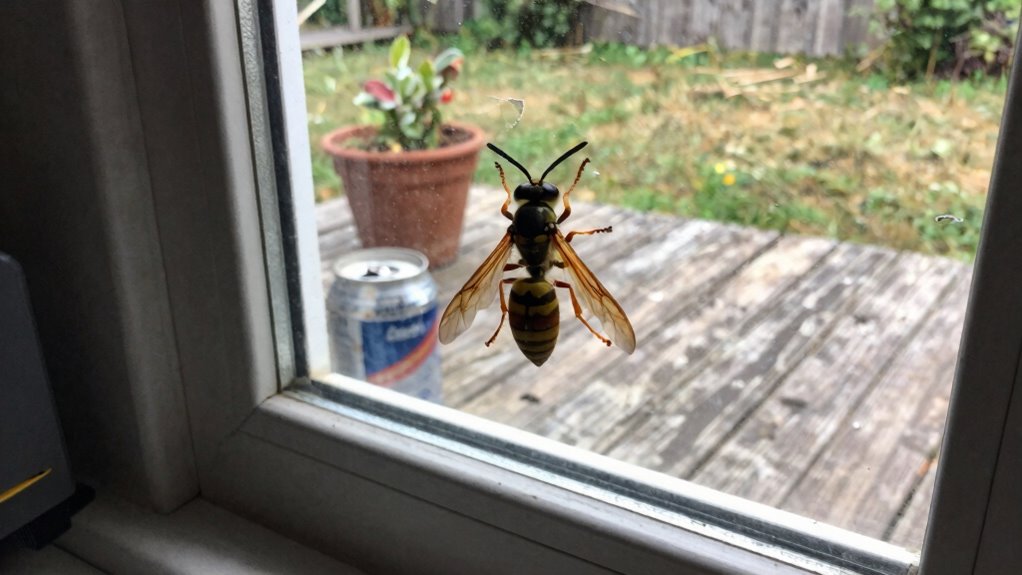
Wasps aren’t drawn to your house by sheer bad luck. They’re following three simple signals: food, shelter, and easy entry.
Wasps aren’t drawn by bad luck—they follow food, shelter, and entry points.
Your home’s siding, especially damp wood prone to rot, practically screams “prime real estate.” They chew through that soft timber to expand nests, causing structural damage you won’t notice until it’s costly.
Weatherproofing gaps is non-negotiable for effective pest control. Check rooflines, foundation cracks, and window frames.
A gap the size of a pencil eraser is a VIP entrance for a queen wasp. Fine mesh over vents and a chimney cap cost under $30 and block their access.
Seal utility entry points too as part of your home exclusion strategy. If they can’t squeeze in, they’ll move on and your house stays yours.
Regularly inspect soffits and fascia for early signs of wasp activity. Using brush seal strips or flexible foam seals around uneven window and door gaps can block wasps seeking shelter. Hire a professional for thorough wasp nest removal if you spot persistent housing.
Remove Food and Scent Trails That Attract Wasps
Your backyard barbecue is a five-star restaurant for wasps, and you’re the unsuspecting host. They follow scent trails from uncovered sugary drinks, meat scraps, and rotting fruit.
Tightly seal garbage bins and empty them weekly; clean spills immediately. For persistent foragers, deploy traps with bait rotation, switching between sweet lures like soda and protein such as tuna every few days, since wasps’ cravings change.
Proper trap placement matters: hang traps at least 20 feet from seating areas, near known flight paths but away from direct sun. Remove fallen fruit from trees daily to cut off a major attractant.
A tidy yard means fewer guests, and that’s the simplest wasp control method. For long-term protection, consider professional pest control services for nest removal and ongoing yard treatment.
If you spot a nest early, use a targeted wasp spray for immediate knockdown. Pair that with bait rotation and trap placement to keep foraging pressure low all season.
Buyer-intent shoppers often look for outdoor wasp traps, protective sprays, and lures, so stock up before peak activity. A clean, scent-free space is your best defense against repeat visits. To maximize effectiveness, choose traps with multiple entry tunnels and a leak-proof bottom to prevent escapes and spills.
Seal the Cracks and Gaps Wasps Use to Get Inside
A thorough exterior inspection with a flashlight and some skepticism reveals the tiny entry points wasps use to sneak inside.
Start by checking foundation cracks, siding gaps, and roofline separations for easy access points.
Caulk is your cheapest fix at around $5 a tube. A silicone based stain repellent also seals wood and prevents future damage from these pests.
Wasps don’t need much room. A 1/8 inch gap is enough for them to enter your home.
Don’t forget utility lines and attic vents during your pest control check. Fill every hole with a durable stainless steel wire mesh sealant to keep wasps out for good.
This task isn’t glamorous, but it is highly effective for wasp prevention. Expect to spend $15 to $30 for a full kit of caulk and mesh.
Plan to spend an afternoon crawling around your house. The payoff is fewer buzzing surprises from wasp infestation.
Bottom line for wasp control. Seal first then relax later.
Quick Fixes for Doors, Windows, and Vents

After major cracks are sealed, focus on the weak spots you use daily. Doors, windows, and vents act as wasp highways if left unsealed.
Install fine mesh screens over vents and door frames for under ten dollars a roll. This barrier directly exploits wasp behavior by blocking their entry at gaps.
Install fine mesh screens over vents and door frames for under ten dollars a roll to block wasp entry.
Spray a natural repellent like peppermint oil mix around frames weekly as a backup. Check weatherstripping monthly and replace torn strips instantly for effective pest control.
A humming dryer vent usually means a draft, not a nest, but double check anyway. Fixing these quick spots reduces the need for DIY murder later.
Trust me, these simple steps are a practical pest prevention method. For wasp control, buyer intent focuses on affordable, immediate solutions.
These natural sprays are safe for humans and pets when used as directed, making them ideal for high-traffic doorways.
Natural Wasp Repellents You Can Make or Buy Today
Skip the zappers and toxic sprays. Natural wasp repellents actually work if you pick the right ones.
A simple DIY spray, mixing 500ml water, 1 teaspoon dish soap, and 10 drops peppermint oil, works wonders around doors and windows.
Smart compost placement, far from patios and high-traffic zones, eliminates a major attractant without any chemicals. Installing a chimney cover is another low-effort, high-reward barrier for blocking nesting spots.
Ready-made peppermint oil sprays cost roughly 10 to 15 dollars per bottle. Key oil starter kits run 20 to 30 dollars, lasting multiple seasons.
Soak cotton balls in pure peppermint oil and tuck them near eaves for cheap, effective coverage. Bottom line: start with strategic composting and a snug chimney cap, then add key oil barriers.
No zappers, no fumes. Just calm, consistent wasp deterrent for your yard.
These natural oils, including peppermint, lemongrass, clove, and geraniol, create an invisible scent barrier that repels hornets without harmful chemicals.
Plants That Keep Wasps Away From Patios and Entryways
Thyme, basil, and spearmint are top wasp repellent plants that drive pests away naturally.
Eucalyptus and citronella grass create a fragrant barrier for effective wasp control.
Plant these natural deterrents near patios and entryways for a pest free zone.
This simple landscaping trick turns your yard into a botanical bouncer that wasps politely avoid.
For best results, place potted mint near doorways to block wasp entry points.
Citronella grass works well as a perimeter plant for long term pest management.
Planting marigolds near entryways adds another layer of defense, as they drive away aphids and mosquitoes with their scent, while basil and lavender deter flies and other flying pests.
Best Repellent Plants
Several plants actively repel wasps from patios and entryways without requiring sprays or traps. Strategic wasp deterrent planting near high traffic areas is a top natural pest control tip.
Mint, thyme, and eucalyptus near doors create a scent barrier these stinging insects avoid. Spearmint grows fast, costs about $5 per starter, and thrives in pots.
Basil does double duty by repelling wasps and flavoring your pasta. For those seeking organic wasp prevention, consider using wormwood with caution near children.
Citronella grass annoys wasps just as much as mosquitoes. These natural repellent solutions are a lazy homeowner’s dream with no mixing or mess.
They won’t solve a full blown infestation but work well for proactive wasp control. Stick a few of these near entryways for fewer winged party crashers.
Crushing leaves boosts the pest-repelling aroma of these plants and supports natural insect control around patios and entryways.
Essential Oil Sprays
Sprays take a bit more effort than planting mint, but they are a powerful tool for effective wasp control without harsh chemicals.
To make a homemade wasp repellent, mix 500ml of water, one teaspoon of dish soap, and ten drops of peppermint oil. Add five drops of clove oil and five drops of lemongrass oil for extra repellent strength.
Spray this solution around doors, windows, and eaves to create a protective barrier. This territorial spraying works because wasps hate the scent and will avoid treated areas like a bad joke.
The soap breaks the surface tension of water, so wasps drown faster if they land on the mix. For a natural pest control solution, this is one of the most affordable options you will find.
The total cost is about $15 for the oils, and that supply lasts for months of regular use. Reapply after rain to keep the protection active, and your yard stays wasp-free. Volatile oils like peppermint act as natural repellents that fade after a few days due to sun and air exposure, making regular reapplication essential.
Bottom line: this mix is cheap, effective, and smells like a fancy spa, just not to wasps. If you are searching for a wasp killer spray alternative or a DIY pest prevention method, this fits the bill perfectly.
Herb Garden Placement
| Herb | Best Placement |
|---|---|
| Mint | Near entryways |
| Basil | Patio borders |
| Thyme | Walkway edges |
| Rosemary | Door frames |
| Lemongrass | Sitting areas |
Rotate these herbs every season for natural pest control. This simple placement creates a protective barrier that repels mosquitoes and flies.
Plant mint near doors to deter ants and spiders. Basil along patio borders helps control aphids and whiteflies naturally.
Thyme near walkway edges releases natural pest repellent oils when brushed. Rosemary by door frames confuses flying insects with its strong scent.
Lemongrass contains citronella which keeps mosquitoes away from seating areas. This living bug deterrent system is perfect for organic pest management.
Now you can enjoy wasp free patios without harsh chemical sprays. Just a little dirt and a lot of stink does the trick for good.
For added protection, consider using citronella essential oil in diffusers or homemade sprays near these herb garden zones.
Yard Tricks to Keep Wasps From Nesting Nearby

The first trick is to make your yard feel like a wasp-free zone before they even think about settling down.
Start with yard clutter removal, which means clearing piles of wood, leaf litter, or old furniture that offer perfect shelter.
Wasps are lazy squatters, so deny them hiding spots.
Next, focus on standing water elimination, since a birdbath left stagnant or a leaky hose spigot creates a wasp watering hole.
Tip out containers and fix drips without delay.
Trim back overgrown bushes and mow regularly, because tall grass hides ground nests.
Keep garbage bins sealed tight and avoid leaving pet food bowls outside.
These simple habits, done weekly, make your property feel like a lousy real estate deal.
No vacancy signs and no free drinks turn your yard into a tidy, uninviting terrain.
This pest control routine sends wasps looking elsewhere for a home, much like how non-toxic, eco-friendly repellents drive moles and voles from your lawn without harming pets or plants.
Set Up Wasp Traps and Fake Nests
Why hang a decoy nest when you can set a real trap and catch the little buzzers mid scheme? Trap placement matters for effective wasp control. Hang traps near high activity zones, but at least 20 feet from patios and doors. You want to lure them away, not invite them to the party.
Decoy effectiveness is decent for deterring new queens, but a $5 honey bottle trap actually reduces the swarm. Cut the top off a 2 liter, invert it, and fill with sugar water and a splash of vinegar. Commercial pest control options run $8 to $15. Refill bait weekly and empty traps into a sealed bag for safe disposal.
Fake nests work best when visible and sunlit, but they are a stopgap, not a real solution. The bottom line is that traps catch the troublemakers while decoys just bluff. For the best yard protection, use both for peace of mind. Place stations 4 to 5 feet high to target their active flight paths while keeping them out of reach of kids and pets. This dual approach keeps your outdoor spaces safer.
Safe Habits to Keep Wasps Out of Your Home
Prevention beats panic, every time, so make sure your wasp control routine starts with simple daily actions. Ask guests and family to close doors quickly since wasps exploit open invitations.
Swap old outdoor bulbs for yellow bug lights instead of standard white ones. These attract fewer insects, which reduces the hunting grounds for wasps near your home.
Swapping white bulbs for yellow bug lights cuts the insect buffet that attracts wasps to your home.
Keep doors shut during peak wasp hours, usually late on summer afternoons. Check window screens for holes and replace weatherstripping where gaps exist, as a single crack is an open door for a nest removal crisis.
Do not leave soda cans or fruit bowls unattended outside, as these sweet smells guide wasps to your space. Trim bushes back from the house and inspect eaves weekly for early pest control needs.
Vigilance is cheap, but a professional wasp removal service can be costly if you ignore the signs. A little habit tweaking beats a sting every single time.
For extra defense, place bright yellow traps filled with honey or wine around patios and gardens to lure hornets away from entry points.
Frequently Asked Questions
Do Wasps Return to the Same Nest Every Year?
No, wasps do not return to the same nest each year. A nest is a single season structure, abandoned after the colony dies in winter.
Only a mated queen survives, hibernating in a sheltered spot like a woodpile or attic. Come spring, she starts a brand new nest from scratch, so last year’s papery fortress is just a ghost.
Think of it like a rental: they never renew the lease. Spotting an old nest? Knock it down safely with a long pole or broom handle.
It’s an empty relic, not a threat, but if you see fresh wasp activity nearby you may need professional wasp removal.
For active infestations, consider a fast acting wasp spray or a powder duster for ground nests.
These pest control products kill the colony quickly and prevent new queens from establishing next season.
If you’re unsure about the species, a local exterminator can identify the nest and recommend the best treatment.
Don’t wait until summer peaks get a proactive wasp control plan now to protect your home and yard.
Can Wasps Chew Through Silicone Caulk or Foam Sealant?
Can wasps chew through silicone caulk or foam sealant. Yes, they absolutely can, so don’t rely on these alone for pest proofing.
Caulk durability is fair. Silicone resists chewing longer than acrylic, but determined wasps eventually gnaw through. Foam strength is poor. They crunch through it like stale popcorn, making it a weak point for wasp control.
For a real barrier, use metal mesh or hardware cloth over gaps. You can find a roll for around $10 at most home improvement stores. Then seal around the mesh with silicone for a durable pest exclusion solution.
The bottom line is simple. Sealants alone are a snack for wasps, not a long term solution. For effective wasp nest prevention, combine hardware cloth with silicone caulk to block entry points around your home.
Will Ultrasonic Pest Repellers Actually Keep Wasps Away?
Curious about ultrasonic pest repellers for wasps? Save your money because they simply won’t work for wasp deterrence. Wasps don’t have the right hearing to be bothered by those high frequency sounds, so that “zapper” is a total waste.
For the best wasp control, stick to proven methods that target their behavior. Seal up gaps around your eaves and siding to block nesting spots. Remove protein rich foods and sweet drinks from your patio to stop attracting them. Hang a decoy nest in a brown paper bag near high traffic areas to trick them. That solution is far more effective than any plug in device on the market.
How Long Does It Take for a Fake Nest to Work?
A fake nest does not work instantly. It usually takes a few days to a couple weeks for wasps to notice and avoid it.
Nest placement is key for success. Hang it where wasps scout in spring, like under eaves or near old nest spots.
Timing also matters, because wasps avoid areas that already look claimed. This trick works best when used during early spring scouting.
It is not a magic bullet for pest control. But combined with other deterrents, it nudges wasps to build elsewhere.
Budget wise, a quality fake nest costs between five and fifteen dollars. This makes it an affordable buy for homeowners looking to prevent infestations.
For best results, pair it with traps or seal cracks around your home. Smart buyers also set it before peak wasp season hits.
Are There Specific Colors of Clothing That Attract Wasps?
Yes, wasps are attracted to bright colors and floral patterns because their vision mistakes you for a flower. If you want effective wasp control, start by choosing your wardrobe carefully.
Darker colors are less attractive to wasps, which is why professional pest control experts often suggest muted tones. You should avoid bright yellows or whites, especially if you are near a known nest.
Sticking to brown or grey clothing is a simple yet practical pest prevention strategy. While this isn’t a complete cure all for wasp problems, it does help you avoid those aggressive encounters.
Remember that wasps aren’t judging your style, they are just easily agitated by certain stimuli. For the best pest control results around your home, combine smart clothing choices with proven yard inspections.


