
You’ve just brought home a fresh bag of flour, and the last thing you want is to find tiny bugs crawling through it next week. The good news is that keeping flour bug-free is simpler than most people think.
This guide on how to store flour to prevent bugs covers the exact steps you need to stop pantry pests before they start. You’ll learn why freezing works, which containers actually seal out weevils, and where to store your flour for the longest shelf life.
We also cover what to do with whole wheat flour, how to spot early signs of infestation, and options for bulk storage.
By the end of this article, you’ll have a no-fuss system that saves your baking supplies and your sanity.
At A Glance
- Freeze new flour for 48 hours to kill hidden eggs and larvae.
- Transfer flour to an airtight container with a rubber gasket.
- Store flour in a cool, dark pantry away from heat and steam.
- Use Mylar bags with oxygen absorbers for long-term storage.
- Keep containers clean; add bay leaves to deter moths naturally.
Why Flour Bugs Get In and How to Stop Them
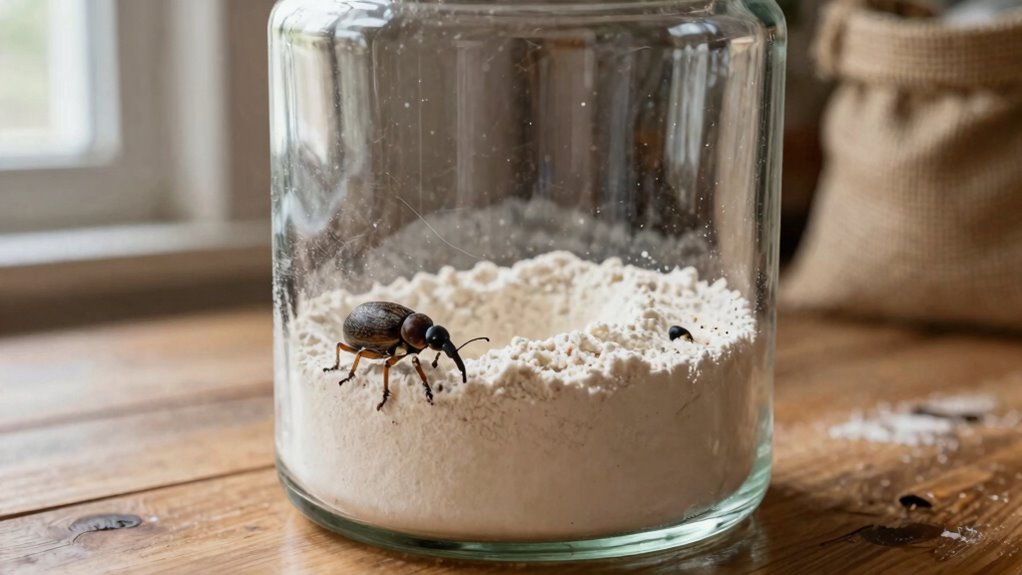
Grain weevils and pantry moths are experts at hiding, so you often won’t notice them until you spot tiny brown beetles or silky webs near your flour bag.
The real trouble starts at the mill, where these pests hitch a ride inside the grain with eggs already tucked away.
Your pantry’s warm, damp conditions then seal the deal, giving those eggs the perfect environment to hatch and multiply rapidly.
To stop this cycle, freeze your flour for 24 hours right after bringing it home, which kills every egg on contact.
Freeze your flour for 24 hours after bringing it home to kill every egg on contact.
Next, transfer the flour into an airtight container, such as a glass mason jar or a sturdy plastic bin.
This simple step blocks new invaders and keeps your baking supplies safe for up to ten months.
Opt for a container with locking hinges and a silicone gasket to ensure the seal remains pest-proof over time.
For ongoing protection, inspect your pantry regularly for signs of infestation, like webbing or tiny beetles near other dry goods.
Professional pest control services can also treat your kitchen if the problem spreads beyond flour.
By taking these preventative measures, you’ll avoid costly food waste and enjoy long term grain storage success.
A quick habit of freezing and sealing saves you from emergency cleanup and keeps your pantry pest free.
Store flour in a cool, dry spot away from heat sources, since moisture and warmth attract pantry pests.
If you notice any suspicious bugs, discard the affected bag immediately and clean the shelf with vinegar to remove pheromone trails.
For added defense, bay leaves or food grade diatomaceous earth placed near containers can deter moths and weevils naturally.
Remember that airtight sealing is your best defense, so always double check the lid clicks shut after each use.
Following these steps gives you reliable flour bug prevention without harsh chemicals, making your kitchen a no go zone for invaders.
With a little routine effort, you can bake with confidence knowing your ingredients stay fresh and bug free.
Where to Keep Flour in Your Kitchen for Best Results
The ideal spot for flour is a cool, dark pantry, but avoid any warm corner near the stove.
For whole wheat or nut flours, refrigeration is a game changer, keeping them fresh for up to a year without any weird growth.
Freezer storage with an airtight bag offers the ultimate long term protection, keeping flour indefinitely and even killing off pantry moths or weevils.
This makes it the best buy for bulk flour storage and gives total peace of mind against infestations.
If you want to stock up on organic or specialty flours, use freezer safe containers and label the date.
You will never worry about rancidity or bug eggs again, and your baking will always taste clean.
For daily use, a sealed glass jar on a cool shelf works well, but check it monthly for any signs of moisture or pests.
When you buy flour in bulk, rotate your stock and always transfer it to fresh packaging for maximum freshness.
Using silicone gasket locking lids provides an even stronger defense against moisture and pests in your pantry.
Ideal Pantry Location
A cool, dark pantry corner beats the countertop every time. Pantry humidity is flour’s silent enemy, causing clumps and mold. Using a dehumidifier for silverfish control can help maintain a dry environment that deters both pests and moisture. Choose a spot away from the stove or dishwasher, anywhere steam gathers. Shelf rotation matters too, always push newer bags to the back. That way, you use older flour first, avoiding musty surprises. This spot keeps flour fresh for months, not weeks. Think of it as a stable, slightly boring retirement home for your baking staples. It’s not glamorous, but it works. No drama, no bugs. Just reliable flour, waiting for pancake emergencies, and natural pest control from a dry environment. Don’t overthink this. Pick a cool, dry nook, rotate your stock, and move on. Your pantry is smarter than you think. Trust it and you will buy flour with confidence every time.
Refrigeration and Freezing
Refrigeration and freezing turn your flour into a nearly immortal baking ally, so you can stop worrying about weevils hatching at 0°F. Pop that bag in the freezer for 48 hours upon purchase, and any stowaway eggs meet their maker.
Just don’t use glass containers, because I learned that the hard way when a mason jar exploded. Transfer flour to a sealed plastic container first to avoid a mess and protect against pantry moth infestations.
Dampness control is key, so always let frozen flour reach room temperature before opening. Otherwise, you’ll invite clumpy sadness and potential mold growth that ruins your baking supplies.
Temperature monitoring is easy, since your fridge already does it. Whole wheat flour loves the cold and stays fresh up to a year, which makes it a smart buy for bulk flour storage.
Freezer flour lasts indefinitely, so you can stock up without fear of spoilage. The bottom line is to freeze new flour for two days, then store it cold, and your baking game stays bug‑free.
For extra pest control, keep an airtight lid on your container and label it with the purchase date. This simple habit supports long‑term flour preservation and keeps your kitchen free from unwanted critters. Additionally, placing pheromone-based traps near your flour storage can help break the moth breeding cycle and catch any remaining male moths.
Airtight, Vacuum-Sealed, or Mylar: Which Container Works Best?
Airtight plasticware works well for everyday kitchens if you use flour within ten months. It is a simple and affordable pest control solution for short-term storage.
Mylar bags block all light and oxygen, stopping bug eggs from hatching effectively. These metallic pouches are ideal for long-term storage and pest prevention.
Vacuum-sealing systems push shelf life to two years by removing every air pocket. They require a dedicated machine, which can be overkill for casual bakers.
For serious preppers, Mylar bags with oxygen absorbers offer the best pest control. If you want maximum freshness, a vacuum sealer is the top choice for buyer-intent buyers.
Unlike non-toxic sticky traps that capture adult moths without chemicals, these storage methods physically seal out pests before they ever reach your flour.
Airtight Plasticware
Airtight plasticware is the practical champion of flour storage for most home bakers. It is not the flashiest option, but it is the one you will actually use.
These containers rely on a rubber gasket to keep air, pantry moths, and weevils out. A good snap lock mechanism prevents accidental opening and protects against pest infestation.
Best for pantry use up to 10 months with proper sealing. Avoid thin lids that warp and look for BPA free, thick walled options for durability.
Price ranges from $10 to $25 for a 5 pound container. For targeted pest control, always freeze flour first to kill any insect eggs before storage.
A vacuum sealed system removes more air, but plasticware is simpler and cheaper. Think of it as the storage equivalent of a reliable minivan. Not sexy, but it gets the job done without drama.
Buy sturdy plastic containers with tested seal quality for everyday use. They are the workhorse for flour, providing affordable pest prevention and long term freshness. Similar locking buckles and sealing rings create an airtight fortress that keeps pests out and moisture in.
Mylar Bag Benefits
Mylar bags are the overachievers of the flour storage world. Think of them as the high-end storage solution that your pantry moths will never see coming.
They block light completely, and with oxygen absorbers, they create a death chamber for insect eggs. This makes them a top choice for pest control in long term food storage.
| Mylar Bag Feature | Why It Matters |
|---|---|
| Mylar durability | Resists rips and punctures, lasting years in storage |
| Oxygen barrier | Stops oxidation, keeping flour fresh up to 25 years |
| Light block | Prevents spoilage from UV exposure |
| Reusable seals | Can be resealed multiple times without failure |
| Pest-proof | Thick material stops weevils from chewing through |
The Mylar durability means no accidental splitting when you grab it from the back of the pantry. The oxygen barrier quietly suffocates any stowaway eggs, giving you effective pantry pest prevention.
Yes, they look like astronaut food bags, but your flour will outlive your enthusiasm for baking. If you want to buy Mylar bags for emergency preparedness, this is the solution you need.
Bottom line: if you’re serious about long-term storage and hate surprises, Mylar wins for insect infestation prevention.
For added defense, these bags pair well with long-lasting residual barrier sprays that can be applied around pantry entry points for extra protection.
Vacuum-Sealing Systems
Vacuum-sealing systems are a smart middle ground between airtight containers and heavy-duty Mylar bags. They remove all air, crushing flour into a dense brick and suffocating any pest eggs lurking inside.
Pairing vacuum sealing with nitrogen flushing replaces oxygen with an inert gas. This dramatically extends shelf life past two years for long-term pantry protection.
Zero oxygen means zero bugs. Insect eggs can’t hatch without air, so you win the pest control battle.
Space-saving bricks stack neatly like tiny, edible cinder blocks. Transparent seals let you literally see the hold, with no guessing involved.
A basic hand-pump sealer costs just $30 and bags are pennies each. For cost-effective, no-fuss food preservation, this system beats airtight containers.
It lacks Mylar’s light block, so store in a dark pantry. Perfect for deep storage, just don’t bang the brick on the counter.
Freeze Your Flour Right After Buying It
A home baker’s first enemy isn’t a bad recipe. It’s the tiny eggs hidden in that bag of all-purpose flour you just brought home.
So freeze your flour right after buying it. Pop the sealed plastic or glass container into the freezer for 24 hours. 48 is even better.
This kills any weevil eggs before they hatch. A bottom freezer drawer works perfectly for pest control.
Avoid the refrigerator door shelf. Too much temperature fluctuation can let bugs survive.
An oven shelf or cabinet above the stove stays too warm. Don’t trust them for this job.
Let the flour sit out until it reaches room temperature before opening the container. That prevents dampness from sneaking in and ruining the texture.
It’s a simple, cheap defense against pantry pests. No special gear is needed, just cold.
Your flour stays bug free. You skip the panic of finding webs in your baking.
For ongoing protection, combine freezing with non-toxic, chemical-free traps placed near your pantry shelves.
How to Store Different Types of Flour for Maximum Freshness
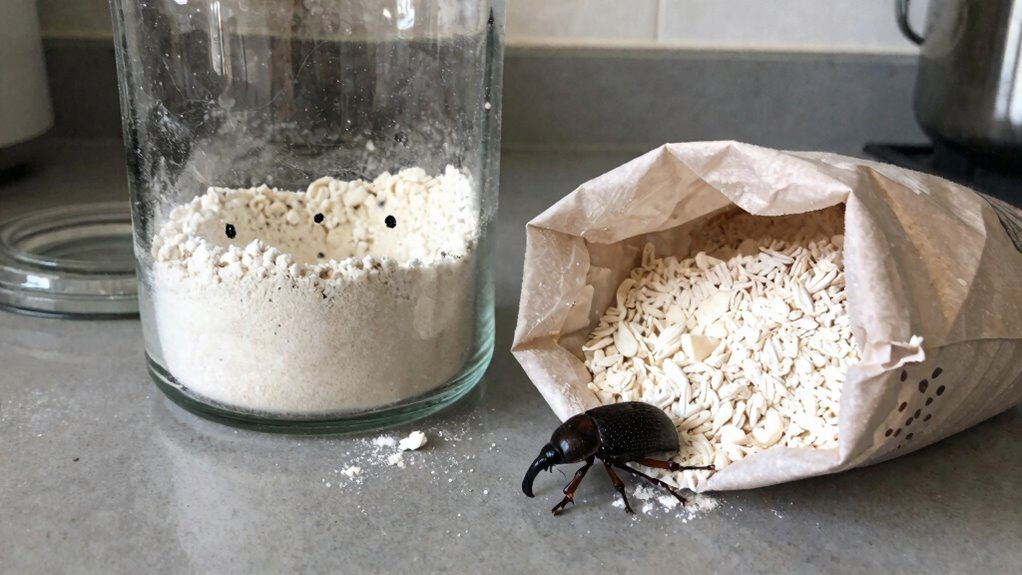
Once you freeze the flour to eliminate weevil eggs, the real task is keeping each type fresh for its full lifespan. Different flours need their own care because the more nutritious a flour is, the faster it spoils.
Whole wheat flour goes rancid in months due to its natural oils. White flour can last a year if sealed tightly to prevent oxidation.
For pest control, store whole wheat flour in the fridge or it will turn sour before you can use it. Almond flour is a diva; keep it cold and sealed so it does not turn oily.
Self rising flour loses its chemical leaveners fast, so use it within six months to avoid buying waste. Coconut flour is a champ that lasts two years, but keep it bone dry or pests will find it. For additional protection, you can sprinkle food-grade diatomaceous earth around storage containers to deter weevils.
Pick airtight containers that fit each flour’s lifespan and label them with dates. Your future self will thank you for this practical, friendly approach to maximum freshness.
Mylar Bags and Oxygen Absorbers for Long-Term Flour Storage
Mylar bags are the heavy duty metallic looking pouches that block light and oxygen, which ruins insect eggs.
Pair them with oxygen absorbers, little iron packets that suck out air, and flour stays fresh for decades.
Pair them with oxygen absorbers, little iron packets that suck out air, and flour stays fresh for decades.
This combo works best with cool stable temperatures and airtight humidity control.
Even a tiny leak ruins the whole setup for long term pest prevention.
Cost runs about 0.50 dollars per bag plus 0.10 dollars per absorber.
For the best bug control, seal five pound batches then store in a bucket or dark pantry.
Avoid glass or plastic bins for long term flour storage.
They let in light and air that invite pantry pests.
Bottom line: Mylar plus absorbers equals flour that outlives your sourdough starter.
No bugs, no spoilage, just steady quiet storage that safeguards your supply.
For added protection, consider using pheromone-based trap monitoring in the pantry to catch any stray adult moths before they breed.
How to Spot Weevils in Your Flour Before It’s Too Late?
Mylar bags and oxygen absorbers are excellent for long term food storage, but they don’t help once pests are already inside your flour. Catching grain weevils or pantry moths early means knowing the subtle warning signs before they ruin your whole batch. Look for tiny, brown beetles crawling on the flour surface, and your stomach will drop the moment you see them move. Fine, web like threads clinging to the container’s rim are a clear sign of pantry moth larvae working their way through your pantry pest control routine. A musty, sour smell that hits you the second you open the bag makes you wonder how long they have been hiding in there. Small, dark specks or tiny holes in the flour itself are proof that grain weevils have already hatched and fed on your stockpile. Check for these clues every single time you grab flour, and make it a habit after each pantry inspection. If you spot any of these signs, toss the whole bag immediately, because contaminating your other dry goods is not worth the risk. For a more proactive approach, consider rotating your flour stock and using airtight glass jars for daily use. Pheromone traps targeting adult males can disrupt beetle breeding without pesticides, offering an additional layer of defense. Professional pest control services recommend freezing new flour for 48 hours before storage to kill any hidden eggs. Your best defense is a combination of vigilant checking and solid food storage pest prevention methods. Act fast when you see these clues, and you will protect your emergency food supplies and your family’s health.
Simple Tricks to Prevent Pests in Your Flour Storage
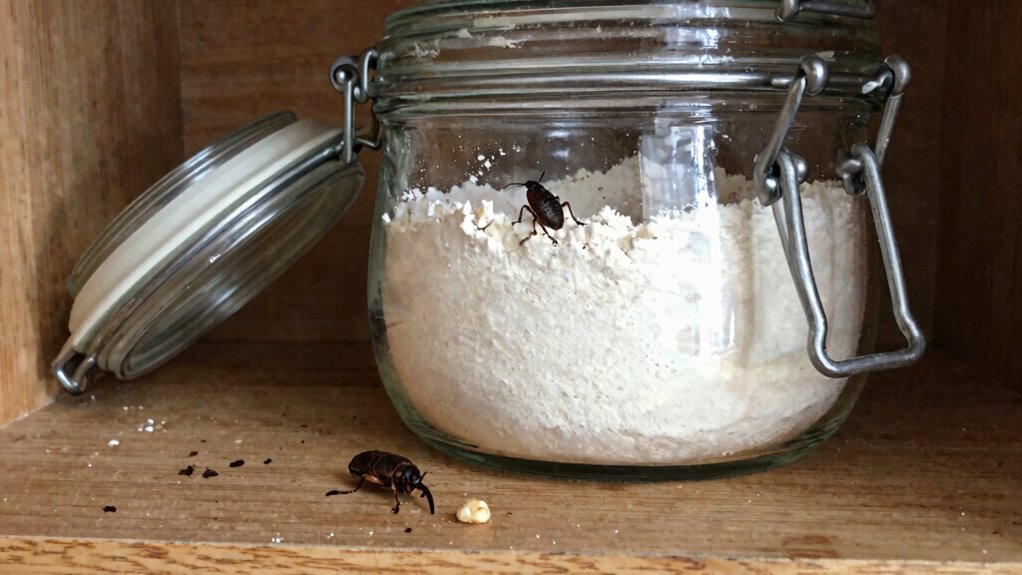
Freezing flour for 48 hours kills existing eggs, but it won’t stop new pests from invading later.
The real trick is using airtight containers like glass mason jars or hard plastic.
They block entry completely, and skip cheap Ziploc bags for long term storage.
Those bags tear easily, and weevils can chew through thin plastic without effort.
Container cleaning matters for pest prevention.
Wash every jar with hot soapy water, dry fully, then wipe the rim with vinegar.
Residue attracts bugs and stale flour smells linger, causing flavor absorption into your next batch.
That’s why you should never reuse a dirty bag.
Store flour in a cool dark pantry because sunlight speeds spoilage.
Add a bay leaf per container to deter moths naturally.
Avoid overuse risks like burning or redness, though this applies to sprays, not flour storage.
Invest about $15 in proper jars, clean them religiously, and your flour stays bug free.
Simple, cheap, and done.
How to Store Flour in Bulk Without Worrying About Bugs
Bulk flour saves money but attracts pests if stored poorly. Skip the flimsy paper sack and use food-grade airtight containers instead.
Bulk flour saves money, but poor storage invites pests—use airtight containers instead.
Freeze the flour for 48 hours to kill hidden weevil eggs and larva. This step protects your baking recipes from contamination.
No more tossing spoiled half bags or feeling guilty about wasted cash. A clean bin means peace of mind for up to two years with vacuum sealing.
Check your pantry without panic because organized storage beats creepy crawlies. Your family bakes stay safe and free from surprise protein in sourdough.
Invest in one sturdy bin, freeze once, and seal tight. Your bank account and your cookies will thank you.
Frequently Asked Questions
Can I Store Flour in the Refrigerator Without Freezing It First?
Yes, you can store flour in the refrigerator without freezing it first, but watch out for fridge humidity. That moisture creates condensation risk inside the container, which can lead to mold and even pantry pest infestations.
For effective pest control, transfer flour to an airtight plastic or glass jar before chilling. A bay leaf inside adds mild deterrence against weevils, but for serious protection, pair it with a food grade diatomaceous earth barrier or bay leaf sachets you can buy online.
The fridge keeps white flour fresh up to a year, but whole wheat flour needs cooler temperatures to prevent rancidity and grain moth activity. To buy the right pest proof containers, look for vacuum seal lids or locking clips that keep moisture and bugs out.
Bottom line: refrigerate your flour away from damp spots, and you are golden. For long term flour storage solutions, consider investing in a dedicated pest control pantry kit that includes traps and natural repellents.
Does Freezing Flour Change Its Texture for Baking?
Freezing flour does alter its texture, but usually in a good way for baking quality. The cold makes the flour’s fats solidify, and ice crystals can slightly damage starch granules, leading to a finer, more delicate crumb in cakes and pastries. This isn’t a bad thing. It’s like a free conditioning step that also acts as a simple pest control measure.
Freezing prevention keeps pantry moths and weevils at bay. That’s a separate win for anyone looking for an effective bug deterrent without chemicals. For most recipes, you won’t notice a difference in your baked goods. Just let the flour warm to room temperature before use, or you’ll get clumpy dough.
If you want to buy a long term flour storage solution, freezing is your best bet. Bottom line: freeze without worry, your baking benefits, and pests lose their chance to infest.
How Long Can Vacuum-Sealed Flour Actually Last in Storage?
Vacuum sealed flour can last up to two years, but only if the seal holds tight. Vacuum seal failure lets in air and moisture, which can attract pantry pests like weevils or moths.
Oxygen absorber lifespan is about six months once opened, so use fresh ones for long term storage. Whole wheat flour lasts 6 to 12 months, while all purpose hits one year.
Keep flour in a cool, dry place or freeze it indefinitely, just don’t forget about it. For pest control, always inspect bags before sealing and use airtight containers with bay leaves or diatomaceous earth.
Buy extra oxygen absorbers and resealable mylar bags to protect against rodents and bugs. Bottom line: two years max if sealed tight, but check for signs of infestation regularly.
Can I Reuse Mylar Bags After Opening Them for More Storage?
Yes, you can reuse Mylar bags after opening them, but seal integrity is the catch. Once opened, the airtight zipper or heat seal is compromised, so oxygen absorption packs are wasted because they exhaust quickly on a half empty bag.
For short term storage, say a month or two, reusing Mylar bags works fine. For long term pest control, no, reuse is not recommended.
Reuse those bags for pantry storage, but vacuum sealed or fresh Mylar beats recycled for bug proofing. Each reseal weakens the barrier like a parachute you have already jumped, so trust it less each time.
To keep pantry pests like weevils and moths out, buy new Mylar bags for serious long term storage. The bottom line is recycle for quick use, and purchase new bags for ultimate prevention against rodent and insect infestation.
Is It Safe to Use Flour if I See No Bugs but It Smells Bad?
No, it is not safe to use flour that smells bad, even if you see no bugs. A bad odor often means the fats have oxidized, causing rancid flour with a stale, sour, or Play-Doh like smell.
This spoilage can hide mold or bacteria, which may trigger allergic reactions or food poisoning. Toss that bag immediately to avoid a stomach ache.
While visible pests like weevils or pantry moths are a common concern, a bad smell signals hidden contamination. Trusting your nose is a key part of effective pantry pest prevention.
If you’re serious about pest control for pantry items, invest in airtight containers and consider using food grade diatomaceous earth. Buying a new $4 bag of flour is far cheaper than dealing with a sick household.
For buyer intent, look for pest proof storage solutions like glass jars with rubber seals or stainless steel canisters. These products stop bugs and also block moisture that speeds up rancidity.
Your nose is your best pest detection tool: if the flour smells off, don’t use it. Replace it now and protect your kitchen from hidden food spoilage.


