
Getting rid of spiders in the bedroom doesn’t require harsh chemicals or an expensive exterminator. With a few simple tools and consistent habits, you can keep your sleeping space spider-free for good.
This guide covers the most effective, low-cost methods—from sealing entry points to using natural repellents—so you can stop worrying about eight-legged visitors.
You’ll learn exactly where spiders hide, what keeps them coming back, and how to make your bedroom less inviting without a messy cleanup.
The best part? Each step is practical, easy to follow, and designed for people who want fast results without complicated gear.
Once you start with the sealing and vacuuming routine, the rest of the steps fall into place naturally.
Here’s exactly how to kick spiders out and keep them gone.
At A Glance
- Vacuum weekly, focusing on corners, baseboards, and under the bed.
- Seal gaps around windows and doors with silicone caulk.
- Apply diatomaceous earth powder along floor edges to kill spiders.
- Place sticky traps along walls, behind furniture, and in closets.
- Reduce humidity below 50% with a dehumidifier to deter spiders.
How to Get Rid of Spiders in the Bedroom Fast
Speed is priority one when spiders have overstayed their welcome. First, cut off their highway to your bedroom by pruning tree branches touching the house.
Remove outdoor debris like leaf piles or wood stacks near the foundation. That alone kills most traffic, since spiders hitch rides on foliage or hide in clutter.
Next, grab the vacuum for immediate spider removal. Attack corners, baseboards, and under the bed in one swift pass.
Webs and egg sacs don’t stand a chance, and each sac destroyed means hundreds fewer babies later. It’s a cheap, instant, and oddly satisfying pest control trick.
Don’t forget to shake out blankets and check behind headboards. Those spots are prime real estate for skittish arachnids.
Quick, thorough, and done. That’s the fast track to a spider free sleep zone.
For ongoing protection, place plant-based repellent pouches in corners and near entryways to deter re-infestation without chemicals.
Seal Every Crack and Gap Around Windows and Doors
A gap around a window or door is basically a spider’s welcome mat. A thorough entry point inspection reveals the most common spider highways, like cracks, loose frames, and worn weatherstripping.
Pay attention here, since sealing gaps is the single most effective way to block them. It’s also cheaper than exploring natural repellents later.
Use silicone caulk for cracks in window frames and door trim, costing about $5 to $10 per tube. Install door sweeps on the bottom edge of exterior doors, trimming them to fit snugly for around $10 to $15.
Silicone caulk for cracks and door sweeps for gaps stop spiders at the source.
Apply weatherstripping around windows that don’t close flush, focusing on the top and sides. A roll typically runs $8 to $12.
Seal gaps around cable or pipe entries with expanding foam, priced at $4 to $8. Just don’t overdo it: spiders don’t need a spider sized hole. For smaller holes, steel wool strips create a sharp, chew-proof barrier that spiders cannot penetrate.
Add tight fitting window screens if existing ones are torn or loose. These cost $15 to $30 each.
Get everything sealed and you’ll turn those open doorways into brick walls for eight legged guests. Your pest control routine will be much more effective, and you’ll stop spider infestations before they start.
Vacuum and Clean to Destroy Webs and Egg Sacs
The vacuum is the unsung hero of spider warfare, and making it your first line of attack pays off fast. Routine cleaning, especially weekly vacuuming, yanks down webs and crushes egg sacs before they hatch into hundreds of tiny spiders.
Focus on corners, baseboards, and under the bed. For egg sac disposal, immediately empty the canister or bag into a sealed outdoor bin. Otherwise, they might crawl right back out.
A trap with multi-directional entry points can intercept spiders from multiple angles, enhancing your tactic of focusing on corners and baseboards.
| Cleaning Area | Key Action | Frequency |
|---|---|---|
| Corners & ceiling | Remove webs with crevice tool | Weekly |
| Baseboards & floor | Vacuum along edges, under furniture | Weekly |
| Around windows & doors | Suck up hidden egg sacs | Bi-weekly |
That is it, no fancy gadgets, just a good vacuum and a bit of discipline. It is cheap, effective, and oddly satisfying.
Cut Down Clutter and Remove Hiding Spots
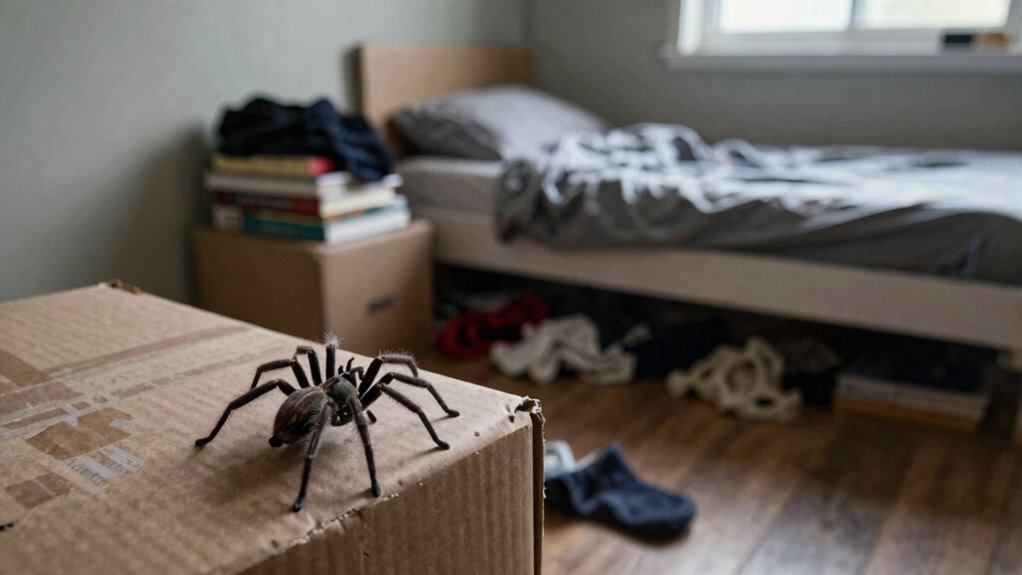
You have mastered vacuuming webs and crushing egg sacs, but if the bedroom still looks like a spider hotel, clutter is the real culprit. Spiders love quiet, dark corners, so reducing their hideouts is key for effective pest control.
Store seasonal items like holiday decorations or winter coats in airtight bins. Cardboard boxes are spider apartments, so swap them out for sealed storage.
Toss piles of old books, magazines, or boxes. These make perfect web anchors and give spiders a place to breed.
Move climbing plants away from bedroom walls. They act as highways for spiders hunting prey near your sleeping area.
Keep under-bed and closet floors clear. Spiders prefer undisturbed zones, so eliminate those hiding spots.
Shake out linens, blankets, and shoes before use. Nobody wants a surprise eight-legged roommate when getting dressed.
Clutter is prime spider real estate. Clear it now, and they will check out of your home for good.
For ongoing defense, apply a long-lasting residual barrier spray to baseboards and entry points every two to four weeks.
Apply Natural Spider Repellents in the Bedroom
Try peppermint oil first as a gentle spider repellent. Mix ten drops into a spray bottle of water and mist corners, window sills, and baseboards.
The strong scent is harmless to humans but makes spiders leave quickly. For a longer barrier, use diatomaceous earth as a natural pest control powder.
Sprinkle it thinly along floor edges where spiders might crawl. This fine chalky powder damages their exoskeletons and works for weeks.
Both products cost under ten dollars and smell better than chemical sprays. Buy the oil for a quick fix, then add the earth for ongoing protection.
It is a solid start for bedroom pest control without needing a hazmat suit. Apply the repellent first, then dust the barrier for complete coverage.
For a more lasting solution, consider placing natural repellent pouches in closets and under the bed to keep working for up to 90 days with plant-based oils.
Set Up Glue Traps to Track and Capture Them
Glue traps aren’t glamorous, but they’re the nosy neighbor of spider control because they reveal secrets. Place them flush along walls, behind furniture, and in closets to catch wandering spiders and identify high-traffic areas for targeted pest control.
Proper glue trap placement matters: position traps perpendicular to baseboards for best results. Sticky trap monitoring then shows you which spots are quiet or which need more action, saving guesswork in your home pest management routine.
For effective spider removal, put traps flat against walls every few feet, especially in corners. Check sticky traps weekly and replace them when dusty or full to maintain stickiness.
Use them in dark zones like under beds and dressers to catch nocturnal spiders and other crawling insects. They are discreet and cheap, with a pack of 30 traps costing about $8, and they release no toxic fumes.
Keep them away from pets because sticky surfaces can snag paws or whiskers, so place traps in areas inaccessible to cats and dogs. Bottom line: glue traps are low-effort sentinels that show you the enemy’s path, acting as a first step in integrated pest management.
Monitor them weekly, then adjust your attack based on what you catch to reduce spider populations near your living spaces. For persistent infestations, pair these traps with crack and crevice treatments for a more complete pest control solution.
Always position traps along baseboard lines and under furniture edges where spiders travel, as this maximizes capture rates. If you want to buy glue traps online, look for non-toxic options with strong adhesive that stay effective for weeks.
Remember that these traps work best as a tracking tool, not a standalone fix for severe spider problems. Combine them with sealing entry points and reducing moisture to keep your home less inviting to pests.
Finally, replace traps every two weeks in high activity zones to keep them performing at peak stickiness. Regular monitoring turns a simple sticky board into a powerful early warning system for your pest control strategy.
For example, some traps use a non-drying glue that maintains stickiness for up to a year indoors.
Reduce Humidity and Swap Out Your Porch Lights
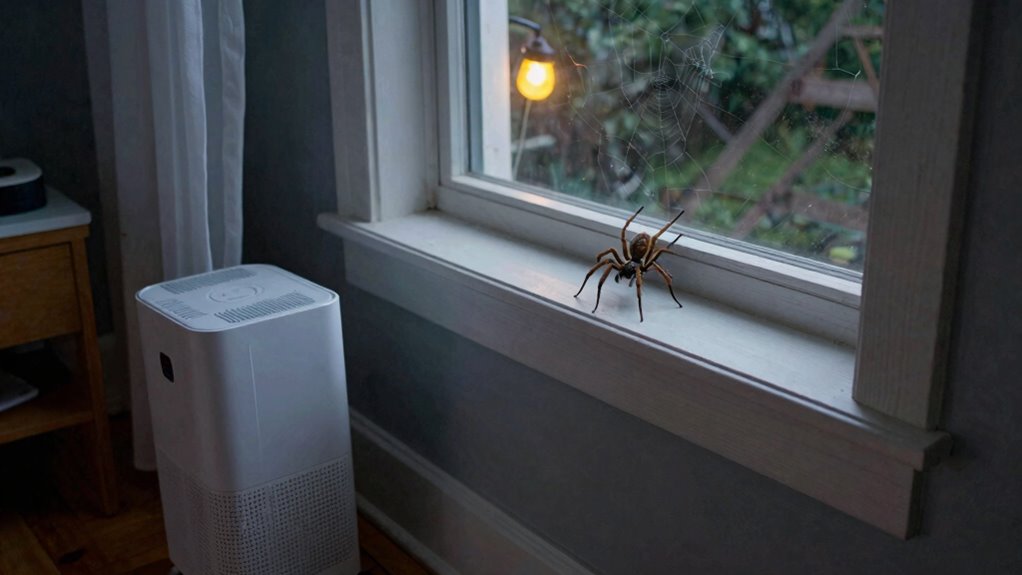
Tackle the moisture problem first, since spiders thrive on dampness like tiny vampires. Humidity control is your main weapon, and a 30-pint dehumidifier for around $150 keeps bedrooms under 50% humidity, which spiders hate. For consistent moisture control, choose a dehumidifier with auto or continuous drainage to minimize the dampness that attracts pests. Fix any leaks too, because damp corners are a five-star hotel for pests. Now swap out your porch lights, since outdoor lighting is a bug buffet lure.
Bright white bulbs attract moths, which attract spiders. Switch to yellow or sodium vapor bulbs that cost about $10 and draw fewer insects, cutting the spider snack supply.
Keep lights off when possible, and position fixtures away from doors. The bottom line is this: cut the damp and dim the glow.
Spiders lose their reason to visit, and this pest control method is simple, effective, and cheap.
Frequently Asked Questions
Can Spiders Climb up Bedposts or Hang From Ceilings Over My Bed?
Yes, spiders can climb bedposts and hang from ceilings. Their tiny leg hairs create a grip on most surfaces, including metal bed frames.
For effective pest control, remove ceiling webs above your bed each week. A handheld vacuum, costing around $30, is a smart pest control product to capture climbers.
Regular vacuuming of bed frame joints and corners also blocks spider migration. Check canopies and headboards, as spiders love the high ground near your sleep area.
To buy the best spider prevention, keep ceilings web free and bedposts smooth. This simple treatment stops their nightly commute without harsh chemicals.
Do Ultrasonic Pest Repellers Actually Work to Keep Spiders Away?
Do ultrasonic pest repellers work to keep spiders away?
The short answer is no, they are not effective for spider control.
Spiders simply don’t have ears to hear the high‑pitched sounds these devices produce.
Despite costing between $20 and $40, these gadgets emit frequencies that humans cannot hear.
But spiders remain completely unimpressed because they detect vibrations, not airborne sound.
One study tested three popular brands and found zero reduction in spider activity.
So skip the gimmick and save your money for proven spider deterrents.
For real spider pest control, try peppermint oil spray or seal cracks with caulk.
These physical exclusion methods are far more reliable than any ultrasonic repeller.
Bottom line: don’t buy the hype.
Focus on cleaning, sealing entry points, and using natural repellents for long‑term spider management.
Will Spiders Bite Me in My Sleep, and Are They Dangerous?
Spiders rarely bite you in your sleep because they are natural predators focused on catching small pests, not humans. Most spider bites are harmless and feel like a mild mosquito sting with minor swelling or itching.
The real risk of a dangerous bite stays very low, especially if you use professional pest control products to keep them away. A bite is possible if you accidentally roll onto a spider, but that’s rare and not a cause for panic.
Sleep paralysis has nothing to do with spider behavior, it is a separate medical condition. To keep your bedroom spider free, seal cracks, use sticky traps, and apply residual sprays around baseboards.
Buying a quality spider repellent or insecticide spray can give you peace of mind and long term protection. Bedtime is safer than you think, so rest easy knowing pest control solutions work.
How Do Spiders Keep Coming Back Even After I Clean and Seal Everything?
Spiders keep coming back because cleaning and sealing don’t remove their actual food supply. Tiny insects often slip through microscopic gaps around pipes or unsealed vents that your caulk simply missed.
Those bugs are the real magnet, and even a spotless room can hide a few stray crumbs or plant pests drawing spiders in for a snack. For effective spider control, you need to target the pest prevention chain, not just the visible webs.
Check your window screens monthly since they sag and loosen over time, creating new entry points for both spiders and their prey. Patch those sneaky cracks with a quality silicone sealant and cut back on bug-attracting dampness in basements and crawl spaces.
If you want long-term home pest defense, consider pairing exclusion with a residual insecticide spray around baseboards and entry frames. That targeted approach breaks the food cycle and stops recurring spider infestations before they start.
For smarter spider removal, invest in sticky traps near windows and doors to monitor activity while applying a broad-spectrum indoor pest killer. This dual strategy gives you immediate relief and a clear path to professional-grade results without needing an exterminator every month.
Finally, reduce outdoor lighting near entrances, since bright bulbs lure the flying insects spiders hunt. Once you eliminate their pantry, those eight-legged tenants will finally check out for good.
Can Houseplants in the Bedroom Attract or Hide Spiders?
Yes, houseplants can definitely act as spider hotels in your bedroom. Leafy foliage gives spiders a prime hiding spot, and the soil often harbors small insects that they hunt.
Proper houseplant maintenance and regular soil inspection are key to avoiding an indoor spider problem. Check for webs under leaves and don’t let the soil stay damp, since moisture attracts pests.
Spiders aren’t typically after the plant itself. They are after the bugs it attracts, such as fungus gnats and ants.
To keep spiders away, you need effective pest control for houseplants. Keep your plants trimmed and the soil dry, or you might as well roll out the welcome mat.
Using a targeted spider repellent spray around the pot and base can stop them from nesting. For severe infestations, consider a natural insecticide that targets the prey, not the plant.
Buying a moisture meter helps you avoid overwatering, which reduces pest activity. Combine that with regular vacuuming of nearby surfaces for a clean, spider free bedroom.


