
Getting rid of pharaoh ants isn’t like dealing with other pests—sprays will only make things worse by scattering queens into new colonies. Baits are your only real fix, using slow-acting poison that workers carry back to sterilize the hidden nest over several weeks.
This guide covers exactly how to place bait stations, keep your kitchen dry, and stick with the plan until the colony is gone.
Keep reading for the full step-by-step timeline.
At A Glance
- Use only non-repellent baits; sprays trigger colony budding and worsen infestations.
- Place bait stations along foraging trails near baseboards, sinks, and appliances.
- Apply IGR baits like S-methoprene to sterilize queens over 13 to 15 weeks.
- Match bait type to ant cravings, such as sugar or protein, for acceptance.
- Keep bait fresh and replenished; monitor stations weekly for several months.
Why Pharaoh Ants Are So Hard to Control
Pharaoh ants are tricky to handle because standard sprays fail to kill them. In fact, spraying often makes the problem worse by scattering the colony.
A single queen can lay 400 eggs, so a nest can explode into thousands of ants quickly. The real issue is queen biology and colony budding.
When disturbed, the colony deliberately splits into multiple new nests. This budding process means one queen and a few workers break off to start a fresh infestation.
Spraying only kills about 10 percent of the ants you see. The queens and hidden nests survive, so you are just paying for more ant real estate. The bottom line is that sprays act like fertilizer for these pests.
For effective control, you need professional pest management that targets the entire colony structure. Slow-acting poison ensures worker ants carry bait back to the nest, share it with the colony, and eliminate the queen.
How to Identify a Pharaoh Ant Infestation in Your Home
Identifying a pharaoh ant infestation starts with three key signs: their tiny size, their trails, and where they nest. Workers are only about 2 mm long, a pale yellow to light brown, so they look like small specks moving in lines along baseboards or countertops.
Unlike most ants, they nest in warm, hidden spots like wall voids or under floors. If you see steady trails but no obvious mound, you have found the right pest for professional pest control treatment.
These ants often appear near kitchens or bathrooms as they seek moisture and food. A pharaoh ant colony can be difficult to eliminate without targeted baits from a local exterminator.
Spotting ants in a clean home usually points to a hidden nest inside your walls. Calling a residential pest control service early prevents the infestation from spreading to multiple rooms. Applying boric acid powder into cracks and crevices works effectively as ants ingest it during grooming, killing them within days.
Nesting Site Clues
How do you know if you have pharaoh ants instead of another tiny pest? Look for nesting clues, not just the ants themselves. These pests favor warm, humid spots near water and food, like wall voids, under floors, or inside furniture.
You won’t see a mound because nests are hidden, often behind baseboards or in electrical outlets. A key tip is noticing ants appearing from multiple, scattered points, which signals colony budding where queens split off to form new nests.
That behavior makes pharaoh ant control difficult, so bait station placement becomes essential. Since you are not targeting one central nest, place bait stations along suspected trails near those warm spots. Using a plant-based spray for immediate contact is an option, but it will not resolve the colony.
Remember that spraying makes them bud more, so patience with baiting is your real ally. For effective pest management, focus on consistent baiting and monitoring to stop the colony expansion.
Visible Foraging Trails
Watch where you step. Pharaoh ants march in visible foraging trails, like tiny commuters on a sugar-fueled rush hour.
These trails, often along baseboards or countertops, are a dead giveaway of an infestation. Their ant behavior involves following pheromone trails from food to nest, and they rarely stray.
Trail width is about 2 mm (1/16 inch) wide, so it’s easy to miss. Foraging ants represent only about 10% of the colony, meaning the nest is close by.
For effective pest control, bait placement must target these trails directly. Use non‑repellent baits that workers carry back to the nest, which is a key ant treatment strategy.
Don’t spray: that triggers budding, spreading chaos. Instead, place bait stations along the trail, checking every few days.
This is calm, methodical work, like knitting but with pest control. For a lasting ant infestation solution, monitor bait acceptance and refresh stations as needed.
Remember that trail disruption matters less than consistency. Professional exterminators rely on slow-acting gel baits here, not contact killers.
You want the workers to return and recruit more ants over time. That’s how you solve the root problem, not just the visible line.
If you’re tackling a recurring issue, look for moisture sources near the trail. Pharaoh ants love warm, humid spots, so sealing gaps and reducing water access boosts bait effectiveness.
Schedule a follow‑up inspection every three to five days to gauge progress. This home pest control approach beats quick fixes and avoids colony fragmentation.
For maximum colony collapse, choose a gel bait with a fipronil-based active ingredient that kills slowly over 24 to 36 hours, allowing the poison to spread throughout the nest.
Appearance and Size
At first glance, a pharaoh ant looks like a spec of caramel-colored dust that decided to grow legs and throw a parade. Workers measure just 2 mm, barely larger than a pinhead, while queens stretch to 4 mm.
Their pale yellow to light brown bodies make them easy to confuse with tiny crumbs. But their relentless, meandering trails betray them for what they are.
| Feature | Worker | Queen |
|---|---|---|
| Length | 1.5–2 mm | 3.5–4 mm |
| Color | Pale yellow-brown | Darker, reddish-brown |
| Wings | None | None (males have them briefly) |
Their pharaoh ant origin traces to tropical Africa, yet they thrive anywhere warm. Your pharaoh ant diet includes fats, sweets, and dead insects, so they eat pretty much whatever is handy.
Spotting one or two is not proof of an infestation. But seeing hundreds in a line is your cue to call for professional extermination services.
To stop these pests for good, you need targeted ant control treatment. A rapid pharaoh ant elimination plan focuses on their hidden nests and satellite colonies. Using bait rotations with different ingredients prevents resistance and ensures thorough colony elimination.
Why Baits Are the Only Effective Treatment
Three things make baits the only real choice for pharaoh ants: their sneaky nesting habits, their ability to bud when threatened, and the fact that sprays only kill about ten percent of the colony.
Sprays are a joke because they hit the foraging ants, but the nest stays hidden and the survivors just bud off into new colonies.
Baits work because they get carried back to the nest, poisoning the whole colony from the inside out.
Baits work because they get carried back to the nest, poisoning the whole colony from the inside out.
This slow acting formula lasts weeks, so even latecomers get a dose of the treatment.
Bait stations shield the poison from kids and pets, and monitoring frequency catches hot spots before they explode.
IGR baits sterilize queens over months, ending the line entirely no spray can do that.
Bottom line skip the sprays.
Baits are the only way to hit the hidden nest for complete pharaoh ant control.
For best results, choose child-resistant stations that use durable plastic or metal cases to ensure safe placement in homes with kids and pets.
Which Baits and IGRs Work Best for Pharaoh Ants
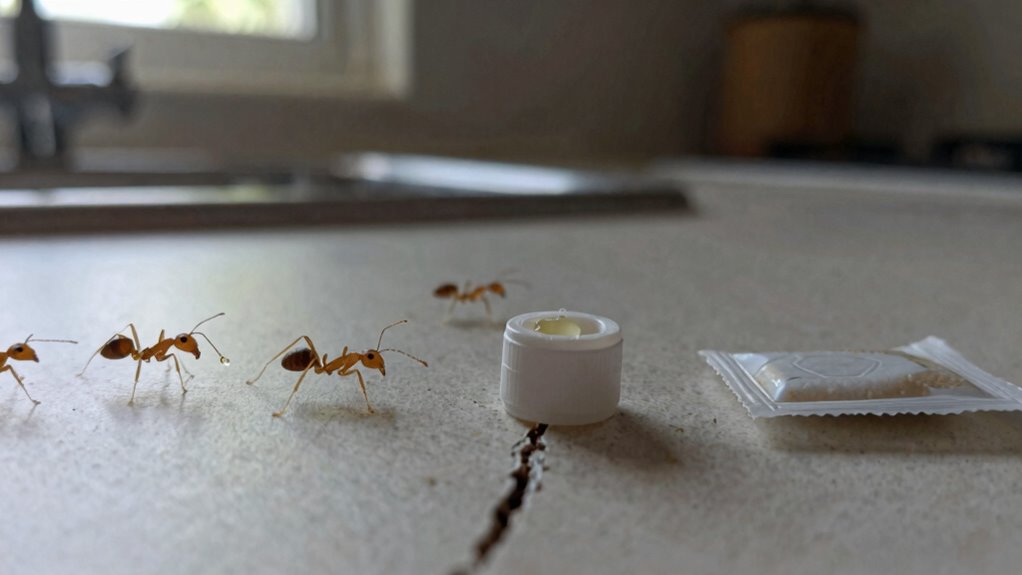
Regarding bait selection, the two main heavy hitters are insect growth regulators like S methoprene and non repellent toxic baits such as boric acid or hydramethylon.
IGR baits, such as those with 0.5 percent S methoprene, work by slowly sterilizing the queen and stopping new workers from being born.
This process takes about 13 to 15 weeks to eliminate the whole colony.
For best results, these baits need to be placed right along foraging trails and near food or water sources.
Keep the bait fresh and replenish it regularly for effective pharaoh ant control.
Pharaoh ants reject mismatched formulas, so identifying the species and matching the bait to their sugar or protein cravings is critical before choosing any product.
Bait Types and IGRs
Bait choice matters a lot when dealing with pharaoh ants. It may matter more than any other factor in your pest control strategy.
IGR baits like S-methoprene are the gold standard for ant control. They sterilize queens and stop reproduction without causing that dangerous budding response.
Boric acid bait at 1 percent concentration in sugar water is a cheap option. However, it kills slower and needs precise sugar ratios to be effective.
The secret to colony elimination is bait station placement. Put stations right along foraging trails, near water sources and warmth, not just where you see ants.
This targets hidden nest cores for complete ant extermination. Expect a colony elimination timeline of 13 to 15 weeks, not days.
Patience is mandatory for successful pest management. IGR baits prevent queen reproduction, while hydramethylnon offers fast kill but must be non-repellent.
Bottom line for professional ant control: pick an IGR bait, place stations properly, and wait it out.
For effective results, choose baits containing spinosad for fast colony elimination.
Best Application Strategies
| Bait Type | Best For |
|---|---|
| IGR (S-methoprene) | Long-term colony elimination (13-15 weeks) |
| Boric acid (1%) | Quick knockdown, good for small infestations |
| Hydramethylon | Works fast but requires careful placement |
For long term monitoring, keep blank stations out after treatment. Replenish baits as needed because ants stop feeding when they are full. Avoid sprays since they cause budding and make infestations worse. Stick with non-repellent ant baits for the best results. For serious pest control, choose IGR baits for complete colony elimination. Boric acid offers a fast knockdown for small ant problems. Hydramethylon works quickly but needs precise placement to be effective. Use these ant control strategies to get rid of ants for good. Remember to buy quality ant bait products for your home. For effective pharaoh ant control, use compact, child-resistant stations to ensure safety while placing baits along trails and near harborages.
How Long Does Baiting Take to Eliminate the Colony?
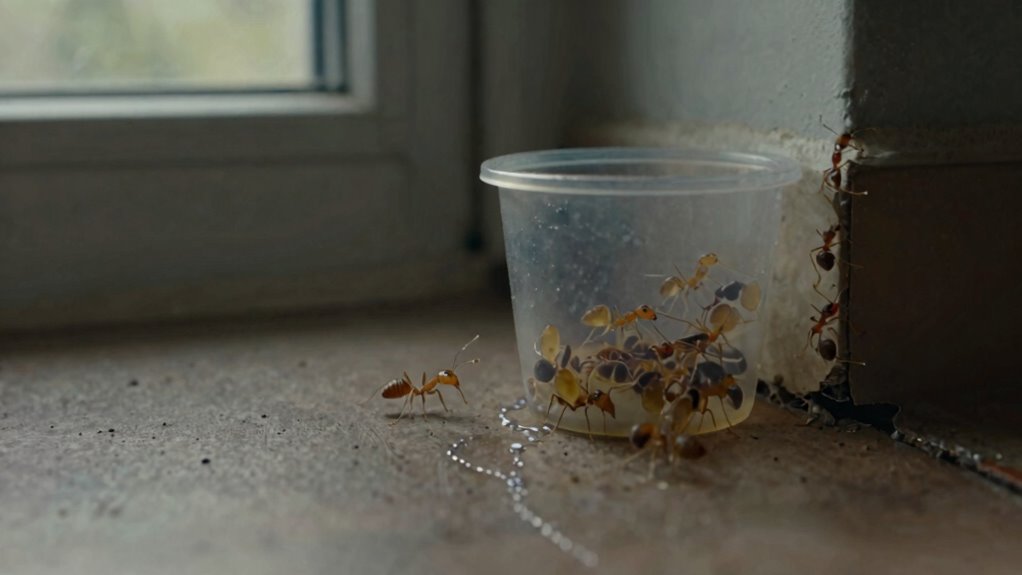
Baiting is not a quick fix, though it is the only fix that actually works. The treatment timeline typically stretches 13 to 15 weeks for full colony elimination, depending on colony size and bait uptake.
Field trials show an 80 to 90 percent ant activity drop after 4 to 5 weeks. Queens must be sterilized over multiple generations, so patience is non-negotiable for effective pest control.
IGR baits like S-methoprene stop queen reproduction. Workers must feed it back to the nest for weeks to ensure the colony is eliminated.
Bait persistence matters, so refill stations immediately. If you don’t, the colony rebounds faster than you expect.
Foraging ants are only 10 percent of the colony. Baiting targets the hidden 90 percent slowly but with certainty.
Stick with it, and the ant buffet eventually closes for good. This ant bait approach delivers a permanent solution for your home. Indoor borax bait can last weeks if the bait stays appealing to ants.
Step-by-Step Guide to Placing Baits
Forget the spray can. Pharaoh ants are a different beast, and related species like Argentine ants may respond to sprays, but here, sprays trigger budding.
Begin with bait station placement along foraging trails, near baseboards, under sinks, and by appliances. These stations must be non-repellent, so think small plastic containers with gel bait inside, costing about $10 for a six-pack.
Place one station every ten feet in infested rooms for effective ant control. Check them weekly, and refill when empty, not when full.
Don’t move stations once placed, because ants follow paths, not your schedule. A buddy once put a station in a closet, then moved it, and the ants got lost and threw a picnic in his sock drawer.
Don’t move bait stations. Ants follow paths, not your schedule—or your sock drawer.
Keep stations stable, keep bait fresh, and let the colony self-destruct for long term pest management. It’s boring, but it works, and that’s the key to eliminating the whole nest.
For best results, pair this with a professional pest control inspection if you need faster colony elimination. Bait placement is the core of any pharaoh ant treatment plan, so trust the process and stay patient.
Many gel baits provide up to three months of protection for a single room or high-traffic area with a fast-acting formula.
Why Sprays Make Infestations Worse: The Budding Problem
Spraying a pharaoh ant infestation feels like the logical first step, but it actually makes the problem much worse. Their budding behavior triggers colony fragmentation when disturbed, turning one nest into many.
A queen and workers break off to start new colonies hidden inside your walls and floors. Sprays only kill about 10% of the ants, usually the foragers, leaving queens and brood safe.
Spray induced dispersal forces ants to relocate quickly, splitting into multiple new colonies through nest relocation triggers. Pyrethroid sprays are especially dangerous because they directly stimulate budding, turning one infestation into dozens.
For effective pharaoh ant control, avoid sprays and use baits with slow acting insecticides instead. This targets the hidden queens and stops the budding cycle naturally. Instead, natural plant-based repellents offer a safer alternative that creates a scent barrier to deter pests without triggering colony fragmentation.
Where to Check for Hidden Nests in Walls and Furniture
Instead, stick to indoor baiting methods like slow acting gel baits placed along foraging trails. A single bait station costs about $5 and takes weeks to work, but it beats chasing phantom nests forever. For effective pest control, focus on the source rather than surface sprays. Gel baits can be applied in small dots near ant trails to eliminate entire colonies.
Preventing Future Pharaoh Ant Infestations
Preventing future pharaoh ant infestations is less about heroic last stands with a can of spray and more about consistent, boring habits.
Preventing future pharaoh ant infestations is less about heroic last stands and more about consistent, boring habits.
That approach is a relief because it focuses on simple, pest-proofing steps you can follow.
Focus on sealing cracks in baseboards and around pipes with inexpensive caulk, costing $3 to $5 per tube.
Keep kitchens dry and crumb-free by wiping counters nightly and storing food in airtight containers for effective ant control.
Landlord responsibilities include fixing leaky faucets and sealing structural gaps.
They must coordinate with tenants in multi‑unit buildings to stop ant colonies from spreading.
Community wide treatment is non‑negotiable, since one infested apartment can re‑infest an entire complex.
Coordinate with neighbors using IGR bait stations that cost $15 to $30 each, placed every 10 to 15 feet for targeted colony elimination.
Monitor with blank bait stations priced at $2 to $5 each every month.
If ants return, re‑bait immediately to maintain ongoing prevention.
Gel baits with active ingredients like fipronil can also be placed in cracks and hideouts to target pharaoh ants while remaining safe for pets and the environment.
The bottom line is that consistent habits beat any chemical heroics when it comes to long-term pharaoh ant management.
Frequently Asked Questions
What Should I Do if I See Ants After Treatment?
Seeing ants after treatment is not a failure, but a signal to re evaluate bait placement and inspect new trails.
Baits take 13–15 weeks to eliminate colonies, so ants may still forage from surviving nest pockets or new daughter colonies.
Make certain bait stations remain full and undisturbed near trails and dampness sources.
Avoid sprays because they cause budding, making things worse.
Stick with your baiting plan for long term ant control.
Consistency, not panic, wins this slow, boring battle.
For the best results, use a professional grade ant bait gel near active trails and moisture zones.
If you want to buy a reliable product, look for a bait that targets the queen and stops colony growth.
Check bait stations weekly and refill them promptly.
Patience is your best tool for complete ant elimination.
Can Pharaoh Ants Survive Winter Outdoors?
Pharaoh ants can survive winter outdoors, but only in warm, sheltered spots like compost piles or under heated slabs. Outdoor nesting is rare in cold climates because they need 80 to 86°F humidity to thrive.
Natural predators like spiders and beetles help thin out outdoor colonies, but the ants bud before freezing temperatures hit. They split into cozy micro nests, which keeps the colony alive through winter.
So yes, these pests are tough, but they are not immortal. Baiting indoors remains the real kill shot for complete control.
Bottom line: do not rely on winter weather to handle your pest control for you. A targeted pest control treatment plan is your best defense against persistent pharaoh ant infestations.
Do Pharaoh Ants Bite People or Pets?
Yes, pharaoh ants do bite people and pets, though it’s rare and feels like a mild pinch. Their bites aren’t venomous, but they can cause minor irritation on the skin.
For bite treatment, simple soap and water usually suffices, but watch for allergy concerns. Some individuals get red, itchy bumps that may need a topical antihistamine.
These ants are more interested in stealing your snack than your blood, so bites are accidental. Still, keep kids and pets away from infested areas to avoid unnecessary nibbles.
If you spot a trail in your kitchen, that’s a sign you need professional pest control. Pharaoh ants nest in hard to reach spots like wall voids and behind baseboards.
A DIY spray often fails because these ants split into new colonies when disturbed. That’s why you should call a licensed exterminator for targeted baiting and ant control solutions.
For proactive homeowners, investing in gel baits and insect growth regulators can stop an infestation before it spreads. Compare top rated pest control products on Amazon or buy from trusted suppliers near you.
Look for proven ant baits that contain hydramethylnon or fipronil. These active ingredients deliver delayed kill, allowing worker ants to carry the poison back to the colony.
How Do I Prevent Ants From Entering Through Electrical Outlets?
To block pharaoh ants from electrical outlets, seal outlet gaps with non conductive silicone caulk. This keeps ants out without risking a shock, as silicone doesn’t conduct electricity.
Apply caulk around every outlet plate, crack, and baseboard crevice near outlets. Recheck monthly because ants are persistent and can find new entry points.
This method stops tiny invaders for under $5 a tube, making it a budget friendly pest control solution. Paired with baiting, it’s highly effective for ant prevention.
Caulk every outlet gap without exception to keep ants out and keep your home safe. For best results, combine with ant bait stations to target the colony.
Are Pharaoh Ants Attracted to Electronics or Appliances?
Yes, pharaoh ants are strongly drawn to electronics and appliances in homes and businesses. Their nesting habits target warm, humid harborage like computer towers, microwaves, and fridge compressors.
These pests seek heat and dampness, not the wires themselves, which can cause short circuits or contamination. A single queen, only 4 mm long, can start a thriving colony inside a printer or router within weeks.
To protect your expensive equipment, inspect devices for ant trails and look for signs of nesting. For effective pest control, place bait stations near appliances, not on them, to avoid electrical hazards.
Using a quality gel bait or granular ant killer near those warm spots will attract workers back to the colony. This targeted approach ensures you eliminate the nest without risking damage to sensitive electronics.
Always monitor high value items like servers, copiers, and kitchen appliances for re infestation. Consistent monitoring combined with professional grade ant baits gives you long term control over these invasive pests.


