
Cleaning a pantry after pantry moths doesn’t have to be a nightmare, and it’s definitely not a sign you’re a bad housekeeper. Those little pests usually hitch a ride home in birdseed or a forgotten bag of flour.
I’ll walk you through the simple, no-fuss process to kick them out for good—vacuuming every crack, scrubbing shelves, and freezing the stuff you want to save. You won’t need fancy supplies, just a HEPA shop vac, hot soapy water, and a tube of silicone caulk.
Stick around for the full step-by-step guide, including how to trap any stragglers that might still be lurking. Ready to reclaim your pantry? Let’s get straight to it.
At A Glance
- Empty pantry and freeze all suspect foods for seven days to kill hidden eggs.
- Discard any item with webbing, larvae, holes, or clumped grains immediately.
- Vacuum every crevice, corner, hinge, and gap to remove eggs and cocoons.
- Scrub shelves with hot, soapy water, then rinse with vinegar solution.
- Seal cracks with caulk and set pheromone traps for ongoing monitoring.
Why Pantry Moths Keep Coming Back (and What You’re Missing)

You have scrubbed every shelf and tossed suspect flour, yet a moth still flutters by the spice rack. That is not bad luck, it is a missed detail in your pantry pest control routine.
The larvae likely pupated in a crack you overlooked or a forgotten bag of birdseed became a nursery. Those moths did not wander in from outside, they have been hiding in plain sight surviving on crumbs.
Natural deterrents like bay leaves will not fix an active infestation. They are just insurance for future prevention.
Natural deterrents like bay leaves won’t fix an active infestation—they’re only insurance for future prevention.
Winter dormancy is a trap. Moths slow down but do not die, waiting to reemerge when the kitchen warms again.
The fix is to freeze all suspect grains for a full week. This is a cheap solution costing about $0.50 per freezer bag.
Then seal everything in thick plastic containers. Do not rely on sprays or traps alone, they catch adults but not the eggs. Pheromone-based traps attract and capture male moths from up to 25 feet away to break the breeding cycle.
The bottom line is you missed a pupa, not the plague. Focus on thorough inspection and sealing to stop the cycle for good.
How to Inspect Pantry Moths in Every Food Item
A flashlight and a magnifying glass are all you need to start this task. Carefully open every bag, box, and jar, paying close attention to folds and creases where pests hide.
Look for webbing, clumped grains, or tiny worm-like creatures, which is a clear sign of pantry moth larvae identification. Even unopened boxes deserve a check, since larvae can chew through thin plastic packaging.
If you spot obvious pests, skip any thoughts of effective fumigation methods and just bag the item and toss it out. For suspect items without visible signs, seal them in thick Ziploc bags and freeze for a full week.
That cold treatment kills hidden eggs or larvae that you cannot see. It is tedious work, but skipping even one box means you might start the whole inspection over again.
The bottom line is to examine everything, freeze anything questionable, and never trust sealed packages alone. For a complete pantry pest control solution, combine this manual check with species-specific pheromones that attract only pantry moths, or professional pest control services if an infestation persists.
Toss These Items Immediately (Even Sealed Packages)
After scanning every box and bag, it is time to face a hard truth. Toss any item with webbing, larvae, or holes in its packaging, even sealed ones.
Pantry moth larvae chew through plastic and thin cardboard. That “unopened” bag of flour is likely compromised.
> Pantry moth larvae chew through plastic and thin cardboard. That “unopened” bag of flour is likely compromised.
Grains and cereals must go if you see larvae or webbing near bag seams. Dried fruit and nuts attract egg-laying adults, so remove any with visible cocoons or clumps.
Spices and powders often hide tiny larvae in crevices. Toss any unsealed or suspicious packages immediately.
Pet food and birdseed can be infested from the store. Discard them if you find larvae or silken threads.
Boxed mixes and pasta have thin cardboard that offers no barrier. Throw away any with webbing or pinholes.
For effective cocoon removal, vacuum all crevices right after tossing. Then place pheromone traps to catch lingering males.
Do not second-guess your choices. If it looks suspect, it goes.
Freeze Suspect Foods for 7 Days Before Cleaning
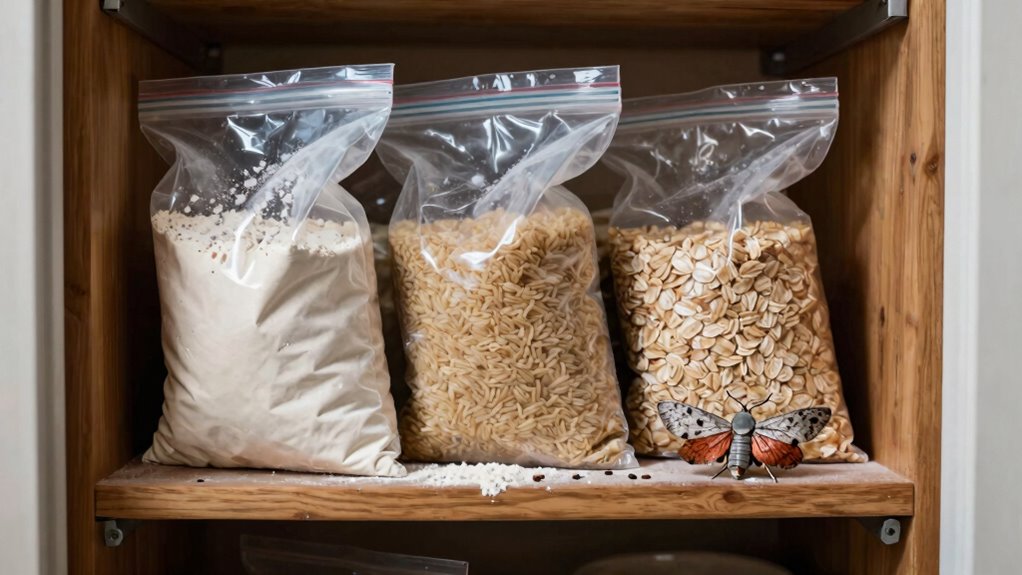
Freezing suspect foods for seven days is the gold standard for killing any hidden moth eggs or larvae. It’s a simple, chemical‑free trick that works because the cold snaps their life cycle cold.
This pest control method costs you nothing but a little patience and freezer space. So before you start scrubbing shelves, bag up those borderline items in sealed Ziploc bags.
Let them chill for a full week to stop pantry moth infestations at the source. That way, you’re not just cleaning, you’re actually preventing the next generation from crashing your pantry party.
Pro tip always double‑bag flour and grains to seal in any hidden eggs. Storing these dry goods in airtight containers with locking lids and silicone gaskets further deters pantry pests from returning. This targeted treatment ensures your pantry stays safe without harsh chemicals.
Freeze Duration
Patience is a virtue, especially when dealing with pantry moths. The recommended freeze duration is a full seven days, not less. This freezing timeline guarantees eggs and larvae are thoroughly killed, even those hiding deep inside grain kernels. Shorter freezes risk survivors, undoing all your work. So when you find suspect flour, rice, or cereal, bag it tightly and commit to a week in the freezer. Mark your calendar, forgetfulness breaks the cycle. After seven days, you can safely clean the pantry without fear of live eggs hatching later. This step is non-negotiable, skipping it is like locking the door after the thief left. For best results, keep frozen items separate from fresh food. Your patience rewards you with a moth-free kitchen, no do-overs. This approach remains effective even if you later use a weevil killer spray that only targets adult insects.
Preventive Freezing Method
Why gamble with a pantry full of vulnerable flour, rice, or cereal when a simple, low-tech solution exists? The preventive freezing method uses cold storage to stop a pantry pest infestation before it starts.
Any suspect, unopened bag of grains or beans gets sealed in a Ziploc and frozen for seven full days. This guarantees complete egg elimination, killing both larvae and hidden eggs that might hatch later, so you can keep your food safe.
Best done before a cleaning session, this step removes the guesswork and targets common stored product pests. Those bags of oatmeal or pasta that look fine but sat next to infested items? Freeze them to kill off any grain beetles or Indian meal moths.
After a week, transfer everything to airtight containers to prevent future bugs from getting in. It’s cheap, easy, and far less dramatic than uncovering a pantry full of webbing later, making it ideal for proactive pest control. For lasting protection, choose containers with locking hinges and silicone gaskets that block pantry moths and weevils.
Bottom line: freeze first, clean second, and avoid re-infestation entirely. This method works well for kitchen pest prevention, and it’s a smart buy for anyone wanting long-term pantry protection without sprays or chemicals.
Pantry Moth Cleaning: Vacuum, Scrub, and Seal Every Crack
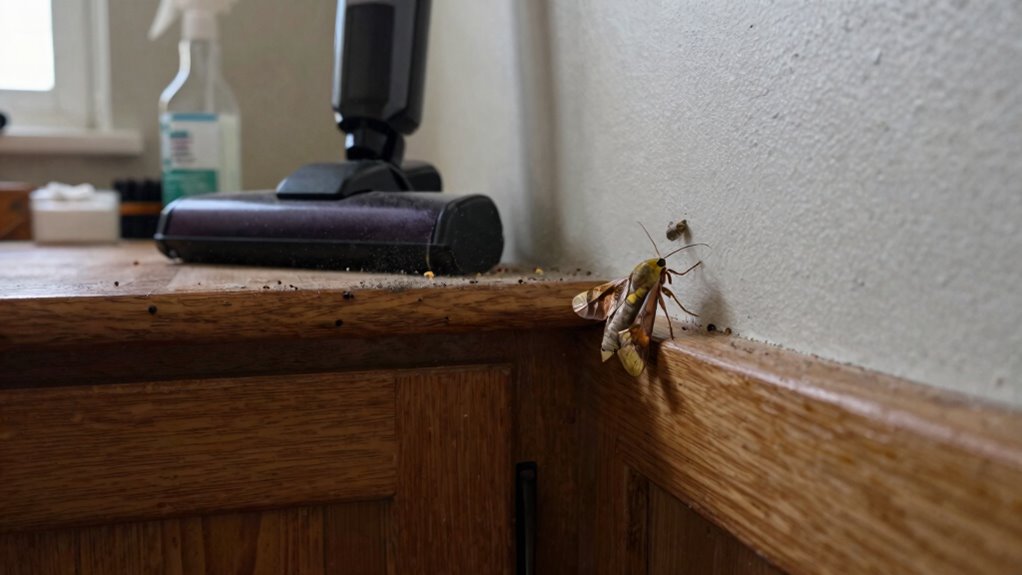
Once the pantry is empty and suspect foods are frozen, the real work begins.
A thorough vacuuming of every crevice and corner, followed by a hot, soapy scrub of all shelves, removes eggs and larvae that could restart the infestation.
Pheromone-based traps provide effective ongoing monitoring after cleaning. Finally, sealing every wall crack with caulk or silicone denies moths their favorite hiding spots and entry points.
This pest control step is essential for long term prevention and helps you keep your pantry moth free.
Vacuum Every Crevice
A thorough vacuuming is the most effective pest control step after removing infested food. Pantry moth larvae are escape artists that crawl along baseboards and under shelf edges to pupate.
Those cracks are prime real estate for eggs, so use a crevice tool to suck out every crumb, corner, and hinge. Don’t forget gaps where shelving meets the wall because moth winter dormancy does not kill them, it just hides them.
Vacuum slowly and methodically to capture hidden larvae and eggs. Empty the canister or bag outside immediately, otherwise you are just giving them a ride to new spots. This task is tedious but skipping it means you are leaving a welcome mat for round two. A standard shop vac under fifty dollars with a HEPA filter works best for deep pantry moth treatment. For ongoing defense, place non-toxic adhesive traps along baseboards and under shelves to intercept wandering pests before they establish a foothold.
Scrub Shelves Thoroughly
Scrubbing shelves thoroughly is the key step in any effective pantry pest control treatment. It removes sticky eggs and hidden larvae that survive suction, breaking the moth life cycle.
Wipe every corner with hot, soapy water to destroy eggs before they hatch. Scrubbing crevices with a toothbrush stops larvae hiding in the tiniest gaps.
Rinse with a vinegar solution; the smell fades but the eggs do not. This cheap pantry cleaning method works reliably.
Apply natural deterrents like bay leaves to repel moths without harsh chemicals. Place monitoring traps after cleaning to catch males and verify your pest elimination success, and consider using pheromone-based traps to interrupt the reproductive cycle effectively.
Let shelves dry completely before restocking your pantry. The scrub is messy, but it ends the moth party for good.
Seal All Wall Cracks
| Caulk Type | Best For |
|---|---|
| Silicone caulk | Bathroom-grade, flexible, won’t shrink |
| Acrylic latex caulk | Easy cleanup, paintable, good for dry areas |
| Expanding foam | Large voids behind cabinets |
| Putty | Small nail holes or minor cracks |
Choosing the right caulk keeps pantry pests out for good. Silicone caulk costs $5 to $8 per tube and handles dampness well.
Acrylic latex caulk runs $3 to $6 and works for most dry pantry cracks. Apply a thin bead and smooth it with a wet finger.
Let the caulk dry for 24 hours before restocking shelves. A $10 tube is far cheaper than a $50 moth trap.
Seal now and sleep better knowing your pest proofing is complete. For larger gaps behind cabinets, use expanding foam to block rodent entry points.
Putty works for small nail holes and minor cracks that pests might sneak through. Scan all walls and baseboards with a flashlight to find hidden gaps.
Every crack you seal reduces the chance of an ant or cockroach invasion. You can quickly stop pantry moths by eliminating their entry routes.
Tackle this simple home maintenance task over the weekend. Your kitchen will stay cleaner and your pantry safer from pest damage.
For windows and doors, a brush seal with nylon bristles also effectively blocks pests by filling uneven gaps.
Pantry Moth-Proof Food Storage Using Glass Jars
Several types of airtight glass jars can end the pantry moth cycle for good. The key is proper glass jar sealing, as these containers deny larvae any entry point while flimsy plastic bags get chewed through in hours.
Airtight container benefits include total exclusion of tiny eggs and pupae, too. Consider these jar features that make you feel truly safe.
Thick glass walls mean nothing chews through them. Rubber gaskets form an impenetrable seal with no gaps.
Wide mouths make it easy to pour and inspect, so no hidden surprises remain. Latched or clamp lids let you visually confirm they are closed with no guessing.
Nesting design saves shelf space and discourages clutter. One 32-ounce Kilner jar runs about five dollars.
A set of four Weck jars costs roughly twenty dollars. For best value, choose clear, wide-mouth mason jars with one-piece lids that test food safe and hold tight.
Your pantry becomes a fortress, not a buffet for Indian meal moths or flour beetles. For similar protection on countertops, airtight lids with locking buckles prevent fruit flies from detecting odors and entering produce containers.
Set Pheromone Traps and Use Bay Leaves as Deterrents
Glass jars seal the deal on food storage, but they do nothing about the moths that might already be fluttering around your kitchen. Pheromone traps and bay leaves work as a two-pronged deterrent for pantry pest control.
Pheromone traps lure males with a synthetic scent to interrupt breeding. Check moth trap longevity and replace them every three months. Most traps specifically target clothes moths or casemaking clothes moths, so confirm compatibility with your pantry pest.
Bay leaves are a natural repellent with high bay leaf safety, non-toxic around food. Place them in shelf corners, near door jams, or inside glass jars.
Timing matters for best use: traps catch adults, and you can buy six for $12. Bay leaves deter new larvae from developing.
Pheromone traps snag males after cleaning to stop the breeding cycle. Bay leaves emit a scent moths hate, so tuck a couple in each jar.
It’s not perfect, but it’s cheap and clever. You will feel like a moth detective, but your pantry will stay protected from infestations.
Inspect New Groceries Before They Enter Your Pantry
Before a single box of cereal enters your home, the fight against pantry moths begins at the grocery store bag. Those careful grocery box checks are non-negotiable for effective pest control.
Bulk bin risks are real because loose grains and nuts can hide eggs you cannot see. Examine boxes for tiny holes or webbing threading through seams, as moth larvae chew right through cardboard.
Squeeze bags of flour or rice. Hard clumps mean eggs have glued grains together.
Shake dry pet food bags and listen for rustling that signals adult moths inside. Avoid buying from dusty bins with spillage, as those are prime spots for infestations.
Bring a magnifying glass if you must, since a crushed egg looks like a speck of pepper. A single infested package can undo weeks of cleaning, so patience at the store saves panic later. For added protection, consider using an OMRI-listed product to create a natural barrier around stored goods.
Frequently Asked Questions
Can I Freeze Flour for Less Than a Week?
Freezing flour for less than a week is risky, and it’s not a gamble I’d recommend for anyone serious about pest control.
The standard protocol is a full seven days to ensure all eggs and larvae are dead.
Shortening that window might leave survivors, which could quickly re-infest your pantry and undo all your hard work.
If you want reliable moth prevention and long-term flour storage protection, stick to the week-long freeze.
It’s a small patience investment to keep your baking supplies safe.
Skipping days? You’re basically rolling the dice with pantry moths, and those pests are notoriously hard to eliminate once they spread.
For the best results, treat freezing as a non-negotiable step in your food storage hygiene routine.
Think of it as a proactive defense measure, not just a quick fix.
If you’re in a hurry, freeze the flour for at least 48 hours, then thaw and refreeze for another 48 hours, but even this shortcut isn’t as foolproof as the full seven days.
Many pest control experts, including those who sell pantry moth traps and repellent sprays, agree that a single continuous freeze is your safest bet.
Ultimately, you want to buy flour that’s already clean, then seal it in airtight containers after freezing to block any new invaders.
That combination of cold treatment and proper sealing is what separates smart shoppers from frustrated homeowners.
So, before you ask “can you freeze flour for 5 days,” ask yourself if you’re willing to risk an infestation over two days of waiting.
The answer is usually no, and the extra time costs you nothing but a little shelf space.
Do Bay Leaves Actually Repel Pantry Moths?
Bay leaves are a folk remedy, not a proven repellent. Scientific evidence for their effectiveness against pantry moths is thin. They might add a nice smell to your pantry, but don’t expect them to stop a determined infestation.
For real moth control, skip the guesswork and use airtight containers and pheromone traps. This DIY pest management approach is cheaper and more reliable than hoping herbs work.
The best pantry pest prevention starts with sealing all dry goods like flour, cereal, and pasta. If you already see webbing or tiny brown moths, buy a quality pheromone trap kit to catch the adults and break the life cycle.
Bottom line: bay leaves won’t hurt, but they won’t save your flour either. For a long term solution, invest in storage containers and targeted pest control products that actually kill.
Can Pantry Moths Live in Sealed Glass Jars?
Can pantry moths live in sealed glass jars? Yes and no. A truly airtight seal, like Mason jars with intact rubber gaskets, stops adults and larvae cold.
But a loose lid or cracked rim? That’s an open door. The key factor is container seal integrity, not the material itself.
Glass is great, but it won’t fix a faulty closure. Check the infestation timeline: eggs or larvae already inside a jar can survive until they starve, but they can’t chew through.
Bottom line: inspect seals monthly like a paranoid squirrel. For effective pantry pest control, look for airtight storage solutions and routine moth traps to catch any invaders early.
Should I Throw Away Unopened Spices?
Unopened spices don’t automatically get a free pass. You should toss them if they fail a smell test or a visual inspection for webbing or tiny eggs.
Moth larvae can leave a musty, stale odor that’s a clear red flag. Look closely for any signs of pantry pests like webbing or clumped grains.
Spices are low risk but not immune to infestations. A $4 jar isn’t worth the headache of a broader pest problem.
To protect your pantry, freeze new spices for a week before storing them. This cheap, easy precaution kills any hidden eggs or larvae.
If you need pest control solutions for your kitchen, consider airtight containers or pheromone traps. The bottom line is simple: if it looks or smells off, bin it.
Your pantry’s peace is worth more than that cinnamon. Trust your senses and buy smart to avoid future pest issues.
Will Pheromone Traps Attract Moths From Outside?
Pheromone traps are unlikely to attract moths from outside. These traps specifically target male Indian meal moths already inside your home.
They do not lure in moths on a seasonal migration from the yard. Trap placement matters, so stick to pantry shelves near infested food.
Outside moths seek different food sources and are not drawn to these indoor lures. One user reported zero new moths after using a trap for a full month.
For around $10 for a two pack of Dr. Killigan’s traps, you capture surviving moths. They will not summon bugs from your garden or lawn.
This makes them a smart, cost effective choice for indoor pest control. Trust the product to clean up existing infestations, not create new ones.


