
Gel bait vs. roach traps—your choice depends on whether you want speed or proof. Gel cuts costs by up to 75% and slashes roach activity by 76 to 91% in three months, while traps run $4–$6 per apartment and take longer to hit zero counts.
Gel hides in tiny beads for discreet eradication, but traps give undeniable evidence of an infestation. Stick one or two traps in for monitoring, and you get the best of both worlds.
Below, you’ll find a full breakdown of costs, timelines, and tips to pick the right tool. Let’s get into the numbers.
At A Glance
- Gel bait costs up to 75% less than traps, saving $3–$5 per apartment.
- Both methods reduce roach populations by 70–91% within three months.
- Gel bait reaches zero roaches faster (43–73% of homes) than traps alone.
- Traps provide visual proof and long-term monitoring; gel baits are discreet and less visible.
- Traps reveal hidden infestations; bait alone may miss nests requiring targeted placement.
Gel Bait vs. Roach Traps: Which Method Kills Roaches Faster?
When comparing speed, both gel bait and roach traps can cut a German cockroach population down to size within a few months. The real question is whether one actually outpaces the other in the day to day grind of an infestation.
Gel bait wins here, and not by a hair. Its placement strategies are simpler, as you just dab tiny beads near harborage spots with no trap jenga required.
Traps need precise positioning around stoves and fridges to catch the most, which is a fussy chore. Plus, bait’s long term effects hit harder through colony spread via cannibalism, killing roaches that never touch a trap.
Traps only catch the clumsy ones, while both methods hit about 70 to 91 percent reduction in three months. However, bait reaches zero roaches faster in the everyday battle for pest control results.
Bottom line, if you want speed without the headache during cockroach management, bait leads the crawl for effective roach elimination. Some gel baits like those containing Fipronil or indoxacarb work within hours and can last up to a year after drying out.
Gel Bait Alone: 76–91% Reduction in Three Months
Gel bait alone delivers a strong 76 to 91 percent reduction in cockroach activity within just three months, making it a fast-acting first step for any infestation.
Gel bait alone cuts cockroach activity by 76 to 91 percent in just three months.
The data also shows that zero trap counts reached 43 to 73 percent, which means many homes saw complete elimination during that window.
Material costs stay low at $1.04 to $2.83 per unit, and you only need 5 to 10 grams of bait per application.
Residents reported no sightings in 63 percent of cases across both studies, so the results are consistent and dependable.
For pest control professionals and DIY homeowners alike, this is an affordable way to knock down a roach problem before rotating to other treatments.
Pair it with crack and crevice inspections, sanitation improvements, and monitoring traps to sustain the gains over time.
If you are looking for an economical cockroach elimination method that works fast, gel bait is your best first move.
You save on material, save on labor, and get a proven reduction that builds confidence for follow-up service visits.
This approach relies on a non-repellent action that allows roaches to feed and then transfer the toxin to others in the colony, boosting the overall kill rate.
Roach Traps Alone: 70–91% Reduction With Higher Costs
Roach traps alone can cut cockroach populations by 70 to 91 percent, matching gel bait in one study. But the cost is higher, with glue traps priced at $4.07 to $6.22 per apartment, roughly 2 to 4 times more than bait.
You also need to replace damaged or dirty traps, which adds to the expense. Residents sometimes worry traps look like clutter, but they still perform well.
In one study, 48 percent of apartments reached zero trap counts, and in another study, 73 percent did. Placing traps near kitchen sink cabinets and stoves catches the most roaches.
Non-toxic glue traps offer a chemical-free alternative that remains safe around kids and pets, with some lasting up to six months before needing replacement.
The bottom line is traps work fine, but they hit your wallet harder. If you are on a tight budget, think twice before choosing this method.
Material Costs: Gel Bait Cuts Expenses by up to 75
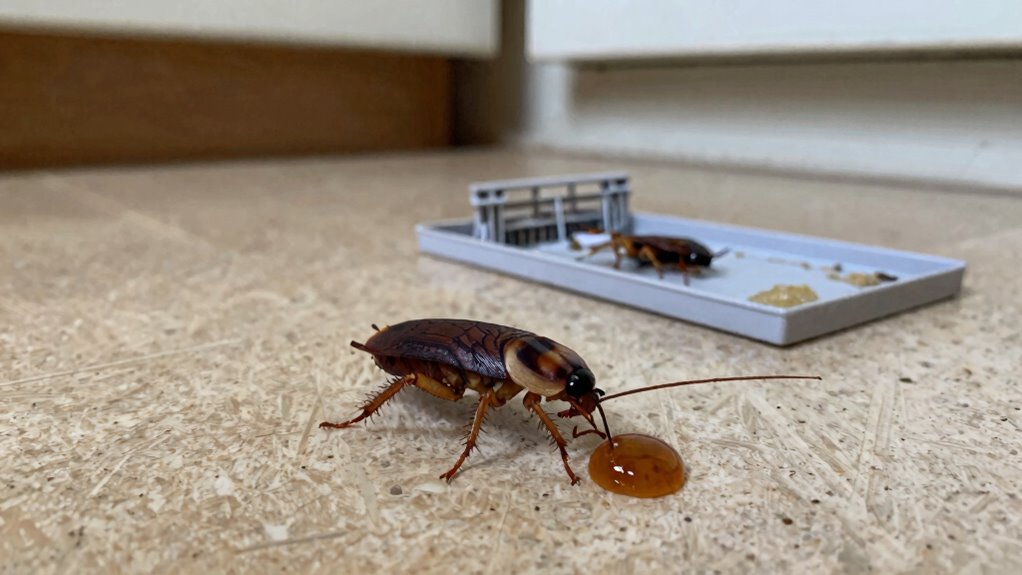
Gel bait is the cheaper option by a wide margin, costing as little as $1.04 per apartment in one study. That is roughly 75 percent less than trapping, a material cost comparison that is hard to ignore.
Trapping runs $4.07 to $6.22 per apartment, whereas baiting stays under three bucks. This budget-friendly choice also aligns with resident perception.
In apartments with leftover cockroaches, 63% of residents said they didn’t see any bugs. No one reported roaches where trap catches hit zero.
So even when bait alone doesn’t wipe them out completely, tenants aren’t freaking out. A small price cut plus a calm reaction is a practical win.
The bottom line is that bait slashes material costs and resident feedback stays positive. For pest control buyers on tight budgets, gel bait is an easy call.
For targeted control, gel baits with syringe applicators provide precise placement in cracks and tight spots.
Where Roach Traps Work Best: Kitchen, Stove, and Refrigerator
Sticky traps work like cockroach polygraphs by showing you exactly where the activity is.
Sticky traps act like cockroach polygraphs, revealing exactly where activity is concentrated.
In kitchens, traps placed by the stove caught 26 to 34 percent of roaches, while traps behind or beside the refrigerator grabbed a much higher 36 to 41 percent.
The toilet trap only caught 2 to 16 percent, so it is best to skip that spot.
For serious pest control monitoring, place sticky traps near heat and moisture sources like refrigerator compressors, which cockroaches love.
During a typical infestation timeline of three months or less, traps alone cut roach counts by up to 91 percent in apartments.
However, application technique matters, so use ten to sixteen sticky traps per apartment instead of just a few.
This approach reveals low level activity where roaches hide and lets you target gel bait precisely.
The bottom line is that traps shine as scouts in these hot spots, not as standalone exterminators.
Long-lasting effectiveness delivers up to six months of coverage when traps are placed in drier areas.
Why Low-Level Roach Activity Often Goes Unnoticed
Residents often think their roach problem is solved, even when it isn’t. In one study, 63% of people living in apartments with lingering roaches said they never saw a single bug.
This gap between what people notice and what sticky traps detect means low level infestations can quietly persist for months. Professional pest control can help uncover hidden roach populations that you may assume are gone.
Relying solely on visual signs is not enough for effective roach removal. If you suspect a lingering issue, try placing glue boards in dark corners to monitor activity.
Reaching out to an exterminator for a roach inspection can prevent a full blown outbreak. Many homeowners are surprised by what traps reveal behind appliances and under sinks.
Taking action early saves time and stress later. A pest management professional can assess your home and recommend targeted treatment plans for lasting results, including bait stations with delayed toxins that work against nests.
Resident Perception Gaps
| Resident Perception | Reality (Trap Data) | Gap Explanation |
|---|---|---|
| “No roaches seen” | 1–10 caught per trap | Nocturnal, low activity |
| “Maybe a couple” | 10–20 caught | Hidden harborage nearby |
| “A few here and there” | 20–30 caught | Intermittent sightings |
| “Some roaches” | 30–50 caught | Regular low-level presence |
| “It’s bad” | 50+ caught | Established infestation |
Without professional monitoring, many residents think zero roaches equals success. But sticky traps reveal the hidden pest activity you cannot see.
That is why follow up inspections are critical for effective cockroach control. Even a few caught roaches mean a harborage is close by.
Catching 1 to 10 roaches per trap indicates a low level nocturnal pattern. You may not see them during the day, but active monitoring proves they are there.
When trap counts hit 10 to 20 pests, a nearby nest is likely hiding in walls or cabinets. This is the perfect time to schedule targeted baiting or gel treatment.
If you see 20 to 30 roaches in one trap, intermittent sightings will soon become more frequent. A proactive pest management plan can stop the spread before it grows.
At 30 to 50 caught roaches, you have a regular low level infestation that needs professional intervention. Routine service visits and exclusion work are essential.
Any trap with over 50 roaches signals an established infestation. You need an immediate treatment plan with residual sprays, dusts, and harborage elimination.
Relying on sticky traps alone without follow up monitoring lets these gaps widen. Partner with a licensed pest control company for ongoing prevention and peace of mind.
Similar to bed bug traps, some disposable glue traps use non-toxic sticky adhesive and red or black color attraction to catch pests without chemicals.
Low Catch Thresholds
Low infestation levels often go unnoticed because trap catches of ten or fewer roaches are easy to miss.
In one study, 63% of residents with active low level problems reported seeing zero roaches at all.
This invisibility creates real blind spots for effective pest management.
Reduction rates stall when you treat only based on sightings, leaving survivors to rebound quickly.
Cost ratios shift dramatically when you use monitoring tools.
Sticky traps cost $4 to $6 per apartment and catch hidden populations, while baiting alone costs less at $1 to $3 but risks missing the problem entirely.
Zero trap catches in some apartments meant zero complaints.
That proves no roaches detected equals no roaches noticed in resident feedback.
The quiet truth is that low activity does not mean no activity.
You cannot fix what you cannot see, so sticky traps are the cheap, awkward truth tellers here.
These traps work best when placed flush against walls along known pest pathways, as the adhesive remains effective for up to a year.
How Many Gel Baits You Need Per Room for Best Results
The number of gel baits per room comes down to proper dosage and placement density. Research shows that applying 5 to 10 grams of gel per apartment works best for roach control.
Break the gel into tiny 0.1-gram beads across roughly 50 spots for maximum coverage. This ratio is the sweet spot for wiping out roach activity and reaching zero trap counts.
Place beads near refrigerators and stoves where roaches love to hang out. Stick to this placement strategy and you will see trap counts drop to zero in most cases.
For best results, focus on high activity areas like kitchens and bathrooms. Consistent bait application is the key to effective pest elimination. Imidacloprid-based baits also achieve secondary kill through droppings loaded with the active ingredient.
Gel Bait Dosage Guidelines
Gel bait dosage is the key difference between success and failure in pest control. Precise application ensures you get the best results from your roach bait product.
Studies show that using 5 to 10 grams per apartment, split into tiny 0.1 gram beads across 50 spots, achieved full control in up to 73% of units.
For a standard apartment, apply 5 to 10 grams total as small pea sized beads. Focus your kitchen applications near the refrigerator, which captured 36 to 41% of roaches, and the stove, which caught 26 to 34%.
Bait longevity typically lasts three months, but dust can reduce its transient effectiveness. Reapply wisely if you notice the beads looking dusty or losing appeal.
Material cost runs just $1.04 to $2.83 per apartment. This is far cheaper than trapping methods, which cost $4 to $6.
For most rooms, stick with 10 grams. That amount is enough to wipe out low level infestations without overkill.
Bead Placement Density
Studies show applying about fifty small beads, each 0.1 grams, per apartment works best. That means roughly 5 grams total per room, with a focus on targeted roach baiting.
Space beads about six inches apart, targeting cracks, corners, and behind appliances like refrigerators and stoves where roaches hide. Don’t clump them together, spread them out like a dotted line for consistent coverage.
Too few beads leave gaps in your bait station pattern, while too many waste bait and may repel roaches. The goal is effective pest control coverage, not a mountain of gel.
A few well-placed spots outperform many sloppy ones every time. Stick to this DIY pest treatment pattern, and you’ll get results without overthinking it. Hydramethylnon baits deliver long-term results by infecting entire colonies through ingestion and carcasses.
Achieving Zero Trap Counts
Achieving zero trap counts is the gold standard in cockroach control, and gel bait alone can hit that mark in up to 73% of apartments after three months, depending on the study. That is not magic. It is about putting the right amount of bait in the right spots.
For best results per room, apply 0.1-gram beads the size of a pea in roughly 50 spots per apartment. Focus near sinks, stoves, and fridges where roach activity is highest.
Use 5 to 10 grams of gel bait total per apartment, costing only $1.04 to $2.83 in materials. Expect 90% population drops by day 30, even without any prior cleaning.
No need to tidy up first. This approach wins social acceptance because it is discreet and low mess.
Its long term durability stems from the bait’s delayed action, killing generations of roaches. For a clean sweep, gel bait is your ticket, but just do not skimp on the beads. For additional pest elimination, boric acid powders last for weeks if kept dry.
When to Combine Gel Baits With Monitoring for Faster Control
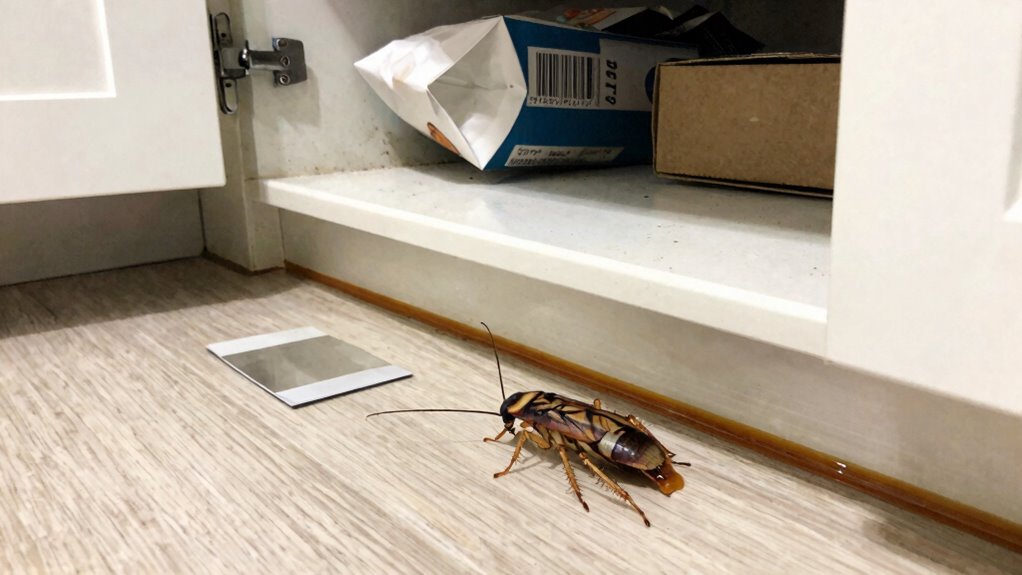
After three months, you might think you’re in the clear, but a cockroach’s ability to hide is real. Combining gel baits with monitoring is smart when resident density is high, like in apartment buildings. Bait alone can miss hidden stragglers, so adding sticky traps near refrigerators and stoves catches those survivors fast. For complete protection, treat nearby pet bedding with a permethrin spray to eliminate fleas and ticks on contact.
Adjust application frequency based on trap counts. If you see 10 or fewer roaches over two weeks, you’re at a low level infestation. But don’t let your guard down, because studies show that assessment based programs using traps to guide bait amounts achieve over 90 percent population reduction by day 30.
It’s a simple upgrade. Traps cost more, but for faster control they’re worth the extra few bucks per apartment.
Choose Gel Baits If You Want Cheaper, Discreet Roach Control
Skip the sticky traps and save your wallet. Gel baits deliver discreet roach control for a fraction of the cost. You will spend about $1 to $3 per apartment versus $4 to $6 for traps. They are less visible, so no one has to stare at glued bugs. The cost advantage is clear. Material costs are up to 3.9 times cheaper, based on distributor pricing. Stealth mode is a major benefit. Baits hide in small beads, avoiding trap clutter, and residents rarely see roaches after treatment. Check product shelf life during inspection protocols. Expired gel loses potency, so always verify before application. A 2020 study showed bait alone cut roach counts in 76% of apartments after three months. No mess, no fuss, just targeted pest control. For a wallet friendly, low profile solution, gel baits are the clear winner for residential roach management. Gel baits work because they use a slow-acting poison that allows roaches to carry the bait back to their colony for thorough elimination.
Choose Roach Traps If You Want Visual Evidence of Infestation
Roach traps give you clear visual proof of an infestation by catching bugs on a sticky surface. Unlike gel bait that vanishes into hiding spots, traps let you monitor population levels over time and pinpoint problem areas.
For example, 36% of catches may be found behind the refrigerator, showing you where to focus pest control efforts. This hands-on evidence helps confirm a roach problem even when you don’t see live cockroaches.
In fact, 63% of residents in one study reported no sightings despite ongoing activity. To get effective pest management, these traps offer a simple way to track infestation severity. Catchmaster Pest & Insect Glue Traps last up to one year, providing long-term monitoring for any crawling insect issue.
Visual Confirmation
Visual confirmation is one of the biggest advantages of using roach traps over gel baits. Each glued roach gives you undeniable proof of an active infestation, while bait leaves no visible trace of dead bugs.
Trap saturation clearly signals when it’s time for a swap, so you never have to guess about replacement timing. Seeing exactly where roaches land, like behind the fridge in many cases, pinpoints hot spots for future pest control treatment.
While bait hides its work, traps let you count the bodies for that satisfying sense of progress. You will also see your failures, which is oddly reassuring for thorough cockroach management.
For skeptical homeowners or anyone needing to show a landlord or spouse “told you so,” traps deliver the goods. Just remember to place them near roach harborage areas for the best results in your extermination efforts.
Monitor Population Levels
Monitor bug populations by counting the sticky bodies yourself. This turns population dynamics into a simple, visual headcount, not guesswork.
You will know exactly when you cross infestation thresholds, like seeing ten or more roaches in two weeks. No frustrating “did the bait work?” mystery, just grim, sticky reality.
| Feature | Roach Trap | Gel Bait |
|---|---|---|
| Visual proof | High | None |
| Cost per home | $4–$6 | $1–$3 |
| Monitors trends | Yes | Hard |
| Works alone | Often | Sometimes |
| Best for | Seeing counts | Sneaky kills |
Traps let you track decline over monthly monitoring, whereas gel hides the evidence. If you are a data nerd or just want to avoid surprise roach armies, traps win.
The bottom line is to choose traps for clear, cheap population tracking you can actually see. For professional pest control results, sticky traps deliver undeniable proof of cockroach activity.
Start Today: Apply Gel Baits or Set Traps in 10 Minutes
Getting started doesn’t require a hazmat suit or a degree in entomology. Anyone can apply gel baits or set traps in ten minutes, with results showing up fast.
The choice comes down to a few key trade offs for your pest control needs. Gel baits cost $1 to $3 per apartment, using 50 small beads to lure roaches out.
The bait smell attracts them, but it fades, requiring reapplication. Traps cost $4 to $6 per apartment, placed in 10 to 16 spots.
Trap maintenance is low. Just swap them monthly, but they need steady monitoring.
Both methods reduced trap counts by 70 to 91 percent in studies. However, traps cost 2 to 4 times more.
For quick low cost action, gel baits are the best roach killer option. Traps work if you enjoy checking glue or want to pretend you are a roach detective.
Your call.
Frequently Asked Questions
Do Gel Baits Harm Pets or Children if Ingested?
Most gel baits use low toxicity insecticides like fipronil or hydramethyllon. When used as directed, they are safe around pets and children for effective pest control.
The bittering agent helps deter ingestion, but a curious lick might cause drooling or an upset stomach. For best results, place gel baits in tiny beads behind appliances instead of out in the open.
If a large amount is eaten, call poison control for professional advice. Panic isn’t needed, just common sense and tidy placement to buy the right pest control solution.
Remember to check product labels for child safety and pet toxicity warnings. Choosing the best roach killer or ant bait means understanding how to use gel baits properly.
Smart homeowners prioritize prevention and safe pest control practices. A little care keeps your home pest free without unnecessary risk to your family.
How Long Do Gel Bait Applications Remain Effective Before Reapplication?
Gel bait longevity typically spans one to three months, though environmental factors like humidity and dust can shorten it.
A five gram application per apartment, placed in small beads, often holds up for three months for most low level infestations.
Dampness degrades the gel faster, so check kitchen spots near sinks or refrigerators first.
Reapplication depends on residual activity; in studies, no extra gel was added for three months, and trap counts stayed low.
For best results, monitor monthly and look for stragglers.
If you see pests returning, it is time to reapply to prevent the infestation from gaining ground.
This cockroach gel bait is a smart purchase for durable pest control in high moisture areas.
Buy enough for quarterly application to maintain a pest free home without constant upkeep.
Can Roach Traps Alone Prevent Future Infestations From Returning?
Traps alone can’t reliably stop return visits, since they only catch, not kill the source.
They lack secondary kill, the poison spread when roaches eat bait and die in the nest, and they don’t fight bait shyness, where roaches learn to avoid certain foods.
Traps cost between $4 and $6 per apartment, while roach bait stations run just $1 to $3, and traps miss hidden breeding spots.
Use traps for monitoring and bait for control instead.
Bottom line: traps slow them down, but professional grade bait ends the party for good.
Are Gel Baits Effective Against Roaches Resistant to Common Pesticides?
Yes, gel baits can work against pesticide resistant roaches if used correctly. Resistant roaches often survive since they avoid or detoxify common poisons, but gel baits exploit their feeding habits.
Bait rotation strategies switch active ingredients every few months, preventing resistance from building up in the population. This keeps your roach control plan one step ahead of their evolving defenses.
Resistance mechanism analysis identifies which specific detox enzymes or nerve mutations the roaches have, guiding bait choice. For best results buy a professional gel bait that targets their exact weakness.
Bottom line: do not just use one bait forever. Rotate every 3 to 6 months.
It is like changing your coffee order, keeps things interesting and effective. Stick with proven roach baits and combine with a comprehensive pest management plan for long term results.
Do Sticky Traps Lose Efficiency in Humid or Dusty Environments?
Yes, sticky traps do lose effectiveness in humid or dusty environments. Adhesive longevity suffers as dust coats the glue, reducing its stickiness.
Humidity can cause the glue to soften or seep, compromising your pest control efforts. Trap placement efficacy hinges on avoiding these conditions.
Placing traps under refrigerators or behind stoves often exposes them to dust. For best results, check traps weekly and replace them when grime builds up.
A dirty trap is just a sticky, expensive floor decoration that won’t catch bugs. To get the best rodent monitoring results, buy high quality glue boards designed for humid basements.
Consider using covered sticky traps for dusty areas like garages or crawl spaces. These pest control products maintain adhesion longer in challenging environments.
If you need effective insect monitoring in a kitchen or warehouse, rotate traps frequently. This smart purchase strategy ensures you catch pests before they spread.


