
Bed bug eggs are tiny, pearly white ovals, roughly one millimeter long, and easy to confuse with dust or salt.
If you’re waking up with bites, knowing what bed bug eggs look like is your first step to stopping an infestation before it spreads.
These glossy, sticky eggs hide in seams and crevices near your mattress, blending right into fabric and wood grain.
In this guide, we’ll break down exactly how to spot them, what to do if you find them, and the best products to eliminate them fast.
Keep reading for a clear, practical breakdown of egg identification and removal tools you can trust.
At A Glance
- Bed bug eggs are tiny, about 1mm long, like a grain of salt.
- They are pearly white or cream-colored, oval, and have a glossy finish.
- Eggs have a sticky coating and feel tacky, unlike dry dust or debris.
- They are often glued in clusters inside mattress seams and dark crevices.
- Fresh eggs are white; older eggs become cream or slightly translucent.
What Do Bed Bug Eggs Look Like?
Bed bug eggs are the first sign of an infestation, so recognizing them is your best chance for early pest control.
These tiny specks, roughly one millimeter long, look like miniature white or cream-colored ovals.
These tiny specks, roughly one millimeter long, look like miniature white or cream-colored ovals.
Think of them as a grain of salt with a sticky coating that clings stubbornly to surfaces.
In the bed bug lifecycle, eggs hatch into nymphs, which are tiny, pale versions of adults.
Each nymph needs a blood meal before molting, so spotting those eggs promptly is a crucial move.
You will find them tucked into mattress seams, along baseboards, or behind loose wallpaper and furniture.
Since they are about the size of a pinhead, you need a keen eye and good light for detection.
Knowing how to identify these eggs puts you ahead of the game for effective bed bug treatment, particularly by using residual sprays that kill eggs and provide lasting protection.
Why Are Bed Bug Eggs So Hard to See?
Why spotting bed bug eggs feels like a tiny scavenger hunt. They are roughly one millimeter long, pale white, and glued into shadowed seams.
That sticky coating makes them blend into wood grain or fabric lint. They are easily mistaken for dust during a routine inspection.
During the bed bug lifecycle, eggs appear for barely a week before hatching. This gives you a narrow window to find them before they become nymphs.
Standard egg detection methods like flashlights and magnifying glasses struggle against their size and placement. You need a bright light, a credit card to scrape crevices, and often a microscope to confirm.
It is not impossible, just tedious. The payoff matters because each missed egg extends the infestation cycle by weeks.
Using interceptor traps can help catch wandering bed bugs before they lay more eggs in hidden areas.
Where Do Bed Bugs Lay Eggs in Your Home?
Bed bugs treat your home like a secret real estate portfolio, investing only in prime, shadowy locations. They prefer sleeping areas, tucking eggs into mattress seams, box springs, and bed frames.
Behind baseboards, peeling wallpaper, and picture frames are likewise prime spots. Even inside electrical outlets or nightstand cracks, they hide their sticky, 1-millimeter eggs.
For effective egg detection, focus on these dark, narrow crevices near where people sleep. Non-toxic monitors use physical tricks like textured surfaces to safely detect early signs without chemical exposure. Early prevention hinges on inspecting these exact zones regularly, especially after travel.
Ignoring them means allowing 200 to 500 eggs per female, a tiny army waiting to hatch. So, grab a flashlight, check those seams, and disrupt the real estate empire before it rents out your entire bedroom.
Use a credit card to scrape along mattress seams for a thorough pest control check. Consider professional bed bug treatments if you spot any tiny white eggs.
Do Bed Bug Eggs Look Like Dust, Salt, or Mold?
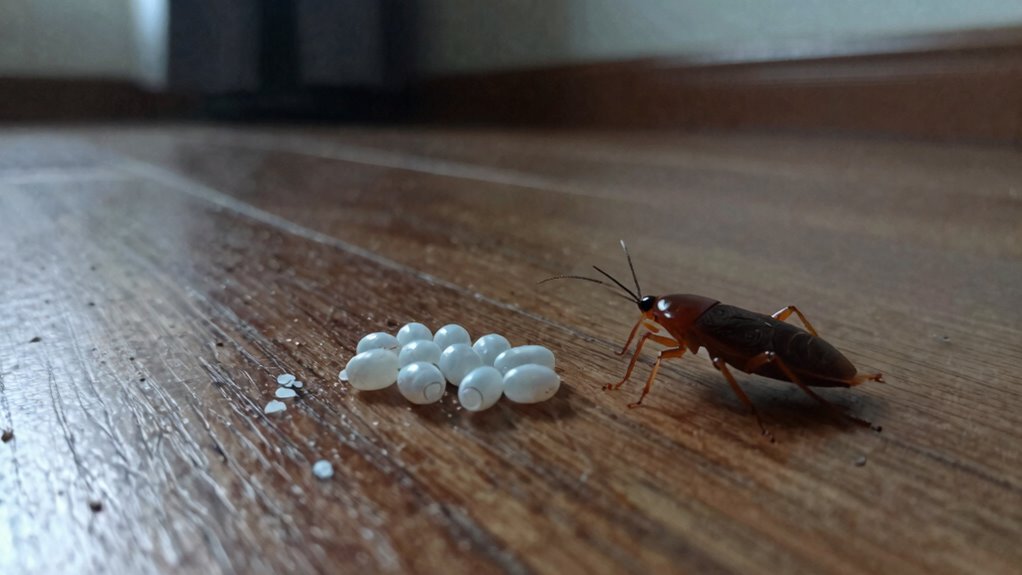
While dust, salt, and mold can all be tiny and pale, bed bug eggs are distinct in both form and function. A grain of salt is uniform and brittle, whereas these eggs are oval-shaped, roughly 1 millimeter long, and covered with a sticky coating that glues them to surfaces. Dust lacks any defined shape, but bed bug eggs have a precise, pill-like form. Mold spreads in irregular patches, not as individual eggs. You cannot simply blow them away like dust. That sticky coating holds firm, making removal difficult during pest control treatment. For positive identification, you need microscopic confirmation. The eggs are off-white and nearly invisible on fabric, so professional inspection is often necessary for detection. Think of it this way: dust is messy, salt is food, and mold is fungus. But bed bug eggs are a clear signal of infestation that requires immediate action. Do not shrug them off as debris. Proper identification is critical because, unlike bed bug eggs, dust lacks any defined shape. Call a pest management professional if you suspect you are seeing bed bug eggs.
What Happens After Bed Bug Eggs Hatch?
Once you’ve identified those tiny, sticky eggs, the real question is what happens when they hatch. The egg timeline is quick, with nymphs emerging within three to seventeen days depending on warmth and humidity.
Out pop nymphs, which are baby bed bugs, cream-colored and only about 1.5 millimeters long. They’re hungry immediately, needing a blood meal before they can molt and grow.
These nymph stages involve five molts over roughly five weeks, with each stage requiring another meal. Without feeding, nymphs can’t mature, but they’re resilient enough to survive for months in cooler conditions.
After hatching, they scatter into cracks, feeding every few days. This slow, methodical march toward adulthood means a full infestation can build quickly if you don’t act fast.
For effective bed bug control, it’s critical to treat both eggs and nymphs early, since standard sprays often miss the tucked-away hiding spots. Professional pest removal services use targeted heat treatments or residual insecticides to break the life cycle.
If you’re searching for bed bug extermination near you, ask about follow-up inspections, because newly hatched nymphs can appear after the first pass. Combining a vacuum, steam, and a quality bed bug spray gives you the best chance to stop the next generation. Natural spray repellents with essential oils can also help in adjacent areas to deter pests from re-infesting after treatment.
| Stage | Key Detail |
|---|---|
| Egg hatching | 3–17 days after laying |
| First nymph | Must feed within days to molt |
| Adult | Reached after 5 molts, roughly 5 weeks |
Why Do Bed Bug Eggs Survive Treatment?
Bed bug eggs have a tough outer shell made of glue and protein, not a fragile skin. This strong coating lets them shrug off many common sprays like a raincoat sheds drizzle.
That protective shell blocks most pesticides, giving the embryos inside a major survival advantage. This built-in insecticide resistance is exactly why standard treatments often fail.
The eggs also possess real heat tolerance, surviving temperatures that would kill an adult bed bug. A home steamer might miss them if it doesn’t hit 130°F directly on the egg.
Pesticides targeting adults are useless against these hidden eggs. The glue anchors them tightly inside crevices, hiding them from direct sprays or contact treatments.
So a single treatment wipes out active bugs, but the eggs simply wait it out. To stop them completely, you need a follow-up heat treatment or a specialized spray that penetrates the glue barrier. One effective alternative is applying food-grade diatomaceous earth which kills bed bugs within 48 hours by dehydrating them on contact.
Ignoring the eggs is just renting them room for a sequel infestation. For effective pest control, always plan a second treatment to break the life cycle.
How to Confirm Bed Bug Eggs vs. Look-Alikes
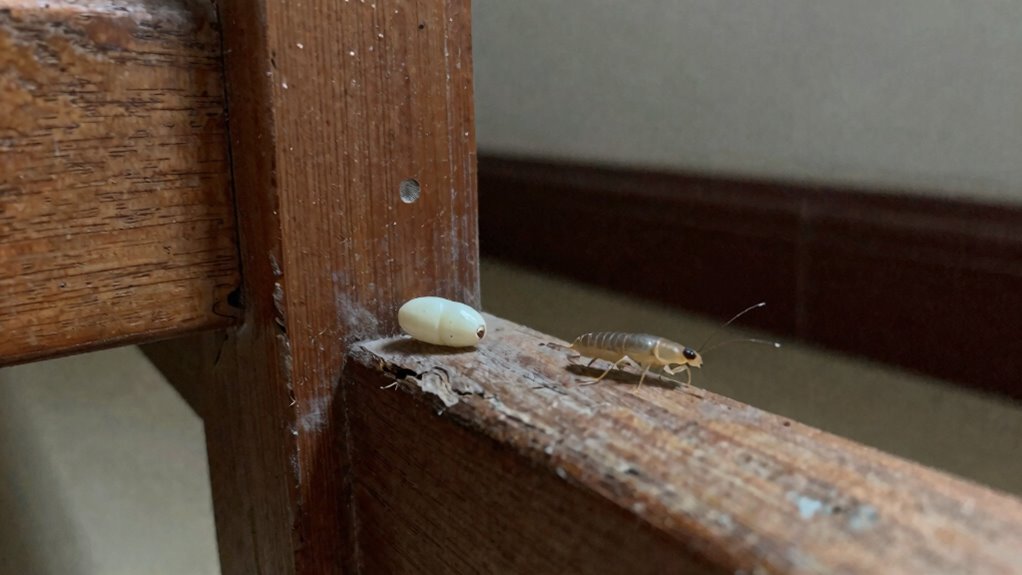
To confirm bed bug eggs versus lookalikes, start by checking visual clues and size. Eggs are about 1 millimeter, oval, and white, similar to a grain of salt.
Next, look for a sticky residue that holds eggs to surfaces. Unlike dust or debris, they won’t brush away easily.
Finally, inspect hidden hatch locations like mattress seams and baseboards. Bed bug eggs are often tucked in these spots, not scattered randomly like lint or mold.
If you need professional pest control help, a trained exterminator can identify eggs during a treatment inspection. For accurate bed bug detection, focus on these glued clusters in your home.
Visual Clues & Size
Visual clues are your first line of defense against a bed bug infestation. Bed bug eggs, roughly 1mm long, look like a tiny grain of salt. Their oval shape and sticky coating often cause confusion with dust or debris.
Key differences emerge across lifecycle stages for accurate bed bug identification. Egg color variation is subtle, freshly laid eggs are pearly white, while older ones may appear cream or slightly translucent. Look-alikes like carpet beetle larvae or lint lack this uniform, glossy finish.
Size matters for effective bed bug treatment, at 1/32 inch they are nearly invisible without magnification. A microscope or strong magnifying glass confirms what you find.
Check mattress seams, baseboards, and behind picture frames where females lay 1 to 5 eggs daily. If it is not sticky or perfectly oval, it is likely not a bed bug egg.
Bottom line, visual cues narrow it down, but magnification seals the deal for pest control success. For treatment, a thin, barely visible layer of boric acid powder should be applied to these hiding spots to ensure pests do not avoid it.
Sticky Residue Check
Sticky residue is the telltale giveaway of a bed bug infestation. Bed bugs cement their eggs with a glue-like substance to anchor them during egg laying. This leftover stickiness often persists after hatching, catching debris and dust. The residue separates real eggs from look-alikes like lint or salt grains. You can check for stickiness by touching suspect spots. Real eggs feel sticky to the touch, while dust or lint is dry with no residue. Oval eggs have a shiny coating, whereas salt grains are crystalline. Nymphs hatch from these eggs, but debris never changes form. Residue smears when pressed against a surface. In contrast, sand or crumbs simply crumble away. Eggs are often found in clusters near mattress seams. Look-alikes appear as random scattered particles. If you suspect bed bugs, schedule a professional inspection. Early detection saves time and prevents a full blown infestation.
Hidden Hatch Locations
Most people never see a bed bug egg until they’ve already got a problem, and by then, the eggs are hiding in the last places you’d think to check. Egg survival depends heavily on the nook’s climate, and humidity influence is key. Too dry, eggs shrivel; too damp, they mold.
To confirm eggs versus look-alikes like dust or lint, focus on these hidden hatch locations. Check mattress seams and tags, where eggs stick in rows and are glued tight. Behind loose wallpaper, you find a dark, humid microclimate that supports egg development.
Inside electrical outlets, eggs stay warm and undisturbed, making this a perfect spot for bed bug egg survival. Under baseboards, humidity influence keeps eggs viable longer, so inspect there with care. Use a flashlight and magnifier to spot real eggs, which are pearly white, oval, and about 1 mm.
If they smear or crumble, they are not eggs. Bottom line is you need to inspect these spots or you will miss the nursery entirely. Professional pest control services can also help with targeted treatment for active infestations, and whole-room heat treatments can kill eggs at all life stages in as little as eight hours.
Buyer intent for egg removal products often starts with knowing these precise hiding spots. Remember that early detection and professional treatment options can stop an infestation before it grows.
Frequently Asked Questions
Can Bed Bug Eggs Move?
No, bed bug eggs cannot move. They are glued firmly to surfaces with a sticky coating that acts like permanent superglue.
Their oval shape helps them hide in cracks, but these eggs stay put. Even newly hatched nymphs must crawl away from the spot.
The eggs lack legs or muscles for motion. So if something seems to move, it’s likely just debris or a tiny bug.
If you’re inspecting for a bed bug infestation, look for immobile, pearl-like eggs in mattress seams or baseboards. For effective pest control, a targeted treatment spray or steam cleaner can kill both eggs and adults.
Choosing a quality bed bug killer with residual action ensures you wipe out the entire life cycle. That’s the smart purchase for long term relief.
Do Bed Bug Eggs Have a Smell?
Bed bug eggs don’t have a strong smell, so you can’t rely on your nose to find them. In fact, most people will never detect a scent from the eggs alone, even during a thorough inspection.
Any faint odor they might release is easily masked by dust, fabric, or other household smells. That’s why sniffing around for signs of bed bugs is almost always a waste of time and effort.
Instead of trying to smell them, grab a bright flashlight and a magnifying glass to visually inspect seams, crevices, and mattress folds. Heavy infestations may produce a musty, sweet odor from adult bugs and fecal spots, but that smell comes from the colony, not the eggs themselves.
If you’re dealing with a suspected bed bug problem, focus on targeted bed bug sprays, residual insecticides, and heat treatments that kill eggs on contact. For reliable detection, use sticky traps and monitor harborage areas, then apply a quality egg-killing solution to prevent rehatching.
Professional-grade bed bug killers often include growth regulators that stop nymphs from maturing, which is essential for breaking the lifecycle. Whether you choose a DIY kit or hire a pest control service, remember that visual inspection beats scent detection every single time.
How Long Can Bed Bug Eggs Survive Without a Host?
Bed bug eggs typically survive three to seventeen days, but that’s only until they hatch. The real concern is egg viability without a host, and that depends heavily on temperature resistance.
Nymphs, the baby bed bugs, need a blood meal immediately or they die within days. Cooler temperatures can stretch their survival, but warmth speeds up their demise.
So eggs don’t linger long alone, giving you a limited window to act. For effective bed bug control, you want to target both eggs and nymphs with a quality product.
A heat treatment or a residual spray that kills on contact can break the lifecycle fast. If you’re searching for a pest control solution, choose something labeled for bed bug eggs and nymphs.
Bottom line: you have weeks, not months, before they’re gone, assuming you’re not feeding them. Don’t wait, because a single missed egg can restart your infestation.
Can Bed Bug Eggs Be Washed off in Laundry?
Can bed bug eggs be washed off in laundry? Not reliably, and that’s a common frustration for anyone dealing with a bed bug infestation.
The sticky glue that holds those eggs to fabric, known as adhesive viability, often survives a standard wash cycle.
You need water above 120°F to kill the eggs, but even that high heat doesn’t guarantee they’ll detach from clothing.
A dryer on high heat works better for killing both eggs and live bed bugs, but the adhesive still keeps them clinging to fibers.
For a pest control solution, physically scrubbing infested items after washing is key to remove stubborn eggs.
If you’re shopping for bed bug treatments, consider combining high heat laundry with a targeted spray or steam cleaner for complete elimination.
Buyer intent often leads people to check integrated pest management products, since a single wash rarely solves the problem.
Are Bed Bug Eggs Visible on Dark Surfaces?
Yes, bed bug eggs are visible on dark surfaces, but you have to look carefully. Their pale cream color creates a sharp contrast against black or navy fabrics.
Still, they are extremely tiny at roughly 1 millimeter each. You should look for light reflection or texture changes instead of just color.
A bright flashlight is essential for home bed bug detection because it catches their sticky coating. Think of finding a single grain of salt on a black t shirt; it is possible, but not obvious.
For absolute certainty, use a magnifying glass or trust a professional pest inspection. Guessing and missing eggs can lead to a full infestation, so don’t risk it.
A professional exterminator will know where to look for bed bug eggs and nymphs, saving you time and frustration. If you want effective treatment, consider buying a quality inspection kit or calling a local pest control service for a targeted treatment plan.


