
Bed bugs are sneaky, but knowing how to check for bed bugs yourself can save you time, money, and sleepless nights. You don’t need a pro for the first step—just a flashlight, a thin spatula, and a little patience.
Start where you sleep, scanning mattress seams, box springs, and headboard crevices for telltale black spots, shed skins, or tiny eggs.
We’ll walk you through exactly what to look for, when to call in a canine inspector, and how to stop an infestation before it spreads. Keep reading for a full pest control guide that gets straight to the point.
At A Glance
- Inspect mattress seams, box springs, headboards, and baseboards with a bright flashlight.
- Use a thin-blade spatula to pry into crevices and collect debris onto a white cloth.
- Look for small black fecal spots that soak into fabric and cannot be brushed away.
- Search for translucent shed skins, pearly white eggs, or live bugs in dark cracks.
- Consider a canine inspection (90%+ accuracy) or professional exterminator for confirmation.
How to Inspect Your Mattress and Box Spring for Bed Bugs
Before you start dismantling your bed like a crime scene investigator, know this: the mattress and box spring are ground zero for bed bugs.
Complete headboard removal is non-negotiable, as these pests hide in seams, tufts, and behind screw holes.
A quality flashlight and thin-blade spatula cost under $20 and are indispensable for inspecting folds and crevices.
For deeper analysis, molecular detection methods like canine inspections (typically $300–$500) sense live bugs with 90%+ accuracy.
Begin at the bed, then check baseboards and outlet covers.
Stop searching if you find one; vacuum immediately to contain the spread.
Ignoring the bed means missing the hub of the infestation.
You’re smarter than that.
Using passive interceptor protection under furniture legs can catch bed bugs before they reach you.
What Bed Bug Stains, Skins, and Eggs Actually Look Like
You already found the mattress seam, good. Now look for fecal spots: small black stains that look like ink blots.
Unlike dirt, these absorb into fabric so you can’t brush them off. Cast skins are translucent empty shells resembling tiny pale bug shaped husks.
Eggs are pearly white, about 1/16 inch, and often glued into crevices. These signs confirm a bed bug infestation even if you haven’t seen live bugs.
Eggs are pearly white, about 1/16 inch, and often glued into crevices, confirming infestation even without live bugs.
Bite patterns on skin, clusters of three in a line, can tip you off. But remember, some people don’t react at all.
Given that bed bugs hide up to 95% of their lives, stains and skins prove they have colonized your bed. No live bugs still means debris equals action. Bed bug interceptor traps placed under furniture legs can catch these signs early for detection.
Bottom line: any of these visual clues means you need pest control now. Start your treatment plan immediately to stop the spread.
How to Inspect Your Bed Frame and Headboard for Bed Bugs
Start with the headboard. Remove it from the wall, or at least tilt it forward.
Bed bugs love hidden crevices where peeling wallpaper meets wood. They will also crawl into drywall cracks nearby, so shine a bright flashlight along every joint.
Check for tiny black fecal spots or shed skins. Use a thin spatula to scrape debris from screw holes where these flat pests can hide.
Inspect the frame’s slats and corners for dark stains and eggs. This is where they live like tiny, unwanted roommates that require immediate pest control action.
If you spot anything, vacuum the area right away. Staying methodical prevents missing any crack and saves you from starting your bed bug inspection over.
For serious infestations, consider professional pest control services. A focused headboard check is a key step in thorough bed bug prevention.
Apply food-grade diatomaceous earth into cracks and crevices using a dust duster for targeted treatment.
Where Bed Bugs Like to Hide in Your Home
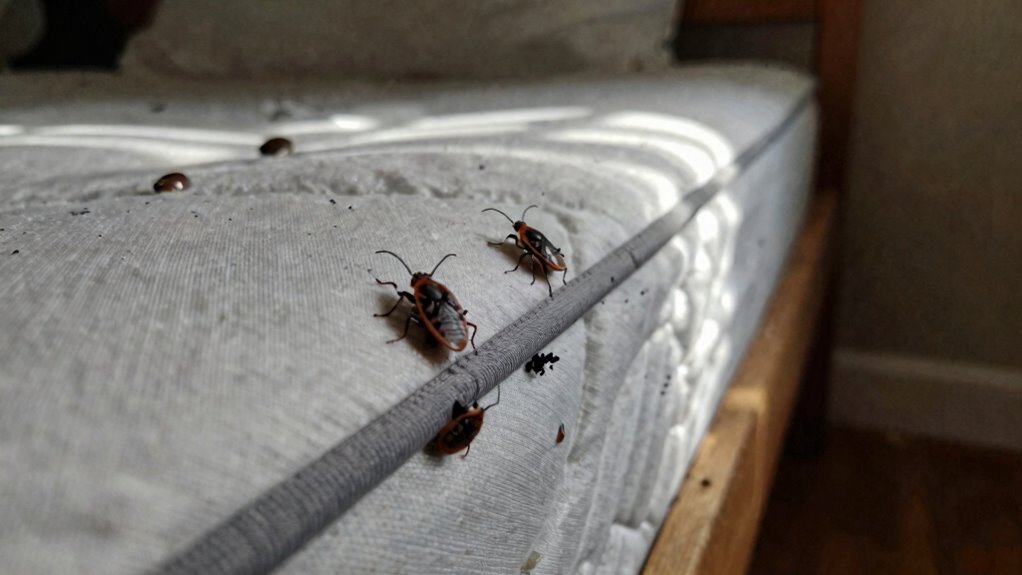
Bed bugs avoid open areas and prefer hiding in seams, crevices, and dark corners. Check behind baseboards, under loose wallpaper, inside electrical outlets, and along carpet edges where walls meet floors.
In bedrooms, inspect near headboards and behind picture frames for early signs of infestation. Use a flashlight and a thin spatula to uncover these pests, but do not expect them to be easy to spot.
In bedrooms, inspect headboards and picture frames early, using a flashlight and spatula to find bed bugs.
Focus on any spot where fabric meets a crack, as this is a common bed bug habitat. If you travel or host guests, always examine those zones first for effective pest control.
Bottom line: proactive bed bug detection in these key hiding places can prevent a larger problem. Professional treatment may be needed if you find evidence of an active infestation. For ongoing prevention, adding plant-based laundry additives to your wash routine can help kill bed bugs on fabrics at all life stages, including eggs and larvae.
How to Inspect Furniture Like Couches and Chairs for Bed Bugs
After a bed, couches and chairs are the next prime real estate for bed bugs. They love hiding in seams, under cushions, and where fabric meets wood.
Start by flipping cushions to look for black fecal spots or cast skins. These are the shed exoskeletons from the bed bug life cycle.
Use a flashlight to inspect zipper tracks and crevices carefully. Do not just eyeball it. Pry apart fabric folds with a thin spatula for a thorough check.
If you spot anything, resist the urge to spray wildly. Focus on identification first, since bite treatment options only help symptoms, not the source. Using a six-sided zipper encasement on your mattress can also help confirm if bed bugs are trapped inside rather than hiding elsewhere.
One colony can hide here for months, silently feeding. You will feel like a furniture detective, minus the trench coat.
If you find one bug, assume there are more. Better to start professional pest control treatment now than after your sofa becomes a bug motel.
Common Hiding Spots in Electronics, Outlets, and Baseboards
Electronics, outlets, and baseboards create a perfect hiding trifecta for bed bugs. Many people mistakenly believe these flat, brown pests only infest mattresses. For safe outlet inspection, never spray insecticides into sockets. Instead, use a thin-blade spatula or screwdriver to gently pry off cover plates after turning off the power. When treating baseboards, remove the trim with a pry bar and scrape debris into a bag. Look for tiny black fecal spots or cast skins that indicate an active infestation. A quality flashlight, priced around $20, helps reveal these hiding spots. Check under carpeting near walls and along depressions where beds meet floors. Start your bed bug treatment with baseboards then outlets, as bugs hide in these tight cracks for months. Professional pest control can verify if a full extermination is needed. However, interceptor traps placed under furniture legs provide continuous monitoring and physical capture without chemicals.
How to Spot Bed Bug Bites on Your Skin

Bed bug bites often show up as straight lines or tight clusters of three, typically on your arms, legs, or back.
About one in four people, and up to half of seniors, get no reaction at all, so the absence of itching does not mean you are in the clear.
Reactions can range from simple red spots to raised hives, depending on your immune system’s timing.
This makes bite patterns a useful clue but never a definite sign of an infestation.
To be sure, look for other pest evidence like tiny blood stains on sheets or molted bed bug skins.
If you suspect an active problem, scheduling a professional pest control inspection is your best next step.
Targeted bed bug treatments can eliminate the source before bites become more frequent.
Always check mattresses and box springs for dark fecal spots or live insects to confirm the issue.
Using a spray with long-lasting residual protection can help prevent further infestation.
Appearance and Patterns
A bed bug bite on your skin usually announces itself as a small, red, itchy welt. But here’s the trick: it’s not the individual bump that gives the pest away, it’s the pattern.
These bites often cluster in lines or groups of three, reflecting the bug’s feeding style. For a reliable bed bug inspection, look for these common bite patterns.
A straight line of three red welts looks like a tiny train track. A zigzag pattern shows random spots that resemble a messy connect-the-dots.
A tight cluster of three or four bumps suggests a nearby infestation. A single lone welt can be easily mistaken for a mosquito bite.
Investigating bed bug origins starts with resident interviews for effective pest control. Ask about recent travel, luggage placement, and where guests sat.
Those stories often reveal the source and help you determine the best treatment plan. For immediate control, you can use plant-based sprays that kill bugs on contact without harsh chemicals.
Reaction Variations
Since not everyone reacts the same way to bed bug bites, you might inspect a room and find zero evidence on one person while their partner looks like a dartboard. That’s because a person’s unique bite immune response can vary widely.
Masked reactions are common, especially age related nonreactivity where older individuals show no marks at all. Delayed sensitization means some people don’t react until weeks after exposure, making early detection tricky.
Antihistamine masking happens when cold meds calm your skin, hiding an infestation. This leads to misdiagnosis overlap where bites get confused with fleas or poison ivy. For chigger bites, a product like Cortizone-10 Maximum Strength with hydrocortisone fights inflammation quickly.
Look for lines of three bites on exposed skin. If one person has nothing and the other has welts, don’t assume the room is clean.
The bugs are there, but your skin just isn’t telling you. For professional bed bug treatment, contact a local exterminator to confirm the infestation.
How to Search a Room Without Missing Anything
Finding a bed bug infestation is like playing “Where’s Waldo” with a tiny blood sucking pest that hides in places you never knew existed.
Start your search with a tactical sweep of the room, scanning all surfaces from floor to ceiling.
Visual mapping is key here.
Mentally divide the space into zones and inspect each one methodically, beginning at the bed and working outward.
Use a flashlight and a thin blade spatula to pry into baseboard cracks and furniture joints.
Use a flashlight and thin spatula to pry into baseboard cracks and furniture joints.
Scoop debris onto a white cloth to spot live bugs, fecal stains, or shed skins.
Check mattress seams, behind headboards, under chair cushions, and along baseboards.
Dismantle beds and electrical plates when possible, inspecting every screw hole.
If you find a single bug, stop and treat immediately.
This prevents the risk of spreading the infestation further.
A systematic bed bug inspection guarantees nothing is missed.
For professional pest control help, contact a licensed exterminator for treatment options.
Once found, using a sealed heat chamber can eliminate all life stages without chemicals.
Is That a Bed Bug? How to Tell It Apart From Look-Alikes
Not every creepy crawly is a bed bug, even if it looks like your worst nightmare. An adult bed bug is flat, brown, and wingless, measuring about 1/4 to 3/8 inch long.
Young nymphs are nearly colorless and as small as 1/16 inch, like a poppy seed that decided to walk. That cigar shaped, purplish red body after a blood meal is your key clue for bed bug identification.
Small black fecal spots that won’t brush away also point to an active bed bug infestation. Other bugs hide in similar cracks or leave bite lines on skin.
But they do not leave that exact digestive calling card. To confirm you need bed bug treatment, inspect mattress seams and box springs for these signs.
Professional pest control can stop a bed bug problem before it spreads. Contact an exterminator for a thorough bed bug inspection and removal plan. If you find them, a boric acid powder can be applied with a duster into cracks and crevices as a supplemental DIY measure.
Size and Color Clues
Size check: Adults are apple seed size, not sesame seed size.
Color shift: They are flat brown before feeding, then purplish red and cigar shaped after a blood meal.
No wings: Unlike carpet beetles or cockroach nymphs, bed bugs are completely wingless.
This is a key pest identification clue for home inspection and treatment planning.
If you see a small, flat, wingless bug with that distinct color change, you have found the bug.
Confirming this early can help you choose the right pest control solution fast.
Once you’ve confirmed bed bugs, choosing an applicator with a manual pump or air-pump mechanism can deliver consistent, even powder distribution across large areas like mattresses and baseboards.
Hiding Spot Similarities
Hiding spots for bed bugs often overlap with those of common look-alikes like carpet beetles or cockroach nymphs, but a few key differences can save you from misidentifying the problem and wasting money on the wrong pest control service.
The subtopic focus here is that these pests share a love for dark crevices, but their debris tells different stories, so checking the evidence is your first smart move.
Bed bug fecal spots are small, black stains that soak into surfaces and cannot be brushed away, which is a reliable sign for a professional inspection.
Carpet beetles, on the other hand, leave behind shed skins that are fuzzy or bristly, not smooth like bed bug cast skins, so a magnifying glass helps you spot the difference.
Cockroach nymphs might scatter droppings that look like coarse black pepper, but they lack the distinct musty smell bed bugs emit, and that odor is a strong clue for treatment decisions.
So, check those fecal spots first: if they’re stubborn stains that resist wiping, you’ve likely got bed bugs, not a cleaner pest, and you’ll want targeted bed bug extermination rather than a general cleaner.
That topic overlap is your clue, and knowing these signs helps you choose the right residential pest control or buy effective bed bug sprays without guesswork.
Always look for the soak-in test on fabric or wood, and if you’re unsure, a quick call to a local exterminator for a bed bug heat treatment quote can save you time and money.
Bite Pattern Differences
Since bed bugs, fleas, and mosquitoes all leave bites, you might assume any red welt is a bed bug. However their patterns tell a different story.
Bed bug bites often appear in straight lines or tight clusters, like a tiny breakfast, lunch, and dinner pattern on exposed skin. Flea bites prefer ankles and lower legs, whereas mosquito bites are random, solitary, and raised.
Skin reactions vary, as bed bug bites can take days to appear as small, itchy red welts without a central puncture mark. Bite timing matters because bed bugs feed while you sleep, so you may wake up with fresh bites daily.
Flea bites itch immediately after contact, and location tells the tale. Check arms, shoulders, and neck, since bed bugs avoid hairy areas unlike fleas.
If bites form a line and appear gradually over nights, suspect bed bugs. If random and immediate, blame mosquitoes or fleas.
Check the seams of your mattress, where the real evidence hides. For effective pest control, consider using a TSA-approved spray to protect your luggage during travel and stop infestations early.
How to Contain an Infestation the Moment You Find a Bed Bug
Once you spot a real bed bug, not a stray lint ball or dead beetle, you have officially entered an infestation situation. Your first instinct might be to panic and grab a shoe, but that actually makes things worse by spreading blood stains and attracting more bugs.
Immediate quarantine is your best pest control strategy to stop the spread. Bag the infested mattress in a zippered encasement and toss all linens into a plastic bag for a hot dryer cycle.
Seal any nearby clutter to prevent bed bugs from hiding in other areas. Then call a professional exterminator right away, as DIY sprays just scatter them deeper into walls.
Your job now is containment, not heroics. Think traffic cop, not bomb squad, because you contain and the pro eradicates.
Do not sleep in another room, as they will follow you. Keep calm, bag everything, seal it tight, and call for help.
Professional steam treatments using temperatures up to 356°F provide a chemical-free method that kills bed bugs and eggs on contact without toxic residues.
Signs You Need a Professional Exterminator or Canine Detection
A professional exterminator, or a certified canine detection team, is the right call when the signs point to a hidden, spreading, or stubborn infestation that your flashlight and spatula simply cannot catch.
A professional exterminator or certified canine team is your best bet when a hidden infestation evades your flashlight.
You have done the legwork, found a few spots, but the bugs keep appearing in new rooms, or you are seeing bites with zero visual evidence.
That is your cue to call in the pros for a thorough bed bug inspection and targeted heat treatment.
Recurring bites after treatment mean your DIY sprays and vacuuming are not cutting it, so fresh welts showing up weekly signals a failure in your current pest control strategy.
A licensed exterminator uses residual insecticides and professional-grade fumigation methods that are not available over the counter.
If you spot pests in multiple rooms, like the living room and hallway, the infestation has branched out, so you need whole-home extermination services rather than spot fixes.
When you have no visual proof but symptoms persist, a certified canine team can pinpoint low-level infestations in cluttered spaces that human eyes miss, making them a smart investment for early pest detection.
Bottom line: if you are guessing, stop and schedule a professional pest inspection today. Hire the experts for long-term relief, and your sleep schedule will thank you.
How Long Can Bed Bugs Live and Why That Makes Detection Hard
Bed bugs spend up to 95% of their life hiding in tiny cracks and crevices. This extreme hiding behavior makes professional pest control detection essential for any infestation.
They can survive up to 18 months without a blood meal. A vacant home can still contain a months-old infestation that requires thorough bed bug treatment.
This combination of long lifespans and stealthy habits means a simple visual inspection often misses the bugs entirely. Scheduling a bed bug inspection with a licensed exterminator is the best way to confirm an active problem.
You can miss signs of bed bugs even with a clean home. Early bed bug removal services help prevent a small issue from becoming a large, costly invasion.
Hiding 95% of Life
Finding them is the real trick, not just because they’re small but because they’re masters of hide and seek. They spend 95% of their life tucked into cracks the width of a credit card, emerging only to feed.
That means a thorough bed bug inspection must disturb every crevice, not just the obvious spots. For direct handling safety, don’t squish them with bare fingers; the blood can stain and spread pathogens.
Use a credit card or sticky tape to collect them for pest control identification. Their temperature tolerance is impressive; they survive from near freezing up to 122°F, so a quick hair dryer won’t flush them.
You need sustained heat over 120°F for an hour to kill bed bugs effectively. When prioritizing hideouts, start with mattress seams and box springs, then move to baseboards and even behind picture frames.
They love wood, fabric, and paper, so check every potential bed bug harbor. You aren’t hunting a bug; you’re hunting a shadow.
Patience and a good flashlight beat luck every time for successful bed bug removal.
Lifespan Up to 18 Months
Those 18 months without a meal give bed bugs a survival superpower and create a total nightmare for homeowners. Starvation survival this extreme means they can hide unfed in vacant apartments or stored luggage for over a year.
This prolongs detection risks because a property might seem clean yet still harbor these resilient pests. Bugs remain alive in empty rooms for 18 months waiting for hosts like you to return.
Hitchhiking risk is high too, as a bed bug that fed months ago can still crawl into your suitcase. Over 95% of their life cycle is spent hiding in cracks, so missed inspections give false security.
Professional pest control services often recommend repeat checks after travel for thorough bed bug elimination. Inspecting once is simply not enough to find every hiding spot.
Your best defense is consistent monitoring and immediate treatment if you suspect an infestation. Schedule follow up inspections to break the cycle and protect your home.
Frequently Asked Questions
Can Bed Bugs Fly or Jump?
No, bed bugs cannot fly or jump, so they rely solely on crawling to move around. They have no wings at all, and their legs are built for scurrying, not leaping like fleas.
This flat body shape is why they easily slip into tight spaces, making mattress seams and baseboard cracks prime hiding spots. If you find one, there’s likely a nest nearby, so inspect those areas to confirm the source of an active infestation.
Their limited movement is a small mercy, but persistence is still required to eliminate them completely. For effective pest control, look for bed bug sprays and traps that target these crawling pests right where they hide.
Do Bed Bugs Only Come Out at Night?
No, bed bugs are not strictly nocturnal. Though they prefer nighttime activity, a hungry bug will bite during the day if it finds you resting.
Their main rule is survival, not a schedule. They hide in mattress seams and baseboards, waiting for a meal.
If you get bitten in daylight, don’t rule out bed bugs. They are flexible, annoyingly so.
For effective pest control, check your mattress seams, box springs, and headboard cracks. Use a bed bug spray or mattress encasement to trap them.
A professional exterminator can confirm an infestation early. That saves you time and money on DIY treatments.
Want to stop bites fast? Buy a quality bed bug monitor and inspect your bed weekly. This buyer intent action prevents a full blown outbreak.
Can You Have Bed Bugs Without Seeing Bites?
Absolutely, you can have bed bugs without ever seeing a single bite.
In fact, about one in four people show zero skin reaction, especially older adults, so welts are a terrible early warning system.
Instead of waiting for itchiness, focus on physical evidence that’s far more reliable.
Grab a bright flashlight and a magnifying glass, then check mattress seams, baseboard cracks, and even inside phone jacks or screw holes.
These tiny hiding spots near electronics are prime real estate for bed bugs, so inspect laptop edges and power outlets too.
For early infestation detection, look for dark fecal spots, shed skins, or tiny pearl-like eggs, which are far more telling than bites.
If you’re shopping for pest control products, a good bed bug interceptor trap or a handheld steamer can help you confirm activity without guessing.
Many homeowners buy a bed bug travel kit with a flashlight and crevice tool, because catching them before they spread saves hundreds in treatment costs.
Remember, bed bug heat treatment or professional fumigation works best when you’ve already found the source, not after bites appear.
How Fast Do Bed Bugs Spread From Room to Room?
Bed bugs spread between rooms at a surprisingly cautious pace, often taking days to weeks. Their movement speed depends on factors like proximity to a human host and clutter in the area.
They move faster through shared walls, ducts, or floor gaps than they do across open space. Their hiding behavior patterns, such as spending 95% of their time in cracks, slow down visible movement.
An adult bug crawls about three feet per minute, but they don’t rush across your floors. Instead, they hitch rides on luggage or furniture to travel between rooms.
So don’t panic. Check adjacent rooms methodically before assuming a full outbreak.
To stop bed bugs from spreading, focus on inspecting cracks, baseboards, and electrical outlets. Using a quality bed bug spray or a portable heat treatment device can help kill them on contact.
For a more thorough approach, set up bed bug traps and use an airtight mattress encasement to isolate any hidden infestations. If you need fast results, consider purchasing a professional grade bed bug fogger or hiring a local pest control service for a heat treatment.
Can Bed Bugs Live in Your Hair or on Your Body?
No, bed bugs do not live in your hair or on your body. They are flat, wingless hitchhikers that prefer hiding in cracks and crevices, not crawling around like lice.
These pests go through egg, nymph, and adult stages, all of which stay in mattress seams, bed frames, and furniture joints. Your scalp is not a safe harbor for them.
Infestation signs like rust colored fecal spots or shed skins show up on your mattress and box spring, not on your skin. Bed bugs only crawl on you to feed, then quickly scurry off to their hiding spots.
So relax, your shampoo is safe and a head check is unnecessary. The bottom line is to check your bed, not your head, for effective pest control.
When you look for a bed bug treatment, focus on mattress encasements, interceptors, and crack and crevice sprays. These products target where bed bugs actually live and breed.
Buying a quality bed bug spray or heat treatment kit can stop an infestation fast. For a smart purchase, choose a residual insecticide that kills both adults and nymphs on contact.


