
Finding bed bug eggs starts with spotting tiny, pale, pearl-like specks—about 1mm long, the size of a pinhead—stuck stubbornly in mattress seams or bed frame crevices. They’re oval and smooth, unlike debris that brushes away, so a bright flashlight held parallel to surfaces reveals them by crisp shadows.
Check nearby for reddish-black fecal spots, then vacuum and steam treat areas at 122°F to kill eggs instantly. This guide walks you through every step, from where clusters hide to how to eliminate them for good.
At A Glance
- Use a bright flashlight held parallel to surfaces to cast shadows on translucent eggs.
- Check mattress seams, tags, and box springs where eggs hide in tight, dark pockets.
- Look inside bed frame crevices, screw holes, and wood joint gaps for clusters.
- Inspect under couch cushions, cushion zippers, and along upholstery piping.
- Search within inches of fecal spots, shed skins, or adult bed bug signs.
What Bed Bug Eggs Look Like: And Why They Hide
Bed bug eggs are about as thrilling as finding a grain of salt that ruins your sleep. Using an egg shape analogy, each egg is oval with a slight curve, like a tiny grain of rice, but only 1mm across, about the diameter of a pencil tip.
Bed bug eggs are roughly 1mm long, like a tiny grain of rice or the tip of a pencil.
They’re pale yellow and almost translucent, shiny when fresh, dull when older. This makes them devilishly hard to spot against mattress seams or wood cracks, so you’ll want a professional pest inspection service if you suspect activity.
The female egg laying rate is brutal: up to five eggs per day, roughly 500 in a lifetime. That’s why a single missed cluster can explode into a full infestation, which is exactly why early bed bug detection is critical for affordable extermination.
These eggs hide in tight crevices, not just for warmth, but since the female backs into corners to deposit them. You’ll need a bright flashlight, held sideways to cast shadows, and a magnifying glass, otherwise you’re basically hunting ghosts.
For a thorough bed bug treatment plan, look for live adults, fecal spots, and shed skins near the eggs. If you’re booking a local bed bug removal service, mention the egg clusters during your inspection request.
Without these tools, you’re likely to miss the hidden nursery, which is why proactive six-sided mattress encasements and crack sealing are top home defense strategies. A quick DIY check with a credit card can scrape seams, but professional heat treatment remains the most reliable way to kill eggs before they hatch.
Where to Search for Bed Bug Eggs in Your Bedroom
Bed bug eggs are not scattered randomly but are deliberately placed near feeding and resting sites. The primary spots to search include mattress seams and tags, bed frame crevices, and upholstery or furniture joints.
These locations offer darkness and proximity to a sleeping host. A careful inspection with a good flashlight will uncover clusters of tiny, pale eggs that signal an infestation.
Look for the sticky residue left by the female bed bug as a clue. For effective bed bug treatment, early detection in these hotspots is critical for removal.
Using a high-powered flashlight during pest inspection can reveal eggs even in tight cracks. If you suspect an infestation, order a professional pest control inspection right away.
After identifying the eggs, use a vacuum with a crevice tool to physically remove them. Then apply a targeted bed bug spray to kill any remaining pests and their eggs.
Placing bed bug interceptor traps under all furniture legs can help catch crawling pests and monitor for ongoing activity.
Mattress Seams and Tags
Thoroughness is the name of the game when checking your mattress. The seams and tags are where the real detective work begins.
These tight, dark pockets offer ideal shelter, making egg development smoother for bed bugs. Survival factors like warmth and protection from light are high here.
Inspect slowly with a flashlight held parallel to the surface. Use a magnifying glass to spot eggs smaller than a pencil tip.
| Location | What to Look For | Emotional Stake |
|---|---|---|
| Mattress Seams | Pale, rice grain eggs tucked in piping folds | These eggs hatch in 5 to 10 days. Your bed’s nursery is active. |
| Tags | Clusters beneath the fabric tag’s edge | Each female lays 5 eggs daily. Delayed action multiplies the problem. |
| Stitching | Glossy, translucent specks near thread loops | Miss one, and you feed a new generation. |
Vacuuming removes many eggs, but steam treatment at 118°F for 20 seconds kills 90 to 100 percent of them. Don’t trust your eyes alone.
Add interceptor cups under bed legs for 99 percent detection. Fecal spots nearby confirm you’re in the right zone. For continuous monitoring, place non-toxic traps under every furniture leg to catch adults before they lay eggs in mattress seams.
Bed Frame Crevices
After checking the mattress seams, move the bed frame and examine every crack and crevice you can find. Metal bed frames with hollow tubing and screw holes are prime real estate for bed bug eggs.
Use a flashlight to peer inside those openings. Eggs hide in the dark recesses where bolts connect.
Wood joint gaps where frame pieces meet are similarly inviting. A credit card or thin knife can pry these apart gently for inspection.
Do not overlook the wooden slats underneath. Eggs often line the edges where slats rest on the frame rail.
Check where headboard slats insert into side rails. Fecal spots or shed skins signal nearby egg clusters.
A magnifying glass helps spot these one millimeter translucent ovals. The bottom line is to inspect every joint and crevice, metal or wood.
Bed bugs are architectural critics. They love a good gap, so thorough inspection is key for effective pest control.
Upholstery and Furniture Joints
Bed bugs see upholstered furniture as a five-star nursery, not a cozy spot for you. Their tiny 1mm eggs hide under couch cushions, along piping, and inside wooden joints.
These pale yellow eggs blend with fabric textures, making visual inspection tough. Use heat mapping with an infrared thermometer to spot cooler gaps where eggs cluster.
Place glue traps near furniture legs to intercept crawling nymphs. Weekly checks with a flashlight held parallel to seams cast shadows on the eggs.
Vacuum crevices after each inspection to remove hidden pests. Remember, furniture joints remain prime locations for bed bug infestations. For ongoing detection, use reusable traps with escape-proof walls to monitor hidden areas.
| Location | What to Look For |
|---|---|
| Seam folds | Pale yellow eggs, like tiny rice grains |
| Joint gaps | Clusters near fecal spots or shed skins |
| Cushion zippers | Eggs tucked under zipper teeth or fabric edges |
How to Spot Bed Bug Eggs With a Flashlight and Loupe
A flashlight and a jeweler’s loupe are the budget duo for spotting bed bug eggs. This method works better than you’d expect for early bed bug detection.
Hold the flashlight parallel to seams to cast shadows. This makes those 1mm, translucent, rice grain shaped eggs pop into view.
The loupe, at 10x to 30x magnification, distinguishes eggs from lint or dust. Egg longevity matters: eggs can survive weeks, waiting for a host.
A single female lays up to 500 eggs, so missing a cluster is costly. Look in mattress piping, furniture cracks, and behind headboards.
The loupe reveals fresh eggs, which are shiny and smooth, versus older, dull ones. A cheap $10 loupe and a $15 flashlight beats missing an infestation.
Since a single female lays so many eggs, consider using a long-lasting residual spray like Harris Bed Bug Killer to eliminate hatching eggs for up to 16 weeks.
Signs That Eggs Are Nearby: Fecal Spots, Skins, and Odor
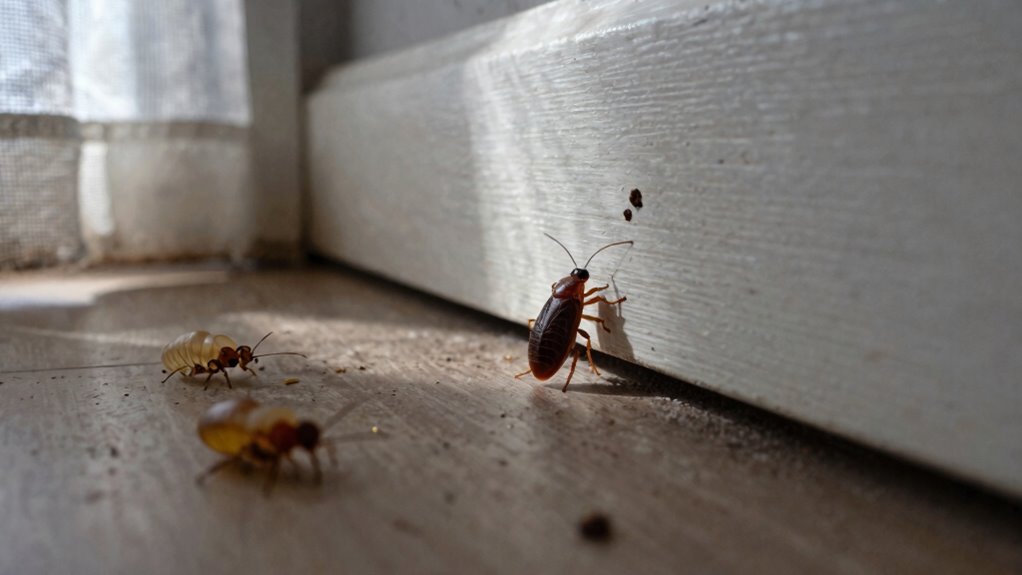
Eggs rarely travel alone and their presence is almost always signaled by three clear clues. Fecal spots, which are tiny reddish black smears, appear near egg clusters as females feed during their reproductive cycle.
Pale yellow molted skins shed as nymphs grow accumulate nearby. A sweet musty odor often described as rotten raspberries signals a moderate to severe infestation.
Look for these signs to identify where bed bugs are hiding. Fecal spots look like dried blood dots or smears while molted skins are translucent pale yellow casings 1mm to 5mm long.
The sweet musty smell is strongest near hiding spots and live crawling adults confirm eggs are likely close. These signs reveal behavior patterns because females lay eggs where they feed and rest.
Spotting any one clue usually means eggs are within inches. There is no need for a fancy pest control test; just look for the mess they leave behind.
Check behind headboards and along mattress seams for these traces. Professional bed bug treatment becomes necessary when you find multiple clues. For proactive control, apply a light dusting of food-grade diatomaceous earth in cracks and along baseboards to kill emerging nymphs.
How to Confirm Eggs Are Bed Bug Eggs: Not Debris
A grain of sand or speck of lint can easily be mistaken for a bed bug egg under a quick glance. But a few simple tips help you identify bed bug eggs correctly during your pest inspection. Using a 10x magnifying loupe, which costs around ten dollars online, reveals the egg’s distinctive oval shape and smooth, shiny surface. In contrast, debris like lint or sand is usually irregular and dull, helping you rule out common look-alikes. For the best results during your bed bug control check, shine a bright flashlight parallel to the suspected area. A true bed bug egg will cast a crisp shadow, while random particles just scatter the light and appear flat. Unlike these look-alikes, bed bug eggs are also typically found in clusters near harborage areas such as mattress seams and bed frames.
Visual Cues vs. Debris
Mistaking debris for bed bug eggs is common, even among the overly confident. I have squinted at a speck of dust myself, thinking it was an egg.
The key is knowing what you are really seeing for effective pest control. Bed bug eggs are perfectly oval, pale yellow, and about the size of a pencil tip.
They appear shiny and smooth, while debris like dust or sand is irregular and dull. Bed bug egg adhesion to surfaces is a strong sign, as eggs stick firmly.
Debris brushes off easily, so check for that glue like hold. Seasonal variance matters in terms of hatch speed, but visual cues stay the same.
Summer eggs hatch faster, while winter eggs linger longer. Look for that shiny, sticky, oval shape to confirm an egg during a bed bug inspection.
If it is not these features, it is just dirt and you can stop squinting. Use a bed bug egg guide or professional pest treatment if you need help identifying signs of infestation.
Magnification & Lighting Tricks
Two simple tools, a flashlight and a magnifying glass, can end your frustrating guesswork during a bed bug inspection. Shine that flashlight parallel to the surface and shadows will pop off eggs, distinguishing them from flat debris.
A 10x jeweler’s loupe for about $10 reveals the egg’s oval, translucent shape versus random dust or lint. Fresh eggs look shiny and smooth, while old ones collapse like popped balloons.
Bed bug eggs measure 1mm, matching a pencil tip diameter, so you can spot them with the right pest control equipment. Use a low angle flashlight to cast shadows on eggs but not on dust.
A magnifying glass shows the egg’s smooth cap, while debris lacks any structure. Eggs cluster near seams, but debris scatters randomly across the mattress.
Insect development depends on temperature thresholds, as eggs hatch in 5 to 10 days at room temp. If it’s not pearly, oval, and sticky, it’s probably just lint or dander.
Bottom line, spend $10 on a loupe and avoid false alarms during your bed bug detection routine. That simple lighting trick alone can save you time and unnecessary pest control treatments.
What to Do Immediately If You Find Bed Bug Eggs
Since you have found bed bug eggs, your first move is to act, not panic. Immediate steps include isolating the infested area, bagging linens, and sealing furniture in plastic to prevent spread.
Next, prepare for heat treatments because eggs die at 122°F. A steamer or professional heater ready can work well. For maximum effectiveness, use a handheld steamer that reaches 221°F to ensure eggs and pests are killed on contact without toxic residues.
Chemical sprays are another option but require careful application to cracks and crevices where eggs hide. Below is a quick reference for immediate actions.
| Action | Details |
|---|---|
| Isolate bedding | Seal in plastic bags, wash in hot water over 120°F |
| Use interceptors | Place under bed legs to catch escaping eggs or nymphs |
| Apply steam | Surface temperature must reach 130°F for instant kill |
| Use chemical sprays | Apply insecticide labeled for eggs to seams and cracks |
| Call a pro | Professional heat treatments cost $1–$3 per square foot |
Bottom line: act fast but methodically. No one wants tiny rice babies hatching in their sofa.
For complete bed bug control, remember to vacuum and dispose of the bag immediately. Always double-check mattress seams and baseboards for hidden egg clusters.
Store clean linens in sealed containers until the infestation is gone. Proper pest control requires patience and consistency with these steps.
Kill Bed Bug Eggs With Vacuuming and Steam Treatment
You have already bagged the linens, sealed the furniture, and maybe called a pro. Now, to kill bed bug eggs, vacuuming and steam treatment work wonders.
The process is simple but demands precision. Vacuum seams, cracks, and baseboards, then immediately seal and discard the bag outside to prevent escape.
Steam surfaces at 118°F for 90 minutes, or 122°F for instant kill. Use a thermometer for accuracy to ensure effective bed bug egg removal. Ensure uniform 360° heating prevents cold spots where pests can survive.
Combine both methods to catch eggs you missed, reducing the need for repeat treatments. This integrated pest management approach saves time and money.
Steam kills 90–100% of eggs on fabric, but it won’t reach deep crevices without direct contact. Focus steam nozzle on every fold and tuft for best results.
Pest control safety means wearing gloves and eye protection. Professional extermination cost averages $300–$500 per room, so DIY vacuum and steam treatment keeps cash in your pocket.
Vacuuming and steam are cheap, fast, and effective. Just don’t skip the bag disposal to avoid a reinfestation.
How to Inspect Secondhand Furniture for Bed Bug Eggs
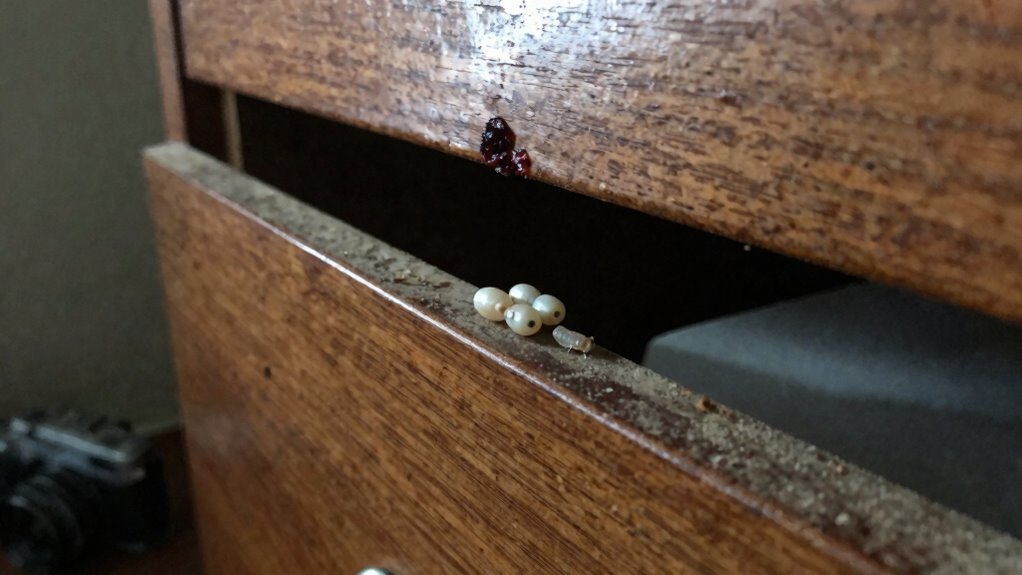
Before dragging home that “free” curbside nightstand or scoring a budget couch from a local online marketplace, inspecting secondhand furniture for bed bug eggs is a non-negotiable step.
Ignore common bed bug myths, like “they only hide in mattresses,” and focus on seams, joints, and cushion zippers.
Grab a bright flashlight and hold it parallel to surfaces to scan for those tiny, pale-yellow, rice-shaped eggs. They’re about 1mm, so a magnifying glass helps for detection.
The egg lifespan is short, from 5 to 10 days to hatch, but one female can lay 5 eggs daily. That means even a “clean” couch can harbor trouble, so check for sticky fecal spots or shed skins nearby.
Your best bet for peace of mind: use an interceptor cup, around $10, under each leg for 89% detection. Don’t risk it; thorough inspection saves your sanity and prevents a future infestation. Combining multiple methods, like sprays and ultrasonic devices, enhances overall bug prevention in bedroom environments.
Frequently Asked Questions
How Long Can Bed Bug Eggs Survive Without Hatching?
Bed bug egg survival depends on temperature, but at room conditions they hatch in 5 to 10 days. Their resilience is notable since they can endure up to 90 minutes at 118°F. However, they die instantly at 122°F, so heat treatment is a powerful bed bug killer.
While eggs won’t survive long without hatching under proper heat, they are tough little squatters. They are not invincible, which means you can get rid of them with the right pest control products. A steamer set to 122°F for 10 to 20 seconds kills 90 to 100 percent of eggs on fabric.
This makes steamers a solid bet for DIY extermination and mattress cleaning. For best results, combine steam with an insecticide spray to eliminate both eggs and adults. Remember, fast action on egg stages prevents reinfestation during your bed bug treatment plan.
Can Bed Bug Eggs Be Brought in on Clothing or Shoes?
Yes, bed bug eggs can absolutely be brought in on your clothing or shoes. This hitchhiker risk is very real because the eggs are tiny, sticky, and easily cling to fabric.
Laundry transfer is a common route for infestations, especially if you sit on infested seats or place your bags on contaminated floors. To kill bed bug eggs, wash your clothes in hot water at 122°F and dry them on high heat.
A quick inspection of your shoes and pant cuffs after travel helps too. This small effort gives you serious peace of mind and protects your home from costly pest control treatments.
If you’re looking for effective prevention, consider using a portable steam cleaner or a bed bug spray for luggage. Smart buyers also add mattress encasements and travel laundry bags to their cart for complete protection.
Do Bed Bug Eggs Stick to Surfaces or Are They Easy to Remove?
Bed bug eggs are surprisingly sticky, which makes them a real pain to remove from fabric, wood, or baseboards. They use a glue-like secretion to cling tight, so a light brush or vacuum won’t budge them.
Your first defense is visual detection: look for pearly, grain-of-rice shaped eggs against dark seams and mattress folds. Once spotted, a putty knife or stiff brush can physically scrape them off, but this takes patience and precision.
For a more reliable DIY bed bug treatment, steam cleaning is your best bet because 122°F kills eggs instantly on contact. Think of it like stubborn bubblegum on a shoe: prying it off takes effort, but heat melts the bond fast.
If you’re dealing with a widespread infestation, professional heat treatment is often the smarter purchase for your time and sanity. It reaches every crack and crevice without you scrubbing for hours, and it eliminates both eggs and live pests in one pass.
Before you buy any bed bug spray or fogger, remember that most liquids won’t penetrate the egg’s protective shell. That’s why targeted tools like a steam cleaner or an integrated pest management plan are worth the investment.
For quick spot checks, use a flashlight and a magnifying glass to inspect mattress tags, headboard joints, and carpet edges weekly. And if you’re unsure whether eggs are present, a sticky trap near the bed legs can confirm activity before you commit to a full extermination service.
Ultimately, the best bed bug removal strategy combines visual inspection, mechanical scraping, and heat application for maximum coverage. Don’t waste money on generic sprays that leave survivors; choose a proven heat-based method or hire a licensed pest control pro for guaranteed results.
Are Bed Bug Eggs Visible to the Naked Eye in Dim Light?
Bed bug eggs are technically visible to the naked eye in dim light, but it’s a stretch. Their tiny size, about 1mm, makes them easy to miss like a grain of sand on a dark carpet.
The shell texture is smooth and glossy, so a flashlight held parallel to surfaces helps catch a gleam. Without that, you’re squinting at shadows and likely to overlook an early infestation.
For best results, use a bright LED flashlight and a magnifying glass to boost your detection odds. This is a practical step for anyone performing a DIY bed bug inspection before buying treatment products.
Bottom line, spotting eggs in low light is possible but not practical for reliable pest control. If you want to confirm an infestation, invest in a high powered inspection tool or call a professional exterminator for a thorough assessment.
What Scent Attracts Bed Bugs to Lay Eggs in Certain Spots?
Bed bugs, frankly, are not picky about scent when laying eggs.
They are, nonetheless, drawn to the carbon dioxide humans exhale, as it signals a nearby food source.
The real attractant isn’t a perfume but the presence of other bed bugs.
Their excrement and pheromones, a chemical signal, create a homey spot.
So, they lay eggs where the colony feels safe and near a CO2 source, not to a specific floral smell.
It’s less about fancy cologne and more about a reliable buffet.
For effective bed bug control, focus on detecting these colony signals rather than masking scents.
A professional pest inspection can identify CO2 hotspots and pheromone clusters to target egg deposits.
When shopping for bed bug treatments, look for products that disrupt these chemical cues.
This buyer intent should guide you toward monitors or traps that mimic human breath or colony scents.


