
Preventing bed bugs while traveling starts with a few smart, low-effort habits. Book a mid-to-high floor room away from high-traffic areas, then store your suitcase in the bathtub before unpacking. Spend just three minutes inspecting mattress seams, headboard crevices, and luggage rack joints with a flashlight. Keep luggage off beds and carpet, seal dirty clothes in plastic bags, and use a metal rack when possible.
At home, dry all clothes on high heat for 30 minutes, vacuum suitcase seams, and quarantine any suspicious bags for two to four weeks. This guide covers exactly what you need to catch these hitchhikers early and avoid an infestation. Read on for a complete, no-fluff breakdown of bed bug prevention gear and strategies.
At A Glance
- Inspect mattress seams, headboard, and box spring with a flashlight for bed bug signs.
- Store luggage in the bathtub until room inspection is complete.
- Keep suitcase off beds, carpets, and upholstered furniture at all times.
- Use sealable plastic bags for dirty clothes and shoes during your stay.
- Dry all travel clothes on high heat for 30 minutes after returning home.
Choose a Room Away From High-Risk Areas for Bed Bugs
Rooms near the lobby or pool get more foot traffic, which raises the odds of bringing in bed bugs from luggage or clothing. For a bed bug free stay, ask for a mid-to-high floor that sits far from these busy spots.
This approach is your best pest prevention tip when booking, and it directly supports hotel room safety during travel. If you want peace of mind lodging, confirm the room’s location at check-in and inspect the mattress seams before settling in.
A quick bed bug inspection checklist includes checking the headboard and baseboards, which adds a layer of travel protection. By prioritizing a low-traffic, elevated room, you cut down the chance of encountering these pests without extra cost or effort. Using non-toxic glue traps between the mattress and box spring can also provide early detection during your stay.
Inspect the Bed, Headboard, and Luggage Rack for Bed Bugs
Start with the mattress. Lift the corner, shine a flashlight along the seams, and look for dark stains or tiny shed skins.
Then check the headboard’s crevices and the luggage rack’s cracks before placing a single bag on them.
Inspect mattress seams carefully for pest control signs like blood spots or molted shells.
Use a bright light to examine the headboard’s joints and the luggage rack’s folds for any bed bug activity.
Keep your luggage off the floor until you finish these checks.
This simple precaution helps prevent bringing bed bugs home from your trip.
For added protection, consider placing traps with strong adhesive under each bed leg to catch any bugs that attempt to climb.
Mattress Seams Check
Inspecting mattress seams, along with the headboard and luggage rack, is the most critical step for spotting bed bugs before they become unwanted travel souvenirs.
A thorough mattress seam inspection means lifting the fitted sheet and running a flashlight along every stitched edge.
Look for seam bug evidence like tiny rust colored stains, shed exoskeletons, or actual bugs huddled in the folds.
Bed bugs are flat and small, about the size of an apple seed, so squinting helps.
Check the piping and the raised edge around the mattress, since bugs love hiding there.
If the room’s luggage rack is fabric, skip it and set your bag in the bathroom tub until you finish.
Bottom line: spend three minutes on this inspection. It is the cheapest insurance you will buy all trip.
No bugs found? You can relax, slightly.
Headboard Crevice Inspection
| Inspection Point | What to Look For | Quick Tip |
|---|---|---|
| Headboard crevices | Dark stains or shed skins | Use a bright LED flashlight |
| Screw holes | Live bugs, tiny eggs | Tilt light to 45 degrees |
| Wood frames | Blood spots, fecal marks | Check behind corners |
| Fabric panels | Ripples or discoloration | Press fabric firmly |
| Wall connection | Gaps between headboard and wall | Slide a thin card through |
Check every screw hole for bed bugs, they cram in tight spaces. This five minute inspection can prevent a full blown infestation.
Dark stains and shed skins on headboard crevices are telltale signs of bed bug activity. Use a bright LED flashlight to spot them easily.
Tilt your light to 45 degrees when inspecting screw holes for live bugs or tiny eggs. Bed bugs hide in wood frames, so look for blood spots and fecal marks behind corners.
Press fabric panels firmly to check for ripples or discoloration from hidden bugs. Slide a thin card through gaps between headboard and wall to detect any infestation.
A thorough bed bug inspection like this costs five minutes of your time. It saves you from a long, itchy week of treatments and frustration.
If you find signs of bed bugs during travel, applying a dry, food-grade powder like HARRIS Food Grade Diatomaceous Earth along baseboards and crevices can kill any hitchhikers within 48 hours.
Luggage Rack Examination
Why do so many travelers skip the luggage rack inspection? Probably since they’re eager to crash. But ignoring it invites bed bugs straight into your suitcase.
Start with the headboard cracks, using a flashlight to spot dark stains or shed skins. Then, move to the luggage rack itself. Flip it over and examine every joint, slat, and crevice. Bed bugs love hiding in those tiny gaps, especially where wood meets metal.
If the rack is fabric, check the seams thoroughly. Don’t set your bag down until you’re certain it’s clean. One missed bug can ruin an entire trip and your laundry routine. A quick, two-minute check is cheaper than a full-blown infestation.
Trust the rack inspection, it’s not glamorous but it works. Finding pest control products for prevention is a smart move before you travel. Carrying TSA-approved sprays under 3.4 ounces makes it easy to treat luggage during your trip.
Store Your Suitcase to Prevent Bed Bugs From Hitching a Ride
Proper suitcase storage is your best defense against bed bugs hitching a ride home after a trip. Always raise your luggage on a hard surface, like a tile floor or a metal luggage rack, and keep it far from beds and walls to avoid contact with infested areas.
Sealable plastic bags, the kind used for storage, create a bug-proof barrier for dirty clothes and shoes. For extra protection, consider using a bed bug spray on your suitcase zippers and seams before storing it away.
Inspect your luggage thoroughly after each journey, especially in crevices and wheels, to catch any hitchhikers early. If you suspect an infestation, use a portable steam cleaner or insecticidal dust designed for travel gear to treat the surfaces.
Storing your suitcase in a large, airtight container or a dedicated closet bin adds another layer of defense against pests. This simple habit saves you from costly extermination services and keeps your home safe from unwanted guests.
Elevated Luggage Storage
Keeping your suitcase off the floor is your first line of defense against bed bugs. They cannot climb smooth metal or hard plastic, so raised rack placement or hard surface storage stops them dead.
A luggage rack keeps the bag isolated, and a tile floor in a bathroom works well too. This simple pest control habit interrupts their travel routes before an infestation begins.
Place the rack in a bright area, away from the bed and wall. This breaks the bug’s travel route and makes bed bug inspection easier.
Set your suitcase on the rack, zippers facing out. Check the rack’s legs for any hitchhikers first to prevent bringing pests home.
For extra safety, put the bag on a hard bathroom floor or counter. Bugs cannot grip polished stone, so this adds a second layer of bed bug prevention.
Bottom line: keep it lifted, keep it clean. A budget friendly rack is cheap insurance against a costly infestation. Use pesticide-free traps as an additional barrier under the luggage rack legs for safe, chemical-free monitoring.
Sealed Plastic Bags
Once you’ve mastered keeping luggage off the floor, the next step is locking it away in a sealed plastic bag. Picture your suitcase in a giant, clear cocoon, safe from hitchhiking bed bugs.
A standard 2.5 mil, 55 gallon contractor bag works well, costing about $5 for a pack. After your trip, seal it tight before entering your home.
This bag aids luggage decontamination by trapping any lurking pests. For complete bed bug prevention, don’t forget laundry sterilization: heat treat your clothes at 120°F for 30 minutes before mixing them with clean laundry. For similar protection on your bed at home, consider a six-sided zippered encasement to fully seal your mattress from insects.
Crawlies can’t survive that heat treatment. The bag’s main job is quarantine, not cleaning, but it buys you time for pest control.
Seal it, let it sit for months if needed, or vacuum and wipe down your suitcase first. Bottom line: a sealed bag is cheap insurance against bringing bed bugs home.
Don’t skip this step for your travel safety.
Hard Surface Placement
Several simple strategies let you outsmart bed bugs before they unpack their bags in your home. Hard surface placement is your first line of defense, keeping suitcases off fabric where bugs hide.
Store your suitcase in the bathtub. Bathroom storage is a bug-free zone since tile lacks hiding spots, unlike carpet or beds.
Simply place your bag in the tub until you have inspected the room. Work on a hard floor surface for thorough pest control.
Lay your luggage on a bare floor or desk for hard item inspection. This lets you spot any crawlers instantly, plus it is easier to clean than a rug.
A metal luggage rack is safe, but only after checking its legs and seams with a flashlight. Never set bags on the bed, even for a moment.
The bottom line is to keep luggage off fabric. Use the bathroom or a hard floor and inspect every surface for bed bug prevention. For added protection, consider using a solar bug zapper to reduce outdoor pest populations near your entry points.
This cheap, effective habit saves you a headache. It also avoids a hefty exterminator bill later.
Seal Dirty Clothes and Keep Personal Items Off the Bed
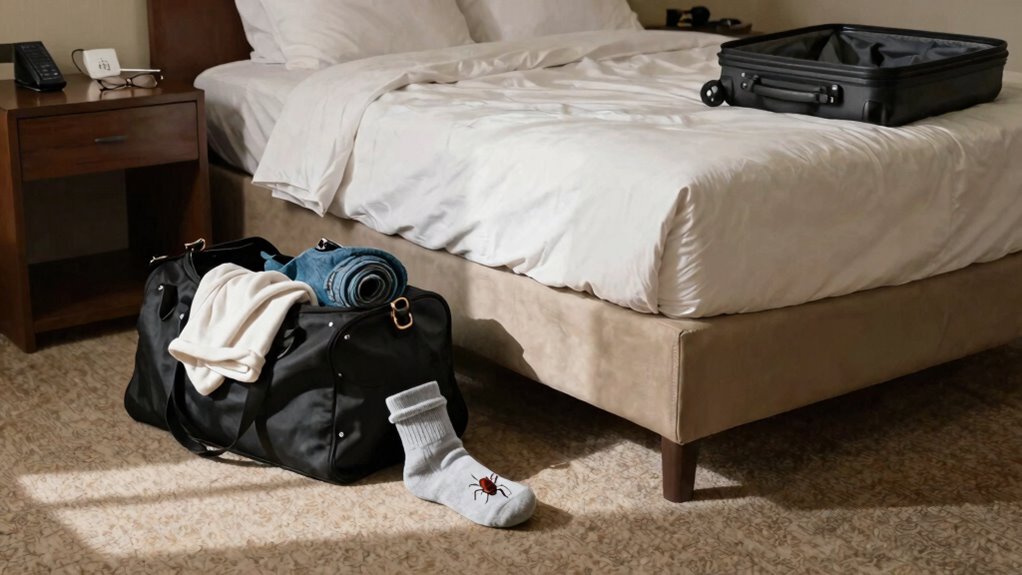
Why would you let bed bugs treat your suitcase like a free Airbnb? Seal dirty clothes in plastic bags immediately because odors attract these hitchhikers.
A single used sock can be a billboard for bugs, so practice strict laundry hygiene.
Store worn items in zipped bags, not loose on hotel chairs or the floor.
This keeps your suitcase a no-bug zone and helps with bed bug prevention.
For personal items storage, keep everything off the bed.
Place your phone, wallet, or book on a nightstand or desk.
Beds are bed bug highways, so your stuff doesn’t need a ride.
Dry cleanable bags cost about $10 for a three-pack and are cheap pest control insurance.
They keep stowaways out of your luggage.
The rule is simple: if it touched you, bag it.
If it’s not critical, keep it off the mattress.
Follow these bed bug treatment tips for travel peace of mind.
It is simple, cheap, and effective against an infestation risk. Portable heat treatment units can later kill any bugs hiding in your belongings.
What to Do If You Find Bed Bugs During Your Stay?
Remember, calm notification equals faster resolution. You are in control, not the bed bugs. Plant-based sprays with essential oils kill on contact without harsh chemicals, offering a safe option for treating luggage or surrounding areas.
Wash and Dry All Travel Clothes on High Heat When You Get Home
Upon returning from travel, head straight to the laundry room before unpacking anything else. Dump everything into the machine on the hottest setting the fabric can take, then dry on high heat for at least 30 minutes. Bed bugs die at 122°F, and this is your easy knockout punch. No skipping the home quarantine step, keep your suitcase isolated in a garage or tough plastic bag for weeks. A thorough vacuum inspection of the bag itself follows, emptying the canister into a sealed bag outside. Yes, it’s fussy, but less fussy than a six-month infestation. Skip the dryer at your own risk. One surviving egg laughs at your laziness. Clothes come out clean, hot, and bug-free. The rest is just damage control. For ongoing protection, consider that monthly reapplications work for most households and budgets.
Clean and Quarantine Your Luggage Before Unpacking

Your suitcase is like a five-star taxi for bed bugs. Quarantine it in a garage or utility room immediately upon return.
Vacuum the entire suitcase thoroughly, including linings and zippers. Then treat it with high heat at 180°F to kill hidden eggs and bugs.
Leave the bag in a car during summer heat over 120°F for 72 hours. Or seal it in a plastic bag and freeze below 0°F for the same time.
For extra protection, place the suitcase inside a zippered mattress encasement. Keep it sealed for a full month to ensure total elimination.
The bottom line is quarantine, treat, then seal. Do not unpack until the bag is completely clean. For faster results, use a handheld steam cleaner that blasts 221°F steam to penetrate fabric fibers and kill pests on contact.
Frequently Asked Questions
Can Bed Bugs Live in Car Trunks or Rental Cars?
Yes, bed bugs can live in car trunks and rental cars, though survival depends on temperature. Extreme heat or cold kills them, but mild climates let them linger for months.
Inspect rental car interiors before you load your luggage. Check seams, floor mats, and trunk lining with a flashlight.
Bed bugs hitchhike easily on bags and clothing. A quick flashlight sweep beats a roadside surprise.
Vacuum thoroughly after any trip and bag soiled items immediately. For extra protection, use a portable bed bug heater or spray approved for vehicles.
Think of your car as a potential stowaway zone, not a fortress. Professional pest control treatment may be needed if you find an infestation.
Do Bed Bug Sprays or Traps Work on Luggage?
Do bed bug sprays or traps work on luggage? Mostly no.
Sprays leave spray residue safety concerns, they can stain bags and irritate skin, plus they rarely kill eggs.
Traps have trap placement effectiveness issues, they catch bugs only if placed under suitcase legs, not inside.
A better bet is hard shell luggage, sealed plastic bags for clothes, and a flashlight for inspection.
Bottom line, skip the chemicals. They are more hassle than help for effective bed bug control on your bags.
How Long Do Bed Bugs Survive in Stored Luggage?
Bed bugs can survive in stored luggage for up to five months without feeding. Their lifespan depends on temperature, as extreme heat or cold kills them faster than moderate conditions.
The material of your suitcase matters too. Hard, non-porous surfaces offer fewer hiding spots than soft fabric bags.
A hungry bug can wait months inside a zipper crack or seam. Don’t rely on a storage closet to starve them out.
Use post-travel quarantine and heat treatment for safer pest control. This is a smart way to protect your home from infestations.
Can Bed Bugs Travel on Electronics Like Laptops or Phones?
Yes, bed bugs can travel on electronics like laptops or phones. They hide in warm, tight spaces such as phone cases or laptop vents.
A single bug hitched a ride home on a friend’s laptop last month. Prevention requires vigilance after any trip or hotel stay.
Inspect devices carefully using a flashlight for bed bug detection. Keep electronics off soft surfaces like beds and couches.
Don’t let that charger cord dangle on hotel bedspreads either. Hard cases block crevices and reduce hitchhiker risk.
Anti bed bug sprays cost $10 to $20 and add a protective barrier. For severe concerns, consider professional pest control treatment for electronics.
Bottom line: treat gadgets like luggage. Check them, seal them in plastic bags, and don’t assume they’re safe.
Buy a travel hard case and a portable heat treatment device for peace of mind. These products kill bugs without damaging your devices.
Should I Tip the Hotel Staff if I Find Bed Bugs?
Tipping when bed bugs are found is not required, and pest control ethics make that clear. The staff failed in their hotel responsibility by not preventing the infestation.
Report the problem to management instead of reaching for your wallet. Ask for a full refund or a room change to avoid those bites and potential skin reactions.
Tipping implies approval of a dirty room, so save your cash for a new luggage lock or a portable bed bug heater. For effective pest prevention, always inspect the mattress seams and headboard before unpacking.
If you spot bed bug shells or blood spots, demand accountability and request professional pest control treatment. Your best purchase for travel peace of mind is a quality bed bug spray or a protective mattress encasement for luggage.


