
Diatomaceous earth kills bed bugs by shredding their waxy shell, leading to fatal dehydration. But here’s the catch: it works like a slow-motion movie, taking days to finish the job.
At a high dose, half will die in 1.7 days, but at a low dose, that wait stretches past two weeks. Bed bugs also actively avoid dusty patches, meaning most never contact enough to die.
In field tests, DE alone often failed to lower bug counts, leaving your home at risk. For faster, reliable results, a silica gel like CimeXa kills 100% in just four days—no waiting, no escape. Stick around for the breakdown of the best pest control weapons.
At A Glance
- Yes, DE kills bed bugs by physically abrading their waxy cuticle, causing fatal dehydration.
- However, DE works slowly, requiring 9 to 15 days of continuous exposure for full mortality.
- Brief contact with DE kills under 37% of bed bugs in lab tests.
- Bed bugs actively avoid DE-treated areas, making prolonged contact rare.
- Silica gel (e.g., CimeXa) is faster and more reliable than DE for bed bug control.
Does Diatomaceous Earth Actually Kill Bed Bugs?
Diatomaceous earth can kill bed bugs, but it works slowly like a tortoise in a demolition derby. The real value here is patience, as DE requires 9 to 15 days of constant exposure to work.
Bed bugs are smart and avoid treated areas, making prolonged contact rare. In tests, brief encounters kill under 37 percent of bugs.
Ethical concerns arise when people rely solely on DE, wasting time and money while the infestation grows. It costs about 10 dollars per pound, but slow action means bugs keep biting.
Using DE alone is like bringing a squirt gun to a house fire. The bottom line is DE works, but poorly.
Pair it with faster killers like CimeXa or a professional for best results. Don’t bet the farm on a dust that needs two weeks to win a bed bug battle.
How Diatomaceous Earth Kills Bed Bugs (The Mechanism)
Diatomaceous earth works against bed bugs in two key ways. It physically scratches their protective outer shell and then causes them to dry out completely.
The tiny sharp particles scrape off the waxy coating that keeps moisture inside the bug. Without that coating, bed bugs lose water and die from dehydration over time.
This process depends heavily on how much powder you use. Higher doses and longer contact times lead to much faster bed bug elimination.
For best results, apply a thin dust layer in cracks, crevices, and along baseboards where bed bugs travel. Reapply after cleaning or if the powder gets damp to keep your pest control efforts effective.
Physical Abrasion of Cuticle
Every pest control product has its unique selling point, and for diatomaceous earth it is a microscopic minefield of jagged fossilized silicates.
Those white dust particles come from crushed, razor-sharp ancient seashells at a scale you cannot see.
When a bed bug walks over it, those shards physically abrade the waxy cuticle.
This is not a chemical poison, just tiny edges carving the bug up like a million paper cuts.
Amateur pest controllers often call DE a desiccant, but technically the drying effect comes second.
The initial kill mechanism is brute, physical destruction of the insect’s waterproof armor.
Without that protective layer, the bug leaks moisture and slowly dehydrates over days.
The abrasion is the first and non-negotiable step in this mechanical insect eradication method.
No chemistry is involved, just a lot of tiny, unpleasant scrapes for better bed bug control.
Products that are OMRI Listed guarantee no synthetic additives or fillers interfere with this natural process.
Desiccation Through Waxy Layer
Once the cuticle is scratched open by diatomaceous earth‘s jagged edges, the real death sequence begins. This desiccation mechanism is deadly simple.
The waxy layer breakdown on a bed bug’s exoskeleton creates tiny leaks. Water then escapes uncontrollably, like a water balloon with a pinhole.
The bug simply dries out. Without that protective waxy coating, it cannot retain fluids.
This process takes days, not hours. For example, at a heavy dusting of 1 mg per square centimeter, it might kill all bed bugs in roughly two weeks.
But light dusting? Think weeks longer. If it works at all, slow and steady doesn’t win this race.
It often loses. For most people, diatomaceous earth is a decent barrier but a poor killer. Reapply after cleaning or rain to keep its residual effect active, as moisture destroys its abrasive power.
Bottom line: rely on it only if you have patience to burn. A backup plan is essential for effective pest control.
Dose-Dependent Mortality
The killing power of diatomaceous earth depends almost entirely on how much you apply. The dose-response relationship is the key to understanding this powder’s effectiveness for pest control.
Higher lethal concentrations kill faster, following a classic dose response curve. For example, at 20 mg the LT50, or time to kill half the pests, is just 1.7 days. Drop to 5 mg and that number balloons to 8.4 days.
Here is how the numbers stack up for your pest control needs. The table below shows the dose, LT50, and 48 hour mortality.
| Dose (mg) | LT50 (days) | 48 Hour Mortality |
|---|---|---|
| 20 | 1.7 | ~90% |
| 10 | 3.2 | ~80% |
| 5 | 8.4 | ~55% |
| 1 | >15 | <30% |
For fast elimination of bed bugs or ants, a higher dose is your best bet. At 20 mg, you achieve nearly complete mortality in just two days. If you want a slower knockdown for a larger area, the 5 mg dose still works but takes over a week. Unlike diatomaceous earth, boric acid acts as a stomach poison that disrupts digestive and nervous systems, leading to dehydration and death with no resistance buildup over time.
What Research Says About DE’s Bed Bug Mortality Rates
According to research on bed bug mortality rates, diatomaceous earth kills under 20% of bed bugs in short exposure tests that mimic real homes. In contrast, CimeXa silica gel achieves 100% bed bug control by day four.
DE requires continuous contact for 9 to 15 days to fully kill bed bugs, but most bugs avoid the dust that long. Field studies confirm that DE alone fails to reduce infestations and acts more like a dusty deterrent than a true insecticide.
The bottom line is that diatomaceous earth works, but you will wait forever for results. For fast acting pest control, grab a silica gel product like CimeXa for speed and reliable bed bug treatment.
Note that food-grade diatomaceous earth is safe for use around pets and children when applied carefully.
How Long Does It Take for DE to Kill Bed Bugs?
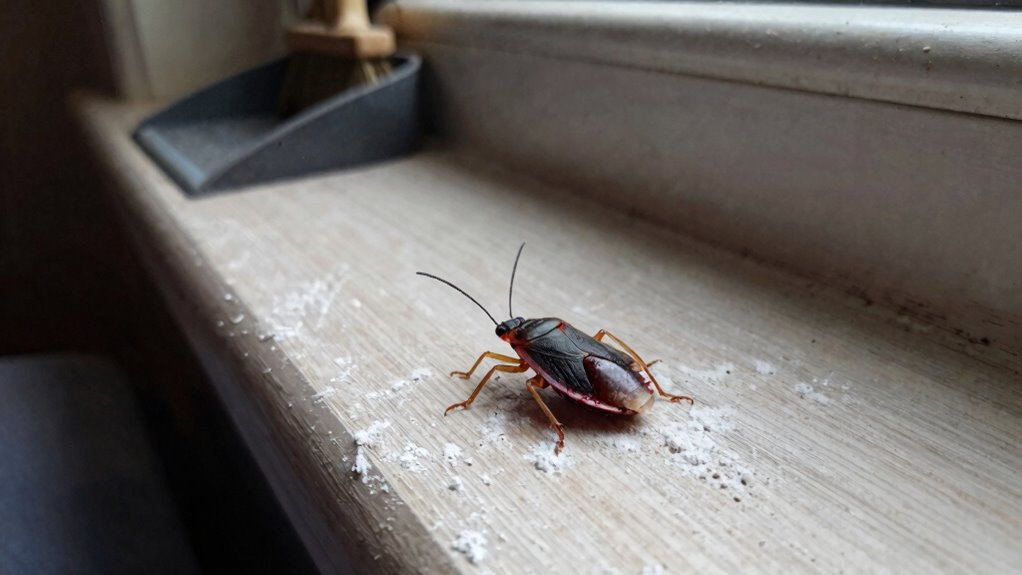
DE kills bed bugs over a period that depends on constant exposure, the amount used, and how fast the powder spreads between pests. In ideal lab tests with steady contact and a heavy dose of 1 mg per square centimeter, adult bed bugs die completely within 9 to 15 days.
If bed bugs only touch the treated area briefly or get a smaller dose, the timeline gets longer. However, when one bug picks up DE and transfers it to others, the process can speed up. The LT50 values range from 1.8 days at high doses to over 8 days at lower ones.
This means for effective bed bug control, you need to apply a thick, even layer of diatomaceous earth in hiding spots and use a targeted pest treatment plan. Homeowners often ask how long until bed bugs die, and the answer is patience while the powder does its work.
For best results, combine DE with other insecticides and monitor the infestation over two weeks. Always buy OMRI-listed products for safe indoor use and reapply after cleaning to maintain the dose.
Continuous Exposure Duration
A ticking clock is what you face when applying diatomaceous earth for bed bug control. Continuous exposure duration is essential, and this is not a quick fix solution.
At a high concentration of 1 mg/cm², it takes 9 to 15 days of nonstop contact to kill all adult bed bugs. That means two weeks of waiting, so patience is mandatory for effective pest elimination.
Persistent dust residues must remain completely undisturbed. Any vacuuming or cleaning will reset the clock on your bed bug treatment.
Environmental moisture impact is significant. High humidity clumps the dust, reducing its cutting power and slowing down the kill time.
Bed bugs actively avoid treated areas. They may not stay put long enough for the dust to work on them.
Bottom line: diatomaceous earth works, but only if bed bugs cannot escape its slow, dusty grip for days. For the best results, keep the dust in place and avoid disrupting the treatment zone. For similar results, a 99.9% pure boric acid powder can also be effective when applied in cracks and crevices.
Dose-Dependent Kill Time
Diatomaceous earth’s kill time depends heavily on the dose. At higher amounts, say 20 mg, the lethal time drops to an LT50 of just 1.7 days, meaning half the pests are dead in under two days.
Lower the dose to 5 mg, and that LT50 balloons to 8.4 days. These concentration curves show a clear pattern: more powder, faster results.
It’s not rocket science, just insect control science, though it is slower than watching paint dry. Continuous exposure at 1 mg/cm² takes a full 15 days for 100% kill.
For anyone expecting overnight pest elimination, DE delivers the opposite. It works indeed, but patience is mandatory.
If speed matters, look elsewhere for a faster insecticide. This works by mechanically damaging exoskeletons and causing dehydration, so the process relies on physical abrasion rather than chemical action.
Horizontal Transfer Speed
Horizontal transfer is DE’s hidden advantage, but it moves at a crawl. For pest control success, transfer efficiency matters more than raw speed: when one bed bug carries the powder back to its nest mates, lethal speed depends on the dose.
At 20 milligrams, half of the recipient bugs die in 1.8 days. At 5 milligrams, that LT50 stretches to 8.4 days, which is slower than a sleepy sloth.
Need a quick kill for active infestations? The 20 mg dose kills 83.3% of unexposed bed bugs within 48 hours, which is decent for a powder made mostly of crushed fossils. But the 5 mg dose takes over eight days to hit 50% mortality, so that’s practically a colony retirement plan for your bed bug problem.
Good news for targeted treatments: nymphs die faster than adults, with 55.6 to 94.4% mortality within 24 hours at high doses. Karma is quick for the little freeloaders, which helps if you’re dealing with a fresh hatch.
Bottom line: DE is a slow but workable option for bed bug control through bug to bug contact, if you’re patient enough. For faster results, silica gel kills all bed bugs in about 4 days, so skip DE when you need an immediate fix.
If you’re shopping for bed bug powders, prioritize silica based options for faster knockdown. For long term prevention, DE still works, but pair it with monitoring and vacuuming for best results. For precise application of DE to bed bug hiding spots, use a manual squeeze bulb duster for targeted treatments along baseboards and under furniture.
How Diatomaceous Earth Compares to Silica Gel and Other Dusts
Diatomaceous earth may seem like a solid choice, but it is honestly the participation trophy of bed bug dusts.
Silica gel products like CimeXa kill 100% of bed bugs in just four days of exposure.
Silica gel products like CimeXa kill 100% of bed bugs in just four days of exposure.
DE only achieves around 30 percent mortality in short exposure tests, which is a repellency comparison not an efficacy tradeoff.
Silica gel is faster and deadlier, and bed bugs tend to avoid high silica areas even more than DE treated zones.
This means they die before they have a chance to flee the treatment area.
DE can work if bugs wallow in it for two weeks, but that scenario is rare.
Tri Die Dust contains 40 percent silica and hits a 90 percent kill rate in pest control testing.
Alpine and DeltaDust hover near DE’s 30 percent mark for bed bug control.
For real bed bug elimination, skip the chalky loser and pick silica gel instead.
It costs more per pound but actually ends infestations instead of just giving bugs a slow avoidable nap.
The bottom line is that silica gel wins hard for effective bed bug dust treatments.
For comparison, steam treatments using temperatures between 221°F and 356°F kill bed bugs and eggs on contact without any chemicals.
Why Bed Bugs Avoid Diatomaceous Earth (And Why It Matters)
Silica gel dusts kill bed bugs in four days and, frankly, they don’t care if the bugs try to flee. Diatomaceous earth works slower because bed bugs detect it through sensory cues, often tiptoeing around treated areas.
This avoidance behavior means they rarely linger long enough for DE to damage their protective waxy coating. Bed bugs sense DE’s abrasive texture, triggering a natural reaction that makes them travel shorter distances and spend less time near treated surfaces.
In non‑forced tests, bugs only briefly touch DE, killing less than 36.7 percent within short contact. For comparison, CimeXa achieves a 100 percent kill rate in four days, making it a far more effective pest control solution.
DE alone fails to reduce real‑world infestations. Bugs simply avoid baseboards or carpet edges where people often sprinkle dust, so your pest control effort goes to waste. Unlike DE, interceptor traps use smooth, non-climbable walls to physically block bed bugs without relying on insect avoidance or dust application.
For faster knockout in your home, skip DE and grab silica gel. Bugs won’t dodge that, giving you a reliable bed bug treatment that works.
Can Bed Bugs Transfer Diatomaceous Earth to Each Other?
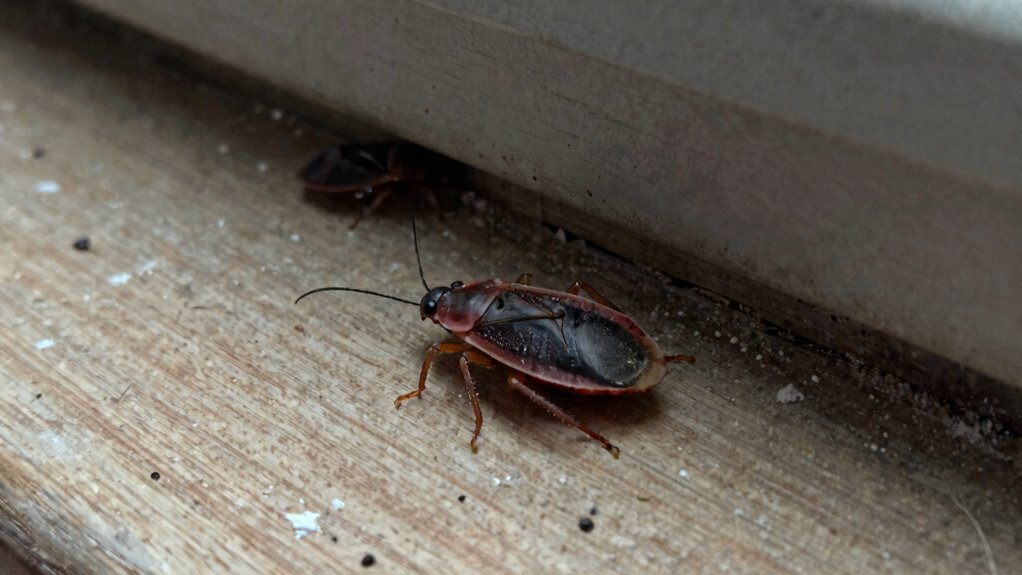
Yes, bed bugs can transfer diatomaceous earth to each other, but it is not a perfect solution for pest control. When a donor bug crawls through DE, it picks up particles that rub off onto other bed bugs during contact.
Studies show that up to 83% of unexposed bugs die within 48 hours after interacting with a dusted buddy. However, the donor bug itself usually dies first because the DE is lethal to them as well.
This horizontal transfer effect works slowly and kills the courier, so it is not a fast elimination method. For practical bed bug treatment, DE can spread through a harbor, but you should rely on it as a secondary weapon.
Combine DE with other professional pest control products for a more complete kill. Buy a high-quality food grade diatomaceous earth and apply it in cracks and crevices where bed bugs travel.
How Concentration and Dose Affect DE’s Killing Speed
Higher concentrations of diatomaceous earth clearly speed up bed bug control, but brief exposures won’t get the job done.
At 20 mg of DE, the LT50 drops to just 1.7 days, meaning half the bed bugs are dead in under two days.
At 5 mg, that time stretches to 8.4 days, which is far too slow for effective pest control.
This is why you need a heavy, sustained dusting across cracks, voids, and mattress seams, not a light sprinkle.
A quick pass with a one-inch strip of treated surface yields zero mortality, so don’t expect results from a casual wipe.
For reliable bed bug treatment at home, focus on thorough coverage and reapplication every few days to maintain the lethal dose.
Buy a duster with a fine tip to place DE precisely along baseboards, box springs, and headboard joints.
If you want faster knockdown, pair the dust with a residual spray, but never mix them wet, as moisture kills DE’s abrasive action.
Remember, short contact means no dead bugs, so leave the dust undisturbed for at least a week.
For buyers seeking quick relief, choose a higher-dose formulation and apply it generously to every harbor zone you can reach.
Higher Doses Kill Faster
Diatomaceous earth, or DE, follows a surprisingly simple rule. If you pile it on, it kills faster, but you will still need patience.
At 20 mg, the median lethal time drops to just 1.7 days. Compare that to 8.4 days at 5 mg, a fivefold speed gain for your pest control efforts.
Heavier dust layers force prolonged contact with the insect. This lets the abrasive particles shred the waxy cuticle faster for quicker results.
Even with high doses, expect days of waiting, not hours. For practical home use, 20 mg kills in under 2 days, while 5 mg stretches past a week.
Surface coverage matters too. One milligram per square centimeter needs 15 days for full mortality, but thicker applications shorten that timeline.
The mechanism is simple abrasion plus desiccation. There is no magical instant effect, just a slow poison that is non toxic to humans.
For your pest control project, pair DE with silica dusts or pheromone lures. These synergistic combinations give you a controlled release of death rather than a blitz.
The bottom line is heap it on, then wait. Diatomaceous earth works, but only on its own clock.
Always use food-grade DE to ensure safety for kids and pets during application.
Short Exposures Fail
Brief contact with diatomaceous earth treated surfaces is not enough to kill bed bugs. These pests actively avoid dust, so exposure time matters a great deal for effective control.
Studies show that short accidental touches, like a bug scurrying over a baseboard, cause less than 37 percent mortality. That result is simply a failure for any pest control treatment.
Even if a bed bug walks through DE, it needs days of constant exposure to die. Brief contact just does not work for getting rid of an infestation.
In tests, one inch DE strips killed zero bed bugs when they were not forced to linger. Think of DE like a slow, sleepy trap that only works if the bug sticks around.
For best results, dust directly into harborages and hidden cracks instead of open areas. Sprinkling along baseboards is a boring waste of powder and a poor buying choice.
The bottom line is that DE is a marathon, not a sprint for quick kills. For faster results, buy CimeXa as a more effective alternative.
Remember that DE only works as long as it stays dry, so moisture reduces its already slow mechanical killing action.
Why Using DE Alone Fails in Real-World Infestations
Several reasons explain why diatomaceous earth alone fails to control real-world bed bug infestations. This treatment method is slow, weak, and bed bugs simply avoid it.
Sprinkling DE along baseboards, hoping for a miracle, offers only false security. Brief contact kills almost nothing because bed bugs do not linger on the powder.
Sprinkling DE along baseboards, hoping for a miracle, offers only false security.
They brush past it, and short exposure kills under 20% of the population. In lab tests, a one-inch strip of DE caused zero mortality.
Avoidance is a real phenomenon. Bed bugs actively spend less time on treated surfaces, reducing the contact needed for death.
Field results are grim. In a real apartment trial, DE alone did not lower the bed bug count.
This dust works best when used as a professional tool in a vacuum. The bottom line is that DE is more of a placebo than a reliable pest control solution.
For effective elimination, pair it with smarter tactics or choose alternative treatments such as Crossfire Liquid Concentrate, which kills bugs and eggs quickly with effects within minutes and provides residual control that continues working after initial spray.
How to Use DE for Bed Bugs (Best Practices Only)
Here’s a no-nonsense truth: diatomaceous earth is not a magic bullet for bed bugs. But when used the right way, it can earn its keep as part of a broader plan.
For best product efficacy, apply a thin, barely-visible dust. Thick piles let bugs walk around it.
Focus only on known harborages such as mattress seams, box spring edges, and baseboard cracks. A fine duster costs around $10 and allows for precise, targeted coverage.
This method protects user safety by reducing airborne dust that irritates lungs. Reapply after vacuuming, once per week for two weeks.
Remember: brief contact won’t kill bed bugs. They must crawl through the dust for hours.
Use it as a long-term barrier, not a quick fix. Consistency is key for complete elimination.
Better Alternatives to Diatomaceous Earth for Bed Bug Control
CimeXa is a silica gel dust that kills bed bugs faster and more reliably than diatomaceous earth. It eliminates 100% of bed bugs within four days of exposure, while DE takes nine to fifteen days.
CimeXa eliminates 100% of bed bugs in four days, unlike diatomaceous earth’s nine to fifteen.
This speed is crucial because bed bugs avoid dusty areas, making brief contact more likely. CimeXa’s fine particles stick to their exoskeleton and dry them out quickly.
It works across the entire bed bug life cycle, from eggs to adults. For faster kill, CimeXa achieves total mortality in four days, whereas DE requires up to fifteen.
In real-world field tests, CimeXa consistently reduces infestations, while DE alone often fails. This makes it a top choice for integrated pest management.
CimeXa pairs well with heat treatments and monitoring traps, creating a layered defense. For a direct and effective solution, skip the DE and grab CimeXa.
It is dry, but it actually lands every time. Use this bed bug killer for reliable control in your home.
Frequently Asked Questions
Is Food-Grade DE Safe for Pets and Humans?
Yes, food grade DE is typically safe for pets and humans when used correctly for pest control. The key is avoiding inhalation risks, as the fine dust can irritate lungs if breathed in.
Wearing a mask during application is wise, especially when treating carpets or baseboards for fleas, ants, or bed bugs. Ingestion safety is high in small amounts, which is why food grade DE is used as an anti caking agent in animal feed.
Keep pets and children away from treated areas until the dust settles to avoid any irritation. Think of food grade DE like flour: harmless in small doses, but you would not want a face full of it.
For targeted pest elimination, always stick to food grade DE and never use pool grade DE, which contains harmful additives. If you are looking for a natural flea powder or ant barrier that works without chemicals, this is a smart purchase for home use.
Does DE Lose Effectiveness Over Time or in Humidity?
Yes, diatomaceous earth loses effectiveness over time in high humidity environments.
When moisture is absorbed, the microscopic sharp particles clump together and turn into a paste instead of staying as a loose powder.
This clumping dramatically slows down its already slow killing action on crawling insects.
Think of it like trying to cut something with a sponge that was supposed to be a knife.
For the best pest control results, you should only apply food grade diatomaceous earth in consistently dry areas.
Inside wall voids, under appliances, or behind cabinets are ideal spots for long lasting bug barrier protection.
Avoid using it in damp basements, crawl spaces with high moisture, or outdoors in rainy climates.
If you apply it in humid conditions, you are basically just dusting with baking flour, which does nothing to kill roaches, ants, or bed bugs.
For smart purchase decisions, look for a dry storage method and reapply after any exposure to moisture.
This way, you keep the fine powder sharp and ready to dehydrate pests upon contact.
Can DE Be Used on Mattresses and Bedding?
DE can be used on mattresses, but only with caution. Apply a thin dust to the box spring and mattress seams, never the sleeping surface. Better yet, encase the mattress entirely. This traps bugs and avoids DE contact.
DE application methods are tricky and slow. Bedding can spread it into your lungs. For $20 to $30, a mattress encasement beats dusting. It offers a cleaner, more reliable fix.
The bottom line is to skip DE on beds. Seal it up instead.
How Should I Clean up DE After Treatment?
Cleaning up diatomaceous earth after treatment is simple if you follow the right steps for safe residue disposal. Always use a HEPA rated vacuum to avoid blowing fine dust back into the air you breathe.
Dispose of the vacuum bag or empty the canister outside, sealing all debris in a plastic bag. Never try wet cleanup, because moisture renders DE ineffective for future pest control treatments.
A quick tip is to empty your vacuum over a trash bin, not indoors. This prevents respiratory irritation and guarantees no lingering residue in your living space.
For best results, repeat the cleaning process after each insecticide application. This ensures your pest control routine stays effective and your home stays protected from bugs.
Will Vacuuming Remove DE That Has Been Applied?
Yes, vacuuming will remove DE, which is exactly the point for cleanup. Chemical safety is simpler once the diatomaceous earth is gone because DE is abrasive dust, not poison, though inhaling it still irritates lungs.
Treatment duration matters when using this pest control product. DE needs days of continuous contact to kill bugs, so vacuuming right after application ruins its slow work.
Best move is to leave DE undisturbed for two weeks, then vacuum thoroughly. This patience makes DE effective only if you let it sit, patient as a rock.


