
How to get rid of flies in the basement starts with understanding that those flies are actually a sign of moisture, not an infestation. If you’ve been swatting and spraying without success, it’s because the real problem is standing water and high humidity.
Stop the dampness, and the flies will stop showing up. This guide walks you through sealing leaks, lowering humidity, and using the right traps so the issue doesn’t come back.
We’ll cover specific products, from plumber’s epoxy to dehumidifier settings, plus a simple weekly routine to keep your basement fly-free. No fluff, just the steps that actually work.
Read on for the full breakdown, including when to spray and how to maintain zero flies long-term.
At A Glance
- Seal cracks and entry points with caulk, expanding foam, or hydraulic cement.
- Control humidity below 60% using a dehumidifier and fix all leaks.
- Place UV light traps 4-6 feet high near common entry points.
- Replace sticky strips every two weeks or when visibly covered.
- Clean first, then use sprays only as a last resort to avoid resistance.
Why Basement Flies Love Moisture and Darkness
Basements don’t just invite flies. They roll out the red carpet for them.
Basement humidity is the main culprit, with dampness from leaky pipes or concrete sweat creating a perfect breeding ground. Key fly attraction sources include organic slime in floor drains, rotting cardboard, and forgotten pet waste.
A single spilled soda or damp mop head releases enough odor to lure cluster flies and drain flies indoors. These pests thrive on moisture levels above 50 percent. For serious infestations, combining drain gel or enzyme cleaner provides long-term control by breaking down the organic scum that fuels breeding sites.
Use a dehumidifier like the Frigidaire FFAD5033W1, costing around $250, to pull excess water from the air. Dry surfaces kill breeding potential fast.
Set Traps and Lights in Non-Food Areas First
Set traps and lights in non-food areas first. This keeps pests away from your kitchen and storage spaces.
Place light traps at 4 to 6 feet high, away from other light sources. The UV bulb attracts flies and should be replaced yearly for about $10 each. UV light traps attract bugs using 365nm and 395nm wavelengths, catching them on sticky cards.
Sticky strips work anywhere but avoid food prep zones. They catch flies without chemicals, even if they are not the most attractive option.
Light Trap Placement
A windowless basement turns one fly into an irritating roommate you never invited. Light trap placement here is a precision job, so hang the unit at 4 to 6 feet high. Keep it away from competing light sources like a washing machine’s glow, which can dilute the lure. Your goal is mechanical exclusion, luring flies before they roam toward food areas upstairs. Remember, UV bulb replacement is mandatory every year, otherwise the trap becomes a dim, useless decoration. For effective fly control in dark zones, position the unit near entry points like a sump pump or floor drain. This catches adult flies early, before they wander into living spaces or kitchen zones. A dad quip: flies don’t need a room key to annoy you, but a well-placed trap denies them the welcome mat. The buyer doesn’t need a fancy setup, just one insect light trap at a cost of about $30. Installation takes three minutes, and annual bulb changes keep the UV output strong for pest management results. Your basement stays fly-free, and you avoid chemical sprays altogether. That’s simple, practical, and a smart investment for long-term pest prevention. Wavelength diversity covers multiple insect types without chemical agents, ensuring the trap remains effective against various fly species in the basement.
Sticky Strip Positioning
Light traps manage flying pests, but sticky strips catch the ones that sneak past. Place them first in non-food areas like basement corners, near sump pumps, or along pipes.
Never hang them above prep surfaces as that invites contamination risks. For cleaning, swap strips when visibly covered or every two weeks, even if they look like sad yellow banners of defeat.
Pair sticky strips with a UV bulb replacement once a year, even if the light still glows. Those bulbs fade fast and lure fewer flies over time.
Sticky strips cost about five dollars for a pack of six. They are cheap, effective, and require zero skill to install.
Bottom line is to stick them where food is not, clean or replace often, and let the strips do the dirty work. Replace strips before they become overcrowded, as adhesive loses grip once the surface is full.
Seal Every Crack, Gap, and Pipe Entry Point
Your basement’s walls might look solid, but flies treat tiny gaps like VIP entrances. Cracks around pipes, conduits, and foundation walls are their easy way in.
Your basement’s walls might look solid, but flies treat tiny gaps like VIP entrances.
Fixing these openings is essential for basement insulation and proper foundation sealing, which blocks flies from entering the cool, dark space they love. Use a high-quality silicone caulk, costing about $5 to $10 per tube, to seal gaps up to a quarter-inch wide.
For larger cracks, apply expanding foam insulation, roughly $4 per can, which additionally boosts basement insulation. Check around every pipe entry point, especially near drains and utility lines. For even tougher gaps, pack in rust-resistant steel wool first before sealing.
Flies will wiggle through spaces you can barely see, so be thorough. A tight seal saves you from chasing flies later and keeps your sanity intact.
Do this before considering screens or door closers. For complete pest control, also inspect for rodent proofing gaps near wire conduits and HVAC ducts.
Buyer intent for fly prevention starts with stopping them at the foundation. Every small crack you seal slashes your fly control costs and effort.
Install Screens, Door Closures, and Air Curtains
18 mesh window screens block even tiny flies, costing $10 to $25 per window.
Automatic door closers keep doors shut after use for $20 to $60 each.
Air curtains blow flies away from busy doorways, with a three foot wide model costing $200 to $500.
Choose 18 mesh screens for basement windows to stop pest entry points.
Add door closers to high traffic exits for effective fly control.
Consider a low cost air curtain for busy entries as a practical pest management solution.
Your flies won’t know what hit them, mostly just wind.
This simple approach targets fly breeding sites and entry ways with affordable, buyer friendly upgrades.
Find and Remove Basement Fly Breeding Sites
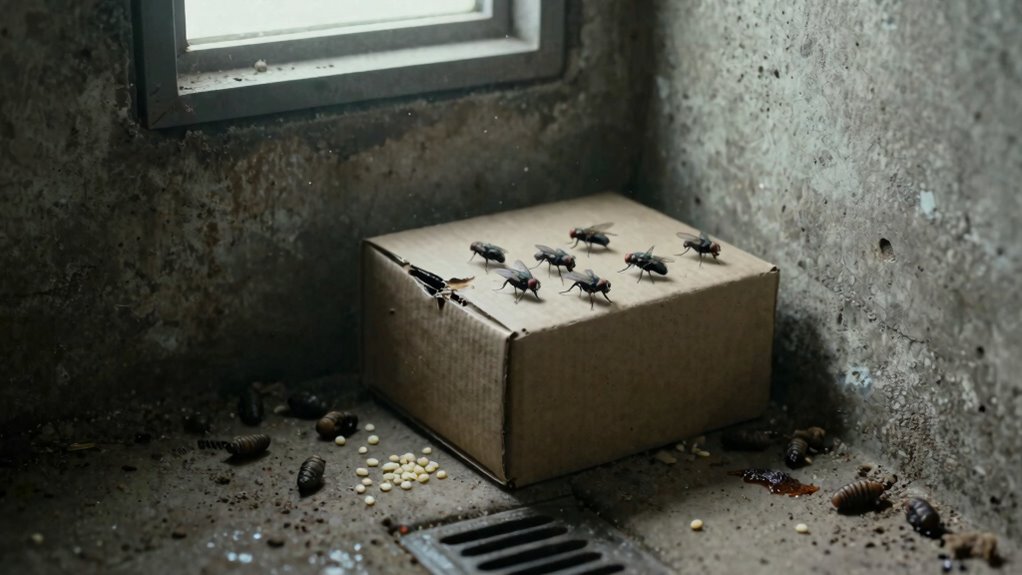
Basements often become prime real estate for flies because they offer moisture, darkness, and neglected organic matter. To solve the problem, you must locate and remove the specific breeding sites first.
Look for piles of rotting potato skins, a leaky drain, or a trash can left open too long. Check dumpster placement relative to basement windows and move it at least 50 feet away if it is too close.
Make sure all dumpster lids are tight to block fly entry. Then search for hidden debris like dead rodents, rotting cardboard, or spilled food under shelving.
For a natural touch, try Venus flytraps in pots near basement entry points to catch adult flies. However, these plants eat slowly and need feeding indoors every week or two, so do not rely on them alone.
Fix any leaking pipes immediately to reduce moisture that attracts pests. Seal all garbage bags tightly and remove every potential food source to break the breeding cycle. Using a vapor-based treatment inside basement trash bins can prevent fly larvae from developing for up to four months.
Stop Basement Leaks to Cut Off Fly Breeding
Since flies breed in dampness, stopping basement leaks is the single most effective way to cut off their life cycle before it starts. Even perfect dumpster placement won’t help if a leaky pipe creates a breeding puddle for fly larvae.
Flies evolve fast, so relying on sprays alone leads to pesticide resistance. Fixing moisture is your best bet for long term pest control without harsh chemicals.
A cracked foundation can be sealed with hydraulic cement for just $10 to $15. This permanent fix blocks both water and fly entry points.
A leaky pipe joint needs plumber’s epoxy, which costs about $8 and dries in 30 minutes. This stops puddles that attract drain flies and fungus gnats.
Sump pump overflow should be directed away with a 20 foot discharge line for $15. Moving water 10 feet from the wall prevents breeding sites.
Condensation on ducts can be stopped with foam insulation wrap for $12. Drip prevention breaks the breeding cycle and keeps your basement dry.
Using a dehumidifier to maintain humidity levels between 50-60% further discourages fly breeding by creating an environment unsuitable for moisture-loving pests.
Only Use Baits and Sprays After Cleaning Fails
Even after patching cracks and drying pipes, flies may still show up. That’s when baits and sprays come in, but only as a last resort.
Using them before cleaning is a sanitation failure, plain and simple. Flies breed in hidden gunk, not air.
Spray first, and you’ll just mask the problem while speeding up pesticide resistance. Flies evolve fast, thanks to their short life cycles.
Baits work best after you’ve scrubbed everything down. Otherwise, they’re competing with rotting food.
A good non-residual aerosol fog, about $12 a can, gives temporary relief for adult flies. But it won’t stop new ones from hatching. For longer control, Hot Shot Insect Killer Aerosol provides up to four weeks of residual protection on non-porous surfaces.
Bottom line: clean first, spray second. Skip that order, and you’re just wasting money on a losing battle.
Inspect Weekly and Log Fly Counts to Stay Fly-Free
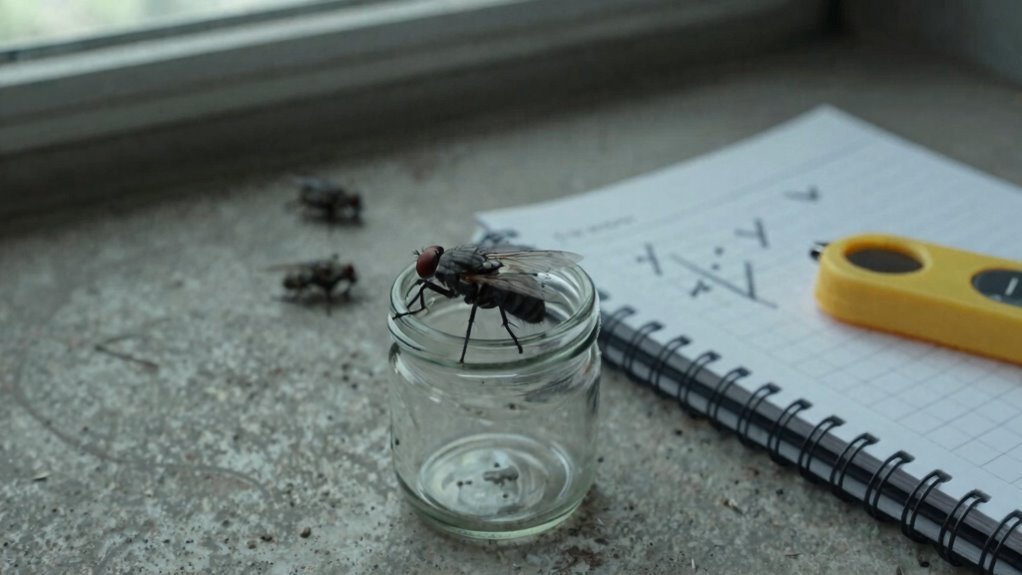
A weekly inspection is your best weapon against a fly invasion, and logging your counts is how you keep score.
Grab a notepad, check corners, under pipes, and near drains.
If you spot more than three flies in one day, that is your action threshold.
Time to stop watching and start acting with professional pest control measures.
Log those numbers like a grumpy scientist.
Consistent receptacle emptying is the unsung hero here, everyone.
A dirty bin is a breeding buffet, and flies love buffets.
Over two weeks, your log reveals pattern spikes like a leaky seal or a forgotten spill.
Fix that root cause, not just the symptom.
Each week, compare counts.
A downward trend is nice.
A flatline means dig deeper.
Your logs become a lie detector for your own cleaning habits.
Bottom line: inspect, log, and adjust.
It is boring, but boring wins basement wars and keeps you fly free.
If you need fly control products, your log will tell you exactly where to place them.
To ensure your spray choice matches the need, consider that fast-drying formulas do not last long and may require more frequent reapplication.
Frequently Asked Questions
Do Flies in the Basement Carry Diseases?
Yes, flies in the basement carry diseases. They are classic disease vectors for filth transmission, picking up bacteria from garbage or decaying matter.
Their hairy legs and mouths transfer this directly to surfaces. A single fly can contaminate food or counters with over 100 pathogens, including salmonella.
Proper sanitation is the real fix. A flyswatter is just a temporary solution.
Bottom line: keep the basement clean, and the disease risk disappears with the flies.
For effective pest control, combine cleaning with a reliable fly trap or insecticide. You need a long term solution for basement flies, not a quick fix.
If you see flies indoors, check for rotting organic matter and seal entry points. Using a professional grade fly bait or a UV light trap can stop an infestation fast.
Smart pest control buyers invest in sanitation first, then the right product. That is how you protect your home and family.
How Do Flies Get Into a Sealed Basement?
Flies manage to get into even a “sealed” basement through tiny hidden cracks you might have missed. Keep an eye out for hairline gaps around pipes, foundation walls, and utility entry points.
These pests also use drains as a superhighway, crawling up through dried out P-traps in floor drains. You can block this route by pouring water down each drain every week to keep the trap full.
Grab a flashlight and inspect every seam and corner of the basement for potential fly entry points. Seal any cracks you find with silicone caulk, which costs about $5 to $10 a tube and is a simple DIY pest control solution.
For a deeper clean, pour a drain treatment or enzyme cleaner monthly to break down organic film that attracts flies. If you’re dealing with a serious infestation, consider a professional pest control inspection to locate hidden entryways.
Stop the gaps, stop the flies. It’s that simple for effective basement fly prevention.
Can a Dehumidifier Alone Stop Basement Flies?
No, a dehumidifier alone will not stop basement flies. It controls moisture in the air, but moisture is not the real attractant for these pests.
Flies are drawn to rotting food, garbage, or organic debris, not damp air alone. The dehumidifier’s main limitation is that breeding sites remain completely untouched.
To get rid of flies, you must target those sources directly. Seal trash, fix drains, and inspect thoroughly for hidden organic matter.
A $150 dehumidifier helps with mold prevention, not fly control. Pair it with proper sanitation or expect those buzzers to stick around.
For the best basement fly control, combine moisture management with a targeted pest control treatment. Trust a complete approach over any single device.
What Is the Fastest Way to Kill a Fly Infestation?
The fastest way to kill a fly infestation is combination therapy. Place UV light traps 4 to 6 feet high, away from competing light like windows, to lure and zap flies.
Pair this with the best non-residual aerosol fog for a temporary knockout. This one-two punch is effective, but flies can develop resistance fast.
Remember, pesticides fail without sanitation. Dirty trash is their real home, not your basement.
Fix breeding sites first, or you are just swatting ghosts. Start with a professional fly control product to target eggs and larvae directly.
Buy a high quality insect light trap for indoor fly elimination. Then use a fast acting fly fogger for a quick knockdown of adult flies.
Always combine your fly killer spray with a thorough garbage cleanup. That is the real secret to a lasting fly infestation solution.
Should I Hire a Professional for Basement Flies?
Yes, hiring a professional for basement flies is often worth it if you’ve tried DIY methods. A professional assessment identifies hidden breeding sites you’d miss, like drains or cracks.
Your DIY cost is low but may fail to stop the problem. Pros use targeted sprays and exclusion, saving you time and frustration.
For a mild issue, fix sanitation first to remove organic matter. For a heavy infestation, say over three flies daily, call an expert.
It is the difference between a quick fix and a lasting solution. A licensed exterminator provides long term pest control that tackles the source.
They can apply insect growth regulators and seal entry points around your foundation. This basement fly treatment protects your home from reinfestation.
If you want effective fly removal and peace of mind, professional pest management is your best bet. Contact a local pest control company for a tailored estimate.


