
Tick eggs look like tiny, glossy beads smaller than a poppy seed, often clustered in a mass that resembles dark caviar or spilled seeds. They start out sticky and damp, then harden and darken over the course of a few days.
You can usually find them in leaf litter, soil crevices, or even dog kennels—and a single female can lay up to 12,000 eggs at once. Spotting that telltale sheen means you need to act fast, because freezing the mass is the most effective way to kill them. In the next section, we’ll show you exactly how to identify and remove tick eggs safely from your property.
At A Glance
- Each egg is smaller than a poppy seed and barely a millimeter across.
- Fresh eggs have a glossy, sticky, amber or reddish-brown shell that reflects light.
- Tick eggs cluster in masses that look like tiny caviar or spilled seeds.
- Egg masses are often found in leaf litter, soil crevices, or dog kennels.
- The shell hardens and darkens from a wet, shiny coating over a few days.
What Tick Eggs Look Like: Size, Shape, and Color
Spotting tick eggs in the wild is like playing a tiny, high stakes game of I Spy, and they are easy to miss but important to find.
They mark the start of the tick life cycle, where each egg is a potential pest waiting to hatch.
A female’s feeding habits directly control the size of her brood, so a fully engorged tick will drop off her host and lay thousands of eggs at once.
These eggs are oval or round, with a smooth, glossy shell that starts sticky and damp, then hardens and darkens over time.
These eggs are oval or round, with a smooth, glossy shell that hardens and darkens over time.
Colors vary by species, ranging from dark brown and reddish brown to amber or pale yellow.
They cluster together in a gelatinous mass, often looking like a tiny clump of caviar or spilled seeds.
If you spot a suspicious little pile during a routine yard inspection, do not ignore it, because that could be the first sign of an infestation.
For effective pest control and tick prevention, contact a local exterminator to identify and remove the egg mass before it hatches.
Even a small cluster can lead to hundreds of active ticks, so early treatment is your best defense.
Call a professional for a thorough tick removal service, and ask about seasonal yard sprays to break the life cycle.
If you see these eggs near pet areas or tall grass, act fast and schedule a home pest control evaluation today.
A quick inspection can save you from a larger problem, since tick eggs are resilient and hatch quickly in warm weather.
Natural deterrents like peppermint and lemongrass oils can help repel ticks from treated areas when applied around entry points.
Tick Egg Size: Smaller Than a Poppy Seed
Tick eggs are tiny oval shells, each one smaller than a poppy seed. Their glossy surface gives them a smooth, almost polished look, like miniature beads hidden in leaf litter.
This shiny coating helps the eggs stick together in a mass, making them easier to spot during a routine pest inspection. If you’re dealing with a tick problem, knowing this visual cue can help you target treatment areas early.
For effective tick control, focus on shady, moist zones where egg masses often cluster. Clearing debris and applying targeted pest control products can reduce the chance of a new generation hatching. These products often contain plant-based repellents that create an unpleasant sensory barricade using natural ingredients like peppermint oil.
If you’re searching for a reliable solution to stop ticks at the source, look for sprays or granules labeled for egg and larval stages. Always read the label and reapply after rain for the best protection.
Regular yard maintenance, like mowing and raking, disrupts these egg masses before they mature. That proactive step is a simple, practical way to lower your family’s exposure to tick bites.
Tiny Oval Shells
How small is “smaller than a poppy seed”? Imagine a grain of sand, but oval. Tick eggs are these tiny oval shells, barely a millimeter across, and they clump together in sticky clusters.
Each egg’s hardened egg coating starts out damp and translucent, then darkens to a reddish-brown or amber over time. You would easily mistake a mass for dirt or mold on leaf litter, or you might find it in a kennel crack if you are a dog owner.
A single female lone star tick can drop 9,000 to 12,000 of these little ovals, so removing one clutch prevents an army of larvae.
When checking your pet’s bedding, do not just look for ticks. Scan for those minuscule, clustered shells to stop an infestation before it starts.
Effective pest control requires this type of thorough inspection. Losing that battle means losing the war against ticks in your yard. Treating clothing and gear with permethrin can protect against ticks, mosquitoes, and other biting pests through repeated washes.
Glossy Surface Texture
The glossy surface texture of these eggs is what makes them so easy to overlook. It is like nature’s little prank, shiny enough to reflect light yet small enough to hide in plain sight.
That sheen comes from a protective coating that locks in moisture retention, keeping the embryo alive until hatching. Here is what that gloss actually means for identification.
Light reflection can mimic water droplets or dew, blending into leaf litter. This makes pest control scouting more difficult, as the eggs evade casual inspection. Natural granules disrupt a bug’s sensory systems without relying on harsh chemicals, offering a safer alternative for treating areas where these eggs may hide.
New eggs are damp but the gloss fades as they dry out, giving them a sticky feel. Homeowners and exterminators should check for this texture when treating soil or mulch.
Unlike gritty dirt, eggs feel slick to the touch if you dare poke them. That smooth finish helps them avoid detection during routine yard maintenance.
The shine also provides a camouflage advantage among glossy soil or vegetation. Identifying these eggs early is key for effective pest removal and prevention.
Why Fresh Tick Eggs Look Sticky and Glossy
Fresh tick eggs look like tiny glossy amber beads, but they are not something you want to touch. That sticky, shiny coating is a survival feature, not a decoration.
The female tick secretes a waterproof waxy layer over the egg mass to keep the embryos from drying out. This fresh sheen signals recent egg laying and active embryo development.
Over a few days, the coating hardens and darkens, losing that initial wet look. So if you spot a glossy, jellylike cluster in leaf litter or kennel cracks, it is a freshly laid tick nursery.
Remove it immediately because one glossy mass can contain thousands of future larvae. Don’t wait to act, as that shine fades fast and the eggs will soon be harder to detect.
That sticky gloss is a ticking biological timer, not a fashion statement. For effective tick egg removal, check shaded areas and crevices where females often deposit these clusters. Using sterilization methods like boiling water or rubbing alcohol can safely destroy the eggs and any tools used for removal.
Where Ticks Lay Eggs: Leaf Litter to Dog Kennels
Inside leaf litter, soil crevices, and even the cracks of a dog kennel, female ticks drop off their hosts to deposit egg masses. These thousands of tiny future parasites are hidden in plain sight. The location depends on the tick species and its typical hangouts.
For effective pest control, focus on these key habitats. Leaf litter is prime real estate for lone star and deer ticks, who favor warm, humid ground cover. Soil crevices shelter American dog tick eggs, often tucked under rocks or logs.
Dog kennel cracks are chosen by brown dog ticks. Yes, they will lay eggs inside your home or doghouse. Animal nests provide cozy spots for soft ticks, who prefer rodent or bird burrows.
For effective egg identification, focus on these tick habitats rather than the host itself. Spotting a cluster of tiny, sticky spheres means you have found the next generation. This gives you a chance to remove them before they hatch. Sawyer Permethrin can be applied to clothing and gear to reduce tick bites during outdoor work in these areas.
How Many Eggs Does a Female Tick Lay in One Batch?
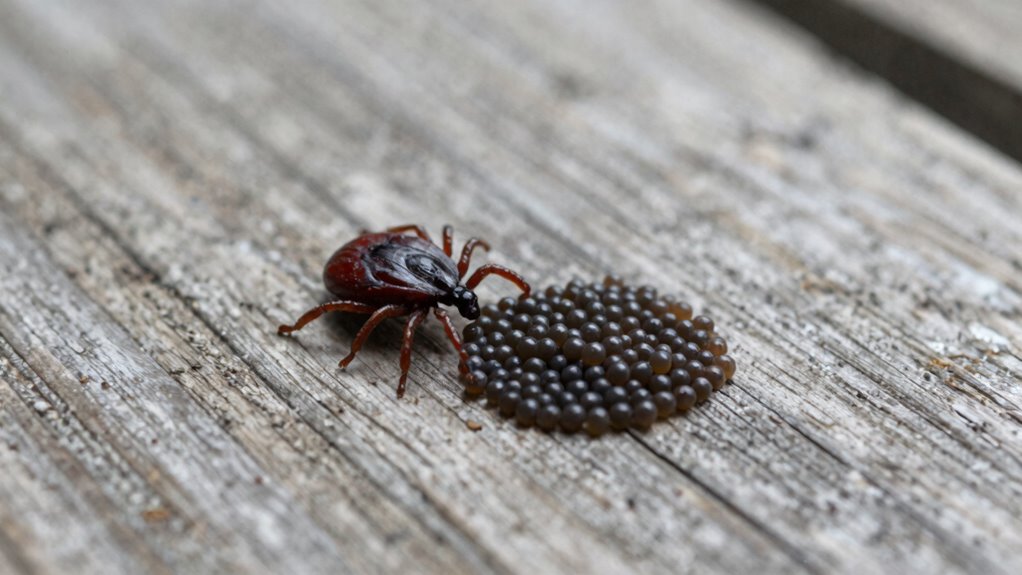
A female tick can lay a staggering number of eggs in a single batch, often between 2,000 and 18,000. That’s enough to start a small army, and not the fun kind.
Lone star ticks, for example, produce 9,000 to 12,000 eggs per batch, whereas American dog ticks manage several hundred. These eggs hatch into larvae, which then seek hosts, increasing the risk of disease transmission.
Prompt tick removal from pets and people is essential for effective pest control. It prevents females from dropping off and laying eggs in your yard or kennel. Using stainless steel tools can ensure safe, complete removal without leaving parts behind.
Removing egg masses, which look like tiny dark clusters, stops thousands of future ticks from emerging. Professional tick treatment can break this cycle and reduce infestation risks.
Bottom line: one batch equals a big problem, so check leaf litter and cracks regularly. Look for tick habitats near your home to target your yard treatment.
How Long Until Tick Eggs Hatch Into Larvae?
Tick eggs take their sweet time hatching, roughly three to six weeks, but only if temperatures stay above 50°F. They wait patiently until conditions are just right for the process to begin.
The speed depends on a few key factors that influence their development. Temperature matters most because below 50°F, they enter a hibernation mode that stalls progress until spring.
Temperature matters most because below 50°F, they enter a hibernation mode that stalls progress until spring.
Moisture levels are also critical since dry air kills eggs quickly. They need humid, sheltered spots like leaf litter to survive and hatch.
Species variation plays a role, with lone star ticks hatching closer to three weeks. Others can stretch the timeline out to six weeks.
One host ticks are clever parasites that hatch and then stay on a single animal for life. This strategy boosts larval survival chances and makes control harder for homeowners.
For effective pest control, focus on removing leaf litter and reducing moisture around your yard. Professional tick treatments using a permethrin yard spray can target eggs before they become a problem in your outdoor spaces.
What Happens After Tick Eggs Hatch
Once the eggs complete their patient wait, they hatch into six-legged larvae often called seed ticks because they look like tiny seeds with legs. These tiny critters, barely visible, start a frantic search for a blood meal.
Larvae survival depends entirely on finding a host quickly, though they can wait months like impatient toddlers at a buffet. Host seeking is a slow, patient crawl up grass blades, waving front legs to snag a passing animal. It’s not dramatic; it’s a quiet, determined gamble. Using Permethrin Tick Repellents on clothing and gear can effectively kill these larvae on contact, reducing the tick bite risk by over 70%.
If they fail, they dry out and die, nature’s harsh reality. If they succeed, they feed for days, then drop off to molt into eight-legged nymphs. That’s the next step, but don’t worry; that’s a story for another section.
For now, remember those seed ticks are just getting started, hungry and persistent. Regular yard maintenance and tick prevention treatments can break this cycle before larvae become a bigger problem.
Hard vs. Soft Tick Eggs: Spot the Difference
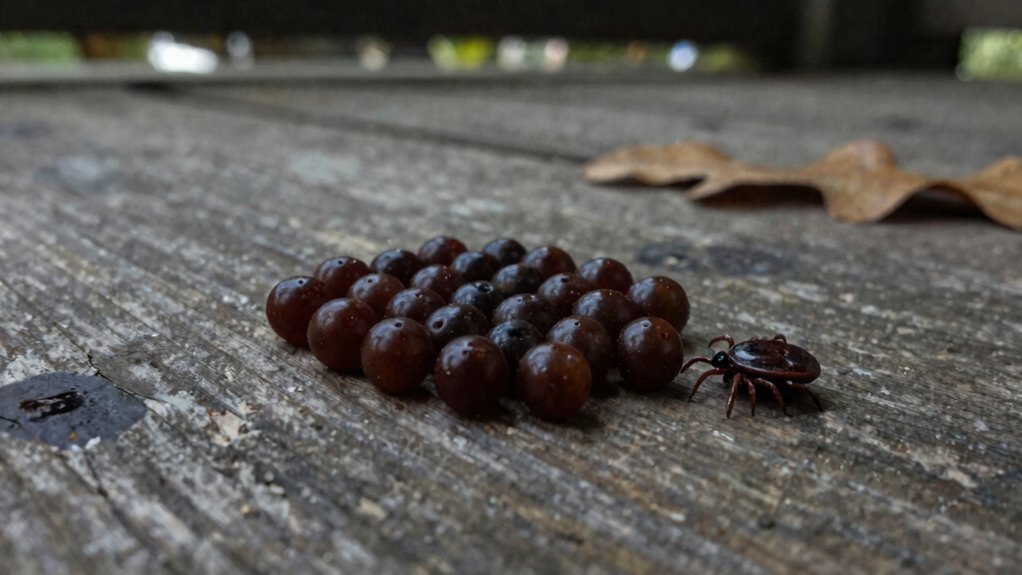
Hard tick eggs stay in one place, protected by a waxy coating, so larvae hatch together and are ready to swarm as a group. Soft tick eggs get laid in multiple spots, which spreads the risk if one batch gets eaten or flooded during pest control treatments. Hard tick larvae emerge in a crowd, boosting their odds of finding a host fast for a quick blood meal. Soft tick larvae hatch in bursts, staggering their debut to survive harsh conditions like drought or cold snaps. If you are dealing with an infestation, knowing these differences helps you target the right stage of the life cycle for removal. For hard ticks, focus on treating the nest site directly to eliminate the synchronized hatch before it becomes a swarm. For soft ticks, you will need to inspect more hiding spots, since scattered egg masses mean repeated follow-up visits are key. A professional pest control service can map these hidden batches and apply residual sprays where larvae are most likely to emerge. Whether you are comparing tick control products or scheduling an inspection, the key is timing your treatment around these hatching patterns. Always check crevices, cracks, and rodent harborage areas, since both tick types rely on sheltered microclimates for egg survival. Buying a broad-spectrum tick killer? Make sure it lists both hard and soft tick species on the label for effective coverage. If you prefer a proactive approach, ask your exterminator about integrated pest management plans that combine habitat modification with targeted acaricide applications. Understanding the egg-laying strategy is your first step toward breaking the reproductive cycle and reducing future infestations. Knowing whether you face a single cluster or scattered batches will save you time, money, and repeated bites. Stay vigilant and re-check treated areas weekly, as soft tick larvae can delay hatching for months. With the right pest control strategy, you can stop both hard and soft tick eggs from turning into a yard full of hungry nymphs.
Why You Should Care About Tick Eggs in Your Yard
A single tick egg mass can harbor thousands of future biters, so ignoring them in your yard is like leaving the front door open for uninvited guests. Each mass, often resembling a tiny poppy seed cluster, can contain up to 12,000 eggs, a serious habitat risk that turns your lawn into a tick nursery.
Understanding seasonal timing is key. Eggs hatch in three to six weeks when temperatures stay above 50°F, meaning spring and early summer are prime windows for an infestation.
Timing is everything: Eggs hatch in three to six weeks once temperatures stay above 50°F.
If you want to prevent tick infestations, start with professional tick control treatments that break the breeding cycle. Focus on removing leaf litter and soil crevices where egg masses hide. To enhance your yard plan, consider applying Sawyer Permethrin spray to clothing and gear for long-lasting protection against emerging ticks.
The risk factor table shows that lone star ticks alone can lay 9,000 to 12,000 eggs per mass. These eggs can carry disease potential, including ehrlichiosis and tularemia.
Your yard management plan should include regular checks of sheltered spots after warm spells. Ignoring egg masses means thousands of hungry larvae will soon emerge, so hire a pest control service to scout and treat these areas.
How to Find and Remove Tick Egg Masses
Spotting tick egg masses takes a deliberate, ground level search since they are tiny. Less than a millimeter across, they easily blend into leaf litter or soil debris.
For effective tick removal, focus on areas where hosts rest. Search sheltered spots like leaf piles, soil crevices, and dog kennels.
Use a flashlight to find them since they glisten slightly. Wear disposable gloves before you scrape the mass into a sealed plastic bag.
Do not crush it or you will disperse eggs into the environment. Freeze the bag for 48 hours to kill all eggs and prevent the larval stage from hatching.
Finally, vacuum the area thoroughly and discard the bag outside. That sticky cluster you found is not dirt, it is a ticking time bomb of future ticks.
Remove it before those larvae start questing for a meal. For total pest control, always inspect pet resting areas and outdoor equipment, and consider applying a long-lasting residual barrier spray to indoor and outdoor perimeters for added protection.
Frequently Asked Questions
Can Tick Eggs Survive the Winter Outdoors?
Yes, many tick eggs can survive the winter outdoors, but their cold tolerance varies by species. Prolonged freezing often kills them, while insulated snow cover protects some eggs.
Spring hatching occurs reliably when temperatures climb above 50°F. These eggs are hardy, not indestructible, so think of them as tiny, patient survivors.
To prevent a spring tick infestation, focus your pest control efforts on leaf litter and sheltered spots. That is where eggs wait, just daring you to forget they are there.
A professional grade tick treatment applied in early spring can target these hidden eggs before they hatch. For the best yard protection, combine a granular barrier product with a liquid spray around perimeter zones.
If you want to buy a reliable tick control solution, look for products containing active ingredients like bifenthrin or permethrin. These deliver long lasting results and break the tick life cycle effectively.
Do Tick Eggs Need Water to Stay Viable?
Tick eggs don’t need a drink, but moisture levels matter. They survive best in humid spots like leaf litter or soil.
Humidity effects keep them from drying out. Too dry, and they shrivel.
Too wet, they might drown, since tick eggs can’t swim. So think “damp, not drenched” for your yard.
For effective pest control, focus on reducing humidity in kennels or yards. Use a dehumidifier or dry soil to tackle tick infestations.
Moisture helps them, so you fight them by drying things out. That’s a key strategy for any tick prevention product you choose.
Can Tick Eggs Be Accidentally Brought Indoors on Clothing?
Yes, tick eggs can be brought indoors on clothing, especially after walking through leaf litter or tall grass. Their tiny, poppy seed like appearance makes them easy to overlook, so careful inspection is key.
Egg viability depends on humidity, but indoors, they may still hatch in a warm, humid spot like a laundry pile. You should always check cuffs, socks, and pant legs thoroughly after being outside.
A quick lint roller pass can catch stray eggs before they become a problem. For extra peace of mind, toss your clothes in a hot dryer for 10 minutes right when you get home.
This simple step kills ticks and their eggs on contact. Bottom line, a visual check beats a surprise infestation every time.
If you want professional grade protection, consider using a permethrin spray on your outdoor gear. It adds an invisible shield that kills ticks on contact, even before they reach your skin.
Look for EPA approved tick repellents and yard sprays to reduce exposure around your home. A targeted barrier treatment can stop ticks from ever hitching a ride indoors.
Do Male Ticks Help Guard or Protect the Eggs?
No, male ticks do not help guard or protect the eggs. Their role ends after mating, so they are basically deadbeat dads in the tick world.
Egg defense is entirely absent because males die soon after or wander off. Females handle everything by dropping off a host and laying thousands of eggs in a sticky mass.
The female then dies too, leaving zero parental care or guard duty. This harsh, efficient system means tick dads are useless after mating season.
If you are dealing with a tick infestation, professional pest control eliminates both adult ticks and egg masses. Using targeted yard sprays and tick tubes can break the lifecycle before eggs even hatch.
For effective tick control, focus on treating host animals and perimeter areas where females drop off. Products like permethrin sprays and tick collars offer solid buyer intent solutions for homeowners.
That is just how ticks roll, so don’t expect any male help. Your best bet is to invest in proven pest control products and services to protect your family from these stubborn pests.
What Natural Predators Eat Tick Eggs in the Yard?
Tick eggs in your yard attract a serious lineup of natural predators that can help with pest control.
Guinea fowl are relentless egg eaters, scouring leaf litter like tiny feathery vacuum cleaners.
They will peck up entire tick egg masses without hesitation in your landscape.
On the microscopic side, beneficial nematodes are tiny roundworms that seek out and destroy tick eggs in the soil.
These natural allies are a smart part of any integrated pest management plan for tick control.
The bottom line is that birds and bugs do the dirty work for you.
If you want to boost your yard defense, consider releasing guinea fowl or applying beneficial nematodes as a targeted tick treatment.
Many homeowners looking for eco friendly pest control solutions buy these products online for immediate results.


