
Preventing ticks in your yard doesn’t have to mean toxic foggers or calling an exterminator every month. The secret is making your outdoor space feel like a desert to them—ticks hate hot, dry conditions and open sunlight.
By raking leaf litter, mowing short, and trimming shrubs, you create sunlit zones that ticks naturally avoid. A simple three-foot barrier of coarse wood chips or gravel at the tree line can stop about 80% of wandering ticks cold.
Place playsets and patios in full sun at least nine feet from wooded edges, and move bird feeders and firewood away from your home’s foundation. For heavier infestations, targeted sprays like bifenthrin or tick tubes work well, but skip spraying near any water sources.
No single method is perfect, so combining several tactics gives you the best defense. The next section breaks down each step so you can choose exactly what fits your yard.
At A Glance
- Remove leaf litter and mow tall grass to create dry, sunny areas where ticks can’t survive.
- Install a 3-foot wide wood chip or gravel barrier between your yard and wooded edges.
- Place playsets, patios, and firewood at least 9 feet from tree lines in full sun.
- Apply acaricide sprays in early summer and fall to high-risk lawn edges and brush.
- Use tick repellent on clothing and check for ticks—yard treatments never guarantee full protection.
Remove 3 Things That Attract Ticks to Your Yard
To make your yard a no tick zone, start by removing three things that attract them. First, leaf litter. It is a damp blanket that ticks love, so rake it up and bag it.
Rake up leaf litter; it’s a damp blanket ticks love, so bag it and remove their welcome mat.
Second, tall grass and brush. Ticks avoid short, sunny lawns, so mow regularly and trim weeds.
Third, overgrown shrubs and ground cover like pachysandra. These create shady, humid hideouts you should clear for sunlight.
For heavy infestations, an acaricide application in May or fall can nuke these zones. After clearing vegetation, applying granules with a spreader ensures even coverage and activates the treatment for maximum effectiveness. Pair it with host targeted treatments like tick tubes or mouse vaccines. These kill ticks on mice before they reach you.
Removing the welcome mat first makes these pest control solutions far more effective for your yard.
9 Landscaping Tweaks for a Tick-Proof Yard
Two simple landscaping tweaks can dramatically reduce tick habitat.
First, create sunlit zones by trimming trees and bushes. Ticks prefer damp, shady areas, and sunlight dries them out.
Second, regularly remove leaf litter. Those damp leaves are prime real estate for ticks waiting for a passing host.
For additional protection, apply a permethrin yard spray to create a residual barrier that kills ticks on contact.
Create Sunlit Zones
Focus on edges near patios, playsets, and garden paths. Ticks concentrate where shade meets vegetation, so hit those spots hard.
One effective pest control tip is simple. If you find yourself squinting in a shady corner of your yard, ticks probably hate that same sunny spot too.
That is exactly the goal. More sun means fewer ticks in your outdoor living space.
Grab some pruners or hire a professional landscaper. Let the light in to reduce tick habitats naturally.
This approach targets buyer intent for a safer, low maintenance yard. Creating sunlit zones is a practical, chemical free pest prevention strategy. Alternatively, for added protection near these edges, treat clothing with Permethrin on clothes to repel ticks for up to 70 washes.
Remove Leaf Litter
Landscaping isn’t just about curb appeal. Removing leaf litter is a direct attack on tick headquarters.
That damp, shaded layer is their perfect hideout, offering protection from mite predators and reducing the reach of fungal control. So, rake it all up, bag it, and haul it away.
Don’t just leave piles in a corner. That’s a relocation program, not a solution.
Why it works: It eliminates the humid microclimate ticks need for survival. Cost is free, except paying a kid ten dollars to do it.
Pro tip: Do this in early spring and again in late fall. Think of it as eviction without the drama.
A bare ground surface, especially near play areas or patios, is a huge deterrent for tick prevention. To support your efforts, keep a stainless steel tick remover in your first aid kit for quick checks after yard work. Bottom line: A tidy yard isn’t just neat. It’s a tick’s worst nightmare.
Build a 3-Foot Barrier That Stops Ticks at the Tree Line
A simple three-foot barrier of dry material stops ticks from crossing from the woods into your yard. Coarse wood chips or gravel work best because ticks lose moisture on these hot, exposed surfaces and avoid them.
A mulch pathway using coarse wood chips costs about $3 per bag, much cheaper than fancy bark. Place the barrier right at the tree line where your lawn meets the woods.
Make it at least three feet wide, since ticks are lazy and won’t crawl far over it. Keep leaves and debris off the barrier, or you will create a welcome mat for ticks.
This is a physical trick, not a pesticide, and stops about 80% of wandering ticks based on landscaping studies. For the cost of a couple pizzas, you get real peace of mind with this pest control solution.
The same principle applies to pool maintenance, where a fine mesh skimmer traps tiny bugs and larvae before they multiply.
Where to Place Playsets, Patios, and Feeders to Avoid Ticks
Kids’ playsets and patios should sit in sunny, open spots, at least three feet from woods or tall grass. That barrier of wood chips or gravel stops ticks from crossing into play zones.
Place bird feeders and firewood piles away from these areas, since ticks hitch rides on rodents and birds. You can reduce tick exposure by keeping these attractants far from your main yard.
For better pest control, choose a dry, well-drained location for your playset. This helps deter ticks and keeps your outdoor pest management simple.
Adding a gravel barrier is a smart tick prevention strategy for patios. It creates a natural tick barrier that pests cannot easily cross.
Always inspect the edge of your lawn for signs of rodents or stray brush. Removing these tick habitats keeps your family safe and your yard pest free.
For additional targeted protection near play areas, consider applying an eco-friendly yard spray made with natural cedarwood essential oil.
Play Areas Away From Woods
Ticks don’t fly or jump. They crawl up from leaf litter, so your play area needs distance from woods to break tick migration.
Place swing sets and sandboxes at least nine feet from tree lines, in full sun. Ticks hate dry, bright spots, making this a simple pest control measure.
Move bird feeders, garbage cans, and stacked firewood away from patios and decks. Those attract mice and deer that drop ticks, raising your pest risk near play zones.
For a concrete example, a playset placed in the middle of a sunny lawn stays far safer than one tucked near a woodpile. Keep vegetation trimmed low around these areas for effective tick prevention.
It’s not about eliminating every tick. That’s impossible, but reducing their chances of hitching a ride is a smart pest management goal.
A dry, sunny play area is your best bet for long-term protection. You can easily implement these tips for a safer backyard.
Consider using a spray formulated with pure peppermint oil to create an additional barrier around these sunny zones.
Barrier Between Lawn and Woods
Since ticks don’t fly, jump, or drop from trees, they crawl from shady, humid edges. A physical barrier between your lawn and the woods is one of the simplest tick control upgrades you can make.
A three-foot-wide strip of coarse wood chips or gravel stops them cold. Use arborist mulch or stone at least two inches deep for effective pest prevention.
Wood chips should be 3 feet wide and 3 to 4 inches deep. Their coarse texture dries fast and ticks hate crossing it.
Gravel or stone at 3 feet wide and 2 to 3 inches deep works well. Sharp edges and heat discourage tick movement.
Barrier fabric under gravel adds long-term weed control. It keeps the barrier stable and reduces maintenance.
Playsets belong in full sun, at least 10 feet from the woods. Patios should follow the same rule and stay away from shade.
The barrier is cheap at about $30 for a cubic yard of chips. It lasts a full season for reliable pest control.
Bottom line: build it, then forget it. Ticks won’t cross your barrier. For added protection on clothing and gear near these areas, Sawyer Permethrin reduces tick bite risk by over 70%.
Feeder and Firewood Placement
In the never-ending quest for tick control, where you place feeders, firewood, and play structures matters just as much as your pest prevention barrier. Ticks love shade and dampness, but smart placement cuts their welcome mat short.
Position bird feeders at least 15 feet from your home. Closer placement invites mice and deer, which are prime tick transporters right to your door.
Opt for a sunny spot to discourage dampness-loving ticks. Stack firewood off the ground in a dry, sunny area far from play zones.
Damp woodpiles are five-star hotels for rodents that ferry ticks around. A solid 3-foot gap from your house supports effective habitat reduction.
Keep playsets and patios in full sun, away from woods or brush piles. Clear leaf litter underneath and add a 3-foot wood chip barrier for outdoor pest management.
This wildlife attraction reduction stops ticks from crossing dry, sunny zones easily. Move these items into the open and maintain dry barriers for complete yard protection. For added protection against invading ticks, you can also mix a permethrin concentrate with water to create a barrier spray around these zones.
Turn your yard into a tick’s least favorite hangout with simple site selection.
How to Spray Your Yard for Ticks (Without Harming Pets or Plants)
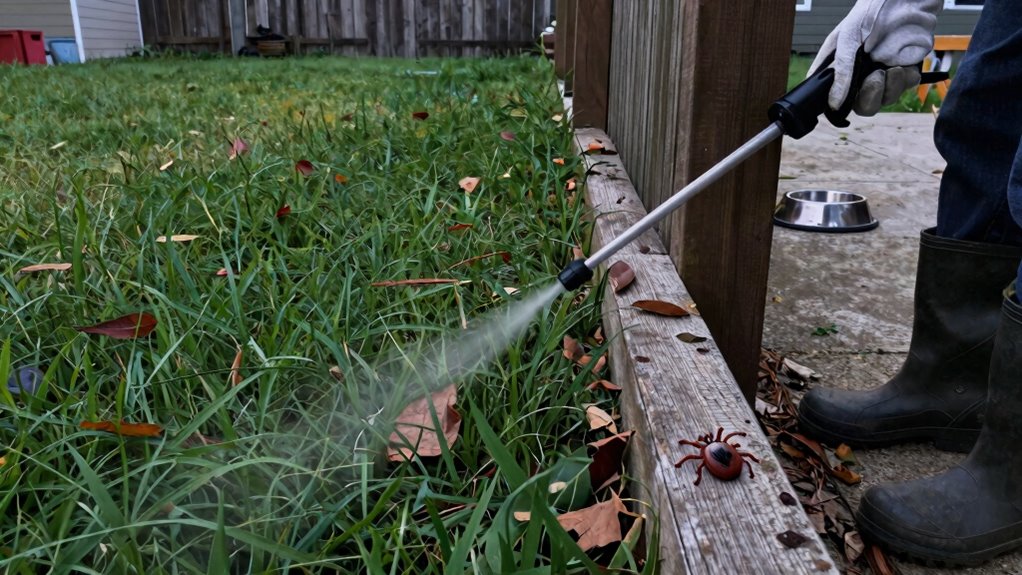
Spraying your yard for ticks requires the right EPA-registered synthetic pyrethroid spray for effective pest control. Apply it in early summer to target nymph ticks, then again in fall for adult ticks. To maximize protection, use bifenthrin sprays that create a long-lasting barrier against pests.
Focus your tick treatment on lawn edges, brush, and stone walls to hit high-risk areas. Never spray the vegetable garden or flowering plants that bees visit for safety.
For pet safety, keep dogs and cats indoors until the spray dries completely, usually about two hours. To protect plants, avoid direct application on blossoms or edible crops.
Stick to perimeter spraying instead of broadcast coverage for targeted tick control. This approach is responsible and keeps your pets paws safe from chemical contact.
Spray smart, not hard, and your yard with fluffy companions will thank you. Buy the right tick spray to safeguard your outdoor space without harming pets or plants.
Tick Tubes and Mouse Vaccines: Yard Treatments That Target the Host
Ticks are picky guests, but targeting their hosts is a clever backdoor tactic. Host targeted treatments, like tick tubes and mouse vaccines, aim to break the tick’s life cycle where it starts on rodents.
Here is how low effort pest control options work. Tick tubes are cardboard tubes filled with permethrin soaked cotton.
Mice use the cotton for nests, and the chemical kills ticks feeding on them. Tick tube effectiveness varies by location and timing, and spring placement works best but results can be mixed.
The mouse vaccine comes as spray coated pellets available since 2023. These pellets vaccinate white footed mice so they cannot pass Lyme bacteria to feeding ticks.
It similarly reduces babesiosis risk, making it a nice two for one deal for yard protection. Both methods are low spray alternatives perfect for families or pet owners.
No broadcast chemicals are needed, just targeted host disruption for tick control. Bottom line: these treatments will not nuke every tick in your yard.
But they are a sneaky, low effort addition to your pest management arsenal. They offer practical relief without high maintenance. Because permethrin is highly toxic to aquatic life, avoid placing these tubes near ponds or streams.
Why Your Treated Yard May Still Have Ticks
Even with professional pest control treatments, a tick free yard is hard to achieve. Ticks are patient hitchhikers that arrive on wildlife, not just lawn pests.
Deer fencing helps keep out a major tick delivery service, but mice, shrews, and birds still bring ticks right into your yard. You can invest in targeted yard maintenance, but a squirrel from the unkempt lot next door can drop a tick anywhere it pleases.
Municipal tick management methods like deer culls or expensive 4 Poster devices rarely cover every property. Spraying your grass only protects your own zone, since ticks ignore property lines entirely.
The bottom line is that yard work reduces your risk but never guarantees protection. Keep using tick repellent and checking yourself after being outside, because a tick’s best trick is proving your fence wrong. Wearing permethrin-treated clothing can provide an additional layer of defense against ticks that may hitchhike into your yard.
Drag for Ticks: The Best Way to Check Your Yard
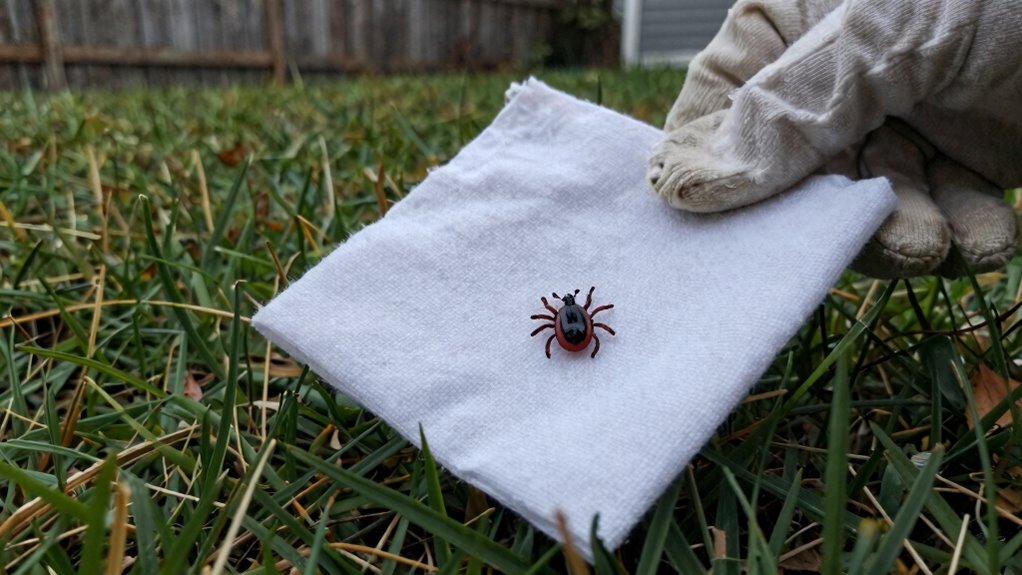
1. Drag early morning or after rain when ticks are most active and stuck to dew.
Focus on shady edges, brush, around stone walls or woodpiles, where ticks thrive.
2. Check the cloth every 10 yards with a lint roller or tape to collect any hitchhikers.
Ticks often hide in leaf litter, under bushes, or along fence lines.
A single tick dragging session reveals hot spots you would never notice otherwise.
To keep your yard safer, drag twice a month in spring and fall.
It is the low-tech gold standard for yard awareness and tick control.
If you want professional pest treatment, consider contacting an exterminator for targeted barrier sprays.
For precise removal of any ticks you collect, use fine-tipped stainless steel tweezers to grasp the pest close to the skin without squeezing its body.
When Yard Treatments Fail: Use Repellents and Tick Checks Instead
Dragging a flannel sheet through your yard twice a month might feel silly, but it’s the best way to spot hot spots before they become problems. Still, even the best yard plan has holes like sprays degrading or rain washing them away. Ticks also hitch rides on wildlife no barrier can stop. When yard treatments fail, personal protection becomes your real defense against pests. Use EPA-registered tick repellents on both skin and clothing for immediate protection. Permethrin-treated gear works for weeks and is a smart buy for homeowners. Don’t skip daily tick checks to catch hidden ticks early. Shower within two hours of being outside, then inspect every crease including behind knees and ears. Tick tubes with treated cotton help reduce nests but are no guarantee. Pair them with vigilant tick control and a thorough inspection routine. Your yard work lessens risk but never removes it completely. Your body is the last line of defense, so check it like a pro, cheaply and daily. For reliable protection, choose a repellent with 20% Picaridin offering up to 12 hours of tick protection.
Frequently Asked Questions
How Long Do Tick Tubes Remain Effective After Placement?
Tick tubes typically stay effective for about three months after placement. However, heavy rain or high humidity can shrink that window, as moisture degrades the permethrin soaked cotton.
Seasonal timing matters for best tick control. Spring placements work best before nymph ticks emerge, while fall tubes target adult ticks.
Check your tubes after wet weather for best results. If they are soggy or moldy, replace them right away.
Inspect tubes every few weeks, especially in damp conditions. This keeps that tick killing power fresh for your yard protection.
For long lasting tick prevention, pair tubes with a perimeter spray. That combination offers complete pest control against Lyme disease carriers.
Can Tick-Safe Zones Be Created With Artificial Turf Instead?
Yes, artificial turf can create a tick safe zone for your yard, but it isn’t a perfect pest control swap. The turf’s heat absorption, which can reach seriously hot temperatures like 150°F, naturally deters ticks since they hate dry, sunny spots.
You still must maintain proper drainage, because standing water under the turf attracts dampness loving pests like mosquitoes and other critters. Think of artificial turf as a low maintenance, tick unfriendly mat, not a magic shield for complete pest elimination.
For the best tick control, pair your turf with a wood chip barrier around the perimeter. This combination gives you a solid, no grass hangout for kids or pets while reducing the need for chemical tick sprays.
If you want a low upkeep lawn solution that cuts down on tick habitats, artificial turf is a smart purchase. Just remember that professional pest control inspections can help spot any hidden damp areas beneath the surface.
Do Ultrasonic Pest Repellers Work Against Ticks in Yards?
Short answer: No, they don’t work against ticks. The effectiveness debate is basically settled.
Ultrasonic pest repellers emit high frequency range sounds above human hearing that are meant to annoy pests.
Ticks, however, don’t have ears that hear airborne sound. They detect vibration, heat, and scent instead.
So these devices just sit there humming, doing nothing to the ticks as you wait. Save your money.
For real tick control in your yard, consider a wood chip barrier or tick tubes.
These physical and biological methods target ticks where they hide and breed.
If you want effective pest control products, focus on perimeter sprays or granular treatments.
Look for buyer intent phrases like “best tick repellent for yards” when you shop.
A helpful expert knows that ultrasonic repellers are a waste for tick prevention.
Stick with proven solutions and you will protect your family and pets smartly.
How Often Should I Replace Wood Chip Barriers Around My Lawn?
Wood chip barriers should be refreshed annually, as material decomposition reduces tick deterrence over time.
Wood chip durability varies with climate, so harsh winters or wet summers speed breakdown.
Inspect your barrier yearly to catch wear early and replace as needed.
This keeps the barrier effective, dry, and less inviting for ticks.
Annual replacement maintains a three-foot-wide barrier that reduces tick migration.
A bag of chips costs three to five dollars, and you’ll need ten to twenty bags for a typical yard.
Top off the chips instead of full replacement if they look mostly intact.
This guarantees maximum protection without wasting effort.
Are There Natural Predators I Can Attract to Control Ticks?
Attracting natural predators like opossums or guinea fowl sounds promising for tick control, but it’s not a reliable standalone solution. Opossums do eat ticks, yet they roam widely, so your yard only gets inconsistent protection.
Guinea fowl work well on open lawns, but they avoid shady, brushy areas where ticks thrive. They can also annoy neighbors with their noise and wandering habits.
For effective results, professional grade pesticides and regular habitat cleanup remain the heavy lifters. A targeted tick spray for perimeter zones or yard treatment reduces populations far more predictably.
Think of natural predators as a helpful bonus, not your main strategy. For best results, pair them with proven pest control products like tick granules or barrier sprays.
That way you get the ecological boost without relying on spotty wildlife behavior. Smart homeowners invest in integrated pest management for long term tick prevention.


