
Ants in the bathroom are usually after moisture, not your food, and that’s the secret to kicking them out for good. By cutting off their water source and sealing up the tiny gaps they crawl through, you can solve the problem in an afternoon—no toxic sprays required. This practical guide covers the best supplies for a DIY fix, from silicone caulk to dehumidifiers, plus helpful notes on when a pro is actually worth the cost. We’ll break down what to buy and what to skip, so you can get your bathroom back fast.
Here’s the product roundup to get you started.
At A Glance
- Fix all leaks and wipe standing water to remove the moisture attracting ants.
- Keep bathroom humidity at 40–45% using a dehumidifier or exhaust fan.
- Seal gaps around pipes, baseboards, and tubs with silicone or latex caulk.
- Wipe ant trails with soapy water to erase pheromone paths and disrupt scouts.
- Install door sweeps and steel wool barriers to block common ant entry points.
Why Ants Keep Invading Your Bathroom
Two factors explain why ants keep invading the bathroom, and neither one involves poor housekeeping. The first boils down simply to ant colony structure.
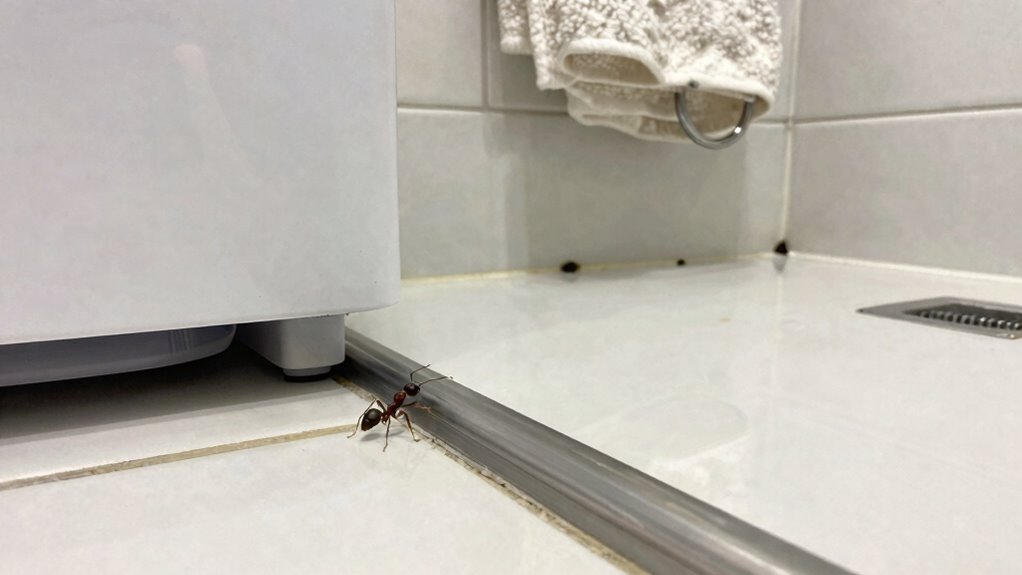
A single scout ant finds a dampness source, then lays down a chemical trail for others. Before anyone knows it, hundreds march in single file, straight toward the sink.
One scout finds dampness, marks a trail, and suddenly hundreds march single file toward the sink.
One bathroom ant is basically an open invitation for a full infestation. Seasonal migration patterns matter too.
During monsoon season, humidity spikes outside, pushing ants to seek drier, more stable shelter. The bathroom conveniently offers both water and cover.
It is not personal, the room just checks all the boxes for ant control needs. Bottom line: ants are not punishing homeowners, they are following biology, not judgment. Unlike mosquitoes and ticks, which can be deterred with picaridin-based repellents, ants require a different strategy.
Understanding those two factors is step one for effective pest management. Stopping them requires a targeted approach, which is a different battle entirely.
Stop Their Water Supply First
The first move is a brutal one: cut off the water. Ants in the bathroom are there for one reason: moisture.
Without it, their ant communication breaks down and those pheromone trails become useless. They will stop coming, and eventually nest relocation becomes their only option.
Fix every leaky faucet, wipe down wet surfaces, and run that exhaust fan. A dehumidifier set to 45% works wonders.
For optimal control, choose a unit with auto or continuous drainage to control moisture buildup that attracts pests.
Most colonies give up within a week once the water is gone.
Check under sinks for slow drips and do not forget the toilet base.
A leaking wax ring is a buffet for them.
A hygrometer costs ten bucks and tells you if you are winning.
It is not glamorous but it is effective. Dry bathrooms mean a happy home.
The bottom line is simple: dry them out and they will move on.
Seal Every Crack and Gap They Use
Cracks and crevices in the bathroom are the ant equivalent of a five star hotel entrance. A single gap around a pipe is a VIP lounge for the entire ant colony, granting them easy access to water and food sources like toothpaste residue.
Sealing these openings cuts off their main highway, forcing them to find hospitality elsewhere. For a quick ant control solution, focus on these common entry points.
| Common Entry Point | The Fix |
|---|---|
| Gaps around plumbing pipes | Apply silicone caulk, about $5 a tube. |
| Cracks in baseboards or tile | Use a paintable latex caulk for a clean seal. |
| Spaces under the door | Install a door sweep, roughly $10 at any hardware store. |
A quarter inch gap is a massive gateway for pest invasion prevention. Grab a caulk gun and go to town, it’s a cheap and satisfying fix.
The bottom line is seal every crack and you’ve effectively closed the hotel for business. This affordable DIY pest control tactic helps you stop ants for good.
For a more permanent solution, consider using a dual-layer barrier of steel wool and metal mesh to block larger openings.
Wipe Away Ant Trails for Good

A quick scrub with soapy water erases the chemical GPS that guides the entire colony. Those invisible pheromone trails left by ant feet turn a lone scout into a reliable highway of invaders.
Dry cleaning your counters breaks the trail and sends the scouts home with nothing. Your bathroom becomes ant free, and that is a small victory worth celebrating.
For lasting ant control, focus on wiping away all scent markers immediately. This ant prevention method stops infestations before they start. To further deter ants, you can also use peppermint oil sprays along baseboards and cracks.
Break Scent Trails
Most homeowners skip the easiest step in ant control: wiping away the invisible pheromone highway. Ants leave chemical trails for their colony, and breaking that line stops new ants instantly.
It is not about the one ant in sight. It is about the dozens still hidden.
Wipe once, and the GPS is cut. Understanding ant lifecycles matters here, since workers constantly get replaced.
Even natural predators, like spiders, rarely eliminate a colony singlehandedly. But a soapy rag works for pest elimination.
Mix dish soap with water, spray along the trail, then wipe. Do this every morning for a week to disrupt ant navigation.
The catch is consistency. This ant killer method is cheap, safe, and immediate.
But it is temporary. For longer-lasting defense, residual barrier sprays can be applied along entry points to keep ants away for months. Repeat the process to prevent ant infestations from returning.
Wipe Surfaces Clean
Breaking a scent trail only works if you erase the spot where it lives. Wipe residue from every countertop, backsplash, and pipe junction.
Use an ant soap solution, a simple mix of dish soap and water, to physically break down the pheromone trail. That trail is the chemical map ants use to navigate your kitchen.
Then, surface disinfect with a standard cleaner to kill any lingering scent markers. This step stops the re-marking behavior that keeps worker ants coming back.
Grab a dry towel and wipe everything bone-dry. Ants love dampness, so leaving a wet sink is basically a welcome mat for new scouts.
To spot treat problem areas like behind the toilet base, use a spray solution of vinegar and water. For long-term pest prevention, pair this with sealing entry points near baseboards.
Focus on corners because they are ant highways. Don’t forget the cabinet hinges, where pheromone residue often builds up unnoticed.
For an added layer of defense, plant-based sprays like those with peppermint or clove oils provide instant contact kill and a lasting repellent effect.
If you need a professional-grade barrier, consider a residual insecticide spray after wiping, but only in out-of-reach joints. For DIY pest control, a weekly wipe-down beats any single deep clean.
Bottom line: a thorough wipe-down costs five minutes and a few cents. Do it after every shower, and you break the party before it starts.
For ongoing ant problems, pair this routine with bait stations near trails to eliminate the colony at the source. Consistency here is your best defense against reinfestation.
Run a Dehumidifier to Dry the Bathroom
Keeping the bathroom between 40 and 45 percent humidity is the sweet spot, since ants pack up and leave when dampness drops below that survival line. This simple moisture control tactic is a proven pest prevention strategy for indoor ant control.
Place the dehumidifier near the sink or tub, not tucked behind the toilet, so it can pull water from the air instead of just collecting dust. That positioning ensures the unit works as a home moisture barrier, directly reducing the standing water and dampness that attract pest infestations.
A small unit that handles 500 square feet costs around fifty bucks, and that’s cheaper than an ant buffet for a thousand thirsty invaders. If you are shopping for dehumidifier deals, look for a model with an auto shutoff and a drain hose for continuous bathroom drying. A model with precise electronic controls keeps it within plus or minus 3 percent.
Keeping humidity at this level also helps you avoid mold and mildew, which are common triggers for carpenter ant activity. For targeted relief, pair the unit with a quick wipe down of wet surfaces after every shower.
Optimal Humidity Levels
Frequently, the quickest fix for a bathroom ant problem isn’t a spray, it’s a dehumidifier. Ant behavior patterns hinge on survival, and dampness is their lifeline.
Your bathroom’s humidity thresholds, usually spiking above 60% after a hot shower, signal an oasis. A dehumidifier aims for 40–45% relative humidity, which turns that oasis into a desert.
At that level, ant scouts stop finding water, trails break down, and colonies move on within days. It’s not magic, just math.
Think of it as turning your bathroom into a salty snack, not a drink station. Monitor with a cheap hygrometer, the size of a button, and run the unit until the reading stabilizes.
Most pests can’t handle that aridity. The bottom line for effective pest control is simple: dry air wins.
Set it, forget it, and reclaim your turf. Consistent humidity management is a proven tactic for bathroom ant removal.
Dehumidifier Placement
Place your dehumidifier near the shower or tub to stop mold and mildew before they start.
A moisture sensor turns the unit on automatically when humidity rises, so you barely have to think about it.
Position the unit at least six inches from walls for maximum airflow.
Set it on a counter or shelf, not the floor, to prevent water pooling and to keep pests like silverfish away.
Water bugs and other dampness-loving invaders will lose their drinking supply when steam vanishes instantly.
A dehumidifier placed across the room delivers disappointing results, like lukewarm coffee on a cold morning.
The bottom line is to cut off the moisture source where it begins.
A fifty dollar unit is a smart buy to control humidity and drive pests out.
To further prevent re-infestation, apply residual protection in cracks and along baseboards after the bathroom is dry.
Fix Leaky Pipes and Faucets Immediately
A single dripping faucet can turn a bathroom into a 24/7 ant resort, so fixing any leak immediately is the smartest pest control move a homeowner can make.
Leaky faucets and poor pipe maintenance hand ants a free drink ticket, and they never leave.
Check under sinks monthly.
A slow drip from a worn washer can waste 200 gallons a year and attract a thirsty ant army.
Tighten loose connections with a wrench.
It is a five minute fix that costs zero dollars and saves your sanity.
Replace worn faucet cartridges.
A $15 part beats a $150 exterminator visit, and it is oddly satisfying to install.
For extra defense, apply a perimeter bait around the home’s foundation to block ant entry.
Look for Hidden Ant Trails and Leaks
Since ants rarely announce their entry points, the smartest move is to play detective before grabbing a spray can. Seriously, grab a flashlight and get curious.
Ant monitoring means watching for those thin, dark lines of workers marching across tiles or along baseboards. They are basically tiny highways, so don’t ignore them.
That trail leads somewhere, and drain inspection is where the real action hides. Pop off the sink trap or toilet access panel, then check for dampness or slow drips.
A leaky pipe attracts ants like a pool party in July. They need water, and your bathroom’s plumbing is a five-star resort.
Fix any drips, seal cracks, and dry the area to kill the invitation. For lasting control, slow-acting bait ensures workers carry poison back to the nest before dying. Bottom line: find the trail, trace the leak, and you have won.
Eight bucks for a flashlight beats a hundred for an exterminator.
Use Vinegar and Essential Oils to Repel Ants
Even though vinegar and essential oils won’t turn a bathroom into an ant-proof fortress, they genuinely send the little invaders packing.
Vinegar wipes out ant trails, destroying the scent paths they follow.
Oil-based barriers do the rest. Peppermint, tea tree, and citrus oils confuse ants with strong smells.
In fact, natural oil sprays like those from Vanquar and Mighty Mint are safe for kids and pets when used as directed.
Here is a simple pest control plan. Mix equal parts vinegar and water in a spray bottle, then douse baseboards, cracks, and known trails.
Add 10 drops of peppermint oil to that mix, or place oil-soaked cotton balls near plumbing gaps. Reapply every few days since these natural repellents evaporate quickly.
These scent barriers won’t last forever, but they are cheap and safe. They smell better than poison for indoor ant control.
For a mild invasion, they are a solid first move. Just don’t expect miracles for a heavy infestation.
Know When to Call a Professional
When vinegar and peppermint oil fail to send ants packing, it is time to call a professional pest control company.
Those home remedies are fine for a lone scout, but a persistent trail means a colony has set up camp inside your plumbing.
DIY vs professional service is simple: you are spraying, they are locating the nest.
Professionals use targeted ant baits and gel to eliminate the colony at its source.
Cost of ant control service runs $150 to $300, which beats endless trail of DIY supplies.
You are paying for a full pest diagnosis, not just a surface spray.
A pro pest inspector checks drains and walls, then applies gel bait to active trails.
If you have tried everything and ants return within days, stop wasting money and hire a professional exterminator.
Multiple ant trails visible around your home mean you need a thorough inspection.
A hidden leak found during the visit should be fixed to eliminate the dampness attracting ants.
Service costs of $150 to $300 are well worth it for a long term ant removal solution.
DIY failed completely, so let a licensed pro handle the colony and keep your home pest free.
A boric acid powder eliminates the nest only if ants transport it back, making professional gel baits a quicker solution.
How to Keep Ants Out Long-Term
The long-term fix is not a spray, it is a strategy. Long term barriers, not quick fixes, are the goal here.
The long-term fix is not a spray, it’s a strategy. Long-term barriers, not quick fixes.
Here is the plan: Seal every crack around pipes, baseboards, and damaged caulking. A pea-sized gap is a superhighway for ants.
Remove their water source. Fix drips, wipe sinks dry, run a dehumidifier below 50 percent.
Perform seasonal inspections of the bathroom. Check these spots quarterly, especially after monsoon rains.
That is it. The homeowner is building a fortress, not a crime scene.
Bathrooms stay dry, gaps stay shut, and ants find another place. Maybe the neighbor’s house, but that is their problem.
For a reinforced barrier, apply perimeter granules in a 6-10 foot band around the foundation and reapply every 30 to 90 days.
Consistency beats chemicals any day. The homeowner will spend more time on the toilet than fighting ants.
Prevent the Water Damage Ants Signal
Ants in the bathroom are a flashing check-engine light for water damage. Fixing leaky faucets, keeping humidity under fifty percent with a dehumidifier, and sealing gaps around pipes and baseboards are the three moves that cut off both the dampness and the trails.
Skip that trio, and the only thing worse than the ants is the swollen drywall bill. For a thorough pest control inspection, call a licensed exterminator to trace hidden moisture routes and ant colony entry points.
Acting fast on these waterproofing steps also prevents mold and wood rot, which attract more pests like silverfish and carpenter ants. If you’re already seeing ant trails, use a targeted bait gel along baseboards after sealing, then monitor for reentry.
Investing in a moisture meter helps you confirm humidity levels before you buy a dehumidifier, saving you from guesswork. Pinless moisture meters use electromagnetic waves to scan finished surfaces without leaving pinholes. This simple DIY pest prevention routine is your best defense against costly water damage repairs and recurring infestations.
Fix Leaks Promptly
Check under sinks monthly for slow drips, especially at pipe joints.
Replace worn washers or caulk around tubs and shower valves without delay.
Wipe up standing water immediately after spotting it.
A $5 washer beats a $500 plumber visit.
Fix leaks fast, and ants will quickly lose their welcome mat.
Since ants follow dampness like tourists follow food trucks, a leaky pipe is practically a VIP pass for pest invasions.
Water damage is more than a structural headache.
It is a signal for ant control needs.
Ant anatomy detects moisture gradients, guiding workers straight to the source.
Their ant life cycle accelerates in humid conditions, so colonies multiply faster near leaks.
Dry pipes mean far fewer ant trails.
That is a real win for effective pest prevention.
Control Humidity Levels
Every bathroom with a lingering dampness problem is fundamentally sending out engraved invitations to every ant in the neighborhood. Controlling humidity is your bouncer.
Use a hygrometer monitoring device, a cheap little gauge around $15, to keep levels below 50 percent. Ants hate that humidity level and it stops them from nesting.
Install a vapor barrier, a plastic sheet that stops moisture from seeping through walls or floors. This blocks their water supply and acts as a no vacancy sign for pests.
Run an exhaust fan after every shower for twenty minutes. Simple, but it works, and the bathroom thanks you for the pest control effort.
Most ant colonies die within a week when moisture vanishes. So check the humidity, dry the room, and save yourself a headache with professional grade moisture management.
Bottom line is dry bathrooms equal a happy life. Stop buying ant baits by fixing the root cause.
Seal Entry Points
Grab a flashlight and go on a crack hunt to stop ants before they settle in. Ants exploit tiny fissures to reach dampness, and those leaks signal water damage.
Fixing the source is smart, but sealing the doors is smarter for long term pest control. Crack sealing around the toilet base and behind the sink is critical for ant prevention.
Pipe gaps, where plumbing enters the wall, are express highways for these thirsty travelers. A tube of silicone caulk costs about six bucks, cheap pest control insurance.
Inspect baseboards and trim: warped wood means water already got in. Seal pipe gaps with expanding foam or caulk, not just around the pipe but the entire opening.
Re-caulk the tub-shower seam yearly, since grout cracks invite them. Bottom line: dry every crack, and ants will have to RSVP elsewhere.
Frequently Asked Questions
Are Ants in the Bathroom Harmful to Health?
Typically, no. Bathroom ants aren’t dangerous to your health.
Ant health risks are minimal. They can trail a few bacteria, but in a clean bathroom it’s a low concern.
Vinegar spray has real limits. It kills on contact but fails to reach the nest, so trails reappear.
Honestly, these bugs work as free humidity detectors. They show exactly where hidden leaks are hiding.
Fix drips right away, wipe surfaces daily, and seal gaps around pipes and baseboards.
Bottom line: they are a nuisance, not a health threat. If you want a lasting ant control solution, look for a gel bait or granular insecticide that targets the colony.
Can I Use Ant Bait in Addition to Vinegar Sprays?
Yes, you can use ant bait alongside vinegar sprays, but not at the same time. Vinegar works as a repellent, which means the strong scent will interfere with the bait by keeping ants away from it.
For proper bait placement, let the vinegar dry completely before setting out bait stations near active trails. Give the ants a few days to take the toxic bait back to the colony; don’t expect magic overnight.
Think of it like offering dessert after a meal. Ant bait only works effectively if the colony is hungry for it, so avoid cleaning with vinegar where you place the bait.
How Fast Do Ants Reproduce Inside a Bathroom?
Colony growth rate in a bathroom hinges entirely on humidity attraction; without water, they’re just passing through. Inside a warm, damp space, a queen can lay dozens of eggs daily, with larvae maturing in weeks.
That’s not a swarm overnight, but it’s a steady climb. Within a month, you’re looking at hundreds.
Fix leaks, dry surfaces, and you cut their numbers fast. Bottom line: humidity is their fuel, so starve them.
If you spot ants near your sink or shower, check for standing water and condensation first. A quick fix with a dehumidifier or a leak repair kit stops most colonies before they settle in.
For active infestations, use ant baits and gel traps placed along their trails, but pair them with moisture control for real results. You want a targeted pest control solution that addresses both food sources and nesting sites.
Most homeowners see a full elimination within two weeks when they combine drying methods with a quality insecticide spray. That’s the smart purchase path: choose a product with a residual formula, like a borax-based bait or a non-repellent liquid.
Remember, ants inside a bathroom rarely mean a single nest; they often signal a nearby outdoor colony. So seal cracks in caulk and around pipes, then apply a perimeter treatment for long-term prevention.
If you’re unsure about product selection, compare reviews for “ant killer for damp areas” or “moisture-proof pest control” to match your exact issue. The faster you act on humidity, the fewer generations you’ll need to break.
What Scent Keeps Ants Away Permanently?
No scent keeps ants away permanently, though citrus oils like lemon or orange repel them effectively for days. A good ant repellent spray with citrus oils costs around $8 per bottle but fades fast, requiring frequent reapplication.
Diatomaceous earth, a fine powder, works longer by drying out their exoskeletons and killing them slowly. However, humidity undermines its effectiveness, so you must reapply after dampness or rain for the best pest control results.
Citrus smells nice but acts as a short term fix for ant problems. Diatomaceous earth is gritty and kills gradually, making it a solid option for natural ant killer buyers.
The bottom line is that scents manage ants but never eliminate an infestation entirely. For a permanent home pest control solution, pair scents with sealing cracks and fixing leaks around your foundation.
If you skip caulking entry points and repairing moisture issues, ants just laugh at your aromatherapy. Smart buyers invest in integrated pest management to buy ant killer that truly works long term.
Will Ants Return if Humidity Stays Above 50%?
Yes, ants will absolutely return if humidity stays above 50%. That moisture level turns your bathroom into a prime nesting spot for common house ants and moisture ants.
Their pest control instincts draw them to damp areas with cracked caulk or leaky pipes. Keeping humidity under 45% with a reliable dehumidifier is your best ant prevention strategy.
Dry conditions eliminate their food and water sources, forcing colonies to relocate. Fixing moisture issues is the most effective long term ant control solution.
Bottom line, invest in a quality dehumidifier or repair leaks. Otherwise, expect ants to keep treating your space like their own private spa.


