
Long, skinny black bugs in the house might seem alarming, but they’re often just harmless pests like silverfish, earwigs, or carpet beetles.
In 2023, understanding these tiny invaders is key to managing them quickly and effectively.
This article covers the best supplies, helpful tips, and what’s worth buying to keep your home bug-free.
If you’re noticing these insects hiding behind baseboards or in damp spots, don’t worry — simple tricks can make a big difference.
From sealing cracks with affordable caulk to reducing humidity, we’ll guide you through effective solutions.
Keep reading to see the top pest control options that work best and help you restore peace to your home.
At A Glance
- They may be silverfish, earwigs, or beetles, distinguished by body shape, size, and presence of pincers or cerci.
- These pests are common in humid, dark areas like basements, bathrooms, or behind baseboards.
- Moisture and food sources such as crumbs, pet spills, or damp wood attract long, skinny black bugs indoors.
- Sealing cracks, fixing leaks, and controlling humidity help prevent these pests from entering and thriving inside your home.
- Proper identification guides effective pest control measures suited for each species and infestation level.
How Can You Identify Long Skinny Black Bugs Indoors?
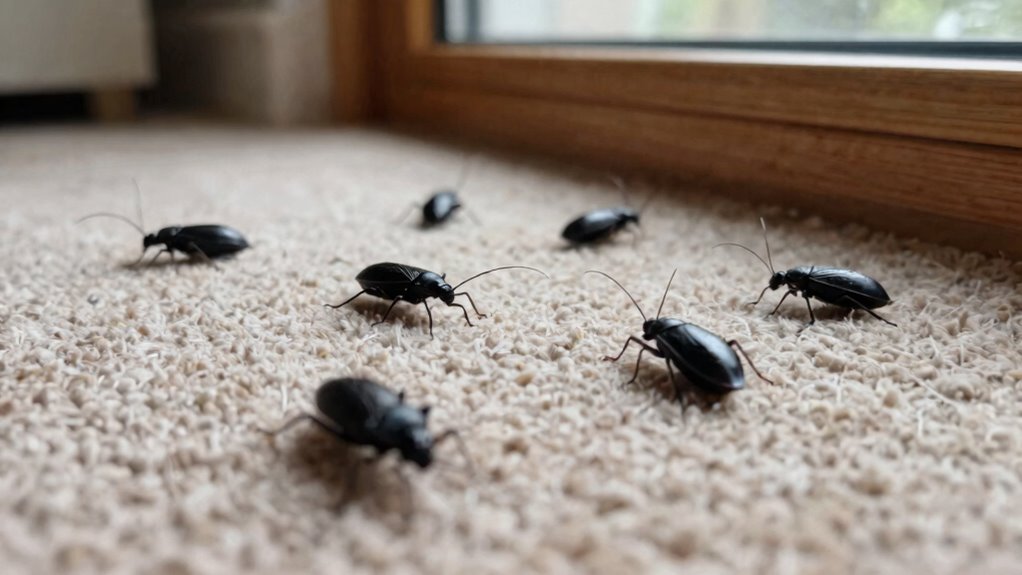
If you’re noticing long, skinny black bugs wandering around your house, don’t panic yet. Many slender pests are harmless, but identifying them correctly can help you decide if professional pest control services are needed.
Observe their movement closely. These bugs are often active at night and tend to crawl quietly along baseboards, sinks, or countertops. Their physical appearances can vary; some are shiny black and wingless, similar to silverfish, while others have elongated bodies with small pincers at the rear, resembling earwigs.
When inspecting, look for specific traits. The presence of pincers or cerci is a key indicator, especially if you notice them in damp or dark areas. Also, pay attention to how slow or quick they move, as that can help differentiate species. Proper pest identification is crucial for choosing the right treatment and preventing future infestations. Recognizing whether these pests are indoor or outdoor originates can also influence the most effective control method.
What Common Indoor Pests Are Thin and Black?
Many thin black pests are common visitors in indoor areas, and they often go unnoticed until they become numerous or cause discomfort.
Identifying these pests is key to effective pest control, as they tend to be tiny or slim, ranging from a quarter to an inch long with elongated bodies in dark shades.
Silverfish and firebrats are examples of pests that can live for years, making pest management more challenging.
In contrast, tiny rove beetles only last a few weeks but can still be a nuisance.
Other common pests include small black carpet beetles and earwigs.
These insects prefer humid, damp environments like bathrooms and basements, which are ideal for their survival.
Using effective traps and placement strategies, such as low-profile adhesive traps and keeping areas damp, can help in managing these pests.
Maintaining proper humidity levels is essential, as these pests thrive in moist conditions, and dehumidifiers can be a helpful part of control efforts.
Practical pest control tips include reducing indoor humidity and sealing entry points to keep these pests out of your home.
Implementing these measures can be highly effective, especially when combined with targeted pest treatments.
Acting quickly to identify and eliminate these pests can prevent infestations and safeguard your living space.
Remember, staying dry and maintaining good sanitation are key elements of effective pest management.
If you notice these pests appearing repeatedly, consider consulting pest control professionals for long-term solutions.
Why Are These Bugs Invading Your Home?
Moisture is the main reason many indoor bug infestations occur. Think of it as their version of a welcome mat for pests like silverfish and earwigs.
Seasonal changes and home gardening, especially during wetter months, cause these pests to move indoors when their outdoor shelters dry up or become less hospitable.
Heavy rain, drought periods, and temperature fluctuations signal to bugs that it is time to find more suitable living spaces inside your home.
Damp walls, condensation, and leaks create cozy hideouts for these insects, making moisture control an essential part of effective pest management.
Gardeners should be cautious of storing firewood or leaf debris close to the house, as these items can attract bugs by providing a source of moisture and food.
Crumbs, pet spills, and cardboard clutter act as irresistible food sources for pests, encouraging them to invade your living space.
Proper cleaning, reducing humidity, and maintaining a tidy environment are key steps in pest prevention strategies for homeowners.
Where Do These Pests Usually Hide and Live Inside?
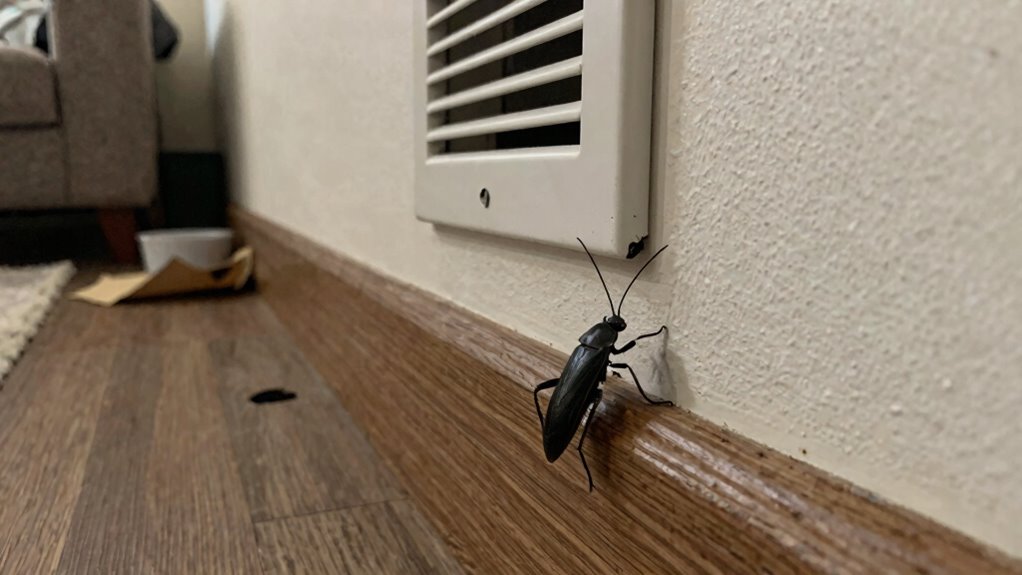
Long skinny black bugs tend to hide where it’s damp, dark, and out of sight—in bathrooms, under sinks, behind furniture, and along baseboards.
These spots are like their secret clubhouse, filled with moisture-loving conditions that keep them happy and hidden, sometimes even smushing their way into wall voids or crawling through vents.
If you find them lurking near drains or in cluttered corners, chances are they’ve made themselves at home in places that are humid, quiet, and easy to miss—kind of like the house’s dark, neglected corners. Indoor pest habitats provide the perfect environment for these bugs to thrive.
Additionally, these pests often avoid light and prefer areas with minimal disturbance, making pest hideouts difficult to detect until an infestation becomes more visible.
Common Indoor Hiding Spots
Common indoor hiding spots for pests include areas that are dark, quiet, and out of sight, making them ideal for pests to feel secure. Think of these places as their version of a cozy shelter where they can evade household pest control efforts.
They often settle into primary harbor zones like attics, basements, and closets, which provide plenty of crevices and cover. Small cracks and holes in the structure serve as secret entry points, making it easy for pests to slip inside and establish long-term hiding spots. Using steel wool barriers around these entry points can effectively block pests from gaining access.
Pests frequently hide behind boxes and stored furniture, especially in cluttered areas. Cracks around windows, doors, and foundation walls are common entry sites that pest control professionals target during inspections. Additionally, sealing these gaps with rodent-proofing materials such as steel wool or mesh can further prevent pests from infiltrating.
Dark corners behind baseboards and in pantry shelves are also popular hiding places where pest control measures can be challenging. Near doorways and basement entrances, pests can enter and quickly find a safe refuge away from human activity.
These spots give pests a safe haven, offering shelter from household cleaners and predators. Sealing entry gaps, reducing clutter, and thoroughly cleaning these areas can disrupt pest hideouts.
Implementing effective pest control methods and preventative measures can make your home less inviting to unwanted guests, ensuring a safer and pest-free environment.
Preferred Moisture Areas
Some areas inside a home are especially attractive to pests that thrive in damp environments. Bathrooms, kitchens, and laundry rooms are common hotspots because they involve frequent water use, which creates ideal conditions for pests like silverfish, cockroaches, and mold mites.
Leaky pipes, condensation on windows, or damp wood in walls and subfloors offer water sources that pests rely on for survival and reproduction. Damp wood, particularly in spaces with poor ventilation or insulation, can become a favorite hideout for termites and wood-boring insects.
Moldy corners, wet basements, and decaying plant soil also serve as breeding grounds for pests, contributing to ongoing pest control problems. These moist environments can encourage mold growth, adding another layer of difficulty in maintaining a pest-free home. Humidity control requirements are crucial because maintaining proper moisture levels helps prevent pests from establishing and reproducing. Implementing proper ventilation and sealing cracks further reduces moisture accumulation, making spaces less inviting for pests.
Using proper ventilation, fixing leaks promptly, and controlling indoor humidity levels are essential steps in preventing pest infestations. Regularly inspecting plumbing and sealing cracks can help keep moisture levels low and reduce pest activity around your property.
The benefits of controlling moisture are clear. Effective moisture management not only prevents pest problems but also protects your home from mold and structural damage.
How Do You Prevent These Bugs From Entering Your Home?
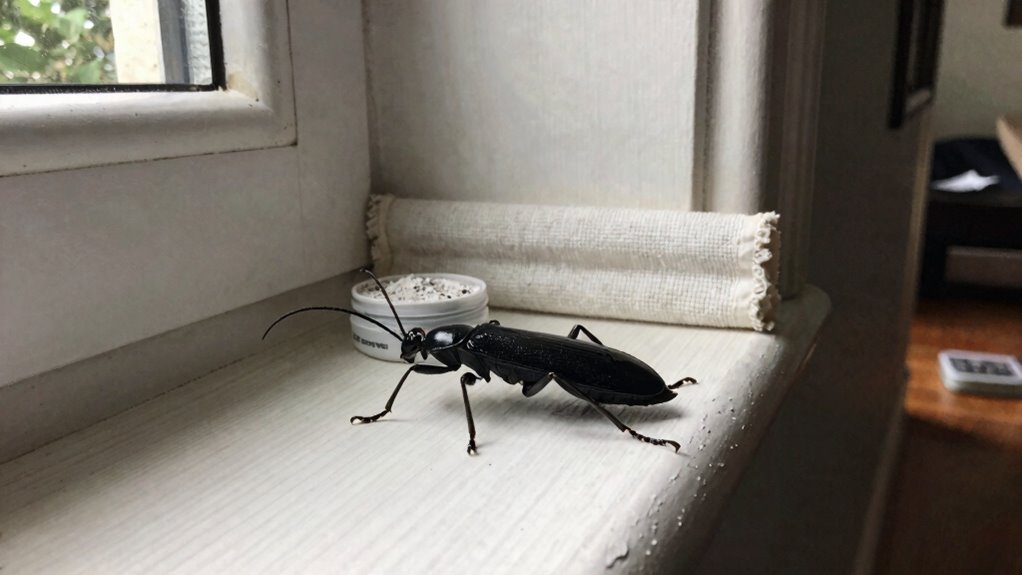
To prevent sneaky black bugs from invading your home, sealing entry points is an effective first step. Gaps and cracks in walls, doors, windows, and the foundation serve as common pest gateways.
Using a silicone-based sealant can block these tiny openings and keep pests like silverfish and click beetles out. Installing weather stripping around doors and windows is also helpful, especially during seasonal changes when insects are more active.
Seal gaps with silicone sealant and add weather stripping to keep pests like silverfish out during active seasons.
Cover vents, crawl spaces, and attic openings with fine mesh to create a physical barrier against pests. Applying an outdoor insecticide spray around the foundation can further prevent crawling bugs from sneaking inside your home. Bifenthrin sprays are an effective option for outdoor barrier treatments, providing residual protection against a variety of crawling pests.
Position outdoor lighting away from entry points because bugs are attracted to light and often follow it indoors. By sealing, covering, and spraying, you greatly reduce the chances of black bugs crashing your home party. These simple pest control tips make your space less inviting to unwanted pests and help you maintain a bug-free home.
Additionally, maintaining proper pest barrier practices like targeted perimeter treatments can significantly extend your protection against these intruders.
What Are the Best Ways to Get Rid of Black Bugs Effectively?
The simplest way to get rid of black bugs is to block their entry points and use targeted treatments, like traps or safe insecticides.
Just tossing some spray around won’t cut it—accurately identifying the bug type makes all the difference, or you’re throwing money into the dark.
Bottom line: fix what you can, then apply the right method for the specific bug—because, surprisingly, those tiny creatures can be quite picky about their spa treatments.
Additionally, choosing products with natural plant oils or organic certifications can ensure safety around your home while effectively managing pests.
Using food-grade diatomaceous earth, which is safe for home environments, can provide a chemical-free way to dehydrate and eliminate pests effectively.
Identify and Remove Entry Points
Finding where black bugs sneak into the house is half the battle. Identifying their entry points through black beetle identification and indoor insect control is essential for effective pest management.
To make your home less inviting to these pests, inspect cracks around the foundation, windows, and doors. Use a flashlight to search along baseboards and attic edges where tiny gaps serve as their highways. Copper barrier tapes can be an effective way to seal small gaps and prevent pests from entering through these routes.
Weatherstripping that is worn or compressed creates an open invitation for insects. Examine soffits and fascia for any openings. Observe clustering spots like windowsills and wall voids, as these are common entry routes for pests.
Seal cracks using exterior caulk or foam for larger gaps. Replace torn window screens and damaged weatherstripping to block entry points. Installing door sweeps enables a tight seal at the base of doors.
Seal around utility penetrations with caulk or mesh to prevent pests from slipping inside. Clear away debris and trim vegetation away from the house to eliminate outdoor hiding spots and access routes.
The bottom line is that stopping bugs at the door is an effective pest control strategy to keep them from becoming houseguests. Proper sealing and routine inspection are key steps in maintaining a pest-free home. Choosing weatherproof door and window seals also helps ensure long-term protection against pests.
Use Targeted Pest Control Methods
Effective pest control is not just about spraying pesticides and hoping it works. Targeted methods tend to be more successful, especially when dealing with common household pests like black bugs.
Using silica powder can be a highly effective pest management tactic. It absorbs moisture in pest hideouts, making it difficult for them to survive. This affordable solution costs around ten dollars per pound and is perfect for applying into cracks or baseboards where pests tend to hide.
Another useful pest control method is borax bait. Mix three parts borax with one part sugar, then sprinkle it into hidden areas where pests are active. The slow-acting nature of borax allows it to gradually eliminate pests over time. Keep in mind that borax is toxic if ingested, so it is essential to keep it away from children and pets.
Features at a glance include silica powder’s low cost, easy application, and its ability to dry out pests effectively. Borax bait provides a slow but reliable method for pest elimination, especially in concealed spots.
How Do You Know If an Infestation Is Serious?
A single black bug here or there probably isn’t cause for panic, but when these long, skinny critters start showing up more often than your favorite TV show, the situation might be serious.
Detecting a severe pest infestation in your home is essential for effective pest control and to prevent further damage.
Signs of a serious pest problem include sightings happening daily, even after you have thoroughly cleaned or vacuumed.
Bugs being found in multiple areas of your house, not just near entry points, can indicate a widespread infestation.
You should also look for the presence of eggs, nymphs, and adult bugs all at once, as this shows active breeding.
Damage to household items like books or clothing, along with webbing in corners or crevices, points to ongoing pest activity.
Persistent odors or a sudden increase in bug clusters might suggest a population boom which requires immediate pest control intervention.
If you notice any of these signs, it’s wise to consider professional pest control services to manage the infestation effectively.
Ignoring a serious pest problem can lead to costly damages to your property or long-term pest persistence.
Acting early with a pest control plan helps to eliminate pests quickly and efficiently, saving you frustration and future expenses.
When Should You Call Pest Control for Help?
Deciding when to call pest control professionals depends on a few clear signs. If bugs keep appearing after a weekend of DIY treatments or pests are spreading rapidly across multiple rooms, it’s time to seek expert help.
Pest infestations should not be ignored, especially when they threaten your property or health. You should contact pest control services if you notice visible damage to furniture, paper, or wood caused by pests.
Structural issues like holes in walls or crawlspace infestations are best handled by professionals equipped with specialized tools. Recognizing long-lasting residual effects can help determine the appropriate treatment method and duration.
Health hazards such as bites, feces, or signs of contamination also demand immediate attention from pest control experts. When you see persistent pest activity despite your efforts, it is a good idea to bring in the pros. Residual protection among treatments can vary, and professionals can recommend solutions tailored to your home’s needs.
What Long-Term Tips Keep These Pests Out of Your Home?
Keeping pests out of your home boils down to managing dampness and sealing entry points—think of it as giving bugs a one-way ticket that they’re unwilling to buy.
Dampness, like in wet basements or behind leaks, attracts bugs since it’s their version of a five-star hotel, so controlling humidity is key; a good dehumidifier costs around $150 to $300 and can make a difference. Regularly inspecting and repairing entry points such as gaps around windows and doors prevents pests from slipping inside uninvited; sealing these exits is one of the most effective long-term prevention strategies.
Sealing gaps around windows, doors, and pipes—using weatherstripping, caulk, or steel wool—closes their highway routes and keeps those long bugs from making a grand entrance; the effort is worth it when you consider the alternative, which is sharing your space with unwelcome tiny guests.
Additionally, being aware of potential side effects of boric acid sprays is important if you consider using them as a pest control method indoors.
Bottom line: stop the bugs before they start, and your home stays a bug-free zone.
Control Moisture Levels
Controlling dampness levels in your home is essential if you want to prevent pests like silverfish, earwigs, and booklice from taking up residence. These insects thrive in humid environments, especially where moisture tends to linger. Using a hygrometer to measure indoor humidity helps you keep moisture levels in check.
Placing smart dehumidifiers in damp areas such as basements and bathrooms is one of the most effective pest control strategies. Aim to keep indoor humidity below 50 to 60 percent, as levels above 70 percent can encourage these pests to multiply. Fixing leaks promptly and ensuring proper drainage can significantly reduce excess moisture. Incorporating high-strength glue traps with natural attractants can help monitor and reduce pest populations in damp areas.
Improving ventilation with fans and opening windows helps reduce humidity and discourages pest infestations. Keeping drains clear and drying wet towels quickly are simple steps to eliminate excess moisture sources. Residual formulas with insect growth regulators provide long-lasting protection in damp, shaded areas, further helping prevent infestations.
Bottom line: managing indoor moisture is a straightforward yet crucial method to prevent pests from invading your home. Incorporate these moisture control techniques into your pest prevention plan for a more pest-free environment.
Seal Entry Points
Sealing entry points is a key long-term strategy for keeping black bugs and other pests out of your home. Choosing the right materials and applying them properly creates a strong, pest-resistant barrier.
| Material | Application Techniques |
|---|---|
| Caulk (affordable and versatile) | Squeeze it smoothly into cracks and gaps around windows, doors, and baseboards. Wipe away excess for a clean finish. It costs about three to eight dollars per tube and is effective for pest proofing. |
| Steel Wool | Stuff it into small holes and openings where pests may enter. Seal over the steel wool with caulk to add extra grip and prevent bugs from chewing through. It is especially useful around utility openings. |
| Expanding Foam | Fill larger gaps and holes with expanding foam. Be careful not to overfill and wait until it dries before painting or finishing. A can costs around five dollars and helps seal entry points against pest intrusion. |
| Cement | Use on foundation cracks or larger structural gaps. Apply with a trowel for a durable and long-lasting pest barrier that keeps pests outside where they belong. |
| Weatherstripping | Seal around windows and doors to create an airtight fit. Replace old or damaged strips regularly for optimal pest control and energy efficiency. |
The bottom line is to select the right sealing material, apply it carefully, and ensure all entry points are properly sealed. Proper sealing prevents pests like black bugs from entering your home through small gaps or cracks and reduces the need for future pest control measures. Using durable, weather-resistant sealants enhances the effectiveness of the barrier and helps in pest-proofing your home long-term. This effective pest proofing technique helps keep black bugs, spiders, and other pests out of your home in the long run.
Recognizing the Difference Between Harmless and Problematic Bugs
Knowing whether those tiny black bugs crawling are harmless or a threat is more than just a guessing game.
Proper insect identification is essential for effective pest control solutions, and understanding size, shape, and habitat can help you determine what you’re dealing with.
Harmless bugs like earwigs and silverfish rarely bite or cause damage to your belongings, while problematic pests such as carpet beetles and rove beetles can harm your clothing or irritate your skin.
Size and shape are important clues. Earwigs typically measure between half an inch and one inch and have distinctive pincers at their rear.
Silverfish are very small, slim, and move quickly, making them easy to mistake for harmless household pests.
Color and appearance also matter. Silverfish are usually silver-gray and not entirely black, whereas beetles can vary widely in color and form.
Recognizing these differences helps when you are identifying pests during your home inspection for pest control or pest prevention.
Habitat plays a key role as well. Earwigs often hide in damp areas such as basements, bathrooms, or wood piles.
In contrast, dry spaces like closets or stored clothes tend to attract carpet beetles.
Behavior patterns can also give hints. Silverfish tend to dart around at night, making them difficult to spot, while earwigs tend to move quickly but are less stealthy.
Understanding the damage potential of these pests is crucial for determining whether professional pest control services are needed.
Most bugs are simply nuisances, but some can ruin your wardrobe or cause skin irritation.
Additionally, some pests like carpet beetles can be effectively managed with natural repellents that target their entire lifecycle without harmful chemicals environmentally friendly pest control.
The bottom line is to identify the pest first and then take appropriate action.
Whether you want to protect your home or prevent pest infestations, early identification is critical for effective pest management.
Frequently Asked Questions
Are Long, Thin Black Bugs Harmful to Humans or Pets?
Long, thin black bugs are generally harmless to humans and pets. They rarely pose any real threat, aside from occasional allergic reactions or minor skin irritation from their hairs or chemicals. These bugs do not typically transmit diseases or bite, making them an unlikely health concern.
Most of these insects, like silverfish, earwigs, and rove beetles, are considered harmless household pests. They are more of a nuisance than a danger, which means a simple pest control approach can usually handle the situation effectively.
If you’re dealing with these bugs, using targeted pest control products such as insecticides or natural remedies can help eliminate them. Regular cleaning and sealing entry points can prevent future infestations and keep your home bug-free.
In short, long thin black bugs are not a reason to panic. They’re more annoying than dangerous, but taking quick action with proper pest control methods can keep your home safe and pest-free.
Can These Pests Cause Structural Damage to My Home?
No, these pests usually don’t cause structural damage to your home.
They primarily feed on materials like paper, fabric, or wood but typically don’t harm the actual building structure.
If you notice signs such as small exit holes, piles of sawdust, soft or weakened spots, or strange noises within your walls, it’s time to consider a pest inspection.
A professional pest control expert can identify whether you’re dealing with a minor nuisance or a serious pest infestation that requires targeted treatment.
In most cases, these pests are more of a maintenance hassle or mess rather than a threat to your home’s foundation.
Using the right pest control products, like insecticides or traps, can help manage the problem effectively.
When dealing with pests that might invade your property, early detection and professional pest control services ensure a safer and cleaner home environment.
Investing in preventative pest control measures helps protect your home from potential damage and keeps pests at bay.
Do These Bugs Have Any of the Common Names I Should Recognize?
Are these bugs familiar to you by their common names like silverfish, firebrats, earwigs, rove beetles, or millipedes? Recognizing these names can help with identifying garden pests and understanding their behavior. Knowing whether they are beneficial or harmful is key to making smart pest control decisions.
Some of these insects act as natural predators, helping to control pest populations naturally. This can be a plus for eco-friendly pest management in your home and garden.
However, not all bugs are helpful; some may indicate underlying issues that need targeted pest control solutions. Identifying their role allows you to decide if you should encourage their presence or take action.
Are There Specific Seasons When These Bugs Are More Active?
Long, skinny black bugs tend to be most active during certain seasons, following seasonal migration patterns driven by indoor climate effects.
Spring and summer see an increase in activity as these pests search for mates and light, especially around windows and doorways.
Fall prompts them to move indoors to escape dropping outdoor temperatures, making your home more attractive to these bugs.
During winter, they stay hidden outside but become more active indoors because of warmth and humidity.
Winter is the prime time to spot these pests in your home, even without much noise or fuss.
Understanding their seasonal patterns helps you use targeted pest control solutions, like insect traps or professional treatments, more effectively.
If you’re dealing with persistent black bugs in your house, winter might be the best time to treat and prevent an infestation.
Investing in the right pest control products now can save you trouble later, making your home bug-free during the year’s coldest months.
What Are Quick DIY Remedies to Eliminate These Pests?
A simple DIY solution for those pesky long, skinny black bugs is to manage humidity levels in your home. Using natural repellents like peppermint oil or diatomaceous earth can also help keep these pests at bay.
Seal any entry points where bugs might be getting in and wipe down surfaces to remove scent trails they follow. Setting up sticky traps nearby can catch insects trying to invade your space.
These pest control tactics are cost-effective and easy to implement. Controlling humidity makes your house less attractive to bugs, while natural repellents push them away.
Together, these methods offer quick relief and reduce the need for expensive pest control treatments. For best results, combine humidity control with natural repellents to effectively eliminate black bugs from your home.


