
How long do spiders live in a house? It depends on the species and conditions, but a female house spider can survive indoors for years, while males rarely last months. That gap matters when you’re trying to manage a spider problem without constant re-infestation.
The real surprise is that food supply and temperature—not your cleaning schedule—dictate their lifespan. A well-fed female in a stable basement might outlive your houseplant, but without regular meals, they burn out fast.
This article covers exactly how long common indoor spiders stick around, and what that means for your pest control strategy. We’ll break down the factors that keep them alive so you can decide whether to ignore them or evict them for good.
Ready to stop guessing? Let’s get into the details.
At A Glance
- Female house spiders can live 3 to 7 years indoors under ideal conditions.
- Males die within weeks after reaching adulthood, often before mating.
- Stable temperatures (65–75°F) and humidity (40–60%) extend spider lifespans.
- Consistent food supply, like flies or moths, enables survival for years.
- Predators, cleaning, and pesticides drastically shorten a house spider’s life.
The Average House Spider Lives 1 to 7 Years Indoors
Bottom line: a female spider with steady indoor conditions and luck could outlive your houseplant. The males are basically arachnid mayflies by comparison.
If you are dealing with a house spider infestation, professional pest control can help remove them safely. Knowing spider lifespans is useful for long term prevention strategies.
Most female spiders can survive up to seven years indoors if conditions are ideal. Male spiders rarely live past a few months after reaching adulthood.
Most female spiders can live up to seven years indoors, while males rarely survive a few months past adulthood.
Regular spider removal services can break the breeding cycle in your home. Sealing cracks and reducing humidity also makes your space less inviting. Placing natural plant-based repellent pouches in corners and entryways can help deter spiders without harsh chemicals.
How Food Supply Determines Your Spider’s Lifespan
A consistent food supply is the single biggest factor separating a spider that lasts two months from one that lasts two years. Without regular meals, a spider’s energy tanks fast, and it burns through its reserves just staying alive.
Flies, mosquitoes, or moths dropping into its web keep it well-fed, but a starving spider won’t molt or reproduce. More food equals more molts, each shed skin means growth, and bigger spiders live longer, sometimes hitting three years indoors.
Competing prey is a problem, so effective pest control around your home ensures spiders get enough to eat. Too many spiders in one area means smaller meals for everyone, shortening individual lifespans.
Hiding spots near food sources, like window sills or cracks, allow spiders to ambush prey without wasting energy. Creating these spots can extend life by months while helping you manage insect invasions naturally.
The bottom line is keep a few bugs around, and your house spider might outlast your houseplant. For long term spider health, focus on eliminating pest hotspots without removing every potential meal. Using a natural peppermint oil formula near entry points repels insects without eliminating the entire food supply, helping maintain a balanced prey population for spiders.
Why Stable Temperature and Humidity Extend House Spider Life
A steady indoor climate helps house spiders live longer by keeping their cold blooded metabolism efficient. Stable temperatures between 65 and 75 degrees Fahrenheit prevent their energy from burning out too quickly.
Consistent humidity levels around 40 to 60 percent stop them from drying out entirely. This simple pest control insight shows why a consistent thermostat is a powerful tool for managing spider longevity. You can also use natural peppermint oil solutions to create a safe, chemical-free indoor spider deterrent.
Your predictable home environment gives these eight legged tenants a longer lease on life. No weather drama cuts their stay short when you maintain moderate conditions.
For homeowners looking to reduce spider activity or extend their lifespan naturally, controlling indoor humidity and temperature is a practical first step. Understanding these factors can help you choose targeted spider prevention strategies.
Optimal Indoor Climate
Indoor heating and air conditioning systems create a surprisingly ideal environment for spiders. By maintaining steady humidity and temperature, these setups reduce the stress that shortens spider life outdoors.
Consistent conditions help spiders thrive rather than just survive. For pest control, this means spiders stay put instead of wandering into other areas.
Optimal humidity prevents dehydration and supports healthy molting. Consistent temperatures from your HVAC system let spiders save energy for reproduction and repair.
A stable indoor climate between 68 and 72 degrees with 45 to 55 percent humidity can help house spiders live up to three years. You are essentially running an unofficial arachnid retirement community. Booklice cannot tolerate humidity below 50 percent, and the same dehumidifiers effective against them will also discourage spider survival.
To manage spider populations, consider reducing indoor humidity or sealing entry points. Regular pest control checks can prevent unwanted infestations while keeping your home comfortable.
Your home’s climate control inadvertently boosts spider longevity. For those seeking pest control solutions, adjusting thermostat settings or using dehumidifiers can disrupt this cycle.
Consistent Temperature Benefits
Three key factors explain why house spiders thrive indoors for so long. Temperature stability, humidity consistency, and reduced metabolic stress keep them comfortable and inactive.
When your thermostat stays constant, a spider’s metabolism slows right down. Less metabolic wear on tiny organs means longer life with less need for pest control intervention.
Think of it as running a car in eco-mode forever with no sudden energy spikes. Humidity control prevents dehydration, so spiders skip the daily scramble for water and moisture.
Spiders dry out fast without proper humidity levels. But a cozy, stable home helps them retain dampness easily, reducing their need to wander for hunting or hydration.
Stable temperatures keep biological processes humming smoothly. Consistent humidity blocks desiccation and removes the drive to seek water sources.
Your boring indoor climate is basically a spider retirement home. Lucky them.
Maintaining humidity levels between 50 and 60 percent creates an environment that is unsuitable for moisture-dependent pests like spiders.
Do Household Predators Shorten Spider Lifespans?
Centipedes hunt spiders with speed and venom, killing them in seconds, which is a major problem if you’re dealing with a pest infestation. Other spiders, like cellar spiders, will pounce and eat smaller species, so your home’s web-to-web battles cut lifespans fast. To manage these predators effectively, placing traps along baseboards intercepts centipedes traveling through dark, moist areas.
Centipedes hunt spiders with speed and venom, killing them in seconds.
People, yes you, squash or relocate spiders, drastically cutting their time alive, even when you’re just trying to remove a nuisance. The bottom line is that these indoor threats, plus human intervention, shorten spider lifespans, which is why professional pest control services often target both predators and prey.
Without these dangers, a house spider might live years, not months, making your attic or basement a safer long-term habitat. If you want spider prevention tips or need an exterminator for spider control, acting quickly can save beneficial species while reducing home invasions.
But remember, every squashed spider or chemical treatment is a direct shift in its survival clock, so check corners and seal cracks to limit both predators and unwanted guests. For long-term results, consider routine pest management that balances removal without introducing extra centipede pressures.
Why Female House Spiders Outlive Males by Years
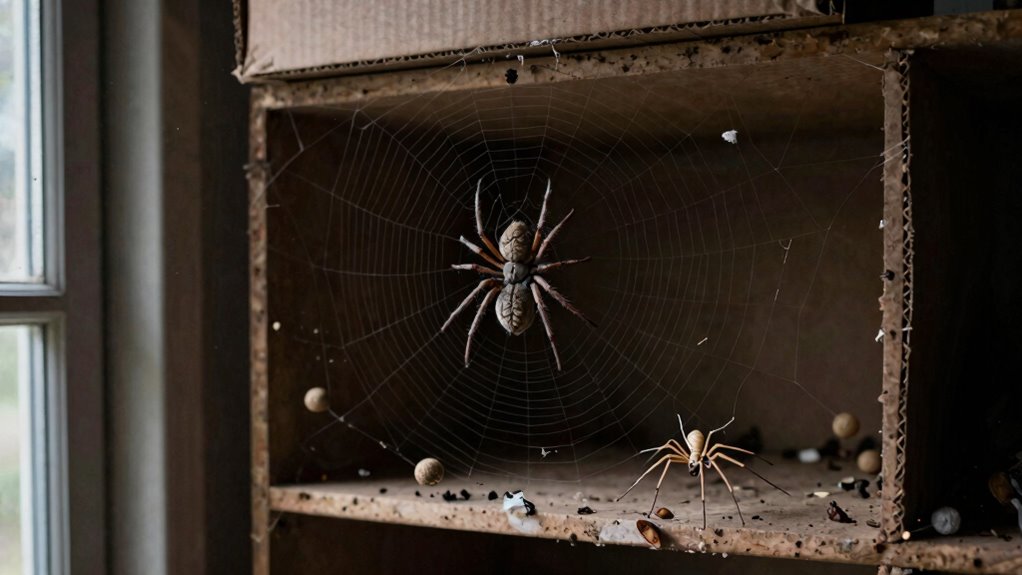
The gender gap in house spider longevity isn’t a mystery. It is a biology textbook fact.
Females are built for the long haul, producing multiple egg sacs over several years. This keeps their bodies in a state of extended maintenance.
Males are on a one-way ticket. Their sole biological drive is to mate, and they typically drop dead within weeks.
If you are dealing with a spider infestation, targeting the long-lived females is key to effective pest control. A single female can keep a home infested for years.
Knowing this life cycle helps when choosing spider removal services. The males die off quickly, but the females require targeted treatment plans.
For lasting results, focus on spider prevention around your home. Sealing cracks and reducing clutter removes the safe harbors females need for egg production. Applying a long-lasting residual barrier spray can eliminate these females and prevent new infestations for months.
Biological Drive Differences
Speaking of biological drive differences, the main reason female house spiders outlive males by years comes down to a single, ruthless evolutionary strategy. Males are built to mate and die, whereas females are built to survive and repeat, much like a pest control cycle you want to break in your own home.
Male mortality is sky-high since they stop eating and wander constantly, often starving or getting eaten before they even find a mate. Female longevity, on the other hand, is a slow, steady game, and that’s why you see more webs over time.
Males reach maturity, sprint to find a female, then keel over within weeks. It is basically spider burnout, but the real pest control concern is their offspring hiding in corners.
Females chill in their webs, eating flies and waiting, which can stretch their life to seven years. That steady web cleaning habit is your best buyer-intent solution for long-term spider prevention.
A male’s entire purpose is a one-shot reproduction. A female’s is a marathon of egg-sacs and survival, meaning your regular pest control treatments should target those lingering webs first.
Female Egg Production Longevity
This brings us directly to the reason female house spiders can outlive males by years, and it is not just about chilling in a web longer. Their longevity is tied directly to egg production.
A single female might produce five clutches per year, each containing up to 250 eggs. That means a lot of potential spiderling survival, but the real trick is she repeats this across multiple seasons.
Some females live three to seven years, laying clutches year after year. The constant energy investment in eggs forces her to be a patient, efficient hunter.
She conserves energy, does not waste it on risky mating quests, and focuses on steady food intake. Clutch frequency is high, but she paces herself.
This reproductive marathon, not a sprint, is why she outlasts males by so long. To control a spider infestation, you need to target these long-lived females before they produce multiple seasons of egg sacs. Natural mineral dusts like refined pumice can help eliminate insects and spiders without harsh chemicals, making them safe for long-term use around the home.
For effective spider pest control, focus on sealing entry points and reducing prey insects around the home. If you need to buy spider traps or sprays, look for products labeled for egg sac removal.
Bottom line: her biological job description just takes longer to complete, which is exactly why homeowners should schedule regular pest monitoring.
Male Post-Mating Mortality
Male house spiders live fast and die young after mating, which is why you rarely see them around for long. This short lifespan is a built in trade off that leaves females to survive for years instead.
If you notice a male spider in late autumn, he may be waiting for spring to find a mate. Many perish in cold corners before that chance ever comes, creating a natural cleanup in your home.
Females produce egg sacs season after season, often lasting until their seventh year. This means a female infestation can quietly grow while males vanish quickly.
Homeowners dealing with spider buildup should consider routine pest control to break this cycle. Imidacloprid is one active ingredient found in some lawn products that targets underground pests, though for spiders inside the home a targeted treatment plan reduces both short lived males and egg laying females.
How Many Eggs a Single Female Spider Lays Over Her Lifetime
A single female house spider can lay 10 to 250 eggs per clutch, producing up to five clutches each year. Over her lifetime that totals roughly 1,000 to 3,000 eggs, which is surprisingly modest for a pest that homeowners often want to control.
Spiderling survival is abysmal, with less than 1% reaching adulthood due to cannibalism, starvation, or bad luck. So if you are looking for pest control services, understanding this life cycle helps target egg sacs before they hatch. Non-toxic glue traps can capture spiders already present in a home without luring new ones inside.
That means a female may crank out a small army of offspring, but her genetic legacy relies on just a handful of survivors. For effective spider prevention, regular inspections and sealing entry points are your best bet.
It is a numbers game, and the house spider plays it relentlessly if not efficiently. Contact a local exterminator to break that cycle and reduce infestations fast.
Why Most House Spider Babies Never Reach Adulthood
Survival in the spider world is a brutal numbers game, and the house spider plays it with heartbreaking odds. Less than one percent of spiderlings reach adulthood, making early death the norm rather than the exception.
This high spiderling mortality stems from three main causes. Egg failure leaves many eggs unhatched due to fungal infections, parasites, or simple infertility, wasting a female’s energy.
Cannibalism among siblings happens soon after hatching, especially when food is scarce. This is nature’s grim version of sibling rivalry.
Starvation kills newly hatched spiderlings because they need tiny prey immediately. Many houses lack the small insects they require, leading to rapid death.
Between egg failure and early predation, most babies never see their first molt. It is a rough start, and only the luckiest, most aggressive survivors get a shot at a full lifespan indoors.
If you are noticing a sudden increase in spider activity, professional pest control can help reduce the conditions that allow so many spiderlings to thrive. A targeted pest control service eliminates the tiny insects they need to survive, and using food-grade diatomaceous earth as a natural barrier can further dehydrate and kill crawling pests without harsh chemicals.
Contact a local pest control expert to break the spider lifecycle before the next batch hatches. Taking action early can keep your home from becoming a nursery for these eight-legged residents.
What Indoor Conditions Help Spiders Live the Longest Lives
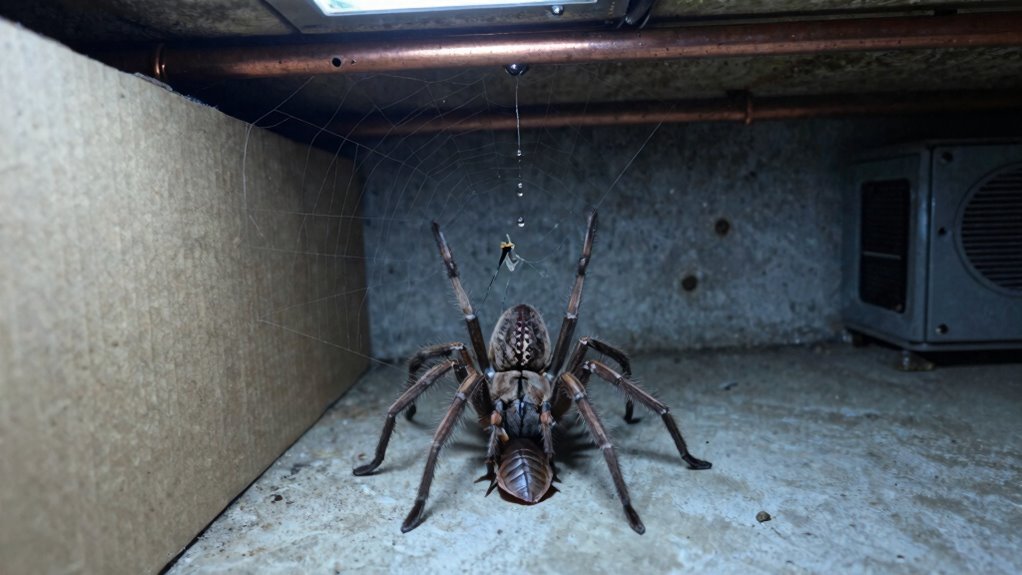
Once a spider survives the gauntlet of egg failure, sibling cannibalism, and starvation, the house itself decides how long it gets to enjoy the good life. The best setup features a stable, moderate temperature around 65 to 75 degrees Fahrenheit with decent humidity, which reduces metabolic stress. A proper basement habitat stays damp, dark, and cluttered, keeping a spider fed on silverfish and pill bugs. This gives females a shot at three to six years of life in your home pest control zone. Attic conditions are trickier because too much heat and dryness cause fast desiccation. However, an attic with consistent shelter and occasional flies works for hardier species like the barn funnel weaver, making spider prevention easier. Avoid drafts, temperature extremes, and full on cleaning binges to support long term spider longevity. Want a long lived house guest? Give them a stable, buggy basement and they will earn their keep by managing household pests.
Frequently Asked Questions
Can Spiders Starve if I Don’T Have Insects in My House?
Spiders can starve without insects, but it takes time. Their slow metabolism means they can survive weeks without food.
Prey scarcity is a real indoor problem. A spider without flies or gnats will eventually weaken and die.
Water availability matters too, since dehydration kills faster than hunger. So a pest free home means a shorter, hungrier spider life.
But honestly, if your house is insect free, the spider probably already moved on. To keep spiders out long term, consider using a proactive spider repellent spray.
For persistent indoor spiders, try glue traps or a targeted spider killer. These pest control solutions work when natural prey is missing.
No bugs means fewer spiders, but sealing cracks and entry points helps even more. A complete home pest control plan stops both insects and their predators.
If you want to prevent spider infestations entirely, focus on eliminating their food source first. Professional grade pest control products can break that cycle indoors.
Do House Spiders Hibernate or Become Dormant in Winter?
House spiders don’t truly hibernate, but they do become dormant in winter. Seasonal activity drops as cooler temperatures hit, slowing their metabolism like a budget laptop on power-saver mode.
Temperature impact is key; consistent indoor warmth near 65°F keeps them barely active, searching for stray flies. Below 50°F, they’ll curl up in cracks, waiting for spring like a cranky armchair philosopher.
The good news is that your heated home turns their winter nap into a light doze, so you might still spot one near baseboards or storage boxes. If you’re dealing with frequent sightings, that’s a sign to check for gaps around windows, doors, and utility lines where they sneak in.
For a quick, low-effort fix, use a targeted spider spray along entry points and corners. That stops dormant spiders from waking up hungry in February and wandering into your living room.
If you want longer-lasting control, consider a residual insecticide dust in wall voids or under cabinets. These products keep working through the season, which is exactly what you need if you’re preparing for a winter pest-proofing routine.
Buying a ready-to-use spray with a crack-and-crevice nozzle saves time and reaches those tight hiding spots. Pair it with a dehumidifier, since drier air makes dormant spiders less comfortable and more likely to stay hidden.
Can I Keep a House Spider as a Pet in a Terrarium?
Yes, absolutely, a house spider can make a fascinating, low maintenance pet in a terrarium. Just keep the enclosure simple with proper terrarium ventilation to avoid mold, since stale air is a killer.
These spiders are hardy, but you’ll need to respect their molting cycle, that’s when they shed their exoskeleton to grow. During molting, they’re fragile, so skip feeding and don’t poke around.
A 5 gallon tank with a mesh lid, some bark, and a water dish does the trick. Expect a few bucks for setup, but the payoff is watching a natural predator thrive.
If you’re dealing with pest control in your home, think of this spider as a free ally against house flies, moths, and crawling insects. You can buy spider enclosures online or grab a mesh lid kit at your local pet store.
For the best pest control products, pair your spider terrarium with a sticky trap near the base to catch overflow bugs. That way, you reduce indoor pest populations without spraying chemicals.
Bottom line: get one, but let it be. A house spider pet is a low cost, pest control solution you can watch hunt every day.
Do Different Spider Species Attract Different Lifespans Indoors?
Yes, different spider species attract different lifespans indoors, and that’s driven by their unique spider life cycles. For example, a common house spider (Parasteatoda tepidariorum) typically lives 1 to 2 years, while a giant house spider (Eratigena atrica) can reach 3 to 7 years, especially females.
Their molting frequency also varies, and frequent shedding often signals rapid growth with a shorter lifespan. That’s why male spiders usually die soon after maturity, so don’t expect them to stick around long-term.
If you’re dealing with indoor spider infestations, knowing the species matters for your pest control strategy. A quick spider identification guide can help you decide whether to set traps or call a professional exterminator for targeted spider extermination.
For long-term indoor spider control, focus on sealing cracks and reducing humidity, since that’s where most species thrive. You’ll also want to remove webs regularly to disrupt their breeding cycles and lower the chance of egg sacs hatching near your living spaces.
Choosing a long-lived species as a companion indoors might sound fun, but adult males will bow out quickly after mating. In practice, most homeowners prefer spider prevention over pet spiders, so invest in sticky traps and residual sprays for effective indoor pest management.
If you see frequent molts, that’s a sign of active growth, meaning you need to act fast with repellents. For the best results, combine a quality spider killer spray with routine vacuuming of corners, which directly targets both adult spiders and hidden egg sacs.
Remember that a giant house spider’s 3 to 7 year span only applies if food and shelter are consistent, which is rare in clean homes. So, realistic indoor spider lifespans are often shorter, and that makes consistent monitoring and preventative treatments your safest bet.
Ultimately, the answer to “how long do indoor spiders live” depends on species, gender, and food supply. Match your pest control products to the specific spider type you see, and you’ll get faster, smarter results without wasted effort.
How Do Spiders Find Water Inside a Home?
Spiders find water inside a home by tracking humidity in the air and seeking out condensation on pipes, windows, or damp corners. That higher dampness is a major clue for them, as it means easier drinking and survival.
They will also sip from pet bowls, leaky faucets, or drip pans to stay hydrated. A dry house honestly cuts their options fast, making pest control much simpler.
So, fix leaks, wipe down wet surfaces, and use a dehumidifier for best results. It is an affordable investment, often around 50 dollars, that makes your home less inviting.
Think of it as denying the drip to deny the guest. This approach is a key part of any effective home pest control strategy.


