
Can cockroaches come through drains? Absolutely—and a dry P-trap is their express lane from the sewer. American roaches love the damp, warm, biofilm-lined pipes, turning an unused sink into an open invitation.
A quick fix like weekly boiling water flushes can stop them, but for a permanent solution you’ll want seal devices that lock the drain. Keep reading for the full rundown on the best drain blockers and maintenance tips to keep your home roach-free.
At A Glance
- Cockroaches enter homes through dry, unused drains when P-trap water barriers evaporate.
- Drains offer cockroaches moisture, food from biofilm, darkness, and stable temperatures.
- American cockroaches are the most common drain invaders, climbing from sewers into homes.
- Flooding sewer backups can push cockroaches past P-traps into indoor spaces.
- Sealing drains with trap guards or weekly water pouring prevents cockroach entry.
Can Cockroaches Really Come Up Through Your Drains?
Yes, cockroaches can absolutely come up through your drains when they are dry and unused. A musty roach smell often signals a hidden infestation lurking in the pipes.
That odor wafts up from the biofilm, a slimy layer of bacteria and food scraps coating the drain walls. Removing that biofilm is essential for effective pest control, because without it you are just giving roaches a free buffet. Regular use of enzyme-based drain cleaners helps digest the organic matter in biofilm, removing the food source that attracts roaches.
American cockroaches thrive on that gunk and will climb straight up from sewers into your home. To stop them, flush drains weekly with hot water to break up the grime.
For a simple trap seal, install one on unused floor drains for about $20. It blocks entry without chemicals and costs little.
Clean drains monthly with a biofoam product that eats biofilm and kills eggs. Bottom line: dry drains invite pests, but wet ones clogged with grime supply a free roach motel.
Keep your drains flowing and you will remove the roach attractant for good.
How Do Roaches Get Past the P-Trap?
The p-trap’s water barrier can evaporate in about a week, leaving a dry, open path for roaches to crawl right up. That means your plumbing’s first line of defense is only effective as long as the water stays. During heavy rain or sewer overflows, flooding can push roaches past the trap’s water seal entirely. This bypasses the intended protection and lets cockroaches enter from the sewer line directly. So that bend in the pipe isn’t the fortress it seems. After just a week of neglect or a storm, it becomes more of a polite suggestion than a real roach barrier. For effective pest control, consider sealing gaps around pipes and using a drain cover, or place child resistant bait stations in high-traffic areas to eliminate any roaches that do get through. You can also schedule a professional pest inspection to target roach entry points and prevent infestations.
P-Trap Water Evaporation
Evaporating p-trap water is the drain equivalent of leaving the front door open for roaches. That small water barrier blocks sewer gases and pests, but it dries up faster than most homeowners expect.
In an unused basement drain, the p-trap can go bone dry within seven days. This creates a highway for American cockroaches straight from the sewer pipe into the house.
Without regular p trap maintenance, that half inch of standing water vanishes. Roaches simply crawl up through the dry curve, bypassing the only drain defense you have.
Simple evaporation prevention like pouring a half cup of water down unused drains once a week costs nothing. Keeping that barrier intact saves you from a whole lot of surprise visitors.
The p trap works great, but only when water is actually in it. Any dry drain is fundamentally an open invite for pest control problems.
To reinforce defenses, applying boric acid insecticidal dust into nearby cracks can help eliminate pests that do manage to enter.
P-Trap Bypass During Flooding
A p trap stops roaches when it is full, but heavy rain exposes a hidden loophole. Flooding bypasses the trap entirely during a sewer backup.
Water pressure forces sewage up through flood plumbing and pushes roaches past the barrier. They simply float or swim through, no evaporation needed.
Think of it like a dam that works fine until a storm surge rolls in. When flood plumbing overwhelms the system, American cockroaches exploit the chaos.
Their tiny bodies let them ride the overflow right into basements or ground floor drains. The fix involves installing a backwater valve, costing around 150 to 300 dollars, to block reverse flow.
Seal floor drains with a threaded cap when not in use for extra roach protection. Do not rely on the p trap alone during heavy rain.
It is only as good as the water sitting in it. For permanent pest control, invest in a backwater valve or drain seal to stop sewer backups and roach invasions.
What Makes Drains So Attractive to Cockroaches?
Drains are basically all-inclusive resorts for cockroaches, minus the mini-bar and with a much worse smell. They offer a perfect storm of survival basics, all in one damp, dark package. For a roach, it’s a five-star hotel where the buffet never closes.
Specifically, three features make them irresistible. First, drain biofilm is a slimy bacteria-rich film that coats pipes. It’s a constant nutritious snack layer requiring zero hunting effort. Second, moisture attractants include standing water and condensation. Roaches need high humidity to thrive, and drains deliver 24/7 hydration. Third, uninterrupted darkness provides a safe hidden corridor away from predators. Stable temperatures never dip freezing, which is perfect for cockroach breeding. Using a vapor-based treatment inside nearby trash bins can eliminate adult flies and larvae, reducing another food source that draws roaches into the same drain-adjacent areas.
It’s not glamorous, but for a cockroach it’s a winning formula. That is why any uncapped pipe is basically an open invitation for a pest infestation. To keep roaches out, seal all drain openings with a tight cover or mesh screen. Regular drain cleaning with enzyme treatments removes biofilm and eliminates food sources. If you notice roach activity near sinks, call a professional pest control service for targeted treatment. A proactive approach stops an infestation before it starts.
Which Roach Species Invade Via Drains Most Often?
The American cockroach is the most frequent invader of drains, with a very high likelihood of entering homes through sewer pipes. They typically breed in sewers and drain pipes, making them a common pest in urban plumbing systems.
The Oriental cockroach has a moderate chance of entering through drains, often found in wet drains and basements. These roaches prefer damp, cool environments and can be persistent in humid areas.
The German cockroach is a low risk for drain invasion and is usually just a visitor in these areas. They breed mainly in kitchen appliances and cracks, staying close to food and warmth.
The Smokybrown cockroach has a low chance of drain entry and only appears occasionally. Their typical breeding spots are mulch and tree holes, so they are more of an outdoor pest.
For effective drain pest control, focus on sealing entry points and reducing moisture in plumbing systems. Hiring a professional exterminator can help target these roach species and prevent infestations.
What Health Risks Do Drain Roaches Pose?
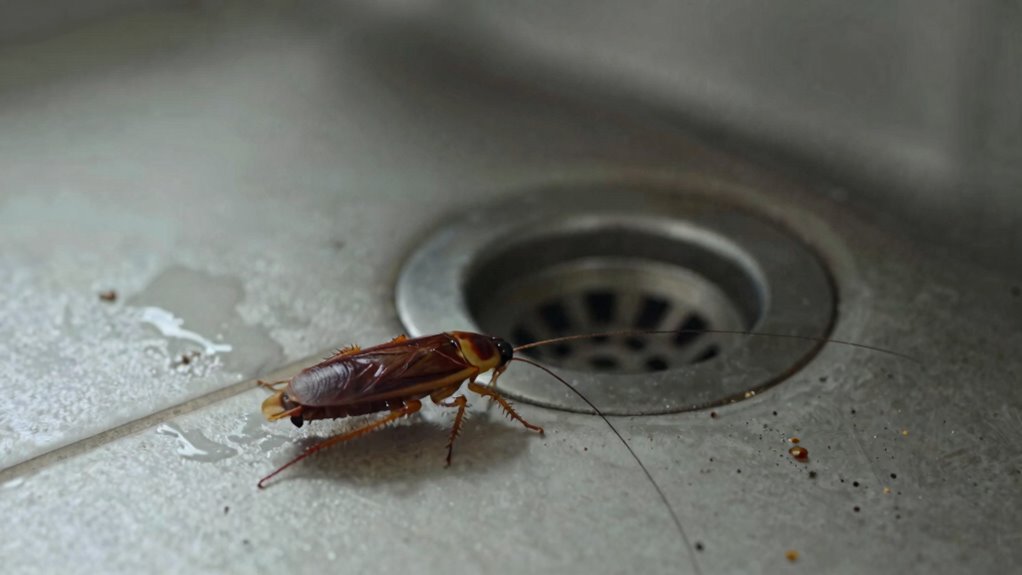
Drain roaches crawl through sewers and feed on filth, carrying a nasty lineup of pathogens that can make people seriously sick. Their bodies and droppings act like tiny delivery trucks for germs, turning your peaceful kitchen into a biohazard zone.
The real trouble isn’t just the roach itself. It’s what they leave behind on counters, utensils, and food prep areas.
They transfer salmonella, E. coli, and dysentery-causing bacteria directly from decaying muck to your clean surfaces. This pathogen transmission is a serious pest control issue you can’t ignore.
The slimy gunk in drains they love is a breeding ground for bacteria. When they crawl through it, they pick up every microscopic freeloader, creating biofilm hazards that worsen your drain roach problem.
Their shed skins and feces trigger asthma attacks and allergic reactions, especially in kids. These allergen bombs can land families in urgent care if you delay action.
Don’t let these sewer tourists hang around your home. Seal drains, run water weekly, and call pest control if you spot one to stop an infestation fast. For immediate control, spray plant-based sprays along baseboards and entryways to kill roaches on contact without harsh chemicals.
The Quick Fix: Pour Bleach Down Drains Before Vacations
A simple, proven tactic exists for keeping roaches out as you’re away. Pour one half cup of bleach down drains before vacations to kill biofilm, the slimy bacteria buffet roaches love.
Bleach also temporarily blocks their entry. But be mindful of bleach hazards like strong fumes and potential damage to metal pipes over time.
Add this to your vacation checklist: run water first to fill the p trap, then pour bleach slowly. Let it sit five minutes, then flush with hot water.
It is not a permanent fix because the seal evaporates after a week. However, it works for short trips as a quick pest control barrier.
Think of it as a quick security guard for drains, not a moat. For longer absences you will need a real seal to stop roaches from entering.
This simple roach prevention trick keeps the creepy crawlers out while you are sipping margaritas. Just don’t forget to close the drain cover afterwards.
For a more lasting solution, consider enzymatic drain maintenance to break down the organic waste that attracts pests without relying on harsh chemicals.
What’s the Best Permanent Way to Seal a Drain?
If bleach is a temporary bouncer, a water trap seal device is the permanent lock on the drain door. These clever gadgets, like Trapguard or Sureseal, install directly into the drain opening. They create a physical barrier that never evaporates and provides a permanent drain seal that lasts years instead of days. For comprehensive pest control, these devices complement fipronil-based gels that offer long-lasting residual protection for nearby roach infestations.
A self-sealing mechanism uses a flap that opens only when water flows down. Then it snaps shut, blocking any critter trying to climb up from the sewer. Simple installation requires no tools, just pop it into a standard drain and it is done.
This cost effective solution costs around $10 to $20 per unit. That is far cheaper than repeated pest control visits or professional drain cleaning services. The drainage trap seal stops roaches, odors, and even sewer gases effectively.
It is the best long term fix for any unused or rarely used drain. Homeowners looking for a permanent roach prevention solution will find this works hands down.
How to Maintain Every Drain in Your Home to Repel Roaches
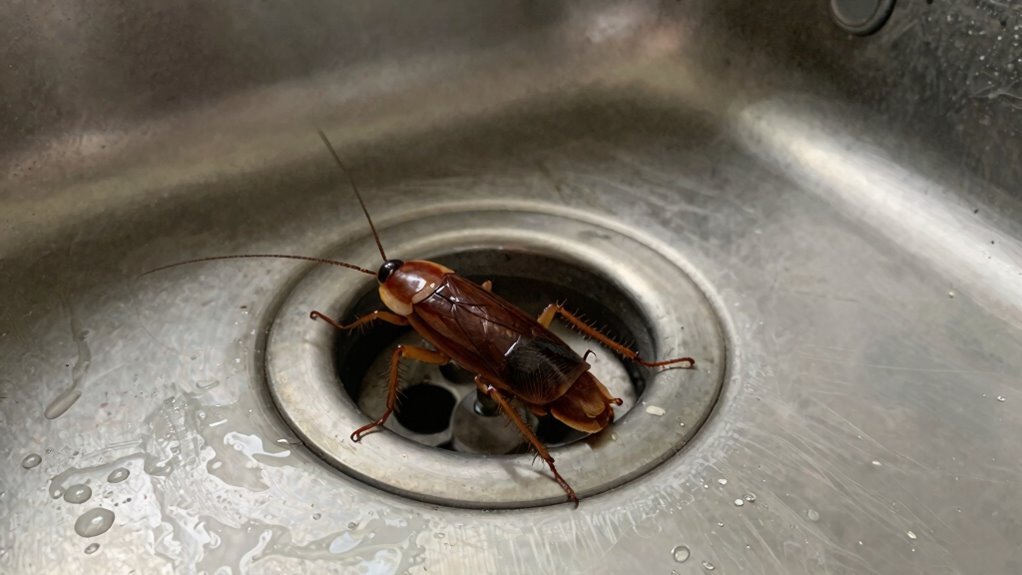
One permanent seal per drain is a solid start, but roaches will exploit any unsealed opening they find. Routine maintenance is non negotiable to keep these pests out.
A permanent seal helps, but roaches will find any unsealed opening they can.
Weekly, pour a pot of boiling water down each drain to break up biofilm removal. This slimy gunk attracts roaches and other insects.
Follow with a bio sanitation enzyme cleaner like Bio Clean to eat organic waste. Monthly, check for cracks or loose pipes that need immediate caulking or replacement.
Run water in unused drains every few days to keep P traps full. Cover floor drains with a screw in cap or TrapGuard seal for around 15 dollars each.
Skipping this simple work invites six legged houseguests into your home. Stay consistent with your drain repairs and your drains stay roach free.
When Should You Call a Pro for a Drain Roach Infestation?
Seeing a few roaches in a drain is one thing, but noticing them during the day or spotting droppings, egg cases, and a musty smell signals a heavy infestation. DIY methods like bleach and boiling water only kill what is visible, failing to reach the nest hidden deep in the plumbing or sewer system. Professional services can use insect growth regulators to prevent roach reproduction for months, stopping the problem at its source.
When traps and cleaning fail to reduce the population for more than two weeks, it is time to call a pro who can apply foams and seal traps to stop the problem at its source. A professional pest control service can target the root of the infestation with specialized treatments that eliminate the entire colony.
If you notice roach activity during daylight hours, that usually means the nest is overcrowded and desperate for food. This is a clear sign you need expert drain roach treatment to protect your home.
The musty smell and egg cases mean the infestation has been growing for weeks. Calling a certified exterminator for a sewer roach infestation ensures the problem is fully resolved and does not return.
Signs of Heavy Infestation
A lone roach near a sink might just be a lost tourist, but a heavy infestation sends clearer signals. When the problem is serious, you’ll notice these three unmistakable signs of a thriving pest colony.
First, an unusual odor: a musty, oily smell wafts from drains even when no water runs. Roaches secrete pheromones that linger and attract more of their kind, making professional pest control a smart move.
Second, visible droppings: look for small, black, pepper-like specks near drain covers or along baseboards. These excretions pile up quickly in a dense population, signaling the need for a targeted treatment plan.
Third, frequent sightings: roaches scurry out daily, especially at night, and you’ll spot them under sinks or in cabinets without much searching. These clues mean the drain colony is thriving, not just passing through. For heavy infestations, quarterly fogging treatments are often recommended to keep roaches from regrouping between professional visits.
Calling a pro soon prevents the problem from spreading further. Expert extermination stops the infestation before it reaches other areas of your home.
When DIY Isn’t Enough
A determined do it yourselfer can handle a few stray roaches, but a drain colony may be too deep for bleach. You need a professional when multiple species appear, like American roaches in the p trap and Germans around the sink. Each pest requires different tactics, so a single product will not work. For example, a boric acid powder with a food-grade lure can kill roaches on contact within 72 hours, but it cannot reach deep drain colonies. Sanitation issues such as biofilm buildup or sewer backups demand industrial grade cleaning, not a scrub brush. An exterminator will use a borate foam treatment that smothers colonies inside pipes. This service costs between 150 and 300 dollars per treatment.
They also seal floor drains for 20 dollars each and inspect exterior barriers to stop re entry. If you have baited and cleaned drains weekly but still see roaches at night, call a pro. It is cheaper than a food safety violation.
Bottom line: DIY fixes stragglers, while professionals fix infestations. For serious pest control, trust the experts to handle your home.
Frequently Asked Questions
Do Roaches Come Through Shower Drains Too?
Yes, cockroaches can come through shower drains, and the American cockroach is the species most likely to do this. They climb up plumbing during heavy rain or when the p trap dries out, often within a week.
Understanding roach lifecycle stages helps, because nymphs actively seek damp, food rich drains. For drain pest control, run water weekly or pour half a cup of bleach before long trips.
A Trapguard seal costs around $20 and blocks entry effectively. Without this simple pest prevention step, they will keep coming back into your bathroom.
Can Cockroaches Survive Being Flushed Down a Toilet?
Yes, a cockroach can survive being flushed down the toilet quite handily. They can hold their breath for up to 40 minutes, so that trip is just a wet, dizzying ride for them.
Most roaches simply climb right back up the plumbing once the water settles. Flushing does not kill them. It just relocates them straight into your sewer system.
For effective pest control, focus on sealing drain entry points and keeping your p trap water levels full. This stops them from climbing back into your home after a flush.
If you are dealing with recurring roach problems, consider using a professional grade roach bait or gel treatment near drains. These products target the nest and eliminate the infestation at its source.
Blocking entry points is your best long term solution for cockroach prevention. Combine that with routine drain maintenance and you will see real results.
Sewer cockroaches are tough, but with the right pest control strategy, you can keep them out for good. Smart homeowners invest in drain covers and targeted treatments to stop this cycle.
Will Ultrasonic Pest Repellers Keep Roaches Out of Drains?
No, ultrasonic pest repellers will not keep roaches out of drains.
The effectiveness of these gadgets is a myth against hardy cockroaches.
Their roach behavior response is minimal. They simply ignore the noise and keep moving through pipes.
Instead of spending $30 on a pointless device, pour a half cup of bleach down unused drains every week.
This cheap pest control method works and it won’t annoy your pets.
For a real drain roach solution, fix the p trap and skip the fancy box.
Buy proven roach prevention products, not ultrasonic repellers, to stop roaches in drains for good.
Do Cockroaches Only Enter Drains at Night?
No, cockroaches do not only enter drains at night, though their nocturnal behavior makes nighttime entry more common. Drain entry frequency spikes after dark since roaches are naturally active then, seeking food and dampness.
But if a p trap is dry or a drain is uncovered, they will crawl in any time, day or night. It is less about the clock and more about opportunity. A thirsty roach does not check the schedule.
Regular drain maintenance is the real deterrent. If you want effective pest control, focus on keeping drains sealed and traps filled with water.
Using a professional grade drain treatment can stop cockroach infestations at the source. For fast roach elimination, consider a gel bait or foaming cleaner designed for sewer roaches.
These products target the hiding spots where roaches breed and travel. Make a smart purchase by choosing a solution that addresses both moisture and entry points.
Can a Garbage Disposal Prevent Roach Entry Through Kitchen Sinks?
A garbage disposal does not guarantee safety against roaches. It physically shreds food, which can reduce the organic buildup roaches love.
However, it does not seal the pipe. If the p trap dries out or pipe seal integrity fails, roaches bypass the blades entirely.
Your disposal cleaning habits matter most. Weekly bleach pours and running cold water help maintain the water barrier.
The bottom line is that a disposal is a tool, not a fortress. For real pest prevention, install a water trap seal device.
Think of it as a smart purchase for roach control. Pair it with a drain seal to block pest entry points effectively.
As a pest control expert, I recommend choosing a silicone trap seal. It stops roach infestations from climbing up through kitchen sinks.


