
Does heat kill bed bugs? Yes, but only if you hit the right temperatures in the right spots. Adults die at 118°F, but eggs need 122°F for over an hour—and the gaps where they hide can stay 15-20°F cooler. Pros use thermal mapping and run heaters for four to five hours to verify every crevice reaches that killer temp. If the coldest spot in your room hits 122°F, you’ve won. Below, we’ll cover why simple treatments fail and how to make professional heat work for your home.
At A Glance
- Heat kills bed bugs instantly at 118°F for adults, eggs need 122°F.
- Eggs require 71.5 minutes of sustained 122°F for 99% mortality.
- Bed bugs cannot develop resistance to high heat.
- Professional treatments run 4-5 hours to ensure 122°F reaches all hiding spots.
- Uneven heat and cold spots cause treatment failures, requiring temperature verification.
The Exact Temperature That Kills Bed Bugs Instantly
The instant kill number for adult bed bugs is 118°F (47.8°C), but eggs are a different story.
Eggs need a brutal 122°F (50°C) for complete lethality, a threshold that’s tough to hit in real-world heat treatments.
Adults drop dead in minutes at 120°F, but eggs can laugh off 113°F for hours, surviving up to seven days.
Adults die fast at 120°F, but eggs survive 113°F for hours, even days.
This biological split means you need a targeted heat treatment plan, not just a quick blast.
The good news is that bed bugs pay fitness costs for heat exposure, so they can’t evolve resistance fast.
Repeated sublethal heat leaves them weaker, not tougher, which is a win for DIY pest control and professional extermination alike.
So, while instant kill is a moving target, especially for eggs, consistent heat near 122°F works as your reliable treatment option.
For bed bug removal, always aim for the high end of the temperature range and don’t rush the process.
Contact a local pest control service if you need commercial-grade heaters or fumigation expertise for severe infestations.
Remember, thorough heat application is your best bet for mattress treatment and whole-room elimination.
Bottom line: hit 122°F and hold it there to break the egg cycle and kill adults in one go.
Don’t cut corners or shorten the exposure time, because surviving eggs will hatch and restart your problem.
A handheld steam cleaner reaching 221°F can kill bed bugs and eggs faster than the minimum 122°F threshold.
Why Heat Beats Chemicals for Bed Bug Control
Heat treatments often beat chemical sprays for bed bug control because they target every life stage, even the heat tolerant eggs that resist common insecticides.
Chemicals fail to reach eggs hidden in tiny cracks, and bed bugs quickly evolve resistance to them.
Heat removes that chance entirely.
Bed bugs have limited ability to adapt to high temperatures, as any tolerance they develop comes with a fitness cost that harms their survival.
Natural variation in heat tolerance is very narrow, so whole populations die off during treatment.
Adult bed bugs die at 118°F in minutes, while eggs require 122°F to be eliminated.
No resistant survivors means no repeat visits from the pest control technician.
Heat works through thoroughness, not pickiness, for lasting bed bug removal.
For effective bed bug extermination that avoids callbacks, this method beats the chemical game every time.
Uniform 360° heat prevents cold spots where bugs can survive, ensuring every inch of the treated area reaches lethal temperatures.
At 113°F, How Long Do Adults Really Survive?
Timing is critical for effective pest control. 113°F requires 94.8 minutes to ensure reliable death.
Hiding spots like deep cracks stay cooler and can drag out survival. A tiny minority of pests may handle the heat for a few extra minutes.
Microclimate tricks also matter, because soft surfaces insulate and slow heat penetration. For heat treatment to work, you must guarantee every corner hits that target temperature.
Allow over an hour and a half for complete elimination. This approach works, but only with careful preparation and full coverage. Tightly woven fabrics and proper zipper seals are essential to ensure no pests escape into untreated areas during the process.
Eggs Survive Heat: Real Time and Temp for Bed Bugs
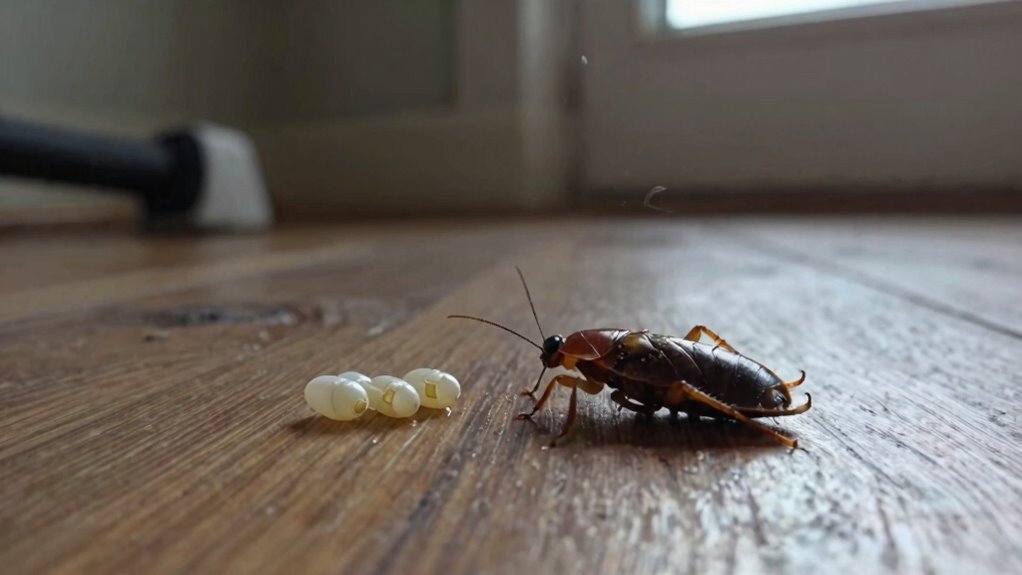
Eggs are the real challenge in bed bug heat treatments.
At 113°F, adult bed bugs die in about 95 minutes, but eggs can survive up to seven hours.
That is one stubborn capsule that demands higher temperatures for complete pest control.
Egg survival depends on heat penetration.
If the temperature does not reach 122°F deep inside cracks and crevices, those eggs simply wait it out.
At 118°F, eggs need 71.5 minutes for 99% mortality, which is far longer than most homeowners expect for effective bed bug treatment.
For lower temps like 112°F to 115°F, forget it.
They will laugh at your heater for hours.
The key is consistent, high heat reaching all hiding spots, not just the air.
Focus on your target of 122°F minimum and monitor everywhere with a thermometer.
Do not rush the process.
Otherwise, you are just warming up the next generation of bed bugs.
For successful pest elimination, invest in thorough heat remediation equipment and follow proper protocols.
Why Most Room Heat Treatments Miss the Target Temp
So the eggs are tough, but the real trick is that most room heat treatments never actually hit the temperature they claim to. Homeowners and even some pros set the thermostat to 135°F, thinking that’s enough, but heat dissipates unevenly.
Cold spots in closets, under furniture, or behind baseboards can stay 15–20°F cooler. Without proper vapor monitoring, dampness in the room acts like a heat sink, soaking up energy and preventing lethal temperatures from reaching bugs hidden deep in cracks.
Humidity control is the unsung hero here. High humidity makes it nearly impossible to sustain 122°F for the required 71 minutes to kill eggs.
Poor air circulation leaves pockets of cooler air, especially near floors. Furniture blocks heat flow, creating shadow zones where bed bugs survive.
Dampness absorbs heat, requiring more energy and longer run times. Lack of sensors means you can’t confirm every spot hit 122°F.
You need thermal mapping and dehumidifiers to actually hit that target. For reliable pest control heating, investing in sensor coverage and moisture removal is essential to get the kill. Maintaining humidity levels between 40-50% is critical because booklice, like many pests, cannot survive when relative humidity stays below 50 percent.
Inside a Professional Heat Treatment: Step-by-Step
A professional heat treatment starts with a boring but essential step: pre-treatment inspection. Technicians hunt down every crack, crevice, and clutter pile where bed bugs might hide, since missing a spot means missing the bugs.
The goal is to guarantee every hiding place reaches that stubborn 122°F, the temperature that finally kills their heat hardy eggs. This thorough sweep is your first line of defense for effective bed bug elimination.
During this prep phase, you also need to clear out items that block heat flow, like thick rugs or stacks of cardboard. Proper heat treatment preparation ensures the hot air reaches deep into baseboards, mattress seams, and furniture joints.
Professional exterminators use thermal probes to monitor temperatures in real time, so nothing gets left to chance. Once the target heat is locked in, the whole room becomes a lethal oven for both adult pests and their dormant eggs.
For long term pest control success, sealing cracks and reducing clutter before the service makes a real difference. You can also pair heat treatment with a residual spray for ongoing protection after the service. You can ask for a free inspection quote to identify all harborage points ahead of your scheduled heat treatment appointment.
After the heat wave passes, a follow up inspection confirms zero live activity, which gives you peace of mind and a pest free home. If you need same day bed bug heat service, many local companies offer emergency slots for faster relief.
Pre-Treatment Inspection
Before the first heater is switched on, a professional heat treatment begins with a thorough pre-treatment inspection. Skipping this step is like baking a cake without checking if the oven works. Technicians inspect every inch, from baseboards to box springs, for signs of infestation. They identify harborage spots where bed bugs hide, ensuring no heat shield blocks the kill zone. This inspection further dictates critical prep work.
Furniture removal is vital. Items like electronics, which can’t handle high heat, must be cleared out first. Clutter reduction gives heat a straight path to every crack and crevice. This prevents cool zones where bugs survive. Cracks and gaps are sealed or marked for targeted airflow. This ensures even temperature distribution. Personal items like medications or candles are relocated. They can melt or degrade under extreme heat. Technicians may also treat clothing with permethrin-based solutions to provide long-lasting protection against any bugs that escape the heated area.
Skipping this step means you are just warming up the bugs’ living room. You are not baking them.
Targeting 122°F Everywhere
Does Heat Kill Bed Bugs?
Targeting 122°F Everywhere (Inside a Professional Heat Treatment: Step-by-Step)
Why does the entire room need to reach 122°F? Bed bugs and their eggs hide in cracks, baseboards, and furniture.
They are escape artists that avoid a simple spot treatment. Heating every corner ensures no cold pocket lets them survive.
Professionals use thermal mapping to place sensors everywhere. This verifies that the lethal temperature penetrates thick upholstery.
They aim for 135°F ambient air to bake the pests out completely. Heaters run for four to five hours to guarantee total kill.
It’s a boring but necessary step in pest control. One cold corner means eggs survive and the infestation returns.
Uniform heat is key to full eradication. For a lasting bed bug treatment, every inch must reach the target temperature. Interceptor traps with smooth, non-climbable walls are also effective for monitoring any survivors that try to re-enter furniture legs after the heat treatment.
How Heat Reaches Cracks and Mattresses
Heat doesn’t travel easily into every crack and crevice, so killing hidden bed bugs in mattresses and furniture takes extra effort.
Mattresses act like thick sponges, absorbing heat and slowing its movement through the foam.
The center can stay cool well after the surface hits 120°F, which is why pest control professionals aim for a steady 135°F ambient temperature.
They run commercial heaters for hours to push heat deep into the foam and hidden gaps.
This thermal treatment ensures the warmth forces its way into every bed bug harbor, giving you complete elimination.
For reliable results, always hire a certified exterminator who uses industrial equipment and monitors temperature closely.
You can also use diatomaceous earth as a mechanical barrier in cracks and crevices to kill bed bugs by dehydration within 48 hours, complementing heat treatments.
Temperature Penetration Challenges
The ambient temperature in the middle of a room can hit 135°F, whereas a bed bug tucked inside a box spring’s seam might be enjoying a balmy 98°F. That gap is the whole game for effective bed bug heat treatment.
Heat doesn’t magically seep everywhere. It has to travel through stuff like furniture and clutter.
Thermal mapping tracks temps in real time. It is the only way to know if you have actually cooked the little guys hiding deep inside furniture.
Insulation barriers like thick carpets, books, or stacked boxes soak up heat. They delay the rise in cold spots during your pest control treatment.
Mattress layers and tight wood joints act like mini ovens. They hold cooler air pockets that can protect bed bugs.
Airflow from fans can blow heat away from cracks. This creates uneven hot zones that weaken your heat treatment.
Furniture against exterior walls loses heat faster. This happens even when the room reads lethal for bed bug elimination.
The bottom line is simple. Unless probes confirm 122°F in those seams, you are just warming the place up. Waterproof dusts like BASF Delta Dust can complement heat efforts by targeting cracks and crevices where heat penetration fails.
Mattress Heat Absorption Rates
A mattress acts like a dense heat sponge, absorbing warmth slowly and releasing it even slower. That mattress core lag means the inner foam stays cool while the surface can hit 130°F.
The foam insulation effect makes it hard for heat to reach hidden seams where bed bugs hide. So professionals crank ambient room temperatures to 135°F and hold them for hours, not minutes.
Eggs need 122°F deep inside the mattress, and surface readings can fool your thermometer. A typical queen mattress takes 20 to 30 extra minutes to fully saturate, depending on its density.
Budget mattresses with thick polyurethane foam add another 15 minutes to the heating time. That is why targeted heat treatment beats a quick blast every time.
Patience kills bugs, not just heat. Trust the lag, measure the core temperature, and do not rush a good roast.
Can Bed Bugs Develop Resistance to Heat Treatments?
Bed bugs simply cannot develop resistance to high heat because they lack the genetic tools needed to survive it. This means heat treatments remain one of the most reliable pest control methods for complete eradication.
Offspring from heat treated bugs inherit no toughness, so resistance is not passed down. Professional exterminators rely on this fact when planning your heat treatment service.
Sublethal heat exposure actually weakens bed bugs instead of hardening them. This makes follow up treatments far more effective and reduces the chance of reinfestation.
Their heat tolerance range is extremely narrow, roughly 113 to 122 degrees Fahrenheit. With no room for adaptation, targeted heat kills bed bugs at every life stage without fail. For those seeking chemical alternatives, plant-based laundry additives provide an eco-friendly method for treating infested clothing and linens.
The Only Temperature Reading That Confirms Your Heat Treatment Worked
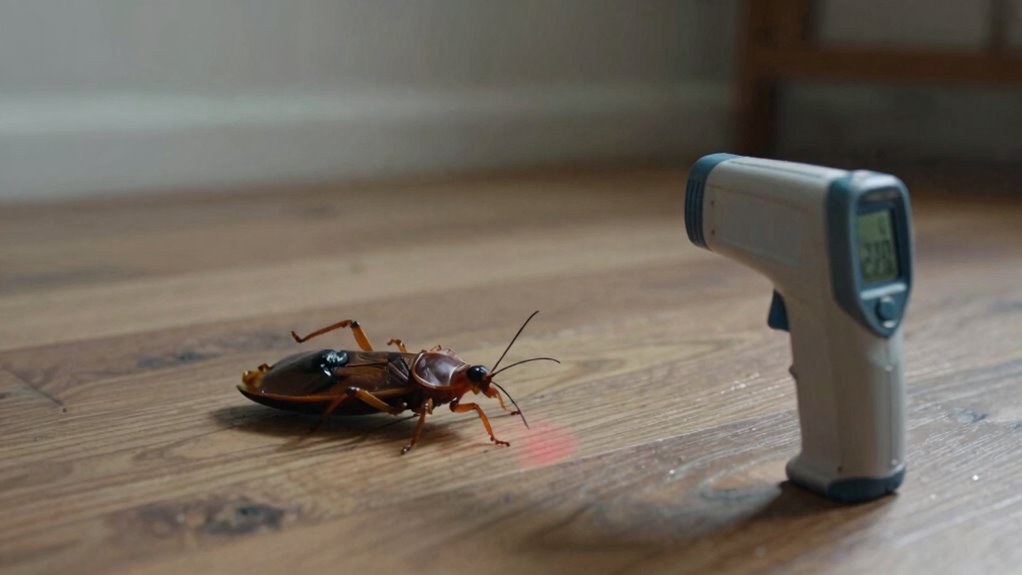
The only temperature reading that truly confirms a heat treatment worked is 122°F measured inside the cracks and crevices where bed bugs hide. You cannot rely on the air temperature in the middle of the room to guarantee success.
Reaching this minimum ensures bed bug eggs die along with adults. Adult bed bugs succumb at 118°F, but eggs demand that extra four degrees for complete lethality.
A professional exterminator might aim for 135°F ambient air during bed bug heat treatment. Without verifying uniform penetration at 122°F in every harborage site, the treatment is just hot air.
Always ask your pest control technician for proof of 122°F readings in furniture seams, baseboards, and electrical outlets. This single number confirms your bed bug infestation is fully eliminated. Using pesticide-free traps as a physical barrier can help monitor for any surviving pests after treatment.
Critical Temperature Thresholds
The difference between 118°F and 122°F is the difference between a dead bed bug and a very angry one. Knowing the exact thresholds matters more than any heater’s wattage.
These tiny vampires have surprising heat resistance, but their acclimation limits are narrow and unforgiving. Adult bed bugs hit thermal death at 118°F in minutes, but eggs need 122°F for total kill.
At 113°F, adults take nearly 95 minutes to die, while eggs laugh it off for up to 7 hours. The egg’s heat resistance means a two-hour bake at 118°F fails to stop 80% from hatching.
Brief exposure to 120°F kills adults in under a minute, but eggs require sustained 122°F heat. Don’t trust air temperature alone, measure inside cracks and crevices where bugs hide.
For total elimination, always target 122°F in every hiding spot. That sustained heat ensures you buy a pest control solution that actually works.
The bottom line is 122°F is your true victory lap for a complete bed bug heat treatment. For travel protection, consider a TSA-approved spray like Premo Guard Bed Bug & Mite Spray for convenient, contact-kill defense against bed bugs on luggage and in hotel rooms.
Targeted 122°F Minimum
Every thermometer in the room might say 120°F, but that’s just the air playing nice. The real proof lives deep inside baseboards, box spring fabric, and the tiny crack behind a loose nail.
The only reading that confirms success is 122°F at the coldest spot, and that number is what separates effective pest control from mere warm air. Heat mapping reveals that furniture placement can block airflow, creating cool pockets where bed bug eggs survive.
Without that specific reading, you’re just warming the room, not delivering a guaranteed bed bug treatment. Homeowners who ask for 122°F minimum at every target area know they’re investing in total elimination, not a temporary fix.
| Target Area | Required Temperature |
|---|---|
| Baseboard crevice | 122°F minimum |
| Box spring fold | 122°F minimum |
| Mattress seam | 122°F minimum |
| Behind furniture | 122°F minimum |
| Crack in wall | 122°F minimum |
Air temperature is a liar, while deep material temperature is the truth you can trust. Reaching 122°F everywhere means every egg is cooked, so you won’t need a follow-up service or a second heat treatment.
Skip the guesswork and demand that number, because that’s how you buy real protection for your home. If your technician won’t verify the coldest spot, call it a warm hug, not a professional inspection.
Checking baseboard crevices, box spring folds, and mattress seams with a reliable probe sensor is the only way to be sure. Professional heat remediation companies use thermal mapping to hit 122°F at the floor line and behind heavy furniture, so you get long-term results. For those with concurrent ant issues, residual barrier sprays can provide months of protection after heat treatment.
Confirming Uniform Penetration
Hitting 122°F in one spot is a good start, but that doesn’t mean the job is done. Without confirming uniform penetration, bed bugs simply crawl to cooler zones.
Professional thermal mapping uses systematic temperature checks across the entire room to identify these cold spots. Heat sink locations, like metal bed frames or concrete floors, can create dangerous refuges for eggs.
A grid pattern measuring every 3 to 4 feet helps guarantee no harbor stays below 122°F. Electronics or thick furniture may require extra heater placement or extended time to reach lethal temps.
Only consistent readings from floor to ceiling confirm the treatment worked. A single cold pocket can shelter eggs and reboot the infestation.
Bottom line: Check everywhere, or expect a sequel.
For a more targeted approach, pairing heat with a 99.9% purity boric acid powder can help eliminate bugs that escape to cooler zones.
How Long Should You Keep the Heat On for Eggs?
Heat kills adult bed bugs quickly, but eggs require much longer exposure. Egg thermotolerance means they survive 45°C for hours, so treatment duration must be generous.
At 48°C, eggs need about 71.5 minutes for 99% mortality. However, room heat rises slowly, so most professionals run heaters for 4 to 5 hours.
At 48°C, bed bug eggs need about 71.5 minutes for 99% mortality, so professionals run heaters for 4 to 5 hours.
This guarantees cracks and crevices reach the required 122°F. Shorter treatments risk survivors and missed eggs.
A good rule: if the ambient air hits 135°F, hold that temperature for at least three hours. This accounts for cold spots and furniture interiors.
Don’t cut corners on timing. Keep the heat on long enough to ensure your bed bug heat treatment is thorough and effective.
Why Heat Treatments Fail: and How to Fix It
Even a perfectly heated room can fail if the heat doesn’t reach every hiding spot. Bed bugs and their eggs hide deep inside walls, furniture, or under thick insulation, where temperatures often stay below the lethal 122°F.
Professionals must use fans and ducting to circulate heat everywhere, monitoring multiple zones with thermal sensors. Heat damage risks rise when technicians overshoot to 150°F or more, warping electronics, melting vinyl, or cracking wood.
Cost comparison shows whole-room heat treatments run $1 to $4 per square foot, while chemical treatments cost $200 to $600 per room. However, failures can double expenses.
Common failure points include cold spots behind baseboards or inside mattresses. To fix this, a pre-treatment inspection and repositioning fans mid-session guarantees even 122°F penetration for over
What to Do If Heat Alone Doesn’t Get Rid of Bed Bugs
If heat treatment alone didn’t wipe out the bed bugs, and it happens more often than pros like to admit, don’t panic. Heat alone can miss eggs hidden deep in walls or furniture where temperatures stay below 122°F.
The fix is to pair it with a residual spray that kills nymphs for weeks, like a non-repellent insecticide applied to baseboards and bed frames. Then, use steam touching every crack and crevice; at 212°F, it nukes survivors instantly.
A steamer like the Dupray Neat works great for this at around $100, and it’s a solid bed bug elimination tool for DIY pest control. Don’t forget mattress encasements and interceptors, since they trap stragglers cheaply and prevent re-infestation.
Bottom line: heat alone isn’t a silver bullet, but combine it with spray and steam, and you’ve got a solid one-two punch. Keep at it, because bed bugs hate persistence, and consistent treatment is your best weapon for a full extermination.
Frequently Asked Questions
Can Heat Damage Electronics or Sensitive Household Items?
Heat can damage electronics and sensitive household items, so it is smart to prepare before pest control heat treatments.
Most devices tolerate up to 125°F, but bed bug heat treatments often reach 135°F for several hours.
Item specific risks include melted plastics or swollen batteries, especially in laptops and tablets.
Remove computers, candles, medications, and aerosol cans from the treatment zone first.
Think of it like leaving a phone in a hot car on a summer afternoon.
Professional pest control crews use sensors to monitor temperature and avoid accidental damage.
If you want to protect your valuables, moving them out is the safest move.
Bottom line: prep ahead to skip a repair bill, and that is no one’s idea of a good time.
Do I Need to Remove All Furniture Before a Treatment?
No, furniture does not need to be removed for whole room heat treatments. This professional pest control method treats everything in place, which is a major convenience for homeowners and renters alike.
Bagging items like clothes and linens is optional, but it can help protect delicate fabrics. Relocating plants is smart, since the heat can dry them out quickly.
Whole room heat targets all harborages, including cracks and crevices that spot heating often misses. This thorough approach works like a sauna for your belongings, eliminating bed bugs, roaches, and other heat-sensitive pests in one pass.
Make sure electronics cool down completely before powering them back on. The key takeaway is this: leave the couch in place, but scout the clutter and remove anything heat sensitive.
For effective pest control products and professional heat treatment services, focus on preparation over heavy lifting. This method minimizes disruption while maximizing pest elimination, making it a top choice for infested rooms.
Can Pets and Plants Stay in the Room During Heating?
No, pets and plants cannot stay in the room during heat treatment. Lethal temperatures for bed bugs reach 118°F for adults and 122°F for eggs.
Pet safety is a real concern because heat can cause heatstroke or burns. Their bodies simply cannot regulate temperature that fast, so you must remove them before the treatment begins.
Plant safety also fails during whole house heat remediation. Most houseplants wilt or die if temperatures climb above 100°F.
Professional pest control technicians aim for an ambient heat of 135°F, which is far too high for any living plant or pet. A dad joke says it best: “Your fern will be fried.”
The bottom line is that both pets and plants need to leave the room. If you’re looking for safe bed bug heat treatment, always confirm with your exterminator that all living things are removed beforehand.
How Soon After Treatment Can I Safely Reenter the Room?
Safe reentry wait is typically 1 to 2 hours after the heat remediation time ends.
The room must cool below 85°F to avoid burns and ensure your pest control equipment is safe to handle.
Technicians check, then give the all-clear using a digital thermometer or heat sensor.
Beds and furniture are safe to use, though a faint “toast” smell may linger from bed bug droppings or heat-treated wood.
One quirk: don’t bring in cold groceries right away.
Fogged mirrors from quick temp drops cause confusion, and moisture can attract ants or silverfish.
Bottom line: follow the pro’s “cool-down” timer.
It’s simple, not silly, and protects your home from secondary pest issues after treatment.
Will a Single Heat Treatment Guarantee Elimination of All Bed Bugs?
A single heat treatment for bed bugs cannot guarantee total elimination. The process must reach 122°F inside every tiny crack where eggs hide.
Bed bug behavior makes uniform heating tricky because they scurry into deep crevices. Eggs can survive 45°C for hours, so any missed spot will ruin your results.
Think of it like baking a cake. One cool pocket leaves raw batter behind.
Professional pest control services often combine heat with chemical treatments for better odds. The bottom line is that one shot helps, but follow ups seal the deal.
For a complete bed bug removal plan, ask your exterminator about integrated pest management. This approach uses heat, steam, and residual insecticides to target every life stage.
Buying a DIY bed bug heat treatment kit? Check that it includes temperature monitors and a pre treatment checklist. Otherwise, you risk wasting money on a partial kill.
Most experts recommend at least two professional heat treatments spaced two weeks apart. This timing catches newly hatched nymphs before they can reproduce and reinfest your home.


