
Raccoon droppings are more than just a messy cleanup—they’re a health hazard that lingers for years. These dark, tubular piles often contain roundworm eggs that become airborne if you sweep or vacuum them dry.
You need a safe, step-by-step plan to remove them without risking your family’s health. That’s exactly what this guide covers: how to identify raccoon waste, clean it properly, and seal your home against future visits.
Misting droppings with water, double-bagging, and using boiling water on hard surfaces stops the spread of harmful eggs. We’ll also walk you through blocking entry points with steel wool or heavy-duty mesh so raccoons stay out for good.
Ready to get your yard safe without guesswork? The next sections break down each step clearly and quickly.
At A Glance
- Raccoon droppings are tubular, dark brown to black, and contain undigested berries or seeds.
- Droppings often accumulate in communal latrines at tree bases, decks, or attics.
- Feces may harbor roundworm eggs that cause severe neurological damage if inhaled or ingested.
- Never sweep or vacuum dry droppings; mist with water before bagging to prevent airborne eggs.
- Boiling water kills roundworm eggs on hard surfaces; bleach only loosens them for rinsing.
What Do Raccoon Droppings Look Like?
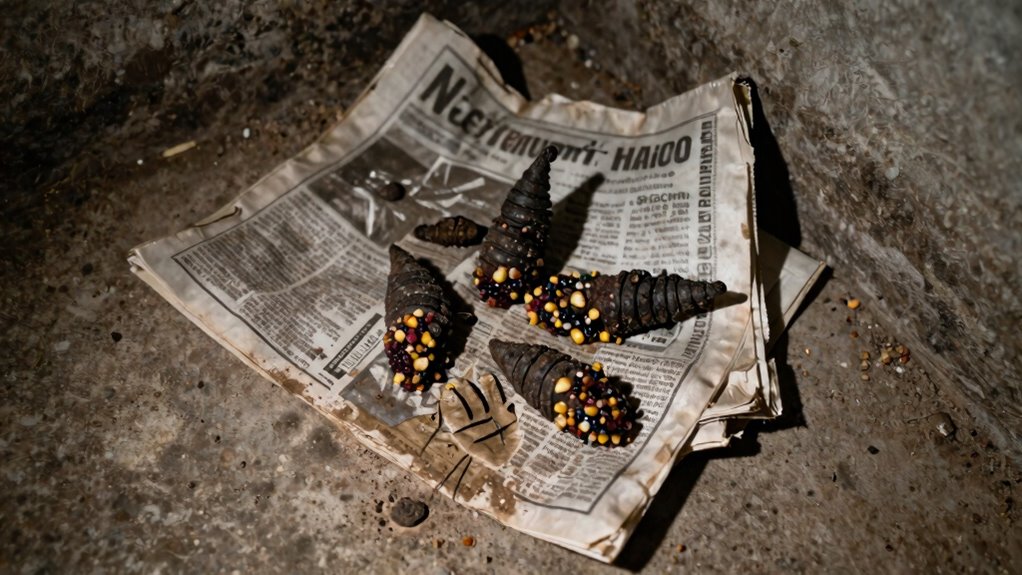
Raccoon droppings have a distinct look once you know what to spot. They are tubular, three to five inches long, and about as thick as your thumb with blunted ends.
Raccoon droppings are tubular, three to five inches long, and about as thick as your thumb with blunted ends.
The color shifts from dark brown to black. The real giveaway is the contents, such as berries, seeds, or corn kernels.
These reflect the raccoon diet’s scavenging nature and help with pest control identification. You will rarely find a single piece because they pile up in communal latrines.
Common latrine spots include tree bases, deck corners, or attic edges. For latrine identification, consistency matters because they crumble easily and smell musky, unlike dog scat.
Size wins for proper rodent and wildlife cleanup. A pile of matching tubes in one spot is your clue.
If you see that combination of shape, contents, and grouping, it is raccoons. Trust the pattern, not just one turd, to confirm a raccoon problem.
For effective removal services, look for a professional pest control company. They can handle the hazard and sanitize the area safely.
To ensure thorough cleanup, use a spider repellent spray in the surrounding area as a preventive measure.
Why Raccoon Poop Is Dangerous to Your Health
Raccoon poop is genuinely dangerous to your health, and not just because it looks like a lumpy, berry filled horror show.
The real threat comes from infectious roundworm eggs, known as Baylisascaris procyonis, which can survive in soil for years and cause severe neurological damage if inhaled or ingested.
These eggs are a major reason to call a professional pest control service for safe raccoon waste cleanup.
The feces and urine also carry risks like leptospirosis and rabies, diseases that demand serious caution.
You should never handle raccoon droppings with a shovel and a smile.
Instead, hire an animal removal expert to sanitize the area and prevent future infestations.
Use protective gear if you must clean it yourself, but professional remediation offers peace of mind.
Keep pets away from raccoon latrines to avoid roundworm transmission.
For home prevention, seal all attic and crawlspace entry points to exclude raccoons using humane one-way exclusion devices that allow safe exit without reentry.
A skilled wildlife removal team can inspect your property and remove these dangerous nuisances.
Roundworm Infection Risks
A single pile of raccoon droppings can pack a medical wallop that rivals a horror movie plot. These feces often host *Baylisascaris procyonis*, a roundworm whose eggs can survive for years in soil.
Inhaling or ingesting the eggs triggers a human roundworm infection. The larvae then tunnel through organs like the liver, lungs, and even the brain.
Symptoms start vague with nausea and tiredness. But they can escalate fast to blindness, coma, or death, especially in kids who put dirty hands in their mouths.
The eggs are glue-like and stick to surfaces, making cleanup tricky. Never sweep droppings, as that launches the eggs into the air.
Instead, for safe pest control removal, mist droppings with water first. Scoop carefully and double-bag the waste.
Boiling water kills the eggs effectively. Bleach only loosens them, so stick with heat for complete roundworm egg elimination.
Treat every raccoon latrine like a biohazard, because it is. For peace of mind, consider calling a wildlife removal service to handle the area. Using a humane trap with smooth internal edges can minimize animal stress during capture and prevent further contamination of the area.
Leptospirosis Exposure Dangers
Leptospirosis is a hidden danger in raccoon droppings that can seriously affect your health. The bacteria spread when infected raccoon urine gets into feces and enters your body through cuts, eyes, or mucous membranes. Humidity makes things worse, so damp, shaded latrines become perfect breeding grounds for the bacteria.
Rain can wash bacteria from droppings into puddles, ponds, or garden soil. This turns a casual stroll into a real health hazard for you and your family. Sweeping or vacuuming dry feces launches tiny droplets into the air that you can inhale without noticing.
Early signs of infection mimic the flu, so you might not connect them to a cleanup job. That is why professional pest control services are the safest choice for raccoon waste removal. Treat all droppings as infectious and always wear protective gear.
Never dry sweep or vacuum raccoon feces, as that spreads the bacteria. Boiling water or a professional cleanup service is your safer bet over bleach solutions. For complete peace of mind, hire an expert for raccoon waste cleanup and prevention.
Rabies Transmission Threats
Note this about raccoon waste. The feces itself does not carry the rabies virus.
The real threat is a bite wound risk. If raccoons are using your attic as a latrine, they are likely living there too.
Rabies transmission happens through saliva from an infected raccoon bite or scratch. Touching their droppings will not give you rabies.
That pile of poop is gross, but it is not the rabies vector. The danger is proximity during cleanup.
You bend over and reach into dark corners. You might spook a sleeping raccoon and that is when you get bitten.
Key risks include rabies which is almost always fatal once symptoms appear. The virus lives in saliva, not in feces.
Vaccinate your pets as it is cheap insurance costing 15 to 25 dollars per shot. The bottom line is that the poop is a warning sign.
If you see raccoon latrines, assume the animals are nearby. Call a wildlife removal pro who charges 200 to 500 dollars for removal.
This avoids that dangerous bite wound risk. Do not try a DIY approach to a rabies exposure.
Where to Find Raccoon Latrines Around Your Home
Raccoons are creatures of habit, and they often pick the same spots to do their business. Common latrine sites include flat rooftops, where they can leave piles near chimneys or vents, and the bases of large trees, especially near logs or exposed roots.
Checking these areas first can save homeowners a lot of time and a few nose-wrinkling surprises. For effective raccoon removal and to protect your yard from damage, inspect these latrines early and schedule professional pest control if droppings accumulate. Adding plant-based repellents with peppermint or garlic around these latrine sites can create an unpleasant sensory barrier that naturally deters raccoons from returning.
A thorough raccoon inspection around vents and tree bases helps you spot problem zones fast. You can then implement raccoon proofing measures like sealing roof gaps and installing wire mesh to deny them access.
Common Rooftop Latrines
First, let’s talk about where raccoons turn your roof into their personal restroom. These critters love high, flat areas, like green roofs, which offer a cozy spot for their messy business.
Solar panels are even better, providing a warm, sheltered platform underneath for their waste. For effective pest control, target these common latrine spots before roundworm contamination spreads. One effective way to block this access is by installing physical mesh barriers with 1/2-inch openings to prevent perching and nesting.
- Rooftop edges. Raccoons walk along the edge, leaving piles near gutters or chimney bases.
- Green roof patches. The soft ground is perfect for digging and dropping waste, ruining your rooftop garden.
- Under solar panels. The dark, warm space is prime latrine territory, often unseen until the smell hits.
Yes, it’s gross, but knowing these hotspots helps you plan cleanup and removal.
Frequent Tree Base Sites
Move past the roof and look down. Tree bases are prime raccoon latrine spots and a serious pest control concern. Raccoons prefer the fork where a trunk splits or the area right under low branches.
Leaf litter piles up here, hiding droppings and requiring professional cleanup in many cases.
This leaf litter and dried waste quickly causes soil contamination beneath the tree.
Roundworm eggs can linger in that soil for years, posing a real risk for kids and pets.
Check oak, maple, and large pines as key inspection points for wildlife removal services.
The cleanup is not fun: scoop up all contaminated leaf litter, then pour boiling water over the soil.
No bleach required except if the soil is clay.
Scrub the area clean, double bag everything, and warn the neighbors to prevent future infestations.
A quick inspection saves a headache later and helps you avoid costly pest control interventions.
For persistent pest concerns around the home, boric acid powders can provide long-lasting control of silverfish and other crawling insects in dry indoor areas.
How to Safely Remove Raccoon Droppings Step by Step
Raccoon dropping removal is less a chore and more a hazmat operation disguised as yard work. Start suiting up with disposable gloves, an N95 mask, and rubber boots. No shortcuts allowed. Lightly mist the pile with water to kill dust, then bag it directly. Double bag for the trash to contain the risk. Never sweep or dry vacuum because that aerosolizes dangerous roundworm eggs. For odour control, HEPA vacuuming the area after removal captures lingering particles. Only use a HEPA rated machine to avoid spreading contamination.
Mist and bag. Spray feces with water, scoop with a plastic bag, seal it tight, then double bag for municipal disposal.
HEPA vacuum. Run a HEPA vacuum over the latrine site to capture dust and eggs. This likewise aids odour control.
Boiling water rinse. Pour boiling water over the spot to kill remaining eggs. Avoid bleach solutions here because they don’t destroy raccoon roundworm eggs.
For professional grade remediation, consider a pest control service that offers wildlife cleanup. They use industrial HEPA vacuums and proper disinfectants to ensure your yard is safe for pets and kids. This method is similar to how permethrin-treated clothing bonds to fabric fibers to provide lasting protection against insects and disease.
The Best Ways to Disinfect After Raccoon Poop Removal
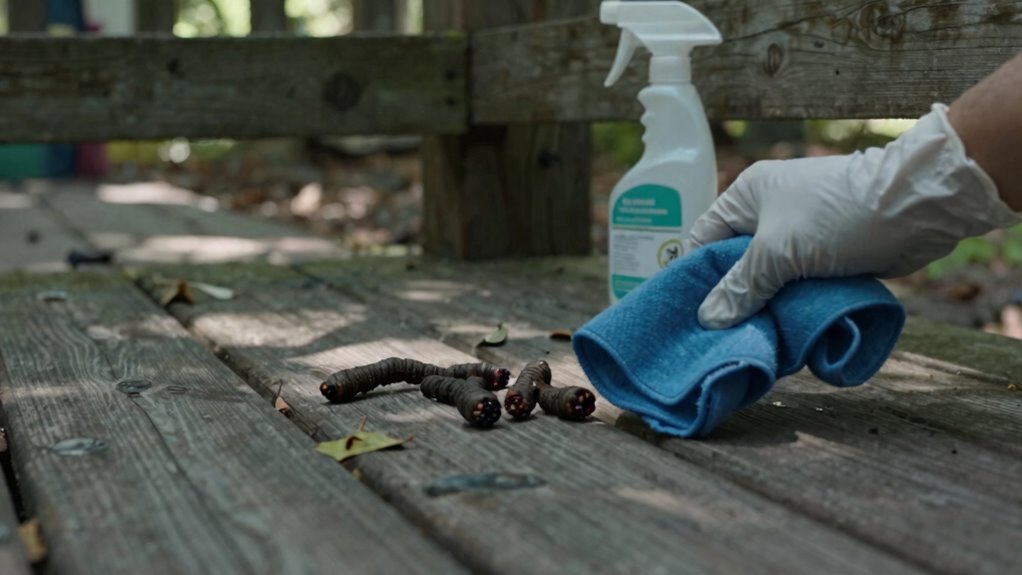
Boiling water is the only simple DIY method that actually destroys raccoon roundworm eggs outright. A 10 percent bleach solution dislodges eggs so they can be rinsed away, but it does not kill them. This vital difference matters for effective pest control.
Use boiling water on hard surfaces like decks, patios, and concrete after you complete raccoon waste removal. Carefully pour it over contaminated areas to sanitize the spot.
| Surface | Best Disinfectant | Key Note |
|---|---|---|
| Concrete or asphalt | Boiling water | Destroys roundworm eggs. Repeat twice. |
| Wood decks | Boiling water | May warp wood, but kills eggs effectively. |
| Soil or grass | Bleach solution | Does not kill eggs. Only rinses them deeper. |
For soil or grass, avoid boiling water because it will kill the lawn. Instead use a bleach solution to rinse eggs away. This method reduces risk without eliminating the threat.
Always wear gloves and goggles during cleanup to prevent exposure. The bottom line is boiling water wins for hard surfaces. Bleach solution is a backup, not a cure, for raccoon roundworm removal.
How to Seal Entry Points After Raccoon Dropping Cleanup
2. Chimney caps made of stainless steel with spark arrestors block raccoons from nesting above.
Prices range from $30 to $80, and a simple retrofit fits most flues.
This is a solid half-day job for a DIYer looking to exclude raccoons.
3. 20-gauge sheet metal patches work for rotted wood or gaps larger than 1/4 inch.
Cut, bend, and screw the patch over holes, then seal edges with silicone caulk.
A 2×2-foot sheet costs around $10 for effective raccoon proofing.
Bottom line: seal only after you are certain no raccoons are trapped inside.
Always check for signs of raccoon activity before closing any entry point.
For extra protection around smaller gaps, use a steel wool roll to block entry points that raccoons or other pests might exploit.
When to Call a Professional for Raccoon Feces Cleanup
Though a homeowner can handle a small pile of droppings with gloves and a bleach spray, certain situations call for professional raccoon waste removal.
Cost factors climb fast with attic infestations, where contaminated insulation must be removed and replaced.
DIY safety limits are real.
Roundworm eggs become airborne if disturbed, and a single misstep could risk severe illness.
Roundworm eggs become airborne if disturbed, and a single misstep could risk severe illness.
Professionals use HEPA vacuums, industrial disinfectants, and full hazmat gear.
They also locate hidden latrines under decks or inside soffits.
When to call an expert for raccoon feces cleanup.
A droppings area larger than a trash can lid means it is time to hire a wildlife cleanup service.
You find them in an attic with blown-in insulation.
A child or pet has accessed the site.
The bottom line is this.
If the cleanup requires more than a single bag of waste, or if you lack the stomach for bleach fumes and guesswork, hire a pro.
It is cheaper than a hospital visit.
Professional removal protects your family from roundworm and other hazards.
How to Handle Sick, Injured, or Baby Raccoons Safely
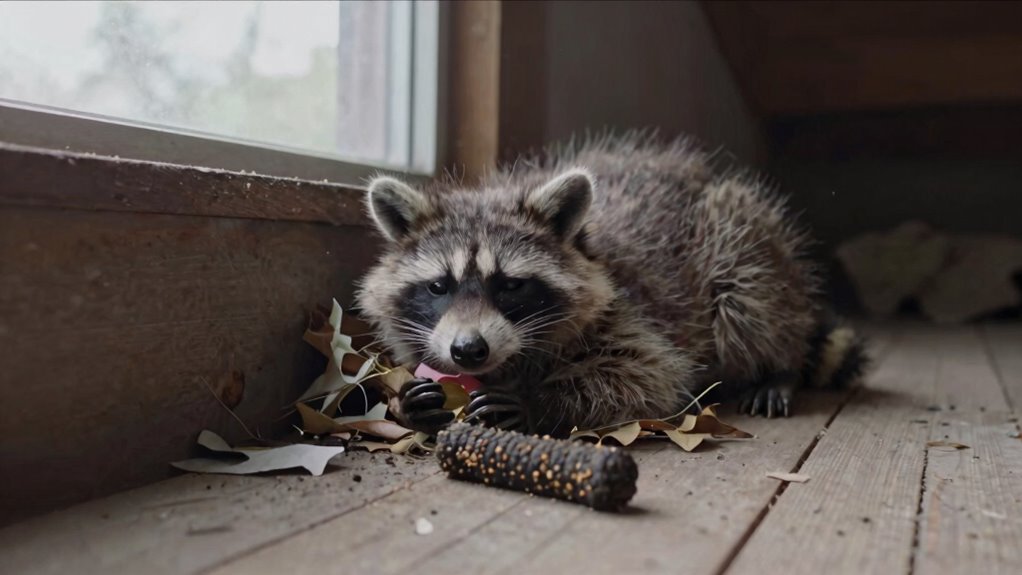
Your first instinct may be to help, but handling a sick, injured, or baby raccoon safely requires caution. This protects both you and the animal from serious risks like rabies and roundworm. Never touch them directly, and always follow safety protocols.
Spot the signs first. A stumbling raccoon during daylight or a crying, shivering baby alone for hours means trouble. Do not assume it is orphaned, as mom may be nearby.
Keep distance and contain the animal using a heavy-duty trash can or carrier with air holes. Wear gloves and a mask every time, as roundworm eggs are invisible but deadly. Call a professional pest control service or wildlife rehabber immediately.
Baby raccoons need specialized milk, and cow’s milk can kill them. Your good intentions may backfire fast without expert help. Observe from afar, protect yourself, and let the experts handle the rest.
For safe removal or prevention, contact a licensed pest control company. They can trap and relocate raccoons humanely, and inspect your property for entry points. Ultrasonic rodent repellers may also be used as a non-toxic deterrent after removal to prevent future raccoon activity.
Frequently Asked Questions
Can Raccoon Droppings Make My Dog Sick?
Yes, raccoon droppings can absolutely make your dog sick. The main danger comes from raccoon roundworm, a serious parasite that threatens your pet’s health.
When dogs sniff or eat infected feces, they can get Baylisascaris procyonis. This parasite attacks the nervous system, causing symptoms like lethargy, loss of coordination, and even blindness.
If you think your dog has been near raccoon waste, get to a vet immediately. Early treatment is critical for the best outcome.
To prevent exposure, you should safely clean up raccoon latrines under decks, in attics, or near sheds. A targeted pest control plan can stop raccoons from returning to these high risk spots.
Use boiling water to kill roundworm eggs on hard surfaces where raccoons have pooped. For ongoing protection, consider professional wildlife removal or a repellent spray designed for raccoons.
Keeping your yard clear of food sources and sealing entry points are smart pest prevention steps. These actions lower the chance of your dog encountering contaminated droppings.
If you need a reliable raccoon deterrence product, look for options with motion activated lights or ultrasonic sound. Buying the right solution now can save you costly vet bills later.
How Long Can Raccoon Roundworm Eggs Live on Surfaces?
Raccoon roundworm eggs can survive for years on surfaces. They last up to five years or more on decks, soil, or attic wood.
Egg viability depends on dampness and shade. Dry, sunny spots shorten surface longevity, so direct light helps.
A simple wipe down won’t cut it. These eggs laugh at vinegar and mild cleaners. Use boiling water or a 10% bleach rinse to dislodge but not destroy them.
For safe pest control, skip sweeping entirely. Bottom line: treat any suspect area like it is toxic. Because it really is.
You need professional grade decontamination efforts to kill raccoon roundworm eggs. Search for raccoon waste removal services if you find droppings indoors.
Is It Safe to Compost Raccoon Feces?
Composting raccoon feces is not safe, and it poses serious health risks for your garden and family.
Roundworm eggs from raccoon waste can survive for years, even in a hot compost pile.
This leads to soil contamination that can easily infect pets or kids playing in the garden.
To maintain effective pest control around your property, always double bag the waste and toss it in the trash, not your compost bin.
Think of it as the one green choice you should skip for safety.
Your soil will thank you for avoiding this particular fertilizer experiment, and you will avoid attracting more raccoons.
For reliable wildlife removal and ongoing pest prevention, look into professional grade animal repellents or exclusion supplies.
The bottom line is simple: trash it, don’t till it, and keep your garden raccoon free.
What Should I Do if I Accidentally Touched Raccoon Poop?
First, wash with soap and warm water for 20 seconds. That skin rash or tetanus risk is real, but mild panic isn’t needed.
If you have a cut, see a doctor. Seriously, don’t wait.
Raccoon poop carries roundworm eggs, but simple, thorough handwashing is your best bet here. That said, if you touched it hours ago and feel weird, call a clinic.
Avoid touching your face until hands are clean.
For full peace of mind, consider professional raccoon removal services to eliminate droppings and prevent recontamination.
A pest control inspection can also identify den sites and latrines around your property.
If you need a reliable wildlife control solution, check out top rated raccoon traps and exclusion products.
Can I Use a Pressure Washer to Clean Raccoon Droppings?
A pressure washer is a bad idea for raccoon droppings because it can aerosolize dangerous roundworm eggs into a fine mist.
That mist is a serious health hazard, so skip the sprayer entirely for this job.
Pressure washer safety is really about avoiding that contaminated mist, not blasting it around your yard.
Instead, mist the droppings gently with water to keep them damp, then scoop them up with a disposable bag or scoop.
After removal, treat the area with heat or a strong disinfectant to neutralize lingering eggs.
For disinfectant selection, boiling water is your best bet because it kills roundworm eggs on contact, or use a 10% bleach solution to loosen stubborn residue.
Let the bleach sit for at least five minutes, then wipe it up with paper towels.
This method is far safer than high-pressure washing, which spreads pathogens across surfaces like patios, decks, and driveways.
If you’re dealing with repeated raccoon activity, consider a professional pest control service to address the source, not just the cleanup.
Look for wildlife removal experts who specialize in raccoon exclusion and attic cleaning, since droppings often hide in hard to reach spots.
For DIY buyers, a bucket, heavy duty gloves, a shovel, and a spray bottle with bleach are all you need.
Skip the pressure washer rental, it’s overkill for this task and could cost you a trip to urgent care.
Roundworm eggs are resilient, so heat is your ally, think boiling water or a steam cleaner set above 200°F.
Just avoid any method that creates airborne particles, which means no leaf blowers, brooms, or high pressure nozzles.
When in doubt, call a licensed pest control technician who carries commercial grade disinfectants and HEPA vacuums.
These pro grade products are designed for biohazard cleanup, unlike a pressure washer meant for siding and concrete.
Remember, raccoon waste is a biohazard, not just a mess, so treat it with the same caution as other animal feces.
Your health and your family’s safety are worth more than a quick rinse with a power tool.
Buy a simple enzyme cleaner labeled for wildlife waste if you prefer a ready to use option, it breaks down organic matter safely.
Pair that with a stiff brush and warm water, and you’ll get better results than any pressure washer could offer.
Always double bag the droppings and toss them in a covered trash bin, then wash your gloves and boots with hot soapy water.
By following these steps, you’re not just cleaning up, you’re preventing roundworm transmission to pets and kids.
So, the answer to “can I use a pressure washer?” is a firm no, unless you want to turn a small mess into a major health risk.
Stick with low pressure, high heat, and proper protective gear for a safe, effective cleanup every time.


