
How to Clean a Pantry After Weevils doesn’t have to mean tossing half your kitchen in a panic. If you’ve spotted those tiny brown bugs in your flour or rice, you’re not alone—and you can kick them out for good.
The right approach stops the infestation fast and keeps your dry goods safe. This guide walks you through every step, from immediate cleanup to long-term prevention.
You’ll learn exactly which items to trash, how to sanitize shelves without harsh chemicals, and why airtight containers are your best defense. No fluff, just practical steps that work the first time.
Read on for the full process, including a simple monitoring trick that catches stragglers before they multiply.
At A Glance
- Inspect and discard all infested or questionable food in sealed bags.
- Double-bag infested items and dispose directly in an outdoor bin.
- Vacuum every shelf, corner, and crevice to remove eggs and larvae.
- Wash surfaces with warm water and white vinegar, then dry completely.
- Use pheromone traps and monthly inspections to prevent re-infestation.
Why Weevils Keep Coming Back (and How to Stop Them)
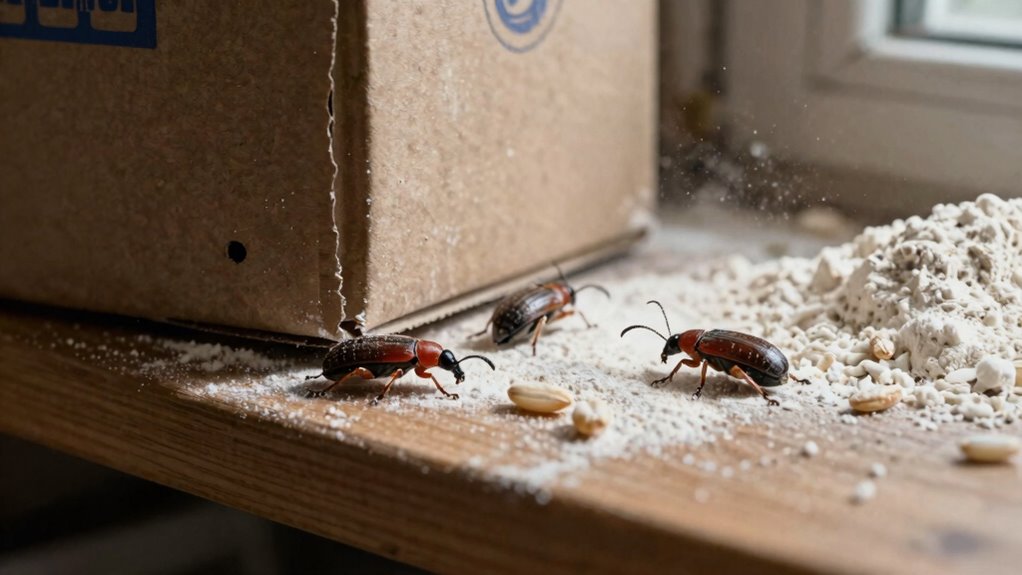
Weevils don’t just appear out of nowhere; they hitchhike into your pantry. That unopened bag of flour or those forgotten pasta boxes made of thin cardboard or soft plastic offer a perfect entry point for tiny holes. A single egg can restart a full blown infestation.
Weevils hitchhike into your pantry; a single egg can restart a full-blown infestation.
Weevils chew through cardboard and thin plastic like it’s paper. They leave pheromone trails, drawing more weevils to the party. Stop blaming yourself for the problem.
Seal everything in glass or metal to break the cycle. Airtight containers are cheap insurance against repeat infestations. You can find them for about two dollars each at discount stores. Combine this with non-toxic, chemical-free traps placed near pantry corners to actively interrupt the weevils’ reproductive cycle.
This simple pest control step stops weevils from coming back. It also protects your food from other pantry pests. Invest in durable storage and you banish the risk for good.
Discard All Infested or Questionable Food Immediately
Infested food must go immediately, sealed in a plastic bag and placed straight into an outside bin. Your kitchen trash is simply a breeding ground for pantry pests like weevils and grain beetles.
Every single item needs to come out for a thorough inspection. Look for tiny holes in packaging, clumping, or a faint musty smell where these pests hide.
When in doubt, toss it out without hesitation. A questionable box of pasta is not worth the risk of a fresh infestation on your newly cleaned shelves. After discarding, thoroughly wipe down all surfaces before restocking with goods stored in containers featuring silicone gaskets and locking lids to prevent pests from returning.
Seal and Remove
Any food that shows the slightest sign of weevils or even makes you suspicious gets a one way ticket to the outside bin. Seal it tight in a plastic bag first.
This is not the time for maybe it is fine. Weevils chew through cardboard and soft plastic like they are paid for it.
Seal each suspect bag individually and knot it twice. Then toss it straight into the outdoor trash.
No kitchen bin detours. This step is non negotiable for effective pest control.
| Action | Why It Matters |
|---|---|
| Double bag infested items | Prevents weevils from escaping into your home or garage. |
| Seal bag tightly before moving | Stops eggs and larvae from scattering during transport. |
For prevention strategies, remember that a single missed bag can restart the cycle. Use airtight side-locking lids with silicone gaskets for pantry storage to avoid future infestations.
For cleaning tips, never reuse questionable packaging. Just bin it.
A two dollar roll of heavy duty trash bags saves you from a fifty dollar re infestation headache later. Buy extra bags for peace of mind.
Inspect Every Item
How does one truly know if a food item is compromised? Check every box, bag, and jar for tiny holes, clumping, webbing, or a faint musty odor.
Weevils leave white droppings that look like fine powder. A careful, routine inspection now saves headaches later.
Look for pin-sized holes in cardboard or plastic packaging. Check for webbing or silk threads inside dry goods like flour or rice.
Feel for clumps or unusual texture in grains, pasta, or cereal. Sniff for musty or off odors that signal infestation.
Examine folds, corners, and seals where eggs hide. Discard any questionable item immediately, sealing it in a plastic bag for the outside bin.
This harsh but necessary step supports long term prevention by removing all breeding sources. A regular pest control habit keeps your pantry safe and your kitchen free of hidden threats. Beyond weevils, pheromone-based traps can also attract and capture male moths from up to 25 feet away to break the breeding cycle.
When in Doubt, Discard
A single questionable box of pasta can ruin an entire clean pantry. When inspection turns up even a hint of doubt, the verdict is simple: toss it.
Decision fatigue is real. Agonizing over every bag of flour or box of cereal wastes time and invites another infestation.
Instead, adopt a ruthless policy. If packaging integrity is compromised, even slightly, that item goes.
Tiny holes, soft spots, or an odd smell mean the food is suspect. Weevils hide well, so a clean look is not proof of safety.
A two-dollar box of crackers is not worth a month of re-infestation battles. Protect your stored goods with a strict toss-it policy.
Discard anything opened or loosely sealed. When in doubt, bin it.
Your wallet stings briefly, but the pantry stays clean. Hesitate less and throw away more.
You can prevent pantry pests by acting fast. A quick discard saves future pest control efforts, and weevil sprays mostly target adult insects, so eggs require airtight storage and thorough cleaning to prevent reinfestation.
Vacuum Every Shelf, Corner, and Crevice
The vacuum is your single most effective weapon against a weevil infestation, far more reliable than any spray or prayer. A proper vacuuming session with crevice focus removes eggs and larvae you cannot see.
Use a dedicated handheld or canister vacuum with a crevice tool for about $20 to $40. Attack every shelf, corner, and crack where weevils hide in joins and back walls.
Empty the canister or bag immediately into an outside bin. Otherwise, you just give them a ride to a new hiding spot.
Work methodically from top to bottom so crumbs fall onto already cleaned surfaces. Do not rush the process, spend extra minutes on crevice focus areas like shelf edges and behind brackets.
This single pest control step eliminates most hidden pests, making the next wash far more effective. For complete grain pest elimination, target every crevice with your vacuum tool. After vacuuming, you can apply a fine dust of food-grade DE to dry shelves for ongoing weevil prevention.
Wash and Fully Dry Surfaces to Remove Weevil Eggs

Now the real work begins with washing every surface to remove weevil eggs and food residue.
A simple mix of equal parts warm water and white vinegar kills lingering eggs while acting as a natural deterrent.
Warm soapy water handles sticky messes just as well for thorough pest control.
After scrubbing, the pantry must dry completely for two to three hours.
Moisture attracts weevils, so a fan or a dry day is your best friend here.
This drying step is essential for effective grain weevil prevention and long-term pantry pest management.
You can use a dehumidifier or leave cabinets open to speed up the process.
Always inspect dry goods before returning them to ensure no infestation remains.
Running a dehumidifier helps maintain humidity levels between 50-60% to further deter pests.
Washing Surfaces Properly
Wipe down every surface with a mix of equal parts warm water and white vinegar. This solution kills lingering eggs and acts as a natural, food-safe deterrent for pantry pests.
The proper water temperature, roughly 120°F or hot but not scalding, helps dissolve residue without warping shelves. A typical drying duration is two to three hours, but longer on humid days.
Use a fresh cloth for each shelf to avoid spreading eggs. Scrub corners and crevices with a soft brush, as those sneaky eggs love hiding there.
Rinse surfaces with plain warm water to remove any vinegar smell before the next step. Replace sponges or cloths immediately after use, because old ones can harbor eggs.
Let all surfaces air dry fully, as wiping wet shelves invites dampness-loving weevils back. For ongoing prevention, applying a light dusting of food-grade diatomaceous earth along baseboard cracks and crevices can help kill any remaining pests through dehydration. This approach balances thoroughness with patience, keeping your pantry ready for restocking.
Ensuring Complete Dryness
A thorough drying phase is the unsung hero of weevil elimination because dampness invites these pests. After washing, surfaces must be bone-dry to kill eggs, which need humidity to hatch. Maintaining humidity levels below 50 percent using a dehumidifier prevents booklice and other pests from returning. This final step in the cleanup routine prevents re-infestation and makes humidity control critical for pest control success. Use a fan or wait for a dry day, avoiding humid conditions entirely for best results.
| Surface | Drying Time | Why It Matters |
|---|---|---|
| Shelves | 2–3 hours | Removes trapped water |
| Corners | 1–2 hours | Prevents hidden damp spots |
| Cracks | 3+ hours | Kills lingering eggs |
| Floor | Until dry | Stops floor-level pests |
Check with a paper towel to spot trapped moisture. If it feels damp, wait longer before restocking your pantry.
Don’t rush this step. Weevil reinfestation is no joke and you have already done the hard work.
Let complete dryness be your victory lap and protect your stored grains. A fan or sunny windowsill helps speed up the process.
Switch to Airtight Containers to Block Weevils
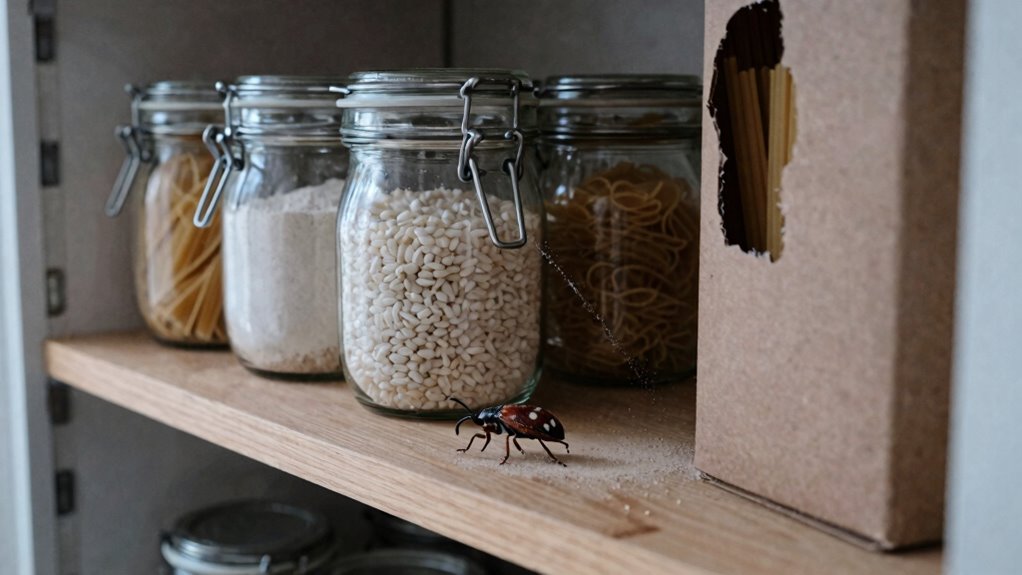
After your pantry has been scrubbed, vacuumed, and dried like a forgotten fruit left in the sun, the next step is to switch to airtight containers to block weevils. Weevils chew through cardboard and thin plastic like a bored toddler through wrapping paper, so durable storage is non‑negotiable for effective pest control.
Airtight containers are non‑negotiable—weevils chew through cardboard like bored toddlers through wrapping paper.
Use glass containers with clamp‑down lids. They are see‑through, non‑porous, and cost around $8 to $12 each at big‑box stores for your grain storage.
Metal tins, like locking cookie tins, work great for bulk flour or sugar. They are chew‑proof and last decades for long term pantry pest prevention.
Hard BPA‑free plastic containers with silicone gaskets are cheaper at $5 to $8. But check for warped seals over time to keep your flour weevil free.
Every container must have a tight seal. Test by flipping it upside down: if air escapes, so can pests. These containers can also keep fruit flies from detecting odors and entering your stored goods.
Label everything with a date. This keeps you rotating stock and spotting problems before they become crunchy surprises in your food storage.
Dispose of Infested Items in an Outdoor Bin
Bag it, tie it, banish it. That outdoor bin isn’t just trash, it’s a fortress against pantry pests like weevils and moths.
Use an outdoor bin with a sealed bag every time you toss infested dry goods. Avoid the kitchen bin completely, because that mistake invites instant regret and a new infestation cycle.
Move the outdoor bin at least ten feet from your home’s entry points to keep creeping dread away from your walls. Keep the bag tied tightly so no stray grain or larvae can sneak back inside your living space.
Choose a bin with a latching lid to break the hopeless cycle of re-infestation. Dispose of the infested items the same day you find them, because delayed disposal only wastes your pest control efforts.
For effective pantry pest removal, pair this routine with a thorough shelf wipe down and a vacuum of cracks. This proactive step targets insect prevention and eliminates lingering eggs before they hatch.
Your outdoor fortress bin works best when it’s dedicated solely to contaminated food waste. Never mix these items with regular trash, since that weakens the barrier and gives pests a route back indoors.
Pest proofing your kitchen starts at the curb, not the counter. After sealing the bag, take it out immediately and close the lid securely to stop flies and rodents from becoming secondary threats.
This same practice also prevents flour beetle outbreaks and keeps your home pest free for good. Check the bin weekly for any residue or spills, and wash it with hot soapy water to maintain a clean defense line.
When you toss infested cereal or pet food, always double bag if the original packaging is torn. That extra layer blocks odors that attract new invaders, so your outdoor bin stays a true barrier.
Make this disposal method a habit, and you’ll cut down on repeat treatments and costly replacements. A latching bin plus same day removal is your best pest control tip for breaking the cycle for good.
Naphthalene found in mothballs can damage pets’ livers and kidneys, so avoid using such chemicals in or near your disposal area.
Track Weevils With Monthly Checks and Traps
Once the last sealed bag hits the outdoor bin, the real work shifts from cleanup to keeping it that way. Monthly checks and a few clever traps will stop weevils from returning.
Regular inspections catch renegade weevils before they throw a party. This saves future headaches and ruined rice.
Set monthly calendar reminders for trap monitoring and visual shelf sweeps. A missed month gives weevils a head start in your pantry.
Place pheromone traps near vulnerable dry goods like flour, pasta, and oats. These sticky cards attract and catch adult weevils for about five dollars for a six-pack.
Inspect all new purchases immediately at home, not after storage. Grocery packages often carry hidden eggs that can start an infestation.
Check container seals monthly because any compromised lid is an open invitation for tiny crawlers. Log findings in a simple notebook.
Spotting zero bugs for three straight months means the colony is truly gone. That routine keeps the pantry safe without paranoia, just ten minutes monthly.
Pheromone-based traps target pantry moths specifically, preventing reproduction without chemicals.
Recognize Weevil Signs Before Infestation Starts
Catching weevils before they settle in is a game of noticing the tiny clues they leave behind. Early detection hinges on spotting warning signs like small holes in cardboard or plastic packaging, where adults chew their way out.
Look for clumping or fine webbing in dry goods, such as flour or rice, and a faint, musty odor that signals contamination. A quick sniff test works wonders for pest control in your pantry.
Check shelf back walls and corners, as eggs hide there, invisible to the naked eye. When in doubt, toss questionable packets to prevent a full infestation.
It is cheaper than a full re-cleaning. Monthly inspections catch stray bugs, stopping the reproduction cycle.
A sticky trap, placed near storage, monitors for movement. For ongoing monitoring, use sticky fly tapes that feature non-toxic and chemical-free adhesives. Spot these signs and you will save your pantry and your sanity.
Frequently Asked Questions
Can I Use Bleach to Clean My Pantry After Weevils?
Bleach is not ideal for your pantry after weevils. Its residue can linger on nonfood surfaces, risking chemical contamination of restocked items.
Warm water and white vinegar kill weevil eggs effectively without leaving harmful traces. Bleach is overkill for a pantry, like using a flamethrower on a spider.
Stick with simple cleaners for weevil removal. They work, they’re safe, and you won’t taste bleach in your oatmeal later.
Trust the vinegar for pantry pest control. For a thorough weevil treatment, combine a white vinegar spray with a deep clean of cracks and shelves.
This method targets weevil eggs without toxic residue, making it a smart pest control product choice for food areas. If you need a stronger solution, look for food safe pesticides labeled for pantry pests.
How Long Can Weevil Eggs Survive Without Food?
Weevil eggs can survive in egg dormancy for up to eight months without food. They wait quietly in cracks or packaging folds, ready to hatch when conditions improve.
Compared to pantry moths, which hatch in weeks, weevils are the patient couch surfers of the pantry world. They are annoying but low maintenance, making them a persistent pest control challenge.
This resilience means a thorough vacuum and wash is non negotiable. Skipping it invites a sequel you do not want to experience.
The takeaway is simple. Do not trust a clean shelf until it is bone dry and fully inspected.
You will be repeating this chore sooner than your sense of humor allows if you skip these steps. For effective pest control in your kitchen, use a handheld vacuum with a crevice tool to reach hidden spots.
Then wash all surfaces with hot soapy water and a vinegar rinse. This pantry pest prevention method stops weevil eggs from surviving and ruining your dry goods.
For added protection, consider using food grade diatomaceous earth in cracks and corners. It is a natural pest control product that targets insects without harsh chemicals.
Inspect all new grains and flour before storing them. Store opened packages in airtight glass or plastic containers to avoid reinfestation.
If you want a professional grade solution, look for insect growth regulators designed for stored product pests. These products can break the egg cycle and eliminate future hatches.
Buyer intent phrases like “best pantry moth traps” or “natural weevil killer for kitchen” can guide you to the right supplies. Make a smart purchase by choosing items with long lasting residual effects for continuous protection.
Should I Throw Away Unopened Packages if Weevils Are Nearby?
Yes, unopened packages near weevils should go straight to the trash. Weevils can chew through soft plastic and thin cardboard, so sealed food safety is a risky myth.
The real pest control risk is infestation spread from nearby packaging. Tiny eggs hide in box folds, cardboard creases, and under labels you cannot see.
Throw away anything questionable to stop a full pantry reinfestation. A two dollar bag of flour is not worth the headache of buying bait traps or fumigation supplies.
For peace of mind and a smart purchase decision, toss those packages now. Consider replacing them with airtight glass or heavy plastic containers after a thorough pantry cleanup.
Can Weevils Infest Pet Food Stored in the Pantry?
Yes, weevils can absolutely infest pet food stored in the pantry. Pet food storage is just as vulnerable as human dry goods, since weevils chew through thin bags and cardboard.
For effective infestation prevention, transfer kibble into airtight containers like glass jars or metal tins with secure lids, costing $10 to $20. Vacuum pantry shelves weekly to remove crumbs and eggs, and always inspect new bags for tiny holes before storing.
A monthly wipe down with white vinegar naturally discourages weevils from returning. Treat pet food exactly like your own cereal: seal it tight, or risk buying your dog weevil protein.
If you see signs of weevils, act fast with a thorough pantry cleaning and consider a targeted pest control spray for cracks and corners. Buying airtight pet food containers is a smart purchase that pays off by saving money and preventing contamination.
What Temperature Kills Weevils and Their Eggs?
The ideal temperature to kill weevils and their eggs is 0°F (18°C) in your freezer for four days. A hot wash above 140°F (60°C) destroys them instantly.
For effective pantry pest control, simply toss infested flour into a freezer bag for a long weekend. You can also run containers through a dishwasher on a sanitize cycle for quick results.
This zero chemical treatment is the best pest control method for anyone who wants a fuss free solution. It uses no sprays or bait and keeps your food safe from grain weevil damage.
If you are looking for a DIY pest control product that does not require buying chemicals, freezing works perfectly. Just remember to label your dry goods so you do not accidentally create a frozen soup experiment.
For buyers seeking long term pest prevention, combine freezing with airtight storage containers. This ensures no weevil eggs survive to reinfest your pantry staples.


