
Getting rid of weevils in your pantry doesn’t require harsh chemicals or a full kitchen remodel. These tiny grain beetles show up in flour, rice, and pasta, but a few smart steps send them packing for good. You already need to toss infested food and scrub shelves, but the real trick lies in preventing their return.
This guide covers how to stop an active infestation and keep your dry goods safe long-term. We’ll walk through cleaning, storage, and natural repellents without the fluff or guesswork.
Keep reading for the practical, proven methods that actually work without wasting your time.
At A Glance
- Inspect and discard infested pantry items immediately to stop spread.
- Deep clean shelves with soapy water, then vacuum all cracks and corners.
- Freeze suspect grains at 0°F for one week to kill bugs and eggs.
- Store all dry goods in airtight glass, rigid plastic, or metal containers.
- Use bay leaves or cloves in containers as a natural, chemical-free deterrent.
Spot Weevils Early by Checking These Signs
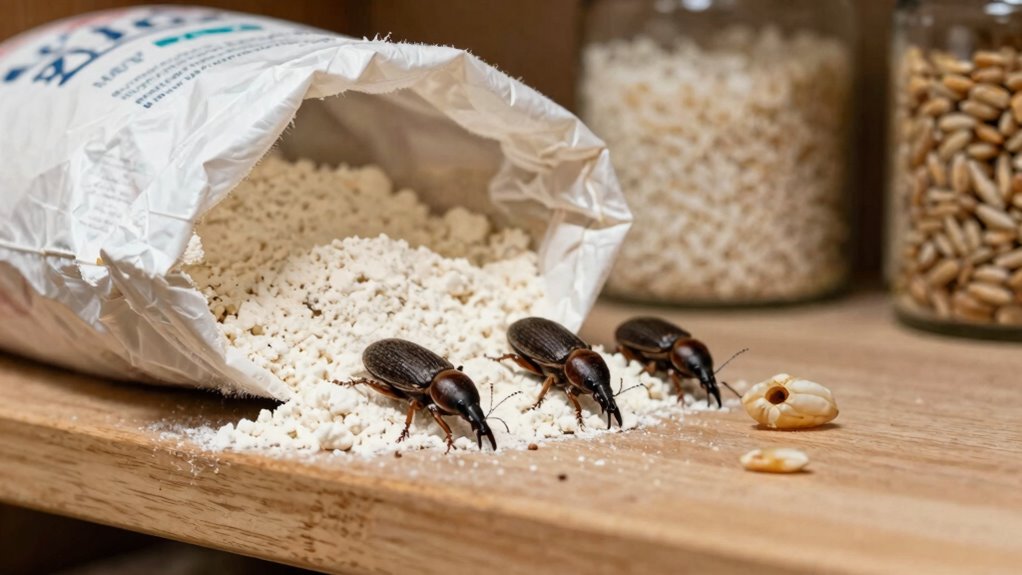
A pantry’s worst nightmare is the weevil, a tiny reddish-brown beetle between 1/8 and 3/16 inch long. Understanding their insect biology is key: rice weevils fly, while granary weevils don’t.
The pantry’s worst nightmare is the weevil, a tiny reddish-brown beetle; rice weevils fly, but granary weevils don’t.
Both love dry goods, and the first clue is spotting them in rice, flour, or pasta. Fine dusty debris in packages? That’s weevil poop, not harmless flour dust.
Look for clumped grains or food that smells off, which signals an active infestation. A recurring problem near bird seed or pet food in a garage pantry location means the infestation is wider than the shelf.
Don’t mistake them for harmless bugs; check every package, especially bulk items. I once found a colony in a forgotten bag of oatmeal, so I know how quickly they spread.
Catching them early saves a lot of cleanup, and targeted pest control steps like freezing suspect goods or sealing containers can stop them fast. If you see one, inspect thoroughly and call a local exterminator for a full pantry treatment plan, or use food-grade DE as a non-toxic option to combat them effectively.
Empty Your Pantry Completely and Inspect Everything
Since we have talked about spotting weevils early, now it is time to jump into the messy part. Empty your pantry completely and inspect everything.
This is the pantry eviction for every box, bag, and jar. Pull them all out with no survivors and no mercy.
A proper grain quarantine means isolating each item on the counter or table. Check for tiny holes, dusty trails, or clumped grains.
| Area Checked | What to Look For | Action Taken |
|---|---|---|
| Boxed pasta | Webbing or holes | Set aside for review |
| Flour bags | Damp clumps or powder | Flag for disposal |
| Rice containers | Moving specks | Seal in a bag |
| Cereal boxes | Torn inner liner | Open fully |
Check every seam and fold with a flashlight or magnifier. If something looks slightly off, it probably has an infestation.
Sweep shelves first, then wipe down with soapy water. Dry everything completely before returning any food.
It is tedious work, but skipping this step invites a sequel of pests. Take your time to ensure a pest free pantry.
Once all infested items are removed, store remaining dry goods in containers with airtight side-locking lids to prevent future weevil invasions.
Bag and Discard Weevil-Infested Food Safely
Once an infestation is confirmed, seal the infested package inside a sturdy trash bag before it leaves the pantry. This simple pest control step stops adult weevils from marching into your next bag of flour, a classic mistake many homeowners make.
After sealing the obvious culprits, quickly inspect neighboring items for any signs of weevil activity. Any old or expired goods that look suspect should be tossed in the same bag for safe disposal.
This method helps you manage pantry pests effectively and prevent a larger weevil infestation. For complete pest elimination, consider using pheromone-based traps to interrupt the reproductive cycle and combine traps with proper sanitation after discarding infested food.
Seal Infested Packages
Thoroughness in the disposal process is oddly satisfying, but it requires a bit of ritual. First, identify the culprit. It is likely the rice weevil or granary weevil, two common grain weevil species.
Seal infested packages in a sturdy plastic bag, then tie it tightly. This prevents escapees from colonizing your pantry anew. A good pest control trick is to double‑bag it and take it straight to the outdoor trash. Don’t just toss the box.
These critters crawl. The bag is their prison. Seal it. Tie it. Remove it fast. No second chances. For effective grain weevil elimination, always act quickly.
Since weevil sprays mostly target adult insects, airtight storage is crucial to prevent eggs from hatching and re-infesting your pantry.
Inspect Adjacent Items
Now inspect the items sitting next to that bag of rice. Weevils don’t travel far on their own, but they’ll hitch a ride on nearby boxes of pasta, bags of flour, or even that forgotten box of cereal.
Check every dry good within arm’s reach. If even one looks suspicious, like clumped or dusty grain, bag it and discard it safely to stop a pantry infestation in its tracks.
Think of this as saving yourself from repeating cupboard treatments later. A thorough inspection now beats using chemical sprays later, which you’d rather avoid near food anyway.
Trust me, spraying poison in your pantry is no one’s idea of a good time. Bottom line, inspect all adjacent items closely and toss any suspect packages.
That simple step prevents a second round of frustration and makes your pest control cleanup actually stick. For long term success, consider replacing infested items with silicone gasket sealed containers as a proactive measure.
Dispose Old Products
Why toss old food that looks fine when weevils don’t care about expiration dates.
They lurk in overlooked grains, forgotten containers, and dusty bags at the back of the shelf.
One tiny hole can hide dozens of eggs, so treat every suspect package as a potential pest control issue.
Bag every item tightly before discarding it to stop pantry beetles from spreading.
If you toss loose infested food, those little beetles will march right back into your pantry.
Seal it up, then trash it. Think of it as weevil quarantine.
Throw away anything remotely suspicious, especially bird seed or pet food stored in garages.
Those bulk bags often breed trouble and attract stored product pests.
Better to lose a dollar’s worth of rice than fight a full blown infestation later.
Buy fresh dry goods only after sealing off old supplies.
Inspect every overlooked grain and forgotten container with a critical eye.
If in doubt, bag it and bin it for the cheapest, safest fix.
Professional exterminators recommend this approach for long term pantry security.
For ongoing monitoring after you’ve cleared the shelves, pheromone-based traps can catch adult moths before egg-laying, helping you verify that the infestation is truly gone.
Vacuum Every Crumb, Crack, and Corner Thoroughly

Vacuuming every crumb, crack, and corner is the unsung hero of weevil eviction. Skipping it is like mopping a floor without sweeping first, messy and pointless.
A canister vacuum with a crevice tool, priced around $40 to $80, gets into baseboards, hinges, and under shelving where eggs hide. Pull the shelves out completely to reach back corners, weevils love those dark gaps.
Don’t rely on solar fumigation, it only works on sealed bags left in direct sun for hours. For loose debris, it is completely ineffective.
Ultrasonic devices are a gimmick, bugs ignore them completely. After vacuuming, empty the canister outside immediately so survivors cannot crawl back.
This step clears the stage for washing, so do it once and do it right. Your pantry pest control will fail without this thorough cleaning.
For a more lasting solution, consider a water-based, low-odor insecticide concentrate like Suspend SC for treating cracks and baseboards where weevils may travel.
Scrub Shelves to Kill Hidden Weevil Eggs and Larvae
A damp sponge and soapy water create the one two punch that sends hidden weevil eggs packing.
The pantry shelf material could be wood, metal, or laminate, but all need a thorough scrub.
Use a hot, soapy cleaning solution type. A mix of dish soap and water works perfectly with no harsh chemicals needed.
Work every corner, nook, and cranny where crumbs hide. Weevil eggs are tiny, sticky, and cling stubbornly to surfaces, but soap breaks down that glue.
Weevil eggs cling stubbornly to surfaces, but soap breaks down that glue.
Scrub shelves twice, rinse with a clean damp cloth, then dry completely.
Don’t skip the undersides or shelf brackets because eggs lurk there too.
This step is cheap, effective, and oddly satisfying when you see grime dissolve.
The bottom line is that a good scrub kills eggs before they hatch into more pantry freeloaders.
For ongoing prevention, consider using enzyme-based cleaners in nearby drains to break down organic waste that attracts pests.
Caulk Pantry Cracks to Stop Weevils From Returning
After scrubbing and cleaning, it’s time to seal the escape routes for weevils.
Caulking cracks in pantry shelves, corners, and baseboards blocks the tiny entry points these beetles use to return.
Focus on gaps around pipes or old wood, where pests often sneak back in.
A simple tube of acrylic latex caulk, around $5 at any hardware store, fills those gaps quickly.
For weevil-prone gaps, consider using a brush seal strip for flexible coverage on uneven surfaces.
This easy step stops future infestations before they start.
It is a cheap and practical way to keep your pantry weevil free.
Seal Crack Entry Points
Pantry cracks are a weevil’s VIP entrance, so sealing them is less optional than a security upgrade. Crack sealing targets entry points hidden behind baseboards, shelf brackets, and corner joints where dusty residue accumulates.
A caulk gun with silicone-based sealant works well. It costs around $8 and lasts for years. First, clean the gaps and let them dry. Then apply a thin bead, pressing it in with a finger to close the weevil’s highway.
Skip the fancy stuff. Standard latex caulk cracks over time, so silicone is the better bet for long term pest prevention. Check the pantry’s back panel too, as it is a favorite staging area for infestations.
It feels odd caulking spots you rarely see, but these cracks are the quiet back door. Do it once, do it right, and forget about it. The bottom line is seal first, breathe later.
Prevent Future Infestations
Sealing cracks is the quiet hero of weevil prevention. Caulk those tiny gaps in pantry shelves, baseboards, and corners. Even a 1/16 inch space invites them in. A six dollar tube of silicone caulk beats a sixty dollar food purge every time. Reapply yearly because wood shifts and gaps reopen. This simple pest control step stops an infestation before it starts.
Storage tips matter too but only after sealing. Transfer everything like flour, rice, and pasta into glass or thick plastic jars with gasketed lids. Thin bags are useless because weevils chew through them like a snack buffet. Rethink your pantry layout by keeping bulk bags on lower shelves away from open food. Rotate your stock so nothing sits for months. That stale forgotten cereal is a breeding condo you want to avoid. For persistent problems, consider placing glue traps along walls and behind appliances to monitor for stray pests that slip past your sealed barriers.
Bottom line is seal first then store smart and breathe easy. Or do not seal and keep playing whack a bug. Your call on how much weevil prevention you want to invest.
Freeze or Heat Treat Grains to Kill Weevils Instantly
Weevils can survive a surprising amount of pantry chaos, but freezing or heating grains will kill them instantly. For frozen storage, simply place suspect flour or rice in the freezer for at least one week.
This cold shock eliminates live bugs and their eggs, making it ideal for bulk purchases or questionable farmers’ market finds. No need to toss everything in a panic; freeze for convenience and peace of mind.
Heat treatment offers a faster route, though it demands more attention. Spread grains on a baking sheet and bake them at 120°F for one hour.
Heat treatment safety requires checking your oven’s accuracy; too low won’t work, and too high might toast your oats. Done correctly, the food remains perfectly edible afterward, so you can keep your pantry staples without waste.
This chemical-free fix targets pantry pests directly, and it’s a straightforward solution for a common kitchen headache. For long-term grain storage protection, freezing is your low-effort winner, while baking suits urgent weevil control needs.
Both methods stop infestations instantly, and they preserve your food’s quality. Bottom line: freeze for convenience, heat for speed, and end the weevil saga for good.
To further protect stored grains, consider using copper barrier tapes to seal entry points in your pantry and prevent weevils from accessing new food sources.
Use Airtight Containers to Keep Weevils Out of Dry Goods
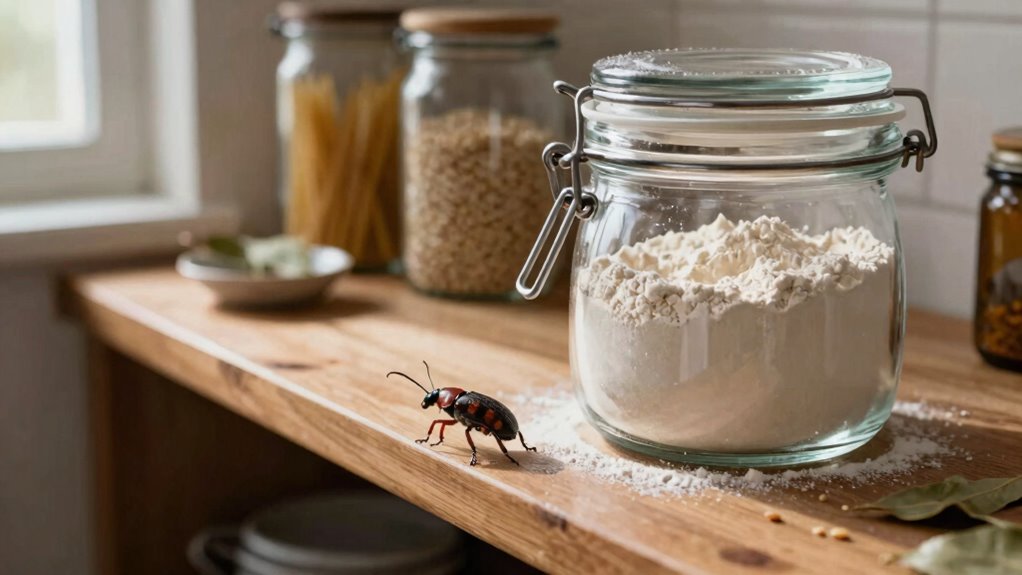
An airtight container is a weevil’s worst enemy. These pests simply cannot chew through glass, rigid plastic, or metal.
The key is choosing the right container types for your storage location. A pantry shelf needs sturdy, stackable jars. A garage cabinet can handle larger metal bins.
| Container Type | Best For | Typical Cost | Lifespan |
|---|---|---|---|
| Glass Mason Jars | Flour, rice, pasta | $12 for 12-pack | Indefinite |
| BPA-Free Plastic Canisters | Cereal, crackers | $8 for 4-pack | 5–10 years |
| Stainless Steel Bins | Pet food, bird seed | $25 for 10-liter | 20+ years |
| Airtight Clip-Top Jars | Coffee, tea, spices | $15 for 3-pack | 10+ years |
Transfer everything, even unopened store bags, into these containers. Thin cardboard is a weevil welcome mat.
Pick a cool, dry storage location like a low shelf away from heat. This simple swap costs under $20 and stops reinfestation cold.
For long term pest prevention, always inspect bulk grains before storing. Seal each item tightly to block pantry moth and beetle entry. For added protection against flying pests, pheromone-based traps can attract and capture male moths from up to 25 feet away to break the breeding cycle without using toxic chemicals.
Use a transparent glass jar to spot early signs of infestation. Your food stays safer and your kitchen stays cleaner with this one change.
Repel Weevils Naturally With Bay Leaves and Cloves
The humble bay leaf, that forgotten herb in the back of the spice rack, is a weevil‘s sworn enemy.
Simply tucking a few dried leaves into containers of flour, rice, or pasta releases a scent that deters these pests without any chemicals.
For an extra layer of defense, scattering a few whole cloves among the grains doubles the deterrent effect.
This natural pest control method keeps pantry bugs at bay with common kitchen staples.
You can prevent weevil infestations using these non toxic repellent strategies.
No need for harsh insecticides when bay leaves and cloves work so well for grain protection.
Store your dried goods with these ingredients for effective kitchen pest management.
It is a simple, chemical free solution for long term pantry security.
These plant oils block insect neuron signals, making them a safe and effective alternative to synthetic chemicals.
Bay Leaves Placement
Weevils find the scent of bay leaves and cloves highly off-putting, making these spices a natural, chemical-free deterrent for your pantry.
Tuck two to three whole bay leaves into each container of flour, rice, or pasta to keep pests at bay.
Whole leaves release their aroma slowly over months, so avoid crushing them for the best long-term protection.
This method repels weevils through scent alone, so don’t expect it to kill an existing infestation outright.
For those who don’t have bay leaves handy, whole allspice or cinnamon sticks work as excellent clove alternatives.
Drop a few into your grain jars or sprinkle them on pantry shelves, replacing them every three months for ongoing defense.
It’s a cheap and easy way to protect your food storage without harsh chemicals, and it’s perfect for anyone seeking natural pest control solutions.
If you’re dealing with a weevil problem, this simple trick helps you buy weevil-free grains and keeps your kitchen staples safe from pantry pests.
For those who prefer a trapping approach, non-toxic pheromone traps can be placed nearby to monitor and reduce adult male moths in your pantry.
Cloves Deterrent Method
For those who found bay leaves useful but want an extra layer of protection, cloves offer a comparably simple, natural deterrent. Their strong, spicy aroma confuses weevils, disrupting their sense of smell and making grains unappealing.
| Aspect | Clove Details |
|---|---|
| Clove potency | Highest when whole. Ground cloves lose scent fast but still work in short stints. |
| Placement method | Tuck 5–8 whole cloves per quart of grain. Scatter a tablespoon of ground cloves on a small dish inside the container. |
| Deterrence duration | Whole cloves last 2–3 months. Ground cloves need replacement every 3 weeks. |
Replace cloves when the smell fades. A sniff test works fine. Use them in rice, flour, or pasta containers. Skip them for pet food because dogs hate the taste. A $3 jar covers several pantries, making this an affordable weevil control solution. Bottom line: cloves work better than bay leaves for stubborn infestations. They are not a forever fix, but they are a powerful natural deterrent. Swap them out, keep grains sealed, and you will likely avoid sequel infestations. This method works like a charm for long term pantry pest prevention. Just remember to do the sniff test. If you forget, it is your own fault. For even stronger repellent action against pests, peppermint and cedarwood essential oils offer a non-toxic alternative for pantry use.
Use Traps and Rotate Food to Prevent Weevils From Returning
Rotate food like a pantry DJ, older items first and new ones behind. This forces you to use everything before larvae can mature.
Buy smaller bags of flour or rice, say 2 to 5 pounds, and consume within a month. Store grains in clear glass jars so you spot weevil activity early.
Use pest control traps to catch any stray grain insects. For best results, place pheromone traps near dry goods to target adult males without using pesticides. This helps prevent weevils from returning to your pantry.
It’s not glamorous, but it beats finding squirming guests in your cereal. Keep your dry goods rotated and sealed for long term pest prevention.
Frequently Asked Questions
Can Weevils Bite Humans or Pets?
No, weevils cannot bite humans or pets. Their anatomy lacks the strong mouthparts needed for biting skin.
Weevils have a long, narrow snout designed for piercing and feeding on dry grains, not flesh. Their feeding habits focus exclusively on plant matter like rice, flour, and oats, never blood or tissue.
This is a mild relief, though finding a weevil in your cereal is its own special kind of horror. But from a pest control perspective, they are harmless to you and your pet while being ruinous to your pantry stash.
If you spot these tiny invaders in your stored foods, a targeted pantry pest inspection is your first smart move. For effective grain weevil elimination, consider food-grade diatomaceous earth or pheromone traps.
To prevent reinfestation, store dry goods in airtight containers and rotate your pantry stock regularly. Many homeowners find that a professional pest control treatment for stored product pests offers the longest lasting protection.
Will Weevils Infest Sealed Plastic Containers?
Sealed plastic containers are not invincible, but they drastically cut your pest infestation risk. Weevils won’t chew through rigid plastic on their own, so that’s one major worry off the table.
However, thin, flimsy plastic containers can have tiny entry points like lid gaps or hairline cracks. For under $10, you can buy thick, snap‑tight polypropylene containers that block weevils cold.
Avoid old Tupperware with warped seals because pantry bugs find those weaknesses fast. The bottom line is simple: buy quality plastic storage for grain and flour, because cheap stuff just stores optimism.
Are Weevils Harmful if Accidentally Eaten?
Accidental digestion of weevils is not harmful. Health risks are virtually nonexistent; they are just extra protein, albeit an unappetizing one.
The body processes them like any other food, no sickness involved. Think of it as a free, crunchy bonus you never asked for.
Bottom line: no need to panic, just toss the infested bag and move on. It is more of a psychological ick factor than a medical one.
If you find weevils in your pantry, it is a clear sign you need better pest control for stored food. A grain weevil infestation often starts in bulk flour, rice, or pasta.
Professional pest control products like pheromone traps or airtight container seals can stop adult weevils from spreading. You should buy weevil proof storage canisters to prevent reintroduction.
For active infestations, consider diatomaceous earth or a targeted pantry pest spray. These solutions kill weevils on contact without harming your food when used correctly.
The real payoff is protecting your dry goods from future attacks. Invest in long term prevention and save money on wasted groceries.
How Long Do Weevils Live Without Food?
Adult weevils can survive two to three months without food, but their exact lifespan depends on your home’s conditions. In cool, dry environments, their metabolism slows down dramatically, allowing them to last even longer.
Warm, humid air speeds up their metabolism, which cuts their survival window short. They are resilient pantry pests, but they are not invincible once their food source runs out.
Without a grain stash to infest, they will eventually starve and die. To prevent a weevil infestation, keep your pantry sealed with airtight containers and maintain low humidity levels.
If you are dealing with an active infestation, consider using food grade diatomaceous earth or pheromone traps as part of your pest control strategy. For long term prevention, store grains in glass or hard plastic containers and inspect new packages before bringing them home.
The bottom line is simple: a dry, sealed pantry is your best defense against these tiny invaders. With the right pest management products and habits, you can stop weevils from outlasting your patience.
Do Weevils Spread Diseases to Pantry Surfaces?
No, weevils do not spread diseases to pantry surfaces. Their main concern is surface contamination through feces, shed skins, and dead bodies, which affects food safety rather than causing illness.
Think of them as messy squatters, not biological hazards. Proper cleaning with soap and water removes all traces, restoring safety.
Bottom line: these pests are gross but harmless. For real peace of mind, use a targeted pantry pest control spray to kill hidden eggs and larvae.
If you’re dealing with recurring weevil infestations, consider investing in airtight containers and an insect growth regulator product. You can also place pheromone traps to monitor and reduce adult weevil activity before they multiply.
Always inspect dry goods like flour, rice, and pasta for signs of weevils before buying. A simple pantry cleaning routine with a vacuum and disinfecting wipes keeps surfaces safe and contamination free.
For full protection, look for pest control products labeled for stored product pests. Your goal is to eliminate the food source and break the life cycle, not just sanitize.


