
Finding a pantry moth infestation early saves you from tossing out half your kitchen. Adult moths are the visible sign, but the real damage comes from larvae hiding in webbing, eggs, and sealed packages. You don’t need to wait for fluttering moths to know you have a problem—check corners, paper folds, and jar lids for silky trails. Even unopened plastic bags aren’t safe; larvae can chew right through them.
If you’ve spotted one moth a week, you’re still in control—daily sightings mean it’s time to act fast. This guide walks you through the exact inspection steps and treatment methods that actually work. Grab your flashlight and let’s get your pantry clean again.
At A Glance
- Inspect flour, rice, cereal, and pet food for silky webbing or clumped grains.
- Check folds of bags, jar lids, and corrugated box crevices for tiny whitish-grey eggs.
- Sift suspect dry goods into a white bowl to spot cream-colored larvae with brown heads.
- Use a flashlight to examine cabinet cracks, hinges, and undersides of shelves.
- Set pheromone traps near the pantry; catch males within a week to confirm breeding.
First Signs of Pantry Moth Activity
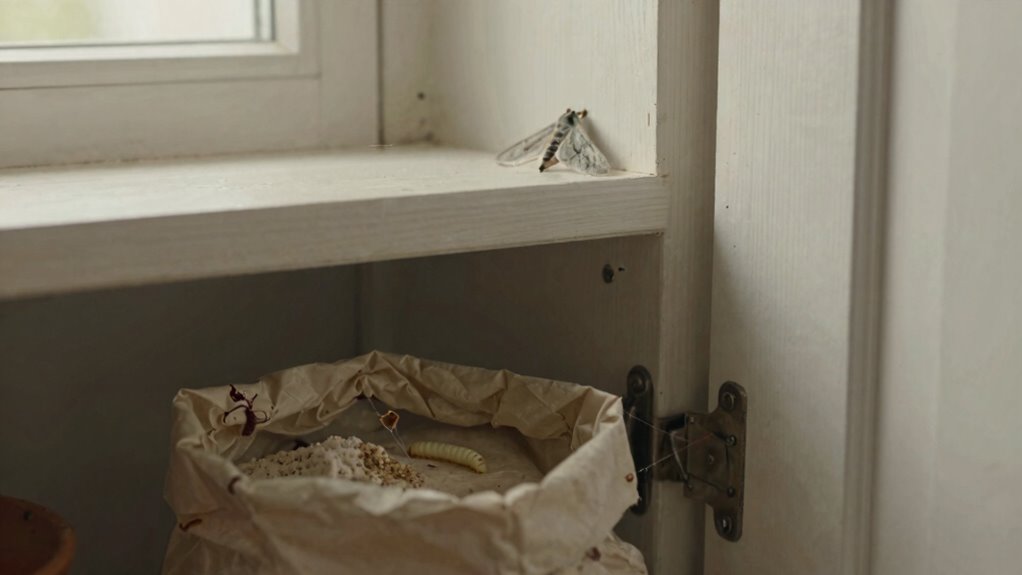
Sometimes the first sign isn’t a moth at all. It’s a faint, silky thread clinging to a corner of your flour bag like a tiny, unwanted cobweb.
That webbing, often overlooked, is a calling card from larvae that have already begun feasting. By the time someone notices adult moths fluttering near the cabinets, the infestation is likely weeks old.
That webbing, often overlooked, is a calling card from larvae that have already begun feasting.
Identifying adult moths is straightforward. They’re small, maybe half an inch across, with two-toned wings, bronze on the tips and lighter near the body.
They seem clumsy and bounce off lights after dark. Seasonal activity patterns peak in late spring and early summer, when warmer temperatures speed up their life cycle.
A single moth in February is a red flag, but a few in July is almost expected. Catch them early with proactive pest control solutions, or you’ll be sifting flour for weeks.
If you spot webbing or moths, consider pantry moth traps to stop the problem fast. Inspect dry goods like cereal, rice, and pasta for early signs of an infestation to prevent a full outbreak. These traps often attract male moths from up to 25 feet away to break the breeding cycle.
Where Pantry Moths Hide and Lay Eggs
Pantry moths often lay their eggs inside open or loosely sealed containers of dry goods like flour, rice, and pet food. Infested items usually show webbing or larvae inside the food itself.
The moths also target hidden corners and crevices of cabinets, especially near crumbs. Their eggs appear as tiny whitish-grey specks on packaging.
For effective pest control, check all stored food for signs of an infestation. Using airtight containers can help prevent pantry moths from spreading.
If you see webbing or eggs, discard the affected items right away. A thorough cabinet cleaning with vinegar can remove remaining eggs and larvae.
To disrupt the breeding cycle, place pheromone glue traps near the infestation source, as they specifically target adult males without pesticides.
Preferred Egg Sites
Why do pantry moths always pick the most inconvenient spots, like that half-open bag of flour you meant to seal last week. These pests are drawn to oviposition hotspots where eggs stay undisturbed for weeks.
Prime hidden breeding sites include folds of paper bags and the underside of jar lids where crumbs collect. Deep inside cracked spice containers also serve as perfect nursery locations.
Corrugated cardboard boxes are favorite egg laying spots for moths sneaking into tiny tunnels. You should also check cabinet crevices between shelves and the back wall where food dust gathers.
Targeting these areas rather than just open food is key for effective pest control. If you find webbing or tiny eggs in any spot, you have discovered their nursery. Pheromone traps detect these early infestations and protect shelves and bins.
Clean them thoroughly with a vacuum and soapy water to break the cycle. For severe infestations consider using pantry moth traps or calling a professional exterminator.
Infested Dry Goods
Where do these pests hide once they’ve infiltrated your dry goods? Pantry moths stash their eggs and larvae inside open flour bags, pasta boxes, or even sealed plastic bags of cereal.
They burrow deep, often under the surface, so a quick glance won’t catch them.
Proper stock rotation is your first line of defense.
Always use older packages before newer ones to avoid letting infestations settle.
Container inspection matters too.
Check for tiny holes, webbing, or clumpy grains inside pet food bags or spice jars.
A bag of birdseed costing $8 can harbor dozens of eggs without a visible clue.
Sift through rice, flour, or nuts thoroughly, as these are prime laying spots.
The takeaway is simple: inspect every dry good and rotate your stock.
You’ll catch the problem before it multiplies and protect your pantry from hidden moth outbreaks.
Combine these traps with proper sanitation and storage practices to prevent re-infestation.
Hidden Corners And Crevices
Check the cabinet corners you’ve been ignoring. Pantry moths are sneaky little jerks, and they love dark, dusty spots.
A proper crevice inspection means getting down on your hands and knees with a flashlight. Peer into every gap where they lay eggs in places you’d never think to look.
You’ll find webbing that looks like cheap, sticky spider silk in corners you forgot existed. Tiny eggs resembling whitish-grey rocks cling to the underside of shelves.
Larvae, cream-colored with brown heads, wriggle in the dust bunnies you’ve been avoiding. Even sealed cracks can hide pupae waiting to hatch into more fluttering nuisances.
This pantry pest cleanup method is gross but it works. Sweep every nook and cranny for effective moth prevention.
Wipe with vinegar to disrupt their breeding cycle. Don’t skip the back of that cabinet corner, as it’s their favorite nursery for stored product pest control.
Using airtight side-locking lids with silicone gaskets can prevent these pests from infiltrating stored dry goods.
Spotting Pantry Moth Eggs, Webbing, and Larvae
The first and most obvious giveaway is the cobweb-like webbing they leave behind, a silky mess that clumps grains together like a failed art project.
For eggs, look for tiny whitish-grey specks that resemble little rocks, often clustered on food or packaging, and each one can hatch into a new problem.
Finally, the larvae themselves are cream-colored with brown heads, about half an inch long, and they’ll be wriggling inside food packets like uninvited tenants.
If you spot these signs, it’s time to take immediate pantry pest control action and start extermination before the infestation spreads.
Check every sealed bag and cardboard box, because eggs and webbing hide in the folds and seams, and a professional pest removal service can help if the problem feels overwhelming.
For a DIY approach, vacuum all shelves, wipe down with vinegar, and discard any contaminated dry goods, then use pheromone traps to monitor for new activity.
Act fast to stop the breeding cycle, and you’ll save your kitchen from a full-blown moth invasion that requires costly fumigation treatments.
Remember that early detection with these visual clues is your best defense, so inspect your pantry at least once a month for fresh webbing or larvae movement.
Identifying Whitish-Grey Eggs
Look for whitish-grey specks that resemble fine gravel stuck to your cereal box. Those aren’t crumbs, they’re future larvae waiting to hatch.
To catch an infestation early, inspect the crevices of open flour bags or pet food containers. Eggs often clump together in these hidden spots, so a quick pest control check can save you from a bigger problem.
When you rinse rice and see eggs floating to the surface, treat it as a clear sign of a hidden invasion. This simple household inspection trick reveals what’s been quietly developing inside your pantry.
These tiny deposits can hatch in just seven days, turning one unnoticed spec into hundreds of hungry caterpillars. For effective pest prevention, seal dry goods in airtight containers and wipe down shelves with vinegar to stop the spread.
Using pheromone-based traps in your pantry can help monitor for adult moths before they lay more eggs.
Recognizing Cobweb-Like Webbing
Cobweb-like webbing is the first visible sign that pantry moths have moved in and made themselves at home. This silk, spun by larvae, often clumps grains together or coats cabinet corners like a tiny, unwelcome hammock.
During a visual inspection, look for these telltale strands inside food containers or on pantry shelves. For effective pantry moth control, you need to know exactly where these pests hide their handiwork.
| Where to Check | What to Look For |
|---|---|
| Flour or cereal bags | Silken mats holding grains into solid clumps. |
| Cabinet corners | Fine, wispy threads near crumbs or spills. |
| Dry pasta packages | Webbing coating noodles, sticking them together. |
| Open spice jars | Thin, cobweb-like layers on surface of powder. |
| Sealed containers | Silk on rim or lid, sign of a moth jailbreak. |
A thorough cleaning routine is key: remove all food, vacuum every crevice, and wipe down shelves. This step is critical for any do-it-yourself pantry moth extermination plan.
If you spot webbing, toss the affected food immediately, because it’s a certain bet the larvae have already trashed it. Don’t ignore it, as that’s how infestations get comfy and spread to other dry goods.
For long term protection, consider using non-toxic sticky traps or pheromone monitors after cleaning. These tools help catch adult moths and confirm if your kitchen pest solution is working.
Finally, store all new food in airtight glass or hard plastic containers to prevent future moth entry. That simple habit kills the cycle and saves you from repeated cleanouts.
Finding Cream-Colored Larvae
Finding cream-colored larvae inside unsealed cereal boxes means an active pantry infestation needs your immediate action. These wriggling pests, up to 17mm long, hide with their brown heads barely visible against grains.
Sift through dry goods weekly, searching for tiny moving specks or clumped webbing. Check cabinet corners where eggs hide like minuscule whitish rocks.
Inspect sealed packages because larvae chew through thin plastic with ease. Vacuum thoroughly and set moth traps nearby to catch emerging adults.
Effective pantry cleanup requires discarding infested items outright, not salvaging them. Traps alone will not solve the problem because larvae keep feeding for months.
After removing contaminated food, wipe shelves with soapy water. If you spot one larva, assume dozens more hide in flour, pasta, or pet kibble.
Act fast, or those tiny crawlers become airborne moths within weeks. For lasting control, consider applying an organic spray that breaks down quickly and avoids harming pollinators.
Inspect Every Package: Open or Sealed
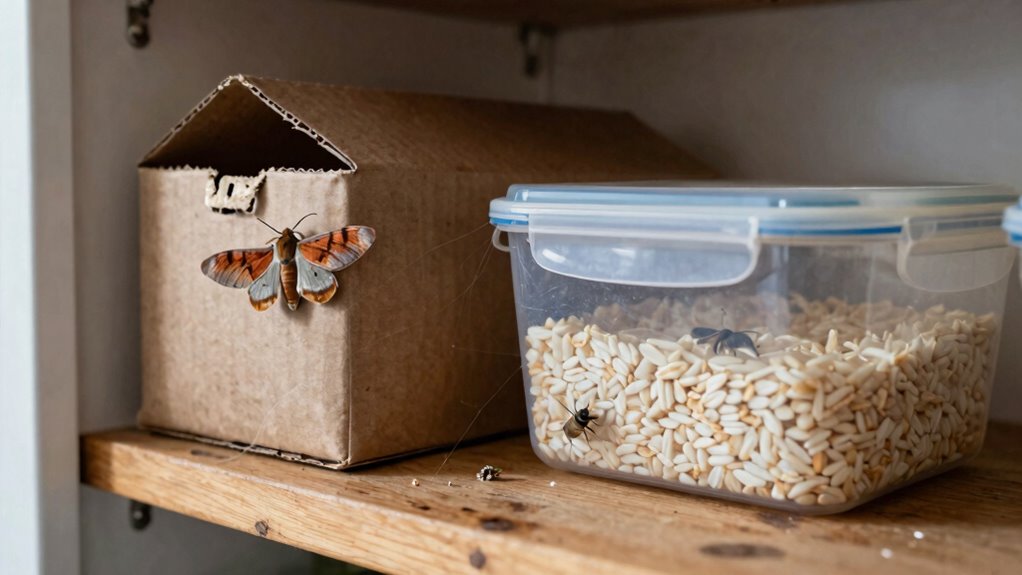
Moths treat sealed packaging more like a suggestion than a fortress. This means every single item in your pantry deserves a hands-on inspection, even the ones that look untouched.
You need to perform diligent package tracking by pulling each box, bag, and canister out. Look for tiny entry holes, webbing, or fluttering adults as part of your pest identification process.
Any suspect items require immediate quarantine methods. Isolate them in a sealed plastic bag to stop the infestation.
Do not trust packaging, because larvae chew through cardboard, plastic, and foil with ease. They are persistent and one dry pasta box can harbor an entire generation.
The goal is simple: find the source to achieve effective pest control. Then stop it cold with thorough pantry treatment.
Inspect every single item, no exceptions for effective pantry protection. If you skip a package, you risk a return infestation and wasted food.
After discarding infested items, switch to containers with silicone gaskets and locking hinges to prevent any future pests from re-entering your dry goods.
Step-by-Step Pantry Search for Moths
To find pantry moths, start by inspecting every single package in your cabinets. Check all bags, boxes, and containers, even sealed ones, because moths can chew through thin plastic and cardboard.
Then move your inspection to the cabinet shelves and cracks themselves. Look closely in corners and crevices for webbing and eggs that often hide there.
If you spot any signs of a moth infestation, remove all affected food items immediately. Use a vacuum to clean shelves thoroughly before wiping them down with vinegar or a natural pest control spray.
Seal any gaps or cracks around cabinet edges to prevent future moth entry. For ongoing moth prevention, store dry goods in airtight glass or hard plastic containers right after purchase.
Always check expiration dates and inspect new groceries before putting them away. This simple pantry moth treatment routine helps keep your kitchen pest free. Reapply food-grade DE every two weeks for continuous control after cleaning infested areas.
Check All Packages
Before you start flinging open cabinet doors, it pays to understand the game you are playing. Pantry moths are masters of hide and seek, and their favorite trick is hiding in plain sight.
Every sealed bag is a suspect, since larvae chew through cardboard and thin plastic with ease. Check package integrity first, sniff for mustiness and poke for soft spots.
Look for tiny pinholes along seams, which are feeding entry points for a moth infestation. Tap bags over a white plate, sifted flour or rice may reveal wriggling larvae.
Inspect bulk storage bins, especially the inner rims and lid undersides, where webbing clings during a pantry pest invasion. Squeeze bags tightly, crunchy resistance often means cocoons inside.
Discard anything suspicious without opening it indoors. A single missed package can restart the battle, so ruthless inspection pays off when protecting your food storage. Use sticky traps for monitoring to detect any stray adult moths after discarding infested items.
Inspect Cabinets and Cracks
Once you have cleared every package off the shelves, focus on the cabinets themselves. Moths love hiding in every nook, corner, and shadow.
Study your cabinet layout because those dark, quiet spaces act like a five star hotel for pantry pests. Grab a flashlight since crack depth matters for effective pest control.
A crack even a quarter inch deep can hide eggs, webbing, or tiny larvae. Run a finger along each crevice and sweep out crumbs with a dry brush.
Look for whitish grey specks that resemble tiny rock grit, as those are eggs and they signal an active infestation. Check hinges, under shelves, and behind loose panels.
This step is tedious, but skipping it means the moth problem returns. Get low and close to inspect every hidden inch for complete pantry pest elimination. For a similar approach with fabric pests, discreet triangular traps can be placed in dark corners to monitor for adult beetles.
How Moths Get In: Windows, Vents, and Infested Bags
Buzzing around a kitchen light at midnight, a pantry moth is rarely a random guest, because it earned its way in through one of three predictable doors. Moth behavior explains why they follow food scents, gliding through hidden entryways like loose window screens, unsealed vent covers, or gaps around utility pipes.
A pantry moth entering your kitchen is rarely random—it followed food scents through three predictable doors.
The most insidious route, however, is the infested bag you carried home, unaware, which can introduce eggs directly into your pantry. A torn cereal box from the grocery store might quietly harbor those eggs, so check every fold and seal before you store it.
A dryer vent flap flipped open by wind offers a freeway for moths, so secure it with a tight-fitting cover and mesh. A window left ajar during late spring, when moths swarm, invites them straight into your kitchen, so close it or install a snug screen.
A secondhand container, supposedly clean, is another hidden hazard, so wash it with hot soapy water and inspect the lid’s gasket for larvae. Check screens for tears, seal vent edges with caulk, and inspect packaging before it enters your cabinets, because a single unnoticed tear can spark an infestation.
Otherwise, you are hosting a party you never planned, and professional pest control for moth removal becomes your quickest fix. For long-term prevention, rotate dry goods into airtight jars and vacuum cabinet crevices monthly to break the moth life cycle. For stored clothing, use plant-based moth repellents that are non-toxic and safe for sensitive sinuses.
How to Check Dry Goods for Pantry Moths
To check dry goods for pantry moths, grab a flashlight and a sense of mild suspicion. Empty every container onto a clean surface, then sift through flour, cereal, and pasta with your fingers.
Larvae hide deep, leaving clumped webbing that sticks like tiny hammocks. Examine packaging holes for signs of infestation because even sealed boxes can be breached.
For ongoing vigilance, set out moth traps with pheromone monitoring to catch males early. This cheap early-warning system costs around $8 for a three-pack and helps prevent a full-blown pest control problem.
Check each item methodically using the table below:
| Item Type | Common Sign |
|---|---|
| Flour, grains | Slimy clumps or fine silk |
| Nuts, seeds | Tiny holes or dust |
| Chocolate, dried fruit | Webbing on surface |
| Spices, mixes | Live larvae near seams |
Discard anything suspect immediately to avoid contamination risk. Store new purchases in airtight containers for long-term pest prevention.
Few Moths vs. Full Infestation: Counting the Problem
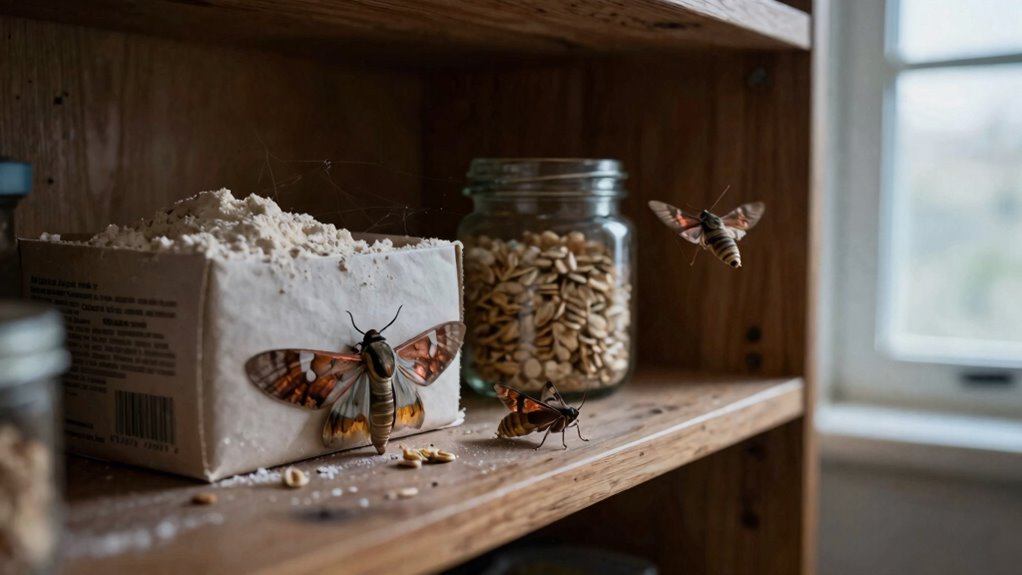
Spotting a single moth fluttering near the window does not mean war has been declared on your pantry. It could be a stray wanderer, not a colony.
A full infestation, however, sends clear signals. You’ll see webbing clumping your rice, larvae wriggling in flour, or tiny holes punched through cereal boxes.
The key is counting frequency and damage. To gauge the severity, consider these emotional triggers.
One moth per week is annoying but manageable. Check your dry goods for any signs.
Daily sightings mean something is hatching. Your pantry is now a nursery for pests.
Larvae in every open bag mean you are feeding a generation. Time to purge all infested items.
Webbing across cabinet corners signals full occupation. The colony has settled in and needs immediate treatment.
Developing new moth detection tech helps separate false alarms from real crises. Community reporting maps can reveal if your neighbors share your uninvited guests. A targeted spray with cedar oil masks the scent cues moths rely on to find fabrics and dry goods.
Count the signs, not just the moths. Accurate pest control starts with knowing when to act.
Simple Tests to Confirm Pantry Moths in Your Food
You might feel smarter than a moth, and you probably are. A quick kitchen test can confirm whether those tiny flakes in your flour are harmless dust or pantry pest larvae.
First, sift a cup of flour into a white bowl. Any cream colored, brown headed larvae will stand out, floating or wriggling.
Next, pour water over suspect grains. If tiny worms bob to the surface, that is a dead giveaway of a food moth problem.
For a passive check, try trap placement. Hang a sticky pheromone trap near the pantry door, about eight dollars for a pack of two. These traps use pheromone lures to attract and catch male moths before they breed.
These traps catch male moths, not females. But if you snag a few within a week, you have breeding adults.
Ignore them, and those flakes become a full blown buffet. Bottom line: test your food, not your luck.
Life Cycle Timing: When Infestation Peaks
Moth activity follows a predictable calendar, much like clockwork. Their peak season arrives in late spring and early summer when warmth speeds development from egg to adult in under two months.
Moth activity follows a predictable calendar, much like clockwork, peaking in late spring and early summer.
Spring awakening begins when temperatures hit 50°F, hatching dormant eggs into hungry larvae. These tiny pests will chew through your expensive organic quinoa without mercy.
Summer brings an explosion of mating, with each adult laying up to 400 eggs. Your pantry becomes a prime nursery for this infestation.
Fall slows them down as cooler weather reduces breeding activity. Yet larvae still feed, munching on your emergency popcorn stash.
Winter survival sees a few pupae hunker down in moth dormancy. They wait patiently for warmer days to ruin your cereal again.
Knowing this peak timing helps you anticipate their attack. Schedule your pest control inspection before late spring to intercept the cycle.
Professional moth treatment applied in early May can prevent the summer explosion. Use pantry pheromone traps as a cost effective monitoring tool.
Seal all dry food in airtight containers to deny larvae access. This simple prevention step disrupts their entire breeding ground.
When to Move to Immediate Extermination
Professional pest control for pantry moths typically runs $150 to $300 for a full treatment, including pheromone traps and pesticide fogging. Technicians will also seal entry points and inspect adjacent cabinets.
One missed egg can trigger a full re-infestation, so don’t gamble with spot fixes. If you’ve already inspected every shelf twice and still spot live moths after a full week, it’s time to call a licensed exterminator.
Finding larvae or webbing inside sealed containers is another clear sign you need immediate professional intervention. A targeted fumigation and comprehensive pantry moth removal service is far cheaper than tossing your entire stock twice.
Schedule a same-day inspection if you see adults near ceiling corners or clustered around light fixtures. Early intervention stops the breeding cycle before it spreads to adjacent rooms.
Ask about a follow-up visit, since a second treatment often breaks the egg hatch cycle completely. Compare quotes from two local providers, but prioritize those who offer a written guarantee on re-treatment.
Frequently Asked Questions
Can Pantry Moths Infest Sealed Plastic Containers?
Yes, pantry moths can infest sealed plastic containers, but only if a flaw exists. Moth behavior drives them to squeeze through tiny gaps in lids, torn seals, or weak plastic.
Once inside, larval damage appears as webbing and holes in food. Airtight, thick walled containers with intact gaskets stop them, but flimsy tubs fail.
To protect your pantry from pests, check every seal carefully. Cheap storage often bends, creating entry points that Indian meal moths love.
For the best pest control solution, store dry goods in glass jars with rubber seals, not plastic bags. Sealed doesn’t mean safe except truly airtight, so invest in premium food storage to prevent infestation.
Buy heavy duty containers with locking lids for long term pantry moth prevention. That’s the smart purchase for effective pest control and peace of mind.
Do Pantry Moths Bite Humans or Pets?
Pantry moths do not bite humans or pets. These pests lack the mouthparts needed to bite or feed on blood.
Adult moths are harmless to your family and pets. A curious cat sniffing one won’t face any health risks.
The real problem is pantry moth larvae inside your food. They chew through packaging and contaminate dry goods like flour or cereal.
For effective pest control, focus on inspecting your stored grains. Use airtight containers and consider pheromone traps for early detection.
If you’re looking for a professional grade solution, a moth killer spray or fogger can target hidden infestations. Don’t waste time on bite relief products, just check your oats for webbing.
Will Freezing Kill All Stages of Pantry Moths?
Freezing can absolutely kill all stages of pantry moths, including eggs, larvae, pupae, and adults. You just need to be precise with your temperatures and timing to get effective pest control.
To ensure total elimination, your freezer must reach a consistent 0°F or below. Most pantry pests share this vulnerability, so you can use the same method for flour moths or Indian meal moths.
The duration of the cold exposure is critical for success. Leave infested items in the freezer for at least four days to guarantee the cold penetrates to the center of packages.
Some resilient eggs can survive a shorter chill, so extending the treatment improves your odds. For a truly foolproof moth treatment, I always recommend freezing for a full week.
This gives you complete peace of mind that your kitchen supplies are safe. When you are looking for a natural pest control option, freezing is a reliable, chemical free first step.
Just remember to seal items in airtight bags before freezing. This prevents moisture damage and stops any surviving moths from escaping into your pantry later.
Can Pantry Moths Live in Vacuum-Sealed Bags?
Yes, pantry moths can live in vacuum sealed bags if a bag has a tiny, unnoticed hole. The vacuum seal itself stops them because eggs need air to survive.
A single bag tear allows them to crawl inside and infest your food. Larvae can also chew through thin plastic, making even sealed bags vulnerable.
So inspect those supposedly sealed bags closely for any small tear. A tiny rip is like a welcome mat for a hungry pantry moth infestation.
Dropping a few bucks on hard plastic containers is a smarter pest control buy. These airtight storage solutions block moths and larvae from getting in.
For long term pantry moth prevention, choose durable containers with tight locking lids. This simple purchase stops eggs and crawling insects cold.
How Long Can Pantry Moth Eggs Stay Dormant?
Pantry moth eggs can stay dormant for several weeks to months, depending on dormancy triggers like temperature and humidity. Cooler conditions below 50°F pause development, while warmth revives them.
Egg viability factors include age and dryness, so older or desiccated eggs fail to hatch. Think of them as tiny uninvited nappers that wake up when it’s cozy enough to party.
Check for whitish-grey specks in dry goods like flour or cereal. For effective pest control, inspect carefully and use pantry moth traps to catch adults before they lay more eggs.
Buying a quality moth killer spray or pheromone traps can help you break the cycle fast. Dormancy doesn’t mean gone, so take action now to protect your kitchen.


